
How Metal Sign Printing Works, From Blank Aluminum to Mounted Sign


The panel, the ink, the gauge and the mount, explained the way a sign shop would explain them at the counter, with the limits named rather than skipped.
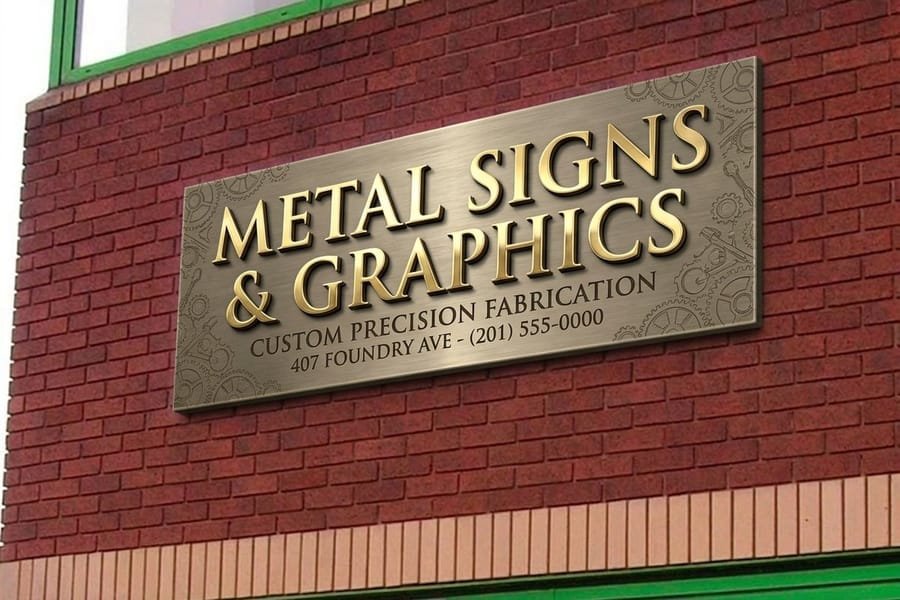
A metal sign is printed with UV curable ink onto an aluminum sheet that already carries a baked white coating, on a flatbed press where lamps harden the ink the moment it lands. The ink bonds to that coating rather than to the metal, so the coating and any overlaminate decide how long the print survives. Gauge decides stiffness: 0.040 inch stays flat up to about 18 by 24, and 0.063 inch is for larger panels and post mounting. Cutting, corner radiusing and hole drilling all happen after printing.
Quick answer
Coated aluminum, UV ink, and a cure that happens on contact
Metal sign printing puts UV curable ink straight onto a coated aluminum panel and hardens it under lamps in the same pass. No absorption, no drying time, and no film in between on a directly printed panel. What varies between one metal sign and the next is the gauge of the sheet, whether the face is gloss, matte, reflective or dry erase, and whether a laminate is added over the print. Fabrication finishes the job: the panel is cut to size, the corners are radiused, and the mounting holes are drilled through the artwork.
How a Metal Sign Gets Printed, Step by Step
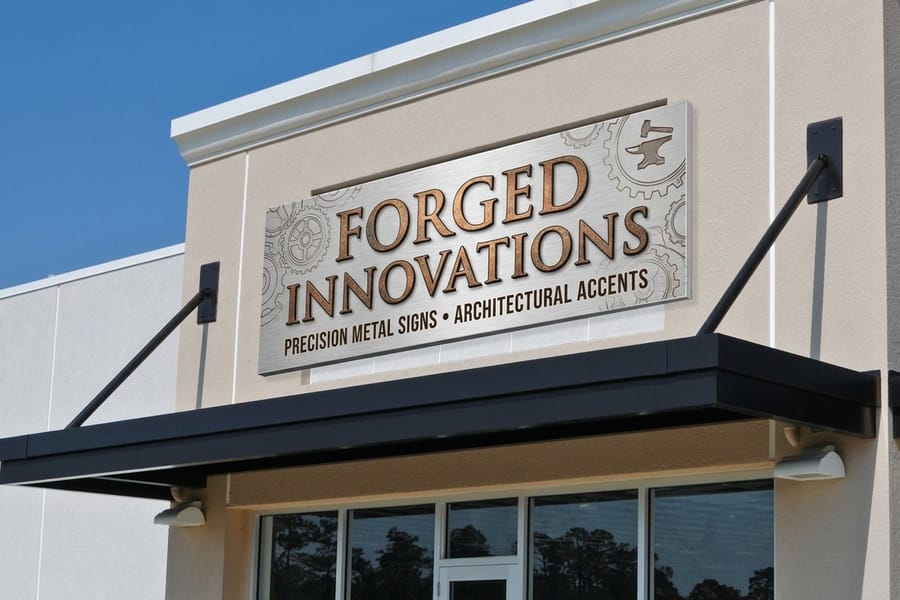
The sheet does most of the work before any ink is involved. Sign aluminum arrives already coated with a baked white finish, and that coating is what the ink actually grips. Print onto bare mill finish aluminum and the image sits on a slick oxide layer that lets go within a season.
One, the panel is squared and loaded flat. A flatbed press holds the sheet down on a vacuum table so it cannot shift by a millimeter while the head passes over it.
Two, the head lays UV curable ink. This is not the same chemistry as a poster press. UV ink does not soak in and does not dry by evaporation, so nothing about the panel has to be absorbent.
Three, lamps cure each pass immediately. A lamp travels with the head and hardens the ink the moment it lands, which is why a metal sign comes off the table dry and can be handled straight away.
Four, the panel is cut, radiused and drilled. Corners get rounded so nobody catches a hand on them, and holes are drilled through the finished print.
There is a second production route worth knowing about, because quotes rarely say which one you are getting. Instead of printing the metal, a shop can print adhesive vinyl on a roll press, laminate it, and squeegee it onto the panel. That is slower and adds an edge that can lift, but it is the only way to build a sign on reflective aluminum signs, where the retroreflective layer is a film rather than a coating. Direct printing wins on plain white panels. Film wins where the film itself is the point.
Gauge, Coating, and Picking the Right Panel
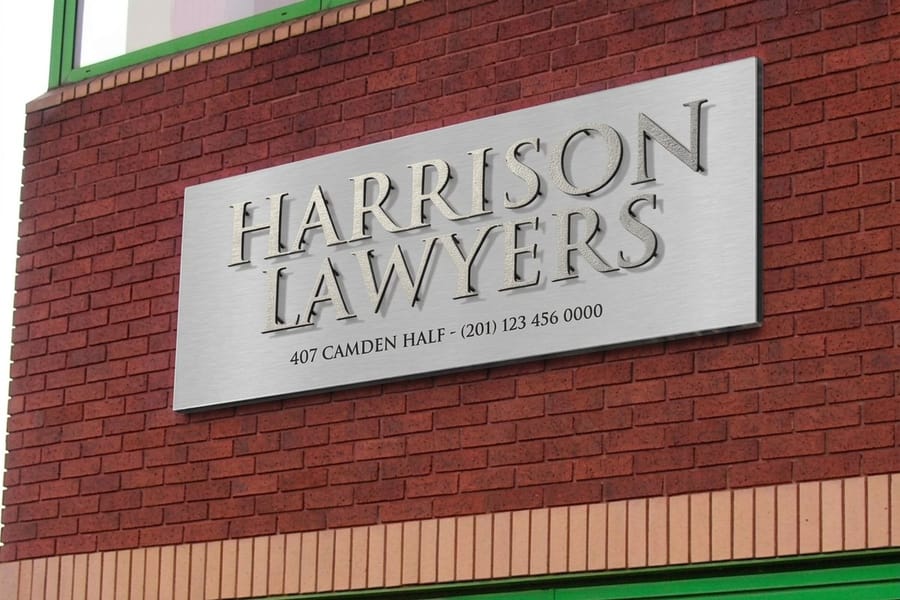
Two numbers decide almost everything about how a metal sign behaves: how thick the metal is, and how far it has to reach between the points where it is held. Thickness is sold in thousandths of an inch, so 0.040 and 0.063 are the two you will see quoted.
0.040 inch is the default gauge. It stays visually flat up to about 18 by 24 inches on a wall, and it is what most parking, door and wayfinding signs are built on. Push it to 24 by 36 and hold it at only two points and you get oil canning, the slow ripple across the face that catches light and makes a new sign look secondhand. 0.063 inch fixes that, at more weight and a higher price per panel. A composite panel, two thin aluminum skins bonded either side of a plastic core, is the third route: flatter than either skin, lighter than solid metal at the same stiffness, and covered properly in our guide to ACM signs.
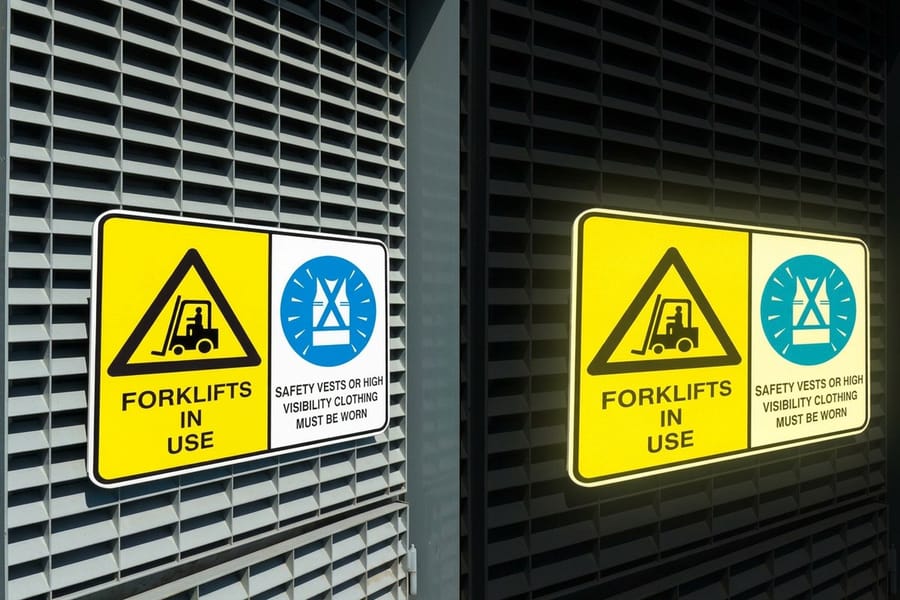
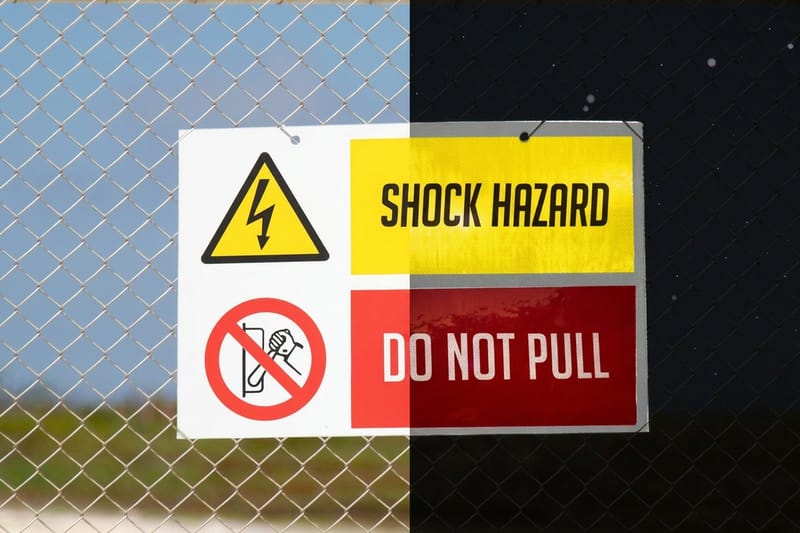
Finish is the other lever. A gloss white face gives the strongest color but throws glare back at anyone reading it from an angle, which is a real problem on a wall lit by spotlights. Matte gives up a little punch and reads cleanly from every angle. Then there are the two speciality faces: retroreflective sheeting, which returns headlight beams to the driver rather than scattering them, and a dry erase face for boards that get written on daily.
| Panel | Stiffness | Realistic outdoor life | Buy it for | Starting price |
|---|---|---|---|---|
| Metal Signs | Flat to about 18 by 24 on a wall. | Multiple seasons, longer with a laminate. | Parking, wayfinding, door and wall signs. | From $29 |
| Aluminum Signs | Holds shape at larger formats and on posts. | Multiple seasons in full sun. | Property, site and roadside signs that stay up. | From $36 |
| Aluminum Sign Panels | Panel stock for frames and channel systems. | Multiple seasons. | Sign systems where the frame is already there. | From $29 |
| Reflective Aluminum Signs | Same as the base panel it is built on. | Set by the sheeting grade, not the ink. | Anything read after dark by headlights. | From $41.02 |
| Plastic Coroplast Signs | Flexes, and the flutes show in raking light. | About one season outdoors. | Short campaigns, open houses, events. | From $25 |
Read the last two columns together. The reason metal costs more than plastic is not print quality, it is that the panel is still there in year three. If the message expires before then, the cheaper substrate is the correct answer, not the compromise.
What Actually Wears Out a Metal Sign
Almost nobody replaces a metal sign because the metal failed. The print goes first, and it goes in a predictable order.
Ultraviolet light breaks down pigment, and it does not break all pigments down at the same rate. Magenta and orange shift first, then yellow, while black and dark blue hold on far longer. That is why a faded sign reads as washed out rather than uniformly pale, and why a brand built on red will show its age sooner than one built on navy. An overlaminate is a clear film applied over the cured ink that takes the UV hit before the ink does. It adds cost per panel and it is the single change that most extends a sign in full sun. The trade offs of the different films are laid out in our guide to laminated signs.
Corrosion is the worry people bring to the counter, and it is mostly the wrong worry. Aluminum does not rust. Where the coating is broken, at a drill hole or a saw cut, it oxidizes to a dull gray film that then protects what is underneath. It looks untidy up close and it stops there. Steel signs behave completely differently, streaking rust down the face from every fastener, which is worth checking when one quote comes in far below the others.
Two other things end signs early. Cleaning with an abrasive pad scratches the laminate into a haze that no amount of polishing brings back, so mild soap and a soft cloth is the whole maintenance routine. And a panel mounted too tightly against an uneven wall will dish around the screw heads, which is a mounting fault rather than a material one. For a broader look at how substrates hold up outside, our aluminum signage durability guide covers the same ground from the buying side.
Mounting: Holes, Standoffs, Posts and Frames
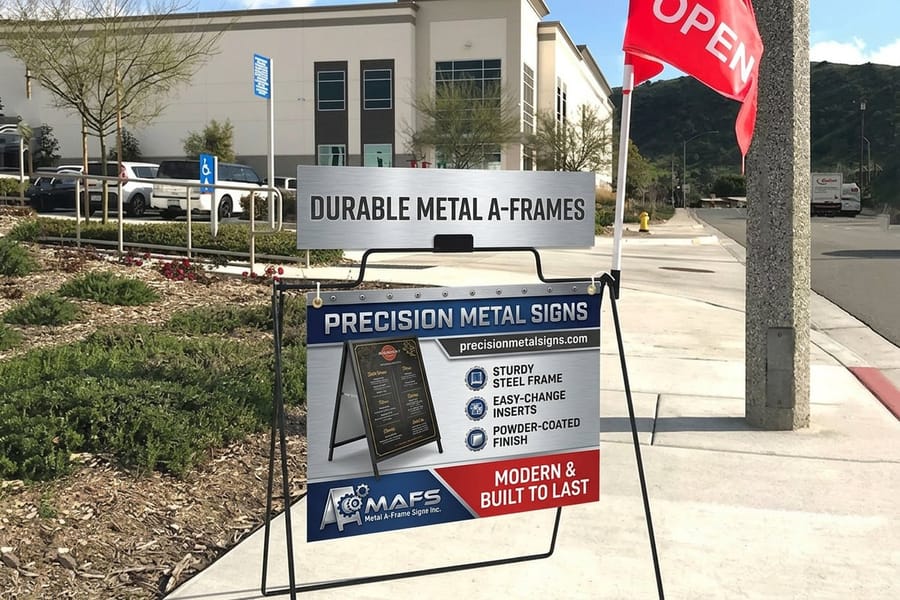
How a sign is fixed changes what you should order, so decide the mount before you decide the panel. The mount sets the gauge, the hole pattern and sometimes the size.
| Mount | What the panel needs | Where it fits | Watch out for |
|---|---|---|---|
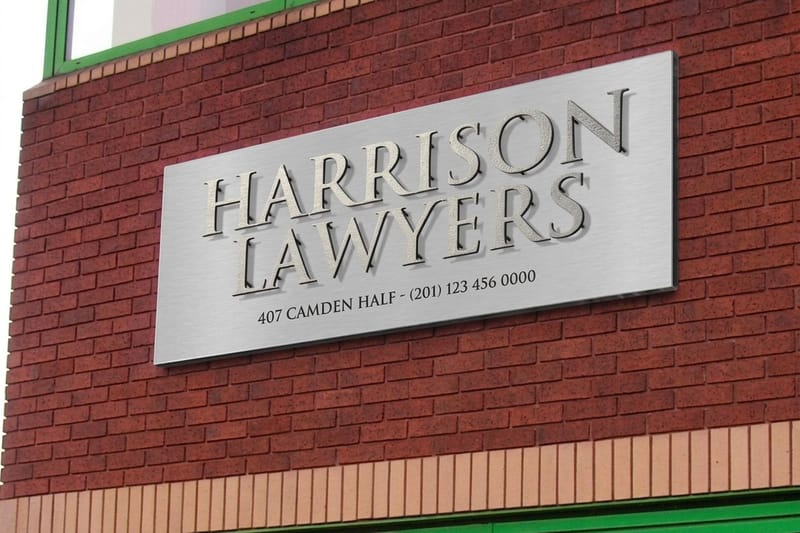
| Corner holes | Four drilled holes set in from the corners. | Flat walls, fences, gates. | Use washers, or screw heads dish the face. |
| Standoff screws | Holes sized to the barrel, heavier gauge. | Lobbies, offices, retail interiors. | A thin panel between four standoffs waves. |
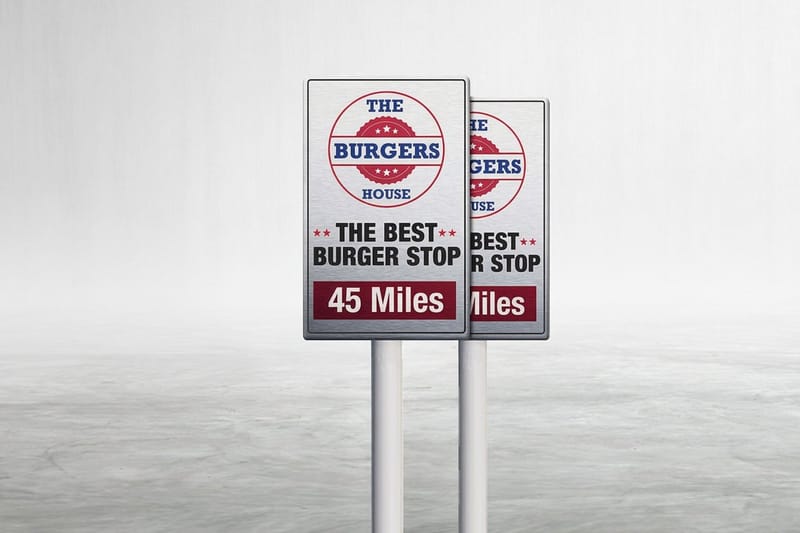
| Post or channel | Two holes on the vertical center, 0.063 inch. | Roadside, property lines, job sites. | Wind loads the panel, not just the post. |
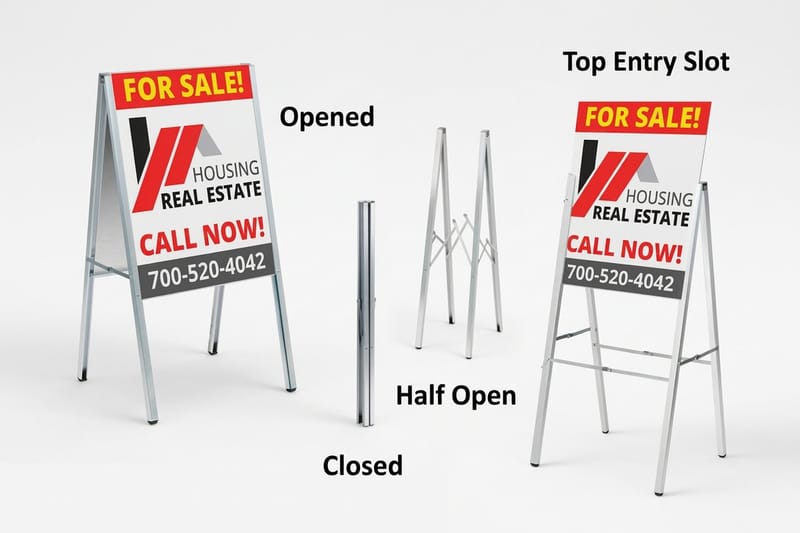
| A frame holder | No holes, panel cut to the frame size. | Sidewalks, entrances, daily setup. | Frame size dictates the panel, exactly. |
| Tape or clips | No holes, a clean flat back. | Indoor smooth walls only. | Painted drywall can come away with it. |
Standoffs deserve a note, because they are the mount people most often order wrong. Holding a panel at four points and floating it off the wall shows every ripple in the metal, so a standoff job wants the heavier gauge even at a modest size. The mechanics of the hardware are explained in our standoff screw guide.
Set the hole pattern in the file, not on the phone afterwards. Drilling happens after printing, so a late change means a hole through the middle of a logo or a reprint. Keep type and logo edges at least an inch clear of each hole center, and start from a correctly sized layout in the blank template library. If the sign is permanent and attached to a building, check the local rules first, because a sign that has to come down is the most expensive one there is: our state by state permit guide is the place to start. For the wider family of rigid and roll printed products, the large format printing hub lists everything we run.
Wally explains metal sign printing
Coated panel in, cured print out, holes last
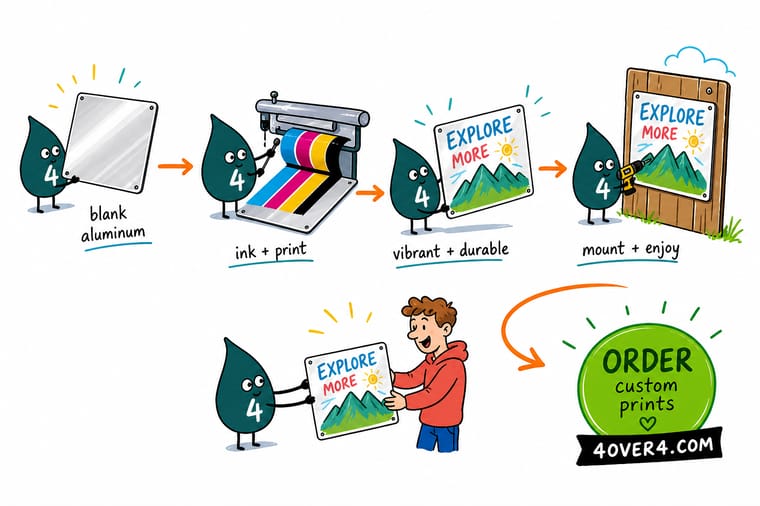
Wally lays the aluminum panel flat and holds it down with vacuum. The head passes over it, drops UV ink on the baked white coating, and a lamp riding beside the head hardens the ink before the head comes back. The panel leaves the table dry. Then he trims it, rounds the corners so nobody catches a hand, and drills the mounting holes through the finished artwork, which is why he asks where those holes go before he prints, not after.
Order custom metal signs →Specs and pricing
Panels, sizes, and starting prices
Aluminum, dry erase aluminum and coroplast panels each carry their own gauges and sizes on their product pages.
Print it
Order a metal sign built for where it hangs
Explore more
Where to go next


By the numbers
UV ink cured on coated aluminum in house
Common Questions
Your metal sign questions, answered
Is a metal sign printed directly on the metal or on vinyl stuck to it?
Both routes are used, and they produce different signs. Direct printing runs the aluminum panel through a flatbed UV press, where the ink is laid on the panel and cured by lamps in the same pass. There is no film to lift at a corner and no seam. The other route prints adhesive vinyl on a roll press, laminates it, and applies it to the panel. That route is how reflective signs and very large panels get made, because the reflective sheeting has to be a film. For a standard business or wayfinding sign, direct printing is the cleaner build.
What gauge aluminum should I order?
0.040 inch handles most wall mounted and fence mounted work up to about 18 by 24 inches without visible waving. Move to 0.063 inch when the sign is 24 by 36 or larger, when it goes on a post where wind gets behind it, or when it is mounted at only two points. Composite panels around 3mm are a third option: two thin aluminum skins bonded to a plastic core, so they stay flatter than either skin alone and dent less, at the cost of not being bendable and of an edge that should not sit in standing water for years.
How long does a printed metal sign last outdoors?
The panel outlasts the print, usually by a wide margin. Cured UV ink on a coated aluminum face holds up for multiple seasons in direct sun, and an overlaminate on top extends that meaningfully by taking the UV hit first. Magenta and orange pigments shift before the darks do, so a sign with a red logo will look tired before a black and white one prints the same way. If a sign faces south with no shade, budget for the laminate.
Can I choose where the mounting holes go?
Yes, but say so before the job prints. Holes are drilled after printing, straight through the finished artwork, so a hole in the wrong place lands in the middle of a logo. The usual default is one hole inside each corner, set in far enough that the panel does not tear at the edge. If you need a post mount, ask for two holes on the vertical center line instead, and keep type at least an inch clear of every hole center.
Do metal signs rust?
Aluminum does not rust, which is the main reason sign shops use it rather than steel. What it does is oxidize where the coating is broken, so a drill hole or a cut edge can go dull gray over time. That is cosmetic and stays local. Steel signs, by contrast, bleed rust down the face from every fastener. If you are comparing quotes and one is much cheaper, check which metal is under the print.
Should I use metal or coroplast for a short campaign?
For anything under a season, coroplast is the honest answer and the cheaper one. Plastic Coroplast Signs start at $25 at 4OVER4.COM against $29 for Metal Signs, and the gap widens as the size grows because aluminum is priced by the square foot of metal. Metal earns its cost when the sign is permanent, when it gets handled or knocked, or when it needs to look like a fixture rather than an announcement.
Get Started
Order a 0.040 inch aluminum panel, printed in 4 business days
Pick your panel, set the size and the hole pattern, and we print on coated aluminum with UV ink that cures on contact.
Legal Disclaimer
Gold Standard guarantees apply to all standard orders placed through 4over4.com. Price match requires verifiable proof of a competitor's published price for an equivalent product with matching specifications and turnaround time. Satisfaction guarantee covers manufacturing defects and print quality issues. Contact support with order number and documentation. On-time delivery rate based on tracked orders 1999 to 2026. Individual results may vary based on shipping carrier performance.
