
Branded Journals and How to Choose Cover Stock, Binding and Foil


Cover material, binding and decoration are the three choices that decide what a branded journal costs and whether anyone keeps using it. Each one behaves differently once the journal is carried in a bag.
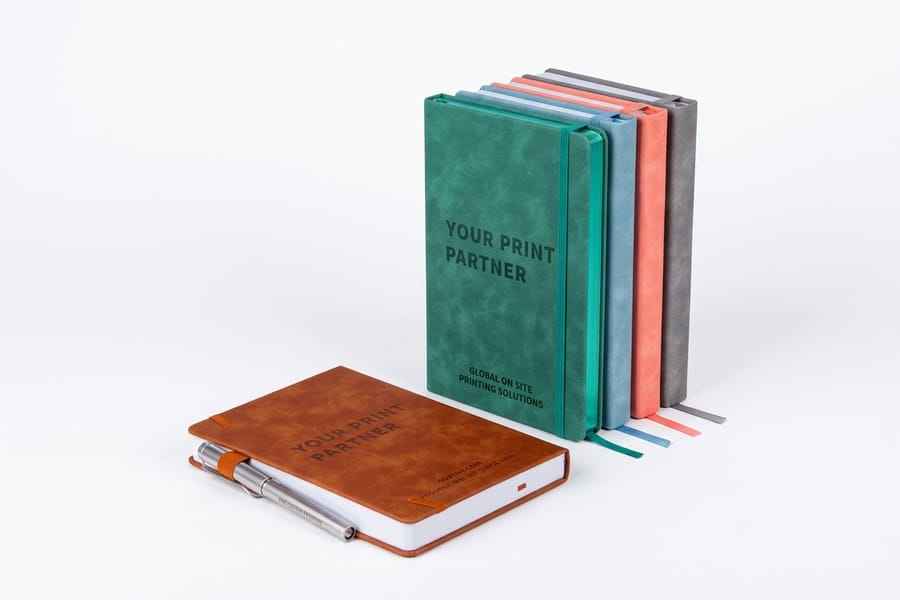
A branded journal is a bound book of blank pages carrying your logo, and three decisions set its price: the cover material, the binding, and how the mark is applied. Leather-look covers take a deboss or a foil stamp but not full-color printing. Wire binding is the only option that stays open flat on a desk, and perfect binding is the only one that gives you a printable spine. Decoration sets the minimum, which is why Leather Journals start at $10.00 while Embossed Notebooks start at $763.37.
Quick answer
Cover, binding, decoration, in that order
Spec a branded journal from the outside in. The cover material decides which decoration methods are even possible, since a leather-look surface takes pressure and foil while a coated board takes four-color ink. The binding decides whether the book stays open, and only wire and coil do. The decoration decides the minimum order, because a die is paid for once and then divided across the run. Page count and inner paper weight matter, but they move the price far less than any of the three above them.
What a Branded Journal Is, and What It Is Not
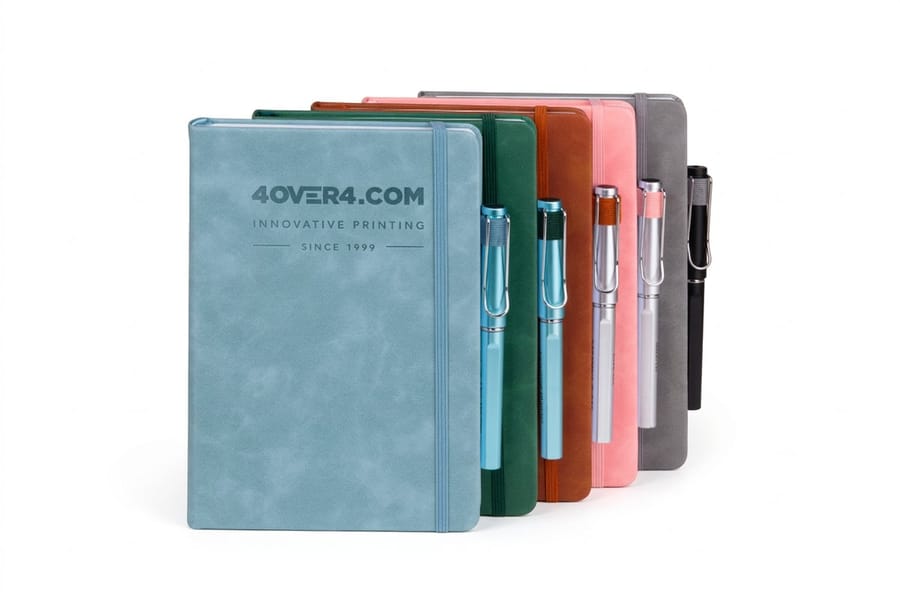
A branded journal is a bound book of blank or ruled pages with your mark on the cover, built to be carried for months. Two neighbors get confused with it constantly, and ordering the wrong one wastes the budget.
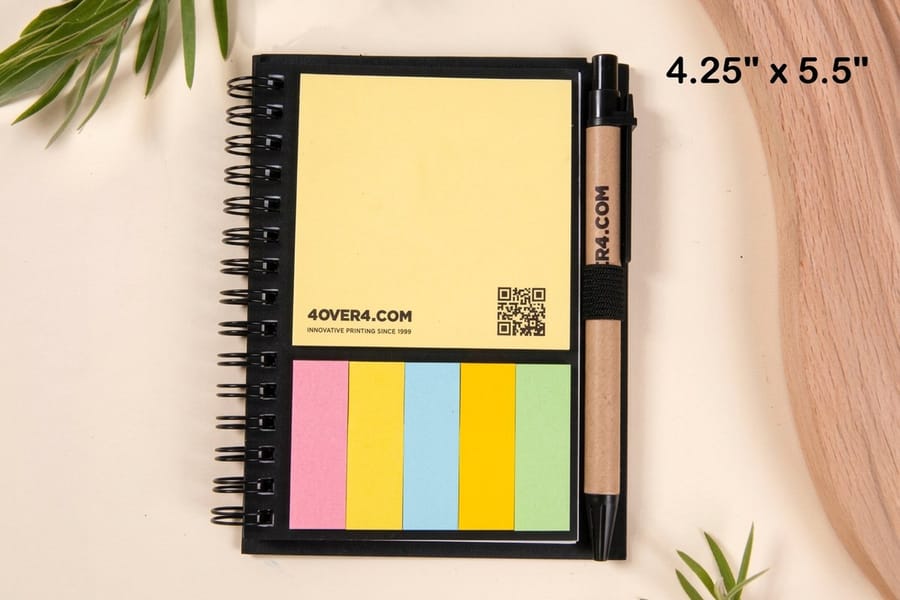
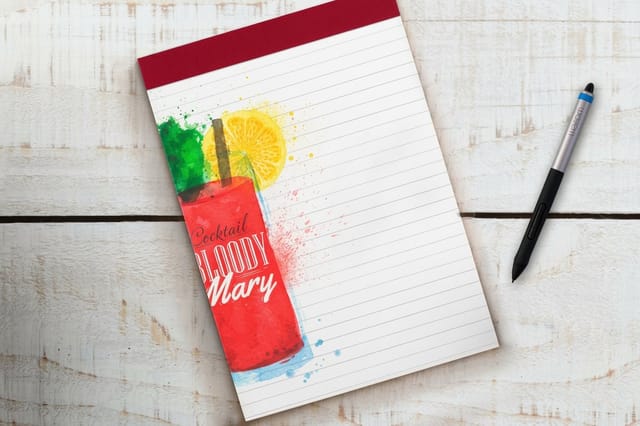
A notepad is glued at the head so sheets tear away and get thrown out. That is a consumable, and people treat it like one, which is exactly right for a desk pad or a lead-capture sheet. Standard Notepads start at $93.37 for a run and do that job well. A booklet is printed content someone reads once. A journal is neither. It is an empty object that only earns its cost if the recipient keeps using it, so the parts they touch, the cover and the binding, matter more than the paper inside.
That single test decides most specs. Ask whether the recipient will still be opening this in month six. If the honest answer is no, order a cheaper printed notebook or a notepad and spend the difference somewhere else. If the answer is yes, spend on the cover and the binding, because those are the two things that fail first. Our guide to organizing a work notebook shows what daily use actually does to a book, and the full range sits in notebook printing.
Cover Stocks, and What Each One Will and Will Not Do
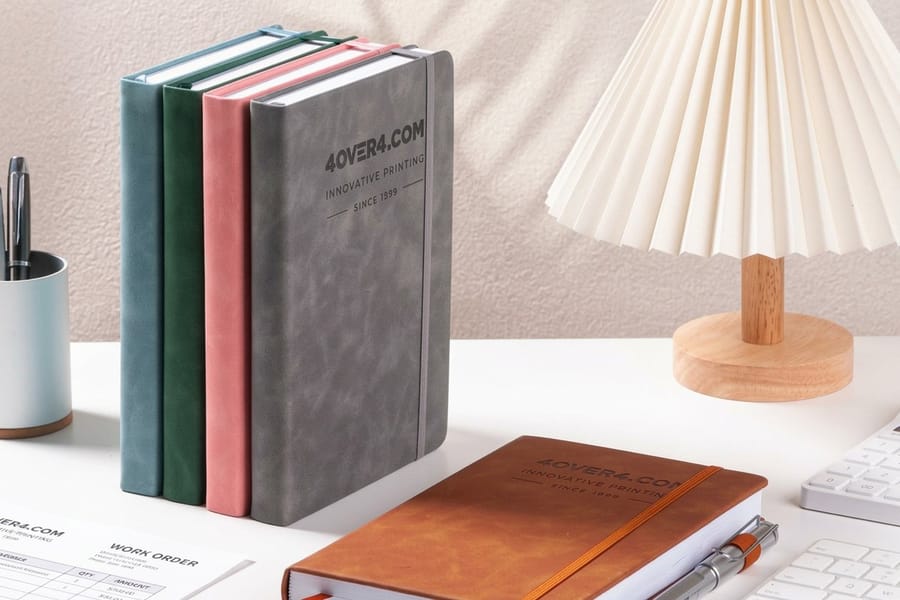
The cover is the whole first impression and it decides which decoration methods are open to you. Pick the decoration and the cover together, never one after the other.
| Cover stock | How it feels | Decoration that works | How it ages |
|---|---|---|---|
| Bonded or synthetic leather | Warm, slightly padded, a little give under the thumb. | Deboss, blind emboss, single-color foil. | Scuffs blend into the grain, so it looks used rather than damaged. |
| Soft touch laminated board | Velvety matte, closer to rubber than paper. | Full CMYK printing, foil, spot gloss over the matte. | Holds fingerprints and shows corner wear before the flat areas go. |
| Printed cardstock | Stiff and light, the standard notebook cover. | Edge to edge four-color printing, laminate for protection. | Corners soften first, usually within weeks in a bag. |
| Kraft or uncoated board | Fibrous and dry, no shine at all. | One or two-color printing, foil, deboss. | The most forgiving, because marks read as character on brown stock. |
The column that catches people out is the third one. A leather-look cover has no white base and no smooth clay coating, so process color has nowhere to sit. Send a photographic logo to a leather cover and you get a muddy approximation or a rejected file. Leather Journals start at $10.00 and are built around pressure and foil, not ink.
On the coated side, laminate is doing more work than the board underneath. A soft-touch film is what makes a cheap board feel expensive, and it is also what makes fingerprints show. If the journals go into a welcome kit that sits in a warehouse before it ships, that matters. The difference between the board weights themselves is covered in cover stock versus cardstock.
Binding Options and the Lay-Flat Trade-Off
Binding is the decision people regret most, because its effect only shows up in use. There are four realistic options for a journal, and they split cleanly into books that stay open and books that do not.
- Wire or coil. The cover swings a full 360 degrees around the spine, so the book lies flat on a desk with no hand on it. The cost is the spine itself: the coil is exposed, so there is nothing to print a title on, and a wire book stacks badly on a shelf.
- Sewn case bound. Signatures are stitched and glued into a hard cover. It opens to roughly 150 degrees and the pages still lift toward the middle. It feels the most substantial in the hand, and a hard cover is the best surface there is for a deboss.
- Perfect bound. Pages are glued to a flat spine you can print on, which is how a brand name gets read on a shelf. It opens to about 90 degrees and closes itself the moment you let go. It also needs enough pages to build a spine, so very thin books are not candidates. Perfect Bound Books start at $375.05.
- Saddle stitch. Folded sheets stapled through the spine. Cheap and thin, and the page count has to be a multiple of four because every sheet carries four pages. Fine for a slim planner, wrong for a year-long journal.
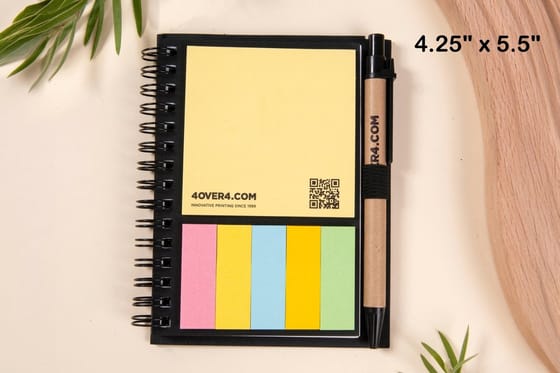
Choose by the verb. If people will write in it, wire binding wins and the missing printed spine is a price worth paying. Deluxe Spiral Notebooks start at $5.00 and are the straightforward version of that choice. If the journal is a shelf object with a name on the spine, perfect binding wins and you accept a book that pushes back. The mechanics of all four, including how thick a spine needs to be, are set out in our guide to binding types, and the page count arithmetic is in booklet page counts explained.
Foil, Emboss and Deboss on a Journal Cover
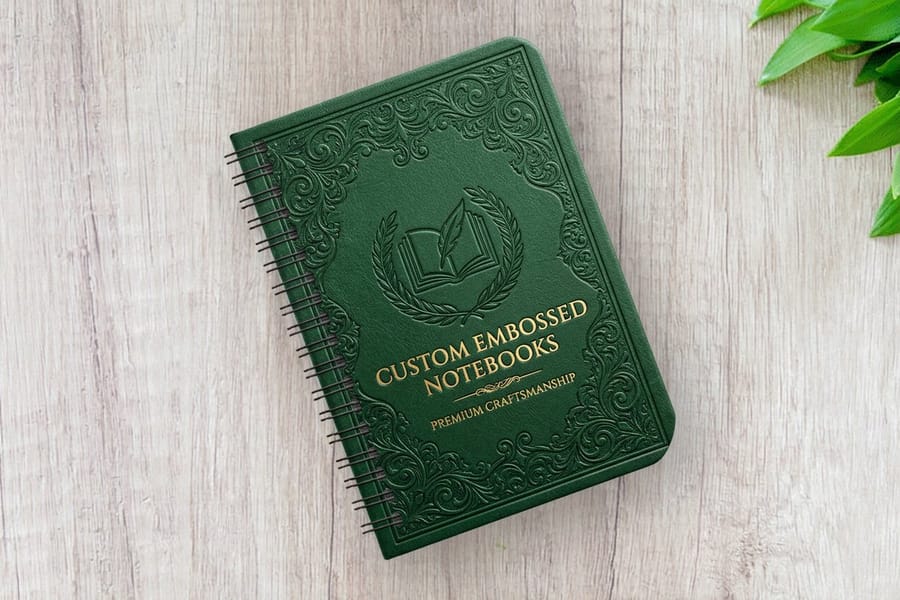
All three of these press a metal die into the cover, and all three carry a one-time tooling cost. What separates them is the direction the cover moves and whether anything is left behind on the surface.
Deboss pushes the mark down into the cover. Nothing is added, so nothing can rub off, and on a leather-look stock the compressed shadow around the edge does the work that ink would normally do. It is the most durable option on the list, and it is the reason a debossed journal still looks right after a year in a bag.
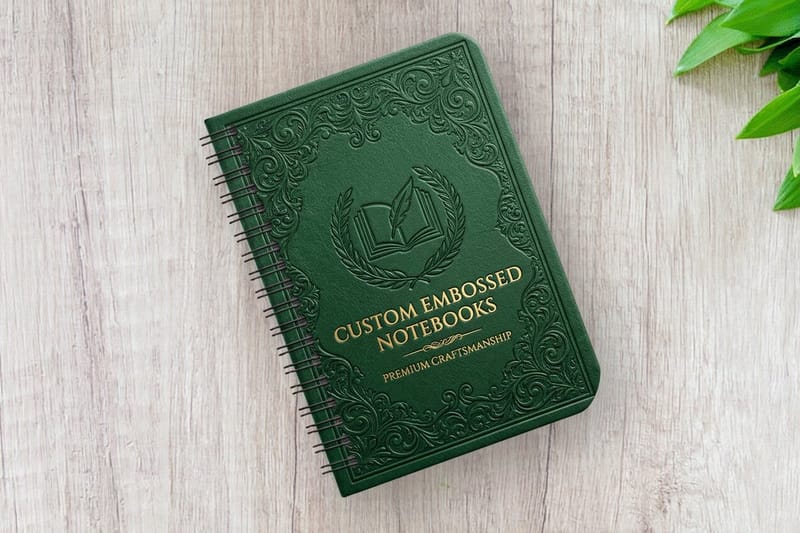
Emboss raises the mark instead. It reads well under a raking light and badly under flat office lighting, and because the raised area stands proud of the cover it takes the abrasion first. Use it on a thicker board that can hold the shape. Embossed Notebooks start at $763.37, which reflects the die and the press setup rather than the book itself. The difference between the two directions is worked through in embossing versus debossing.
Foil stamping lays metallic leaf into the impression under heat, so you get the pressed shape and a reflective surface in one pass. It is the only one of the three that is visible from across a room, which is why it dominates gift journals. How foil stamping works covers the process in full.
The artwork rules are the same for all three, and they are stricter than most people expect. Supply one flat shape with no gradients and no screens, because a die has one depth and cannot render a percentage of anything. Keep strokes at half a point or heavier, since a hairline either disappears into the compression or tears the material. Convert type to outlines, avoid type below about 8 point, and give two pressed elements a little space so the die does not crush the ridge between them. Start from a correctly sized layout in the blank template library rather than scaling a business card file up.
Minimums, Quantity Breaks and What to Budget
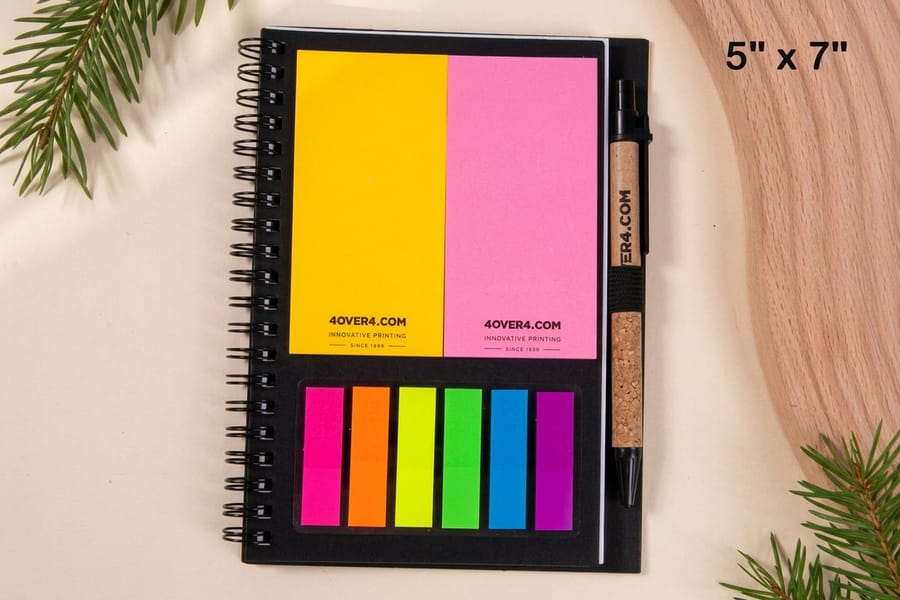
The starting prices across journal products look wildly inconsistent until you see what sets them. It is not the book. It is whether a die exists.
Digitally decorated and printed books start low, because the setup is close to any other print job. Leather Journals start at $10.00 and Deluxe Spiral Notebooks at $5.00. Pressed covers start high, because a die is cut once, paid for once, and then divided by however many books you order. Embossed Notebooks start at $763.37 for that reason. Those two figures are not describing the same order size, so compare the quantity ladder in the configurator rather than the headline number.
That arithmetic has one practical consequence for swag. On a die-based cover, going from a small run to a larger one costs much less per book than the first order did, because the expensive part is already paid for. If you are ordering journals for a conference and you know a second wave is coming, ordering both together is usually cheaper than ordering twice. The break points across notebook runs are laid out in bulk notebook printing quantity breaks.
Budget for the boring parts too. A journal that goes into a welcome kit needs somewhere to sit, and a printed belly band or a card insert is where the full-color messaging goes when the cover cannot carry it. Getting corporate gifting right covers how the pieces fit together, and the rest of the branded range sits in promotional products. If the journal is meant to start a habit rather than sit on a desk, how to start journaling for your business is worth handing to the recipient with it.
Wally explains branded journals
Cover first, then binding, then the logo
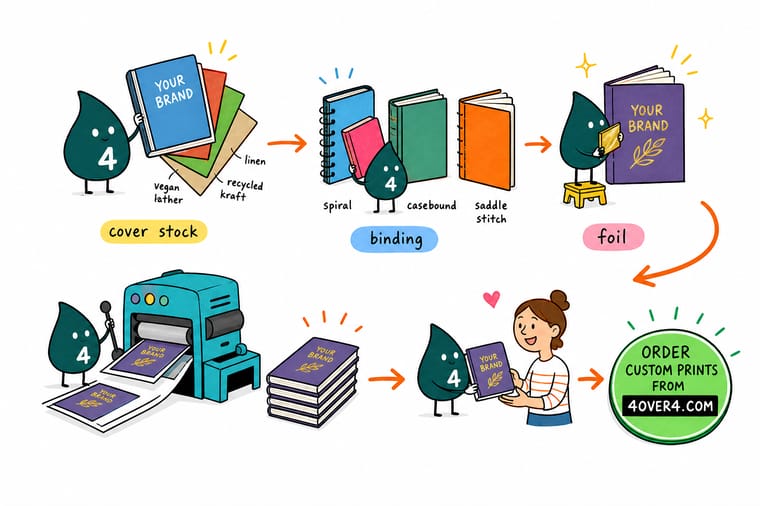
Wally starts with the cover, because that is what decides everything else. Leather takes a pressed mark and a foil stamp, coated board takes full color. Then he picks the binding: wire if people will write in it, a glued spine if the brand name has to be readable on a shelf. The logo comes last, cut into a die, one flat shape, no gradients and no hairlines. Order the questions that way and nothing has to be redone.
Configure leather journals →Specs and pricing
Journal formats, sizes and starting prices
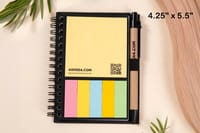
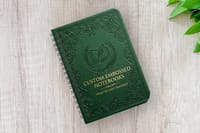
Compare the three journal builds side by side, with live configuration choices and starting prices straight from the 4OVER4.COM configurator.
Print it
Order journals people keep using
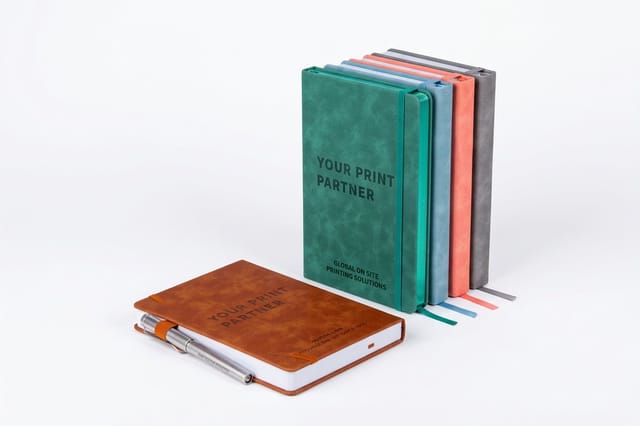
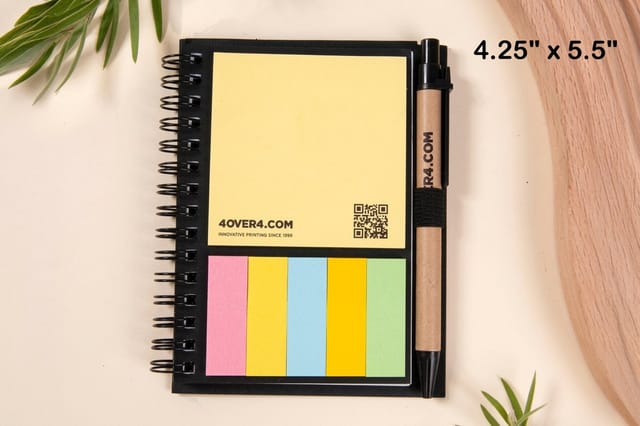
Explore more
Where to go next

By the numbers
Who prints and binds a branded journal
Common Questions
Your branded journal questions, answered
What is a branded journal?
A branded journal is a bound book of blank or ruled pages carrying your logo on the cover, made to be carried and written in over months rather than used up. It sits between a notepad, which is glued at the head and torn away sheet by sheet, and a printed booklet, which contains content people read. The cover material and the binding are what people judge it by, because those are the two parts they touch every time they open it.
What is the best cover material for a branded journal?
It depends on how the logo is applied. Bonded and synthetic leather covers are the right answer when the mark is a single-color deboss or a foil stamp, because the surface compresses under the die and holds a crisp edge, and scuffs blend into the grain. Soft-touch laminated board is the answer when you want a full-color cover with a velvety feel, though it shows fingerprints and the corners soften first. Printed cardstock is the cheapest and prints edge to edge in CMYK, but it is the first to look tired in a bag.
Which journal binding lies flat?
Wire and coil binding, and only those. The cover folds a full 360 degrees around the spine so the book stays open on a desk without a hand on it. A sewn case bound journal opens to roughly 150 degrees and the pages lift back toward the middle. A perfect bound book with a glued spine opens to around 90 degrees and springs shut when you let go, which is fine for a book people read and frustrating for one people write in.
Should the logo be foil stamped, embossed or debossed?
Deboss the mark if you want it to read as expensive and survive handling, because a pressed-in impression cannot rub off. Foil stamp it if the logo needs to be visible across a room, since metal leaf catches light that a blind impression does not. Emboss it, meaning raise it, only when the cover stock is thick enough to hold the shape, and expect the raised area to take the wear first. All three need a metal die, so all three carry a setup cost that is spread across the run.
What is the minimum order for branded journals?
There is no single minimum, because the decoration sets it rather than the product. Undecorated and digitally printed journals start low, with Leather Journals from $10.00 and Deluxe Spiral Notebooks from $5.00 on the configurator. Pressed covers start much higher, with Embossed Notebooks from $763.37, because a die is cut once and paid for once regardless of how many books you order. Check the quantity ladder in the configurator before you compare those two figures, since they describe different order sizes.
Can I print a full-color photo on a leather journal cover?
No. A leather or leather-look cover takes pressure and foil, not four-color process ink, so photographs, gradients and fine multi-color artwork have nowhere to sit. If the design depends on color, order a printed board cover and put the color there, or simplify the mark to one shape and deboss it. A common compromise is a one-color foil logo on the leather cover and the full-color artwork printed on a belly band or the first inside page.
Get Started
Order a leather journal from $10.00
Pick the cover, choose wire or a printed spine, add a foil or debossed mark, and we print journals that still look right a year later.
Legal Disclaimer
Gold Standard guarantees apply to all standard orders placed through 4over4.com. Price match requires verifiable proof of a competitor's published price for an equivalent product with matching specifications and turnaround time. Satisfaction guarantee covers manufacturing defects and print quality issues. Contact support with order number and documentation. On-time delivery rate based on tracked orders 1999 to 2026. Individual results may vary based on shipping carrier performance.
