
Greeting Cards vs Postcards for Customer Thank-Yous


Two ways to say thank you in the mail, priced honestly. Here is the delivered cost once envelopes are counted, the size that changes the postage, and the coating that stops a pen working.
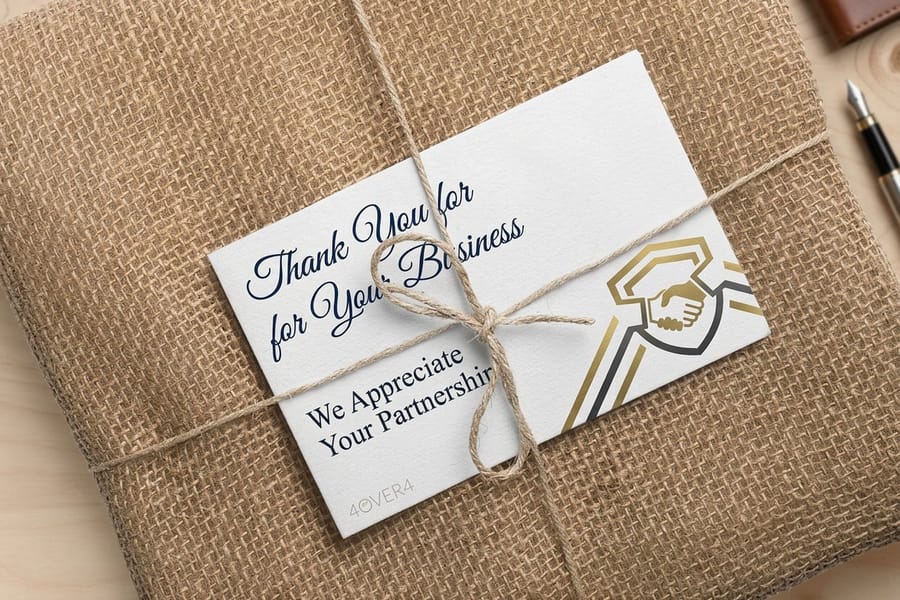
Send a postcard when the thank-you goes to every customer, and a folded greeting card when it goes to the accounts you cannot afford to lose. The postcard is read without being opened and needs no envelope, so Standard Postcards from $16.48 stay near their printed price. A folded card adds an envelope from $142.99, hand stuffing, and letter-rate postage instead of postcard rate, in exchange for a private message, four panels of room, and a card that stands on a desk.
Quick answer
The envelope decides it, not the card
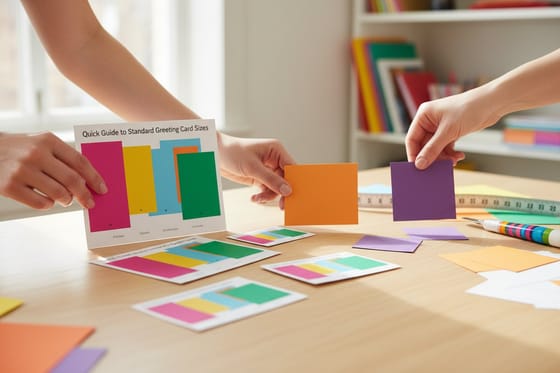
Postcards win on reach, folded cards win on weight. Nothing has to be opened for a postcard to be read, and there is no envelope to buy, stuff or pay letter postage on. A folded card costs more at every one of those steps and buys back privacy, a full inside spread for real handwriting, and a piece that stands up on a desk for weeks. Decide by list size and account value, then check the size against the USPS postcard window at 4.25 by 6 inches before anyone starts designing.
What Each One Costs to Put in a Customer Hand
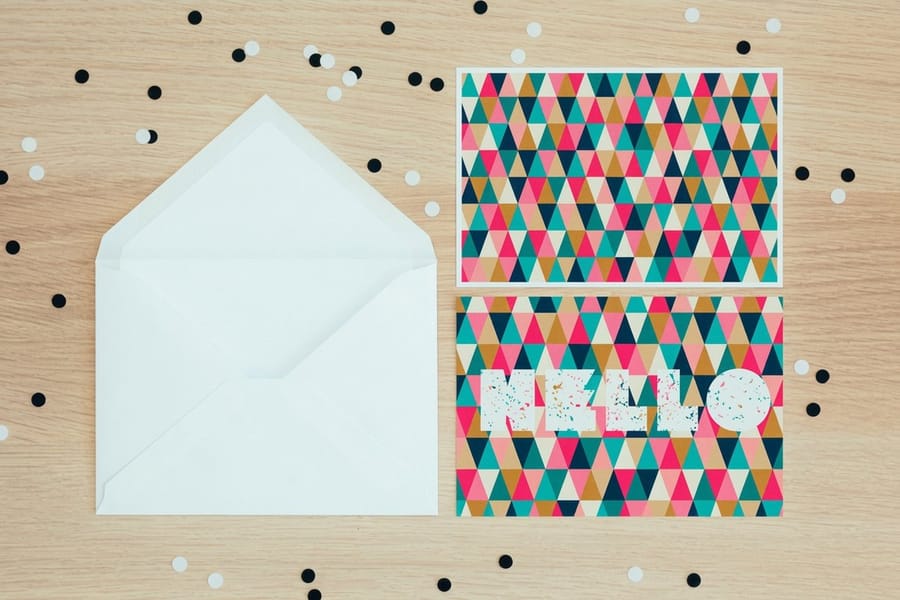
Compare the delivered cost, not the print cost. The printing is close. Everything that happens after the box arrives is where the two formats separate.
| Format | Starts at | Writing space | Envelope | Mail class |
|---|---|---|---|---|
| Standard Postcards | $16.48 | Left half of one side. | None. | Postcard rate at 4 by 6 inches. |
| Business Thank You Cards | $19.77 | One full flat side. | Optional. | Postcard rate if it fits the window, otherwise letter. |
| Folded Thank You Cards | $38.22 | Four panels, whole inside spread free. | Required. | Letter rate. |
| Greeting Cards | $56.02 | Four panels on heavier stock. | Required. | Letter rate. |
Now add the line the table cannot hold. Printed envelopes start at $142.99, and on a folded-card job the envelope is frequently the biggest number on the invoice. Then somebody has to fold nothing, stuff everything, seal it and apply postage at letter rates rather than postcard rates. A postcard skips all four of those steps, which is why a business that sends a thank-you to every order tends to land on postcards within a year of trying anything else.
None of that makes the folded card a bad buy. It makes it a targeted one. Work out your delivered cost per piece both ways before you choose, and our breakdown of direct mail cost per piece shows where the postage and handling lines usually land.
When the Postcard Is the Better Thank-You
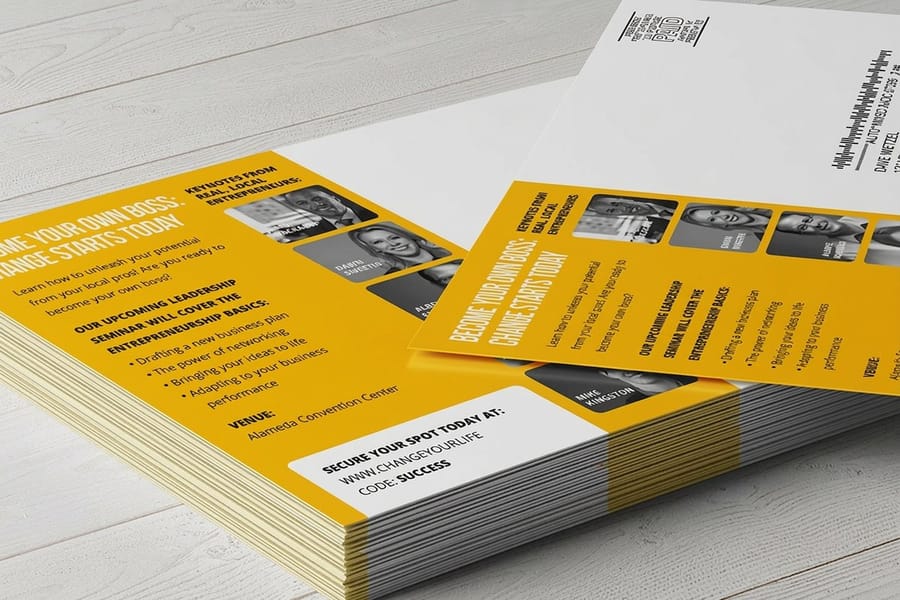
The postcard has one advantage nothing else matches: it cannot be ignored on the way to the bin. There is no flap to open, so the message is read in the two seconds between the mailbox and the kitchen counter. For a thank-you, which nobody was waiting for, that is worth more than presentation.
Send a postcard when the list is long and roughly equal, when the note is short enough to say in three lines, and when the thank-you follows a transaction rather than a relationship. A repeat order, a completed install, a first purchase in an online store: all of those are postcard territory. It is also the right pick when speed matters, because a postcard job goes from box to mailbox in an afternoon with no assembly at all.
Two design rules keep it working. Reserve the right half of the address side for the mailing panel, since the address block, the postage area and the barcode clear zone are not negotiable, and our note on how to address a postcard correctly shows the exact zones. Then keep the front image quiet enough that the piece does not read as an advertisement, because the whole point is that this one is not selling anything. If you would rather hand the addressing and the drop to us, direct mail postcards start at $89.68 with print and mailing in the same order, and how postcard mailing services work covers what you supply and what we do.
When the Folded Card Earns Its Envelope
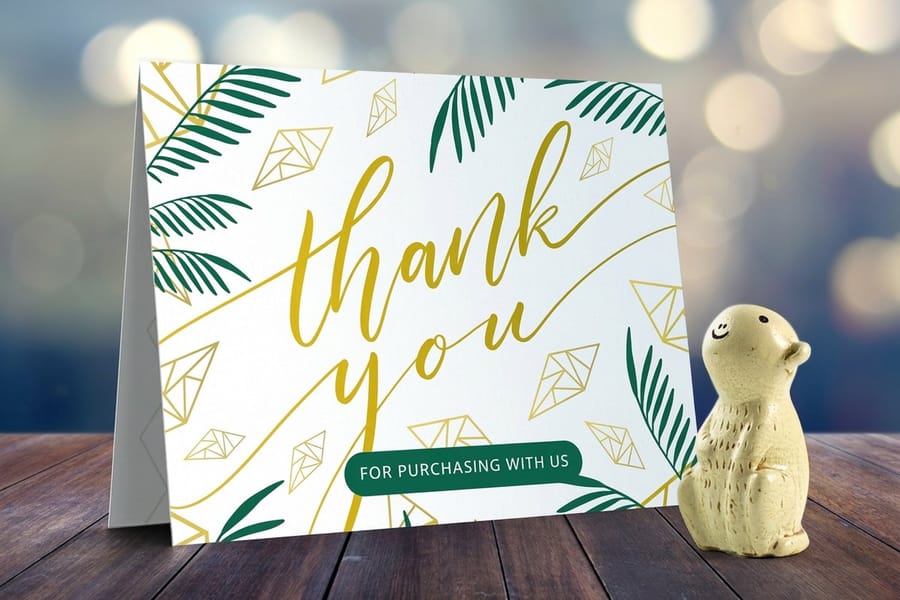
A folded card buys two things a postcard cannot: privacy and room. The message travels sealed, so you can name the deal, the amount, the surgery, the settlement, or anything else a customer would not want a neighbor reading off a card in the mail pile. And the inside spread is a blank page rather than a half panel, which is the difference between a line and a paragraph.
The envelope also does quiet work. A hand-addressed envelope with a real stamp gets opened at a far higher rate than a windowed one, and it survives the sorting a customer does over a recycling bin. The card then stands up on a desk, which a postcard does not, and that is where the extra month of visibility comes from.
Use folded cards for the top slice of the list: the accounts that carry the quarter, the referral sources, the client who just renewed, the wedding or funeral job where a printed marketing tone would be wrong. Heavier stock matters more here than finish, because the card has to hold itself open on a desk. Our greeting card sizes and stocks guide walks through the weights, and if the envelope size is the open question, pairing cards and envelope sizes saves a reprint. Browse the finishes in greeting card printing and the plain-spoken options in thank you card printing.
Four Mistakes That Waste Either Format
Most thank-you programs fail on execution, not on format choice. These four account for nearly all of it.
- Gloss on the writing side. UV and gloss aqueous coatings seal the sheet, so pen ink sits on top and smears when the cards stack. If anyone is signing by hand, order that side uncoated or matte. This is the single most common reason a batch of thank-you cards gets rebooted.
- Designing past 4.25 by 6 inches without meaning to. A postcard that grows to 5 by 7 in layout quietly moves the whole mailing from postcard rate to letter rate. Decide the size against the rate first, then design into it.
- Putting an offer on it. A discount code turns the thank-you into an ad and the customer reclassifies the whole thing. Say thank you, sign it, stop. Send the offer three weeks later on a separate piece.
- Sending it late. A thank-you that lands a month after the order reads as a mailing list, not a response. Set the trigger at the delivery or the completed job, print in batches, and keep the gap under two weeks. The wording that survives that pace is covered in how to design a thank-you card.
One more, quieter than the others: printing a full signature block with logo, tagline, phone and social handles under a two-line thank-you. It reverses the tone of the piece. A name and the business name is enough, and the customer already knows who you are.
Wally weighs the two thank-yous
One gets read, the other gets kept
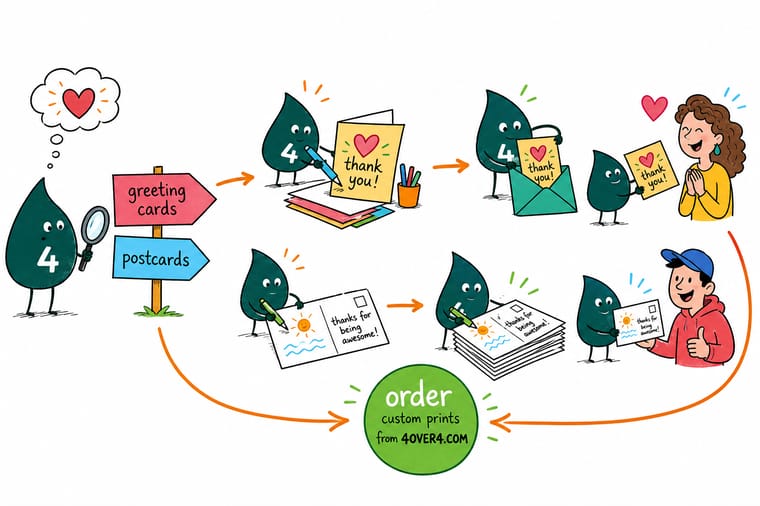
Wally holds a postcard in one hand. Nobody opens it, so the note is read on the walk back from the mailbox, and there is no envelope to buy or stuff. In the other hand is a folded card in its envelope. It costs more at every step and the customer stands it on a desk, where it sits for a month. He sends postcards to the whole list and folded cards to the twenty accounts he would hate to lose. And he keeps the writing side uncoated, because a pen slides straight off gloss.
Print business thank you cards →Specs and pricing
Sizes, stocks and starting prices side by side
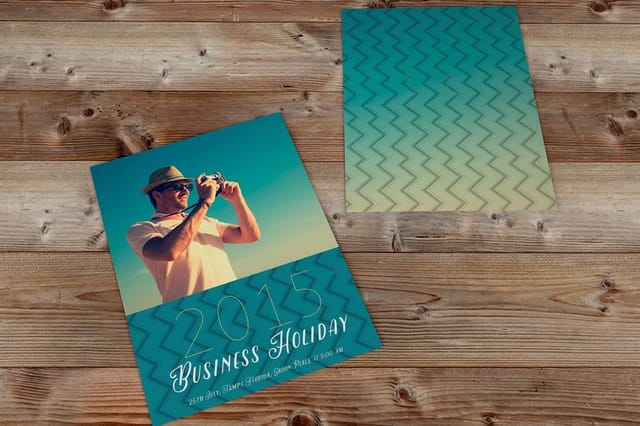
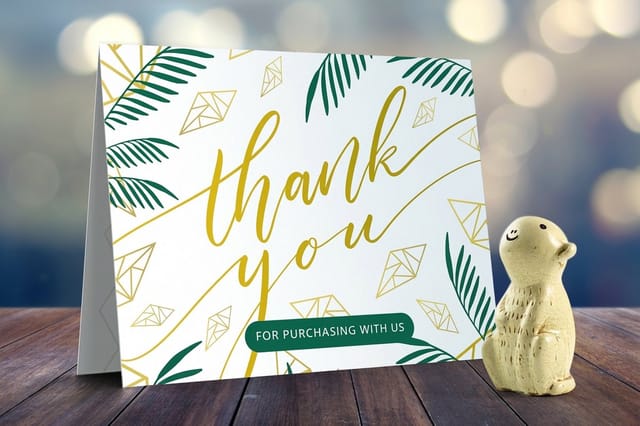
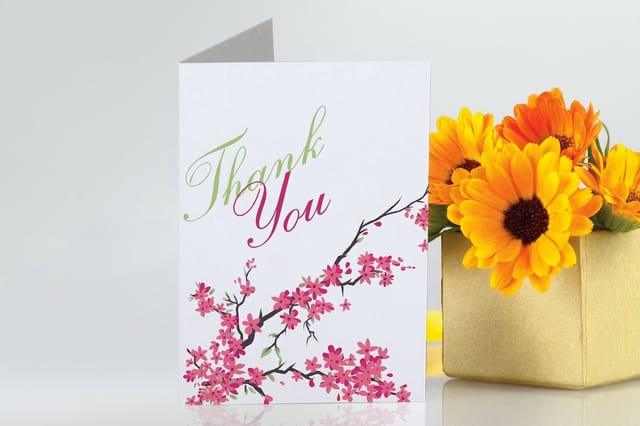
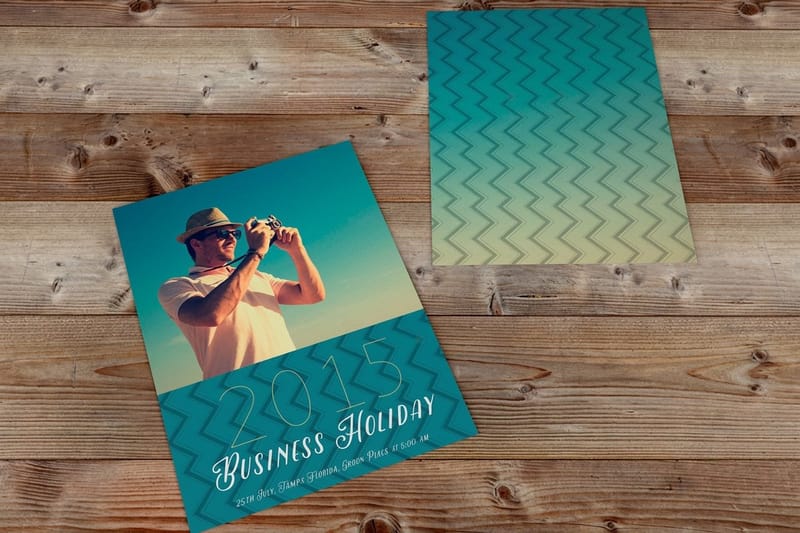
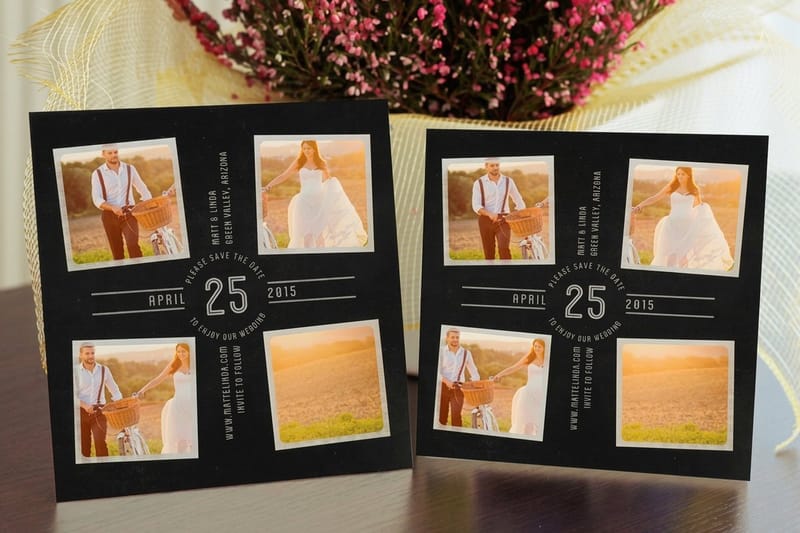
The postcard, the flat business card and the folded greeting card, with live configuration choices and starting prices straight from the 4OVER4.COM configurator.

Print it
Order the thank-you that fits your list
Explore more
Where to go next


By the numbers
The printer that runs both cards and postcards
Common Questions
Your thank-you card questions, answered
Should a business thank-you go on a greeting card or a postcard?
Match the piece to the value of the relationship. A postcard suits a thank-you sent to every customer who ordered this month: it costs less to print, needs no envelope, no stuffing and no envelope postage, and it is read without being opened. A folded greeting card suits the accounts you would fight to keep, because the envelope creates a small ritual and the inside spread gives room for a real handwritten paragraph. Many businesses run both, postcards to the whole list and folded cards to the top slice of it.
How much more does a folded thank-you card cost than a postcard?
The printing gap is modest and the envelope gap is not. At 4OVER4.COM, Standard Postcards start at $16.48, Flat Thank You Cards at $19.77 and Folded Thank You Cards at $38.22, so a folded card roughly doubles the print cost. Printed Envelopes start at $142.99, so the envelope is often the largest single line in the job. Add the time somebody spends folding, stuffing and sealing, plus letter-rate postage instead of postcard-rate postage, and the true delivered cost of a folded card runs well above twice the postcard.
What size postcard still mails at the postcard rate?
USPS applies the postcard rate to a rectangular piece between 3.5 by 5 inches and 4.25 by 6 inches, with a thickness between 0.007 and 0.016 inch. The common 4 by 6 postcard sits inside that window. A 5 by 7 or 6 by 9 card is over the limit and pays the letter rate, and so does any card that travels in an envelope. Rate tables change, so confirm the current figures before a large drop rather than budgeting from an old quote.
Can I handwrite on a printed postcard?
Only if the writing side is uncoated or matte. A UV coating or a gloss aqueous coating seals the surface so ballpoint and gel ink sit on top instead of soaking in, which means it smudges when the next card lands on it. Ask for the back to be uncoated, or choose an uncoated stock for the whole card. If the design needs gloss on the image side, print gloss front and uncoated back, which is a standard option rather than a custom request.
Does a handwritten note actually beat a printed message?
It changes what the piece is. A printed message is a marketing touch and the customer reads it as one. A few lines of real handwriting, naming the order or the job, reads as a person taking two minutes, and that is the whole point of a thank-you. The practical compromise on a large list is a printed body with a handwritten signature and one specific line added by hand, which keeps the volume workable without making the note feel machine-made.
Is there anything worse than sending nothing?
Yes, and it is a thank-you that asks for something. The moment a discount code, a review request or a next offer appears, the piece stops being a thank-you and becomes an ad, and the customer files it accordingly. Keep the sell off the thank-you entirely and put the offer in the next mailing. If the goal is to drive a second order, a straightforward promotional postcard does that job better and does not spend the goodwill.
Get Started
Order 25 business thank you cards from $19.77
Pick the postcard for the whole list or the folded card for the accounts that matter most, choose an uncoated writing side, and we print it.
Legal Disclaimer
Gold Standard guarantees apply to all standard orders placed through 4over4.com. Price match requires verifiable proof of a competitor's published price for an equivalent product with matching specifications and turnaround time. Satisfaction guarantee covers manufacturing defects and print quality issues. Contact support with order number and documentation. On-time delivery rate based on tracked orders 1999 to 2026. Individual results may vary based on shipping carrier performance.
