
Direct Mail Postcards vs Flyers vs Letters, and Which One Actually Gets Read


Three formats, three USPS price tiers, and one fold that moves a flyer between two of them. The choice plays out differently on a real mailing.
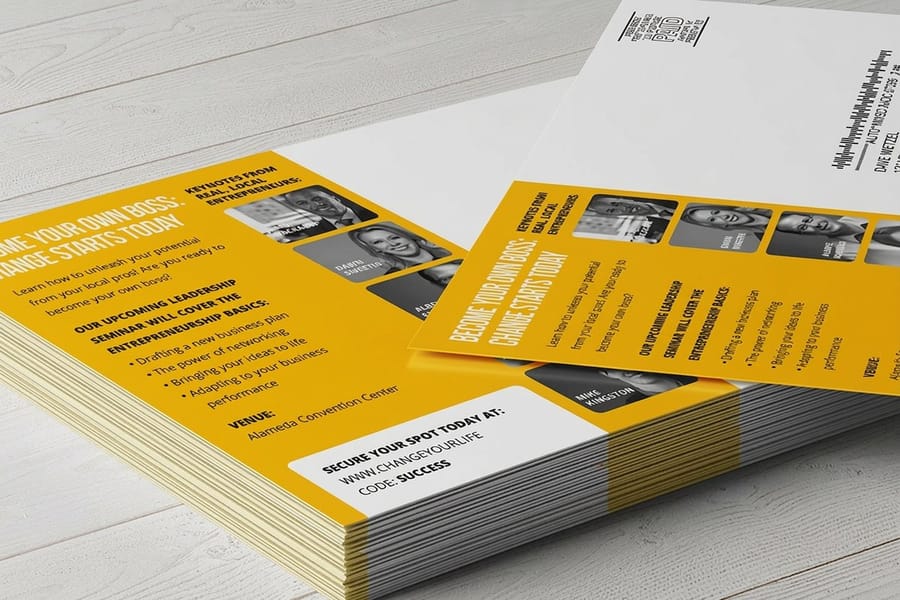
Mail a postcard when the offer is short and you want it read without being opened, a folded flyer when you need more room than a card allows, and a letter when the message is personal, priced, or long enough to need paragraphs. Cost follows size: a card up to 4.25 by 6 inches rides the cheapest USPS tier, letters and folded flyers ride the middle tier, and an unfolded 8.5 by 11 sheet jumps to the flat rate. Direct Mail Postcards start at $89.68 at 4OVER4.COM, Direct Mail Flyers and Direct Mail Letters at $238.73.
Quick answer
Size sets the postage tier, and the message sets the size
Postcards are the cheapest to print and the cheapest to mail, and they get read because there is nothing to open. Flyers give you room a card cannot, and they stay affordable only when folded under the 6.125 inch letter ceiling and tabbed shut. Letters cost the most per piece and earn it on anything private, personalized, or too long for one side of a card. The diagram below shows the three USPS size tiers drawn to the same scale, and where a single fold moves a flyer from one to the next.
USPS Picks the Tier Before You Pick the Format
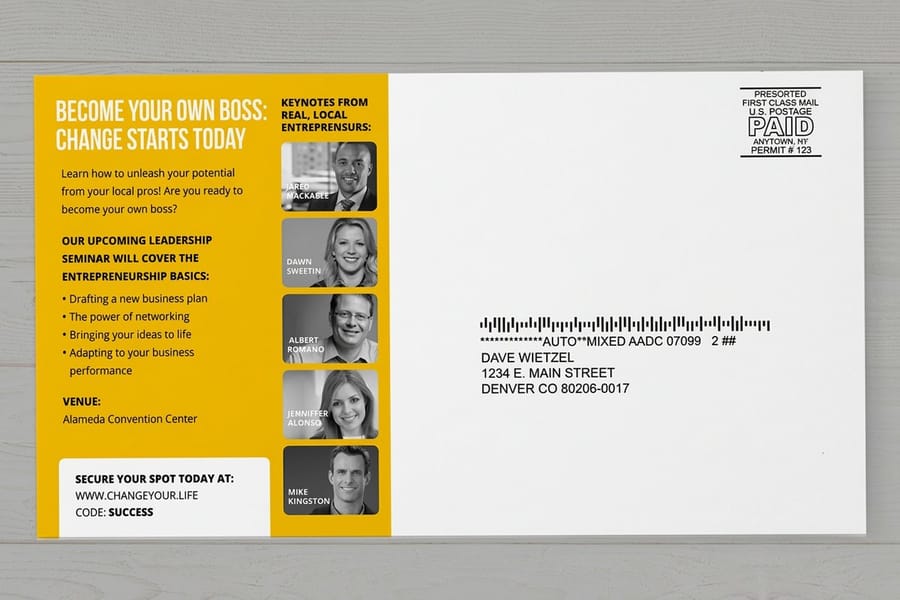
Format arguments usually skip the part that decides the budget. The Postal Service sorts every mailpiece into a price tier by size and thickness, and the three formats sit in three different tiers before anyone talks about design.
| Rate tier | Size limits | Formats that fit | What it means for the budget |
|---|---|---|---|
| Card | 3.5 by 5 in up to 4.25 by 6 in, 0.007 to 0.016 in thick, rectangular. | Standard direct mail postcards. | The cheapest postage the Postal Service sells, and the cheapest piece to print. |
| Letter | Up to 11.5 by 6.125 in and 0.25 in thick. | Letters in envelopes, oversized cards, flyers folded in half, folded self-mailers. | Middle tier. A 6 by 9 card and a #10 envelope cost the same to mail. |
| Flat | Larger than a letter, up to 12 by 15 in and 0.75 in thick. | Unfolded 8.5 by 11 flyers, large brochures, catalogs. | The most expensive tier per piece, and the gap widens with quantity. |
The practical consequence is that a single fold can change the postage on an entire campaign. An 8.5 by 11 flyer is a flat. The same flyer folded once to 8.5 by 5.5 is a letter. Nothing about the artwork changed, only the height of the piece as it enters the machine.
Thickness matters as much as width on cards. A card printed on stock thinner than 0.007 inch, or thicker than 0.016 inch, falls out of the card price even at a perfect 4 by 6. That is why we quote direct mail cards on 14pt and 16pt cover rather than the heavier stocks people ask for on business cards. If you want the full arithmetic, the guide to direct mail cost per piece adds postage, print, list and addressing into one number.
Postcards Get Read Without Asking Permission
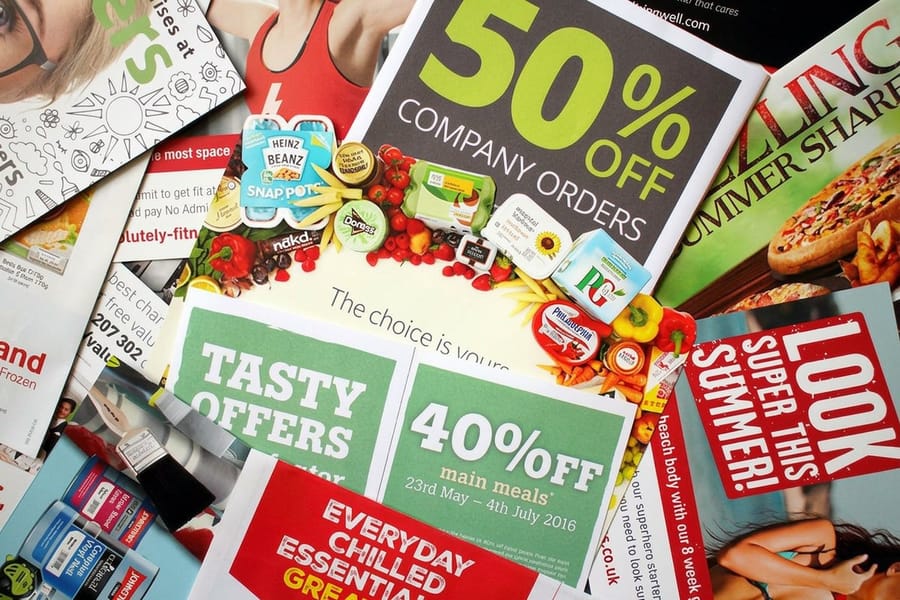
A postcard has no envelope, so it has no gatekeeper. The message is visible from the mailbox to the recycling bin, which is the entire argument for the format and the reason a card beats a better-written letter that never gets opened.
What you give up is room. A 4 by 6 card holds a headline, a short offer, a deadline, and one way to respond. Try to fit a service list, a coupon, a map and a paragraph of company history on it and the piece stops working. The discipline is the point. If your offer cannot survive being reduced to one sentence and one call to action, the postcard is telling you something useful about the offer.
The second trade is privacy. A card is readable by the carrier, the neighbor, and whoever brings in the mail, so pricing conversations, account details, medical anything, and renewal notices do not belong on one. The third is address-side discipline: the bottom right of the address panel is reserved for the barcode, and artwork that creeps into that zone gets the piece kicked out of automation. Our guide on how to mail a postcard shows exactly where those zones sit.
Direct Mail Postcards start at $89.68 and cover printing, addressing and the mail drop in one order. If you want the size options laid out first, the complete postcard size guide shows which dimensions stay inside the card rate and which quietly move to letter pricing.
Flyers Buy Space, and the Fold Decides the Price
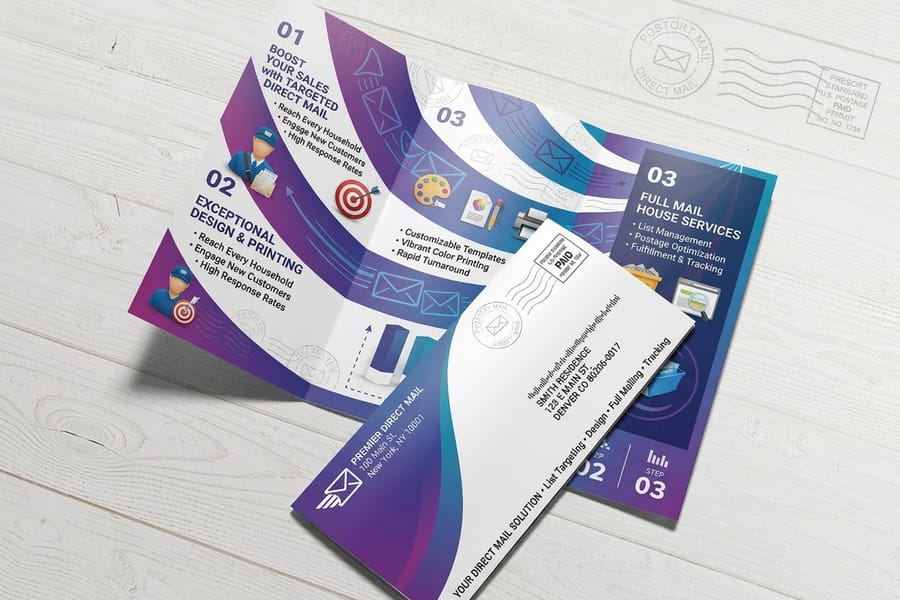
A flyer is the middle format, and it earns its keep when the content is genuinely longer than a card and genuinely does not need an envelope. Menus, class timetables, service lists, seasonal price sheets, open house details with a floor plan. Anything a household might stick on the fridge for a week.
Left flat at 8.5 by 11, it mails as a flat and costs the most of the three to send. Folded in half it drops into letter pricing, but a folded sheet cannot travel loose through the sorting machines. It has to be tabbed shut with wafer seals, and the folded edge has to lead so the equipment grips a closed side rather than an open one. The number of tabs depends on the paper weight and the fold, so get the tabbing spec confirmed before the run instead of discovering it at the mail drop.
Paper weight is the other decision people get backwards. A flyer on 100lb gloss text feels substantial and folds cleanly. On card stock it fights the fold, cracks along the score, and costs more to mail because it is thicker. Save the heavy stock for the card format, where rigidity is what makes the piece survive the trip.
Direct Mail Flyers start at $238.73 with printing and mailing handled together. When the content needs panels rather than sides, step up to Direct Mail Brochures, and remember that a brochure large enough to hold six panels is usually back in flat pricing.
Letters Are for Messages That Need a Closed Envelope
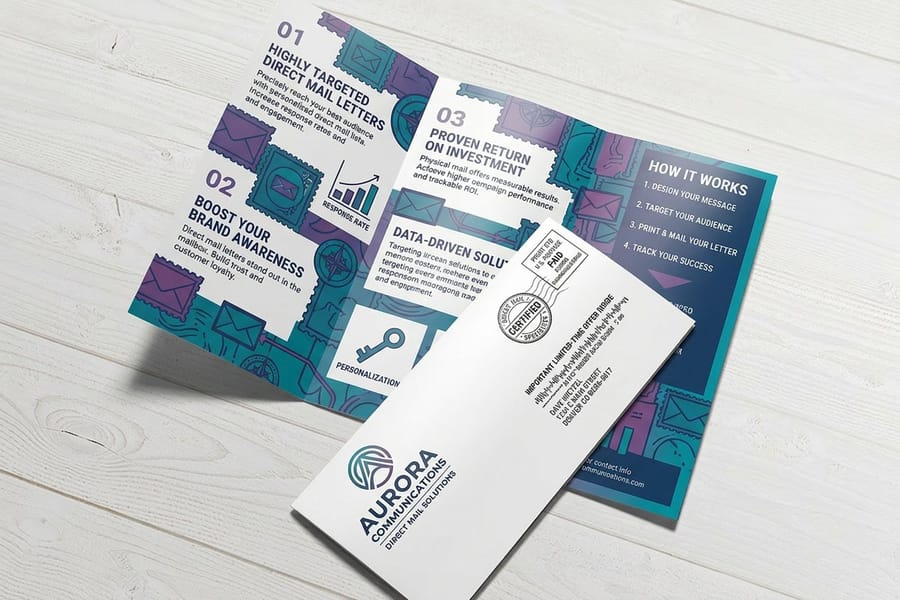
An envelope is a barrier, and sometimes a barrier is exactly what the message needs. Anything with a price, an account number, a renewal date, a legal notice, or a personal appeal reads as serious in an envelope and reads as junk on a card. That perception gap is the whole reason the format survives at a higher cost per piece.
Letters also hold real copy. A card gives you forty words. A letter gives you a page, room for a story, an offer, terms, and a response device the recipient can fill in and mail back. Personalization goes further too, because the salutation, the account history and the offer can all vary by record without the neighbor reading any of it.
The cost is more than postage. A letter campaign adds an envelope, insertion, and a second printed component, and every one of those is a place the schedule can slip. Window envelopes remove one alignment problem by letting the address on the letter itself show through, which is why they dominate billing and statement mail; the window envelope setup guide covers the clear zone the address has to land in. If you are printing the letterhead separately, business letter format with letterhead gets the margins right the first time.
Direct Mail Letters start at $238.73, and printed envelopes start at $142.99 if you are running the envelope as its own job. For the fuller campaign picture, how direct mail marketing works covers list, drop date and tracking.
The Verdict, by the Job You Are Actually Doing
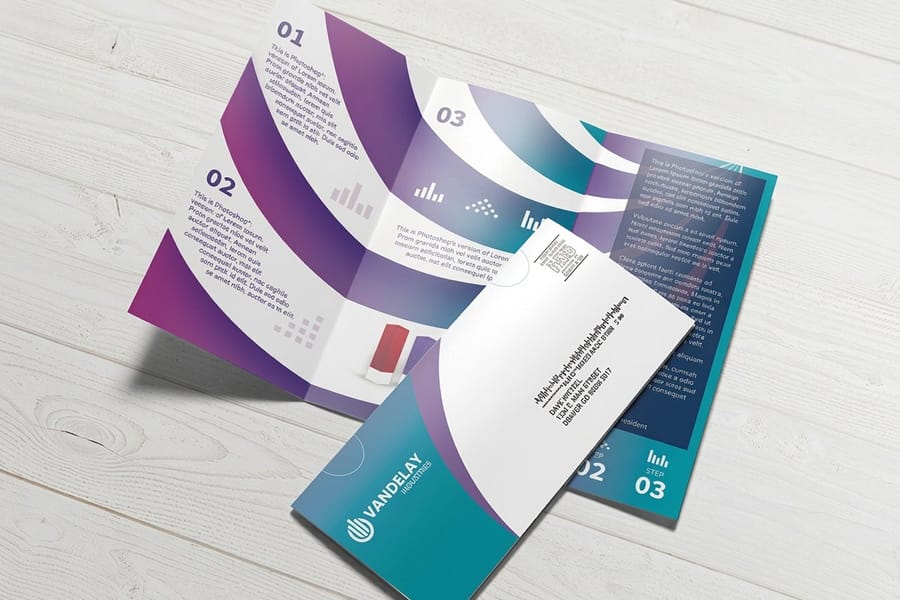
Pick the format from the message, then check it against the rate tier. In practice most campaigns land in one of these five patterns.
| Campaign | Mail this | Why it wins |
|---|---|---|
| Grand opening or local promo | Postcard, 4 by 6 or 6 by 9 | One offer, one date, seen without being opened. Cheapest tier if you stay at 4 by 6. |
| Menu, schedule or service list | Folded flyer, 8.5 by 11 to 8.5 by 5.5 | Enough room to be kept, still priced as a letter once folded and tabbed. |
| Renewal, invoice or account offer | Letter in a window envelope | Private, personalized, and taken seriously because it is closed. |
| Neighborhood saturation, no list | Postcard on an EDDM route | No addresses to buy, and cards suit a message with no name on it. |
| High-value B2B offer, small list | Letter, or a brochure in an envelope | Small quantity makes per-piece cost the least important variable. |
Two habits are worth more than the format choice itself. Mail the same piece twice, three to four weeks apart, because the second drop reaches the people who were away, busy, or not in the market on the first. And test one variable at a time, most usefully the offer, not the paper.
If you are still deciding between two of the three, postcards vs letters for a campaign takes that pair apart in more detail. When the list is the missing piece, start with building or renting a mailing list, and if you want to skip the list entirely, read what EDDM is and whether it fits. All three formats ship from the direct mail services collection.
Wally sorts the mailbox
One fold, three price tiers
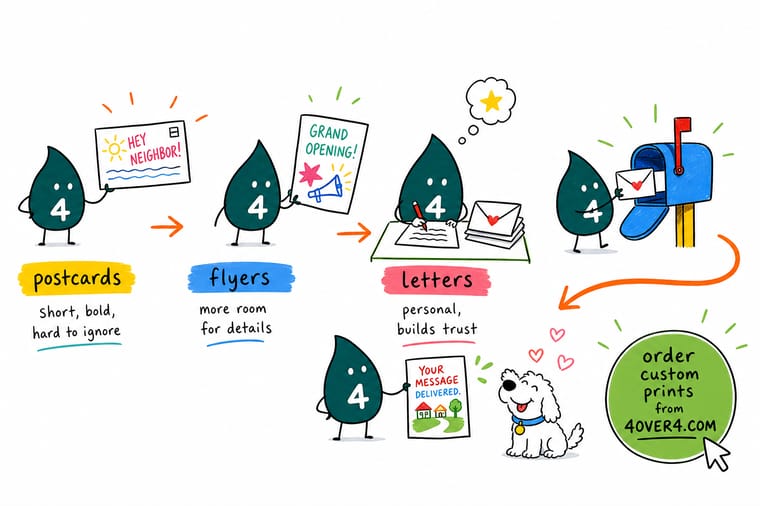
Wally holds all three. The postcard is read on the walk back from the mailbox because nobody has to open it, and it costs the least to print and to send. The flyer carries the menu or the schedule, but only mails cheaply once he folds it in half and tabs it shut. The letter goes in an envelope because it carries a price, a name, and a paragraph nobody wants the neighbor reading. Same campaign, three different bills, and the size of the piece decides which one you get.
Order direct mail postcards →Specs and pricing
All three formats, sizes and starting prices
Postcards, flyers and letters side by side, with live configuration choices and starting prices straight from the 4OVER4.COM configurator.
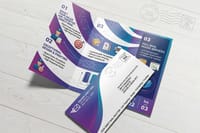
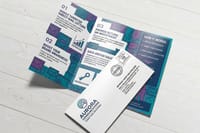
Print it
Order the format your campaign needs
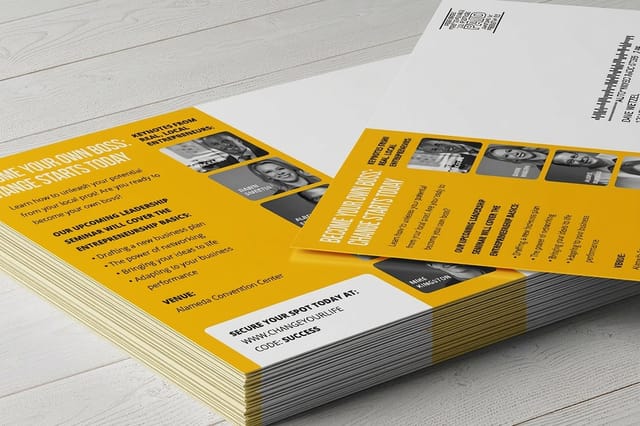
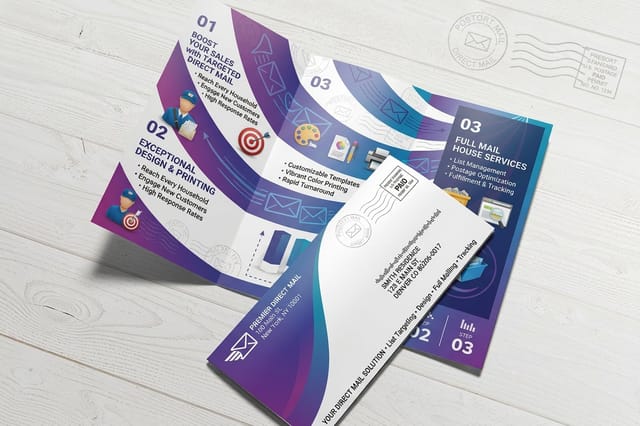
Explore more
Where to go next
By the numbers
Direct mail printed and dropped by 4OVER4
Common Questions
Your direct mail format questions, answered
Which mails cheaper, a postcard or a flyer?
The postcard, on both halves of the bill. A card that stays inside the USPS card-rate window of 4.25 by 6 inches gets the lowest postage tier the Postal Service offers, and it uses less paper than a flyer. Direct Mail Postcards start at $89.68 at 4OVER4.COM against $238.73 for Direct Mail Flyers. The flyer only makes sense when the extra panel space genuinely changes the response, for example a menu, a class schedule, or a list of services someone will keep on the counter.
What size can a postcard be and still get the postcard rate?
It has to be rectangular, at least 3.5 inches high by 5 inches long and 0.007 inch thick, and no more than 4.25 inches high by 6 inches long and 0.016 inch thick. Go past any one of those and the piece is priced as a letter instead. That surprises people who order 5 by 7 or 6 by 9 cards and expect card postage. Bigger cards still mail, and they stand out in a stack, but budget them at letter rate. Our guide to postcard sizes and dimensions walks through every common size and where it lands.
Do I have to fold a flyer to mail it?
No, but leaving it flat is expensive. An unfolded 8.5 by 11 sheet is taller than the 6.125 inch letter ceiling, so USPS prices it as a flat, the highest of the three tiers. Fold it once to 8.5 by 5.5 and it mails at the letter rate. A folded self-mailer has to be tabbed shut with wafer seals and the folded edge has to sit on the bottom so the machines feed it correctly. The tab count depends on the paper weight and the fold, so confirm the spec before the run rather than after.
Are letters worth the extra cost over postcards?
They are when the offer needs privacy, personalization, or more than about forty words. Anything with a dollar figure, an account number, a renewal date, or a legal notice belongs in an envelope. So does a story you need three paragraphs to tell. If the message is one offer and one deadline, an envelope adds cost and a step where the recipient can decide not to look. Read the comparison of postcards and letters for a campaign for the two-format version of this decision.
What response rate should I expect from each format?
Anyone quoting one number for a format is guessing. Response follows the list and the offer far more than it follows the paper, and the same postcard sent to a rented cold list and to your own past customers will not perform within an order of magnitude of each other. Build the list first, then choose the format that suits the message. The guide to building or renting a mailing list covers where the addresses come from and how to keep them clean.
Can I mail all three formats without a mailing list?
Only by route, and mostly with cards. Every Door Direct Mail saturates a carrier route without addresses, which fits postcards and folded self-mailers because there is no name to personalize. A letter loses most of its advantage the moment it says Current Resident. If you want a saturation drop, print a card, and read what EDDM is and whether it fits your business before you buy the routes.
Get Started
500 direct mail brochures cost $238.73 in 6 business days
Pick the format, upload the artwork, and we print, address and drop the whole run. Postcards, folded flyers and letters all leave from the same job ticket.
Legal Disclaimer
Gold Standard guarantees apply to all standard orders placed through 4over4.com. Price match requires verifiable proof of a competitor's published price for an equivalent product with matching specifications and turnaround time. Satisfaction guarantee covers manufacturing defects and print quality issues. Contact support with order number and documentation. On-time delivery rate based on tracked orders 1999 to 2026. Individual results may vary based on shipping carrier performance.
