
Raised Foil vs Raised Spot UV vs Holographic Greeting Cards Compared


Three finishes, one decision. Each does something different to the sheet, each fails somewhere, and one suits a client greeting, a design-led card, or a launch that has to look good on camera.
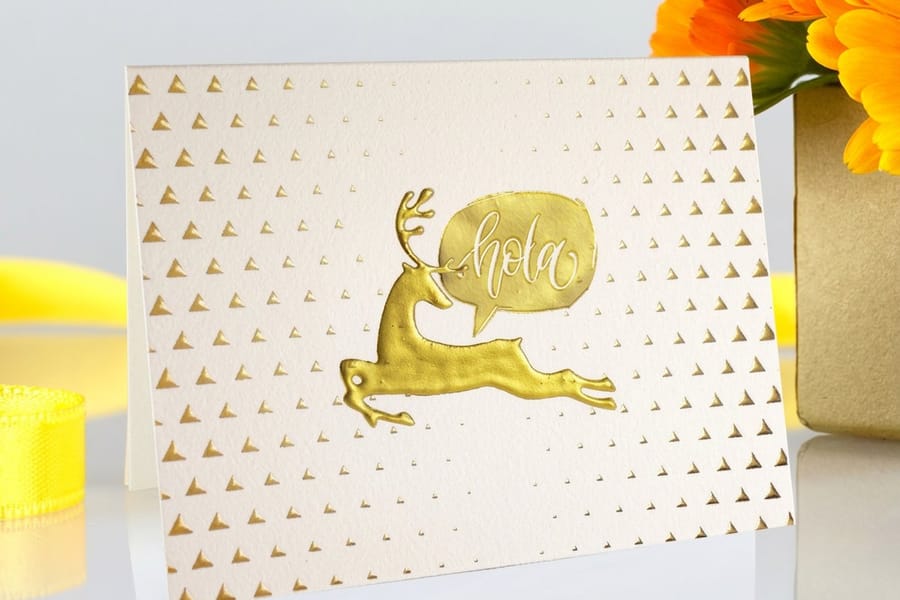
Raised foil is opaque metal you can feel, raised spot UV is clear gloss you can feel, and holographic is a flat rainbow board you cannot feel at all. Foil and spot UV are spot effects that sit only where the art is; holographic covers the whole card and prints semi-transparent over a mirror. At 4OVER4.COM holographic greeting cards start at $367.82, raised spot UV at $591.81 and raised foil at $618.16. Choose foil for a logo that has to carry, spot UV for artwork that is already strong, holographic for anything that has to move on camera.
Quick answer
Two you can feel, one you cannot, and only one covers the whole card
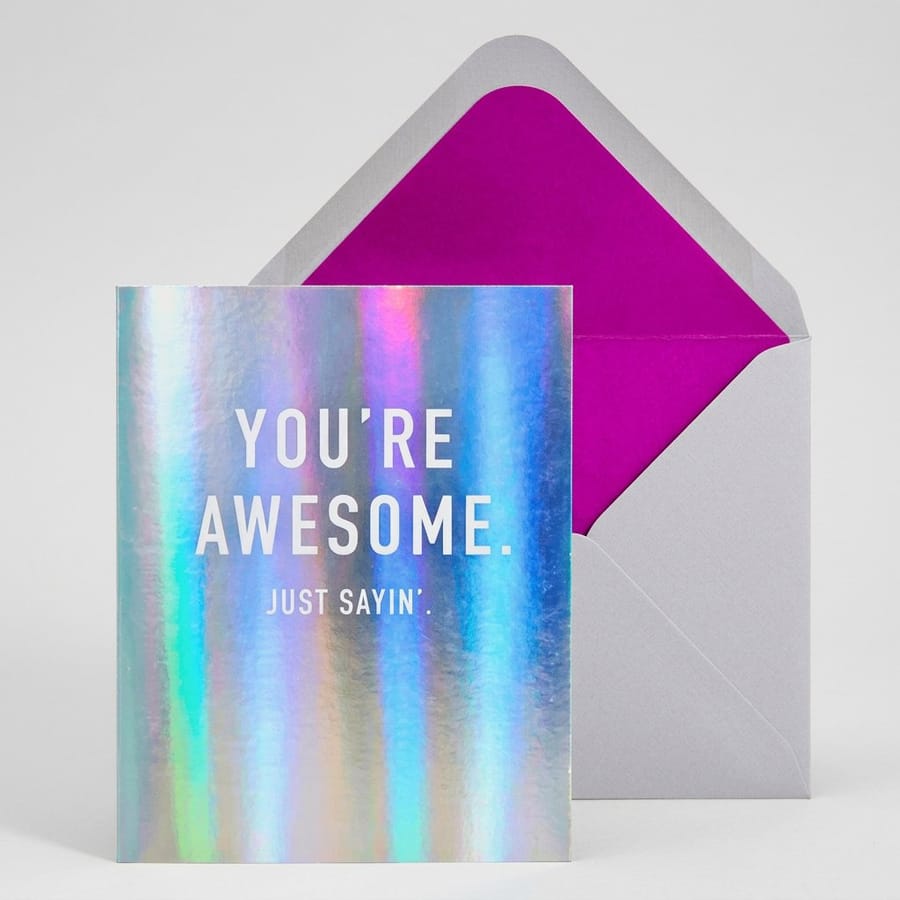
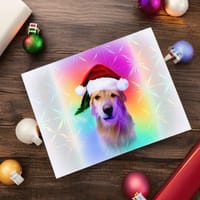
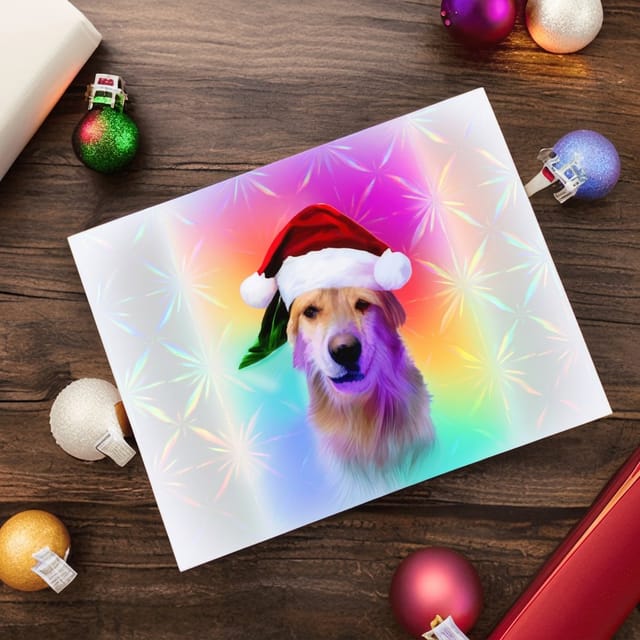
Raised foil and raised spot UV both build a layer above the sheet in the shape of your artwork. Holographic is the sheet. Foil brings its own opaque metallic color and hides what is under it. Spot UV brings no color and shows only as gloss against a duller surface, so it fades in flat light. Holographic runs edge to edge in shifting rainbow, prints semi-transparent because a mirror sits behind the ink, and stays perfectly flat, which is why it photographs best and writes worst.
What Each Finish Physically Is
Three different things are happening on three different levels, and once you can picture the cross section the whole comparison settles itself.
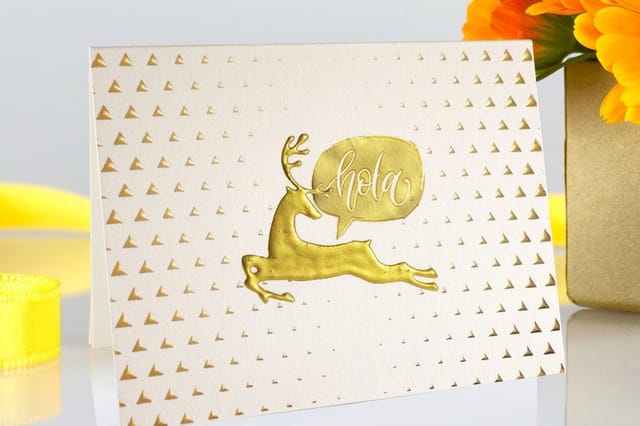
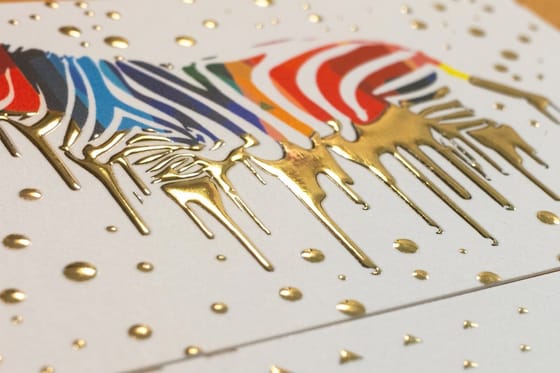
Raised foil is metal plus resin. A thin metallic film is bonded to the sheet where your art sits, and a clear raised layer is built over it. Because foil is opaque, it hides whatever is printed underneath and behaves like a small mirror, which is why a foil monogram is legible from several feet away while everything else on the card is still just ink. It is a spot effect by definition: it exists only where the art is.
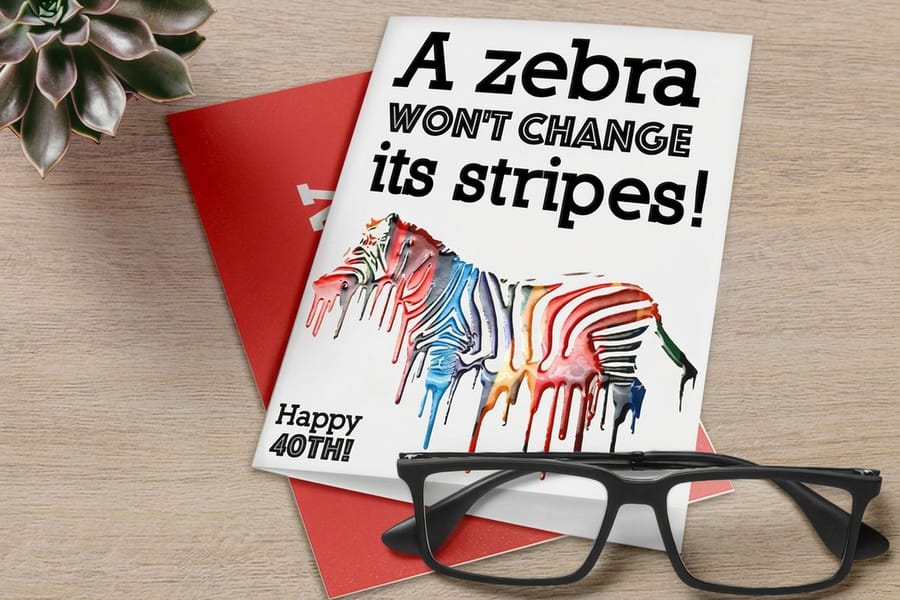
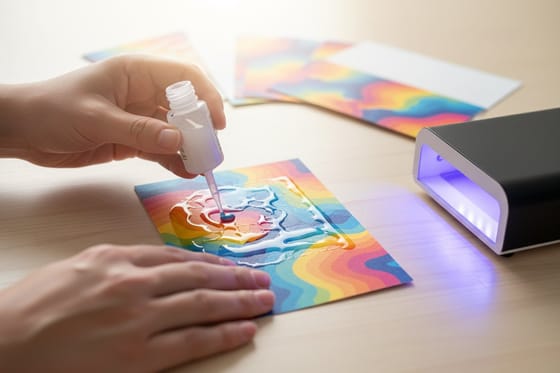
Raised spot UV is the same raised idea with the color removed. A clear varnish is laid over selected areas of the printed artwork and cured hard, so you get height and gloss but no pigment. That means it is never seen on its own. It is seen as a difference, gloss against matte, wet-looking against flat, and the eye only registers it when light hits at an angle. Our guide to how spot UV printing works takes the curing step apart in detail.
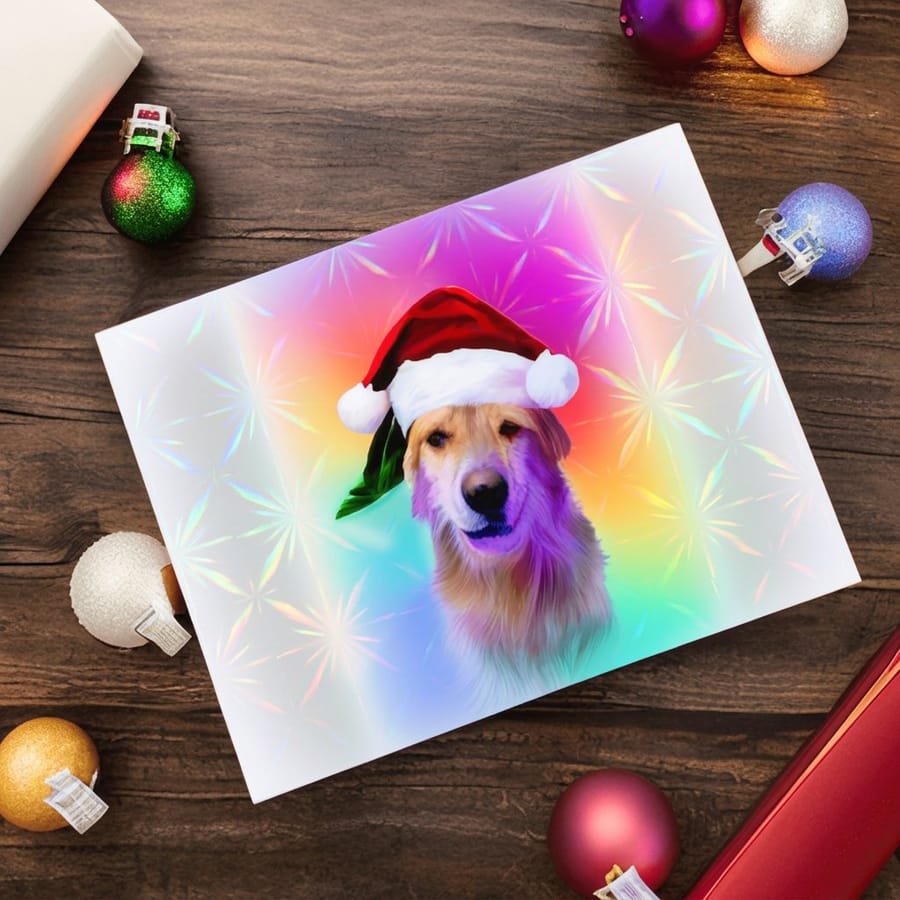
Holographic is not applied at all. It is the stock. The board carries a fine diffraction pattern under its coating that splits white light into moving color, and your artwork is printed on top of it in ordinary CMYK. The card is flat, the effect covers every square inch of it, and the ink behaves differently than it does on white paper because a mirror is sitting behind it.
Raised Foil vs Raised Spot UV vs Holographic, Side by Side
Read the first two rows before the price row. Almost every wrong choice we see was made on price and then regretted on texture or coverage.
| Raised foil | Raised spot UV | Holographic | |
|---|---|---|---|
| Can you feel it | Yes, raised and firm. | Yes, raised and glassy. | No. Flat as any coated card. |
| Coverage | Spot only, where the art is. | Spot only, where the art is. | The entire sheet, edge to edge. |
| Its own color | Yes, opaque metallic. | None. Clear varnish. | Shifting rainbow, changes with angle. |
| Shows in flat light | Strongly. | Weakly. Needs an angle. | Strongly, and it moves. |
| Photographs well | Yes, with a hard light source. | Poorly straight on. | Best of the three on video. |
| Handwriting inside | Normal stock, takes pen. | Normal stock, takes pen. | Coated surface resists pen ink. |
| Starts at | $618.16 | $591.81 | $367.82 |
Two rows carry most of the decision. Coverage tells you whether you are decorating a shape or the whole card, and the handwriting row tells you whether the recipient can do the one thing people do with greeting cards. Everything else is preference. If you want both raised finishes on one piece, dual raised greeting cards put foil and spot UV on the same sheet, and the rest of the family sits in the dual raised printing collection.
Where Each One Lets You Down
Every finish has a job it is bad at, and the brief usually contains a clue about which one you are walking into.
Raised foil breaks on a score. The raised film is cured hard and the paper under it is not, so a fold forces the two to bend at different rates. A foil rule that runs across the crease of a folded card can crack along the line or dull into a scar. Keep raised elements back roughly an eighth of an inch from the score. The same rule applies to raised spot UV, and it is the single most common artwork correction we send back on folded work.
Spot UV loses the argument in a photograph. If the card exists to be seen in the hand, spot UV is quietly excellent. If it exists to appear in a flat-lay shot or a product listing, a straight-on camera with soft light will flatten the gloss into nothing and the client will ask what they paid for. Shoot it at an angle with a hard source, or pick foil.
Holographic fights your ink. Printed color on mirror board is semi-transparent, so light tints pick up the rainbow underneath and anything you intended as white simply is not there, because the paper white is a rainbow. Design for it: heavy solid areas where you need control, deliberate open areas where you want the board to show, and no faint pastel type. Our holographic foil stamping guide covers how the same physics behaves when the effect is stamped rather than printed on.
And holographic fights the pen. A greeting card gets written in. That coated metallic surface repels ballpoint and gel ink, so a message smears or skates unless the inside is a plain uncoated stock. Order the effect on the cover and leave the interior normal.
The Verdict, and What to Order
Pick by what the card has to do, not by what looks best on a sample sheet.
- A business greeting card going to clients: raised foil greeting cards. The logo carries, the finish reads as considered rather than loud, and the inside still takes a handwritten signature, which is the part clients actually remember.
- A card whose artwork is already the star: raised spot UV greeting cards. Use the varnish to trace what is already printed, so the design gains a second layer instead of a competing one.
- A launch, a party, or anything that has to work on camera: holographic greeting cards, which start at $367.82 and are the cheapest of the three here. They move in video, and that motion is the whole point.
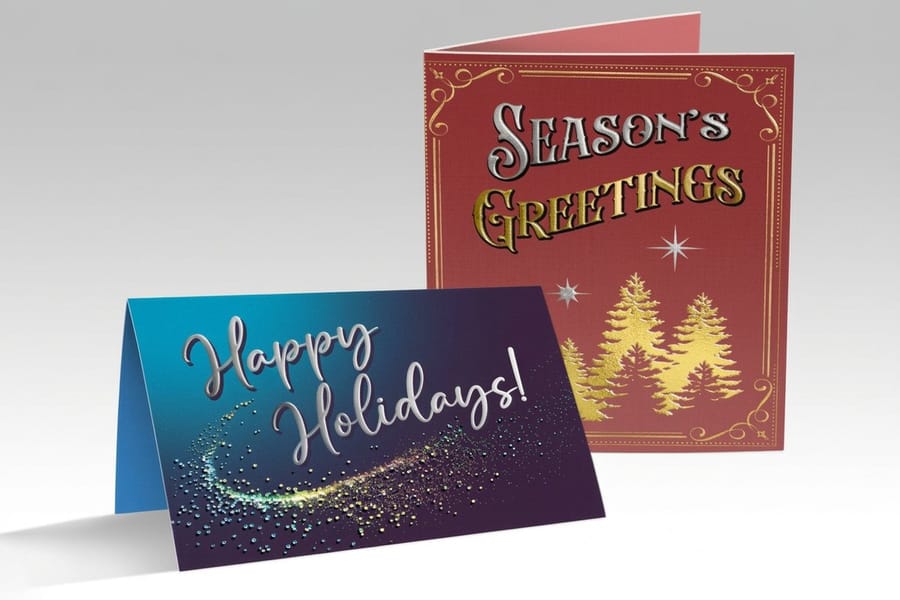
- A flagship piece where budget is not the constraint: both raised finishes together. Foil on the mark, spot UV on the pattern around it, so the card has two different textures under the same light.
Whichever you choose, settle the size and the fold before the finish, because they change the safe area for raised elements. Start with our greeting card printing sizes and stocks guide, check whether the job wants a flat or folded card in flat vs folded greeting cards, and build the artwork on a correctly sized layout from the blank template library. If you want the wider three-way comparison across every product rather than cards alone, foil vs spot UV vs embossing covers the third option we left out here.
Wally explains the three greeting card finishes
Feel two of them, tilt the third
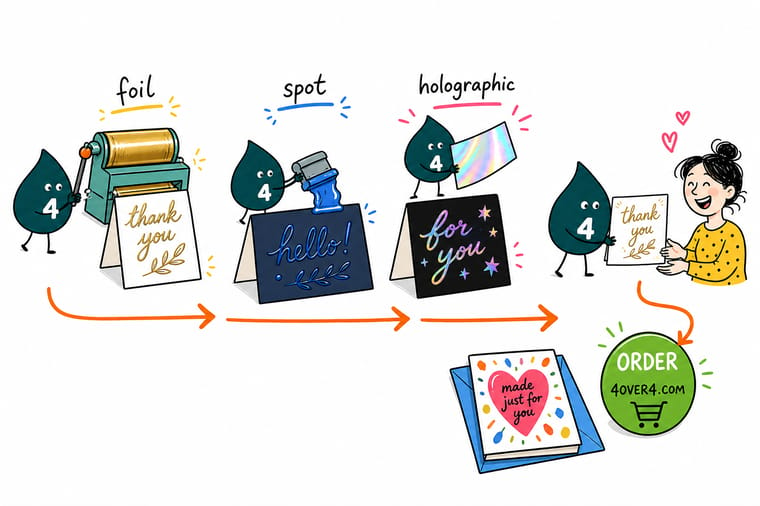
Wally runs a finger across all three cards. The raised foil card has a metal shape standing up off the surface, so he feels it and sees it from across the room. The raised spot UV card feels the same under his finger but shows nothing until he tips it toward the light, because the varnish is clear. The holographic card is smooth as glass and the whole thing moves in color when he turns it. Then he opens each one to sign it, and the pen skates on the holographic surface. That is the part nobody tells you before ordering.
Order raised foil greeting cards →Specs and pricing
Sizes, stocks and starting prices for all three
Configure each finish side by side, with live options and starting prices straight from the 4OVER4.COM configurator.
Print it
Order the finish that fits the card
Explore more
Where to go next

By the numbers
The finishing department behind all three options
Common Questions
Your greeting card finish questions, answered
Which greeting card finish is best, foil, spot UV or holographic?
Raised foil for a name, a monogram or a logo you want people to notice from across a desk. Raised spot UV when the artwork is already doing the work in color and you want a second, quieter layer that rewards a closer look. Holographic when the whole card should be the effect, most often for launches, party invitations and anything that has to photograph well for social. If the card is a formal business greeting going to clients, raised foil is the safe answer of the three.
Can you feel holographic printing?
No. Holographic greeting cards are printed on a board that already carries a microscopic diffraction pattern under a smooth coating. The rainbow comes from the way that pattern splits light, not from anything sitting on top of the sheet, so the surface is as flat as any coated stock. If a tactile finish is part of the brief, you want raised foil or raised spot UV instead, or both together on dual raised greeting cards.
Why can I barely see the spot UV on my card?
Spot UV has no color of its own. It reads purely as a contrast in surface: gloss against something duller. On a card that is already coated in gloss, or under flat overhead light, that contrast has almost nothing to work with. Put the varnish over a matte or dark area, keep the shapes reasonably solid, and look at the card at an angle. If the card is going to be judged from a straight-on photograph rather than in the hand, choose foil.
Can raised foil or raised spot UV cross the fold of a card?
Keep it off the score. A raised layer is a cured film sitting on the surface, and a fold forces that film to bend tighter than the paper under it, which can crack the line or leave a dull scar along the crease. Hold raised elements back about an eighth of an inch from the score on a folded card. Holographic has no such problem because there is no raised layer to break, though the board itself still scores and folds better with the grain running parallel to the fold.
Can people write inside a holographic greeting card?
That is the limit most people find out too late. The coated metallic surface of holographic board resists ballpoint and gel ink, so a handwritten message can smear or skate. Raised foil and raised spot UV cards print on ordinary card stock and only carry the finish on the front, so the inside takes pen normally. If you need a holographic front and a writable inside, ask for the effect on the cover only and a standard uncoated interior.
Do these finishes mail safely?
All three do inside an envelope, which is how greeting cards travel anyway. The finish to watch on its own in the mail stream is raised foil with large solid areas, because the raised film can pick up scuff marks from automated sorting equipment. Envelope them, and none of it matters. Sizing and envelope pairing are covered in our guide to greeting card printing sizes and stocks.
Get Started
100 raised foil greeting cards cost $618.16, holographic $367.82
Pick the size and fold first, then the finish. We print raised foil, raised spot UV and holographic greeting cards, and we will tell you when your artwork is fighting the process.
Legal Disclaimer
Gold Standard guarantees apply to all standard orders placed through 4over4.com. Price match requires verifiable proof of a competitor's published price for an equivalent product with matching specifications and turnaround time. Satisfaction guarantee covers manufacturing defects and print quality issues. Contact support with order number and documentation. On-time delivery rate based on tracked orders 1999 to 2026. Individual results may vary based on shipping carrier performance.
