
Engraving vs Printing Business Cards and When Metal Beats Paper


Metal cards and printed cards are not two grades of the same thing. They differ in what the design can contain, what a reprint costs, and how many hands the card can reach.
Engraving cuts the design into the card, printing lays ink on top of it. A laser etches a metal blank, so you get one tone, no photographs, and no way to fix a detail later. Printing gives full color, photographs and a reprint whenever the details change, and a raised or pressed finish buys back most of the feel. Metal business cards start at $262.52 at 4OVER4.COM against $17.57 for standard business cards, which is the trade almost every decision here comes back to.

Quick answer
One process takes material away, the other puts ink on
An engraved metal card is the material itself, marked by a laser. That gives weight and permanence, and takes away color, photographs and any chance of a correction. A printed card carries everything a press can put down, costs a fraction as much, and can be reordered the week a number changes. Between them sit the finishes: raised foil and letterpress put something under a fingertip while keeping the card on paper you can write on and mail.
Engraving Means Two Different Things, and Only One Ends Up as Metal
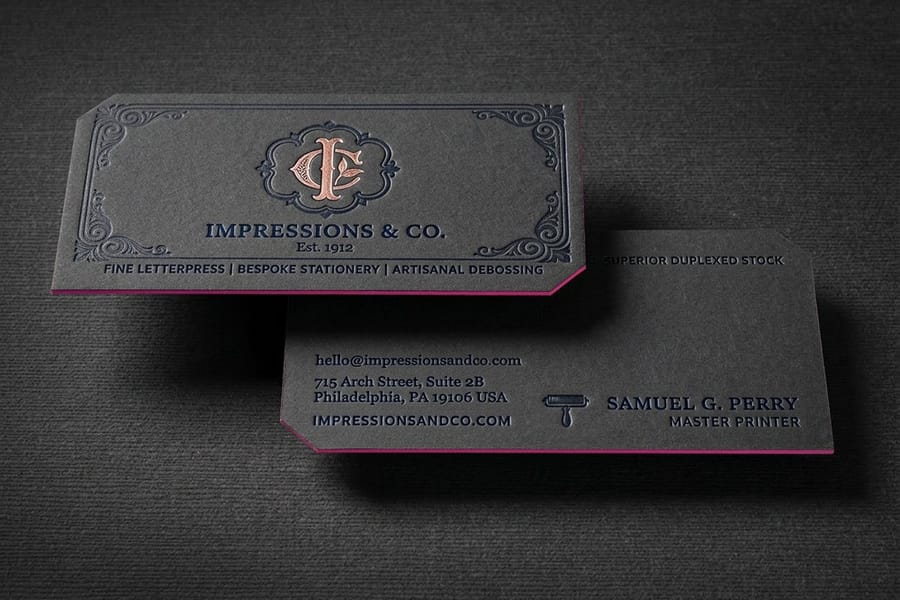
Ask a stationer and ask a startup founder what an engraved business card is and you get two answers. Both are correct, and the confusion costs people money at the quoting stage.
The old meaning is a paper process. A design is cut into a steel plate, ink is worked into the recess, the surface is wiped clean, and the sheet is pressed against the plate under enough force to pull the ink up into a hard, slightly raised line. Turn the card over and you can feel a faint bruise where the plate pushed through. It holds finer detail than any other stationery process, and every design needs its own cut plate, which is the reason the quote starts high and stays high on short runs.
The current meaning is a metal card. A laser marks or cuts the artwork into a thin steel or aluminum blank. Nothing is pressed and no ink is involved, so what you see is the material with the etched areas reading as contrast. This is what nearly everyone means today when they type engraved business cards into a search box, and it is what metal business cards at 4OVER4.COM are.
We do not cut intaglio plates. For the pressed look on paper we run letterpress business cards, which leave a real impression in thick stock, and raised foil business cards, which build the line up instead of pressing it down. The thermography guide explains how that raised layer is made, and embossed vs debossed covers the two directions a die can push a sheet.
Metal, Letterpress, Raised Foil and Flat Print, Side by Side

Four routes reach the same pocket. They differ in what carries the design, what the design can contain, and what happens the day something on the card changes.
| Route | What carries the design | Color range | What it feels like | When details change |
|---|---|---|---|---|
| Engraved metal | A laser cuts or marks a metal blank. | The material plus etched contrast. No photographs. | Cold, heavy, rigid. Nobody puts it straight in a pocket. | Reorder the batch. There is no correction. |
| Letterpress | An inked plate pressed into thick stock. | Solid ink colors, usually one or two. | A dent you can run a thumb across, visible on the back. | New plate, new run. |
| Raised foil | A metallic layer built above the printed surface. | Foil color plus full color print around it. | A lifted, glossy line on an otherwise normal card. | Reprint like any printed job. |
| Flat print | Ink level with the sheet. | Full color, photographs, gradients, tints. | Smooth. The stock does the talking. | Reprint the same week for the price of a box. |
Read the last column before the first. The rate at which your details change is the single best predictor of which card you should own, and it is the column nobody looks at while holding a metal sample. A card with a direct dial and a suite number on it is a card that expires. A card with a name, a role and a domain can survive a move, an office change and a phone system swap, which is the only condition under which engraving into metal makes financial sense.
The middle columns settle the design argument. If the logo is a solid mark, all four routes can carry it. If the logo contains a photograph, a soft gradient or hairline serifs at small sizes, only the printed routes will hold it, and the finish comparison is a better place to spend the budget than the material.
What Each Route Costs at 4OVER4.COM
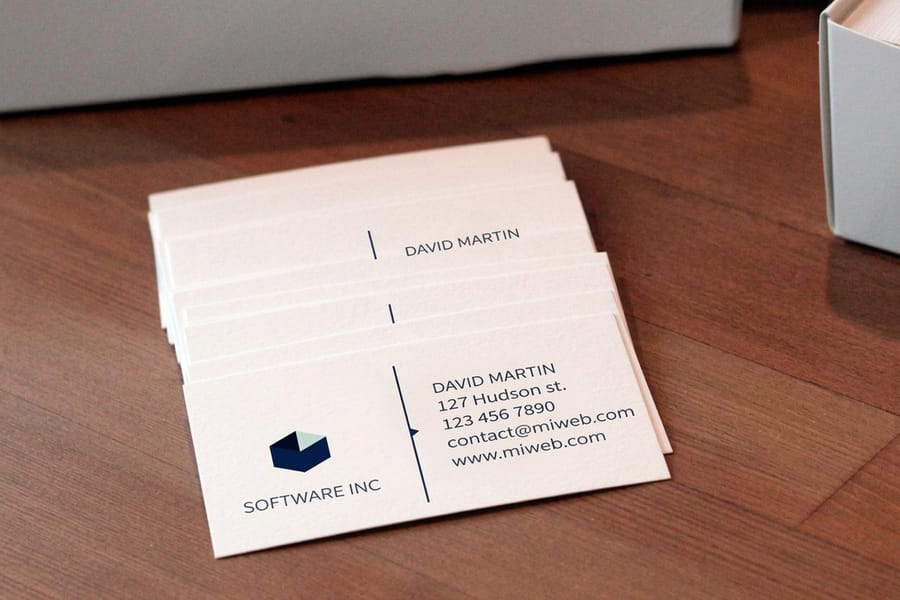
Starting prices make the trade-off concrete. These are entry configurations from the live configurator, so your quantity, stock and finish move them, but the ranking between the routes does not change.
| Card | From | What you are paying for |
|---|---|---|
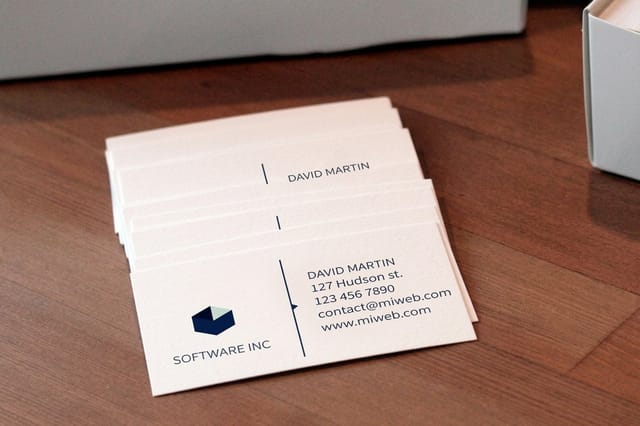
| Standard business cards | $17.57 | Full color print on coated stock. The daily working card. |
| Spot UV business cards | $76.88 | Gloss varnish on selected areas over a matte sheet. |
| Raised foil business cards | $86.78 | A metallic layer lifted above the surface, print all around it. |
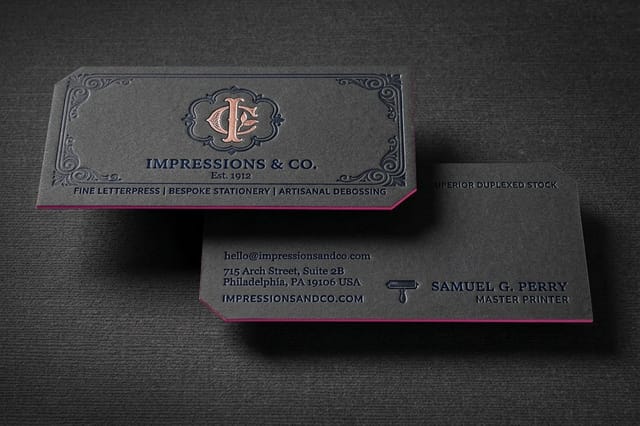
| Letterpress business cards | $251.36 | A pressed impression in thick stock, plate work included. |
| Metal business cards | $262.52 | A metal blank, etched. No ink, no reprint, no photographs. |
The interesting jump is not the top of the table, it is the middle. Raised foil sits at roughly five times a standard card and still gives a surface a hand registers, while metal sits at roughly fifteen times and gives an object. Whether an object beats a surface depends entirely on how many hands it reaches. Our breakdown of what business cards cost walks through where quantity breaks change the math, and business card stock explained covers what the paper itself is doing to the price.
Artwork That Survives a Laser, and Artwork That Needs Ink
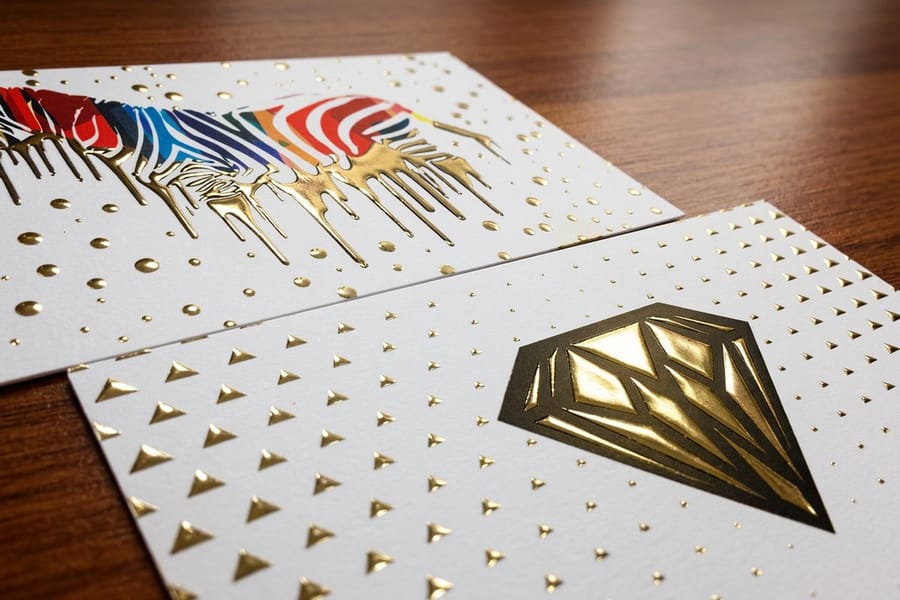
Most disappointing metal cards were disappointing in the file, not on the machine. Etching is a one tone process, so the design has to work as a silhouette before anything else.
Holds up on metal: a solid logo mark, type at a normal text weight and above, generous counters in letters like a and e, wide rules, and reversed blocks where the etched area is large enough to read as a field. Falls apart on metal: photographs, gradients and soft shadows, hairline strokes, small text under about 6 point, tightly kerned scripts, and any logo that only works because two similar tones sit next to each other. Strip those two tones out and the mark often stops being recognizable.
Two habits fix nearly all of it. First, test your logo in pure black on white before you order metal; if it survives that, it will survive etching, and if it does not, no material will rescue it. Second, cut the content down. A metal card that carries a name, a role, a domain and one contact route ages better and etches cleaner than one carrying five lines of small print. Printed cards have no such discipline forced on them, which is exactly why they end up crowded.
Set the file up at the right trim either way. Start from a correctly sized layout in the blank template library, check the margins against the business card size guide, and follow business card outline and file setup for bleed and safe area before you send anything to a process you cannot correct.
The Verdict, and the Split Most Businesses Should Run

Print, and buy metal deliberately as a second, much smaller order. That is the answer for almost everyone, and it is not a compromise. The two cards do different jobs.
The printed box is the working tool. It goes to the trade show, into the invoice envelope, onto the counter, into the hands of people who may or may not call. At $17.57 a box of standard business cards costs less than the parking at the event, and it can be reprinted the week your title changes. If you want it to feel like more than paper, move up the finish rather than the material: spot UV at $76.88 or raised foil at $86.78 both change what a hand feels for a fraction of the metal price.
The metal card is a prop for a specific room. It works when the card is handed over slowly, in a meeting where the person opposite has time to notice it, and it stops working the moment you need volume. Order a small run, keep the content to what will still be true in three years, and accept that you will not be mailing them inside letters.
Skip metal entirely if your address or direct dial is likely to change inside a year, if your logo depends on color or a photograph, or if your cards go out faster than fifty a week. Skip flat print alone if the card is your only physical touchpoint with a high value buyer, and put the difference into a pressed or raised finish. Everything we run for cards sits on the business card printing page, and buying from a local printer versus online covers the other question that usually arrives with this one.
Wally weighs metal against paper
One card is an object, the other is a tool
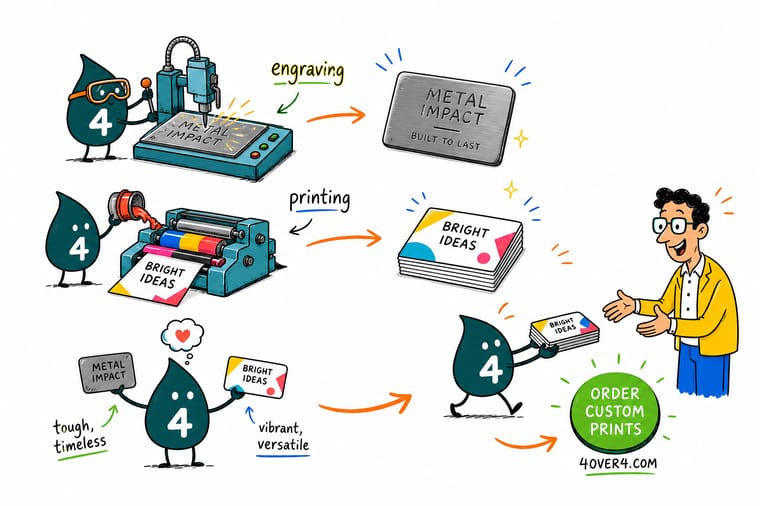
Wally runs a laser over a metal blank and the logo is cut in for good. Then he prints the same logo on card stock in full color, in photographs, with a raised foil line on top. The metal one gets handed to the buyer who decides. The printed box goes to everyone else, and gets reprinted the week the phone number changes. Wally carries both, because they are not competing for the same pocket.
Configure metal business cards →Specs and pricing
Metal, standard and raised foil, configured side by side
The same three routes with their live options and starting prices, straight from the 4OVER4.COM configurator.

Print it
Order the card that fits the room

Explore more
Where to go next

By the numbers
Metal or paper, the card order goes to one shop
Common Questions
Engraved and printed cards, questions we get asked
Are engraved business cards and metal business cards the same thing?
Usually yes in current usage, but not historically. Traditional engraving is a paper process: a design is cut into a metal plate, ink is forced into the recess, and the sheet is pressed against it hard enough to lift the ink into a raised line with a faint bruise on the back. What people order today under the word engraved is nearly always a metal card, where a laser marks or cuts the artwork into a steel or aluminum blank. Both are called engraving, both are done with metal, and only one of them ends up as a card made of metal.
Can you print full color on a metal business card?
Not the way you can on paper. A metal card gives you the finish of the blank, the contrast of the etched area, and in some builds a filled color inside the cut. Photographs, gradients, soft drop shadows and precise brand tints do not survive that. If your identity depends on a photographic element or a two color gradient, the design has to be simplified to a single tone before it goes on metal, and many logos look worse for it. Print those on paper and use a finish for the tactile part.
What is the closest printed card to an engraved one?
Letterpress if you want the impression, raised foil if you want the lifted line. Letterpress business cards start at $251.36 and press a real dent into thick stock, which is the only printed process that puts a mark on the back of the sheet the way engraving does. Raised foil business cards start at $86.78 and build a glossy metallic line above the surface, which reads closer to engraving under a fingertip than any flat finish does.
Do metal business cards work in a wallet and in the mail?
In a wallet, yes, though a bent metal card stays bent while a paper one gets replaced from the box. In the mail, treat them as a package rather than a letter. A rigid card makes an envelope rigid, and rigid mail is handled and charged differently from a flat letter, so posting engraved cards inside a normal business envelope is not a plan. Hand them over in person. That is the only place their cost turns into an effect.
Is engraving worth it for a small business?
For most, no, and the honest reason is quantity. A metal card is memorable because it is rare, and rarity does not scale to a trade show where two hundred cards leave your hand in a day. The pattern that works is a small metal batch for the meetings that decide something and a printed box for everything else. If the budget only stretches one way, spend it on 16pt stock with a raised or soft touch finish and print more cards.
What happens if my details change after an engraved order?
You reorder. There is no correction pass on an etched card, no overprint, no sticker that looks like anything but a sticker. This is the practical argument for keeping a metal card minimal: name, role, one durable contact route, and a domain. Leave the direct dial, the suite number and anything tied to an office lease on the printed card, where a change costs the price of a new box rather than a new engraving run.
Get Started
50 metal cards cost $262.52, 500 spot UV cards $76.88
Configure a metal card for the meetings that matter, or a printed box with a raised finish for everything else. Both price live before you commit.
Legal Disclaimer
Gold Standard guarantees apply to all standard orders placed through 4over4.com. Price match requires verifiable proof of a competitor's published price for an equivalent product with matching specifications and turnaround time. Satisfaction guarantee covers manufacturing defects and print quality issues. Contact support with order number and documentation. On-time delivery rate based on tracked orders 1999 to 2026. Individual results may vary based on shipping carrier performance.
