
Construction Banners vs Coroplast Signs vs Aluminum Signs for Job Sites


A job site needs all three, and each one fails in its own way. Wind does something specific to a fence banner, coroplast flute direction is an ordering decision, and aluminum earns its price.
Use a vinyl or mesh banner for the big project message on the fence, coroplast for directional and temporary signs you will change anyway, and aluminum for gate, permit and safety signs that must stay legible to handover. Mesh beats solid vinyl on an exposed fence run because the perforations let wind pass instead of loading the fence. Coroplast lasts one to two seasons outdoors. Aluminum starts at $36 against $25 for coroplast and outlives the build.

Quick answer
Match the material to the load, then to the calendar
Banner material carries the message, coroplast carries the errands, aluminum carries the rules. On an open fence run the wind load is the deciding factor, and mesh survives where solid vinyl pulls its grommets. Coroplast is the cheapest board on the site and the first thing to fade and crack, so give it work you were going to redo anyway. Aluminum costs more per sign, gets drilled and bolted, and is still readable when the fence comes down.
Three Materials, Three Different Jobs on One Site
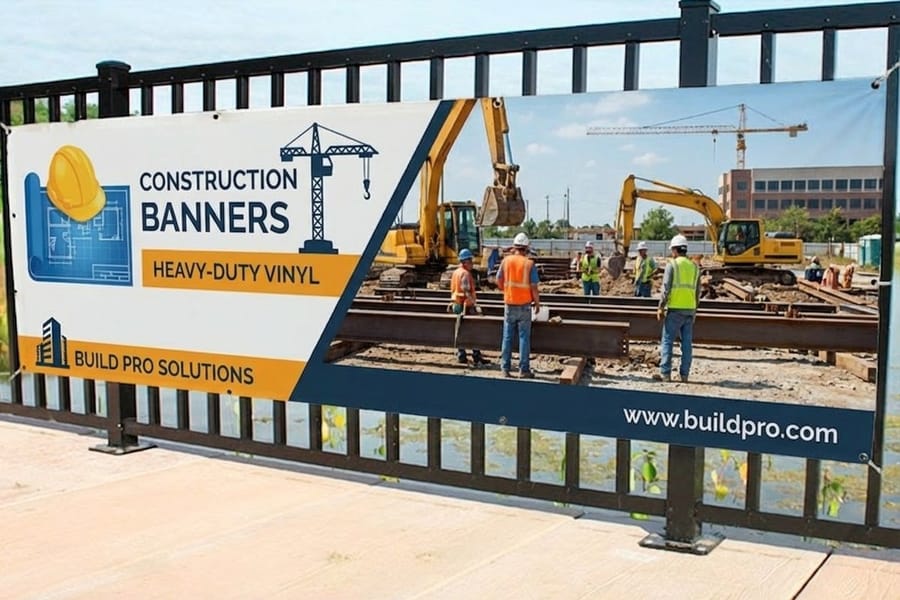
Most sites need all three, and the mistake is buying one material for everything. A fence run and a hazard sign at the gate load a sign in completely different ways, and the material that wins one loses the other.
| Material | What it is | Typical life outdoors | Where it belongs on a site |
|---|---|---|---|
| Vinyl banner | Scrim vinyl, hemmed on all four sides with grommets, usually every two feet. | One to three years, shorter on an exposed face. | The street facing project sign, the developer and contractor names, phase announcements. |
| Mesh banner | The same vinyl, perforated so air passes through the face. | One to three years, and it survives wind that ends solid vinyl. | Long chain link runs, scaffold wraps, anything on an open corner lot. |
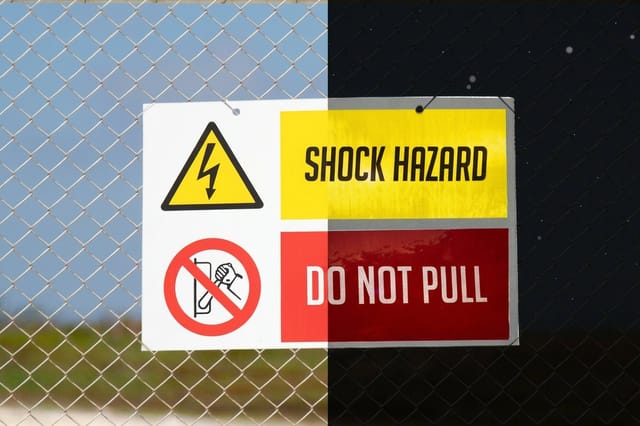
| Coroplast | 4mm corrugated polypropylene, flutes running one direction only. | One to two seasons before fading and flute cracking. | Directional arrows, entry and delivery routing, unit numbers, temporary notices. |
| Aluminum | Solid .040 or .063 aluminum sheet, drilled for bolts. | Years. It outlasts the build. | Gate identification, safety and OSHA notices, permit boards, anything reused next job. |
Read the third column before the price column. A build that runs eighteen months buys its coroplast twice and its aluminum once. If you want the same three way comparison outside a construction context, our guide on aluminum signs vs coroplast vs PVC covers the material properties in more depth, and the most durable sign materials ranks them by how they actually fail.
Wind Decides the Banner, Not the Budget
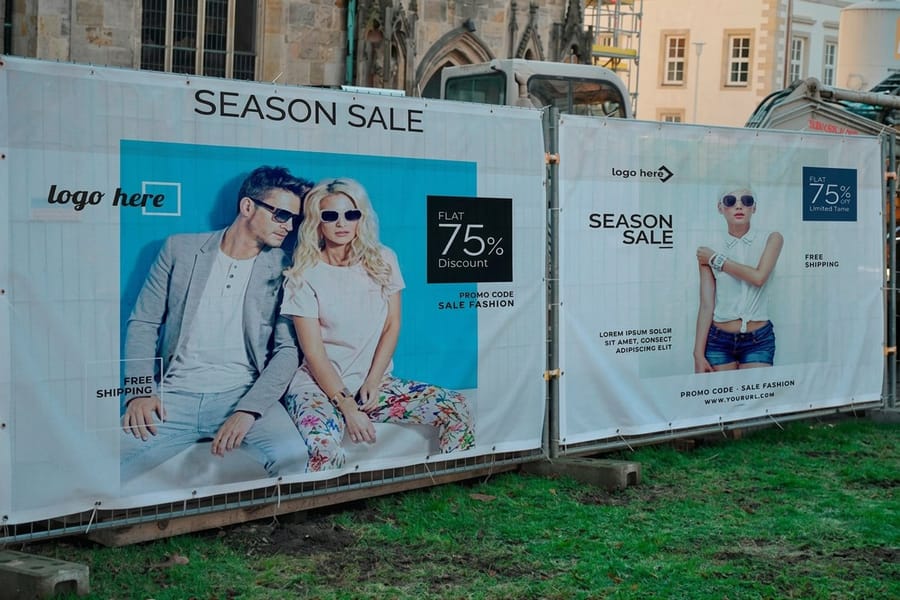
A banner on a construction fence is not really a sign problem, it is a load problem. Solid vinyl catches every bit of wind that hits it and passes that force into the grommets, the zip ties, and the fence panel behind. On temporary fence with no braced footings, the fence goes over before the banner tears.
The field fix is to cut wind slits in the banner face. It mostly does not work. The slits reduce the load a little, then the corners of each cut become the start of a tear, and a banner that would have lasted the project lasts a season. If the site is exposed, order mesh banners instead and let the air through the face by design. You give up a small amount of color density, since the printed area has holes in it, and you get a banner that is still on the fence after the first storm.
Two setup habits matter more than the material choice. Fix at every grommet, not every third one, because a banner supported at three points loads those three points with everything. And tie the corners tight, because that is where every failure starts. Our guide on how to place grommets on banners covers spacing and reinforcement, and how to spec an outdoor vinyl banner walks through hems, weight and finishing before you order.
Where the fence is short, braced, or sheltered by the building itself, solid vinyl is the better buy. Construction Banners start at $79 and give you the largest readable message per dollar of anything on this page.
Coroplast Is Cheap, and the Flutes Are the Catch
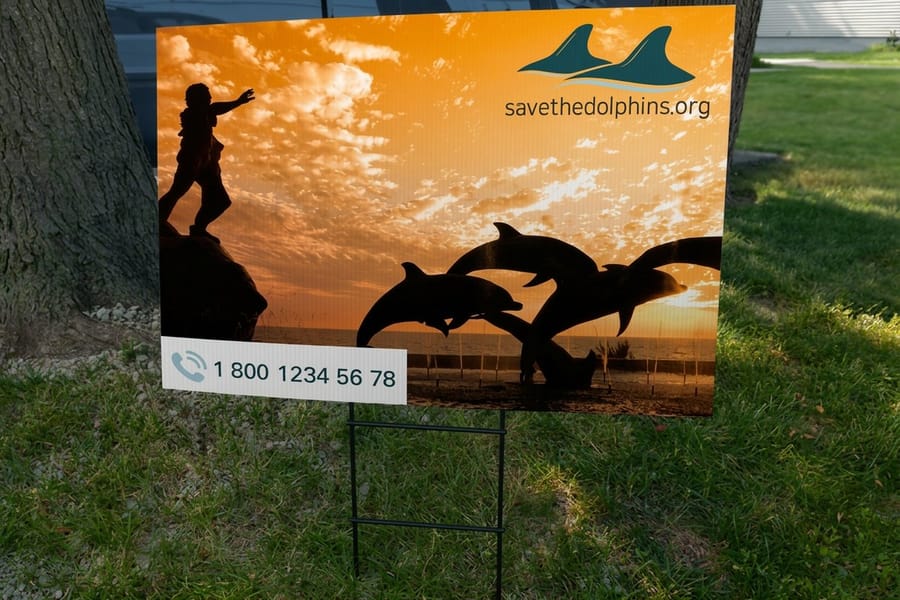
Coroplast is corrugated plastic, so it has an internal grain. The flutes run in one direction across the sheet, and that direction is decided when the sign is cut, not when it arrives on site.
This matters twice. An H stake only works if its two legs can slide into flutes, which means the flutes have to run vertically on a stake sign. Order a 24 by 18 sign with horizontal flutes and it cannot go on a stake at all, and nothing you do in the field changes it. The reverse is true when you zip tie a sign flat to a fence panel: horizontal flutes across the span keep the sign from bowing between the ties.
Say the mounting method when you order, not just the size. On our Standard Coroplast Signs, which start at $25, flute direction is part of the setup rather than an afterthought.
The other thing to know is how coroplast ends. It does not snap suddenly. Reds and oranges fade first under UV, the surface goes chalky, and then the flutes crack at the stake line or wherever a tie has been working the corner through freeze and thaw. That is an acceptable end for a sign directing concrete trucks for eight weeks. It is a bad end for a hazard notice. If you need the same throwaway economics with a better sign face, compare it against yard signs, which use the same board in the standard real estate and event sizes. The full material story is in what coroplast signs are.
Cost per Month, Not Cost per Sign
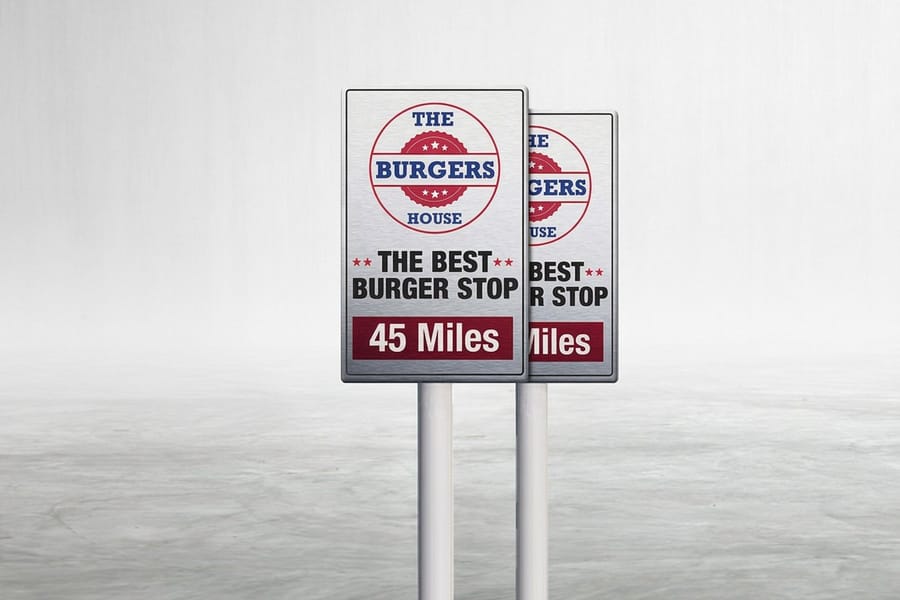
Compared on the invoice, coroplast wins every time. Compared over the length of a build, it usually does not, because the cheap sign gets bought again while the expensive one is still up.
| Product | Starts at | What it survives | Replace it when |
|---|---|---|---|
| Standard Coroplast Signs | $25 | A phase, a season, a route change. | The flutes crack at the stake line or the face has chalked. |
| Aluminum Signs | $36 | The whole build, then the next one. | The message changes, not the sign. |
| Reflective Aluminum Signs | $41.02 | Night traffic at the gate and the haul route. | Same as aluminum. The reflective face is the reason to buy it. |
| Mesh Banners | $75 | Wind on an open fence line. | The hems fray or the grommets start pulling through. |
| Construction Banners | $79 | A braced or sheltered run, and the biggest message area here. | The project name changes or the vinyl has creased. |
The reflective line is worth pausing on. Reflective sheeting is a different face material, not a brighter ink, and it is the only one of these that reads under headlights at a gate or a haul route crossing after dark. If a truck driver has to find your entrance at five in the morning in February, that is the sign to buy. Anything covering statutory or safety content belongs on aluminum as well, for the reasons set out in our guide to safety signs in the workplace.
What to Order for a Typical Site
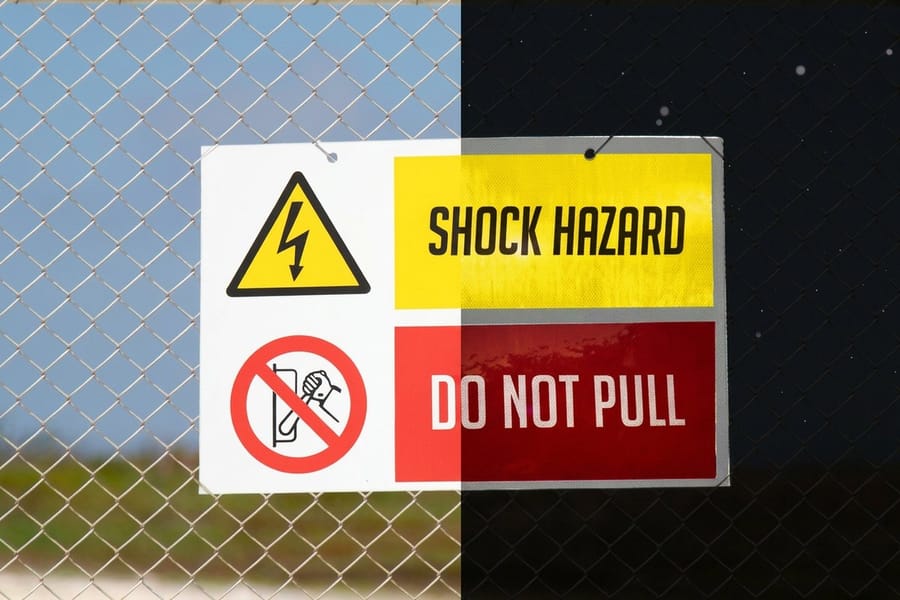
Here is the package that covers a normal build, and the reasoning behind each line.
- One large banner at the street face. 4 by 8 feet if the code allows it, 3 by 6 if not. Solid vinyl on a braced run, mesh on an open one. This carries the developer, the general contractor and the phone number, and it is the only sign anyone reads from a moving vehicle.
- Two to four mesh banners along the fence. Trade names, hiring notices, the project render. Mesh because a fence line is the windiest surface on the site.
- Eight to twelve coroplast signs. Deliveries this way, hard hat area, unit numbers, parking. Vertical flutes if they go on stakes, horizontal if they zip tie flat. Buy a few spares. They are cheap and they get run over.
- Four to six aluminum signs. Gate identification, the permit board, the safety notices, the no unauthorized entry sign. These stay legible for the full build and go into the trailer for the next one.
- One or two reflective aluminum signs. The gate and any point where a vehicle turns off a public road in the dark.
The line not to cross: do not let coroplast carry anything that has to be readable in month fourteen, and do not hang solid vinyl on an unbraced temporary fence. Those two decisions cause most of the resigning a site pays for.
Everything above prints from one file setup, so send artwork once and change only the substrate. Start from a correctly sized layout in the blank template library, read the outdoor sign printing guide for finishing choices, and browse the full range in signs and banners.
Wally kits out a job site
One fence, three materials, three reasons
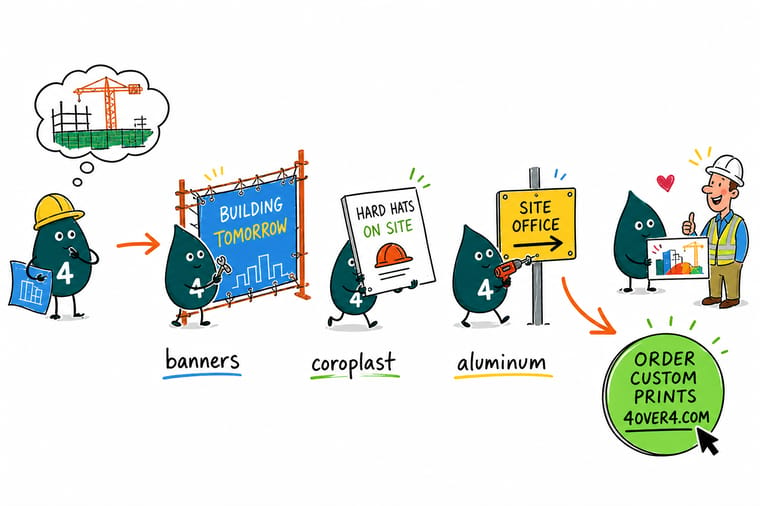
Wally puts the mesh banner on the open fence run so the wind goes through it instead of taking the panel down. He plants the coroplast signs at the entry, flutes running vertically so the stake legs actually slide in, and he buys spares because they get run over. Then he bolts aluminum at the gate for the permit board and the safety notices, because that sign has to be readable on the last day of the build as well as the first.
Order construction banners →Specs and pricing
Sizes, options and starting prices for all three
Compare the banner, the board and the metal side by side, with live configuration choices and starting prices straight from the 4OVER4.COM configurator.


Print it
Kit out the site in one order

Explore more
Where to go next



By the numbers
One shop printing all three sign types
Common Questions
Your job site signage questions, answered
Which sign material is best for a construction site fence?
For a long run of chain link on an open site, mesh banner. The perforations let wind pass instead of loading the fence, so the panels stay upright and the hems stay intact. Solid vinyl is the better choice where the fence is braced, sheltered by a building, or where the banner is short enough that the wind load stays small. If the sign is a code, permit or hazard notice rather than a marketing message, skip banner material entirely and bolt an aluminum sign to a post where it cannot flap or fold over.
How long does coroplast last outdoors on a job site?
Plan on one to two seasons. Coroplast is corrugated polypropylene, and outdoors it fails in a predictable order: the printed reds fade first under UV, the surface chalks, then the flutes crack where the stake legs sit or where a zip tie has been pulling on one corner through freeze and thaw. That is fine for directional and phase signage you were going to change anyway. It is the wrong material for anything that must be legible in month fourteen.
What thickness of aluminum should a construction sign be?
The two common gauges are .040 and .063. Anything up to roughly 18 by 24 inches sits fine on .040 with two mounting points. Go to .063 once the sign is larger, once it is mounted at only two points on a windy face, or once it is somewhere people will knock it with equipment. Thicker aluminum does not fade slower, it just stops the panel oil canning and flexing at the bolt holes, which is what actually ends the life of a thin sign.
Do I need grommets every two feet on a construction banner?
Two feet is the working standard on hemmed vinyl and it is the spacing to ask for on anything running along a fence. Wider spacing lets the banner belly out between fixings, and the load then concentrates on the grommets that are carrying it. Fix with zip ties or bungee balls at every grommet rather than rope through a few of them, and keep the corners tied, because a loose corner is where every tear starts.
Can I reuse construction signage on the next job?
Aluminum yes, banners sometimes, coroplast rarely. An aluminum sign that carried a safety message or a company name comes down, gets wiped, and goes back up on the next site. Vinyl banners survive a move if they are rolled rather than folded, because a crease across a printed area stays visible. Coroplast that has already been through a winter is usually cracked at the stake line even when the face still looks acceptable.
What size should the main project sign be?
The common street facing sizes are 3 by 6 feet and 4 by 8 feet, and 4 by 8 is the one that still reads from a moving car. Before you order, check the municipality: many jurisdictions set a maximum area for construction signage, and some require the permit number, the general contractor and the emergency contact to appear at a stated minimum letter height. Our guide to sign permits in every U.S. state is the place to start on that.
Get Started
Coroplast signs ship in 3 business days, aluminum in 4
Send one artwork file and we print it on banner vinyl, mesh, coroplast or aluminum. Pick the substrate per sign, tell us the mounting method, and we finish it to match.
Legal Disclaimer
Gold Standard guarantees apply to all standard orders placed through 4over4.com. Price match requires verifiable proof of a competitor's published price for an equivalent product with matching specifications and turnaround time. Satisfaction guarantee covers manufacturing defects and print quality issues. Contact support with order number and documentation. On-time delivery rate based on tracked orders 1999 to 2026. Individual results may vary based on shipping carrier performance.
