
Mesh Banner Material and Why Wind Passes Straight Through It


Mesh is the banner material for fences, scaffolding and building faces. The weave releases wind load, the holes cost you color and detail, and solid vinyl is sometimes the better order.
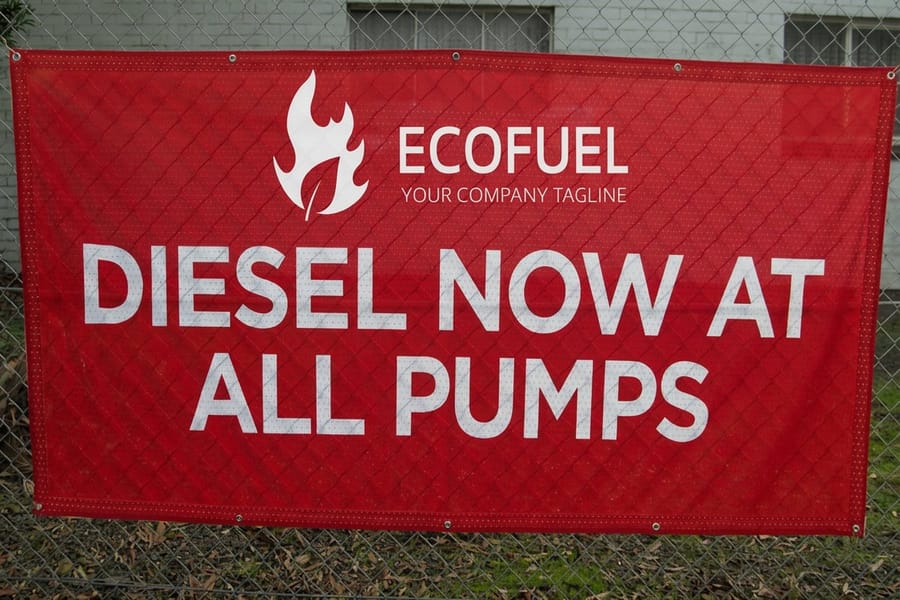
Mesh banner material is PVC coated polyester woven with a regular pattern of small holes, so wind passes through the face instead of pushing against it. That is the entire reason it exists, and it is why fences, scaffolding and building wraps use mesh while indoor banners do not. The cost of the airflow is opacity: the same holes pass light, so colors read a shade lighter than on solid vinyl and fine type softens. Design bold, read it at distance, and keep mesh for anywhere the wind has something to catch.
Quick answer
Airflow in, a little color out
Mesh is vinyl with holes in it, and the holes are the product. Wind passes through the weave rather than loading the panel, so a fence banner stops behaving like a sail and stops tearing at its corner grommets. The same openings pass light, which is why mesh prints a shade lighter, softens small type, and shows a faint ghost of the far side when it is printed both ways. Use it where wind has something to catch. Use solid vinyl everywhere else.
What Mesh Banner Material Actually Is
Hold a piece of mesh up to a window and the answer is obvious: it is a screen. The base is a polyester scrim coated in PVC, exactly the family of material behind a standard vinyl banner, but woven and finished so a regular pattern of small holes runs across the whole face.
Printing is unchanged. The same file, the same inks and the same hemming and grommeting equipment handle mesh and solid vinyl, which is why a mesh panel is not a specialty order with a specialty lead time. What changes is what the sheet does once it is hanging. A solid banner presents a closed surface, and air has to go around it. Mesh gives the air a way through, and a surface the wind can pass is a surface the wind mostly ignores.
Mesh also runs lighter than the 13 oz scrim vinyl that most solid banners are built from, which matters more than it sounds when one person is holding a 4 by 20 foot panel against a fence in a breeze. Everything else stays familiar: hemmed edges, grommets around every two feet, and a finished size you specify the same way you would on any other banner. The banner size guide applies to mesh without changes.
If you want to see it in person before committing a big outdoor job to it, order a small mesh banner at a modest size first and hang it where the real one will go. Mesh is one of the few materials where a photograph genuinely does not tell you what you need to know.
Wind Is the Whole Argument for Mesh
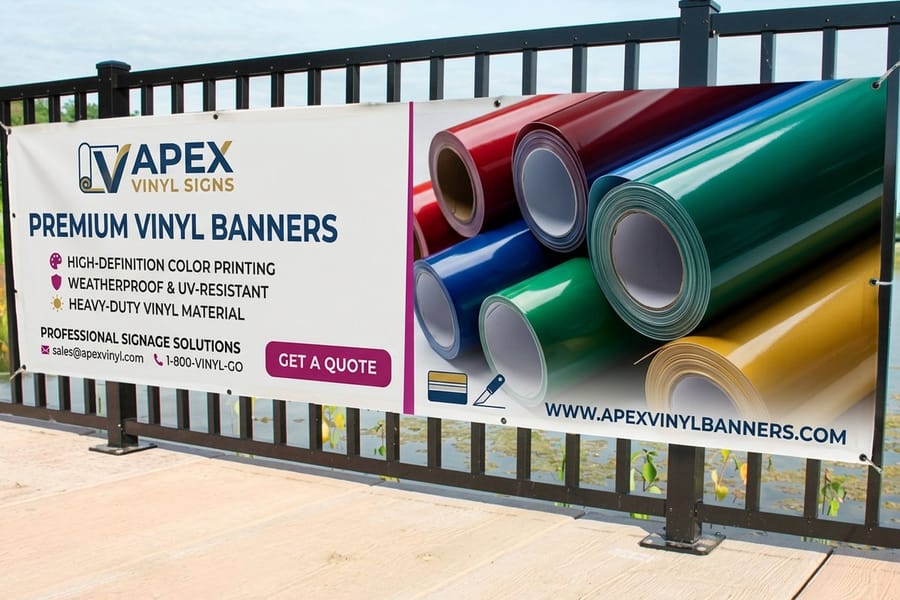
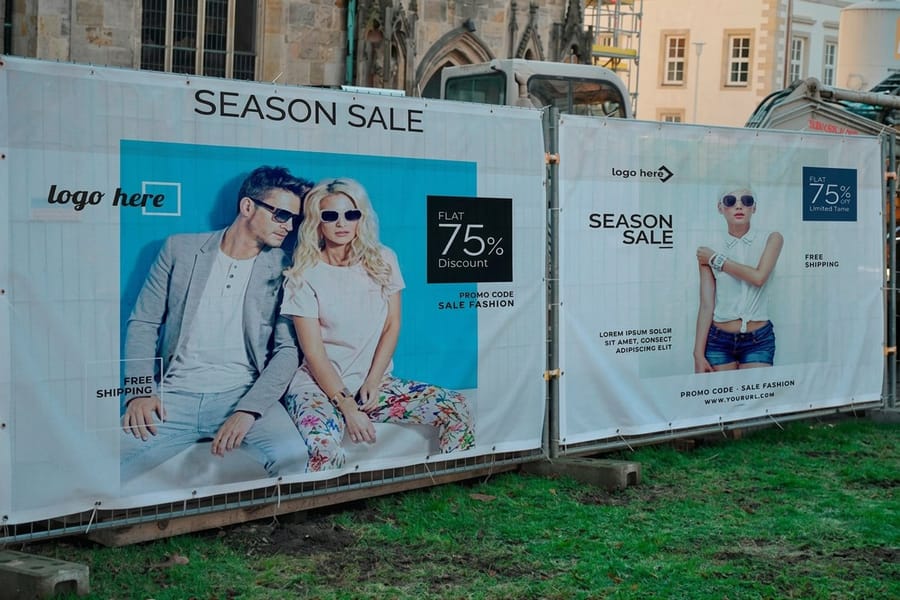
Put a solid banner on a chain link fence and you have built a sail. Wind hits the face, cannot pass, and pushes. The panel bows, the load travels out to the edges, and it all ends up concentrated on a handful of corner grommets. That is why failed fence banners nearly always tear at a corner rather than in the middle.
Mesh removes most of that force at the source. Air passes through the weave instead of piling up against it, so there is far less surface pressure to transfer anywhere. The panel stays close to flat in a gust, the hem stops flapping, and the ties, the grommets and the fence itself take a fraction of the strain.
The field alternative is cutting wind slits into solid vinyl, and it is worth being blunt about it: it is a patch, not a fix. Each slit is a ready made starting point for a tear, and once wind works one open it keeps running. The slits also remove only a small share of the face, so the panel still bows. If a banner is going to sit outdoors on a fence for more than a weekend, order it in mesh and put the knife away.
Two habits protect a mesh panel further. Leave a little slack in the ties so gusts get absorbed rather than transferred, and add an extra tie between grommets at the corners on exposed sites. A panel pulled drum tight looks better on day one and fails first. More on mounting in the banner hanging guide.
What the Holes Cost You in Print

Most mesh pages skip that part. Every hole that lets wind through also lets light through, and a face that is partly open cannot hold as much ink as a face that is closed. The practical result is that the same file prints a shade lighter and slightly softer on mesh than on solid vinyl, and against a bright sky the image loses some contrast because daylight is coming through it.
Detail suffers in a predictable way. Part of every stroke falls into a hole, so thin elements lose their edges first. What survives and what struggles:
| Design element | On mesh | What to do instead |
|---|---|---|
| Heavy display type | Reads cleanly at distance. | Nothing. This is what mesh is for. |
| Small body type | Softens and closes up below roughly an inch of cap height. | Cut the copy, size up what remains. |
| Hairline rules and thin reversed text | Break up and look ragged. | Thicken the rule, or reverse out of a solid block instead. |
| Solid color blocks and logos | Strong, with a small shift toward lighter. | Push saturation slightly if the brand color is critical. |
| Fine gradients and photographic detail | Flatten and lose subtlety. | Simplify to fewer, bolder tones. |
The sign rule of about one inch of letter height for every ten feet of viewing distance is a sensible floor on mesh, and going one size larger costs nothing but a bigger font. Design for the driver at 60 feet, not the person standing at the fence. Start from a correctly sized layout in the blank template library and keep the file simple.
One more thing worth knowing before you order double sided: light passing through the weave means each face shows a faint ghost of the other. If both sides carry the same artwork it is invisible. If they carry different messages, mesh is the wrong build and a blockout construction is the right one. Our vinyl versus mesh comparison lays out the rest of the differences side by side.
Where Mesh Belongs and Where It Does Not

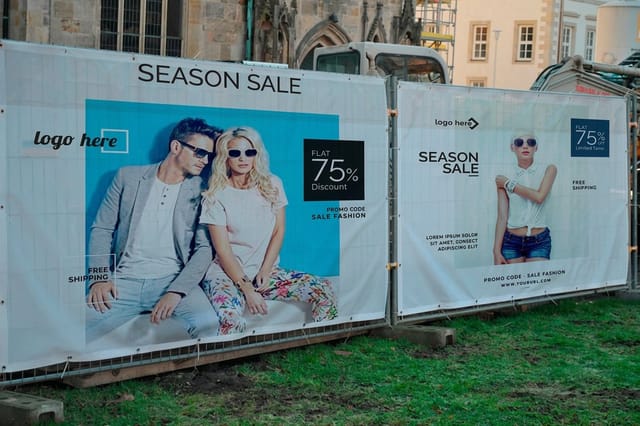
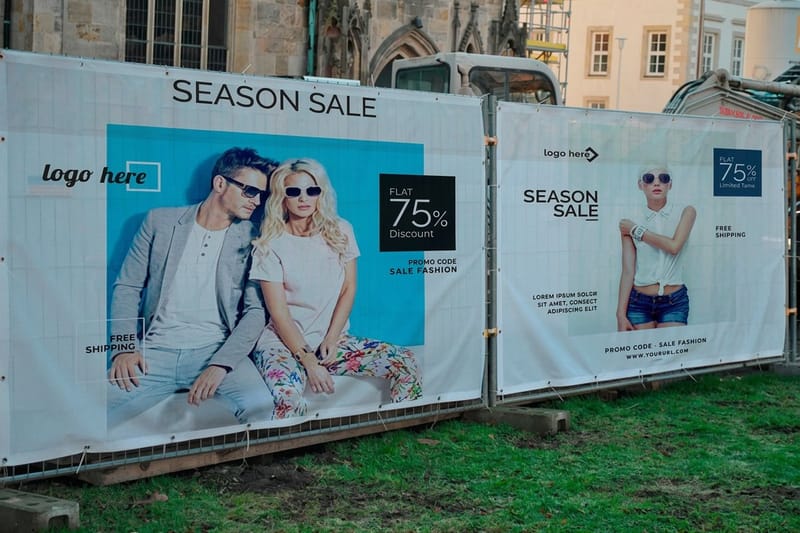
Mesh earns its place anywhere wind has something to grab. Chain link fences around a job site, a school field or a ballpark are the classic case, and construction banners on site fencing are the most common mesh job we print. Scaffolding wraps and building faces are the other big one, because a solid panel that size in an updraft is a real hazard rather than a printing problem. Parking structures, rooftop rails and exposed overpasses all belong in the same group.
It belongs nowhere indoors. There is no wind to release inside a hall, so mesh only surrenders color and sharpness for nothing in return. For a trade show wall, a retail window or a lobby, a solid vinyl banner is the better print and usually the cheaper decision once you account for the do over. The same goes for a banner mounted flat on a wall, where the wall behind it already blocks any airflow.
Street poles are their own case: they are exposed, but the load is carried by a pole pocket rather than by grommets, so purpose built pole banners handle it with reinforced construction instead of perforation. And if you only need partial see through on glass rather than a fence, that is a window film question, not a banner question.
Two practical notes before you order. Mesh collects dust in the weave, so a hose down every few weeks keeps a light background looking light. And large fence or building wraps are permitted work in many cities, so check the local rules before the panel is printed. The sign permit guide covers the state by state picture, and the full banner printing range along with the mesh printing collection, which shows every size and finish we run.
Wally explains mesh
Holes let the wind through, and a little light with it
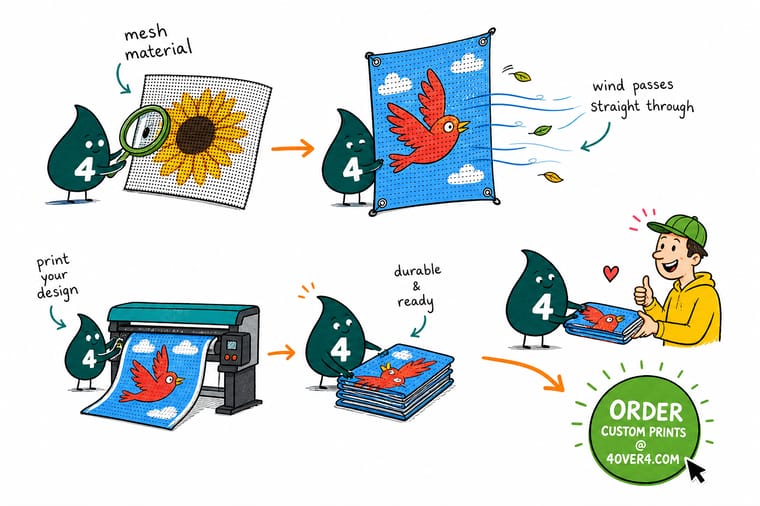
Wally hangs two banners on the same fence. The solid one puffs up like a sail and yanks on its corner grommets. The mesh one barely moves, because the air goes straight through the weave. The catch is that light goes through too, so his colors sit a shade lighter and his small print gets fuzzy. So he keeps the type big, keeps mesh for the fence, and prints anything indoors on solid vinyl.
Order mesh banners →Specs and pricing
Mesh, vinyl and site banners side by side
Compare the live sizes, finishing options and starting prices straight from the 4OVER4.COM configurator before you commit a big outdoor panel to one material.


Print it
Order the banner that suits the wind on site

Explore more
Where to go next


By the numbers
Mesh, scrim and pole banners for open air
Common Questions
Your mesh banner questions, answered
What is mesh banner material made of?
It is a polyester scrim coated in PVC, the same family of material as a standard vinyl banner, woven and finished so the face carries a regular pattern of small holes. The coating takes solvent and UV inks the same way solid vinyl does, so the print process is identical. The difference is entirely structural: a solid banner presents a closed surface to the wind, and mesh presents a screen. Mesh also runs lighter than the 13 oz scrim vinyl used for most solid banners, which is part of why a large mesh panel is easier to handle on a ladder.
Do mesh banners really need to be a different material, or can I just cut wind slits?
Cutting slits in a solid vinyl banner is the field fix, not the right answer. Every slit is a starting point for a tear, and once the wind works one open it runs. Slits also remove only a small share of the surface, so the panel still bows and still loads the grommets. If the banner lives on a fence in open air for weeks, order it in mesh and skip the knife. If it is up for one afternoon in calm weather, solid vinyl with tight ties is fine.
How much detail does mesh actually lose?
Enough that you should design for it rather than test it. Solid shapes, thick type and strong color blocks come through cleanly. Small type below roughly an inch of cap height, hairline rules, thin reversed text and fine gradient transitions soften, because part of every stroke is falling into a hole. The standard sign rule of about one inch of letter height for every ten feet of viewing distance is a good floor on mesh, and going a size larger than that costs nothing.
Can a mesh banner be printed on both sides?
It can be printed on both sides, but it will not behave like a blockout banner. Light passes through the weave, so each side shows a ghost of the other, and in bright backlight that ghost gets stronger. For a genuine two sided outdoor panel where neither face should bleed through, a blockout construction is the right build, and mesh is the wrong one. If both faces are the same artwork, the ghosting is invisible and double sided mesh works well.
How do you attach a mesh banner to a chain link fence?
Use bungee balls or heavy zip ties through the grommets, spaced closely and never pulled bar tight. Grommets on a fence run around every two feet, and the corners take the most punishment, so add a tie between grommets at the corners if the site is exposed. Leave a small amount of slack: a panel with a little give absorbs gusts, while a drum tight panel transfers every gust straight into the hardware. Our guide to grommet placement covers the spacing in detail.
How long does a mesh banner last outside?
Outdoor life depends far more on how it is mounted than on the material. A mesh panel that is tied properly, has slack, and sits on a fence rather than free spanning a gap will outlast a solid banner in the same spot, because it never takes the full wind load. What kills mesh early is abrasion: a loose corner slapping against a metal fence rail will fray the weave within weeks. Check the ties after the first storm, and again a month later.
Is mesh cheaper than vinyl?
They are close, and the choice should not turn on price. Mesh banners start at $75 and vinyl banners start at $79 at 4OVER4.COM, so at the entry sizes the difference is small enough to ignore. Pick the material by where the banner hangs. If it is exposed to wind on a fence or a building, mesh; if it hangs indoors, on a protected wall, or anywhere color depth matters more than airflow, solid vinyl.
Get Started
Pole banners start at $97.76
Pick your size, choose mesh for anywhere the wind has something to catch, and we hem it, grommet it and ship it ready to tie up.
Legal Disclaimer
Gold Standard guarantees apply to all standard orders placed through 4over4.com. Price match requires verifiable proof of a competitor's published price for an equivalent product with matching specifications and turnaround time. Satisfaction guarantee covers manufacturing defects and print quality issues. Contact support with order number and documentation. On-time delivery rate based on tracked orders 1999 to 2026. Individual results may vary based on shipping carrier performance.
