
Buckslips vs Rack Cards vs Statement Stuffers and How to Choose


Three formats that get confused in every quote request. The real trim sizes differ, each delivery path demands its own stock, and one question settles the choice.
Buckslips and statement stuffers are the same piece of paper, a 3.5 by 8.5 inch slip that slides flat into a #10 envelope, and the name changes with the mailing it rides in. Rack cards are a different product: 4 by 9 inches on 14pt or 16pt stock, built to stand in a display pocket and be picked up by a stranger. Buckslips and stuffers start at $27.46 at 4OVER4.COM, rack cards at $42.84. Choose by how the piece reaches a person, not by price.
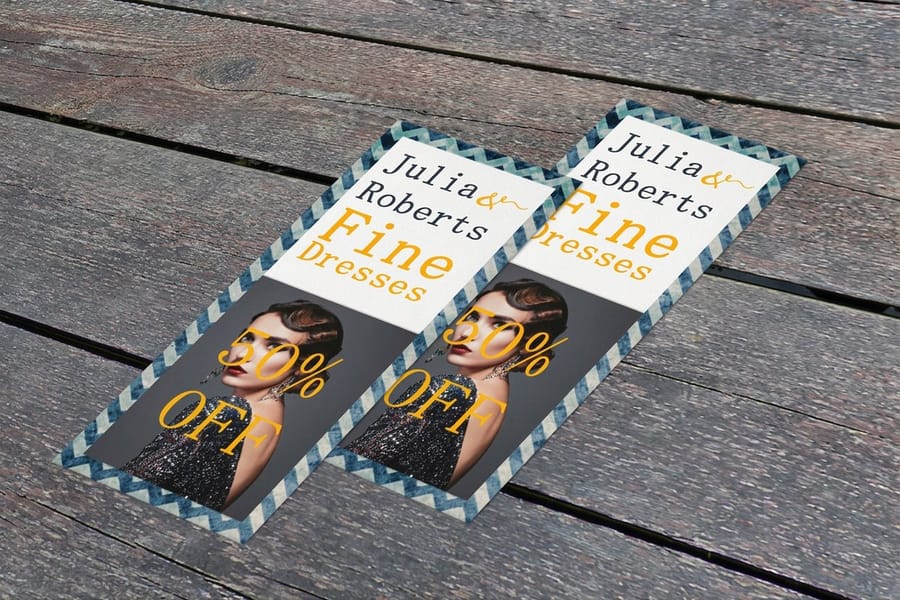
Quick answer
One trim size for the envelope, another for the rack
Buckslips and statement stuffers share a 3.5 by 8.5 inch trim because that is what fits a #10 envelope flat. Rack cards run 4 by 9 on 14pt or 16pt stock because a wire pocket needs a card that stays upright. The envelope pieces cost less and ride on postage you are already paying. The rack card costs more and buys rigidity plus a shelf position. Decide by the delivery path, then let the stock follow.
What Each Format Actually Is

A buckslip is a 3.5 by 8.5 inch slip printed on light stock and dropped into an envelope that is already going out. The name comes from the shape, which is close to a dollar bill. Nobody requests one. It arrives alongside something else.
A statement stuffer is the same 3.5 by 8.5 sheet with a narrower brief: it travels inside a bill, a bank statement or a policy renewal. Same trim, same press, same starting price, since both standard buckslips and statement stuffers start at $27.46 at 4OVER4.COM. The difference sits in the mailing, not in the printing, and any printer who quotes you two different numbers for them is quoting the stock or the quantity, not the format.
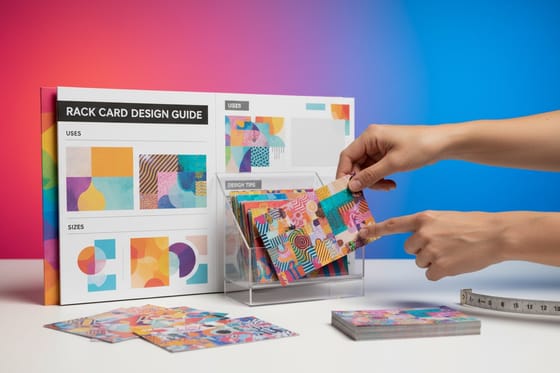
A rack card works from the other direction. It trims to 4 by 9 inches on heavy stock, sits in a wire pocket at a hotel desk, a visitor center or a clinic waiting room, and somebody has to decide to take it. That one fact drives every spec on it, from the caliper of the board to where the headline lands. Standard rack cards start at $42.84.
Two of these arrive inside something else. One has to earn attention from six feet away. Almost every choice between them comes back to that. If you want the rack format examined on its own, the guide to what a rack card is and how to design one goes further on layout.
Size, Stock and Price, Side by Side
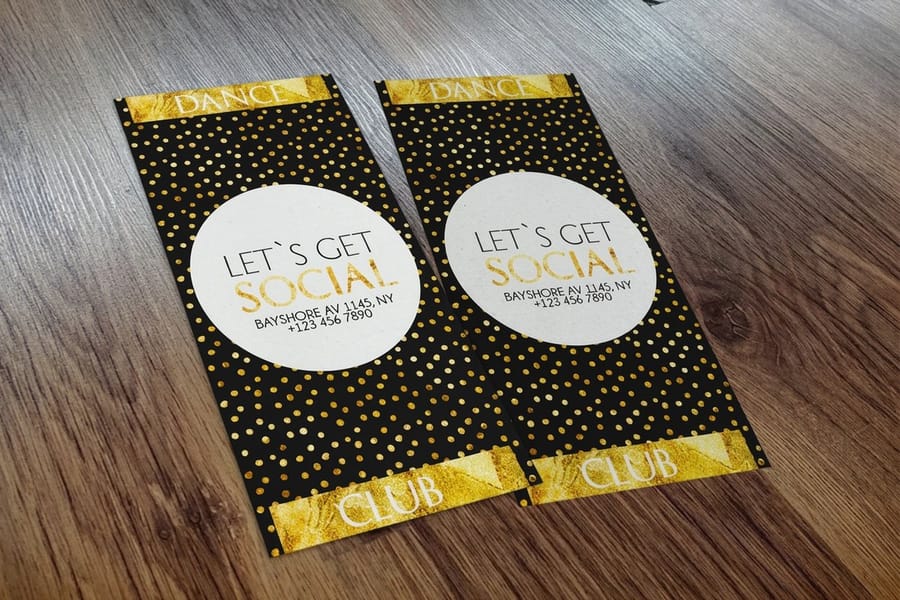
The specs matter less than the delivery path, so read the fourth column before the second. It is the one that decides which of these you should be printing.
| Format | Trim size | Typical stock | How it reaches a reader | Starts at |
|---|---|---|---|---|
| Buckslip | 3.5 by 8.5 in | Text weight or light card | Inserted into an envelope you are already mailing. | $27.46 |
| Statement stuffer | 3.5 by 8.5 in | Text weight, kept light on purpose | Rides with a bill, statement or renewal notice. | $27.46 |
| Rack card | 4 by 9 in | 14pt or 16pt cardstock | Stands in a display rack until somebody picks it up. | $42.84 |
| Postcard | 4 by 6 in and up | 14pt or 16pt cardstock | Mailed on its own, no envelope involved. | $16.48 |
The postcard row is there for a reason. People often reach for a buckslip when there is no envelope going out anywhere, which is the one situation a buckslip cannot help with. In that case the cheapest route to a mailbox is a standard postcard, and the comparison between postcards, flyers and letters is the one worth reading instead.
The Envelope and the Rack Decide the Stock

A #10 envelope measures 4.125 by 9.5 inches. A 3.5 by 8.5 insert drops into it flat, with roughly five sixteenths of an inch of clearance on each side and half an inch at the ends. That clearance is not decoration. It is the tolerance an inserting machine needs to grab one sheet and not two, and it is why the buckslip trim has stayed the same for decades.
Weight is the second constraint, and it is the one that surprises people. An envelope, a folded letter and a text weight slip usually sit inside the first weight step of a First-Class letter. Swap the slip for 14pt card and a run of several thousand can tip over the line, which multiplies across the whole drop. Build one complete sample, envelope and contents together, and have it weighed before the job goes to press. If you are running a large statement drop, read how bulk mailing works first, and get the address block right using the rules in how to address an envelope properly.
A rack pocket applies the opposite pressure. The lip of a standard wire pocket covers everything below roughly the top three and a half inches of a 4 by 9 card, so the headline, the image and the reason to care all have to live above that line. Everything below it is for the person who already has the card in their hand. This is also why stock weight is not optional: a rack card on 100lb text curls forward inside the pocket within a day, and a 3.5 by 8.5 slip dropped into a 4 by 9 pocket leans sideways and hides behind its neighbors.
One more habit worth keeping. Rack cards get handled, pocketed and pulled out again, so a matte or gloss coating pays for itself on anything sitting near a door. Envelope inserts never need it. If the piece has more to say than either format can carry, that is the point where a folded standard brochure becomes the honest answer, and rack cards versus brochures walks through where that line sits.
Which One to Print

Work backward from how the piece reaches a person, and the choice makes itself.
- You already mail invoices, statements or welcome letters. Print a buckslip or a statement stuffer. Postage is paid, the envelope is going anyway, and the only new cost is the printing, which starts at $27.46. This is the cheapest incremental offer in print.
- You have a counter, a lobby or a partner location with a rack. Print rack cards on 14pt or 16pt. The rigidity is the product. A limp card in a rack is money spent on something nobody sees.
- You are mailing a bank or insurance statement. Use a stuffer, keep it on text weight, and make it look clearly like marketing rather than part of the statement. A recipient who mistakes an offer for a required notice is a support call, not a lead.
- You have neither an envelope nor a rack. Neither format helps. A postcard reaches a mailbox on its own, and a brochure carries more detail when somebody has agreed to take it.
If you are printing all three at once, which happens more often than people expect, set them up together. Pull the correct trim from the blank template library so the buckslip does not come back a sixteenth of an inch too wide for the inserter, and browse the rest of the shelf in marketing materials to see what the same artwork can be reused on.
Wally sorts the three formats
One goes in an envelope, one stands in a rack
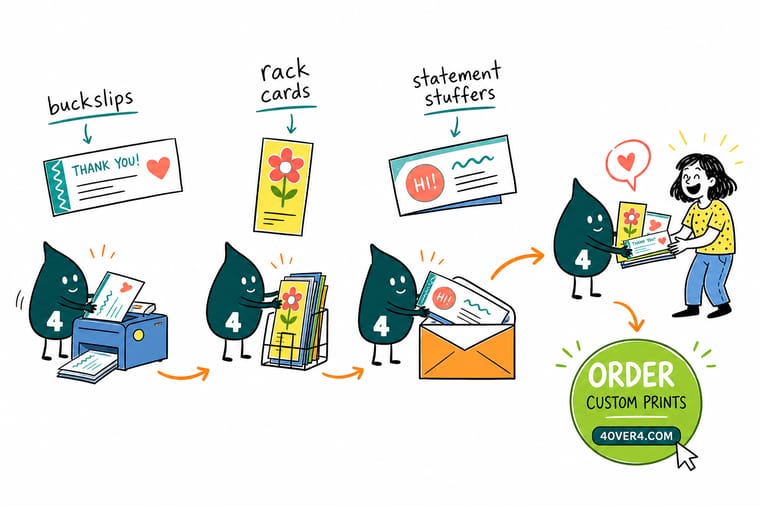
Wally holds a buckslip and a statement stuffer in the same hand, because they are the same 3.5 by 8.5 slip with two different jobs. Both slide flat into a #10 envelope that is already going out, so the only new cost is the printing. The rack card in his other hand is 4 by 9 on 14pt board, and it has to stand up in a wire pocket with just its top three and a half inches showing. Give Wally text weight for the envelope and card stock for the rack, and both pieces do what they were made for.
Order buckslips →Specs and pricing
Sizes, stocks and starting prices for all three
Configuration choices and starting prices straight from the 4OVER4.COM configurator, so you can compare the envelope inserts against the rack card without leaving the page.



Print it
Order the format that matches your delivery path


Explore more
Where to go next

By the numbers
Three insert formats inside a thousand product catalog
Common Questions
Your buckslip and rack card questions, answered
What size is a buckslip?
The standard buckslip trims to 3.5 by 8.5 inches. The name comes from the shape, which is close to a US dollar bill, and the size is not arbitrary: it slides flat into a #10 envelope, which measures 4.125 by 9.5 inches, without a fold. That leaves roughly five sixteenths of an inch of clearance on each side, which is the tolerance an inserting machine needs to pull one sheet at a time. Print it any wider and a machine-inserted job turns into a hand-inserted job.
Is a statement stuffer the same thing as a buckslip?
Physically, yes. Both trim to 3.5 by 8.5 inches and both start at $27.46 at 4OVER4.COM. The names describe the mailing, not the paper. A statement stuffer rides inside a bill, a bank statement or a policy renewal, so it usually has to sit next to a folded document and stay under a weight budget. A buckslip is the broader term for any slip you drop into an envelope that is already going out, including welcome packets, invoices and order confirmations.
What size and stock should a rack card be?
Four by nine inches is the size that fits a standard wire brochure rack, and 14pt or 16pt cardstock is the weight that stays upright in one. A rack card printed on text weight paper curls at the top and slumps forward inside the pocket, which is exactly the failure you cannot see when you approve a proof on your desk. If the rack sits outdoors or near a door, go to 16pt and add a gloss or matte coating so handling does not scuff the face.
Can I mail a rack card on its own?
You can, but check the piece against USPS letter rules before you print. A 4 by 9 inch card on 14pt stock is bigger and stiffer than a standard postcard, and it needs a clear address panel with the right clear zones. Most people who want a mailable card of that shape are better served by a slim postcard or by a buckslip inside an envelope they are already sending. If the mailing is the whole point, start with the guide to types of direct mail advertising before you pick a format.
Will a buckslip push my mailing into a higher postage bracket?
It can, and the answer depends on the whole package rather than the insert alone. An envelope, a folded letter and a text weight slip normally sit inside the first weight step for a First-Class letter. Swap that slip for 14pt card and a run of several thousand can cross the line, which multiplies across the entire drop. Build one complete sample, envelope and all, and have it weighed before the job goes to press. Weighing it afterward only tells you what it cost you.
Which of the three is cheapest to print?
Buckslips and statement stuffers, both starting at $27.46, against $42.84 for standard rack cards. The more useful comparison is cost per delivered message. A buckslip rides on postage you are already paying, so the incremental cost is the printing alone. A rack card carries no postage at all but needs a host location willing to hold it, and cards that sit in a rack nobody browses cost more per reader than any of them.
Get Started
25 buckslips cost $27.46, or $1.10 each
Pick the trim, choose text weight for the envelope or 14pt for the rack, and we print a piece that fits the job it was made for.
Legal Disclaimer
Gold Standard guarantees apply to all standard orders placed through 4over4.com. Price match requires verifiable proof of a competitor's published price for an equivalent product with matching specifications and turnaround time. Satisfaction guarantee covers manufacturing defects and print quality issues. Contact support with order number and documentation. On-time delivery rate based on tracked orders 1999 to 2026. Individual results may vary based on shipping carrier performance.
