
Health and Beauty Labels That Make a Product Look Worth the Price


Jordan is our labels, packaging and sustainability voice, built from the knowledge of our production team, with over 20 years in printing.
A health and beauty label reads premium when its stock suits where the product lives, one accent color carries the brand, and real empty space surrounds the brand mark. The rest of this article walks through stock, shape, water, format and price for each kind of container.
Health and beauty label formats at a glance
| Container | Typical size | What the label carries | Stock that suits it | Where it is used |
|---|---|---|---|---|
| Serum or dropper bottle | Roughly 2 x 1.5 in, or a narrow band | Brand mark, one product word, volume | Premium white vinyl or clear label | Facial oils, serums, tinctures |
| Cream jar lid or side | Round 1.5 to 2.5 in diameter | Logo on the lid, INCI list on the base | Premium, clear or white vinyl | Moisturizers, balms, masks |
| Shampoo or body wash bottle | Full wrap, roughly 8 x 4 in | Full front panel plus ingredients and directions | White or clear BOPP roll with gloss lamination | Anything that lives in a shower |
| Supplement or vitamin jar | Wrap, roughly 6 x 2.5 in | Supplement Facts panel, dosage, warnings | Premium semi-gloss or white vinyl | Capsules, powders, gummies |
| Sachet, sample or tester | Flat, roughly 2 x 1 in | Product name and shade or scent only | Standard stock, short run | Sampling, gift with purchase, PR kits |
Measure the real container before you set the size, because circumference and curvature both change what fits.
What makes a beauty label read premium
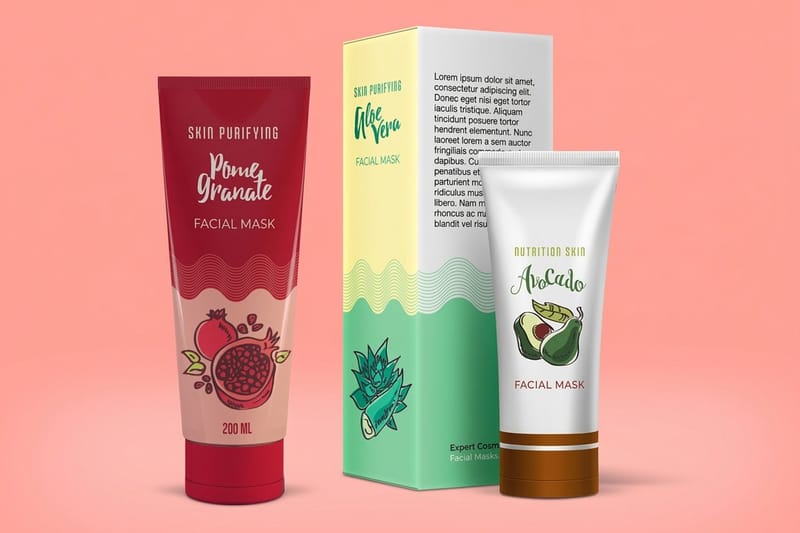
Premium is a stock and layout decision far more than an artwork decision. White vinyl or a clear label, one accent color and a layout with real empty space in it will read as expensive on a plain white bottle. The same artwork on uncoated paper with a full-bleed background reads as a supplement from a discount shelf.
The reason is that people judge a beauty product with their hands before they read a word of it. A vinyl label has a smooth, slightly cool surface. Paper feels dry and thin, and once a customer has felt it they have already priced your product.
Restraint is the other half. Look at the labels that hold the top shelf in any pharmacy: one type family, two sizes, a large quiet area, and the ingredient list carried on the back where it belongs. Our product label printing range covers the stocks below, and the print resolution guide explains why a logo placed at 300 DPI holds its edge at a size this small.
Finish, and what each one costs you
Gloss lamination, offered on roll labels, lifts color, makes photography snap and shrugs off water. It suits anything in a bathroom and works against a product meant to feel understated. Matte/silk lamination, the other roll option, mutes color a little and reads calmer.
Sheet labels carry no laminate, so the face stock sets the look. Hi-Gloss UV gives the shine, semi-gloss sits in the middle, uncoated gives a flat, papery feel, and Brown Kraft suits a handmade soap or balm.
Clear labels and the white ink they do not have
A clear label on a colored bottle looks like the type is printed straight onto the glass. The catch is that ink is not opaque, and these labels print 4 color or black with no white ink. Print a pale gray logo on a clear label, stick it on an amber bottle, and the logo turns amber.
Keep the artwork on a clear label darker than the bottle behind it, or move pale artwork to white vinyl, which gives every color a white base. Settle this at the file stage, because finding it after the run means a reprint.
Custom shapes and sizes for an awkward container
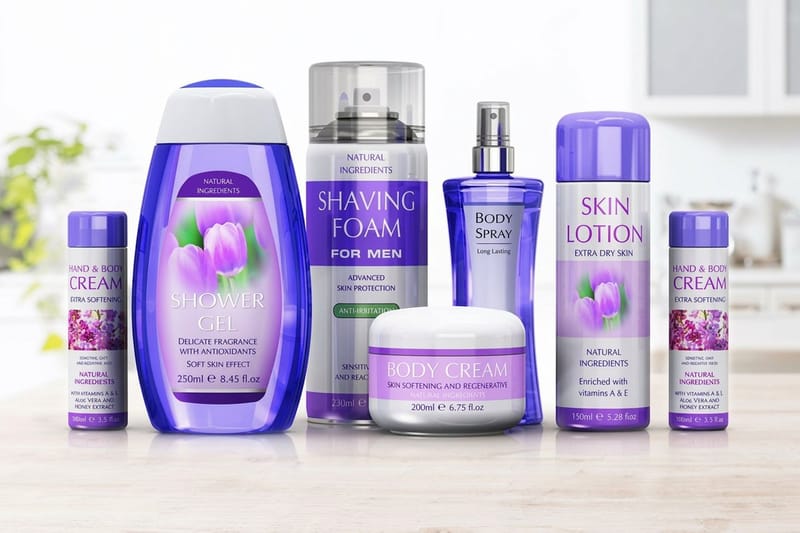
Measure the container before the artwork, because the number on the bottle is the volume inside it and tells you nothing about the surface outside. Wrap a strip of paper around it, mark where it meets, then lay it flat. That length is your maximum width, and the label wants to stop short of it so the two ends meet without overlapping into a ridge.
Shape follows the container after that. A round label suits a jar lid and the flat face of a wide pot. A tall rectangle with rounded corners fits a dropper bottle or a serum, where the usable area is a narrow band. An oval sits better on a curved shoulder than a rectangle, because the corners of a rectangle lift first on a curve. Anything outside those is a die cut shape, and premium health and beauty labels take any size you enter in the configurator, so the label is not forced into a preset.
Labels that survive water, oil and a hot bathroom
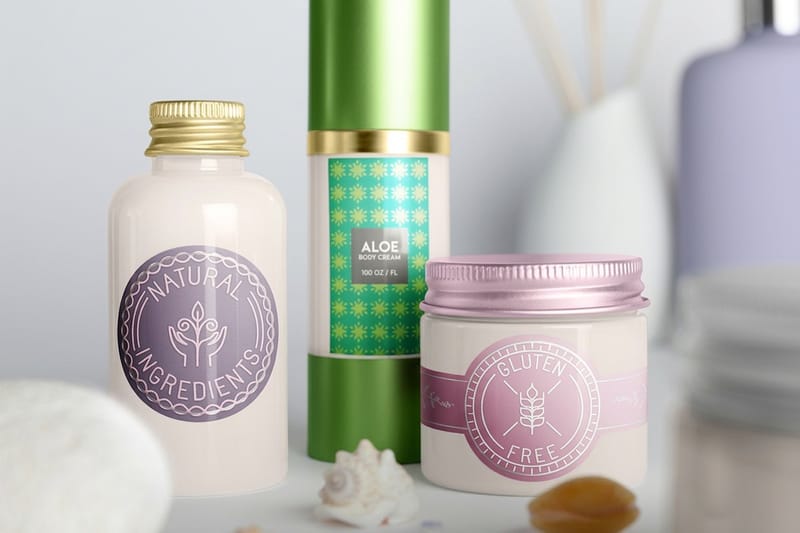
Anything that goes in a shower needs a synthetic face stock. White vinyl, clear label stock and BOPP film do not absorb water, so the label edge stays down and the print stays sharp. Paper wicks water in from the cut edge, and the failure starts as a soft, wavy corner before the whole label lifts.
On a roll, a gloss or matte/silk lamination on top matters as much as the face stock. Steam, hot water and repeated wet hands abrade the surface, and the laminate takes that abrasion instead of the ink. Without one, the printed area can go chalky where the thumb sits, usually right on the brand name.
Oil is the quieter problem. Body oils, cleansing balms and anything with a dropper leave residue on the label every time the product is used. A laminated or vinyl surface wipes clean; an uncoated one darkens where the oil soaks in. If you are printing a full packaging system rather than a bottle alone, our custom product packaging article covers how the carton and the label should agree, and the packaging and labels range lists boxes, mailers and labels together.
Curved bottles change the size you can use
A flat label on a tightly curved bottle wrinkles at the top and bottom edge. The tighter the curve and the taller the label, the worse it gets. On slim serum bottles the practical answer is a short label, a narrow band, or a full wrap that meets itself rather than a tall panel stuck on one face.
Print one, apply it to the real container, and leave it a day before you judge it. Adhesive keeps moving for a few hours, so a label that looks perfect at the bench sometimes shows a lifted corner the next morning. That single test costs one label.
Small type, and the point where it fills in
Ingredient declarations are set small by necessity, and small type is where printing gets unforgiving. Positive type on a light background holds down to about 5 or 6 point. Reversed type, white out of a dark field, fills in earlier because ink spreads slightly into the letterform, and a reversed 5 point INCI list on a dark navy label turns into a gray stripe.
Set the ingredient panel in positive type on a light area whenever the layout allows it, keep it to a single weight, and do not condense the font to make it fit. If it will not fit, the panel is too small for the amount of copy, and the honest fix is a bigger label or a wrap that continues onto the back.
Sheet labels, roll labels and which one you actually need
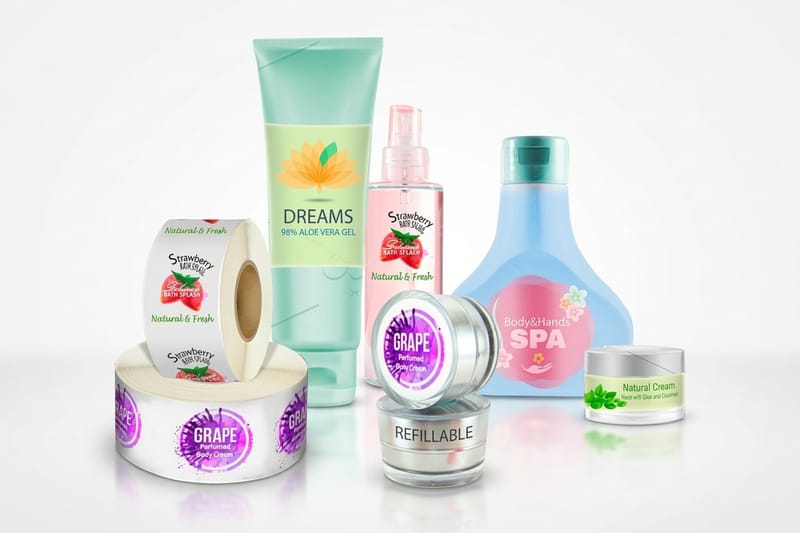
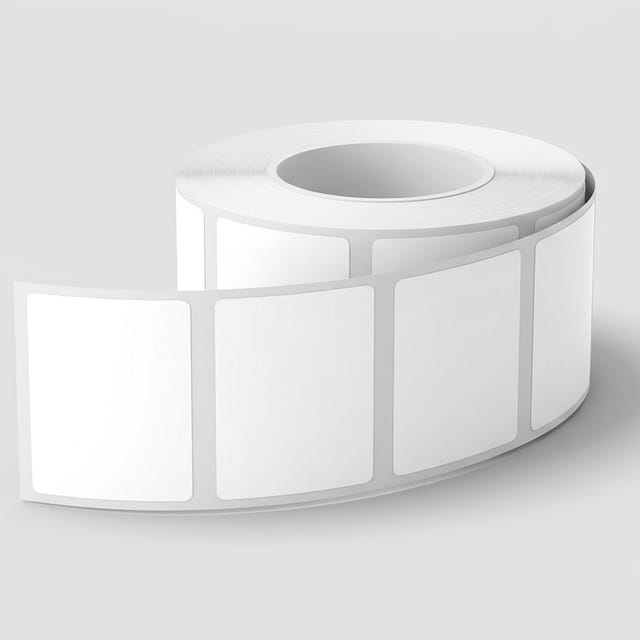
Sheet labels are peeled and applied by hand. Roll health and beauty labels come wound on a 3 inch core, ready to feed a labeling machine, and the price reflects that format: a roll order starts at 100 labels, where the standard and premium sheets start at 25. To see premium sheets on real containers, flip through the premium health and beauty labels story.
If you are hand-filling a few hundred units in a workshop, sheets are the correct answer and the roll is money spent on a format you cannot use. Once a co-packer or an in-house applicator is doing the work, rolls stop being optional, because nobody is hand-peeling ten thousand labels.
The volume itself is also the cost lever. Label pricing steps down as the run grows, and the way price breaks stack is worth understanding before you pick a quantity. Our guide to how bulk price breaks work lays out where the steps fall so you order to a break rather than just under one.
The quantity trap on a first run
The cheapest unit price sits at a quantity that is too big for a first run. Artwork changes after the first month of real feedback: a shade name gets clearer, the volume marking moves, a claim gets softened. A pallet of labels for the previous version is an expensive lesson in patience.
Order enough to cover the batch you can actually sell, keep the artwork file clean and layered, then reorder to a bigger break once the design has survived contact with customers. The difference between the two unit prices is smaller than the cost of scrapping a run.
Printing your own labels at home and what it costs you
Blank label sheets and an office printer are a reasonable way to test a layout on a real bottle, and a poor way to sell a product. A home printer lays ink or toner on a paper face with nothing over it, so the first splash in a bathroom lifts the color and the cut edge starts wicking within a week.
The test is still worth doing. Print the artwork at final size, cut it out and wrap it on the actual container to check that the ingredient panel fits and the seam lands where you expected. Then order the real thing on the right stock: standard labels for a design you are still deciding on, premium vinyl or clear for the finished range.
Label pricing and specs at 4OVER4.COM
Label price moves with size, stock, finish and quantity, and the per unit cost drops as the run grows. Standard health and beauty labels cost $23.88 for 25 and $74.14 for 500, about 15 cents a label, printed in 3 business days on uncoated, semi-gloss, hi-gloss, white vinyl or clear stock. Roll labels hold one price from 100 to 500 pieces, then 1,000 cost $380.66 on white or clear BOPP with gloss or matte/silk lamination, wound on a 3 inch core in 6 business days. The table below shows premium stock from the live configurator, where you enter any size and choose white vinyl or clear permanent, so you can size a first batch before you commit artwork.
Quantity and price
Health and beauty label pricing and specs
Real configurator numbers on premium stock, where a larger run lowers the cost of each label.
| Quantity | Price Per Unit | Total |
|---|---|---|
| 25 | $1.17 | $29.16 |
Matching the stock to where the product lives
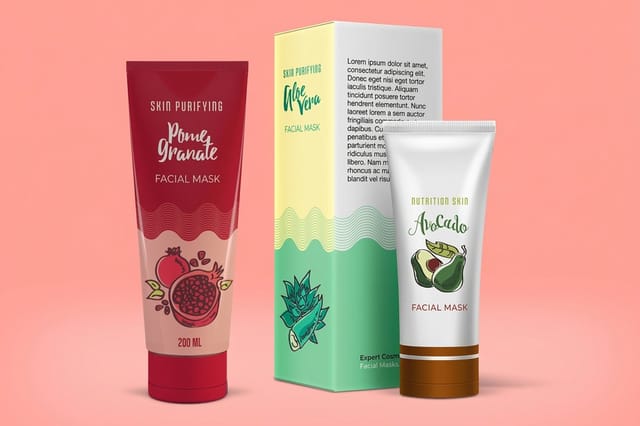
Stock and container work together, and the deciding question is where the product spends its life. A boxed serum on a dressing table stays dry, so premium product labels on semi-gloss or Hi-Gloss UV stock look and perform well, and the premium product labels story shows them on real products. A body wash in a shower is a different job: it wants a vinyl or BOPP face and a permanent adhesive rather than a repositionable one, because the surface will be wet again within hours.
Print it
Health and beauty labels, ready to apply
Premium stocks, from white vinyl to clear, sized to skincare bottles, jars and supplement containers.
Supplements sit between the two. The jar stays dry, so a paper label holds up, and the real constraint is the Supplement Facts panel rather than moisture. Treat that panel as the biggest fixed block on the layout and build the brand around it. If part of the range needs a hanging tag instead of an adhesive label, our custom printed product tags guide covers where a tag does the job better.
Choosing the right label for your part of the industry
Health and beauty covers products with very different lives. Here is how the choice changes by category.
- Skincare and serums. Small labels on curved glass. Premium white vinyl or clear stock, cut as a short band so the edges do not wrinkle.
- Haircare and body wash. Full wraps on bottles that live in a shower. White vinyl sheets for a first batch, then white or clear BOPP roll labels with gloss lamination once an applicator does the filling.
- Supplements and vitamins. A wrap around a capsule, powder or gummy jar. Size the label from the facts panel outward, then pick one of the 50 standard presets or enter the exact size on premium stock.
- Salons and treatment rooms. Retail-ready labels on backbar decants, with the same type on the price card beside them.
- Soap and candle makers. Short runs, seasonal scents, one layout with a color variable. Standard stock is fine for a boxed product and a synthetic is worth it for anything sold near a sink.
Label ideas worth borrowing for a beauty range
A beauty range can run on a small family of labels, one for each job on the shelf. Each idea below uses a size and stock from the catalog and is cheap enough to try on a short run.
- A shade dot on the lid. A 0.5 inch clear circle on a lipstick or balm cap carrying the shade name only, so a customer finds the right one in a drawer without turning it over.
- A clear wrap on amber glass. Clear permanent stock on a dropper bottle with a black wordmark, so the oil shows through and the name stays readable against the amber.
- A tester sticker that looks planned. A 1.25 x 2 inch oval on standard semi-gloss for sachets and testers, matching the main label type so a sample reads as part of the range.
- A batch sticker you write on. A small rectangle on standard uncoated stock, which takes a pen, for the fill date and batch number on handmade soap or balm.
- A band around the gift set. A long, narrow premium label ordered as a custom size on hi-gloss stock and wrapped around a boxed set, so a seasonal edition changes the band and keeps the box.
Templates and print-ready blanks
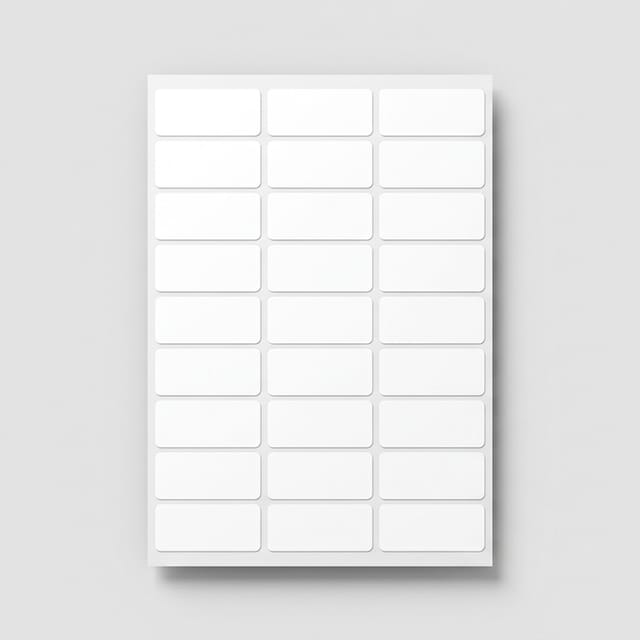
Templates save the round of proofs that gets spent on trim and bleed. 4OVER4.COM sizes its blanks to exact product specs, so your artwork lines up with the cut line without a guess. Premium labels come in 3 x 5, 3 x 6, 4 x 4, 4 x 6, 5 x 5 and 5 x 7 inches or any size you enter, and standard labels run from a 0.5 inch circle for a lip balm lid to a 4 x 6 inch oval, with 1.25 x 2 and 2 x 3 inch ovals for a curved shoulder. Pull a print-ready blank from the blank template library with bleed and trim already marked, then place the ingredient panel inside the safe area rather than against the trim.
Start fast
Templates and print-ready blanks
Label templates and blanks at the exact size, so the logo and the ingredient panel stay inside the cut line.
Wally picks the stock before the artwork
Where the bottle lives decides what the label is made of
Use a synthetic face stock with a laminate for anything that meets water or oil, and premium paper with a laminate for a dry jar. Add a white underprint behind any artwork on a clear label, set the ingredient panel in positive type on a light field, and print one label on the real container before you order the run.
Order health and beauty labels →What to remember about beauty labels
Design tips that hold at every size
- Leave real empty space. The single most reliable premium signal on a beauty label is unused area. Every element you remove makes the remaining ones look more deliberate.
- One accent, used once. One bright word on a quiet field reads expensive. A busy, full-color background reads cheap. Contrast is the effect, not coverage.
- Put the seam behind the panel. On a wrap, land the overlap under the ingredient block rather than through the logo. It is a two-minute layout decision that decides whether the finished bottle looks considered.
- Check it wet, not dry. Run a finished label under a tap and thumb it while it is wet. That is the test the product will actually face.
Explore more
More ways to print and package
Labels, packaging and reading that pair with a beauty range.
Product Premium Health and Beauty Labels 23 stocks, clear and white vinyl among them, for skincare and supplement containers. 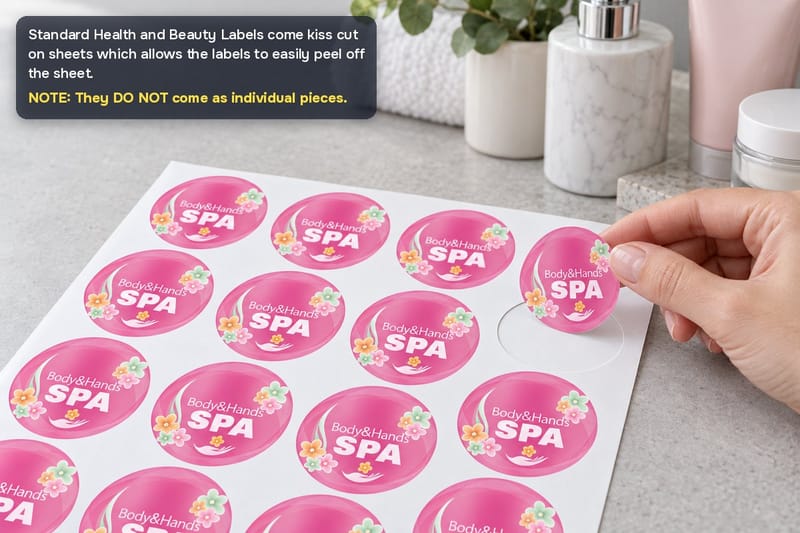 Product Standard Health and Beauty Labels The short-run option for testing a design on real product. Product Roll Health and Beauty Labels Wound on a core for machine application at volume.
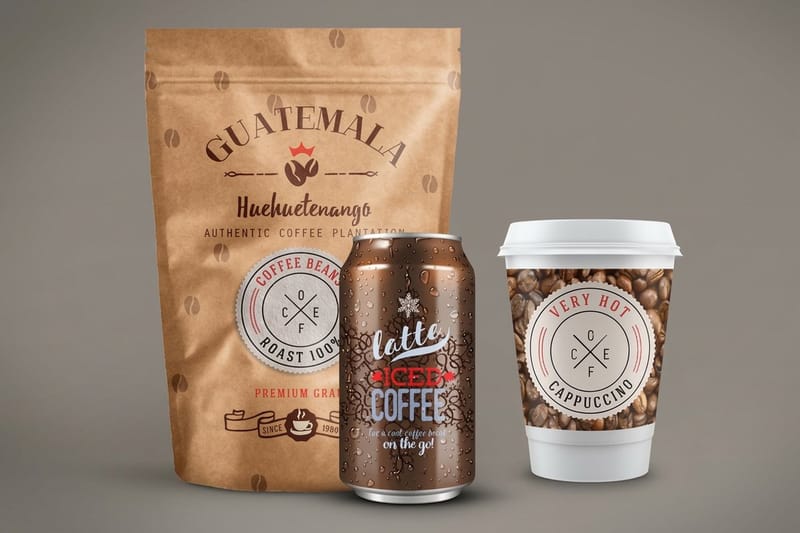 Product Premium Product Labels The same 23 stocks for any product that needs a label.
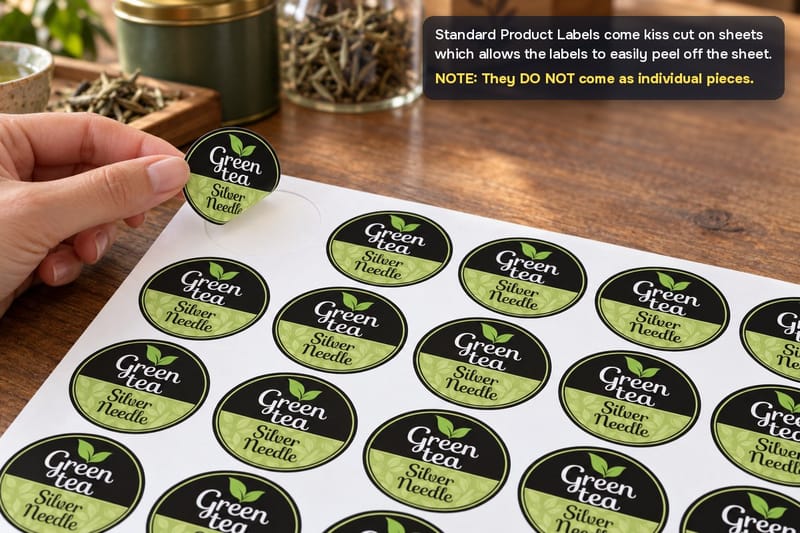 Category Product Label Printing Every label stock and size in one place.
 Article Spa Print Marketing Ideas Treatment menus and retail print for a spa that sells product.
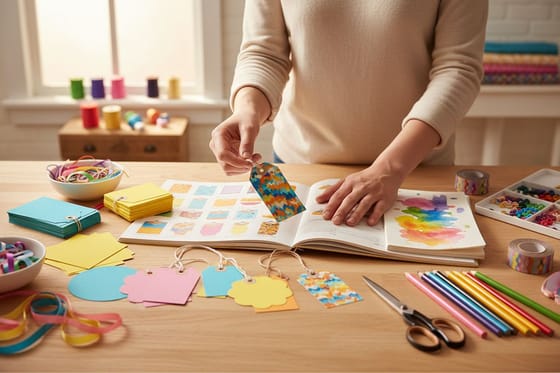 Guide Custom Printed Product Tags When a tag does the job a label cannot.
 Article Custom Product Packaging Making the carton and the label agree.
Ready to print your labels?
Pick your size, drop in your artwork or a free template, and choose the stock for its shelf or shower.
Common questions about health and beauty labels
Does a health and beauty label need a barcode?
Only if it sells through a retailer or a marketplace that scans one. A barcode is a trade requirement rather than a legal one, and each retailer will tell you which symbol it wants. If you are heading that way, leave the space in the first layout instead of squeezing it in later, keep it on a light background with the quiet zone clear, and never scale it down to make it fit.
Can I use one label design across every size in a range?
The artwork carries across, the file does not. Each container has its own circumference, so a label that fits a small jar will not wrap a tall bottle, and scaling the whole design up drags the ingredient panel below a readable size. Keep the brand block and the colors fixed, then rebuild the layout for each size from a template sized to that container.
What is the difference between a laminate and a varnish?
A laminate is a thin film applied over the printed face, and it is what survives water, oil and rubbing. A varnish or coating is a liquid layer that dries on the surface, changing how the label looks and giving light protection but not much more. For anything living in a bathroom the laminate is doing the work. At 4OVER4.COM lamination, gloss or matte/silk, is a roll label option; the sheet labels have none, and Hi-Gloss UV is a coated stock rather than a film.
What label material is waterproof enough for a shampoo bottle?
White Vinyl Permanent or Clear Label Permanent on a sheet, or white or clear BOPP on a roll with gloss lamination over the top. Paper stock with a laminate is not the same thing: the laminate protects the surface but the exposed edge still soaks. Confirm the adhesive as well as the face stock, because an adhesive applied to a bottle that is already damp will never reach full bond.
Does a clear label really look more expensive than a white one?
On a bottle worth showing, yes, because the type appears to sit directly on the glass and the product itself becomes part of the design. It works against you when the container is an ordinary shape or the fill is an unappealing color, since a clear label puts both on display, and then white vinyl is the safer choice.
What has to legally appear on a cosmetic label in the United States?
A cosmetic sold at retail carries the identity of the product, the net quantity of contents on the principal display panel, the name and place of business of the manufacturer, packer or distributor, and an ingredient declaration using INCI names in descending order of predominance. Warning statements apply to specific product categories. Dietary supplements follow a different set of rules built around the Supplement Facts panel. Design around whichever panel applies from the first layout rather than fitting it in at the end, and confirm the current requirements with your own regulatory advisor before you commit a run.