
Raised Foil Printing That Lifts Your Logo Off the Page


Flat foil catches the eye. Raised foil catches the eye and the fingertip, metallic shine built on a raised base so your logo physically lifts off the card. This page covers how the effect is made, where it works in a design, and how to order it at 4OVER4.COM.
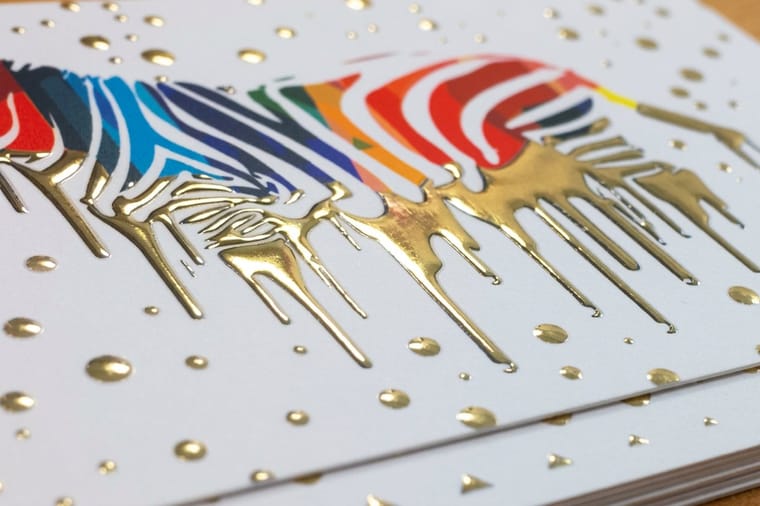
Raised foil is a finishing process that builds a clear raised base on chosen design elements and bonds metallic foil over it, so those elements lift off the surface in dimensional metal. The effect follows a foil layer in your artwork, landing exactly where you mark it while the rest of the design prints in normal color. Because the process is digital, there is no die charge, which makes raised foil practical on greeting cards, postcards, and pocket folders at everyday quantities.
Start here
Metal built on a clear raised base
Raised foil builds a clear base on the exact elements marked in your foil layer and bonds metallic foil over it, so a logo or headline lifts off the card in bright dimensional metal. The process is digital, no die required, and the rest of the design prints in normal full color around it. Bold elements carry the effect best, one raised element beats five, and the finish ships on our greeting cards, postcards, and pocket folders.
Why raised foil gets a piece picked up twice

Print earns attention in two channels: the eye and the hand. Most finishes work one channel. A metallic accent catches light, an embossed mark catches fingertips. Raised foil is unusual because it does both in the same element, a logo that flashes as the piece tilts and lifts under the thumb that runs across it.
That doubling is why raised foil postcards survive the mail pile and why a foiled greeting card gets kept after the season ends. People re-handle things that reward handling, and every re-handling is another impression of the element you chose to raise.
The finish sits in our premium range next to foil stamping and spot UV, and it shares logic with both: metal from the first, dimension from the second. This page covers how the effect is built, where it works in a design, which products carry it, and how to set up a file that foils cleanly at 4OVER4.COM.
What raised foil actually is: a built base under bonded metal

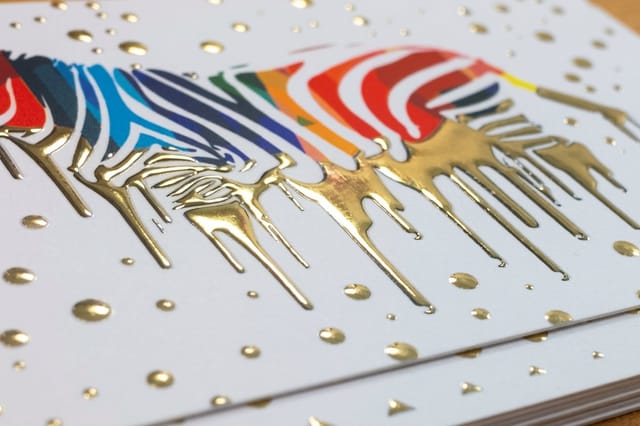
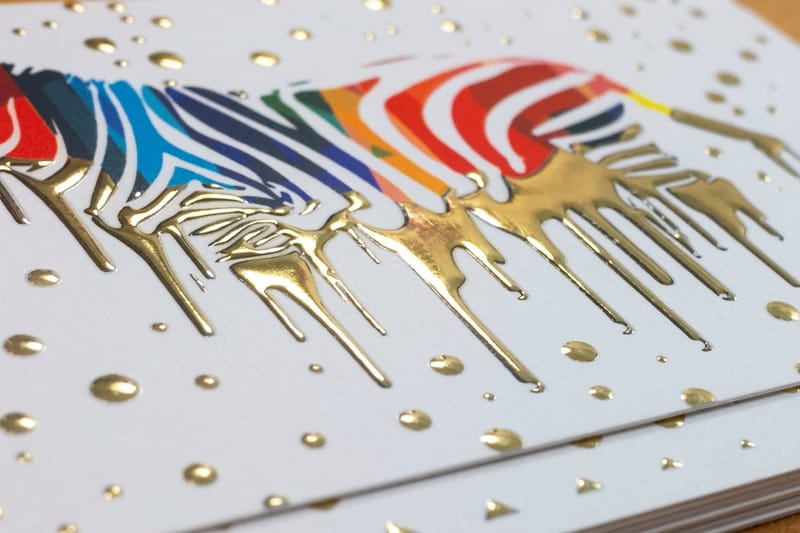
Raised foil is built in layers. Your design prints first, in normal full color. Then a clear base is built up on exactly the elements marked in your foil layer, raising them above the surface. Metallic foil is bonded over that base, so the finished element is metal with height, bright on top of dimension.
The process is digital, which changes the economics. Traditional foil stamping needs a custom metal die for every design, a fixed cost that only long runs absorb. Raised foil follows your artwork file directly, no die, which is why it ships on greeting cards and postcards at everyday quantities rather than being reserved for corporate stationery.
Digital also means precision: the foil lands where the layer says, edge to edge, run after run. The same layer logic drives our spot UV finishes, so if you have prepared art for one, you already know how to prepare the other. The difference is the top coat, clear gloss there, metal here.
Where raised foil belongs in a design
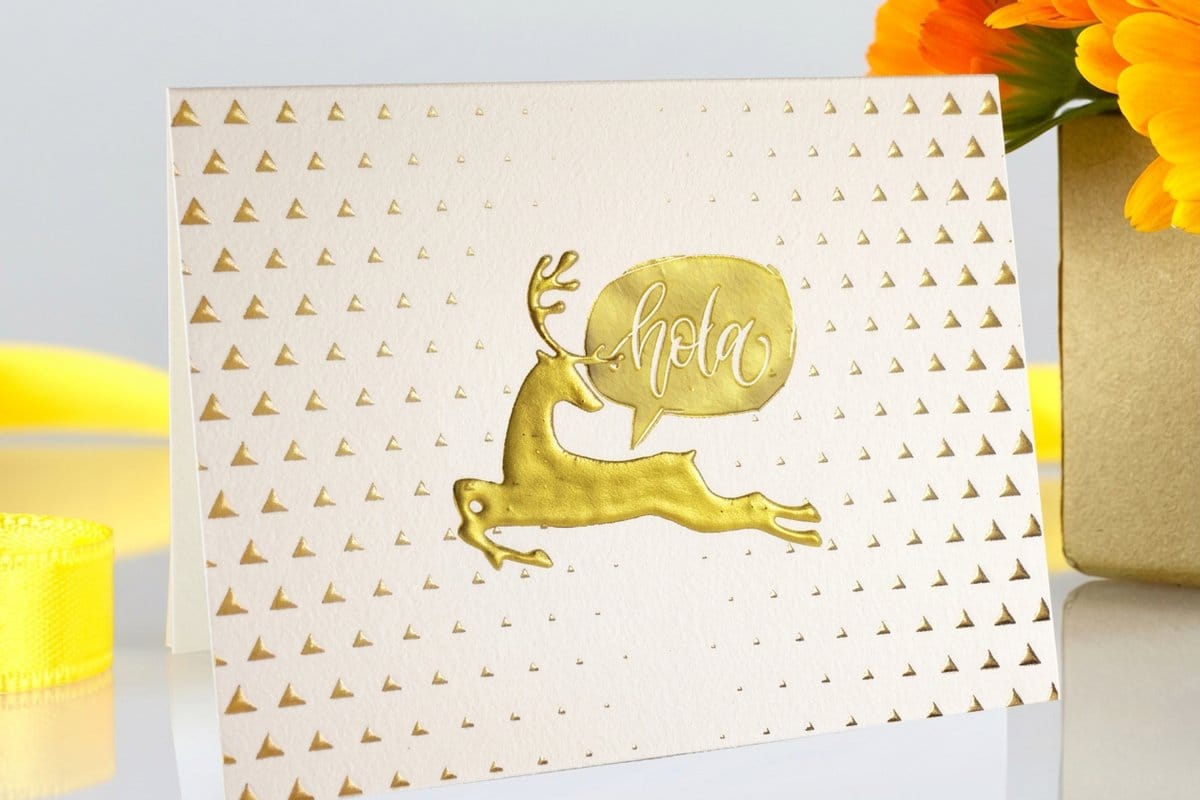
The finish rewards restraint. One raised element on a composed background reads as luxury; five raised elements read as noise. Start by naming the single thing the piece should be remembered for, usually the logo, a name, or one line of display type, and give the foil to that.
Weight matters as much as placement. The raised base needs width to build on, so solid logos, chunky type, monograms, and borders carry the effect cleanly, while hairline strokes and small body text lose their edges. If your logo is fine-lined, foil a contained version, the mark inside a solid shape, rather than the delicate original.
Color strategy is the last lever. Foil over a dark printed field gives maximum contrast in the light channel; foil beside empty white space gives maximum contrast in the touch channel. Both work, they just say different things. For finished examples of each approach, the print showcase collects real customer pieces, and our printing guides cover the file mechanics.
The products that carry raised foil
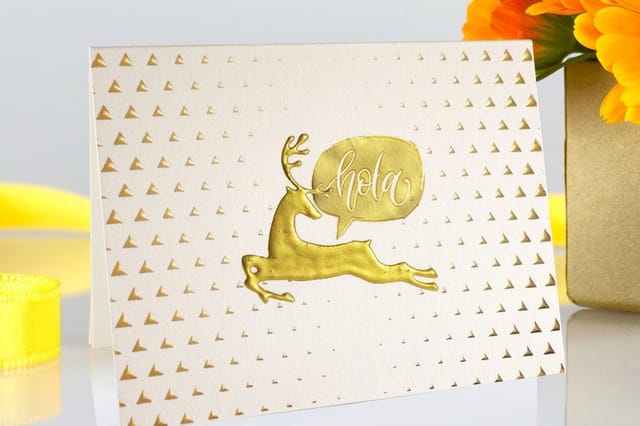
Raised foil greeting cards are the flagship use. A recipient handles a greeting card slowly, opens it, often displays it, and the raised element gets every one of those touches. Holiday cards with a foiled motif routinely outlive the season on a shelf, which is unusual persistence for a piece of marketing.
Raised foil postcards weaponize the finish for the mailbox. A postcard has one second to not be recycled, and a dimensional metallic element is exactly the kind of interruption that earns the flip to the message side. For campaigns where the card carries an offer, the foil goes on the brand, not the coupon code.
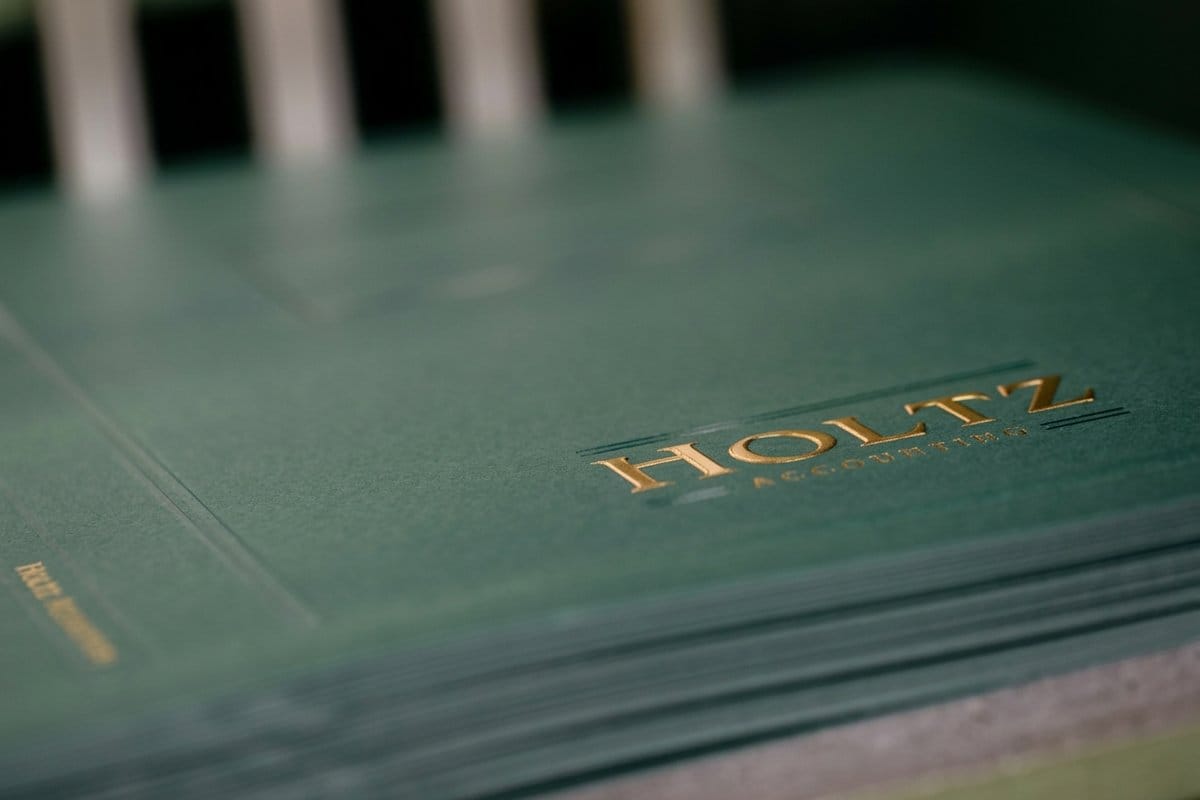
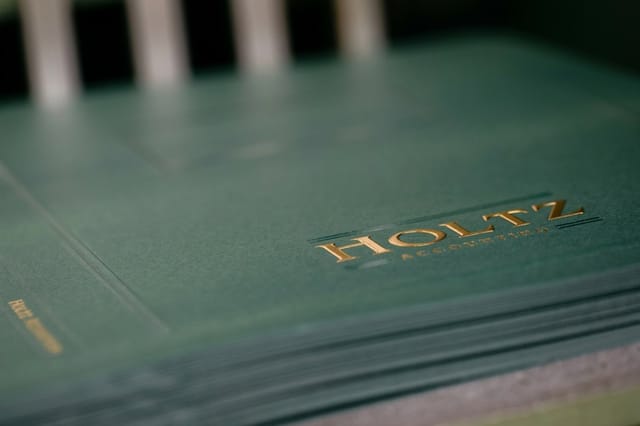
Raised foil pocket folders put the effect on the container everything else arrives in. A proposal inside a folder with a raised metallic logo is pre-sold a little before page one. And for the strongest tactile contrast we make, the suede variant of the greeting card pairs hard bright metal with a velvet-soft laminated surface.
Setting up a file that foils cleanly

Raised foil needs one thing beyond a normal print file: a foil layer. Build it as a separate layer or file the same size as your artwork, with everything that gets foil in solid 100 percent black and everything else white. No gradients, no transparency, no soft edges, the base is either built or not built at any given point, so the layer must be binary.
Respect the physical limits. Give foiled strokes real width, keep foiled elements away from trim edges and folds, and do not run foil across a score line where flexing would stress it. Reversed-out details inside foiled shapes, like the negative space in a logo, need enough size to stay open once the base is built.
Everything else is a standard print-ready file: full color art, normal bleed, safe margins. If any of those terms are new, the printing terms glossary defines them plainly, and starting from a design template sized for the product removes the guesswork. Our prepress review checks the foil layer before anything prints.
Pairing raised foil with stocks and other finishes

The stock underneath decides how loud the foil reads. On a gloss or silk surface, the metal joins an already-reflective field and the effect is bright but expected. On a matte or soft-touch surface, the foil is the only thing shining, and the contrast doubles it. That is the whole idea behind the raised foil suede greeting card: velvet surface, hard metal, maximum distance between the two.
Raised foil coexists well with quieter finishes as long as it keeps the lead role. Flat printed metallics, subtle patterns, and full-color art all support it. What competes with it is other dimensional or reflective effects, glitter stocks, holographic laminates, large raised spot UV fields, which fight for the same attention.
If your piece needs dimension without metal, raised spot UV delivers the same lift in clear gloss, letting the printed color show through. And if you want classic pressed metal on a letterpress budget line, foil stamping remains the traditional route. The full menu lives on our finishing services hub.
No die charge, so short runs work
Raised foil is priced into the raised foil product rather than quoted as an add-on, and the digital process means no die charge, the fixed cost that traditionally kept foil out of short runs. What you pay scales with the product, size, stock, and quantity, and the per-unit price falls as the run grows.
Ordering follows the normal flow: pick the product, configure quantity and options, upload your print-ready art plus the foil layer, and the live price updates as you build. The pricing panel below shows real numbers for the greeting cards on this page, so you can calibrate before you start.
If you are still choosing between metal and gloss, or between raised and flat, the comparison table above summarizes the tradeoffs, and the foil stamping page covers the traditional option in depth. For a project that mixes finishes across a set, cards, folders, envelopes, start at the services hub and our team will map the combination with you.
Compare the options
Dimensional and metallic finishes side by side
Raised foil is one of four ways to give a design shine, height, or both. Here is what each finish does and where it fits.
| Finish | What it does | Best for |
|---|---|---|
| Raised foil | Builds a raised base under metallic foil, so chosen elements lift off the surface in dimensional shine. | Logos, headlines, and accents that should be seen and felt on cards, invitations, and folders. |
| Flat foil stamping | Presses metallic foil into the surface with a heated die, shiny but level with the card. | Classic metallic accents where shine matters but dimension is not needed. |
| Raised spot UV | Builds the same dimensional lift with clear gloss instead of metal, a glassy raised layer over the print. | Designs that want texture and depth while keeping the color underneath visible. |
| Embossing | Presses the stock itself into a raised shape from behind, texture without any added material. | Subtle, tone-on-tone marks where the paper itself should carry the dimension. |
Infographic
The clear base under the metal
From a foil layer in your artwork to metal you can feel, here is what happens between your file and the finished piece.
The raised base is built only where your foil layer says, so the metal lands with digital precision on every piece in the run.
Specs and pricing
What a raised foil piece costs per unit
Raised foil ships as part of the raised foil product, so the whole piece prices out in the configurator. Here are the live specs and price-per-unit, straight from 4OVER4.COM.
| Quantity | Price Per Unit | Total |
|---|---|---|
| 100 | $6.18 | $618.16 |
| 250 | $2.89 | $723.61 |
| 500 | $1.84 | $921.31 |
Raise these
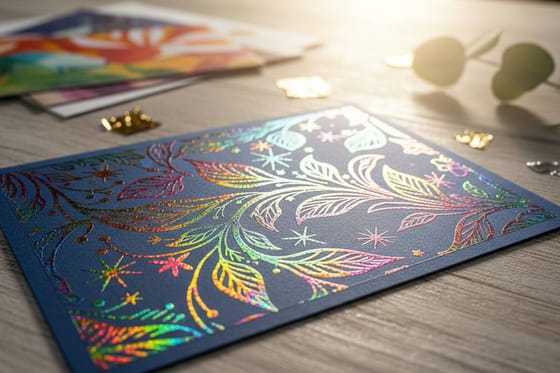
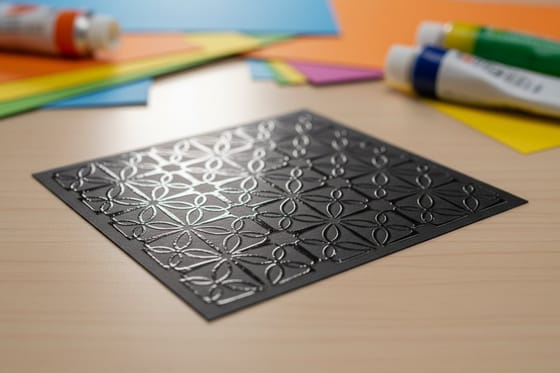
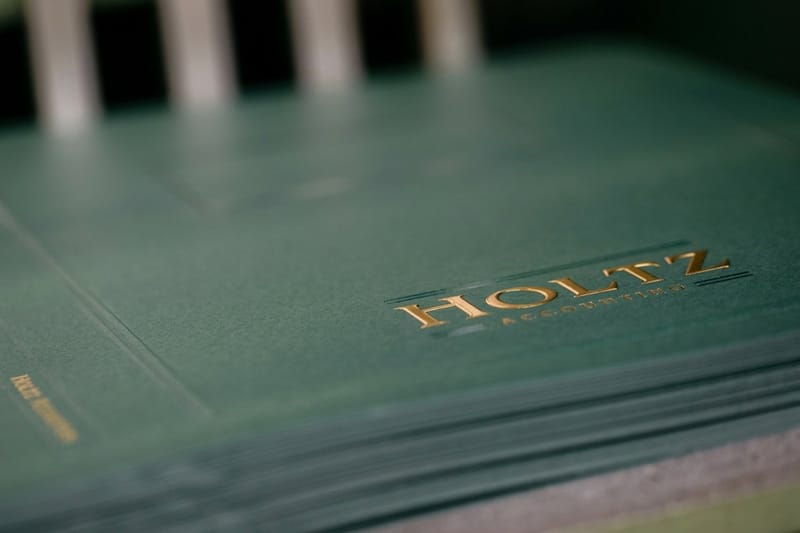
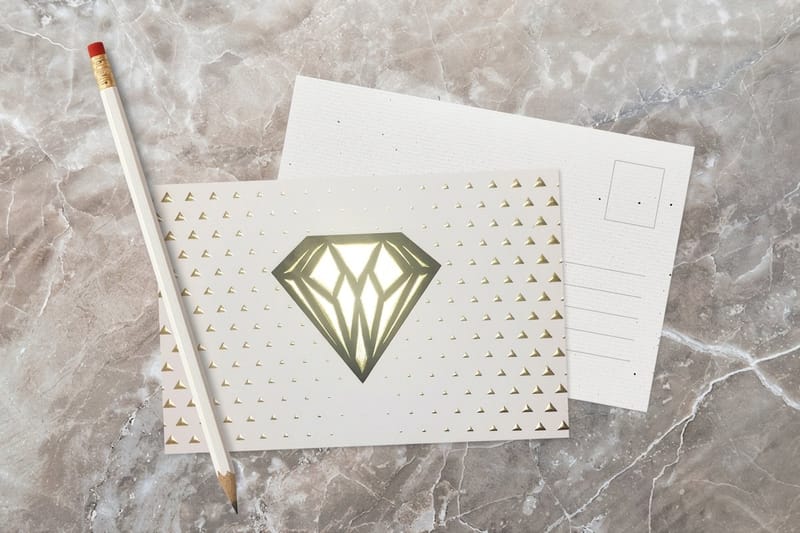
Products that ship with raised foil
Wally explains raised foil
Shine they can feel with their eyes closed.
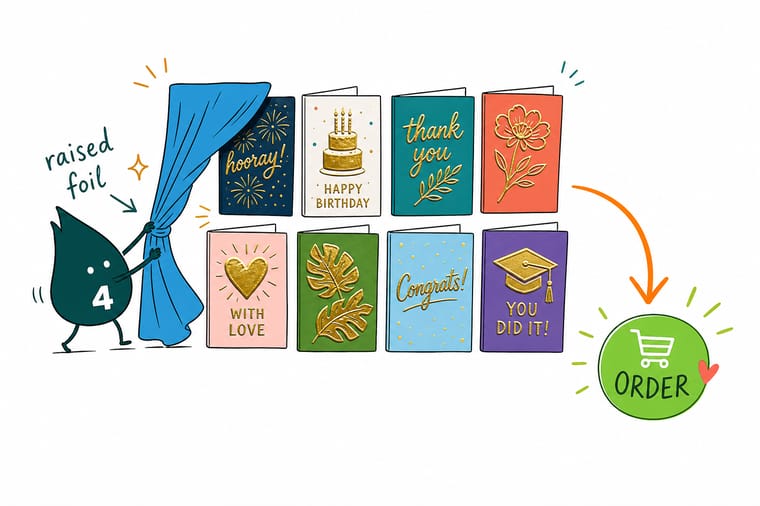
Wally's test for raised foil is simple: close your eyes and run a thumb across the card. If the logo is still there, the finish is doing its job. Mark one bold element in your foil layer, print the design in full color, and let the raised metal do the remembering. Keep fine lines in flat ink, keep the foil off the folds, and let 4OVER4 build the lift on every piece in the run.
Start a raised foil project →Get Started
Ready to lift your logo off the page?
Bring your design to 4OVER4.COM and finish it with raised metallic foil on cards, postcards, or folders. Configure your piece and watch the price update live.
Explore more
Where to go next
By the numbers
Digital raised foil without a die charge
Common Questions
Common questions about raised foil
What is raised foil printing?
Raised foil is a finishing technique that combines dimension and metallic shine in one pass. A clear raised base is built up on the exact elements you choose, and metallic foil is bonded over that base, so your logo or headline physically lifts off the card in bright metal. Unlike an all-over metallic stock, the effect lands only where your foil layer says it should, which keeps the rest of the design clean and printable in normal color.
How is raised foil different from regular foil stamping?
Traditional foil stamping presses foil into the surface with a heated metal die, so the result is shiny but flat, and each new design needs its own die. Raised foil is built digitally from a foil layer in your artwork: the base is raised above the surface rather than pressed into it, and no physical die is made. In the hand, the difference is immediate. Flat foil catches the eye, raised foil catches the eye and the fingertip, and the digital process makes short runs practical.
What design elements work best with raised foil?
Bold, solid elements carry the effect best: logos with real weight, display-size headlines, monograms, borders, and decorative accents. The raised base needs width to build on, so hairline strokes, very small type, and fine serif details can fill in or lose their crispness. A good rule is to foil the one element you want remembered and leave supporting text in flat ink. The contrast between raised metal and quiet print is what makes the piece read as designed rather than decorated.
Which products can I order with raised foil?
At 4OVER4 the finish ships on raised foil greeting cards, raised foil postcards, and raised foil pocket folders, with a suede-laminated greeting card variant for the strongest tactile contrast. Greeting cards use it for names and seasonal art, postcards use it to survive the mail pile, and pocket folders use it to put a dimensional logo in front of everything the folder carries. Each product page prices the finish live as you configure quantity and options.
How do I set up a file for raised foil?
Your artwork needs one extra piece of information: a foil layer that shows exactly which elements get the treatment. Build it as a separate layer or file with the foil areas in solid 100 percent black, everything else white, no gradients or soft edges, since the effect is either on or off. Keep foiled elements clear of folds and trim edges, and give them enough weight to hold the raised base. The rest of the file is a normal print-ready design with standard bleed.
Does raised foil crack on folded cards?
The finish itself is durable in normal handling, but like any raised coating it should not run across a fold or score line, where flexing would stress it. Keep foiled elements a safe distance from folds, and the effect stays crisp for the life of the piece. On flat pieces like postcards there is no such constraint, and on folders the foil belongs on the front panel rather than the spine. Our prepress check flags foil that crosses a fold before anything prints.
How much does raised foil cost?
Raised foil is built into the price of the raised foil product, and because the process is digital there is no die charge, which is what makes it accessible at greeting card and postcard quantities. The per-unit price falls as the run grows, and the foil coverage area matters less than you might expect. The fastest way to a real number is the live configurator on the product page, where quantity, size, and options move the price in front of you.
Legal Disclaimer
Gold Standard guarantees apply to all standard orders placed through 4over4.com. Price match requires verifiable proof of a competitor's published price for an equivalent product with matching specifications and turnaround time. Satisfaction guarantee covers manufacturing defects and print quality issues. Contact support with order number and documentation. On-time delivery rate based on tracked orders 1999 to 2026. Individual results may vary based on shipping carrier performance.
