
Precision Hole Drilling for Tags, Cards, and Hangers


A clean hole in the right place turns a flat print into something you can hang, tie, or bind. Hole drilling bores a precise opening through your tags, cards, and hangers after they print. This page covers the diameters, the placements, and how to order drilling at 4OVER4.COM.
Hole drilling is a finishing process that bores a clean, round hole through your printed piece after it has been printed and cut. The finished pieces are stacked and drilled together on a drill press, so every hole lands in the same position across the whole run. You choose the diameter, the placement, and whether you want a single hole or a pattern. It gives hangtags, door hangers, plastic cards, and bookmarks an opening to hang, tie, ring, or bind, which is why so many pieces end their finishing at the drill.
Start here
A hole in the same place on every piece
Hole drilling bores a clean, round hole through your printed piece, stacking the finished pieces and drilling them together so every hole lands in the same place. You choose the diameter, the position, and whether you want one hole or a pattern for binding. It works across hangtags, door hangers, plastic cards, and bookmarks, and it turns a flat print into something you can hang, tie, ring, or bind with a fastener of your choice.
Why hole drilling matters to a finished print

A printed tag with no hole is just a small rectangle. Add one clean, well placed hole and it becomes a hangtag on a garment, a price tag on a shelf, a gift tag on a ribbon, or a set of cards on a ring. That single opening is the difference between a flat piece of card and a print that has a job to do out in the world.
Hole drilling is a finishing service, not a print step. After your hangtags, door hangers, or cards come off the press and are trimmed, they pass to the drill, which bores the hole exactly where you marked it. Because so much of print stops at the cut, the pieces that are properly drilled and ready to hang feel more finished and cost you no extra handling later.
For pieces where the finish carries the brand, hole drilling pairs naturally with our other services, from custom embossing to special-effect UV coatings. This page walks through what hole drilling is, the sizes and placements to choose, the products that take it best, and how to prepare your file so every hole lands clean.
What hole drilling actually is: the stack, the press, the bore
Hole drilling bores a round opening through your printed piece. Once your pieces are printed and cut to size, they are stacked together and clamped, and a drill press bores through the whole stack in one pass. Drilling the stack rather than punching one sheet at a time is what keeps every hole in the same position across thousands of pieces.
The important thing to understand is registration. The drill is set to the center point you marked on your artwork, so the accuracy of the hole depends on how clearly you mark it. A clean file gives a clean, consistent hole. Our finishing team handles the setup and the press. You supply the position and the diameter you want.
Hole drilling works across many pieces, from plastic cards with a lanyard slot to door hangers and bookmarks with a tassel hole. If you want to add packing, storage, and shipping once the finished run is ready, our kitting and fulfillment service takes it from the drill to your customers.
Hole sizes and where to place them

Two decisions shape a drilled hole: how big it is and where it sits. Diameter is driven by what passes through it. A thin cotton string or a small hook needs only a small hole, often around 1/8 inch, while a binder ring, a wide ribbon, or a grommet needs a quarter inch or more. If you are matching a specific fastener, tell us the size and we drill to fit.
Placement matters just as much. Every hole needs a safe margin of stock around it so the piece does not tear under load, so keep the center a sensible distance from the trimmed edge. Keep it clear of text, logos, and barcodes that must stay readable. A corner hole suits hangtags and price tags, a centered top hole suits door hangers and ornaments, and a paired top layout lets a tag hang level from a ribbon.
The simplest way to get the size right is to test it. Order free samples and pass your actual string, ring, or hook through a drilled hole before you commit the run. If a term in the finishing spec is unfamiliar, the printing terms glossary defines each one.
The products that get drilled most

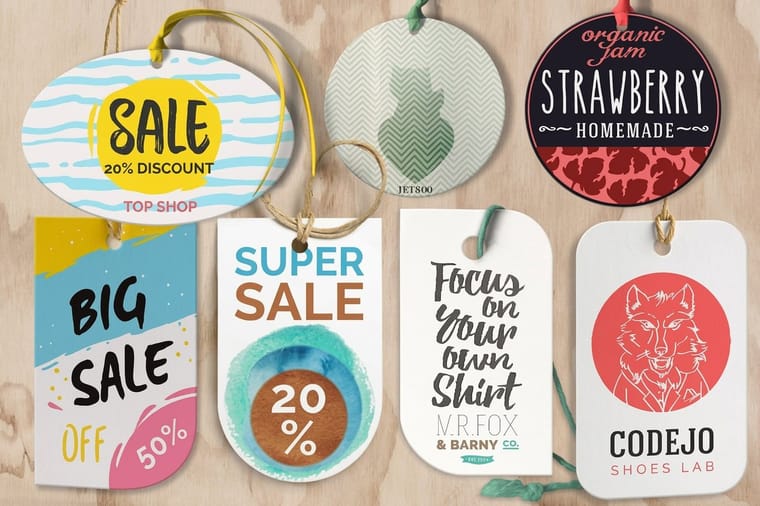
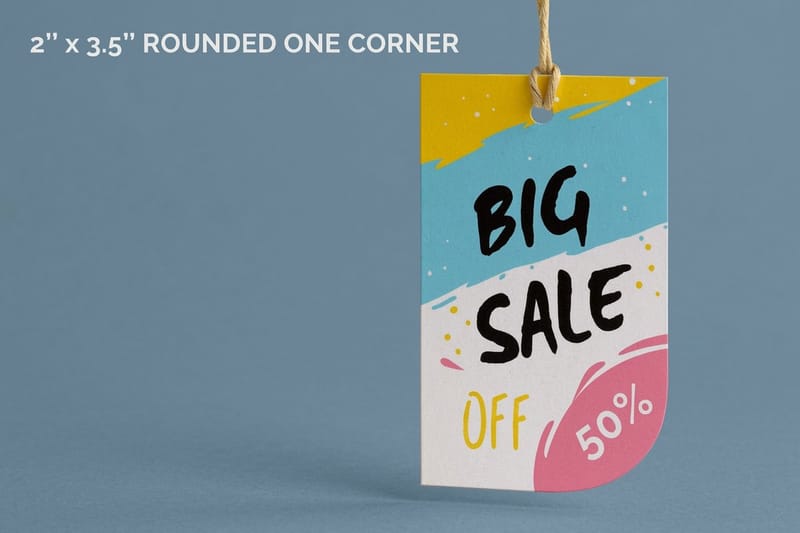
Almost any flat printed piece can be drilled, but a few types ask for it by design. Die-cut hangtags are the classic case: a corner hole lets them tie onto a garment, a bottle, or a gift. Door hangers use a die-cut opening at the top, and a drilled hole handles the same job on simpler shapes.
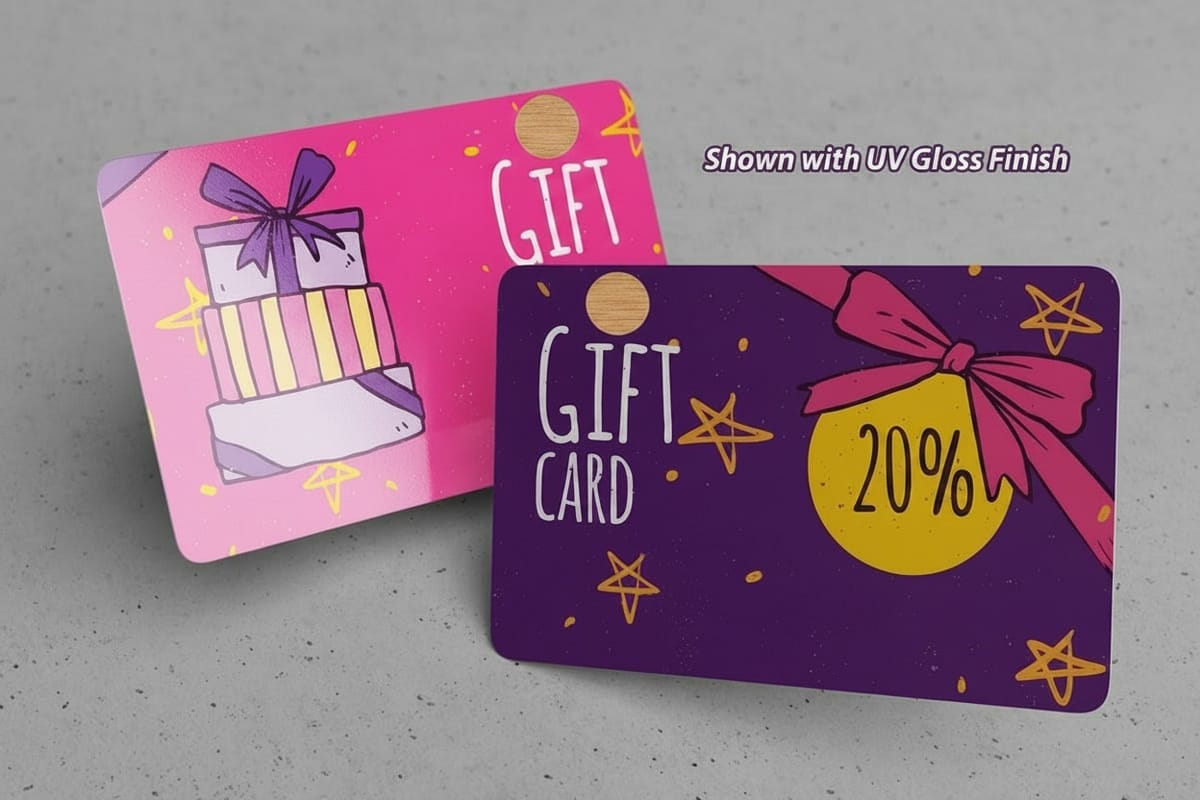
Plastic cards take a slot or hole for a lanyard or a badge reel, and they drill especially cleanly because the material has the body to hold a strong edge. Bookmarks get a top hole for a tassel or ribbon. Beyond those, shelf tags, shipping tags, calendars that hang, and signage that ties to a post or fence are all regular candidates for a drilled hole.
Heavier stocks and plastic drill best because they resist tearing around the opening. Lighter text-weight paper can drill too, but it benefits from a little more margin. Browse the full range through our finishing services to see where a drilled hole belongs on your kit, and see finished examples in the print showcase.
Single holes, paired holes, and binding patterns
A single hole is the most common request, and it covers most tags, cards, and hangers. But drilling is not limited to one hole per piece. In the same pass we can drill two holes, a row, or a repeating pattern, which opens up several practical uses beyond simply hanging a piece.
Two holes at the top let a tag hang level and steady from a ribbon rather than tilting from a single point. A row of evenly spaced holes down one edge prepares a stack for ring or comb binding, so a set of cards or a small booklet holds together. Paired side holes work for lacing a card onto a product or a garment. For any multi-hole layout, mark the center of each hole and note the spacing.
If your idea leans toward a shaped opening or a reinforced ring rather than a plain drilled hole, the comparison table below shows how drilling sits alongside die-cutting, corner rounding, and grommets, so you can pick the finish that matches the load and the look. For a fully custom finishing plan, start a custom project with our team.
How to set up artwork for a clean drilled hole
Hole drilling rewards a clearly marked file. Place the center of each hole on its own clearly labeled layer, kept separate from your printed design, so the finishing team can see exactly where every hole belongs. You do not need to draw the hole at full size, just mark its center point and tell us the diameter you want.
Keep every hole center a safe distance from the trim edge so there is enough stock around it to hold under load, and keep it clear of any text, logo, or barcode that has to stay readable. If you are drilling a pattern for binding, mark each center and note the spacing so the row comes out even. These are the same file habits that make die-cutting and other finishing come out accurate.
For the fundamentals of print-ready files, from color mode to bleed, our printing guides cover the details, and the printing terms glossary demystifies the vocabulary. When your art is ready, our team reviews the hole placement before the run so nothing gets drilled through the wrong spot. You can also start from a design template sized for the product.
Where hole drilling fits with other finishing
Hole drilling rarely works alone. It sits in a family of finishing options that shape and reinforce a printed piece, and the best results often combine two or three. A hangtag might be die-cut to a custom outline, corner rounded so it feels finished, and then drilled so it ties on. Each step does a different job, and they stack neatly on the same order.
When a piece will hang from real load, outdoors or under repeated tension, a plain drilled hole gives way to an eyelet or grommet, which sets a metal ring into the opening so it will not tear. For tags and cards handled indoors, a clean drilled hole is plenty. The comparison table below lays these out side by side so you can match the finish to how hard the hole has to work.
Drilling also pairs with the tactile finishes. An embossed logo or a spot of special-effect UV on a drilled hangtag reads as considered and premium. Explore the full set of finishing services to see everything that can ship on the same job, or read more ideas in our print articles.
Priced by hole count and quantity
Hole drilling is priced as a finishing add-on, driven by the number of holes and the quantity of pieces. Because the stack is drilled together in one pass rather than one sheet at a time, a single corner hole on a run of tags adds very little per piece. Multiple holes or a binding pattern take a bit more setup, but the per-unit cost still falls as your quantity climbs.
To price a specific job, build the piece and its finishing options below, or reach our print team for a quote on custom work. The specs and live pricing panel on this page shows a real example so you can see how quantity, size, and stock move the number in the configurator.
When you are ready, choose your product, mark the hole centers on your file, and place the order. Our finishing team handles the drill and the setup. Explore the rest of our finishing services to see everything that can ship on the same job, from die-cutting to kitting, and check the printing FAQs for anything else.
Compare the options
Finishing options for hanging and binding
A drilled hole is one of several ways to prepare a print for hanging, tying, or binding. Here is what each option does and where it fits, so you can match the finish to the load.
| Finish | What it does | Best for |
|---|---|---|
| Hole drilling | Bores a clean, round hole through the stack, at any position you mark, without changing the outline of the piece. | Hangtags, door hangers, plastic cards, bookmarks, and anything that needs to hang, tie, or bind. |
| Die-cutting | Cuts the piece to a custom outline shape with a steel die, so the whole edge follows your artwork instead of a rectangle. | Shaped tags, unusual card outlines, stickers, and pieces where the silhouette is part of the design. |
| Corner rounding | Trims the sharp square corners into a smooth radius, softening the edge of every piece in the stack. | Business cards, plastic cards, and tags that should feel finished and resist bent corners. |
| Eyelet or grommet | Sets a reinforced metal ring into a punched hole, so the opening will not tear under repeated load. | Vinyl banners, heavy signage, and outdoor pieces that hang from rope, hooks, or zip ties. |
Infographic
One pass through the whole stack
From marked artwork to a hole ready for string, here is what happens between your file and the piece in your hand.
The stack is drilled together in a single pass, so every hole lands in the same spot and the per-piece cost stays low across the whole run.
Specs and pricing
What the drilled piece itself costs
Hole drilling is priced as a finishing add-on, but the piece it finishes prices out in the configurator. Here are the live specs and price-per-unit for a product that drills cleanly, straight from 4OVER4.COM.

| Quantity | Price Per Unit | Total |
|---|---|---|
| 100 | 36.3¢ | $36.26 |
| 200 | 20.9¢ | $41.74 |
| 300 | 16.5¢ | $49.43 |
| 400 | 12.9¢ | $51.62 |
| 500 | 11.6¢ | $58.23 |
| 600 | 11.2¢ | $67.00 |
| 700 | 10.2¢ | $71.40 |
| 800 | 9.47¢ | $75.80 |
Drill these
Products that finish with a drilled hole


Wally explains hole drilling
One clean hole gives your print a job.
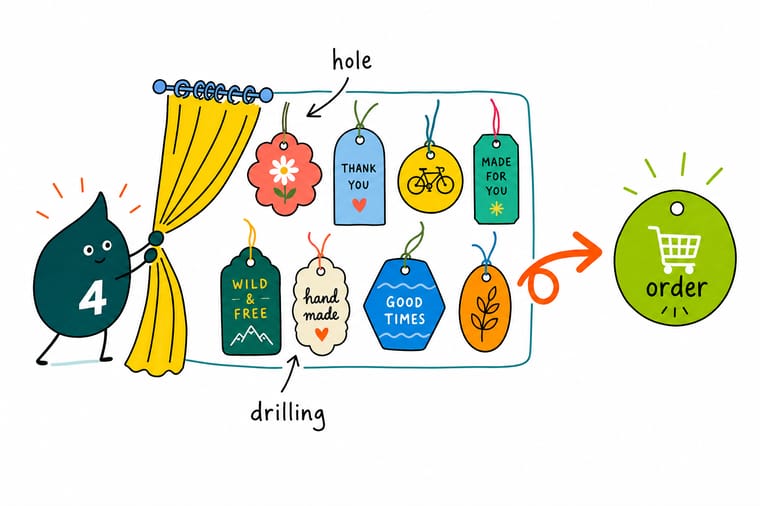
Wally treats a drilled hole like the last move that makes a print useful: mark the center, drill the stack, and the tag is ready to tie, hang, or ring. The whole run is drilled together in one pass, so each hole matches the last and the cost per piece stays small. Keep the hole clear of your text, leave a safe margin from the edge, and let 4OVER4 finish it ready to hang.
Start a hole drilling project →Get Started
Ready to add a clean drilled hole to your print?
Bring your design to 4OVER4.COM and finish it with a drilled hole on the tag, card, or hanger that needs to hang. Configure your piece and watch the price update live.
Explore more
Where to go next


By the numbers
Drilled runs, checked before they ship
Common Questions
Common questions about hole drilling
What is hole drilling in printing?
Hole drilling is a finishing service that bores a clean, round hole through your printed piece after it has been printed and cut. Rather than punching one sheet at a time, the finished pieces are stacked and drilled together on a drill press, so every hole lands in exactly the same position across the whole run. The result is a neat opening you can use to hang a tag, thread a string, ring a set of cards, or bind a stack, which turns a flat print into something with a job to do.
What hole sizes can you drill?
The most common diameters run from about 1/8 inch up to a quarter inch and larger, depending on what will pass through the hole. A thin cotton string or a small hook needs only a small hole, while a binder ring, a wide ribbon, or a grommet needs more room. If you are matching the hole to a specific ring, string, or fastener, tell our finishing team the size you plan to use and we will drill to fit it. When in doubt, order free samples first so you can test a fastener in the hole before you commit the run.
Where should the hole go on my design?
Placement is up to you, but a hole needs a safe margin of stock around it so it does not tear. Keep the center of the hole a reasonable distance from the trimmed edge, and clear of any text, logo, or barcode that must stay readable. A corner hole is common on hangtags and price tags, a centered top hole suits door hangers and ornaments, and a row of evenly spaced holes works for binding. Mark the exact center of every hole on your file so the drill lands where you intend.
What products can be hole drilled?
Almost any flat printed piece can be drilled. The usual candidates are die-cut hangtags, door hangers, plastic cards, bookmarks, gift tags, shelf and shipping tags, calendars that hang, and signage that ties to a fence or post. Heavier stocks and plastic drill especially cleanly because they have the body to hold a strong edge around the hole. If you are unsure whether your stock will drill well, our team can advise, and a free sample lets you feel the weight before you order.
Can you drill more than one hole?
Yes. A single hole is the most common request, but we can drill two, a row, or a repeating pattern in the same pass. Two holes at the top let a tag hang level from a ribbon, a row of evenly spaced holes prepares a stack for ring or comb binding, and paired holes work for lacing a piece onto a product. Just mark the center of each hole on your artwork and note the spacing, and the finishing team will set the drill to match your layout.
How do I set up my file for hole drilling?
Mark the center of each hole on a separate, clearly labeled layer in your artwork, kept apart from the printed design, so our team can see exactly where every hole goes. Keep the marked centers a safe distance from the trim edge and away from important text or barcodes, and note the diameter you want. You do not need to draw the hole itself at full size, just its center point and your intended size. Clean, labeled files drill accurately, which is why we review the placement before the run.
How much does hole drilling cost?
Hole drilling is priced as a finishing add-on based on the number of holes and the quantity of pieces, and because the stack is drilled together it stays economical across a run. A single corner hole on a batch of tags adds very little per piece, while multiple holes or a binding pattern take a bit more setup. The most accurate way to price a specific job is to build the piece and its finishing options in the configurator, or reach our print team for a quote on custom work.
Legal Disclaimer
Gold Standard guarantees apply to all standard orders placed through 4over4.com. Price match requires verifiable proof of a competitor's published price for an equivalent product with matching specifications and turnaround time. Satisfaction guarantee covers manufacturing defects and print quality issues. Contact support with order number and documentation. On-time delivery rate based on tracked orders 1999 to 2026. Individual results may vary based on shipping carrier performance.
