
6 Wayfinding and Compliant Signs Every Building Needs
A visitor makes four or five decisions between the parking space and the door they need. Each one of these six signs answers a decision at a different distance, and one of them carries a measurement written into the accessibility standard. Here is the set, with live pricing on every piece.
A working wayfinding set is six signs: aluminum panels for the permanent route, parking signs for the accessible bays, reflective aluminum for the after-dark exterior, acrylic for the lobby, floor graphics where a wall sign cannot reach, and an A-frame for whatever changed this morning. Printed panels cover directional and informational signage. Permanent room identification, meaning restrooms, stairwells and room numbers, needs raised characters and braille instead, so buy those separately and print everything else.
The lineup
Six signs, from acrylic plates to a $146.07 A-frame
Order the piece your building is missing, or print the whole set at once so the type, the arrow shape and the color hold from the lot to the lobby. Every item lays out in our free online designer, or start from a design template and change only the wording. Prices come from the configurator and fall as the quantity climbs, which matters most on aluminum panels and parking signs where you are ordering by the dozen.


Start here
How the six pieces divide the building
Read the set as a route, not a catalog. The first three signs work outdoors and at distance, where a person is still in a car or crossing a lot. The next two work indoors at reading range, where they are standing still and close. The last one exists for the days the route is wrong. Below we walk the whole set in the order a visitor meets it, and each section names where that piece stops being the right answer.
Sizes, placement and price
The six pieces, where each one sits and what it starts at
Every piece has a size it is normally ordered at and a place on the property it is meant to hold. Aluminum and reflective panels work the exterior route, parking signs handle the bays, acrylic and floor graphics work indoors at close range, and the A-frame covers whatever is temporary. Read the row, tap the piece to jump to its section, then order the size that matches the distance you need it read from.
| Piece | Common size | Where it sits | Starts at |
|---|---|---|---|
| 1. Aluminum signs | 12 in x 18 in and 18 in x 24 in for arrows, 24 in x 36 in for building identification | Corridor junctions, stair landings, the drive-in entrance and the receiving door. The permanent backbone of the whole set. | From $36 |
| 2. Parking signs | 12 in x 18 in on a post, with a 6 in x 12 in fine plate beneath where the state requires one | One per accessible space, bottom edge 60 in above the pavement, plus reserved, visitor and staff bays. | From $30 |
| 3. Reflective aluminum signs | 12 in x 18 in and 18 in x 24 in on retroreflective sheeting | Lot entrances, one-way arrows, fire lanes and any turn a driver has to make after dark. | From $41.02 |
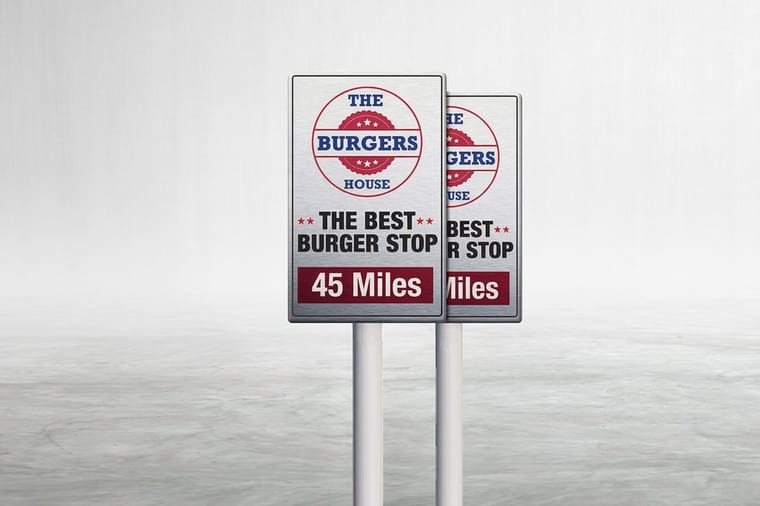
| 4. Acrylic signs | 8 in x 10 in suite plaques, up to 24 in x 36 in for a lobby directory | The lobby wall and the office doors people see from three feet away, mounted on standoffs. | From $152.72 |
| 5. Vinyl floor graphics | 12 in and 24 in circles, 12 in x 18 in directional arrows | Entrance vestibule, the queue at a counter, and the corridor split where the ceiling has nowhere to hang a sign. | From $34 |
| 6. Aluminum A-frames | 24 in x 36 in printed inserts in a folding aluminum frame | Wherever the answer changes today: wet floor, elevator down, entrance moved to the north door. | From $146.07 |
1. Aluminum signs: the permanent layer everything else hangs off
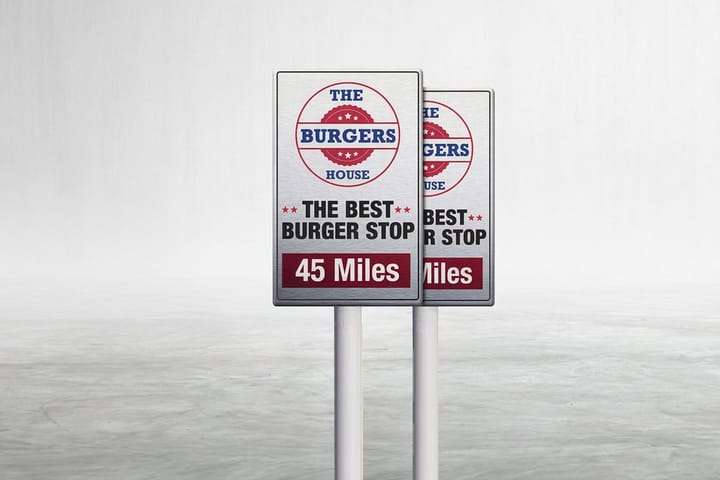
Start here, because most of a wayfinding system never changes. Aluminum signs are a flat sheet of rust-proof aluminum with the graphic printed to the face, and they carry the pieces of the route that will still be true in five years: the department name at a corridor junction, the arrow at a stair landing, the building identification at the drive, the receiving door on the back elevation. They start at $36. Outdoors they hold color and shape through sun and rain instead of going chalky like corrugated plastic or soft like foam board.
Here is the part most signage pages skip. A printed aluminum panel is a visual character sign. The 2010 ADA Standards split building signage in two: directional and informational signs only have to meet the visual character rules, while signs identifying a permanent room or space also need raised characters and contracted braille. Almost all wayfinding is the first kind, so printed panels are the correct product. Restroom doors, stairwell doors and room numbers are the second kind, and a flat printed sheet does not satisfy that requirement no matter how sharp the print is. Order those from a tactile sign fabricator, use printed aluminum for the other ninety percent, and you get a compliant building without paying tactile prices for arrows.
Two spec lines decide how the sign behaves once it is up. Thicker aluminum resists the wobble and corner bend that a thin panel picks up on a post in wind, and gauge is the line to raise before you raise anything else on a post-mounted sign. Finish matters too: the standard calls for a non-glare face with characters that contrast against the background, light on dark or dark on light, so a glossy laminate over a mid-gray field is a sign nobody can read at an angle in afternoon sun. If you are weighing substrates against each other, our comparison of aluminum, coroplast and PVC lays out where each one stops being the right answer, and the aluminum signage guide covers mounting hardware and hole placement.
For a long run of identical blanks that get finished in-house, aluminum sign panels start at $29 and cost less per piece than the finished sign. Indoors, where weather is not a factor, PVC signs start at $25 and take a screw or a strip of tape happily, which is the cheaper way to label a stockroom.
2. Parking signs: the one piece with a number written into the standard

Every accessible parking space needs a sign, and this is the piece of the kit with the least room for interpretation. Parking signs start at $30. The rule is that each accessible space is identified by a sign displaying the International Symbol of Accessibility, that a van space adds the words "van accessible", and that the sign sits with its bottom edge at least 60 inches above the ground.
Sixty inches to the bottom, not to the middle and not to the top. The reason is physical rather than bureaucratic: a full-size van parked in the space has to not hide the sign from the next driver looking for a bay. That is also why a symbol painted on the asphalt does not do the job on its own. Pavement marking is useful, but it disappears under a parked car and under snow, so the post-mounted sign is the one that has to be there.
The trap on a bulk order is the fine plate. Many states require a supplementary plate naming the penalty for parking in an accessible space, and both the wording and the amount are set by state law, not by us. Confirm your state's exact text before you print fifty, because a plate with the wrong dollar figure is unenforceable and has to be reprinted. While you are at it, print the ordinary bays in the same run: reserved, visitor, staff, loading, EV charging. They cost the same per sign and they stop people from parking in the wrong row, which is a wayfinding problem before it is an enforcement problem.
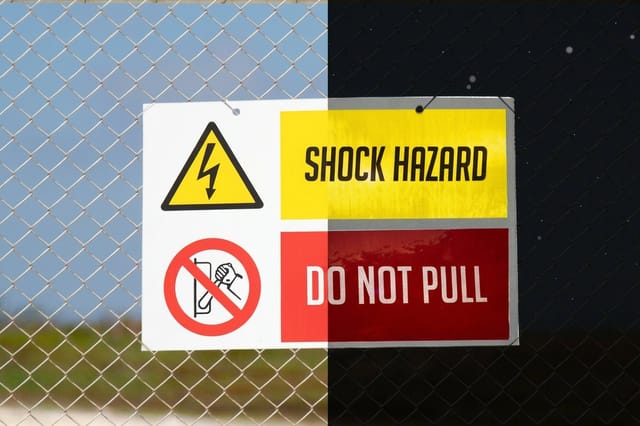
If your lot is unlit or your gate turns onto a dark street, order the accessible and directional posts in retroreflective sheeting instead of plain aluminum. Signs that carry a legal obligation are the last ones you want invisible at night.
3. Reflective aluminum signs: the ones that still work at 9pm

Reflective aluminum signs start at $41.02 and are printed on retroreflective sheeting, which sends light back toward whatever produced it rather than scattering it. Point a headlight at one from forty feet and the sign lights up for the driver in that car. Point a floodlight at it from the side and almost nothing comes back. That single behavior is the whole buying decision.
Put reflective where a driver makes a choice in the dark: the lot entrance, one-way arrows, "do not enter" at an exit-only curb cut, fire lane markings along a building face, and the turn into a staff lot on a night shift. Put it on any post that a car might clip, because a sign that catches headlights is a sign that gets seen before the bumper does.
Now the limit, since it costs roughly five dollars more per sign than plain aluminum. Reflective sheeting does nothing useful in a lit interior corridor, nothing in a daylit atrium, and nothing on a wall nobody shines a light at. Buying the whole building in reflective is money spent on a property that never returns. Order it for the exterior route and leave the interior on standard aluminum. For larger exterior runs, reflective aluminum panels start at $39.
Contrast still governs whether the message reads once the sign lights up. Our breakdown of OSHA safety colors and ANSI color codes covers which color means which category on a hazard or restriction sign, and safety signs in the workplace covers the wording conventions that keep a sign defensible.
4. Acrylic signs: the close-range layer in the lobby

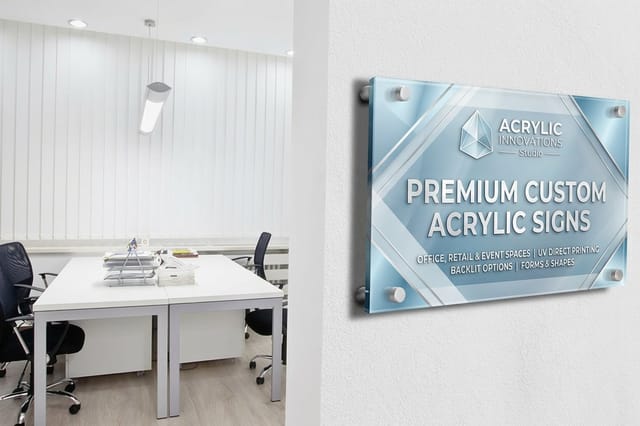
Once someone is inside and standing still, the sign changes job. Acrylic signs start at $152.72 and are the piece for a lobby directory, a suite plaque beside a door, or a floor listing at the elevator bank. Mounted on standoffs, the panel floats a quarter inch off the wall and throws a soft shadow, and that small gap is most of why an acrylic sign reads as a fitted-out building rather than a rented unit.
Two honest cautions. This is the most expensive piece per unit in the kit, so it belongs on the walls people actually look at, not on every corridor. And a fully clear panel over a busy wall is the fastest way to make good typography unreadable. Print second surface, meaning on the back of the sheet so the acrylic protects the ink, and put the text on a solid field rather than trusting a painted wall behind it to stay plain.
Acrylic is an indoor material. It scratches, it shows fingerprints along the bottom edge where people touch it, and it is not what you hang on a wall that gets pressure washed. Clean it with a soft cloth and a plastic-safe cleaner, never an ammonia glass spray, which hazes the surface over time. Our acrylic office and lobby signage guide goes through standoff spacing and panel thickness, and indoor signage for offices and stores covers how the interior set fits together.
One more thing that saves a reprint: a lobby directory is the sign most likely to be wrong within a year, because tenants and departments move. Lay it out with a replaceable insert panel, or keep the artwork simple enough that reprinting one panel is a small order rather than a project. Every layout here can start from a design template so the second version matches the first.
5. Vinyl floor graphics: the arrows people actually follow

Vinyl floor graphics start at $34 and solve the two spots where a wall sign cannot help: an entrance vestibule where everyone is looking down at their feet on a wet mat, and a corridor split with a ceiling nothing can hang from. Arrows on the floor get followed because a person walking into an unfamiliar building is already scanning the ground for steps and thresholds.
Adhesion is the whole story, and it is where most orders go wrong. Floor vinyl wants a smooth, sealed, genuinely clean surface. It will not hold on textured tile, on unsealed or porous concrete, or on a floor that was waxed last week, and it will lift at the leading edge on anything a scrubber machine hits daily. Clean with a degreaser rather than a wax-based cleaner, let the floor dry completely, then squeegee the graphic down from the center outward so no air is trapped under an arrow point. Expect months of life on a main entrance rather than years, because the floor set takes the traffic every other sign avoids. That is a reordering cost you should plan for, not a defect.
Also check the slip rating before you put a graphic in a doorway. A laminate meant for a wall on a floor at a rainy entrance is a liability, so the overlaminate has to be the anti-slip kind. Our floor graphic installation guide walks the surface prep step by step, and the custom floor sticker guide covers shapes, sizes and how long each surface realistically holds.
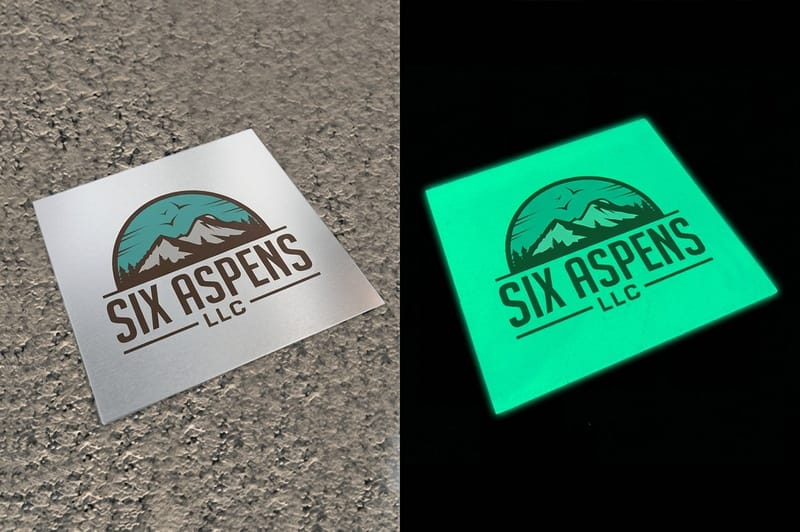
For stairwells there is a separate product and a separate reason. Aluminum glow floor graphics start at $49 and use photoluminescent material that charges under normal lighting and stays visible when the power drops. The International Building Code requires luminous egress path markings in the interior exit stairways of high-rise buildings, so if your property is tall enough for that rule to apply, this is a code item rather than a nice extra. Confirm which edition your jurisdiction has adopted before you order, because local amendments change the threshold.
6. Aluminum A-frames: the sign for the answer that changes today
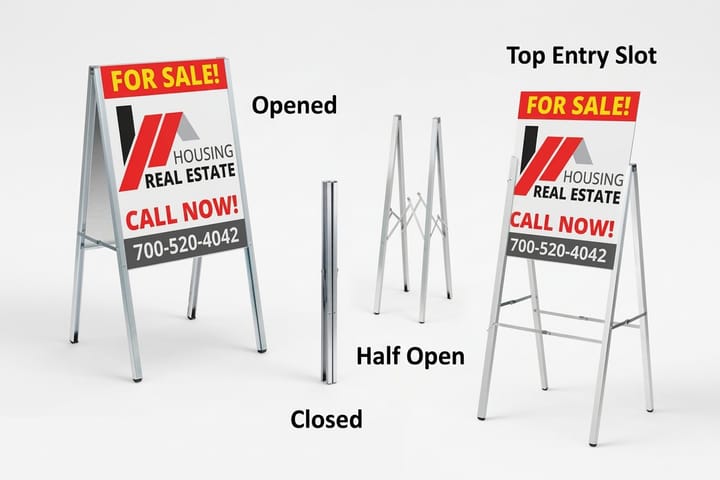
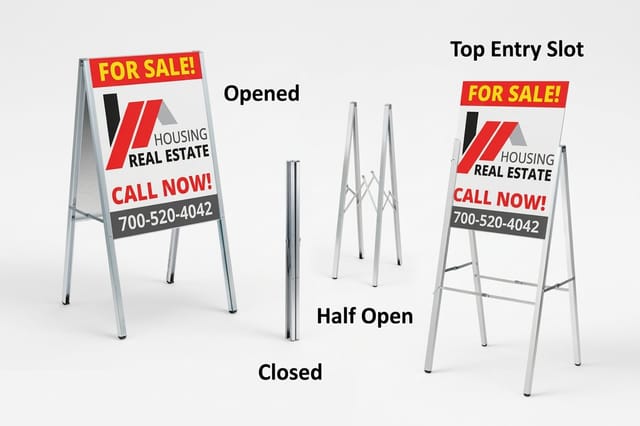
The last piece exists because buildings change faster than mounted signs. Aluminum A-frames start at $146.07 and hold a 24 in x 36 in printed insert in a folding frame you can carry with one hand. Wet floor after a mop. Elevator down until Thursday. Entrance moved to the north door while the vestibule gets retiled. Registration is upstairs today. None of that belongs on a screwed-down panel, and all of it needs to be answered where the person is standing.
Aluminum is the frame material worth paying for in a corridor. It is lighter than steel so staff will actually move it twice a day, and it does not rust in a vestibule that gets wet every morning the way a plain steel frame does. Our comparison of Signicade, aluminum and plastic A-frames goes through weight, wind resistance and how the insert is held on each one.
Two failure modes to plan around. The first is clearance: an A-frame in a narrow corridor becomes an obstruction, and an accessible route has to keep a clear width, so put the frame against a wall in a wide section rather than centered in the pinch point. The second is staleness. A frame that still says "elevator out of service" four days after the repair teaches everyone in the building to ignore the frames, including the day one of them says something urgent. Assign the frames to a person, not to a department, and print a plain branded insert to drop in whenever there is nothing to announce.
Because temporary signage is only useful while the situation lasts, turnaround decides whether you bother. Same-day printing is what makes a Tuesday morning problem a Tuesday afternoon insert instead of a handwritten sheet taped to a door.
Specs and pricing
Compare the two you will reorder most: aluminum and parking signs
Aluminum panels and parking signs are the pieces a property manager buys again every year, as departments move and posts get clipped. Here are the live specs and the price ladders for both, straight from the configurator.

| Quantity | Price Per Unit | Total |
|---|---|---|
| 1 | $36.00 | $36.00 |
| Quantity | Price Per Unit | Total |
|---|---|---|
| 1 | $41.02 | $41.02 |
Wally walks the route
Six signs, six decisions, one building
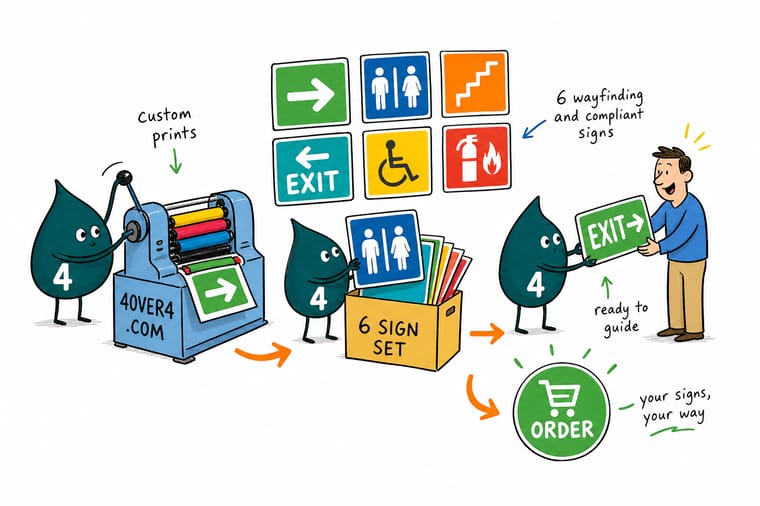
Wally starts in the parking lot, where a reflective panel and an accessible bay sign do the work, then follows an aluminum arrow to the door, reads the acrylic directory in the lobby, and turns at a floor graphic because the ceiling had nowhere to hang a sign. The A-frame is waiting at the elevator with today's news. Print them as one set and the building explains itself. Print them one at a time and the visitor asks at reception.
Shop aluminum printing →See it in use
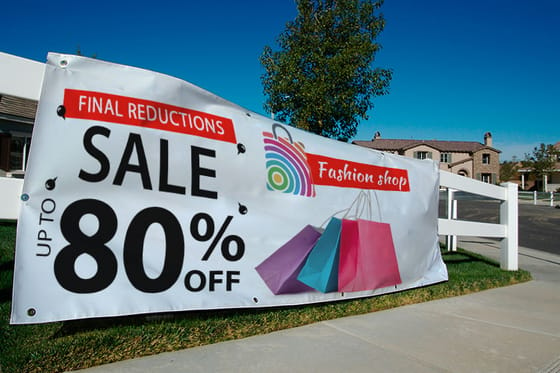
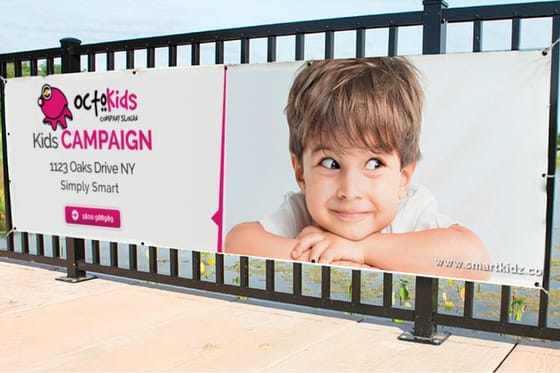
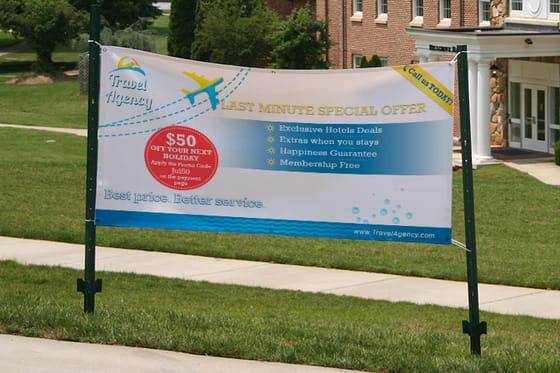
Aluminum signs already mounted in buildings

Explore more
Where to go next
By the numbers
What a building route can be signed with
Common Questions
Common questions about wayfinding and compliant signage
Do printed signs meet ADA requirements?
For directional and informational signs, yes. The 2010 ADA Standards ask those signs to meet the visual character rules, which cover character height, a non-glare finish and characters that contrast with their background. Signs that identify a permanent room or space are a different category: those need raised characters and contracted braille, and a flat printed panel does not provide either. Print your arrows, department names and parking signs, and buy restroom, stairwell and room-number signs as tactile signage.
How high does an accessible parking sign have to be mounted?
The bottom edge of the sign has to sit at least 60 inches above the ground surface. The measurement is taken to the bottom rather than the center so that a van parked in the space cannot block the sign from the next driver. The sign displays the International Symbol of Accessibility, and a van-accessible space carries the additional words "van accessible". A symbol painted on the pavement is not a substitute, because it vanishes under a parked car.
How large do the letters need to be on a directional sign?
Visual characters start at a 5/8 inch minimum height, and once the reading distance passes six feet the standard adds 1/8 inch of character height for every additional foot. A sign read from 20 feet therefore needs characters about 2 3/8 inches tall. Work backward from where a person will be standing when they need the answer, not from the size of the panel you happen to like.
Aluminum or PVC for interior wayfinding signs?
PVC signs start at $25 and are the cheaper choice for interior labels that never see weather, such as stockroom, utility and back-of-house doors. Aluminum starts at $36, resists dents better on a corridor corner people brush past, and is the only one of the two you should put outdoors. A useful split is PVC behind the staff door and aluminum anywhere a customer or a patient will see it.
Will floor graphics stick to my floor?
On sealed vinyl tile, polished concrete or a smooth epoxy floor, yes. On textured or heavily grouted tile, unsealed porous concrete, or a floor treated with a wax-based cleaner in the last week, no. Clean with a degreaser, let it dry fully, then squeegee from the center outward. Plan for months of life at a main entrance rather than years, because that floor takes more abuse than any other sign location in the building.
What is luminous egress path marking and does my building need it?
It is photoluminescent marking of the exit route inside stairways, so the path stays visible when lighting fails. The International Building Code requires it in the interior exit stairways of high-rise buildings, and photoluminescent aluminum floor graphics start at $49. Whether it applies to you depends on the building height and the code edition your jurisdiction adopted, so confirm with your local building department before ordering the run.
How many signs does one floor of a building need?
Count the decision points, not the rooms. Walk the route a first-time visitor takes from the parking space to the destination and mark every junction where they could turn the wrong way, plus every place where the correct answer is not visible from the last sign. That count is your directional sign order. Adding signs anywhere else raises the noise and makes the ones that matter harder to find.
Can I get replacement signs printed quickly when something changes?
Yes. A-frame inserts, floor graphics and single aluminum panels are exactly what same-day printing is built for, so a tenant move or a closed corridor can be answered properly instead of with a sheet of paper taped to a door. Keep the source files organized by sign location and the reorder is a five minute job rather than a redesign.
Get Started
Order an aluminum A-frame from $146.07 for the entrance
Print the six-piece wayfinding set as one branded system at 4OVER4.COM. Pick your sizes, materials and finishes, and watch every price update live as you build the order.
Legal Disclaimer
Gold Standard guarantees apply to all standard orders placed through 4over4.com. Price match requires verifiable proof of a competitor's published price for an equivalent product with matching specifications and turnaround time. Satisfaction guarantee covers manufacturing defects and print quality issues. Contact support with order number and documentation. On-time delivery rate based on tracked orders 1999 to 2026. Individual results may vary based on shipping carrier performance.
