
6 Print Products That Make Safety Culture Stick
Safety culture changes when the rule stops living in a binder and starts living at the panel, the doorway, and the gang box. These are the six printed pieces that put it there, from $93.37 for 25 notepads, each one doing a job the other five cannot.
A safety culture shifts when the message moves from the policy binder to the place the work happens. Six pieces carry it: aluminum signs for permanent hazards, PVC signs for indoor rules that change, posters for the campaign you rotate monthly, a vinyl banner for the goal the whole crew shares, die-cut stickers for recognition people wear, and pre-printed notepads that make reporting a near miss a thirty-second job.
The picks
Six picks, from $93.37 notepads to $108.75 for 50 posters
Buy in this order if you are starting from nothing. The signs come first because they carry the rules, the poster and banner come next because they carry the message, and the stickers and pads come last because they only matter once people believe the first four. Every price below updates in the configurator as you change size, material, and quantity.
- 1
Aluminum signs from $36
The permanent rule. Rustproof metal for the hazards that will still be there next year: live panels, edges, confined spaces.
- 2
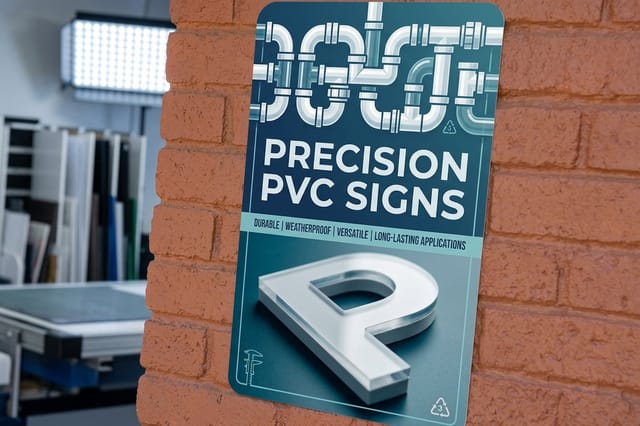
PVC signs from $25
Indoor rigid board at half the weight. Hangs on drywall with two screws, cheap enough to reprint when a process changes.
- 3
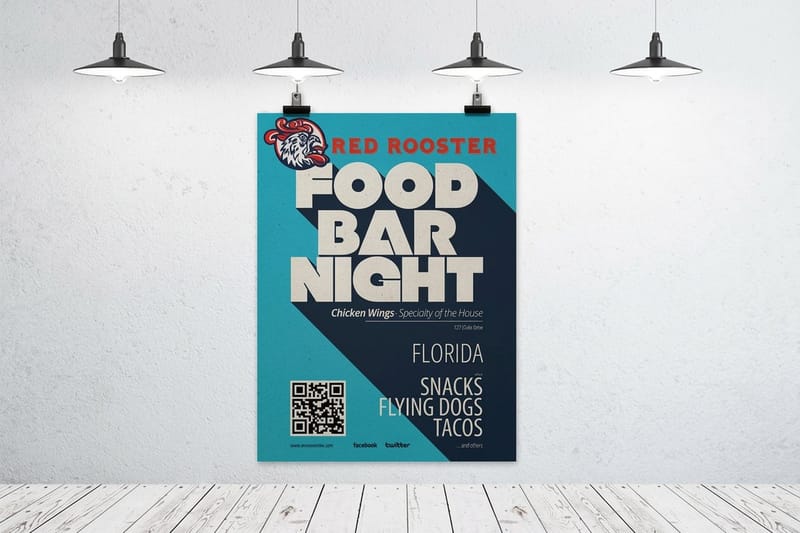
Standard posters from $108.75
The message that rotates. One theme per month in the break room, swapped before anyone stops seeing it.
- 4
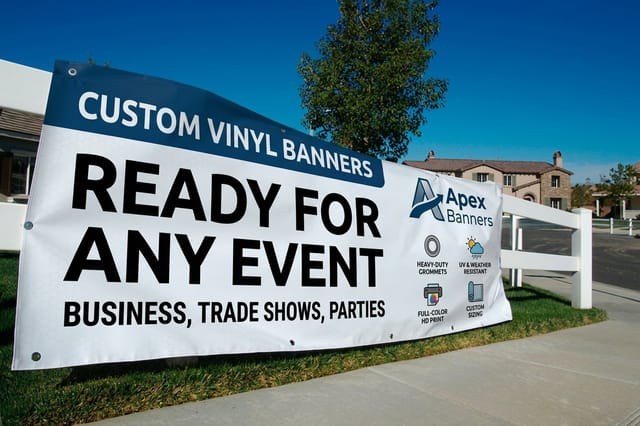
Vinyl banners from $79
The crew scoreboard. Big enough to read across a yard, and the one piece that makes a shared goal visible.
- 5
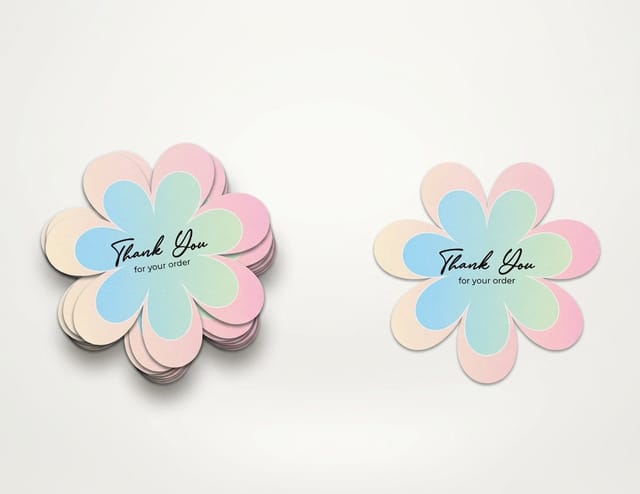
Die-cut stickers from $93.37
Recognition you can wear. Cut to shape for hard hats, gang boxes, and the machines that carry a lockout point.
- 6
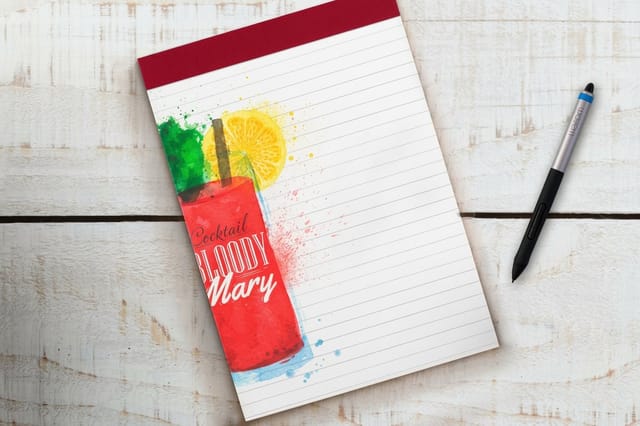
Standard notepads from $93.37
The reporting habit. A near-miss pad at the gang box catches what a phone app never will with gloves on.

Color and substrate
Pick the signal word first, the material second
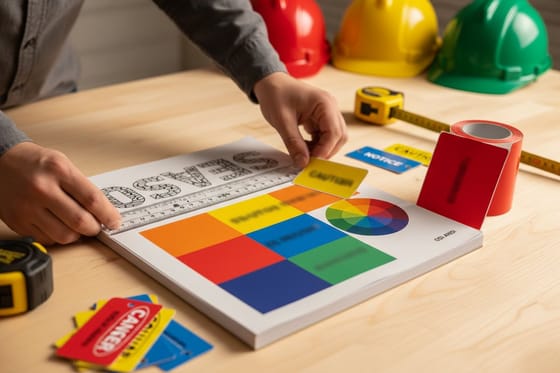
ANSI Z535.2 assigns a header color to each signal word, and the signal word is a promise about severity rather than a design choice. DANGER means the hazard will cause death or serious injury. WARNING means it could. CAUTION covers minor or moderate injury, NOTICE covers a practice with no physical hazard attached, and the green header is for safety instruction and first aid. Get that right and the material choice follows on its own.
Sizes and placement
Where each piece hangs and how often you reprint it
The reprint column is the one most safety managers skip, and it is the one that decides your budget. A rule printed on metal should outlive the person who ordered it; a campaign printed on paper should be gone in a month. Read the row, tap a piece to jump to its section, and order the size that matches the distance you need it read from.
| Piece | Common size | Where it hangs | Reprint cycle |
|---|---|---|---|
| 1. Aluminum signs | 10 in x 14 in and 12 in x 18 in for hazards, 18 in x 24 in at gates | Bolted to fences, machine guards, panel doors, and anywhere weather hits the sign all year. | Rarely. Print it once for a rule that will not change. |
| 2. PVC signs | 12 in x 18 in for a doorway, 18 in x 24 in for a shop wall | Indoor walls, stairwells, shop floors, and the corridor into the plant. | Yearly, or the day a process changes. |
| 3. Standard posters | 18 in x 24 in for a break room, 24 in x 36 in for a shop wall | Break room, time clock, locker room, and the wall people face while they wait. | Monthly. The swap is the point. |
| 4. Vinyl banners | 3 ft x 8 ft for a bay, 4 ft x 10 ft across a yard fence | Above the gate or across the fence, where the whole crew passes it at shift start. | Per campaign or per quarter. |
| 5. Die-cut stickers | 2 in to 3 in for hard hats, 4 in for gang boxes and machines | Hard hats, tool cribs, gang boxes, lockout points, and the back of a laptop lid. | Per training cycle. |
| 6. Standard notepads | 5.5 in x 8.5 in half sheet, 50 sheets to the pad | Gang box, foreman truck, tool crib, and the table where the toolbox talk happens. | Whenever the pads run out, which tells you the habit is working. |
1. Aluminum signs: the rules that do not change
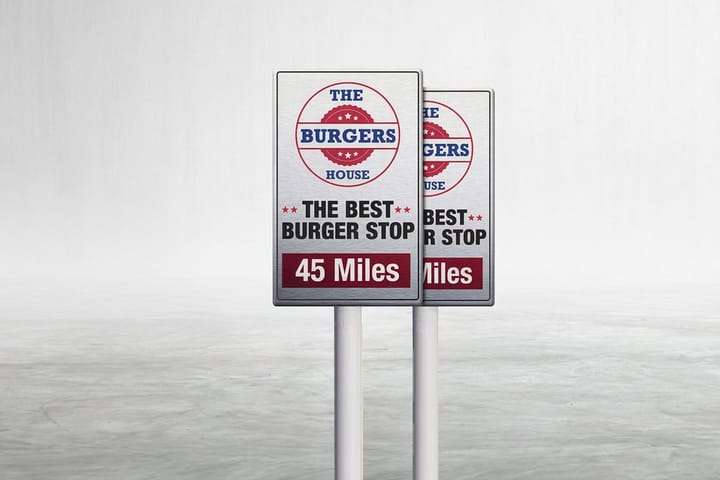
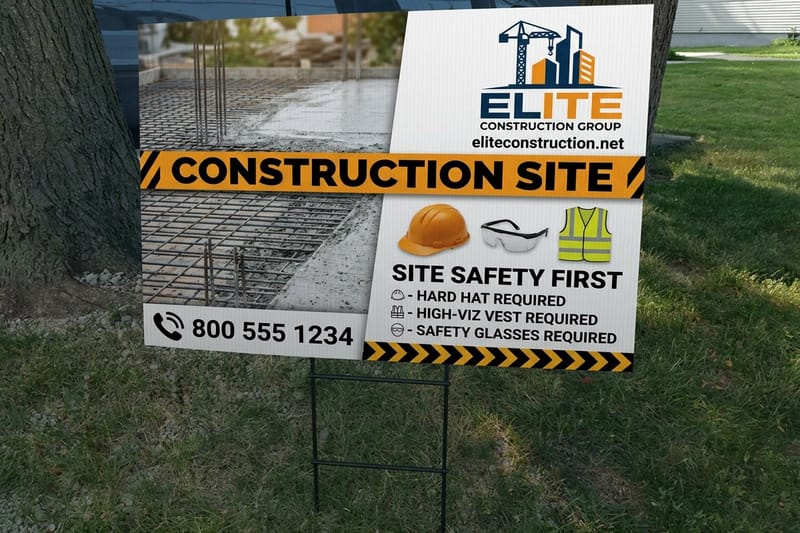
Start with the hazards that will still be hazards next year. Live electrical panels, unguarded edges, confined space entries, forklift crossings. Those get aluminum signs, because aluminum does not rust, does not soften in the sun, and does not curl off a fence in the first storm. Bolt it up and stop thinking about it.
The trade-off is honest: aluminum is the most expensive substrate in this kit per piece, and it is the worst one to be wrong about. A sign bolted to a machine guard is a sign nobody will reprint when the guard is replaced with a different model. So put a signal word on metal only when the meaning is fixed. DANGER means the hazard will cause death or serious injury; WARNING means it could. If you are still deciding which word applies, the rule is not stable enough for metal yet.
Mount height matters more than size on a job site. A sign at 5 to 6 feet reads at walking speed; the same sign at 10 feet gets lost above the sightline of a worker looking at their footing. If you are weighing metal against corrugated plastic or board, our breakdown of aluminum signs vs coroplast vs PVC puts the three side by side, and safety signs in the workplace covers what each one is required to say.
2. PVC signs: indoor rules you can afford to change
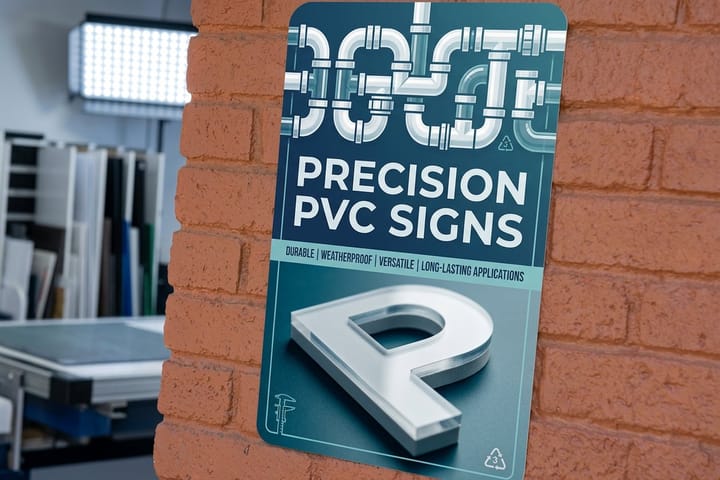
Inside the building, the rules move. A line gets re-tooled, a chemical gets swapped, a doorway becomes a PPE boundary. PVC signs are the right answer there: rigid enough to hang flat on drywall with two screws, light enough that nobody needs a ladder crew, and cheap enough that reprinting one after a process change is a non-decision.
Where PVC fails is heat and direct sun. Left on a south-facing exterior wall or above a kiln line, it will bow, and a bowed sign reads as neglect long before anyone notices what it says. Keep it indoors and out of the hot zone, and send the outdoor duty to metal.
Most of the indoor set is yellow CAUTION and blue NOTICE, which is exactly the band PVC suits: wet floor, low clearance, pinch point, sign in at the gate. Getting the wording tight is harder than getting the color right, and our guide on how to design caution labels shows how to write the hazard, the consequence, and the avoidance in one line instead of a paragraph nobody finishes.
3. Posters: the one message this month, then a new one

Signs state a rule. A poster runs a campaign. This is the piece that carries one idea at a time: hearing protection this month, ladder setup the next, heat illness before the first hot week. Print it at 18 in x 24 in for a break room wall or 24 in x 36 in for a shop floor, and put it where people already stand still, which is the time clock, the coffee machine, and the locker room.
Here is the part most safety programs get wrong. A poster stops working the moment it becomes furniture. Three weeks is roughly how long a wall poster holds attention before people stop registering it, so the schedule matters more than the artwork. Order a set of twelve at once, hang one a month, and the wall stays a channel instead of decoration. Printing them in a single run also costs less per poster than twelve separate orders, and it forces you to plan a year of topics rather than react to the last incident.
Color is not styling on these. Blue headers read as notice, green as safety instruction and first aid, and using red for a policy reminder burns the one color you need people to jump at. Our guide to OSHA safety colors and ANSI color codes maps the whole set, and the full argument for why the message has to move is in the safety culture shift guide.
4. Vinyl banners: make the shared goal visible
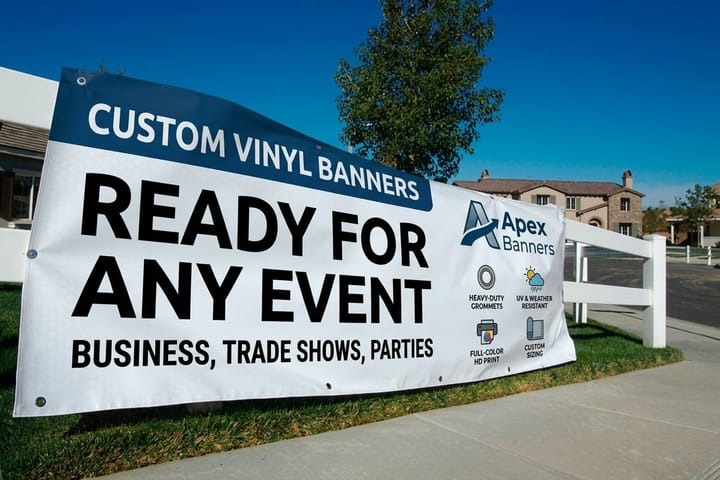
A banner is the only piece in this kit the whole crew reads at once. Stretch a vinyl banner across the yard fence or above the gate and it becomes the shift-start message: the campaign name, the goal, the number everybody is trying to move. Heavyweight vinyl with a welded hem and grommets every 2 feet survives a season outdoors; a banner hemmed only at the corners tears out at the first grommet in a crosswind.
Now the trade-off nobody prints on the banner. A sign counting days without a recordable incident rewards silence. The crew that goes quiet about a sprained wrist protects the number, and the number was never the goal. Flip what you count. A banner that reads how many near misses were reported this quarter rewards the behavior you actually want, because reporting is the input and injuries are the output.
Order the size to the run, not the wall: 3 ft x 8 ft covers a single bay, 4 ft x 10 ft spans a yard fence, and vinyl prints up to 10 feet on the short side as one piece with no seam, so most fence runs come off the roll without a weld through your headline. Mounting decides whether it stays flat, and how to hang banners covers tension and wind load.
5. Die-cut stickers: recognition a worker wears
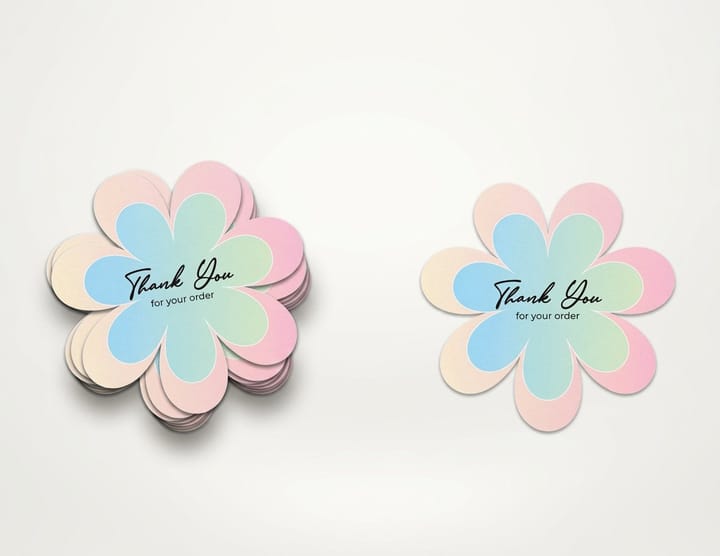
The hard hat is the most-seen surface on any site, and a sticker on it is the cheapest recognition a supervisor can hand out. Print a 2 in shape for a completed rigging course, a shape for the first-aid certified, a shape for the crew that closed out a quarter with every near miss logged. Die-cut stickers cut to the outline of the mark, so a triangle looks like a triangle instead of a square with a triangle on it.
Two limits worth knowing before you order. Keep stickers off the areas of a helmet you inspect for cracks and away from the shell edge, and check the helmet maker guidance, because some manufacturers restrict adhesives on their shells. And keep the count low: a hat covered in twenty stickers signals nothing, while three earned ones signal exactly what you wanted.
The same die-cut run covers equipment marking. Lockout point tags, inspection month dots, and gang box labels all come off one sheet, and outdoor vinyl handles a wash-down. For anything that has to survive chemicals, abrasion, or a solvent wipe, step up to the material choices in our guide to custom safety labels, and our custom industrial labels guide covers the durable end of the range.
6. Notepads: the near-miss habit, on paper
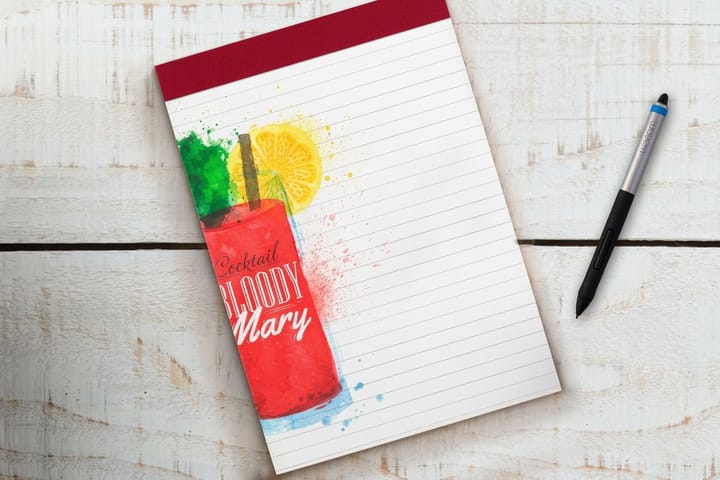
Every safety program says report near misses. Almost none make it easy at the moment it happens. A pre-printed notepad at the gang box does: four fields, a pencil line for the location, thirty seconds with gloves on and no screen to wake. Paper wins here for a plain reason, which is that a worker on a scaffold with wet gloves and no signal is not opening an app.
Print two pads and the habit builds itself. One is the near-miss slip, half sheet, 50 to a pad, one per report so it can be torn off and dropped in a box. The other is the toolbox talk pad, with the date, the topic, the crew signatures, and space for the question somebody asked. That second pad is what turns a five-minute talk into a record you can hand an inspector.
The pad only works if somebody empties the box. Collect weekly, read the slips out at the next talk, and say what changed because of one of them. Skip that step and the pad dies in a month, no matter how good the print is. Pair it with a matching construction site safety sign pack so the language on the pad matches the language on the wall, and start from a design template if you want the fields laid out before you order.
Specs and pricing
Compare the two signs you will reorder most
Aluminum and PVC do most of the work in this kit, and choosing between them is the decision that repeats every time a new hazard appears. Both build in 4 business days and both are sized and quoted by the panel below.


| Quantity | Price Per Unit | Total |
|---|---|---|
| 1 | $25.00 | $25.00 |
| Quantity | Price Per Unit | Total |
|---|---|---|
| 1 | $36.00 | $36.00 |
Wally walks the six pieces
Each one catches a worker at a different moment
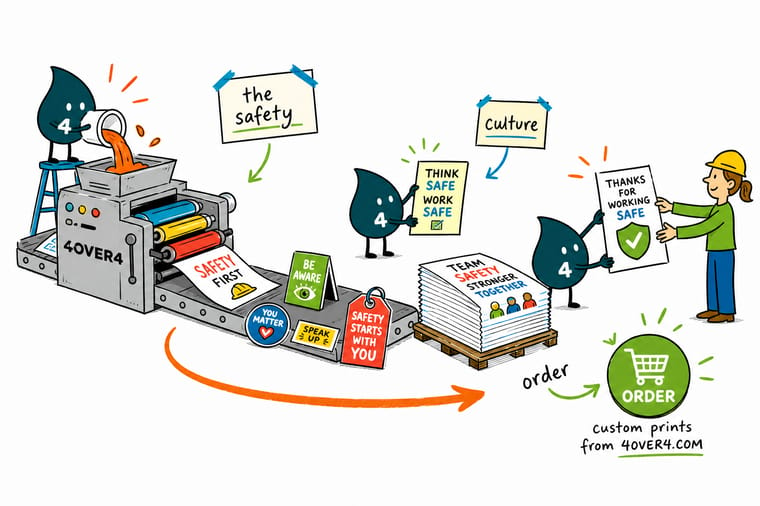
Wally starts at the fence, where the aluminum sign states a rule that will not change, then steps inside to the PVC sign on the doorway, past the poster people read while the coffee brews, under the banner that counts near-miss reports, to the hard hat carrying three earned stickers and the pad on the gang box that captures what almost happened. No single piece builds a safety culture. Printed as one set, in one voice, they put the message everywhere the work is.
Shop construction printing →See it in use
Posters crews have hung at the panel








Explore more
Where to go next
By the numbers
What a safety rule can be printed on
Common Questions
Common questions about safety culture printing
What printed materials actually change safety behavior?
Four jobs, six pieces. Permanent hazards get aluminum signs, indoor and changeable rules get PVC signs, the monthly campaign gets a poster, the shared goal gets a banner, recognition gets die-cut stickers, and reporting gets a pre-printed near-miss pad. The set works because each piece sits at a different point in the day: the sign is at the hazard, the poster is where people wait, the pad is in a hand.
How much does a safety print kit cost?
Prices depend on size, material, finish, and quantity, and every option updates live in the configurator. Starting points at 4OVER4.COM are PVC signs from $25, aluminum signs from $36, vinyl banners from $79, die-cut stickers from $93.37, notepads from $93.37, and standard posters from $108.75. Per-piece cost falls as quantity climbs, so a twelve-poster year printed in one run costs less than twelve single orders.
Aluminum or PVC for a safety sign?
Aluminum for outdoors and for any rule that will not change: it does not rust, does not fade fast, and takes weather all year. PVC for indoors and for anything a process change can rewrite, because it is lighter, cheaper, and easy to reprint. PVC bows in direct sun and heat, so it is not an outdoor substitute no matter how good the price looks.
How often should safety posters be replaced?
Monthly is the schedule that keeps them working. A poster becomes wall furniture within a few weeks, and after that people walk past without registering it. Order a year of topics in one print run, hang one a month, and archive the old one instead of layering a new sheet over it.
Should a banner count days without an incident?
Count reports instead. A days-without-incident banner puts a reward on silence, and the crew that hides a minor injury to protect the streak is doing exactly what the sign asked. Print the number of near misses reported this quarter, or the percentage of toolbox talks held, because those are inputs a crew controls and they push in the direction you want.
Can stickers go on a hard hat?
Usually yes, with two limits. Keep them off the areas of the shell you inspect for cracks and away from the shell edge, and check the helmet manufacturer guidance, because some restrict adhesives on their shells. Keep the number small as well: three earned stickers read as credentials, twenty read as decoration.
What belongs on a near-miss pad?
Four fields and nothing more: what happened, where, what could have gone wrong, and what would prevent it. Add a date line and leave the name optional, because a required name cuts the number of slips you get. Half-sheet pads at 50 sheets sit fine on a gang box, and one report per sheet means a slip can be torn off and dropped in a box without carrying the rest of the pad away.
Get Started
Print the set, not one more sign
Order the six pieces as one branded run at 4OVER4.COM so the wording at the panel matches the wording on the pad. Notepads start at $93.37 for 25 on 70# uncoated text, posters at $108.75 for 50 on 100# gloss text, and each piece is configured on its own page.
Legal Disclaimer
Gold Standard guarantees apply to all standard orders placed through 4over4.com. Price match requires verifiable proof of a competitor's published price for an equivalent product with matching specifications and turnaround time. Satisfaction guarantee covers manufacturing defects and print quality issues. Contact support with order number and documentation. On-time delivery rate based on tracked orders 1999 to 2026. Individual results may vary based on shipping carrier performance.
