
The Raised Foil Set: Three Print Pieces People Feel Before They Read
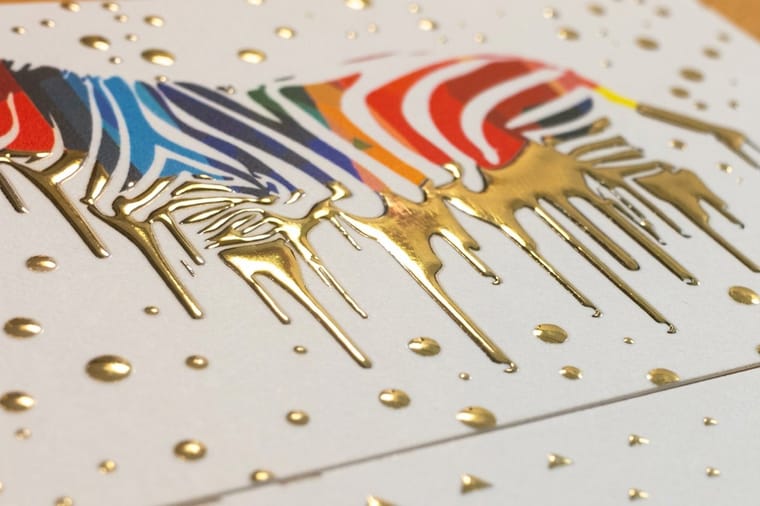
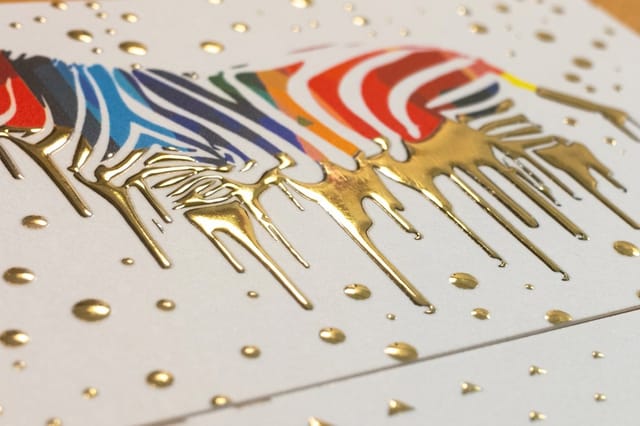
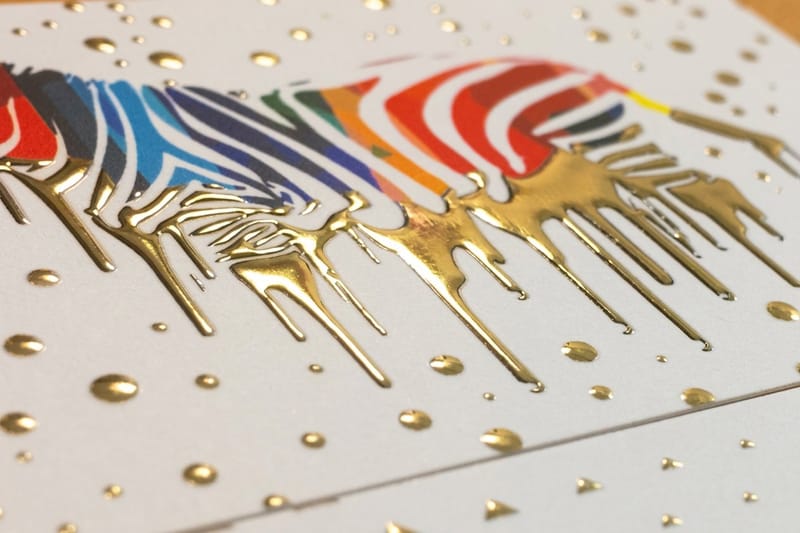
Raised foil is the finish that works through fingertips. A clear layer lifts the metallic artwork off the sheet so it catches light from the side and asks to be touched. These three picks apply that one effect across the moments that matter most: the card you hand over, the card that stays on a desk, and the folder that holds the deal.
The raised foil set is three pieces built on one metallic layer: raised foil business cards from $86.78 for first contact, raised foil greeting cards from $618.16 for the follow up that gets kept, and raised foil pocket folders from $1037.97 for the proposal that closes. Design one vector foil layer, reuse it across all three, and a client meets the same shine at every stage of the relationship.
The picks
Three pieces, from $86.78 for 100 cards to $1,037.97 folders
Start here. These are the three raised foil products we would put in a working set, in the order you should print them. Each card below pulls live pricing from its product page, so what you see is what you configure.
Design and print help
One raised logo on card, folder and greeting
A set only reads as a set when the foil shape, the foil color and the stock repeat. These tools keep the three pieces aligned from the first proof to the reorder.
How they work together
Print in the order the relationship moves
Each piece owns a stage. The card opens the conversation, the greeting card keeps your name in the room, and the folder shows up when there is money on the table.
The card leaves your hand and stays in a wallet. Raised foil is what stops it from being filed with the flat ones.
A foiled greeting card gets propped on a desk instead of dropped in a bin, which buys your name weeks of quiet visibility.
The folder holds the proposal, the pricing and the contract. Foil on the cover tells a client the paperwork was worth care.
1. Raised foil business cards: the pick that starts the set

A business card is handed over in three seconds and judged in one. Raised foil buys you that second back, because the person receiving it feels the logo before they finish reading your name. On a thick dark stock the metallic areas sit slightly above the surface and pick up whatever light is in the room, which is why these cards get turned over instead of pocketed blind.
Keep the foil to one element. A logo, a monogram or a single rule under your name will carry the whole card, and the untouched space around it is what makes the shine read as intentional rather than loud. If you are still deciding between this and a pressed metal die, foil stamping vs raised foil compares the two side by side, and setting up your design files for foil shows exactly how the foil layer should be built.
Print the card first. It is the cheapest way to prove your foil artwork at small size, and every shape you approve here scales straight up to the other two pieces.
2. Raised foil greeting cards: the pick that stays on the desk
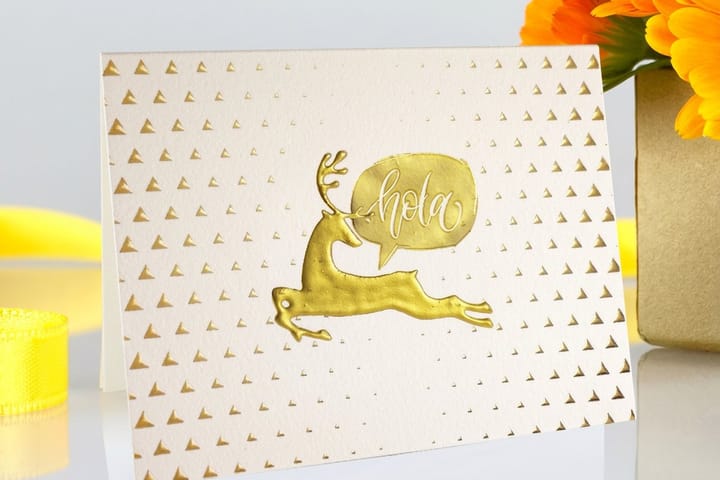
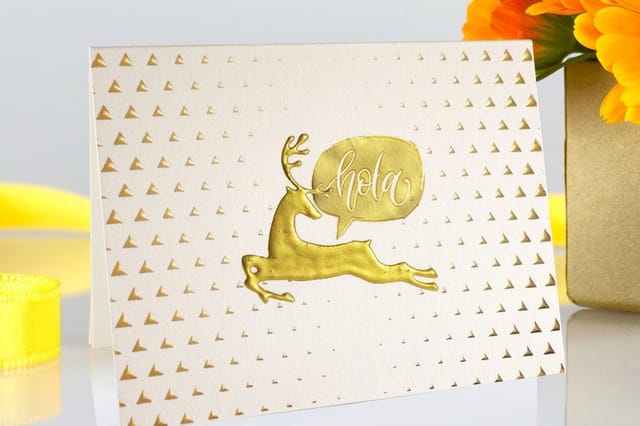
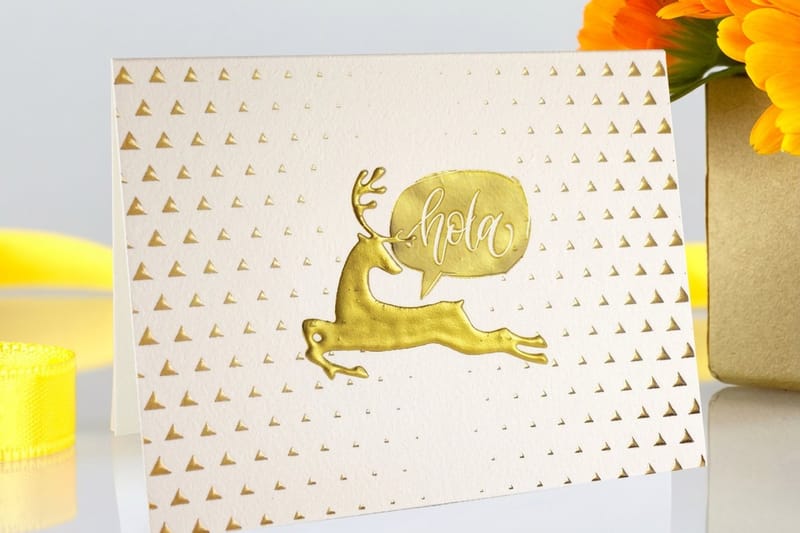
Most client mail is opened, scanned and thrown away in under a minute. A greeting card with raised foil survives that minute. The weight of the stock and the texture on the cover signal that someone chose it, and cards that feel chosen end up standing on a shelf where your logo quietly works for weeks.
Use the cover for one foiled image and save the message for plain ink inside, where it is easy to read and easy to sign by hand. Holidays are the obvious moment, but the same card carries a thank you after a signed contract, a note with a delivery, or an invitation to an opening. Order from raised foil greeting cards and match the foil color you already approved on the business card.
This is the piece that turns a transaction into a relationship, so it deserves the same foil shapes as the card in the recipient's wallet.
3. Raised foil pocket folders: the pick that carries the pitch
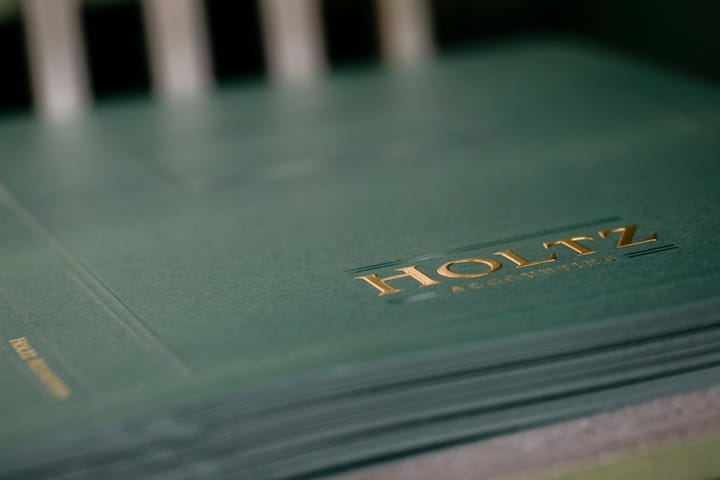
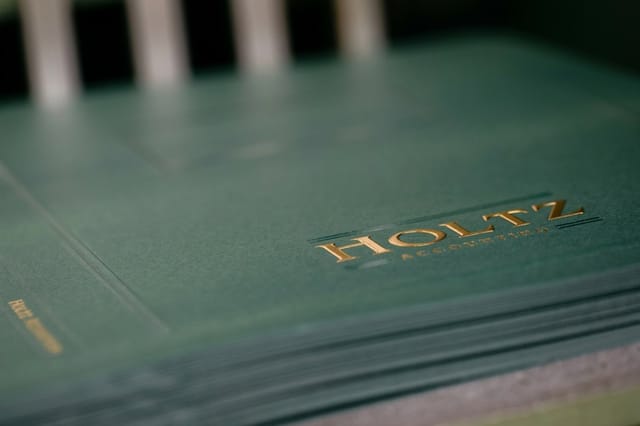
A folder is the only piece in the set a client holds while deciding to spend money. It carries the proposal, the pricing sheet, the spec pages and, in the slit on the pocket, the business card that started the conversation. A foiled cover sets the expectation before a single page is read, and the large surface gives the raised areas room to be dramatic in a way a card cannot.
Scale the same logo up rather than redrawing it, and resist filling the cover. One large foiled mark on a dark uncoated or soft touch stock beats a busy layout every time. If the folder is going into a boardroom, print a short run in your exact brand foil from raised foil pocket folders and keep the interior clean so your documents stay the focus.
Print this one last, once the card and the greeting card have locked your foil color, your stock and your logo shapes across the whole set.

Specs and pricing
Raised foil card specs on 16pt velvet cover and the price ladder
The business card sets the foil color and the stock family the other two picks follow. Check its specs and quantity pricing before you commit the rest of the set.
| Quantity | Price Per Unit | Total |
|---|---|---|
| 100 | 86.8¢ | $86.78 |
| 250 | 47.9¢ | $119.73 |
| 500 | 37.1¢ | $185.63 |
| 1,000 | 36.1¢ | $361.37 |
Wally explains the set
Three pieces, one foil layer, printed to be touched
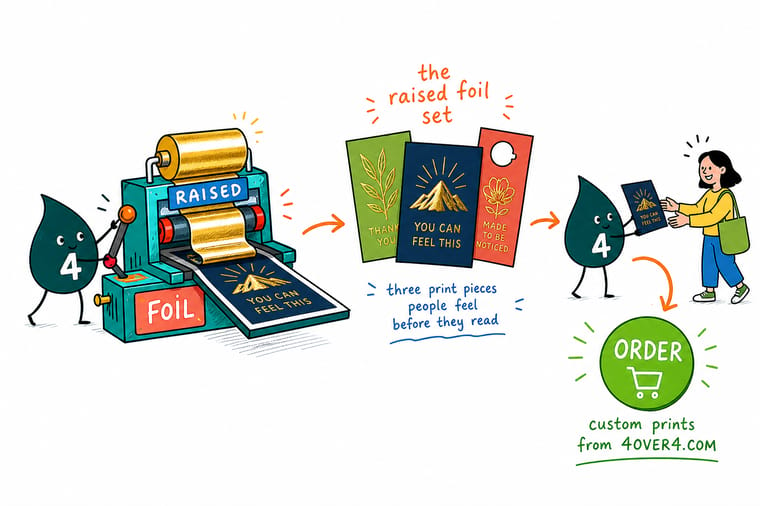
Wally thinks of raised foil the way a tailor thinks of lining: nobody asks for it, everybody notices it. Draw your foil artwork once as clean vector shapes, keep it to a single element per piece, and put it on the darkest stock your brand allows. Then print the card, the greeting card and the folder from that same layer so a client feels the same finish three times.
Shop the raised foil collection →See it in use
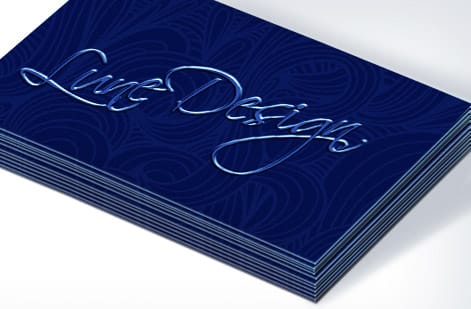
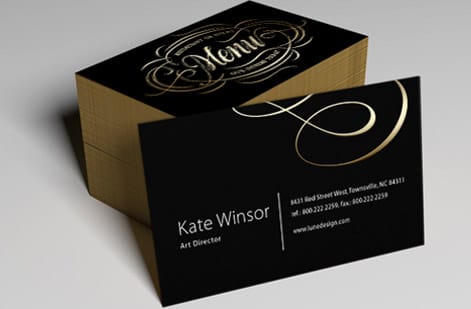
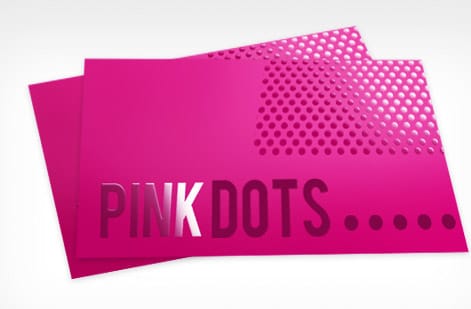
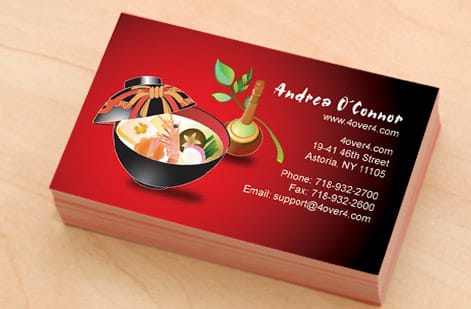
Raised foil work customers have ordered
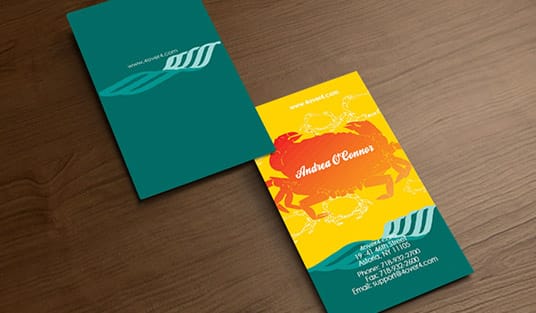
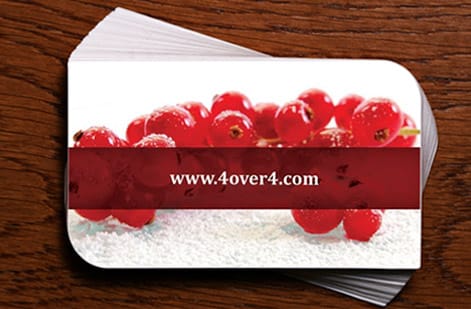
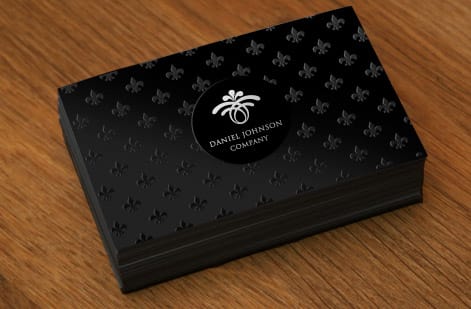
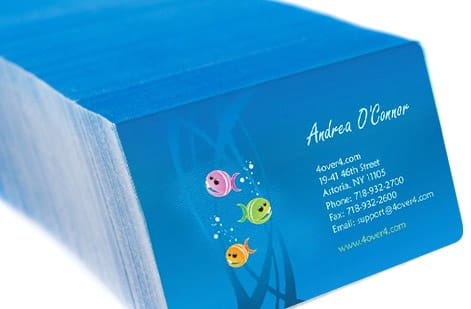
Explore more
Where to go next
By the numbers
One set, printed to be remembered
Common Questions
Common questions about the raised foil set
What is the raised foil set?
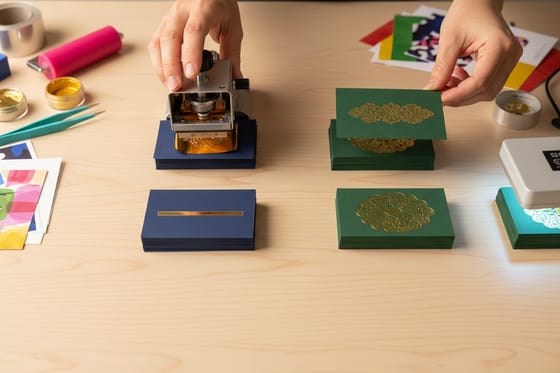
It is a curated group of three raised foil products that share one finish and one design language: business cards, greeting cards and pocket folders. Each one carries the same metallic logo treatment at a different point in the relationship, so a client who takes your card and later opens your proposal sees the same shine twice. You order each piece separately, but you design them as one set.
How is raised foil different from traditional foil stamping?
Traditional foil stamping presses hot foil into the sheet with a metal die, so the foil sits flush or slightly debossed. Raised foil builds a clear resin layer first and bonds the foil on top of it, so the artwork stands above the paper and catches light from the side. There is no die to make, which is why short runs are practical. Our comparison guide walks through both processes.
Which piece should I print first?
Start with the business cards. They are the smallest commitment, they prove the foil art at the size where detail matters most, and they put your logo in circulation immediately. Once you have a card you like, the same vector foil layer scales up to the greeting card and the folder without redrawing anything. Print the folder last, when you know what it needs to hold.
How do I set up artwork for raised foil?
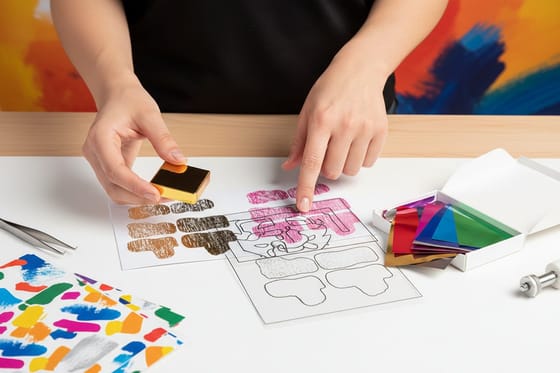
Supply two layers. The first is the full color artwork. The second is the foil layer, drawn as vector shapes filled 100% K on a separate page or clearly named layer, showing only the areas that should be metallic. Keep strokes above roughly half a point, avoid tiny serif detail and gradients, and leave a little breathing room between foil shapes so they stay crisp.
Can I mix raised foil with other finishes on the same piece?
Yes, and the set looks better when you do. Raised foil pairs naturally with a soft touch or matte laminate, because a low sheen background makes the metallic areas jump. What does not work is full gloss under foil: the whole surface reflects, the contrast collapses, and the raised texture stops reading as deliberate. Pick one shiny element per piece.
What colors of foil can I use?
Silver and gold are the workhorses and read as premium on almost any dark stock. Rose gold, copper and holographic options are available for brands that want the finish itself to be the personality. Choose the foil against your background first, not against your screen, because a metallic reads completely differently on ink black than on a light cream sheet.
What does the raised foil set cost?
There is no set price. Every piece is quoted on its own product page and the total depends on quantity, size and stock. Raised foil business cards begin at $86.78 for 100 on 16pt velvet laminated cover in 7 business days, raised foil greeting cards at $618.16 for 100, and raised foil pocket folders at $1,037.97 for 50 with a 10 business day build. Configure each one to see your exact price before you order, and check the collection for other raised foil pieces.
Get Started
Order the three raised foil pieces on one foil layer
Order the three raised foil picks from one printer, on one foil layer, and let a client feel the same finish from the first handshake to the signed proposal.
Legal Disclaimer
Gold Standard guarantees apply to all standard orders placed through 4over4.com. Price match requires verifiable proof of a competitor's published price for an equivalent product with matching specifications and turnaround time. Satisfaction guarantee covers manufacturing defects and print quality issues. Contact support with order number and documentation. On-time delivery rate based on tracked orders 1999 to 2026. Individual results may vary based on shipping carrier performance.
