
5 Print Pieces That Make Personal Branding Expertise Feel Real
An ebook proves you know something. Print proves you meant it. These five pieces carry one sentence about what you fix from a stranger pocket to a client shelf, and they are ordered so the cheap ones test the wording before the expensive one sets it.
A personal brand goes to print in five pieces, and the order matters more than the design. Postcards from $16.48 and business cards from $17.57 carry the promise while it is still moving. A retractable banner stand from $139 puts it behind you at 80 inches. Booklets from $240.55 hand over the method, and a perfect bound edition from $375.05 gives the ebook a spine. All five start at $788.65 together, or $413.60 without the bound book.
The picks
Five pieces, from $16.48 postcards to a $375.05 bound edition
Print them in this order, cheapest and most disposable first. Postcards and cards are how you find out whether your sentence works on somebody who has never met you. The banner and the bound book are how you commit to it. Prices come straight from the configurator and drop per piece as the quantity climbs.
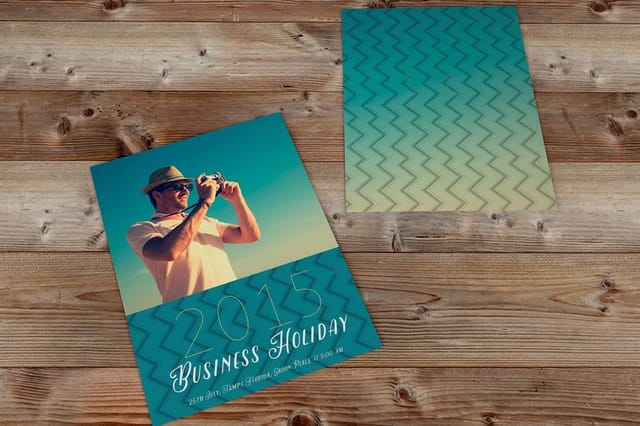
Standard postcards from $16.48
The cheapest way to put your promise and a scannable link in a stranger hand. A 4 by 6 in card still mails at the postcard rate, so the same artwork works as a leave-behind on a chair and as a mailing to the people who downloaded the ebook last year.
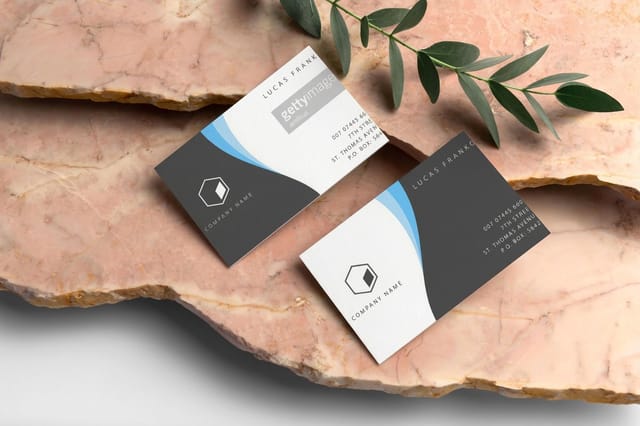
Classic business cards from $17.57
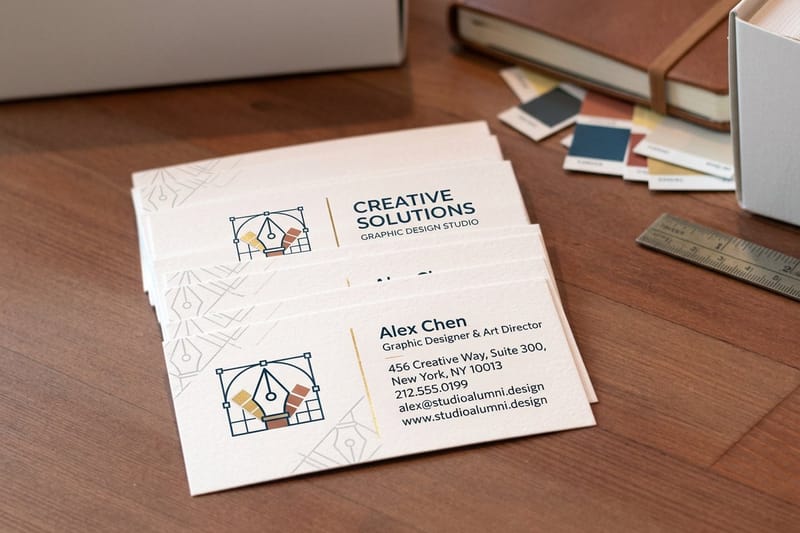
The piece that has to survive a pocket and a wallet for six months and still be legible. Print your name, the one thing you do, and one link. A personal brand fails on a card by trying to list four services.
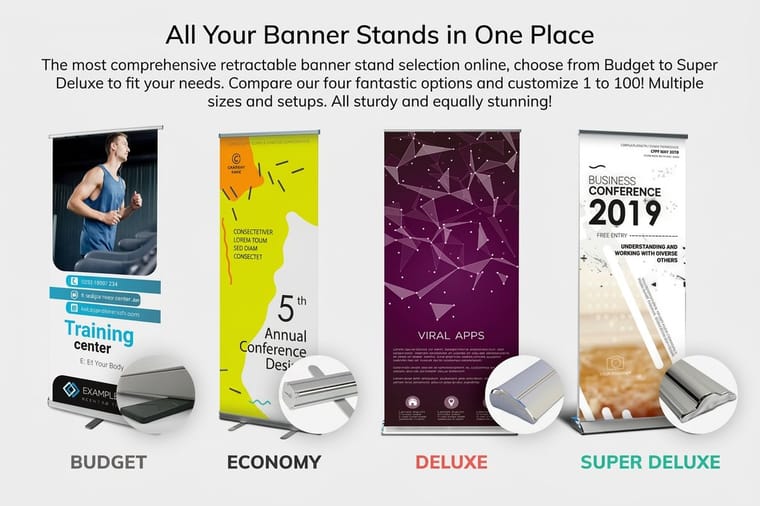
Retractable banner stands from $139
A 33 by 80 in panel that turns any stage, booth or borrowed conference room into your room. It is also the piece that commits you: the panel rolls back into its base, so the line you print is the line you live with all season.
Standard booklets from $240.55
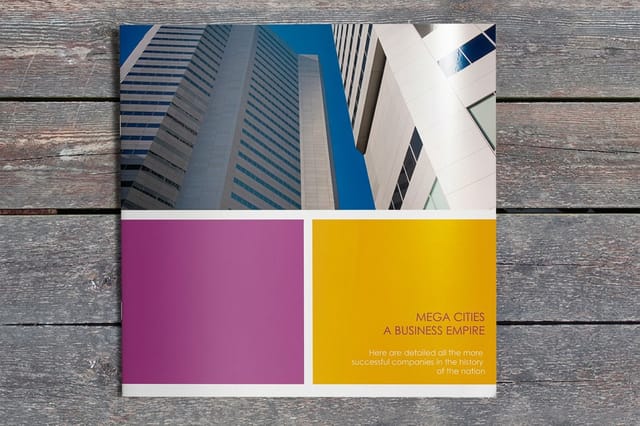
The ebook as a thing you hand over. Twenty pages of your actual method, stapled, cheap enough to revise after every workshop and far more likely to be read than a PDF sitting in a downloads folder.
Perfect bound book from $375.05
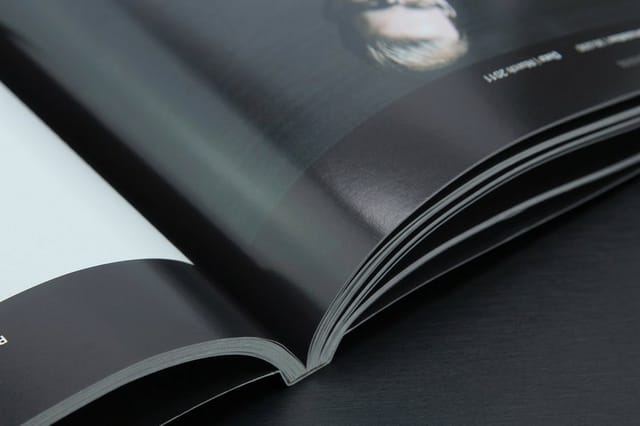
The edition with a printed spine, which is the whole point. A bound book stands on a client shelf with your name readable at the edge. A stapled booklet on that same shelf disappears.
Before you send a file
Design the banner for the band a room can actually see
This is the mistake that costs the most, because it is the piece people design first and check last.
A retractable panel is 80 inches tall and almost nobody uses more than a third of it. Stand one behind a lectern in a hotel function room and the bottom 30 inches vanish: a table takes some, the front row of seated heads takes the rest. Standing eye level lands near 62 inches. So the strip between roughly 45 and 70 inches from the floor is the whole readable canvas, and everything you need a stranger to take away has to live in it.
Work top down inside that strip. Your name goes highest and largest, because it is what somebody photographs. The one line about what you fix sits under it at about half the size. The QR code goes at the bottom of the band, near 48 inches, where a phone can reach it without anyone crouching. Below that, color and pattern only. A logo centred in the geometric middle of an 80 inch panel is a logo behind somebody head, every time.
Print a proof of the layout at a quarter scale, tape it to a wall at the right height and stand back fifteen feet. If your one line is not readable from there, it is not readable in a room either, and no amount of ink fixes that. The same test decides your type size on postcards at a much smaller distance.
The color decision
Choose the brand colour in CMYK first, then match the site to it
A one-person brand fails on consistency long before it fails on design, and color is where the crack usually shows.
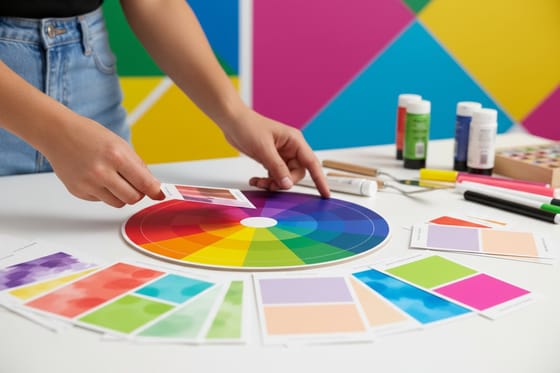
Screens make color with light, and presses make it with cyan, magenta, yellow and black ink. The brightest screen blues, greens and oranges sit outside what four inks can mix, so a color picked in a design tool and approved on a monitor comes back from the press quieter than you expected. Nothing went wrong. The value was never printable.
Reverse the order and the problem disappears. Build your brand color as a CMYK value, print it on the stock you actually use, look at it under normal room light, and only then set the website to match what you are holding. Now the banner, the card and the site agree, which is the entire job of a personal brand identity. Our explainer on why colors look dull when printed covers the gamut problem, and ten color pairings that work in print gives you starting points that survive the conversion.
Two smaller habits close the gap. Keep the palette to two colors plus a neutral, because every extra colour is another thing that can drift across five pieces printed months apart. And if you have no palette yet, start from our design templates and change only the type and the photo, so the first printed set is consistent by construction rather than by discipline.
What each piece does
The five pieces and what each one carries
Each piece meets a person at a different distance and holds a different amount of your argument. Read the row, tap the piece to jump to its section, and start with whichever part of your expertise is currently trapped in a PDF.
| Piece | What it carries | Where it lives | Starts at |
|---|---|---|---|
| Standard postcards | One promise and one QR to the ebook | A seat, a counter, a mailbox | $16.48 |
| Classic business cards | Your name, your one line, one link | A pocket after a conversation | $17.57 |
| Retractable banner stands | The promise at a size a back row can read | Behind you on stage or at a booth | $139 |
| Standard booklets | The method, the exercises, room to write | A workshop table, a client onboarding pack | $240.55 |
| Perfect bound book | The chapters that will still be true in two years | A shelf, a back-of-room table, a review copy | $375.05 |
1. Postcards: the promise, printed cheap enough to be wrong once
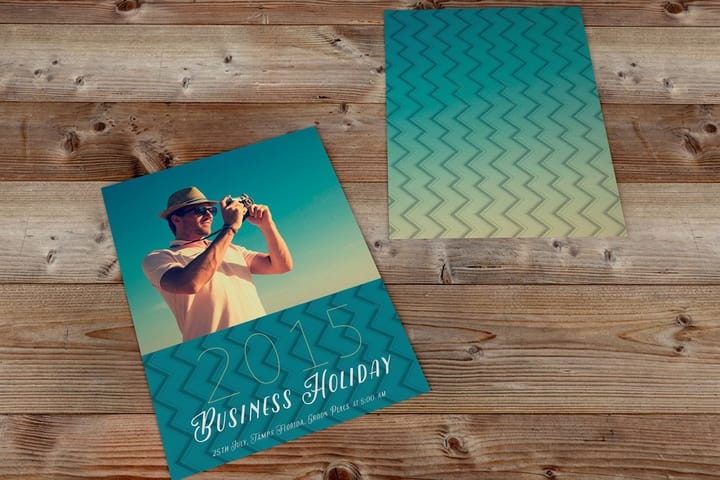
Start here, because this is where a positioning line gets tested. Standard postcards from $16.48 carry one sentence about what you do, a QR code to the ebook, and nothing else. Print two hundred, leave them on chairs at a talk, and count the scans. If the line does not pull, you are out twenty dollars instead of a bound print run.
Size decides postage, so decide it before you decide the layout. The First-Class postcard rate covers cards up to 4.25 by 6 in, which is why 4 by 6 in is the size most people order and mail. Go up to 5 by 7 in and the same card is charged as a letter, so a mailing of five hundred costs meaningfully more for a piece that is not much more visible in a stack of mail. If you never intend to mail it, the larger size is fine and looks better on a seat.
The honest limit of a postcard is that it has no envelope. Anything printed on it is readable by a mail carrier, a receptionist and whoever sorts the pile, which is exactly right for an ebook offer and exactly wrong for a proposal or a fee. Keep the postcard to the invitation and let the conversation carry the rest. Our breakdown of the parts of a postcard covers the address panel and the safe margins, and seven ways to make a brand statement with postcards has layouts worth stealing.
One habit makes the postcard repay itself: point the QR at a short path on your own domain that redirects, not at the file itself. Then a card from a February talk still works in November when the ebook has a new cover, and the hit count tells you which room actually produced readers.
2. Business cards: one name, one line, one link

A classic business card from $17.57 is 3.5 by 2 in, which is about fifty words of usable space before it becomes unreadable at arm length. Most personal brands spend that space badly. Your name, the one thing you fix, and one link is the whole brief; a list of four service lines reads as a freelancer hoping something sticks.
Stock weight is a real signal and it costs almost nothing. A 14pt card is the standard and feels fine. A 16pt card is noticeably more rigid in the hand, and that half second of stiffness is the closest thing print has to a firm handshake. If you speak or pitch, order the heavier stock and skip a fancier finish to pay for it.
Here is the finish trade-off, and people get caught by it. Gloss and soft-touch coatings look expensive and refuse ink. A ballpoint skates off a coated back, so if your habit is writing a referral name, a price or a meeting time on the card as you hand it over, order matte or uncoated and accept a slightly plainer look. Our comparison of matte, glossy and soft-touch finishes lays out how each one behaves, and the US business card size guide has the bleed and safe-area figures.
On the headshot question: a face on a card works, and it works only if it is the same face on your banner, your book cover and your site. Change your hair, your glasses or the photographer and the card starts lying about you, which is a worse outcome than never having printed a photo at all. Pick one headshot, use it everywhere for two years, and reprint the set when you change it.
3. Retractable banner stand: your name behind you at 80 inches
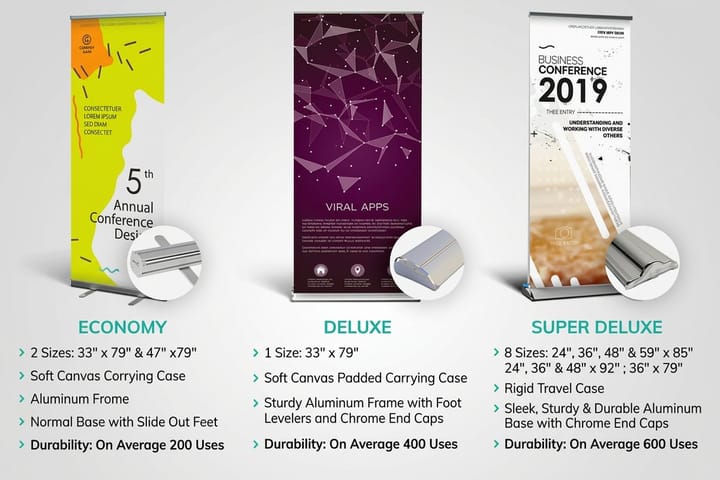
The moment a personal brand stops being a website is the moment you stand in front of a room with your own name behind you. A retractable banner stand from $139 does that in a 33 by 80 in panel that pulls out of a weighted base in about fifteen seconds and rolls back into a case you can carry on a plane.
Design it for the band that people can actually see. The panel is 80 inches tall, but a table, a lectern or a seated front row takes out roughly the bottom 30 inches, and standing eye level sits near 62 inches. That leaves the stretch between about 45 and 70 inches from the floor to carry your name, your one line and the QR code. Everything below it is color. Files come back from designers with the logo centred in the middle of the panel constantly, and in a real room that logo is behind somebody head. Our pull-up banner design guide works through the layout, and the five common retractable sizes covers where each one fits.
Two limits worth knowing before you order. The panel lives rolled inside the base, so a hard crease across a printed face does not relax out, which is an argument for keeping a portrait large and low-contrast rather than making it the focal point. And the base is weighted for indoor floors, not wind: outdoors it wants a water-filled or staked stand instead, covered in using a retractable banner outdoors.
This is the piece that commits you. At $139 it is not expensive to own, but reprinting the panel is most of that again, so the sentence you put on it should be the one you already tested on postcards. That is the reason it sits third in this kit rather than first.
4. Booklets: the ebook as something you can hand across a table
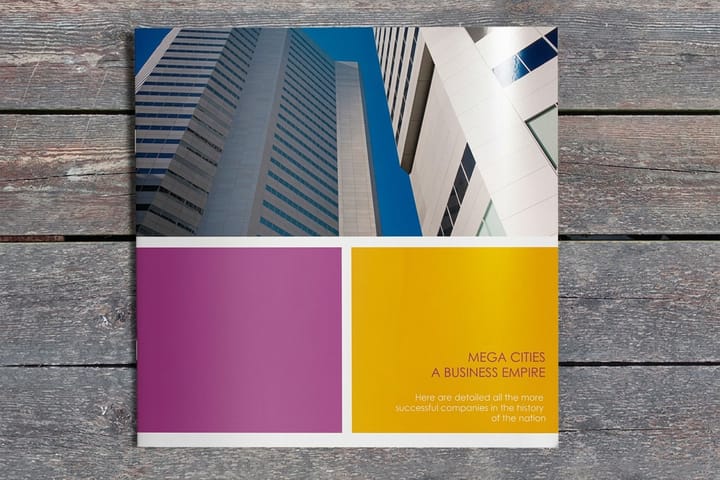
An ebook nobody opens is not expertise, it is a file. Standard booklets from $240.55 turn the useful twenty pages of it into a stapled piece you put in a hand at a workshop, and paper you hand over gets read at a rate a downloaded PDF never matches.
The format has one rule that catches everyone the first time. A saddle stitched booklet is made from folded sheets stapled through the spine, so every sheet carries four pages and the total has to land on a multiple of four. Plan an 8, 12, 16, 20 or 24 page piece. A 22 page manuscript becomes 24 with a notes page and a back cover, not a special order. Past roughly 48 pages the staples start to buckle and the fold stops sitting flat, which is where you switch bindings. The page counts and creep guide also explains why thicker booklets need their inner pages nudged before trimming.
Print the workbook, not the book, while the material is still moving. Stapled booklets are the cheapest bound format we make, so a revision after every cohort is an ordinary expense instead of a decision you avoid. Leave margins wide enough to write in, put one exercise per spread, and keep anything that dates, a tool name, a screenshot, a price, behind a QR code on the back cover.
The limit to accept: a stapled booklet will not lie flat next to a laptop. It springs shut at the page somebody was reading. For the copy that sits open on a desk all day, a coil binding does that and staples never will. Our binding methods guide compares them side by side.
5. Perfect bound book: the edition with your name on the spine

Print this last, and print it when the argument has stopped changing. Perfect bound book printing from $375.05 trims the page block, glues it to a wrap-around cover and gives you a flat spine you can print a title on. That spine is the entire reason the format matters for a personal brand: a bound book sits on a client shelf with your name readable from across the office, and a stapled booklet in the same spot is invisible.
The binding has a floor and a ceiling. You need somewhere around 28 pages before there is enough paper for the adhesive to hold a square spine, and it runs comfortably up to about 500. Between 28 and 48 pages both bindings are open to you, and the choice is about purpose rather than price: staples for something disposable you revise every quarter, glue for something a person paid for and will keep.
One production detail trips up first-time authors every time. Spine width is calculated from the page count and the interior stock, so the cover artwork cannot be finished until the interior is locked. Add a chapter after the cover is drawn and the title creeps off the spine onto the front. Set the interior first, take the spine measurement, then draw the cover. What perfect bound printing is walks the process, and how to print a book online covers file setup in the right order.
Put a version or a year on the spine while you are there. It costs nothing, and it makes the second edition read as progress rather than a reprint of the same claims. If a full launch is what you are planning around it, the author book launch kit covers the pieces that go around the book itself.
Specs and pricing
The two bound formats, side by side
The booklet and the bound edition are the two decisions with real money attached, and page count drives both. Here are the live specs and price ladders straight from the configurator.

| Quantity | Price Per Unit | Total |
|---|---|---|
| 25 | $9.62 | $240.55 |
| 50 | $6.04 | $302.06 |
| 100 | $3.61 | $361.37 |
| 200 | $2.22 | $444.85 |
| 300 | $1.65 | $495.38 |
| 400 | $1.29 | $515.14 |
| 500 | $1.06 | $531.61 |
| 600 | 91.5¢ | $549.19 |
| Quantity | Price Per Unit | Total |
|---|---|---|
| 10 | $37.51 | $375.05 |
| 15 | $27.86 | $417.92 |
| 20 | $23.04 | $460.78 |
| 25 | $20.15 | $503.65 |
| 30 | $18.22 | $546.51 |
| 40 | $15.54 | $621.52 |
| 50 | $14.57 | $728.68 |
| 60 | $13.93 | $835.83 |
Wally prints the sentence, not the resume
One line, five surfaces, in price order
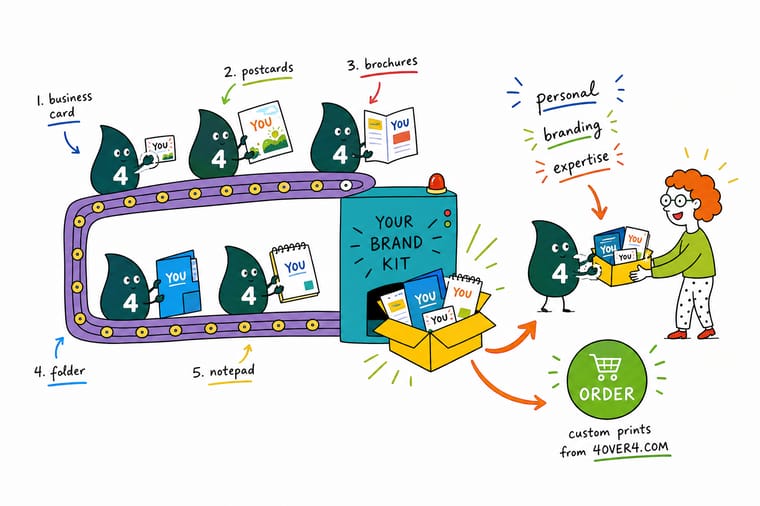
Wally once printed a banner listing six things he could do. Nobody remembered any of them, and the panel cost him a season. Now he writes one sentence, tests it on postcards that cost $16.48, checks whether anyone scans the code, and only then puts it on the banner and the book. Same expertise, same budget, and this time people repeat it back to him. Test cheap, commit expensive, and say the same thing on all five pieces.
Shop the creative professionals collection →See it in use
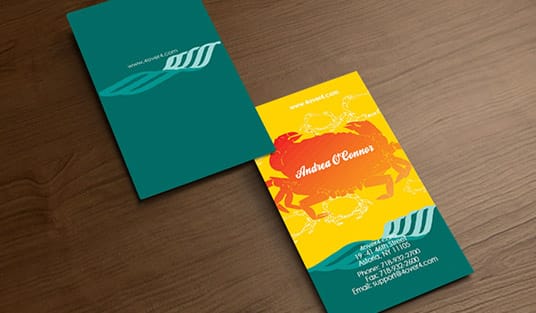
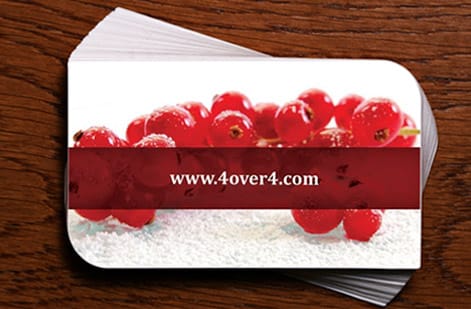
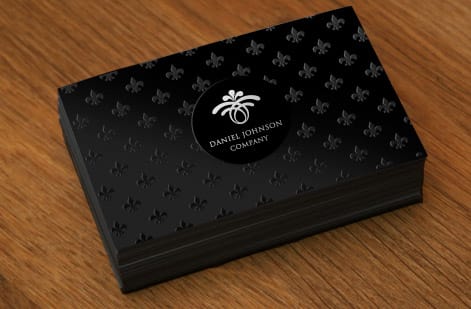
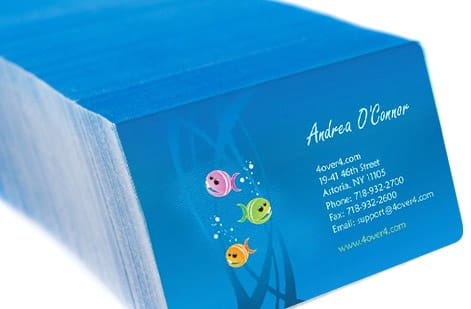
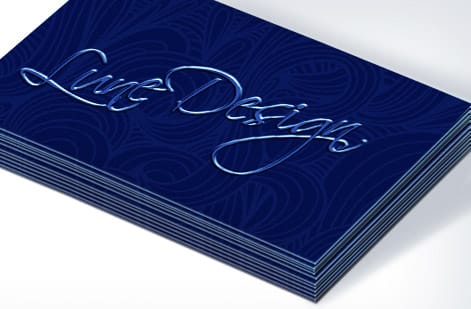
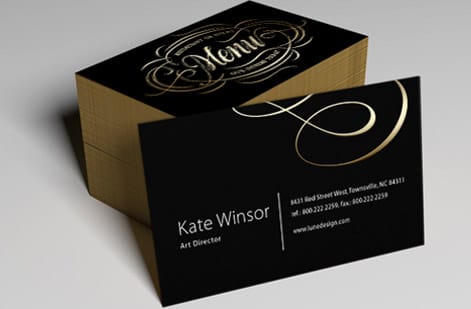
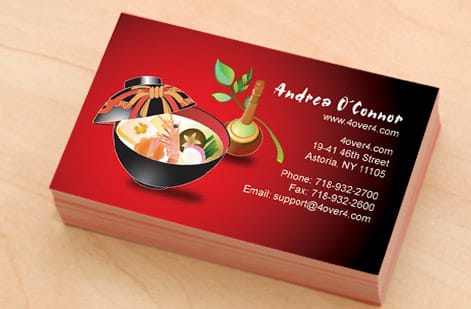
Classic cards authors have ordered
Explore more
Where to go next
By the numbers
What one person's authority can be printed on
Common Questions
Common questions about printing a personal brand
What should I print when I am building a personal brand?
Five pieces cover it: postcards for the offer, business cards for the handoff, a retractable banner stand for the stage or the booth, booklets for the method, and a perfect bound edition once the material has settled. At 4OVER4.COM those start at $16.48, $17.57, $139, $240.55 and $375.05, which is $788.65 for the full set or $413.60 without the bound book. Print them in that order so the cheap pieces test your wording before the expensive one locks it in.
My positioning is still changing. What should I print now?
Postcards and business cards only. Both start under $18, so a line you decide against in six weeks costs you the price of lunch to replace. Hold the banner and the bound book until the same sentence has survived three talks or three sales calls without you rewriting it on the way there.
Should my headshot go on my business card?
It works if it is the same photo everywhere, and it hurts if it is not. A face is the fastest recognition shortcut in print, but a card showing a photo from four years ago, a banner with a different one and a book cover with a third reads as three different people. Choose one headshot, use it across the whole set, and reprint the set when you change it.
How many pages does my ebook need before it can be perfect bound?
Roughly 28 pages, because below that there is not enough paper for the adhesive to hold a square spine. Under 28 pages, saddle stitch it instead, keeping the total on a multiple of four. Between 28 and 48 pages either binding works, so choose glue when someone is paying for the copy and staples when you expect to revise it.
Why does my brand color look duller in print than on my website?
Screens make color with light and presses make it with four inks, and the brightest screen greens, blues and oranges sit outside what CMYK can mix. The fix is order of operations: build the brand color as a CMYK value first, print it, then match the website to what came off the press. Doing it the other way around guarantees the printed set never matches the site.
What size retractable banner should I order for a conference booth?
The 33 by 80 in panel is the standard and fits nearly every booth and stage. Design for the band between about 45 and 70 inches from the floor, since a table or a seated front row hides the lower stretch and standing eye level lands near 62 inches. If you are working a tabletop rather than a floor, a smaller tabletop stand keeps the panel above the table instead of behind it.
How long do these pieces take to print?
Turnaround depends on the product and the finish, and the flat pieces move fastest: postcards, business cards and banner panels are the ones you can still get in hand when a speaking date moves up. Bound work takes longer because the interior has to be printed, gathered and bound before it can be trimmed. Every option and its production time shows in the configurator as you build the order.
Get Started
Put your one sentence on paper
Print the five-piece personal branding kit as one set at 4OVER4.COM. Classic business cards start at $17.57 for 100 on 14pt gloss cover in 3 business days, and each other piece is configured for size, stock and finish on its own page.
Legal Disclaimer
Gold Standard guarantees apply to all standard orders placed through 4over4.com. Price match requires verifiable proof of a competitor's published price for an equivalent product with matching specifications and turnaround time. Satisfaction guarantee covers manufacturing defects and print quality issues. Contact support with order number and documentation. On-time delivery rate based on tracked orders 1999 to 2026. Individual results may vary based on shipping carrier performance.
