
6 Print Products That Turn a High-Ticket Affiliate Ebook Into Booked Calls
A high-ticket affiliate ebook earns nothing on the download page. It earns on the call it produces, so the print that matters is whatever gets a qualified person to book one and turn up already half convinced.
Six pieces do the job, and the order they go in is the point. A retractable banner controls what sits behind you on camera, postcards reactivate a warm list where the commission math finally works, a stapled booklet briefs the prospect before the call, a perfect bound edition gets a stranger to take that call, raised foil cards match the price you just quoted, and a handwritten thank you card holds the client afterwards. Six starting prices add up to $896.08, or $521.03 without the bound edition.

The picks
Six pieces, from $19.77 thank you cards to a $375.05 bound edition
They are listed in the order a prospect meets them, not by price. The banner and the postcards start conversations, the booklet and the book carry them, and the card and the note close and keep them. Prices come straight from the configurator and drop per piece as the quantity climbs.
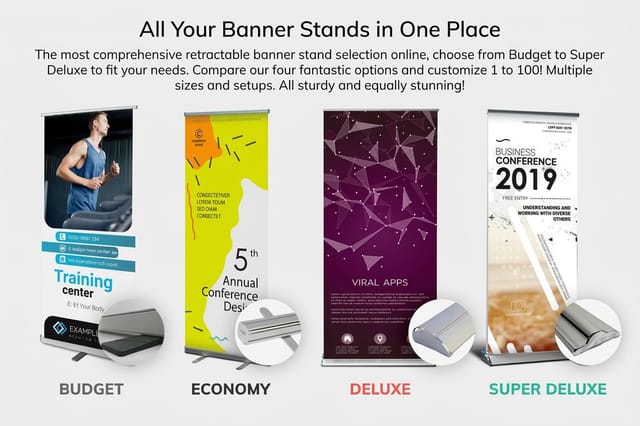
Retractable banner stands from $139
The one piece every prospect sees before you say a word, because it stands behind you on the webinar, the demo and the application call. Three lines of type, no paragraph.
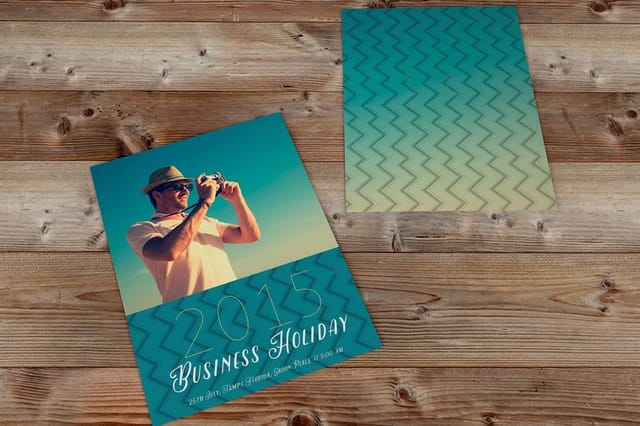
Standard postcards from $16.48
The mailer to people who already know you and stopped opening email. High-ticket commissions are the rare case where postage on a warm list actually pencils out.
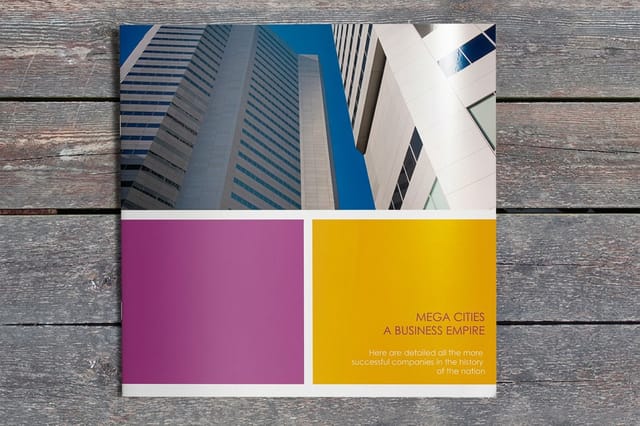
Standard booklets from $240.55
The pre-call briefing you mail or hand over before an application call, so the conversation starts at the fourth question instead of the first.
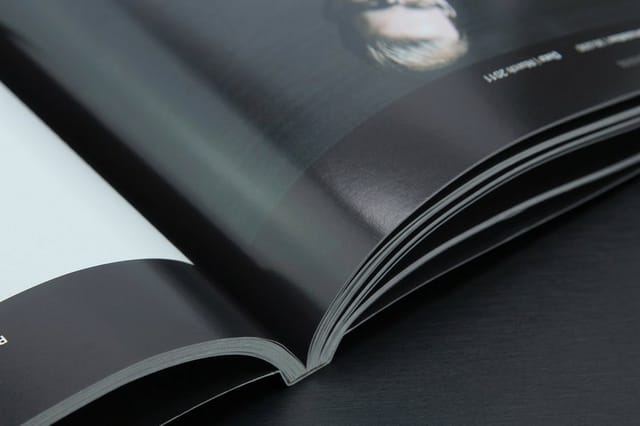
Perfect bound book from $375.05
The ebook with a printable spine. It is the piece that makes a stranger take a call from someone who has never run an ad at them.
Raised foil business cards from $86.78
For rooms where the offer costs five figures and a flimsy card undercuts every word you just said. Foil the mark and one line, nothing else.
Folded thank you cards from $38.22
The handwritten note after a commission clears. Blank inside on purpose, because the whole value is that a person wrote it by hand.
Before you send a file
Sort the manuscript before you print a page of it
You are promoting something you do not own, and that single fact decides what is safe to set in ink.
Go through the manuscript twice with two highlighters. One color for the parts that belong to you: how you judge an offer in this category, the five questions you would ask any program before paying, the worked comparison, what a good fit looks like and who should walk away. The other color for anything the vendor controls, which is the price, the payment plan, the bonus stack, the cart deadline, your commission tier and whether the program is even open next quarter. The first color goes on paper. The second goes on one page at a short URL you own.
Then print a QR code on every piece in the kit pointing at that URL. Not at the vendor’s sales page, not at a raw tracking link, at a path on your own domain that redirects. Affiliate programs pause, change terms, cut commission tiers and occasionally vanish, and a printed run has no edit button. With the redirect in place you change one page and 500 copies already in circulation catch up the same afternoon.
Give every surface its own path while you are at it, so the banner, the postcard, the booklet and the card redirect through four different addresses to the same destination. Those hit counts are the only attribution print gives you, and they answer the question that decides next year's budget: which room, which mailing, which handshake actually produced calls. Sizing and quiet zones for the code itself are in the complete guide to QR codes.
Last, put the disclosure on the paper, not just on the page it points to. A sentence beside the code saying you earn a commission if someone buys through your link costs you nothing and removes the one objection a serious buyer will raise later. Skip earnings screenshots entirely. In a category where every competing piece of collateral shows a dashboard, the one that does not reads as the only credible thing in the pile.
What each piece does
The six pieces and what each one carries
Each piece holds a different part of the argument and lands in a different place. Read the row, tap the piece to jump to its section, and start with whichever stage of your funnel currently has nothing physical in it at all.
| Piece | What it carries | Where it lands | Starts at |
|---|---|---|---|
| Retractable banner stands | Your name, what you help people decide, one short URL | Behind you on camera, and behind the table at a live event | $139 |
| Standard postcards | One reason to book, one code, one deadline you control | The mailbox of past buyers and old opt-ins you already hold | $16.48 |
| Standard booklets | The buying criteria, the questions, the worked comparison | Mailed or handed over before an application call | $240.55 |
| Perfect bound book | The method chapters, the ones still true after the launch | A shelf, a review copy, a back-of-room table | $375.05 |
| Raised foil business cards | Your name and one scannable link, and nothing else | A mastermind table, a conference corridor, a dinner | $86.78 |
| Folded thank you cards | Four handwritten lines and your signature | The mailbox of someone who just paid five figures | $38.22 |
1. Retractable banner stands: what sits behind you on every call
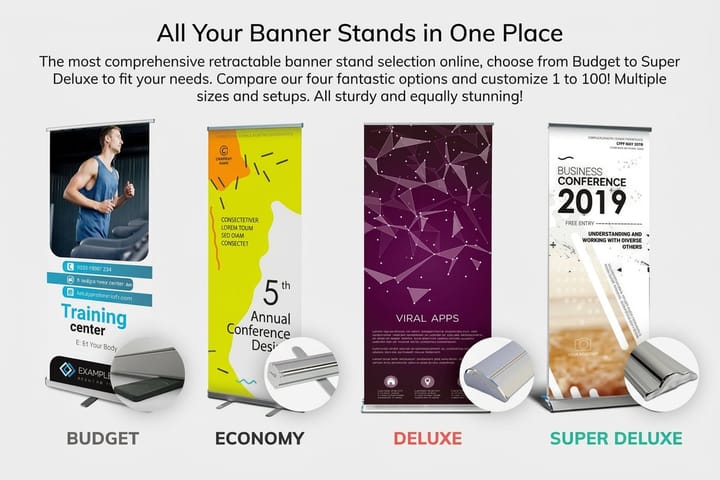
Sell a five-figure program on video and the room behind your head is doing quiet work all day. A retractable banner stand from $139 is the cheapest way to control it. The graphic rolls into an aluminum cassette, pulls up on a pole in about twenty seconds, and rolls back down when the camera is off, so the same piece serves a webinar on Tuesday and a mastermind table on Saturday.
The copy rule is short and unforgiving. On camera the banner is behind you, slightly out of focus, and read in glances. Three lines is the ceiling: who you are, the one decision you help people make, and a short URL. A paragraph turns into gray noise, and a wall of bullet points reads as a conference booth from 2009. If you want to sanity check the layout before you buy, how to choose a banner stand backdrop covers the sizes that fill a frame without swallowing your head.
The limit worth knowing is vertical. At a live event, the bottom foot of the graphic is behind a table, a chair or a person, and on camera the bottom of the panel usually falls below the crop. Design as if everything under about 18 inches from the base will never be seen, and put nothing there but color. How retractable displays work explains the roller tension and why yanking the panel up crooked is what eventually creases an edge.
If you travel to events rather than host them, the tabletop version is a different tool at a different price. Mini retractable banner stands start at $49.41 and fit in a carry-on, which matters when the flight is on you and the commission has not landed yet.
2. Standard postcards: the one place mail beats email
Direct mail is usually the wrong answer for an information product, and it is the right answer here, for one reason. Do the arithmetic before you order anything: take the cost of the run plus postage, divide it by the commission you earn on one sale, and you get the number of sales the mailing has to produce to break even. On a $27 ebook that number is brutal. On a program paying four figures a sale, one response can cover a run of standard postcards from $16.48 several times over.
That still only works on a warm list. Mail the people who already bought something from you, attended a workshop, or opted in before they stopped opening email, because you hold their address for a reason they remember. Renting a cold list and mailing strangers about a high-ticket program burns money faster than ads do, and it does it slower, so you find out a month late. How to build or rent a mailing list is honest about which lists are worth paying for, and direct mail cost per piece gives you the postage side of that division.
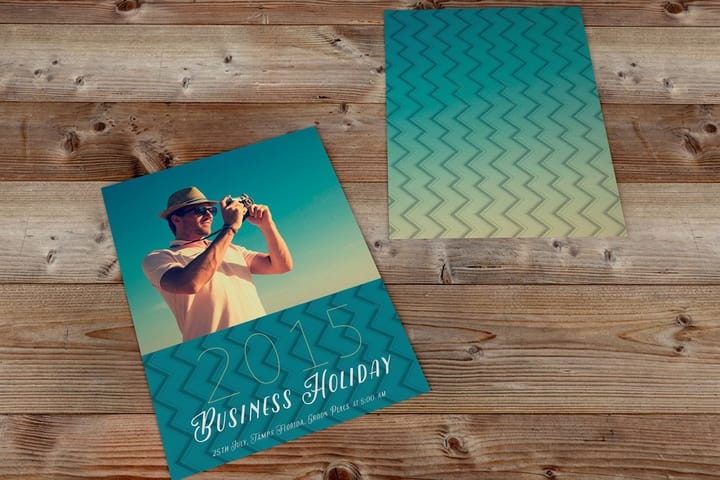
Layout is where most affiliate cards die on the sorting machine. Standard sizes start at 4 by 6 in and run through 5 by 7 in, 6 by 9 in and 6 by 11 in, and the larger sizes exist because a card has to win against a stack of envelopes on a kitchen counter. Keep the offer, the artwork and the QR code on the design side. Leave the address panel and the barcode clear zone empty, or a machine prints a spray of orange bars straight across your code. Adding a QR code to postcards shows the zones exactly.
One card, one job. A postcard cannot explain a $5,000 program and should not try. Give it a single reason to book a call, a code that goes to a page you control, and a date that is real. For an addressed run where the postal side is handled as part of the job, direct mail postcards start at $89.68.
3. Standard booklets: the briefing that shortens the call
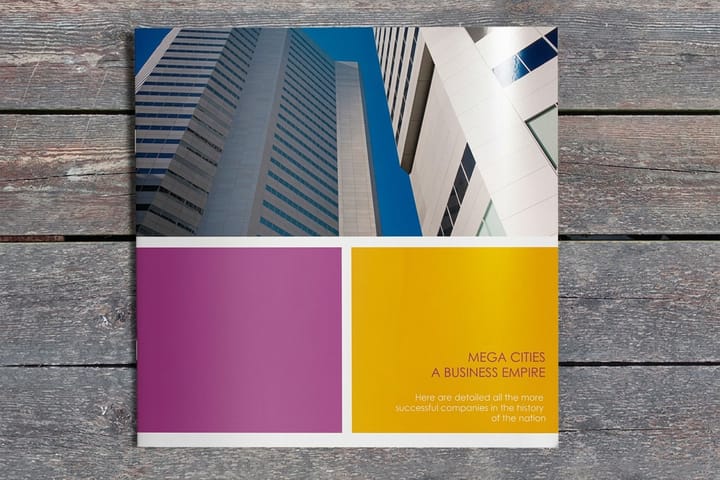
An application call goes badly when the first twenty minutes are spent explaining what the program is. A standard booklet from $240.55, sent before the call, moves that work off the call. Sixteen pages is plenty: how you evaluate an offer of this kind, the five questions to ask any program before paying, one worked comparison, and what happens on the call itself.
Two specs govern the format. Saddle stitch folds sheets and staples through the spine, so each sheet carries four pages and the total has to land on a multiple of four. Plan 8, 12, 16, 24 or 32 pages, and fill a gap with a notes page rather than fighting the count. Past roughly 48 pages the staples buckle and the fold stops sitting flat. The page counts and creep guide explains why thicker booklets also need the inner pages nudged in before trimming, and what a saddle stitched booklet is covers the format end to end.
Write it about the decision, not about the product. Everything specific to the vendor belongs behind the QR code:
- The current program price, and any payment plan
- The bonus stack, which changes with every launch
- The cart deadline
- The enrolment link itself
Print your framing instead, because it survives the vendor pausing the program in March. This is also the piece to reprint often, since a stapled booklet is the cheapest bound format we make and a revision after every launch is an ordinary expense rather than a decision. Same-day turnaround is available on the flat pieces in this kit when a call date moves, which same-day printing covers.
4. Perfect bound book: the reason a stranger takes your call

The ebook becomes a paperback for one commercial reason, which is that a book gets a meeting a PDF does not. Perfect bound book printing from $375.05 trims the page block, glues it to a wrap-around cover and gives you a printed spine. Mail a copy to someone who matches your buyer and the ask changes shape: you are no longer a person with a link, you are a person with a book about the thing they are already trying to decide.
The format has a floor and a ceiling. It needs about 28 pages before the adhesive has enough paper to hold a square spine, and it runs comfortably to around 500. Between 28 and 48 pages both bindings are open to you, and the choice is about what the piece is for. Staples for the briefing you revise every launch, glue for the edition you want on a desk six months later. Our guide on what perfect bound printing is walks the process, and the binding types guide compares it against coil and wire-o.
One production detail catches first-time authors every time. Spine width is a function of the page count and the interior stock, so the cover artwork cannot be finalised until the interior is locked. Add a chapter after the cover is drawn and the title creeps off the spine and onto the front. Set the interior, get the spine measurement, then build the cover as one flat piece across back, spine and front. How to print a book online takes the file setup in that order.
Hold this one back the longest, and be honest about why. It is the most expensive piece in the kit, it takes the most work, and it is the one that dates worst if you fill it with a program that may not exist next year. Write it about the category and your method, mention the offer as an example rather than a thesis, and print a version number on the spine so a second edition reads as progress. If the underlying thinking is still loose, packaging what you know into a high-ticket offer is the better place to start than a print order.
5. Raised foil business cards: the card that matches the price tag

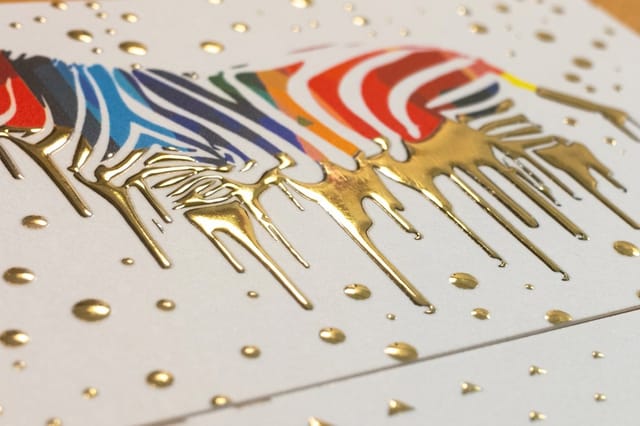
Hand a limp card to someone you just told about a $10,000 program and the card argues with you. Raised foil business cards from $86.78 sit foil on a raised resin layer, so the mark stands above the surface and catches light when the card turns. It is the one detail people notice without being able to name it.
Use it as a spot treatment, not a coating. Foil the logo and at most one short line. A block of body copy in foil is hard to read at any angle, and a large solid foil panel shows every fingerprint from the first handshake. Keep the reverse plain, because raised foil is not a surface a pen will mark, and you want to be able to write a follow-up date on the back. The difference between this and the stamped process is covered in foil stamping vs raised foil.
Give the card one job and one scannable link. A QR code wants roughly 0.8 in square as a working floor for a first-try scan at arm’s length, a quiet border of about four modules on every side, and at least 0.125 in of clearance from the trim so a shift on the cutter never clips it. Dark code on a light field, never reversed out, never sitting on a photo, and never printed in foil, which reflects into the scanner and fails. The complete guide to QR codes covers error correction and quiet zones.
If the raised finish is more than the room needs, spot UV business cards from $76.88 give you a raised gloss on the same artwork without the metal. Whichever you pick, point the code at its own path on your domain, separate from the postcard and the banner, so the hit counts tell you which room actually produced calls. Our design templates already respect the trim and the quiet zone if you would rather not build the file from scratch.
6. Folded thank you cards: the piece with the best return per dollar
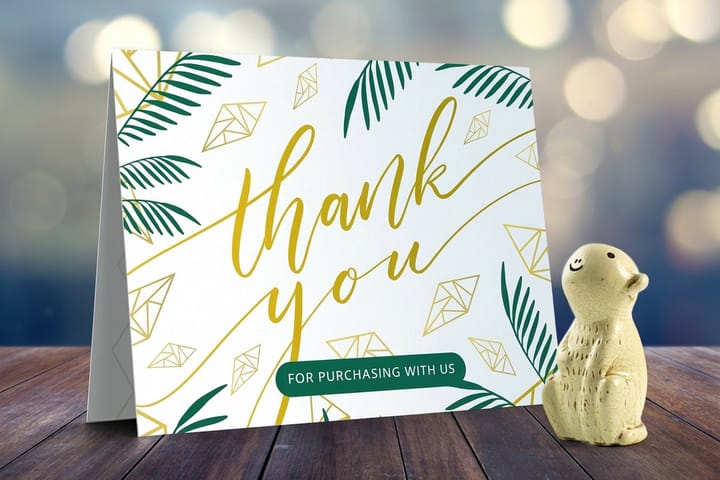
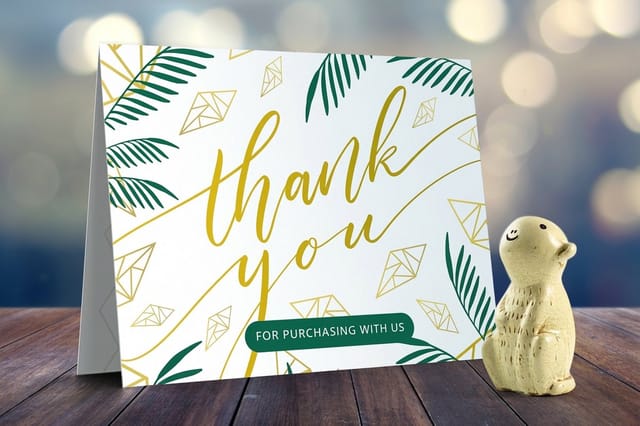
Someone just paid five figures on your recommendation. What arrives next is almost always a receipt and an onboarding sequence. A folded thank you card from $38.22, written by hand and mailed, is the cheapest piece in this kit to send and the one people photograph.
Folded is the whole point. The interior is blank so you can write four lines in your own hand, and the fold means the note stays private in the envelope. Flat thank you cards start lower at $19.77 and are the better buy for a printed message going out in volume, but a flat card gives you one small panel to write on and it reads as a mailer. If the value is that a person wrote it, buy the fold.
Keep the printed side almost empty. Your mark, your name, nothing that looks like an upsell. The moment a thank you card carries an offer it stops being a thank you card, and a client who paid a lot of money reads the switch immediately. Four honest lines about their specific decision beat any layout.
Referrals for high-ticket programs come from people who already bought and felt looked after afterwards, which is the part most affiliates skip because it does not scale. That is exactly why it works. Send the card the week the payment clears, not at the end of the quarter.
Specs and pricing
The two bound formats, side by side
The briefing booklet and the bound edition are the two decisions with real money attached, and page count drives both. Here are the live specs and price ladders straight from the configurator.

| Quantity | Price Per Unit | Total |
|---|---|---|
| 25 | $9.62 | $240.55 |
| 50 | $6.04 | $302.06 |
| 100 | $3.61 | $361.37 |
| 200 | $2.22 | $444.85 |
| 300 | $1.65 | $495.38 |
| 400 | $1.29 | $515.14 |
| 500 | $1.06 | $531.61 |
| 600 | 91.5¢ | $549.19 |
| Quantity | Price Per Unit | Total |
|---|---|---|
| 10 | $37.51 | $375.05 |
| 15 | $27.86 | $417.92 |
| 20 | $23.04 | $460.78 |
| 25 | $20.15 | $503.65 |
| 30 | $18.22 | $546.51 |
| 40 | $15.54 | $621.52 |
| 50 | $14.57 | $728.68 |
| 60 | $13.93 | $835.83 |
Wally prints the half he owns
The offer is rented, the method is yours
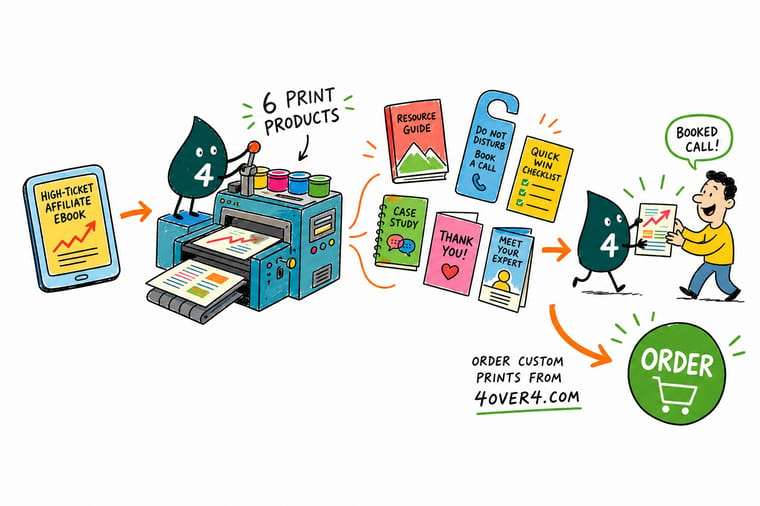
Wally printed 300 booklets with the program price, the bonus stack and the enrolment link set on page nine. Six weeks later the vendor changed the price and dropped two bonuses, and a paper page has no edit button. Now the buying criteria, the call questions and his own name go on the paper, the vendor's details live at one short URL he controls, and every piece carries a QR pointing there. One edit, and the whole run is current again.
Shop the business basics collection →See it in use
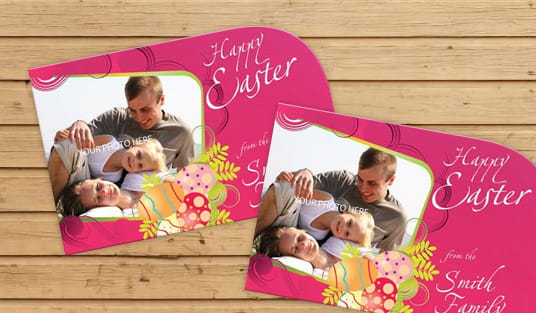
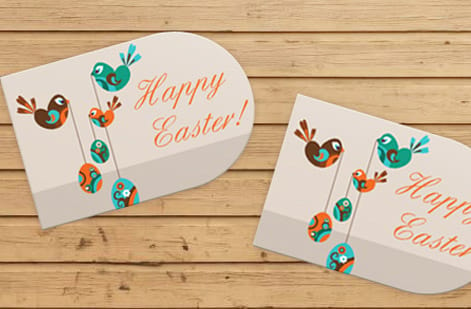
Postcards mailed to a warm list

Explore more
Where to go next
By the numbers
Stocks and formats a high-ticket funnel can use
Common Questions
Common questions about printing a high-ticket affiliate ebook
Is print worth it for a high-ticket affiliate ebook?
It depends entirely on your commission, and the sum is one line. Add the print cost and the postage for a run, divide by what you earn on one sale, and you get the number of sales the run has to make to break even. A $27 ebook cannot carry a $375.05 book order. A program paying four figures a sale can carry it on one response, which is why print behaves completely differently in high-ticket affiliate marketing than it does anywhere else in information products. Run the division first and order the piece that clears it.
Can I print the vendor’s brand name and logo on my material?
Check the affiliate agreement before you send a file, because most programs restrict logo use, forbid earnings claims, and reserve the right to pull permission. The safer build is to print your own framing, your own name and your own method, and to treat the vendor as an example rather than the headline. Keep the program name, price and enrolment link behind a QR code that points at a page on your domain. If permission is withdrawn or the program closes, you edit one page instead of pulping a print run.
Where does the affiliate disclosure go on a printed piece?
On the piece itself, near the thing that sends the reader to your link, in type a person will read without effort. A disclosure that only exists on the landing page does not help someone reading a booklet on a train. Put a plain sentence next to the QR code saying you earn a commission if they buy through your link, and use the same wording across the postcard, the booklet and the book so it reads as a policy rather than a footnote. Never print income screenshots or a specific earnings figure.
Perfect bound or saddle stitch for the ebook itself?
Saddle stitch from $240.55 folds and staples sheets, runs 8 to about 48 pages on a multiple of four, and is cheap enough to reprint after every launch. Perfect binding from $375.05 glues a flat spine, needs roughly 28 pages before the adhesive has enough to hold, and carries up to around 500. Between 28 and 48 pages both are available. Decide by use: staples for the pre-call briefing you revise constantly, glue for the edition you mail to someone you want a meeting with.
What size postcard should I mail to a warm list?
Standard postcards start at 4 by 6 in and run through 5 by 7 in, 6 by 9 in and 6 by 11 in. For a list that already knows you, 5 by 7 in is usually enough to be noticed in a stack without pushing the postage into a higher bracket, and the larger sizes are worth it when the card has to win against a pile of envelopes. Whichever size you order, keep the artwork, the offer and the QR on the design side and leave the address panel and barcode clear zone empty.
What should the banner behind me on camera actually say?
Three lines. Your name, the one decision you help people make, and a short URL. On video the banner is behind your head and slightly out of focus, so anything longer becomes texture. Design as though the bottom 18 inches will never be seen, because at a live event a table or a chair covers it and on camera it usually falls below the crop. Put only color down there. Retractable banner stands start at $139 and the tabletop version starts at $49.41.
Do I need raised foil business cards, or is plain fine?
Plain is fine for most businesses and slightly wrong for this one. When you have just described a five-figure program, a thin uncoated card quietly contradicts you, and raised foil from $86.78 fixes that for the price of one card order a year. Foil the mark and one line only, keep the back plain so a pen still works on it, and never print a QR code in foil because the reflection defeats the scanner. Spot UV business cards from $76.88 give a raised gloss instead if metal is more than the room needs.
What does the six-piece kit cost to start?
The six starting prices add up to $896.08 at 4OVER4.COM: retractable banner stands from $139, standard postcards from $16.48, standard booklets from $240.55, a perfect bound book from $375.05, raised foil business cards from $86.78, and folded thank you cards from $38.22. Leave out the bound edition and the other five start at $521.03. Every price falls per piece as the quantity climbs, and the configurator updates live as you change size, stock and finish.
Get Started
Print the half you own
Order the six-piece kit as one branded set at 4OVER4.COM. Flat thank you cards start at $19.77 for 25 on 14pt gloss cover, a mini retractable banner stand at $49.41, and each piece is configured for size, stock and finish on its own page. Same-day turnaround is available on the flat pieces when a call date moves.
Legal Disclaimer
Gold Standard guarantees apply to all standard orders placed through 4over4.com. Price match requires verifiable proof of a competitor's published price for an equivalent product with matching specifications and turnaround time. Satisfaction guarantee covers manufacturing defects and print quality issues. Contact support with order number and documentation. On-time delivery rate based on tracked orders 1999 to 2026. Individual results may vary based on shipping carrier performance.
