
6 Print Picks That Make an Email Nurture Strategy Work
A nurture flow only works on people who open. These six printed pieces cover the three moments the inbox keeps losing: the subscriber who never opens, the quote that went quiet, and the customer who bought once and disappeared. Every price on this page is live.
A nurture strategy that works stops treating the inbox as the only room you can reach someone in. Email carries the volume, and a small number of printed touches covers what it cannot: a mailed postcard for the segment that never opens, a printed envelope and a signed letter for the deal that stalled, a brochure for the asset nobody downloads, a handwritten card at the conversion, and a quarterly newsletter for after the sequence ends. Print costs more per contact, so aim it at the segments where the contact is worth it.
The picks
The 6 print picks, priced live
Buy the first one if you only buy one. A mailed postcard is the only piece here that needs no envelope, no insert and no assembly, and it aims straight at the largest dead zone in any nurture flow. Each item can be laid out in our free online designer or started from a ready-made design template, and every price updates in the configurator as you change size, stock and quantity.
What each one covers
The gap, the piece, and what it starts at
Read this as a list of moments rather than a shopping list. Each row names a point in the sequence where email tends to fail, the printed piece that covers it, and the price it starts at. Tap a row to jump to the full explanation, including where each one falls short.
| Pick | Format and starting price | The nurture moment it covers |
|---|---|---|
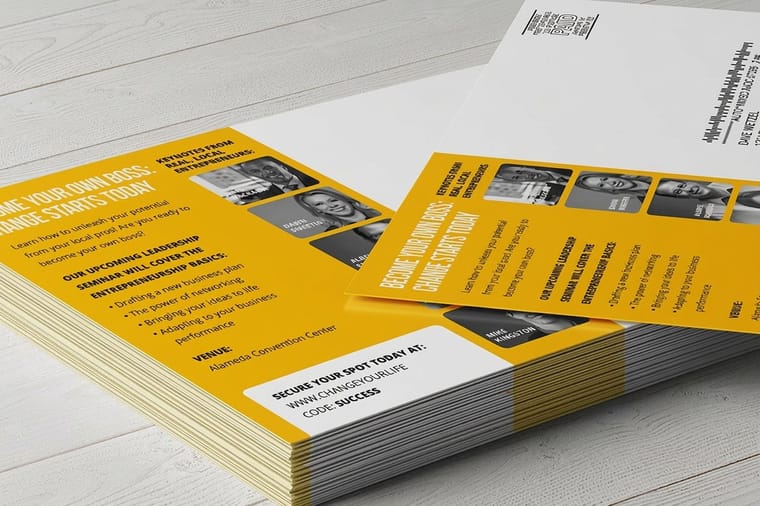
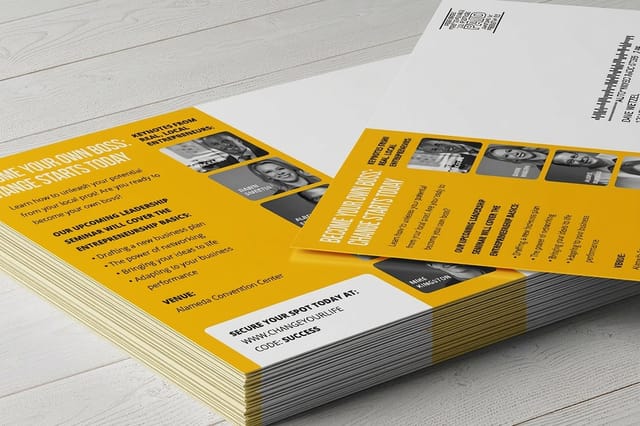
| 1. Direct mail postcards | 4.25 in x 6 in, 6 in x 9 in or 6 in x 11 in, addressed and mailed for you. From $89.68 | The signup who has not opened a single send. No envelope to defeat, so the offer is read on the walk back from the mailbox or it is not read at all. |
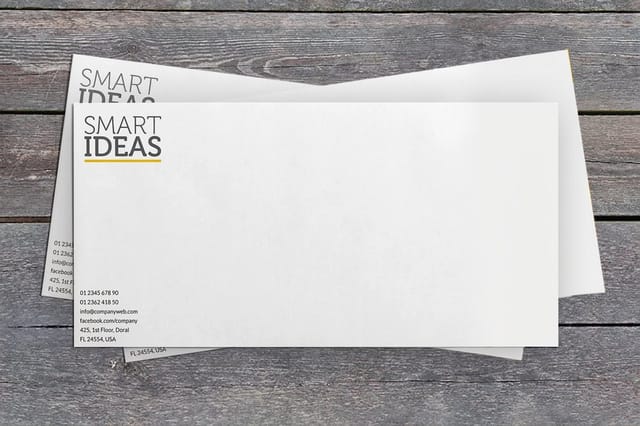
| 2. Printed envelopes | #10 business, 6 in x 9 in or 9 in x 12 in flat, window or plain. From $142.99 | The high-value contact who is worth a sealed piece. The envelope decides whether anything inside gets a chance, which is why it is its own line item. |
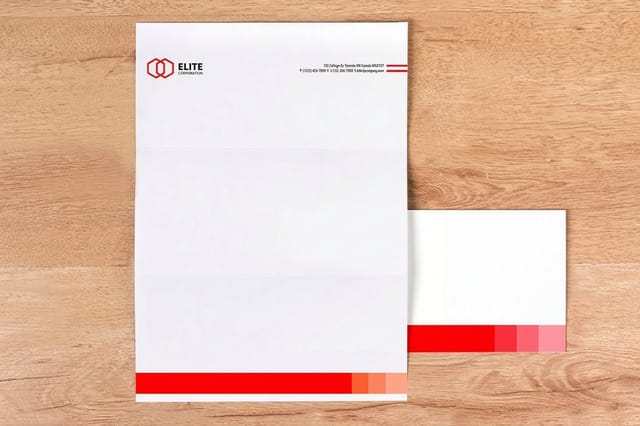
| 3. Letterheads | 8.5 in x 11 in on uncoated 70lb or 80lb text, laser and inkjet friendly. From $99.95 | The quote that went quiet. One page, signed by a named person, printed in your own office the morning you decide to send it. |
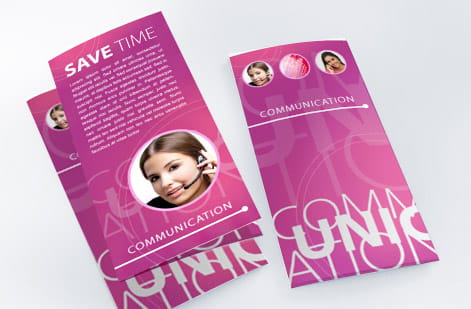
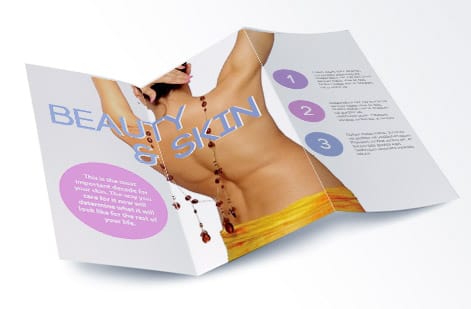
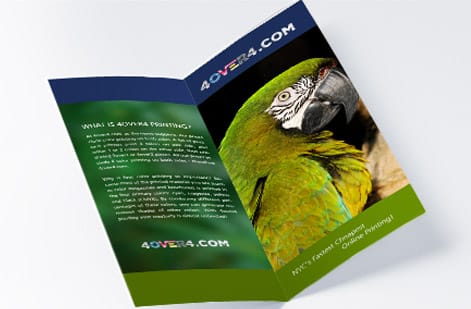
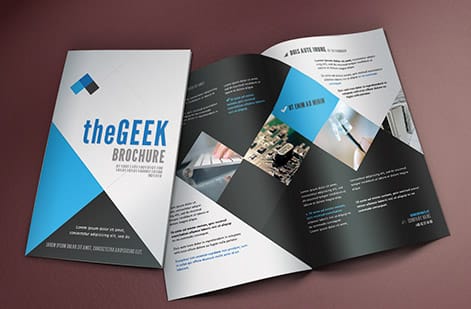
| 4. Brochures | Trifold or bifold from an 8.5 in x 11 in flat sheet, folded and tabbed for mailing. From $57.11 | The lead who keeps clicking but will not book. It is the attachment nobody downloads, delivered as something they cannot close. |
| 5. Greeting cards | Folded A2 or A7, blank inside so a human can write in it. From $56.02 | The first order, the renewal, the referral. The one touch in the flow that should never be typed. |
| 6. Newsletters | Folded text-weight sheets, self-mailer or in an envelope, quarterly. From $75.80 | The customer who bought once and stopped opening. Retention print that keeps arriving after the sequence has run out of steps. |
Start here
Fix the addresses before you plan the drop
The thing that stops most print steps is not budget, it is data. Your email platform holds addresses you can only email, and a mailed piece needs a street address. Pull the postal addresses you already own out of your order and invoice records first, add an optional address field to the forms where asking is reasonable, and accept that the mailable half of your list will be smaller than the emailable one. Then aim the print at the segments where a single contact is worth the postage. The sequence logic behind all of it, including which segment belongs at which step, sits in our email nurture strategy guide, and if you are weighing whether to run the drop in-house, read direct mail agency versus doing it yourself before you commit.
1. Direct mail postcards reach the segment that never opens
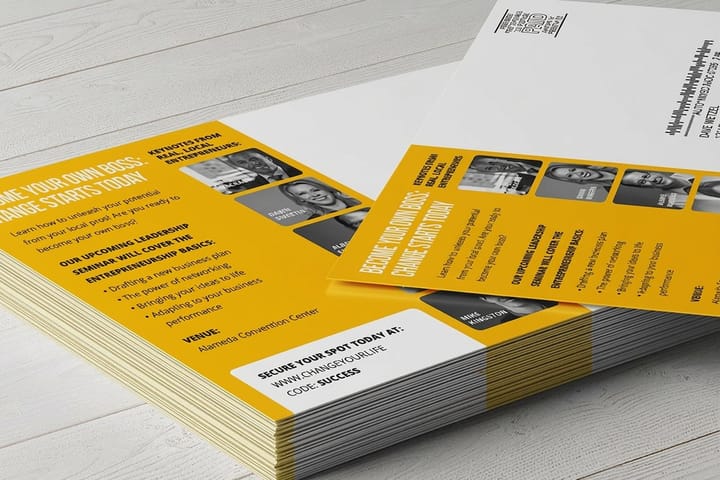
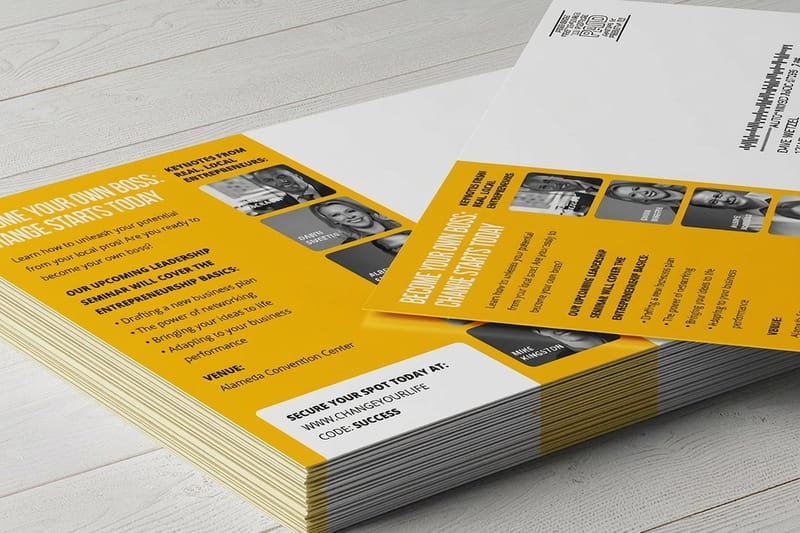
Every nurture flow has a group it cannot touch. They subscribed, the welcome went out, and nothing since has been opened. Re-sending the same sequence to that segment changes nothing, because the problem is the channel and not the copy. Direct mail postcards start at $89.68, and we print them, address them from your list and hand them to the USPS, so a contact who has ignored six emails still gets one message they have to physically move to throw away.
Pick the size by how the piece will be met, not by budget alone. A 4.25 in x 6 in card is the cheapest to mail and gets skimmed in the walk from the box. A 6 in x 9 in card will not hide inside a stack of envelopes, which is why most businesses land there for a re-engagement drop. A 6 in x 11 in card costs more per piece and earns it only when the offer needs room, such as a dated event or a multi-item promotion.
The honest limits are two. Postage is billed on top of the print, so the true cost of a drop is always higher than the price you see on the product page. And a postcard has no open rate, so print a unique short URL or a QR code on the address side and give that campaign its own landing page, or you will never know it worked. The mechanics of building the list and the drop are in postcard marketing, and the send itself is walked through in five quick steps to send direct mail postcards. Get the address block right the first time using how to lay out a postcard for mailing.
2. Printed envelopes decide whether anything inside is read
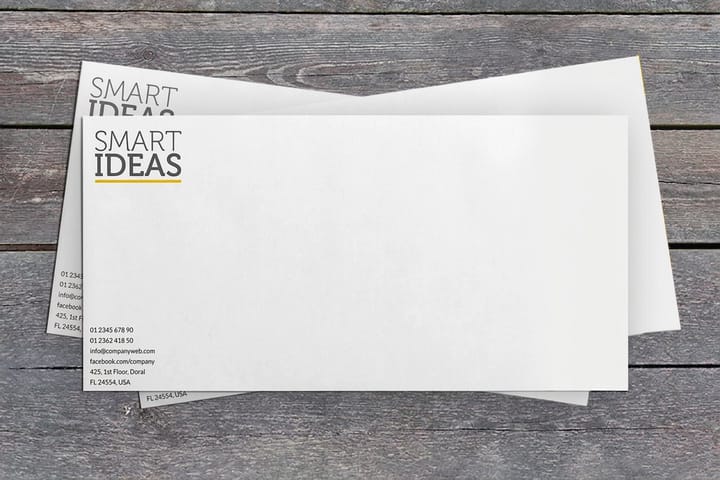
Once you move from a postcard to a sealed piece, the envelope is doing the whole job. Nobody reads a letter they did not open. Printed envelopes start at $142.99, and the format you order changes the odds more than anything you print on the sheet inside.
A #10 business envelope is the standard and the cheapest to mail, and it also looks exactly like every bill and statement in the pile. A 6 in x 9 in envelope stands proud of that stack and takes an unfolded half-page insert. A 9 in x 12 in flat carries a brochure without a single fold, which is what you want when the enclosure is the point. Window envelopes save you addressing the insert twice, but they read as transactional, so use a plain face when the piece is meant to feel personal.
Three details separate an envelope that gets opened from one that goes straight to recycling. Keep the return address printed but small, because a large corporate block announces a mailing. Leave the front otherwise quiet rather than covering it in offer copy. And if the drop is small enough, use a real stamp instead of an indicia, because an indicia says bulk before the recipient has read a word. That is the trade-off with envelopes generally: you buy a stronger, more private message and you pay for it with one more barrier and more postage per piece than a card. When the piece is a letter, our letter printing and mailing guide covers folding, inserting and what the post office wants to see.
3. Letterheads carry the one page that restarts a stalled deal
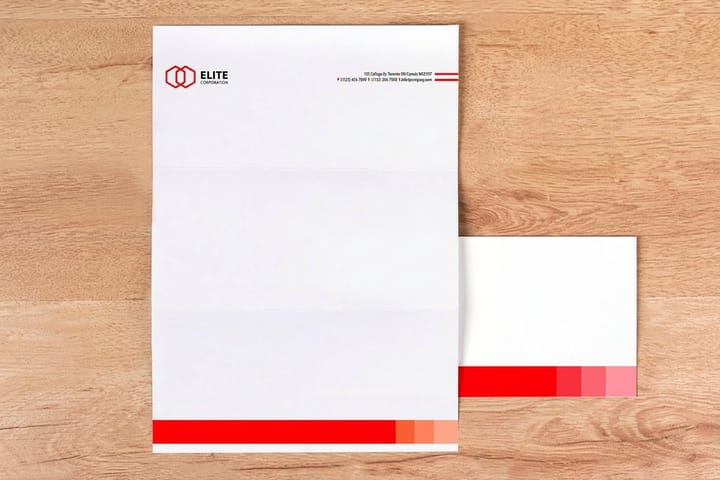
A stalled quote does not need another automated follow-up. It needs one page from one named person, and that is what letterheads are for. They start at $99.95, and unlike everything else on this page you print the message yourself, in your own office, on the morning you decide to send it. That makes the letter the only genuinely reactive print step in a nurture flow.
Order uncoated stock and do not be talked into anything glossy. A 70lb or 80lb uncoated text sheet takes toner and inkjet ink cleanly, feeds through a desktop printer without slipping, and accepts a pen so a real signature is possible. A gloss-coated sheet is built for offset ink, not for a laser fuser, so toner sits on the surface and can flake off a fold, and inkjet ink pools instead of drying. This is the single most common mistake on a first letterhead order.
- Keep the top band shallow. A logo band deeper than about 1.5 in pushes the body copy into the middle of the page and makes a short letter look like an afterthought.
- Leave the bottom 0.5 in clear. Most office printers cannot print to the sheet edge, so a footer that runs too low gets clipped by the machine, not by us.
- Match the envelope now. Ordering the letterhead and the #10 envelope together is the only way the return address type, weight and color actually agree.
Write the letter to one person about one thing. A signed page that names the exact quote, the exact date and one next step outperforms a general reintroduction, which is the same discipline the email version of this step needs and rarely gets. The full sequence logic sits in our email nurture strategy guide.
4. Brochures deliver the asset nobody downloads
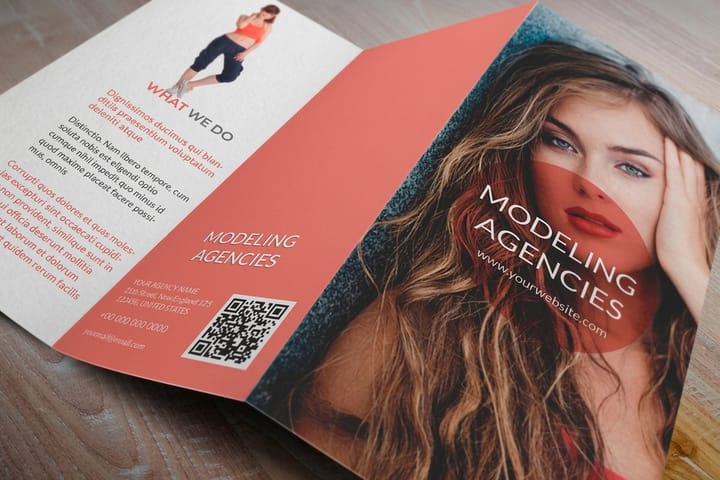
Middle-of-sequence emails usually link to something: a spec sheet, a service breakdown, a comparison. Most recipients never click it. A brochure is that same asset delivered as an object they have to handle, and it starts at $57.11.
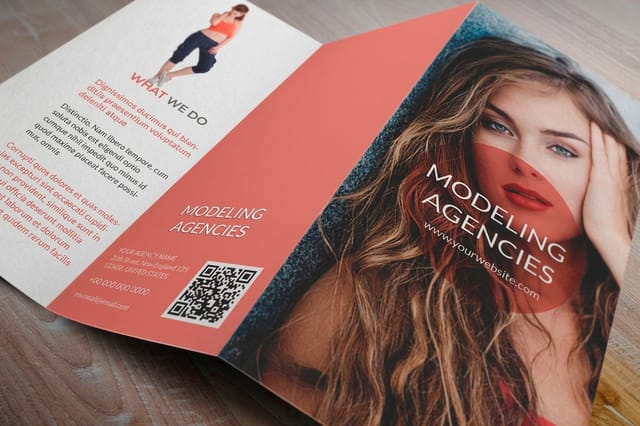
A trifold gives you six panels and the panel order decides whether it gets read. Front panel is the promise. The three inside panels answer the questions in the order people ask them, which is what it includes, how long it takes and what it costs. The back panel is the next step with a phone number and a campaign QR code. Resist filling every panel, because a brochure a person can finish standing up beats one that tries to be a catalog.
Mailing a folded piece has a rule that catches people out. A folded self-mailer has to be sealed before the USPS will carry it, which means wafer seals or tabs on the open edge; you cannot drop a loose trifold in the mail and expect it to arrive flat. The alternative is a 9 in x 12 in envelope, which costs more but keeps the brochure unfolded and lets you enclose a letter with it. Two guides worth reading before you lay one out: how to create a marketing brochure that drives sales for the panel content, and direct mail agency versus doing it yourself for who should be assembling the drop at all. If you would rather not start from a blank page, our design templates give you layouts to drop a logo and an offer into.
5. Greeting cards are the step that must not be automated
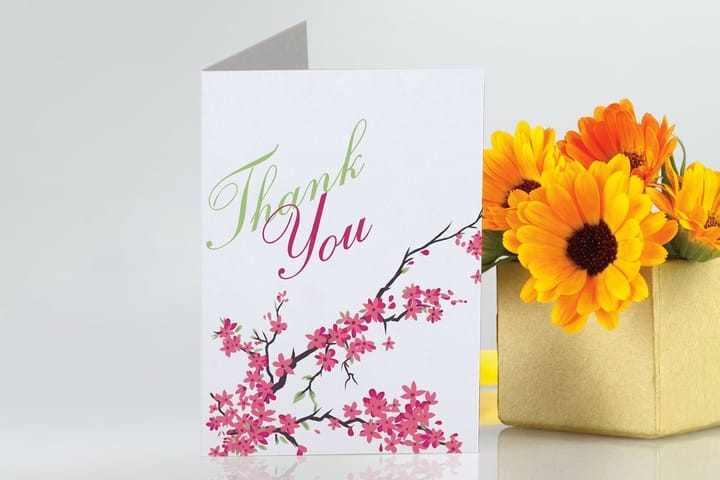
The moment a nurture flow converts is the moment most of them go quiet. A first order, a renewal or a referral deserves one touch that no software sent, and a greeting card is the cheapest way to make that touch land. Cards start at $56.02.
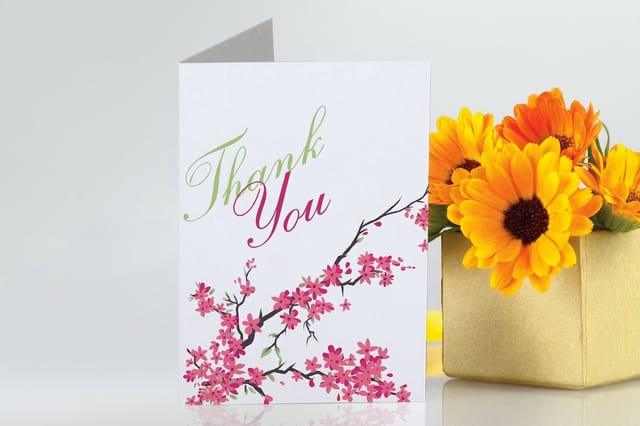
Order them blank inside. A pre-printed sentiment turns the card back into a mailer, and the entire value here is the handwriting. Folded A2 is the compact size that fits a note of two or three lines; A7 gives more room and reads as a bigger occasion. Print the front and the back panel with your brand, leave the inside white, and keep a box at the desk so anyone closing a deal can write one in the same hour rather than adding it to a list.
Say something specific or do not send it. The name of the thing they bought, the person who helped them, one detail from the conversation. A card that could have been sent to any customer reads worse than no card at all, which is exactly the failure mode a nurture sequence is already prone to. For what to actually write, see how to write a thank you card that gets remembered, and for the format side, greeting card sizes, stocks and how to order.
6. Newsletters keep arriving after the sequence runs out
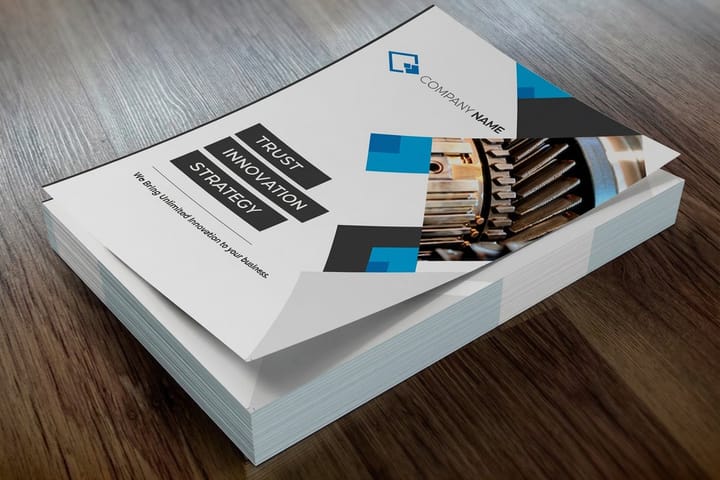
Every automated flow ends. The last email goes out, the contact does not convert, and they sit in a list nobody touches until the next campaign. A printed newsletter is the piece that keeps a slow relationship warm past that point, from $75.80.
Quarterly is the cadence most businesses can actually sustain, and sustaining it matters more than frequency. Two well-made issues a year beat six that get thinner each time. Print on a text weight so it folds cleanly and mails light, and decide early whether it goes as a sealed self-mailer with tabs or inside an envelope, because that choice changes the fold, the address panel and the postage.
The trade-off is effort, not money. The print is the easy part; finding something worth reading four times a year is the part that kills most printed newsletters by issue three. If you do not have real news, a customer story and a straight answer to a question your support desk keeps getting will carry an issue. Production details are in how to print and mail newsletters and how to create newsletters for direct mail, with layout ideas in 15 creative newsletter designs.
Specs and pricing
The two you will reorder the most
Postcards and brochures are the pieces that get used up rather than kept, so they come back around every campaign. Here are the live specs and the price ladders for both, straight from the configurator.

| Quantity | Price Per Unit | Total |
|---|---|---|
| 500 | 17.9¢ | $89.68 |
| 1,000 | 17.1¢ | $170.53 |
| 2,000 | 9.35¢ | $186.95 |
| 3,000 | 6.84¢ | $205.13 |
| 4,000 | 5.58¢ | $223.31 |
| 5,000 | 4.83¢ | $241.51 |
| 6,000 | 4.56¢ | $273.85 |
| 7,000 | 4.37¢ | $306.18 |
| Quantity | Price Per Unit | Total |
|---|---|---|
| 50 | $1.14 | $57.11 |
| 100 | 82.4¢ | $82.38 |
| 200 | 53.3¢ | $106.55 |
| 300 | 41.0¢ | $123.02 |
| 400 | 34.9¢ | $139.49 |
| 500 | 31.2¢ | $155.97 |
| 600 | 26.7¢ | $160.36 |
| 700 | 23.5¢ | $164.75 |
Wally explains the second channel
Email does the volume, paper covers the misses
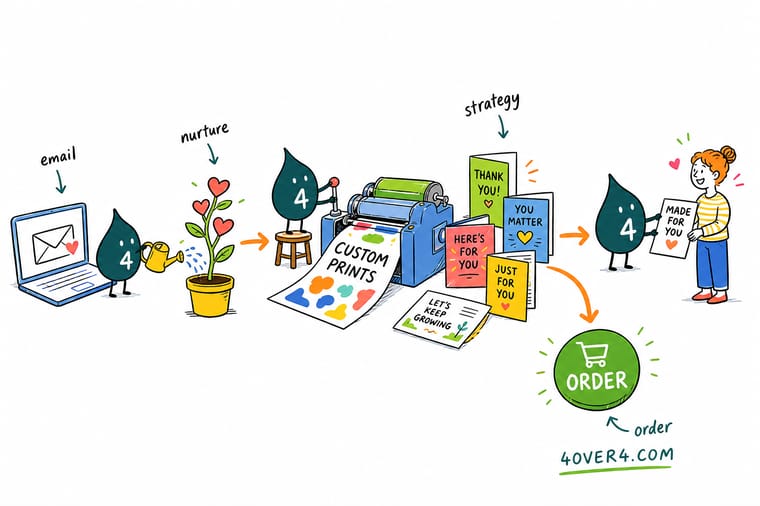
Wally sorts his list into three piles. The contacts who open everything stay on email, because it is faster and it costs almost nothing. The ones who have never opened a single send get a postcard, since a card cannot be filtered and cannot be deleted without being handled. The deal that went quiet gets one signed letter in a plain envelope, from a person with a name. Then he writes a card by hand on the day the first order lands, because that is the one step no software should ever run. Print the postcard first and give it a code so you can prove it worked.
Shop direct mail printing →See it in use
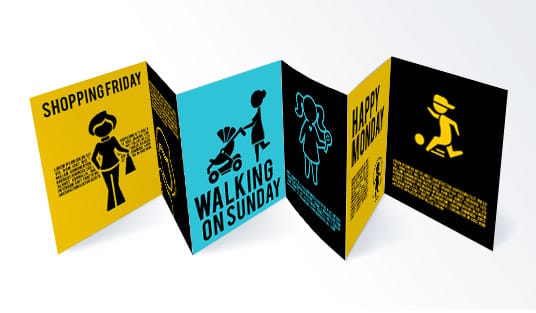
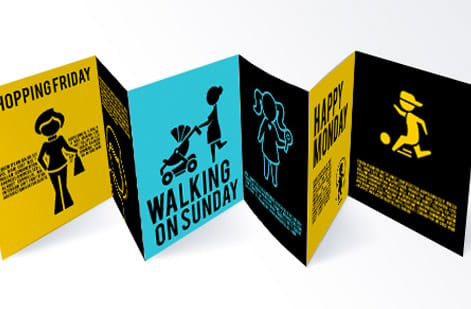
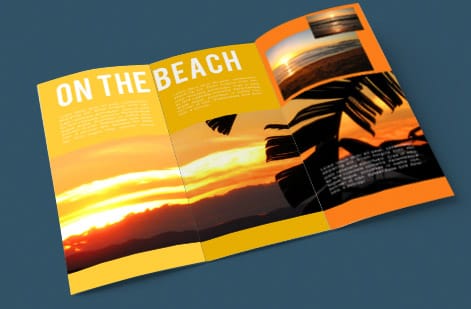
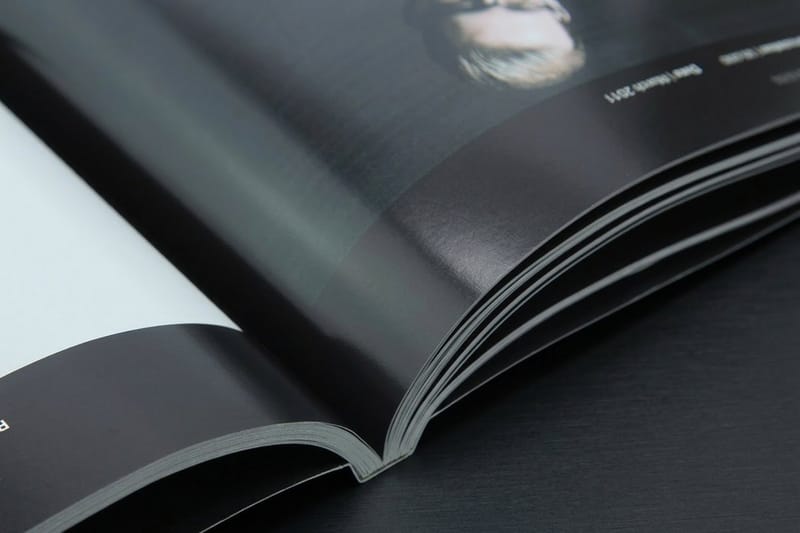
Brochures from the printing showcase

Explore more
Where to go next

By the numbers
Printing that reaches an inbox that ignores you
Common Questions
Common questions about print in an email nurture flow
Where does print actually belong in an email nurture sequence?
In three places. First, on the segment that has not opened anything after the welcome, where a mailed postcard is the only channel still available to you. Second, on the stalled deal, where a signed letter from a named person restarts a conversation an automated reminder cannot. Third, right after the conversion, where a handwritten card marks the moment the flow usually goes quiet. Everywhere else in the sequence, email is cheaper and faster and should keep doing the work.
I only have email addresses. How do I add a print step at all?
You cannot mail an email address, so this is the first thing to fix rather than a detail to sort out later. Add an optional address field to the forms where it is reasonable to ask, such as a sample request, an event signup or anything that ships. Append the rest from your order and invoice records, which already carry a billing address for every customer. Then accept that the mailable portion of your list will be smaller than the emailable one, and plan the drop around the people you can actually reach.
How do I measure a printed step when there is no open rate?
Give each drop its own destination. A short vanity URL, a QR code on the address side of a postcard, or a promo code that exists nowhere else, then a landing page that only that campaign points at. Compare behaviour among the contacts who received the piece against a held-back group from the same segment across the same window. It is coarser than email reporting, but it is real, and it is the difference between a print budget that survives review and one that does not.
Which of the six should I print first?
The postcard, because it targets the biggest hole in a nurture flow, which is the people who never open anything. It starts at $89.68 and needs no envelope, no insert and no assembly. Greeting cards at $56.02 are the second buy, since they attach to a moment you already know is happening and take almost no planning. Envelopes at $142.99 and letterheads at $99.95 are worth ordering together once you know a letter step is a permanent part of the flow rather than a test.
Can I run our letterhead through the office laser printer?
Yes, if you ordered the right stock. Uncoated 70lb or 80lb text is made for it: toner fuses into the sheet, ink dries rather than pooling, and the paper feeds without slipping. A gloss-coated sheet is the problem. Coated stock is built for offset ink, so laser toner sits on the surface and can flake along a fold, and inkjet output stays wet enough to smear. If you already have coated letterhead, print it through a commercial press job instead of the office machine.
Does a folded brochure need an envelope to be mailed?
Not necessarily, but it does need to be sealed. The USPS will not carry a loose folded self-mailer, so the open edge has to be closed with wafer seals or tabs before it goes out. That keeps the postage low and the assembly simple. The alternative is a 9 in x 12 in envelope, which costs more per piece but delivers the brochure unfolded and lets you enclose a letter alongside it, which is usually the better choice for a high-value contact.
How often should a printed newsletter go out?
Quarterly for most businesses, and the reason is capacity rather than response. The print is straightforward; finding something genuinely worth four issues a year is the part that fails. Two strong issues beat six thin ones, because a newsletter that visibly runs out of material trains people to stop opening it, exactly the way a nurture sequence does when the last three emails have nothing new in them.
What does adding a print step really cost?
Print plus postage, always both. Direct mail postcards start at $89.68 for the print, printed envelopes at $142.99, letterheads at $99.95, brochures at $57.11, greeting cards at $56.02 and newsletters at $75.80, and every one of those prices moves with size, stock and quantity in the configurator. Postage is charged separately on top and depends on the format and the class you mail at, so price the whole drop, including the postage, before you approve artwork.
Get Started
Print the step your sequence is missing
Start with the postcard that reaches the contacts who never open, then add the letter and the card as the flow proves itself. Build the order at 4OVER4.COM and watch the price update as you set size, stock and quantity.
Legal Disclaimer
Gold Standard guarantees apply to all standard orders placed through 4over4.com. Price match requires verifiable proof of a competitor's published price for an equivalent product with matching specifications and turnaround time. Satisfaction guarantee covers manufacturing defects and print quality issues. Contact support with order number and documentation. On-time delivery rate based on tracked orders 1999 to 2026. Individual results may vary based on shipping carrier performance.
