
How to Build an Email Nurture Strategy That Turns Signups Into Buyers


Three emails everyone gets, then a branch that reads behavior. The cadence is fixed, one rule decides who moves forward, and past a point a mailed piece does more than another send.
An email nurture strategy works when the sequence forks on behavior instead of sending the same eight emails to everybody. Deliver what the person signed up for within minutes, teach one useful thing on day two and another on day five, then split the list: contacts who clicked get one clear offer, contacts who never clicked get a different channel or get suppressed. Branch on clicks rather than opens, because mail apps that preload images log opens nobody made.

Quick answer
Three sends on a schedule, then a decision
A nurture sequence earns its keep at the fork, not in the copy. The delivery email hands over what was promised, two teaching emails answer the question the signup implies, and then behavior takes over. Anyone who clicked moves to a single clear offer. Anyone still silent after two weeks gets one last email, a mailed piece, or removal from the list, because continuing to send to dead addresses lowers the engagement rate that mailbox providers read before deciding where your next campaign lands.
What a Nurture Sequence Actually Does, Email by Email
Each email in a sequence has exactly one job, and most sequences fail because two emails are trying to do the same one. Write the job down before you write the copy.
| Send | When | Its one job | Signal that it worked |
|---|---|---|---|
| Delivery | Day 0, inside two minutes | Hand over the thing they asked for and say what happens next. | The download or the reply. Nothing else. |
| Teach one | Day 2 | Solve one problem the signup implies. No ask at all. | Replies, and forwards you did not expect. |
| Teach two | Day 5 | Solve a second problem, with one soft link to a relevant page. | A click. This is the fork. |
| Offer | Day 8, clickers only | Make one ask with one link and one deadline. | Purchase, booked call, or a stated objection. |
| Re-engage | Day 14, silent only | Change channel or ask permission to stop. | A response from any channel, including mail. |
The pattern that keeps showing up in sequences that work is restraint in the first email. A welcome message that carries the download, a brand story, a discount code and three social links delivers none of them well. Give people the file. Tell them what arrives in two days. Stop.
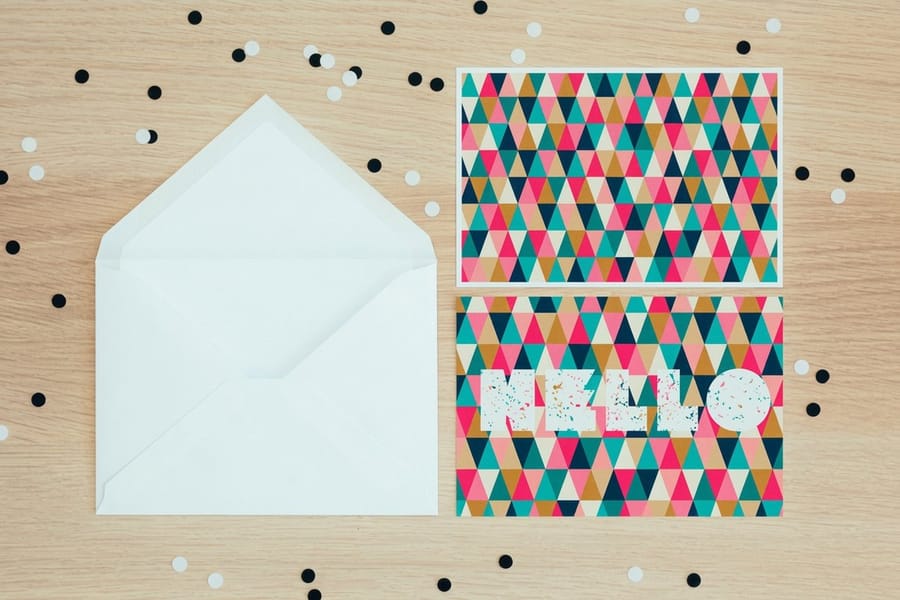
Notice that the last row leaves email entirely. Once a contact has ignored three messages, another email is a rounding error on your list and a small drag on your sending reputation. Mailing a physical piece is the honest alternative, and standard postcards start at $16.48, which is cheap enough to run as a test on a few hundred names. The mechanics of getting one addressed and into the mail stream are in our guide to sending direct mail postcards.
The Fork Is the Strategy, Not the Copy

Most advice about nurture emails is really advice about subject lines. Subject lines matter far less than the question of who receives the next message at all.
Set the branch on clicks. A click is a person choosing to go somewhere, which is difficult to fake and easy to log. An open is not that anymore. Apple Mail Privacy Protection loads the tracking image on Apple servers before the recipient ever taps the message, and several other clients now prefetch images too, so your open column includes people who never read a word. Build automation on that number and the sequence sends offers to ghosts.
Then set the exit. Keeping unresponsive addresses on the send list quietly damages everything else you mail, because mailbox providers judge a sending domain on how its recipients behave in aggregate. Suppressing dead contacts raises the average engagement of the mail you do send, which is the single cheapest deliverability improvement available to a small sender. It feels like shrinking the list. It is really removing the part of the list that was voting against you.
The trade-off worth naming: branching costs you setup time and it costs you volume, and volume is what most dashboards reward. A sequence that mails everyone eight times will always show more sends and more raw opens than one that stops at three for two thirds of the list. Judge it on revenue per contact instead. For contacts who do click and want more detail, a mailed standard brochure from $57.11 is a stronger response than a fourth PDF, and our landing page frameworks guide covers the page that click should land on.
Where Printed Mail Belongs in the Sequence

Print is not a replacement for the sequence. It is the branch you take when the inbox has stopped working, or when the contact is worth more than a message that costs nothing to send.
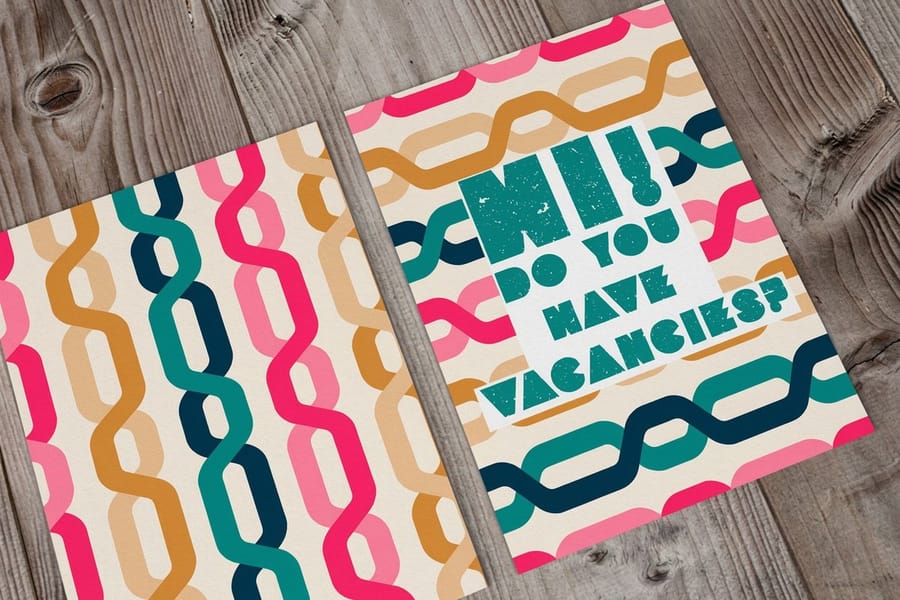
Three moments earn a physical piece. The first is re-engagement, when someone has gone silent and you would otherwise suppress them. The second is a high value lead who requested a quote and then went quiet, where a letter reads as attention rather than automation. The third is onboarding after a purchase, when a printed piece arriving in the week after the order makes the buy feel deliberate.
| Piece | Starts at | Use it when | The catch |
|---|---|---|---|
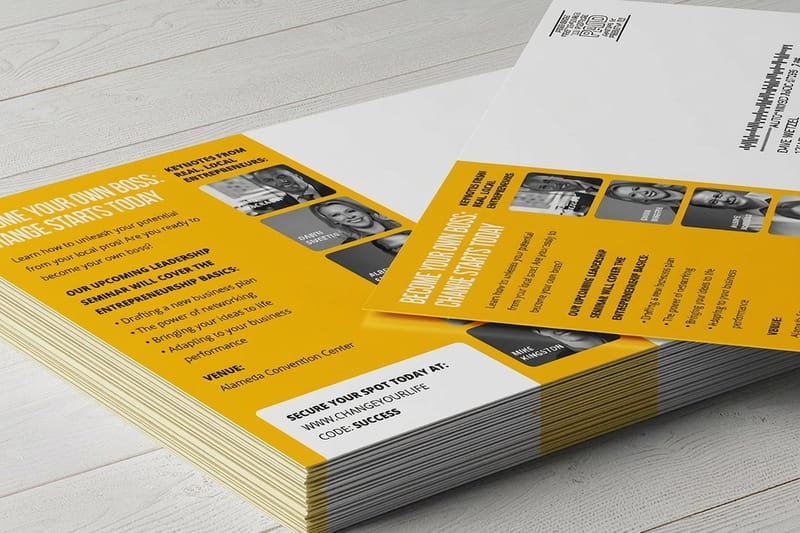
| Standard postcards | $16.48 | Re-engaging a silent segment with one offer and one URL. | No privacy, so nothing sensitive and nothing complicated. |
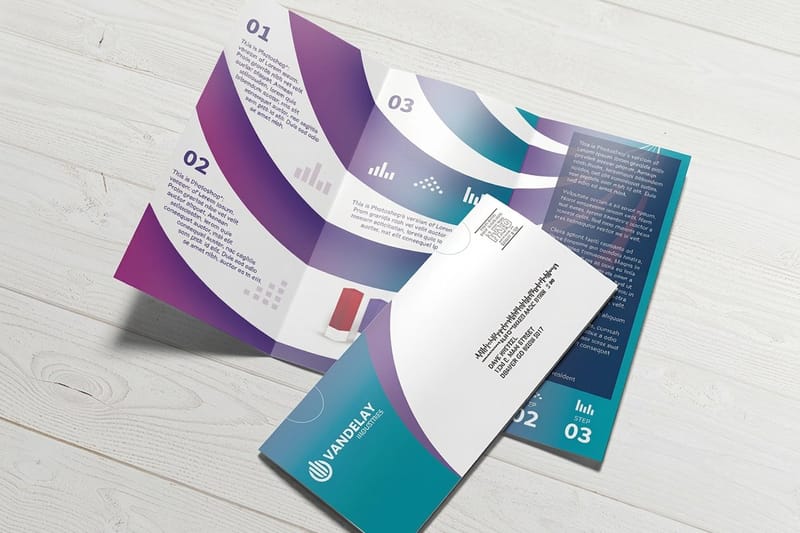
| Printed envelopes | $142.99 | A real letter to a named person at a company you want. | Higher cost per piece, so the list has to be short and chosen. |
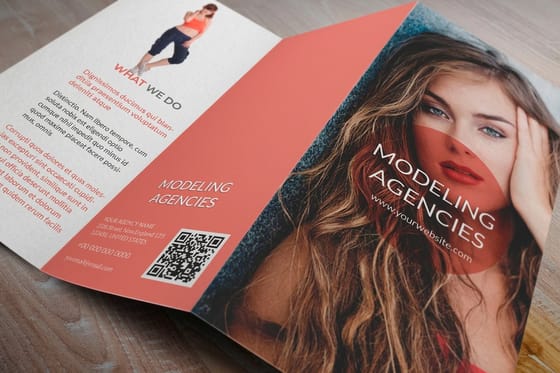
| Standard brochures | $57.11 | Answering a lead who clicked and asked for detail. | Needs an envelope and more postage than a postcard. |
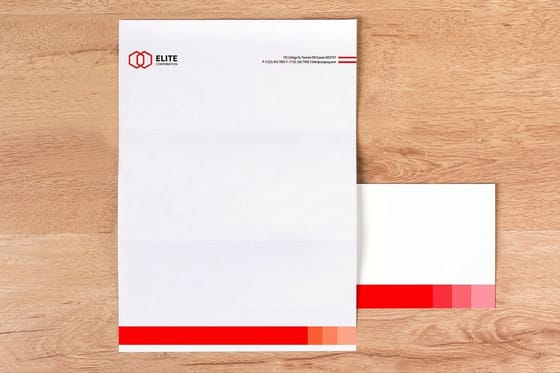
| Standard letterheads | $99.95 | Quotes, proposals and the follow up after a call. | Only worth it when the letter is genuinely written, not merged. |
Whatever you send, give the printed piece its own destination. A short URL or a QR code that nothing else uses turns the mailing into a measurable branch instead of an act of faith. Sizing and bleed rules for a mailer are in our postcard layout guide, letter mechanics are in the letter printing and mailing guide, and the real per piece arithmetic including postage sits in direct mail cost per piece. If you would rather not touch addressing and postage yourself, our direct mail services print and mail the drop for you.
Measuring the Sequence Without Fooling Yourself
A nurture sequence has one number that matters: revenue per contact entering it. Everything else is diagnostic, and several of the popular metrics now lie.
Open rate is inflated by image preloading and should stay on the dashboard as a trend rather than a target. Click rate is honest but it flatters small segments, so read it alongside the raw count. Unsubscribe rate is useful in a way people misread: a low rate can mean nobody cares enough to leave. Watch replies, because a reply is the strongest signal a cold contact can give you and almost nobody tracks them.
Measure the offline branch separately and give it its own URL, or it will be swallowed by direct traffic and look like nothing happened. Compare mailed re-engagement against your realistic alternative, which is suppression, not another email. If a drop to five hundred lapsed contacts wakes up a handful who buy, the postcard paid for itself several times over, and the arithmetic is easier than it looks once you set the cost side properly. Our comparison of direct mail against digital marketing lays out how the two cost structures differ, and if you run a regular mailed update, printing and mailing newsletters covers the recurring version of the same idea.
Review the whole thing quarterly with one question in front of you: which email would I delete if I could only keep four. Sequences grow by accretion, and the fastest improvement most lists get is a deletion. More strategy pieces sit in our marketing strategy guides, and once a contact becomes a customer the follow up shifts to retention, which the customer loyalty card guide and the customer experience guide both cover.
Wally explains the nurture fork
Three emails for everyone, then the list splits
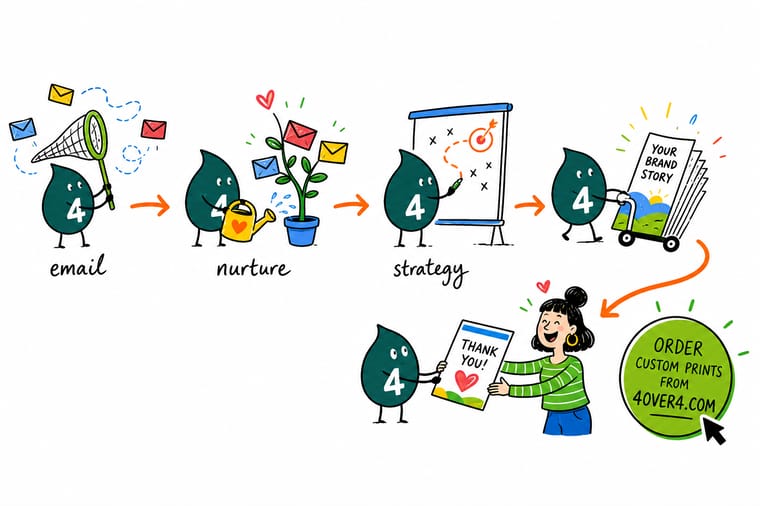
Wally sends the file the moment somebody signs up, teaches one thing on day two, teaches one more on day five, and then stops guessing. Whoever clicked goes into the offer lane. Whoever stayed silent goes into the other lane, where Wally either asks permission to stop or drops a postcard in the mail with its own URL on it. He never adds a ninth email for people who ignored eight, because that habit is what pushes the next campaign into the spam folder.
Price standard postcards →Specs and pricing
The printed pieces the offline branch uses
Sizes, stocks and starting prices for the three pieces that carry a nurture message once email has stopped working, straight from the 4OVER4.COM configurator.



Print it
Order the piece that restarts a quiet conversation


Explore more
Where to go next


By the numbers
Printing and mailing you can plan a campaign around
Common Questions
Your email nurture questions, answered
How many emails should a nurture sequence have?
Three that everyone receives, then as many as the branch justifies. The fixed part is the delivery email, a teaching email around day two, and a second teaching email around day five. After that the count depends on what the person did. Someone who clicked twice can handle four more emails without irritation because they keep raising their hand. Someone who has opened nothing should not receive a fourth, a fifth or a sixth. Counting emails is the wrong unit of measure. Count decisions.
How far apart should nurture emails be?
Two to four days at the start, then wider. The first week is when the person still remembers signing up, so the gaps can be short. By week three, a weekly cadence reads as a newsletter rather than a pursuit. One useful rule: the interval should grow whenever the reader does nothing, and it can shorten whenever they click. If your platform cannot do that, pick four days and stay honest about it rather than dropping to daily to hit a revenue target.
Should I keep emailing someone who never opens?
No, and the damage is not just to that contact. Inbox providers score a sending domain partly on how the people who receive its mail behave. A large block of dead addresses drags the average down and pushes your next campaign toward the promotions tab or the spam folder, which costs you the engaged readers too. Give a non responder one clearly labeled last email, then suppress. If the contact is worth money, switch channels instead and mail them something.
Is open rate still worth tracking?
As a rough trend line, yes. As a trigger for automation, no. Apple Mail Privacy Protection preloads the tracking pixel on the server, so an open is logged whether or not a human ever saw the message, and other clients have followed. That inflates the number and, worse, makes it unreliable in a direction you cannot measure. Branch your sequence on clicks, on replies, and on pages visited. Keep opens on the dashboard, keep them out of the logic.
What do I actually write in the teaching emails?
One idea per email, taken from the question the signup implies. If somebody downloaded a pricing checklist, they are worried about quoting too low, so email two answers a specific pricing objection and email three shows how to present the number. Short is fine. Two hundred words that solve one thing beat a thousand that survey a topic. Resist the urge to append an offer to a teaching email, because it turns a gift into an advertisement and readers notice.
When does direct mail beat sending another email?
When the address has gone quiet and the contact is worth more than the piece costs. Email nine to a silent contact is close to free and close to worthless. A printed postcard costs real money, which forces you to select who receives it, and that selection is most of the benefit. Standard postcards start at $16.48 and standard brochures at $57.11 at 4OVER4.COM, so a re-engagement drop to a few hundred lapsed leads is a small, testable spend rather than a campaign.
Get Started
50 postcards cost $16.48 for the people who stopped opening
Pick a size, upload the artwork, and we print the postcards, letters or brochures that carry your nurture message into a mailbox instead of a spam folder.
Legal Disclaimer
Gold Standard guarantees apply to all standard orders placed through 4over4.com. Price match requires verifiable proof of a competitor's published price for an equivalent product with matching specifications and turnaround time. Satisfaction guarantee covers manufacturing defects and print quality issues. Contact support with order number and documentation. On-time delivery rate based on tracked orders 1999 to 2026. Individual results may vary based on shipping carrier performance.
