
Writing That Sticks and How to Do It on Purpose


Six habits, one rewrite ladder, and a checklist you can run in twenty minutes on copy you have already published.
Writing sticks when a reader can picture it, repeat it out loud, and act on it a day later. That comes from six habits: one idea per piece, concrete nouns in place of category words, a real number instead of an intensifier, one deliberate break in the expected pattern, a single named reader, and repeating the same wording long after your own team is bored of it. Every one of those habits costs you something, which is why most writing skips them.
Quick answer
Pictures, numbers, and the same words every time
Memory keeps objects, not categories. A sentence made of things a reader can see survives the walk from the mailbox to the desk, and a sentence made of solutions and offerings does not. Add one checkable number, break the reader's expectation exactly once, write to one person by name, and then resist every urge to reword it. The ladder below shows the same claim rewritten four times, getting no shorter and far more memorable.
Why Most Business Writing Slides Straight Off
Readers forget most business writing for a mechanical reason. A sentence built from category words gives the brain nothing to file, so nothing gets filed.
Put two versions of the same claim side by side. "We deliver high quality marketing solutions." And: "We print postcards, flyers and brochures." Identical length. The first could be signed by a courier company, an accountant or a software startup without changing a word. The second puts three objects on the table, and objects are what memory holds on to.
Writers reach for solutions, offerings and experiences at the exact moment they are least certain what they sell. Category words feel safe because they cover more ground, and that is the trade-off you are actually making: every extra thing a sentence covers, it covers more faintly. Precision costs you the option of sounding impressive to everybody. It buys you being remembered by somebody.
The second leak is quantity. A piece that makes three arguments does not deposit three memories. Readers keep one thing, at most, and when you refuse to choose which one, they choose for you, usually badly. Decide before you write which single sentence you would fight to keep, then treat everything else on the page as support for it.
There is a third failure that looks like the opposite of vagueness. Some writing is dense with detail and still forgettable, because none of the detail belongs to the reader. Specifications about your process are not the same as facts about their outcome. Our guide to brand messaging components works through the difference at the level of a whole message set, not just a line.
The Six Habits That Make a Line Stick
None of these are style preferences. Each one has a cost attached, and the cost is why most writers skip it.
| Habit | What it does | What it costs you |
|---|---|---|
| One idea per piece | Gives the reader a single thing to carry away, so there is no competition for the one slot they have. | You have to drop your second best point, usually the one you personally like most. |
| Concrete nouns | Replaces categories with objects the reader can picture, which is the form memory stores. | You lose the umbrella. The sentence now excludes part of what you do. |
| Real numbers | Turns an adjective anyone can claim into a fact that can be checked, and checkable facts get quoted. | Numbers age. You own the job of updating them when the number changes. |
| One broken pattern | Violates what the reader predicted the sentence would say, which is the moment attention actually arrives. | Used twice in a paragraph it reads as noise, and the reader stops trusting either surprise. |
| A named reader | Writing to one real person you know kills the committee tone that averages everything into nothing. | Some readers will feel the piece was not written for them, because it was not. |
| Ruthless repetition | Repeating the exact same words across every channel compounds instead of restarting. | Boredom. Your team will beg to change it long before customers have heard it. |
Two of the six do most of the damage when they go wrong. The broken pattern is the one people overdo. A surprise works because the surrounding sentences were predictable, so a page where every line strains for a twist has no baseline left to break, and the reader settles into skimming. Spend the surprise once, in the position you most need someone to stop.
Repetition is the one people underdo, and it is the cheapest win on this list. Rewriting your slogan for a fresh feel is an internal impulse that punishes an external audience, because the person seeing the flyer in March has no idea it echoes the postcard from January if the words have changed. Lock the sentence, then put it everywhere without touching a syllable. The brand voice guide covers how to lock tone as well as wording so the repetition still sounds like one company.
Where the Words Land Changes What Sticks
A line that works in an email can die on a doorstep. The variable is not the medium's prestige, it is how many seconds the reader gives it and from how far away.
| Format | Time you get | Words that survive | Job of the line |
|---|---|---|---|
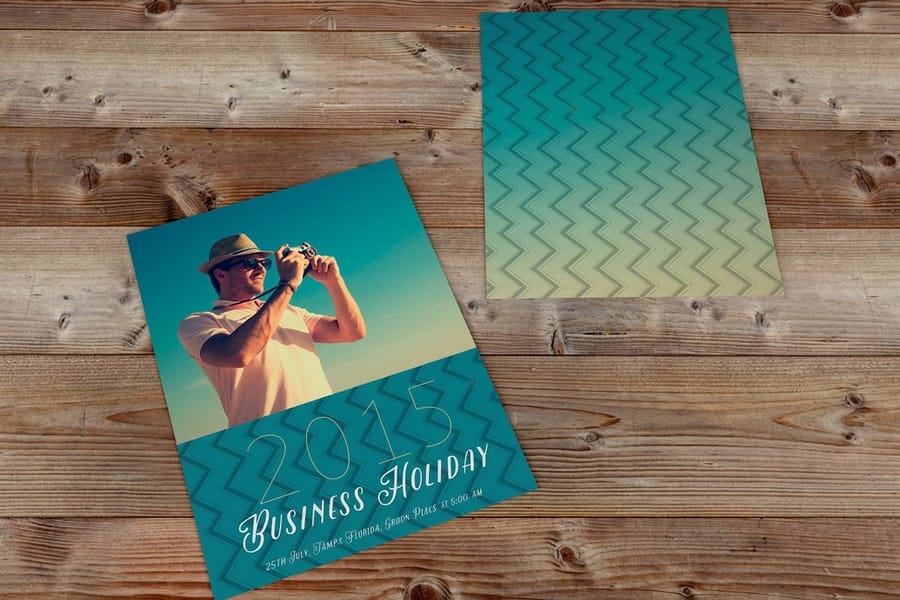
| Postcard | Two seconds, held at arm's length over a bin. | Six to ten in the top third, one number. | Earn the flip to the back. Nothing else. |
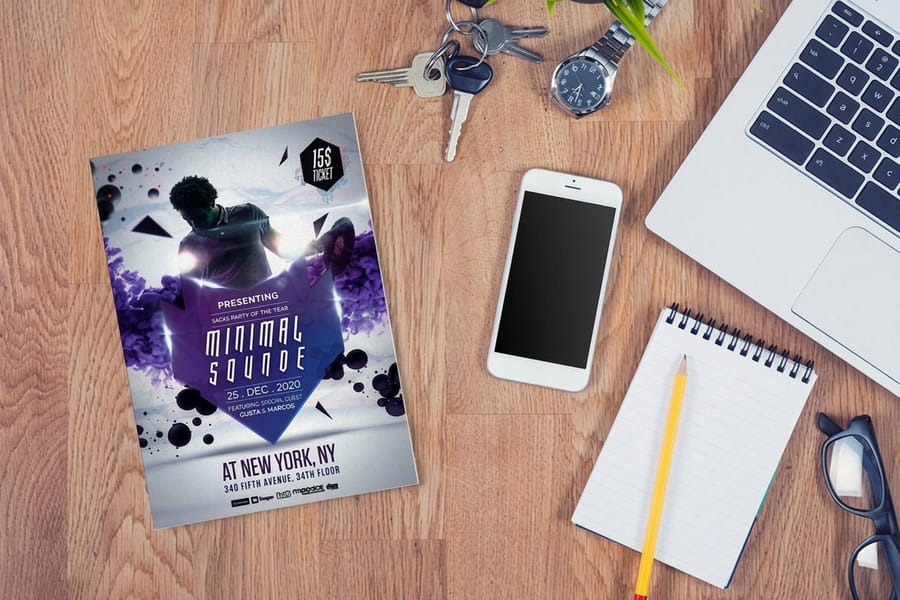
| Flyer | Three to five seconds at a counter or in a hand. | A headline plus three supporting lines. | Name the offer and the deadline. |
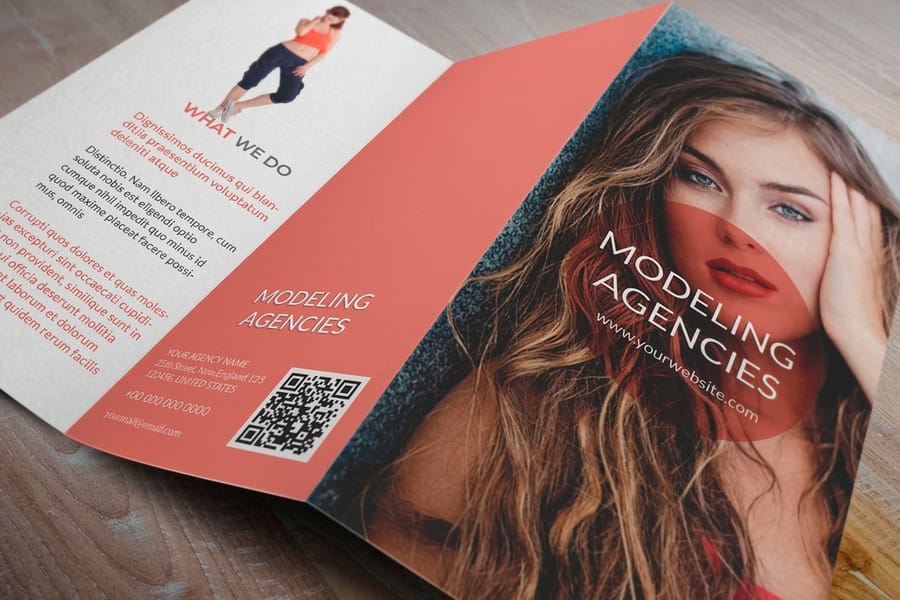
| Brochure | A minute or more, opened deliberately. | Full paragraphs, panel by panel. | Answer the objections the headline raised. |
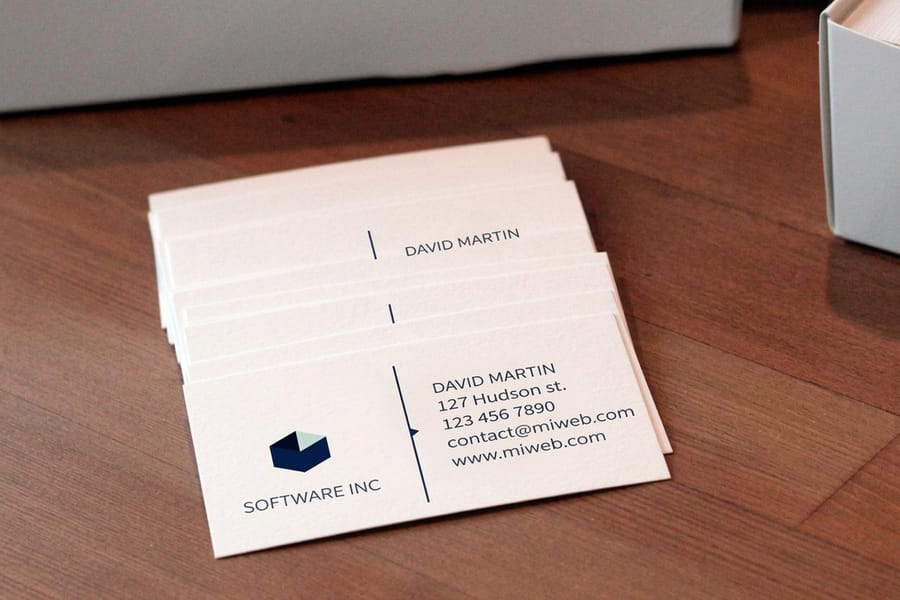
| Business card | Two seconds now, then again in a month. | A role line of four or five words. | Make the person recall the conversation. |
Write the shortest version first. Compressing a loose paragraph into a postcard headline usually means starting over, while expanding a tight line into a brochure panel is a pleasant afternoon. That order also stops the common mistake of designing a beautiful piece around copy that was never tested at the length the piece actually allows.
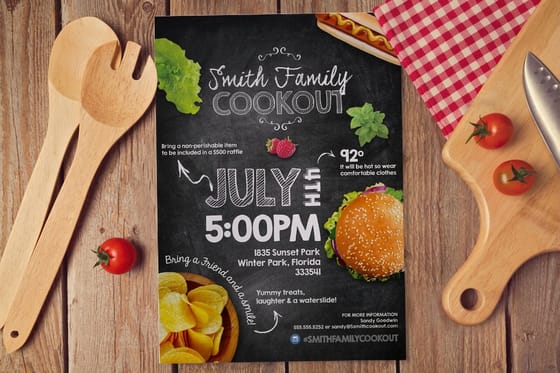
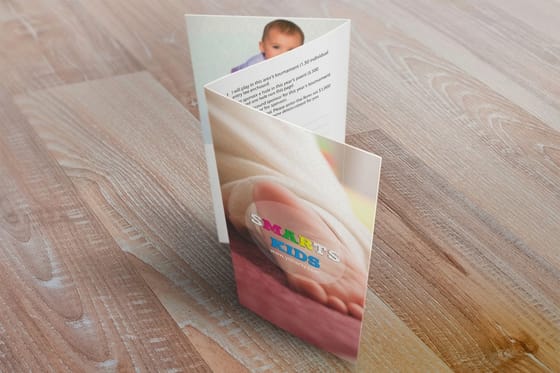
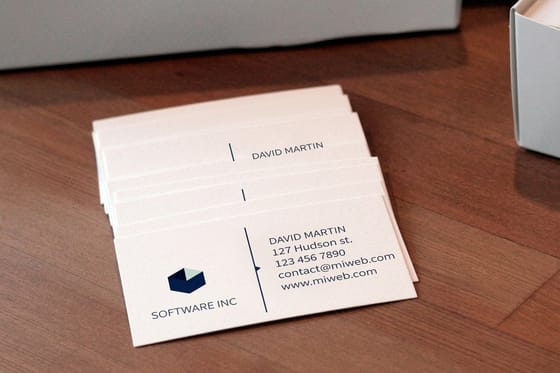
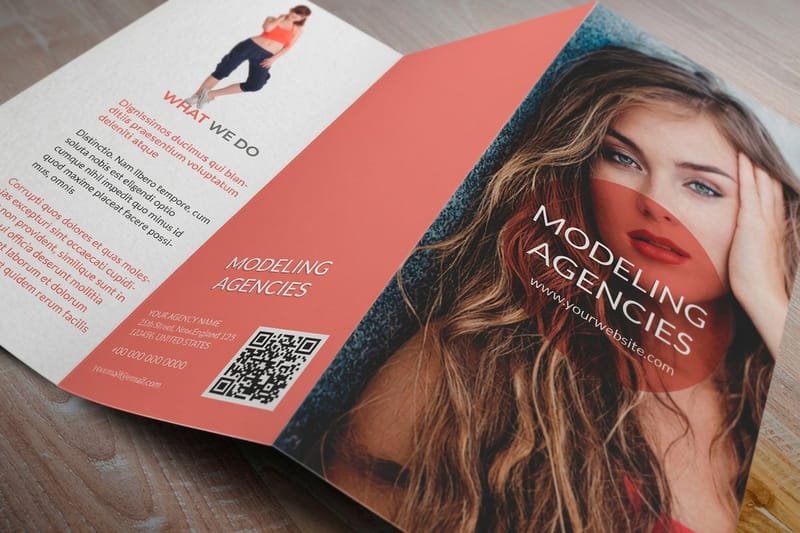
Print is where the repetition habit pays, because the reader cannot scroll past and the piece stays on a desk. Standard postcards start at $16.48 and give you the two second test in its purest form. Standard flyers start at $39.54 when the offer needs a headline plus supporting detail. Standard brochures start at $57.11 and are the right home for the longer argument, with panel by panel content ideas if you are unsure what goes where. Standard business cards start at $17.57 and carry the shortest version of all, which is why a card line is worth an hour of work.
Typography decides whether any of it gets read at distance. A ten word headline set too small on a postcard performs worse than a fifteen word headline set properly, so treat size as part of the writing job rather than a later design detail. Our notes on choosing postcard fonts and on making a business card slogan land cover the sizes that hold up in the hand, and the full marketing materials range shows what else the same line can go on.
The Twenty Minute Rewrite Checklist
Run this on something you have already published. It is faster than writing new copy and it usually finds more.
- Swap in a competitor's name. If the sentence is still true with their name on it, you wrote a category description. Rewrite until it breaks.
- Circle every category word. Solutions, services, offerings, experiences, materials, products. Replace each one with the thing itself or delete the sentence.
- Find the adjectives doing work a number should do. Fast, affordable, premium, extensive. Either produce the number or drop the claim.
- Count the ideas. More than one argument means more than one piece. Move the extras to a list for later rather than deleting them.
- Read it aloud in one breath. Anything you stumble over will never be repeated by a customer, and repetition by customers is the entire point.
- Name the reader. Picture one real person. Ask whether the sentence would embarrass you if you said it to their face.
- Mark your one surprise. Exactly one line should say something the reader could not have predicted. If there are none, add one. If there are three, keep the best.
- Check it against last month. Pull your previous flyer, postcard or email and confirm the key line is word for word identical. If it drifted, restore it.
- Wait a day, then recall it. Write down what you remember of your own draft without looking. Whatever you cannot recall, your reader has no chance with.
Step nine catches the failure the other eight miss. Writers judge copy while holding the whole argument in their head, and the reader never has that. A day of forgetting simulates the reader's position cheaply, and it is the only step here that most people skip.
Once the line survives all nine, put it into rotation and leave it alone. The rest of the work is placement and repetition, which is what the marketing strategy guides deal with, and where advertising copywriting practice takes the same sentence into paid channels.
Wally rewrites the line
Cross out the category word, keep the thing
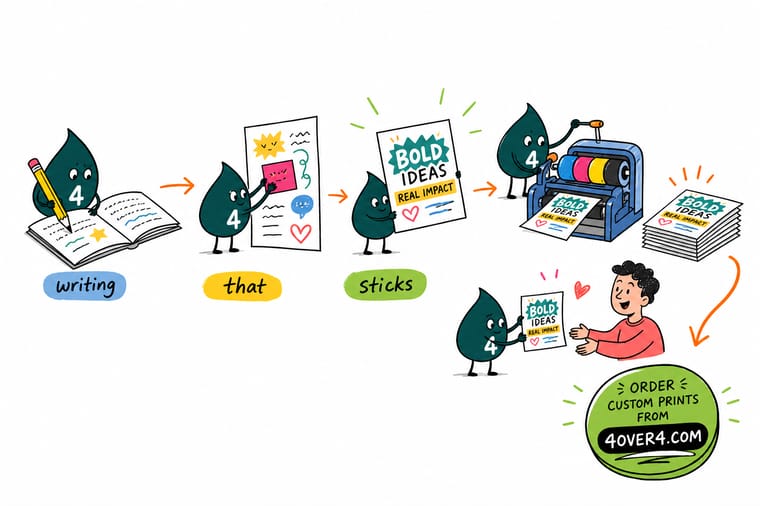
Wally starts with high quality marketing solutions, which nobody remembers because nobody can see it. He crosses out solutions and writes postcards. He crosses out high quality and writes a day of the week. Same length, same breath, and now a reader can repeat it back tomorrow. Then he does the hard part: he pins the finished line to the wall and refuses to reword it for the next six months.
Print your line on postcards →Specs and pricing
Where the line goes, with sizes and starting prices
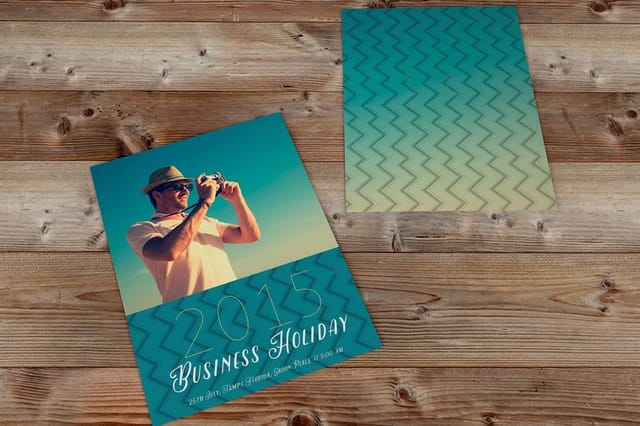
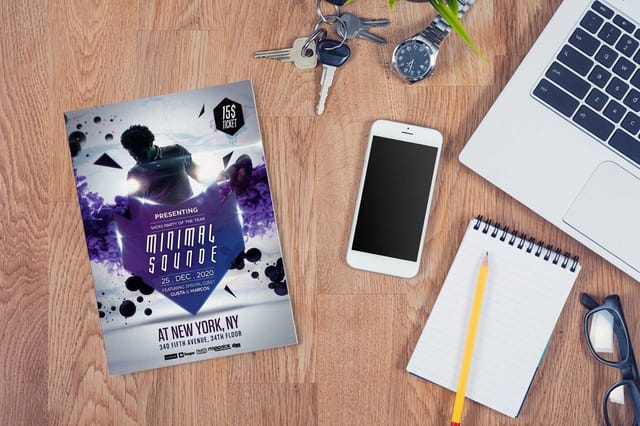
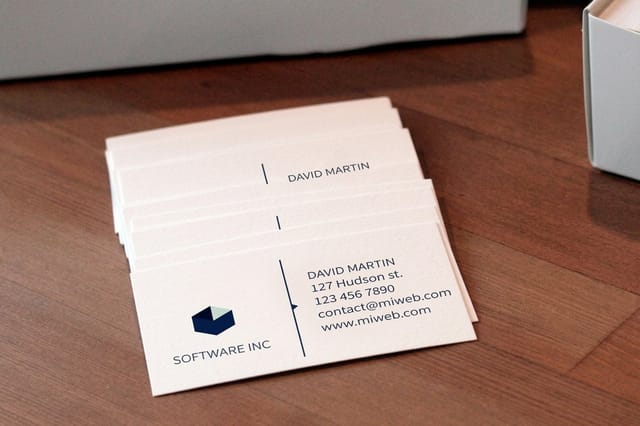
Postcards for the two second test, flyers for the offer, brochures for the longer argument. Live configuration choices and starting prices come straight from the 4OVER4.COM configurator.



Print it
Put the sentence somewhere people hold it
Explore more
Where to go next

By the numbers
Twenty five years of printing, in four numbers
Common Questions
Your questions about memorable writing, answered
What does it actually mean for writing to stick?
A line has stuck when someone can repeat it a day later without looking it up, and when repeating it changes what they do. Recognition is not the same thing. Plenty of readers will nod at a sentence, feel that it sounded professional, and be unable to tell you a single word of it an hour later. The working test is spoken, not written: read your line to a colleague, wait until the next morning, then ask them what you said. Whatever comes back is what you really published.
How long should a message be if I want it remembered?
Short enough to be said out loud in one breath, which in practice lands somewhere near a dozen words. Length is not the real variable though. A twenty word sentence full of things you can picture will outlast an eight word sentence full of abstractions. Cut for vagueness first and count words afterwards, because trimming an abstract sentence just gives you a shorter abstract sentence.
Should I use humor to make writing memorable?
Only when the joke carries the point rather than sitting next to it. A gag people remember while forgetting what you sell is a cost with no return, and it is a common outcome. The safer version of the same instinct is surprise: an unexpected but true detail, a number nobody expected, a plain admission of a limit. Those get repeated for the same reason a joke does, and they survive being retold by someone with no comic timing.
How do I test a line before I commit to it?
Three cheap checks, in order. First, swap your company name for a competitor. If the sentence still reads as true, it belongs to nobody and you have written a category description. Second, say it out loud. Anything you stumble over will never be repeated by a customer. Third, hand it to one person who is close to your buyer and ask them what you would send them in the mail after reading it. If the answer is vague, the copy is vague.
Does the same copy work on a postcard and on a website?
The idea travels, the wording does not. A web page is read alone, at whatever pace the reader chooses, so it can afford a build up. A postcard gets about two seconds between the mailbox and the recycling bin, so it needs the whole point in the top third and nothing else competing for it. Write the shortest version first, prove it works on the printed piece, then let the longer formats expand from it. Expanding a tight line is easy. Compressing a loose one usually means starting again.
How many times do I have to repeat a line before it lands?
There is no honest number, and anyone who gives you one is guessing. The useful signal is internal: when your own team starts complaining that the line is old, your audience is roughly at the point of first noticing it. Teams almost always retire a message while it is still working, because they have seen it in every proof, every draft and every meeting. Keep it until customers repeat it back to you unprompted, then keep it a while longer.
Get Started
Got the line? Now put it where people keep it.
Print the same sentence on postcards, flyers and cards, word for word, and let the repetition do the work your rewrites never could.
Legal Disclaimer
Gold Standard guarantees apply to all standard orders placed through 4over4.com. Price match requires verifiable proof of a competitor's published price for an equivalent product with matching specifications and turnaround time. Satisfaction guarantee covers manufacturing defects and print quality issues. Contact support with order number and documentation. On-time delivery rate based on tracked orders 1999 to 2026. Individual results may vary based on shipping carrier performance.
