
What Web Printing Means and Which Kind You Actually Need


The same two words cover a way of buying print and a machine that prints from a roll. They are easy to tell apart, each applies to different work, and the online kind runs a particular way at 4OVER4.COM.
Web printing means one of two unrelated things: web-to-print, which is ordering printed products through a website, or web-fed offset, a press that prints on a continuous roll of paper instead of cut sheets. If you are pricing cards or flyers in a browser, you want the first. The second is a high-volume machine for newspapers, magazines and catalog runs in the tens of thousands, and it cannot run the heavy cardstock most small-business print is made of.
Quick answer
One term for a storefront, the same term for a press
Web-to-print is how you buy; a web press is one way the industry prints. Ordering online means configuring a product, uploading a file and approving a live price, and the job then routes to whichever press fits it, usually digital or sheetfed offset. A web press only enters the picture on roll-fed jobs at newspaper and catalog scale, on paper light enough to wind onto a roll. Knowing which sense you are reading about saves you from comparing a piece of software against a machine.
Web-to-Print vs Web Press, the Two Meanings Untangled
The confusion is fair, because the printing industry used the word web for a century before the internet borrowed it. On a press, the web is the continuous ribbon of paper unwinding from a roll. Online, web printing came to mean buying print through a website. Search results mix the two freely, so here is the clean split.
| Term | What it actually is | Who uses it | Where you meet it |
|---|---|---|---|
| Web-to-print | Software for ordering print online: configure, upload, preflight, pay, receive. | Anyone buying cards, flyers or brochures from a browser. | Every product page on 4OVER4.COM. |
| Web-fed offset | An offset press printing on a continuous paper roll at very high speed. | Newspaper, magazine and catalog plants. | Runs in the tens of thousands and up. |
| Sheetfed offset | An offset press printing on cut sheets, one at a time. | Commercial printers, including us. | Mid to large runs on heavier stocks. |
| Digital press | Toner or inkjet, no plates, economical from quantity one. | Short runs and fast turnarounds. | Most small online orders. |
When you price standard business cards or flyers in our configurator, you are using web-to-print. Which press the job lands on afterward is a routing decision we make based on quantity and stock, and it is invisible to you by design. Our guide to how an offset press works covers the machinery side in detail.
How a Web Press Works and When the Roll Beats the Sheet
A web press unwinds paper from a roll that can weigh over a ton, pulls it through a series of printing units at speeds that can pass 3,000 feet per minute, then dries, cuts and folds it inline. The press delivers folded signatures, not flat sheets, which is why the format suits newspapers, magazines and catalogs: the folding is part of the print run rather than a separate finishing step.
There are two families. Coldset presses skip the dryer and let ink soak into absorbent uncoated paper, which is cheap, fast and soft-looking, the classic newspaper. Heatset presses run the printed web through a dryer oven and over chill rollers, setting the ink on coated stock for the crisp color you see in a magazine. The ink and color guide explains why coated and uncoated paper take ink so differently.
The trade-off is setup. A web press wastes hundreds of feet of paper getting register and color up to speed, and plating it takes real time. Spread that across 80,000 catalogs and it disappears into a fraction of a cent per copy. Spread it across 500 brochures at $57.11 a set and it would swamp the job, which is why short and mid runs print sheetfed or digital instead. The other hard limit is stock: a roll cannot carry 14pt or 16pt cardstock, so heavy pieces are physically outside what a web press can run.
What Ordering Print Online Actually Gets You

Web-to-print replaced a workflow that ran on phone calls, emailed PDFs and a quote that arrived the next day. The practical gains are specific.
The price is live and complete. Change quantity from 250 to 1,000, switch 14pt to 16pt, add a coating, and the number updates in front of you. Standard postcards start at $16.48 and standard flyers at $39.54, and the price you see for your exact configuration is the price you pay, before you commit to anything.
The file check happens before the press, not after. Uploaded artwork is preflighted for resolution, bleed and size problems while the fix still costs nothing. A missing bleed caught at upload is a two-minute correction; caught after printing, it is a reprint.
Turnaround is a setting, not a negotiation. Many products offer options down to 1 business day in production, chosen from the same configurator as the stock and coating. And a reorder is one click on a saved job, so the second run of cards matches the first without anyone re-sending files. Start from a correctly sized layout in the blank template library and the setup work mostly disappears.
How to Order From 4OVER4.COM, Start to Doorstep
The whole flow takes a few minutes the first time and less on every reorder.
First, pick the product and configure it. On any product page, say standard business cards from $17.57, set the size, stock, coating, quantity and turnaround. The pricer recalculates on every change, so you can compare a 500-count against a 1,000-count in seconds and see exactly what the upgrade to a thicker stock costs.
Second, get the artwork in. Upload a print-ready PDF, or design in the browser if you do not have a file. If you are building the file yourself, the matching blank template already carries the correct trim, bleed and safe-area guides for the size you chose.
Third, approve and let it run. We preflight the file and flag anything that would print badly before the job enters production. After approval, the job routes to the press that suits it, digital for short runs, sheetfed offset for larger ones, and ships to your address. The full pipeline, including what preflight actually checks, is walked through in our guide to how online printing works, and the business cards category is a good place to see the configurator in action.
Wally explains web printing
Same words, a storefront on one side and a paper roll on the other
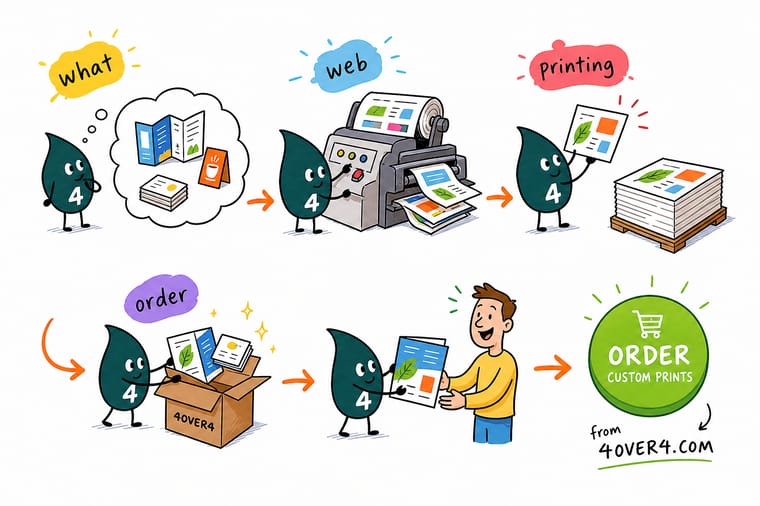
Wally holds up both meanings at once. On his left, a laptop: pick a product, set the size and stock, upload the file, watch the price update, done. That is web-to-print, and it is what you use on 4OVER4.COM. On his right, a roll of paper taller than he is, unwinding through a press at thousands of feet per minute. That is a web press, built for newspapers and catalog runs in the tens of thousands, and it cannot run the thick cardstock your business cards are made of. Order online, and Wally routes the job to the press that actually fits it.
Order standard business cards →Specs and pricing
Configure these products online right now
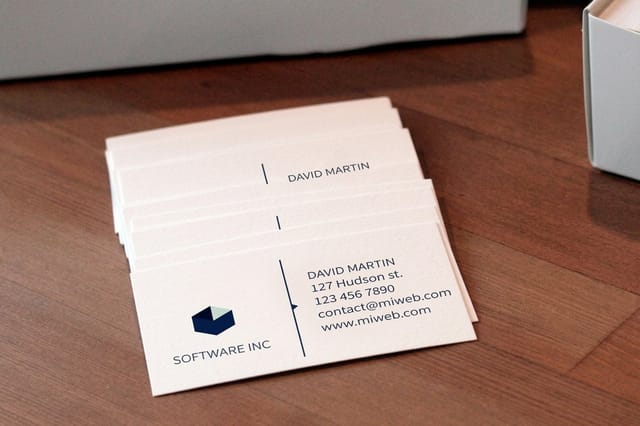
The web-to-print side of the story, live: sizes, stocks and starting prices straight from the 4OVER4.COM configurator.


Print it
Order online and skip the quote round-trip
Explore more
Where to go next

By the numbers
Web to press ordering, counted in years and products
Common Questions
Your web printing questions, answered
What is web printing?
It depends on which sense you have met. Web-to-print means ordering printed products through a website: you pick a product, set size, stock and quantity, upload your artwork, and the printed job arrives at your door. Web printing in the pressroom sense means web-fed offset, a press that prints on a continuous roll of paper at very high speed and is used for newspapers, magazines and large catalog runs. The two share a word and nothing else.
Is web-to-print the same as web offset printing?
No. Web-to-print is the storefront layer, the software that takes your order, checks your file and routes it to a press. Web offset is one specific kind of press that might sit at the end of that pipeline, though for most online orders the job actually lands on a sheetfed offset or digital press. You can order through web-to-print without a web press ever touching your job, and most people do.
When does a web press make sense?
When the run is huge and the paper is light. Roll-fed presses waste a lot of paper getting up to speed and take real time to plate and set up, so the economics only work when that cost spreads across tens of thousands of copies or more. A newspaper, a national magazine or a 50,000-piece catalog belongs on a web press. A run of 500 brochures does not, and a printer who quoted it that way would be overcharging you for setup.
What is the difference between coldset and heatset web printing?
How the ink dries. Coldset presses put ink on absorbent uncoated paper and let it soak in, which is cheap and fast but limits color sharpness, which is why newsprint looks soft and rubs off on your hands. Heatset presses run the printed roll through a gas-fired dryer and then over chill rollers, setting the ink hard enough to print crisp color on coated stock. Magazines and catalogs are heatset, newspapers are coldset.
Can a web press print business cards or postcards?
Not in practice. Web presses run paper light enough to wind onto a roll, roughly newsprint through light coated text weights. The 14pt and 16pt cardstock that business cards and postcards are built on is too stiff to run from a roll, so those jobs print sheetfed or digital. That is not a quality compromise: sheetfed presses hold tighter color control on heavy stock than a web press could.
How do I order printing online at 4OVER4.COM?
Pick the product, then configure it in the live pricer: size, stock, coating, quantity and turnaround, with the price updating as you change each one. Upload a print-ready file or start from a correctly sized blank template. We preflight the file, flag anything that would print badly, and put the job into production once you approve. Standard postcards start at $16.48 and standard business cards at $17.57, and you see the exact price for your configuration before you pay.
Get Started
Postcards run 50 for $16.48, priced before you upload
Pick a product, configure it in the live pricer, upload your file, and we route the job to the press that fits it. No quote round-trip, no guessing at the price.
Legal Disclaimer
Gold Standard guarantees apply to all standard orders placed through 4over4.com. Price match requires verifiable proof of a competitor's published price for an equivalent product with matching specifications and turnaround time. Satisfaction guarantee covers manufacturing defects and print quality issues. Contact support with order number and documentation. On-time delivery rate based on tracked orders 1999 to 2026. Individual results may vary based on shipping carrier performance.
