
How Visual Selling Wins Deals by Showing Instead of Telling


Buyers believe what they can inspect. The ladder runs from a spoken claim to a piece they can hold, a working sales kit needs four items, and visual pitches go wrong in five ways.
Visual selling means putting something in front of the buyer that carries the argument, so they judge the evidence instead of judging whether to trust you. It works because a picture or a sample can be checked on the spot and a spoken claim cannot. The practical version is a ladder: say it, show it, hand it over. The last rung is the only one that keeps working after you leave the room.
Quick answer
Say it, show it, hand it over
A buyer who can inspect your claim stops asking you to prove it. That is the whole mechanism. Move each important claim down the ladder from something you assert, to something you display, to something the buyer holds, and the conversation shifts from trust to evaluation. The lower rungs cost more and take lead time, which is the trade-off, and it is why the pieces you print should be the two or three claims that actually decide the deal.
What Visual Selling Actually Means
Every claim in a sales conversation sits on one of three levels. You can say it, you can show it, or you can hand it over. Each step down that ladder takes work away from you and gives the buyer something they can check themselves.
Say it, and the buyer has to decide whether you are trustworthy. Show it, and they judge the thing rather than you, but only while it is on the screen. Hand it over, and they turn it around, run a thumb across it, and form an opinion you did not have to argue for. That third level is the one most sellers skip, because it takes preparation and the first two do not.
The trade-off is real. Level one costs nothing and can be improvised. Level three has a lead time, a cost, and the risk that you print the wrong message. That is why the honest sequence is to settle what you are actually claiming, test it in conversation for a few weeks, and only then produce something. A folder full of a story you have already abandoned is worse than no folder.
Visual selling also depends on the pieces looking like they came from the same company. If the card, the folder and the booth graphic disagree on the shade of blue, buyers notice without being able to say why. Our guide to building a consistent visual identity covers the rules that keep a set coherent, and color pairings that hold up in print covers the part that changes when a screen color becomes ink.
The Three Moments a Visual Has to Do Work

A sales visual gets used at three different moments, and they demand different things. Confusing them is why so many companies own a beautiful brochure that nobody ever opens.
Before the meeting the job is to earn attention from someone who has not agreed to listen yet. That is a mailer, a postcard, a booth graphic, a poster. It has one line and one image, and it is read at a distance or in two seconds.
During the meeting the job is to anchor the conversation on one thing at a time. A sell sheet, a sample, a diagram drawn on the spot. You control the pace, so the piece can be denser.
After you leave the job is to survive without you and to be legible to a person who was never in the room. That is the folder, the brochure, the leave-behind. It has to answer the question your champion will be asked by their boss.
| Format | Which moment | Who sets the pace | What it must survive |
|---|---|---|---|
| Slide deck | During | You do, completely. | Nothing. It ends when the laptop closes. |
| Sell sheet or flyer | During, then after | Shared. You point, they read ahead. | Being read alone, out of order, weeks later. |
| Brochure | After | The reader, entirely. | A skim by someone who missed the pitch. |
| Banner or booth graphic | Before | Nobody. It works at walking speed. | Being read from ten feet away in bad light. |
| Physical sample | During | The buyer, the moment they touch it. | Close inspection, which is the point. |
Read the last column first. It tells you how much text a piece can carry. A banner that has to be read at walking speed cannot hold a paragraph, and a brochure that has to survive a skim cannot rely on you being there to explain the middle spread. If you are choosing between two of these formats, brochures against sales sheets works through the same decision on a smaller scale.
Building a Sales Kit That Travels

A working kit is small. Four pieces, each with a job you can state in one sentence, packed so you can find the right one without shuffling through the bag in front of a client.
- A folder to hold it. It sets the frame before anything comes out of it. Short run presentation folders start at $108.75, which lets a small team print fifty and change the contents next quarter. Full runs of pocket folders start at $844.54 because they carry a die and are priced for volume, so commit to those only when the message is settled.
- A brochure that explains the offer. This is the piece that works after you leave. Standard brochures start at $57.11 and fold to a size that fits the folder pocket.
- One sell sheet per product. Single page, one product, one page of proof. Standard flyers start at $39.54 and are cheap enough to reprint when a spec changes, which is why they should carry the volatile detail instead of the brochure.
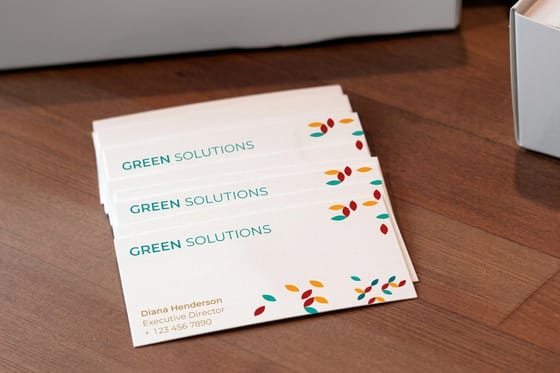
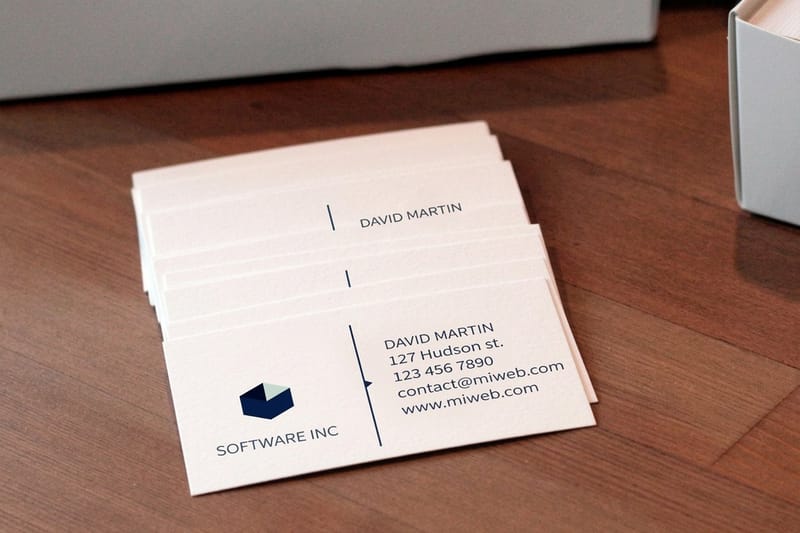
- A card. Standard business cards start at $17.57 and are the only item in the kit that gets deliberately kept.
Two rules make the kit work in practice. Load the folder before you leave the office, not in the car, so you notice what is missing. And keep the sell sheets loose rather than stapled into the brochure, because the whole advantage of a one-page sheet is that you can pull out exactly one.
Sizing and bleed matter as much as the copy here, since a sheet cut to the wrong dimension will not sit in the pocket. Start from a correctly built layout in the blank template library, and if you have never had a piece in hand from us, order free paper samples before you choose the stock. The full range sits in marketing materials, and the fold options are laid out in the brochure printing category.
Where Visual Selling Backfires
Visuals fail in predictable ways, and all of them come from showing more than the buyer asked for.
The overloaded surface. Three messages on one page reliably deliver none. If a sell sheet has a headline, a feature list, a case study and a promotion on it, the buyer reads the promotion and forgets the rest. Cut until one idea is left, then make that idea large.
The flattering rendering. A mock-up that shows the product in perfect light with imaginary features wins the meeting and loses the account at delivery. Show the actual thing, including the plain part. Buyers forgive a modest product far more easily than a surprise.
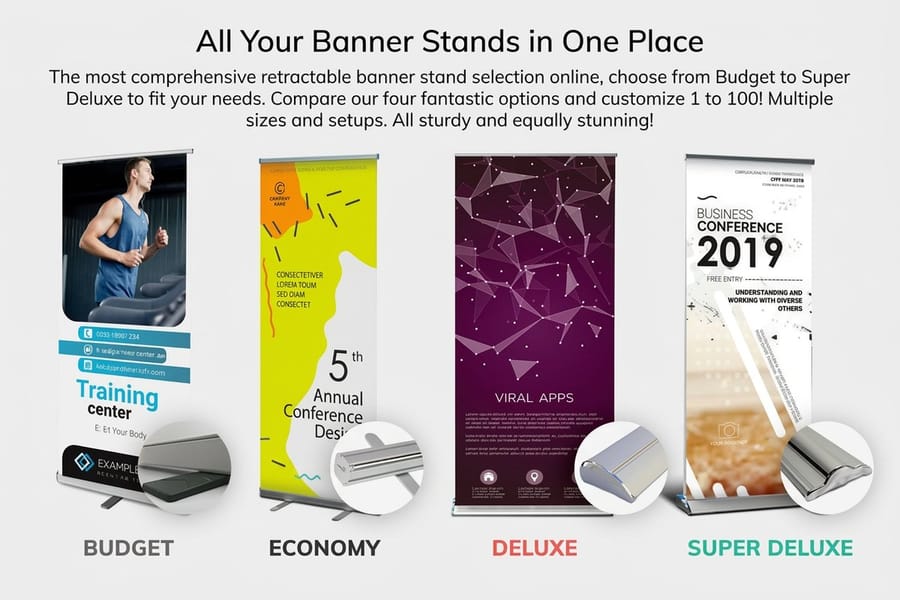
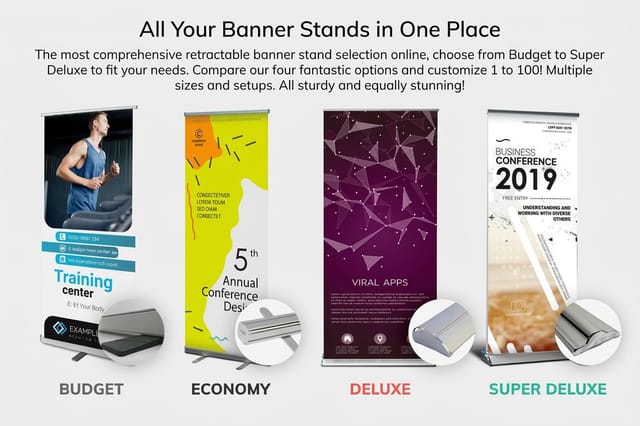
The wall of banners. At a trade show, more graphics is not more visibility. A booth with five competing banners reads as noise from the aisle, where you have perhaps two seconds. One clear statement on a retractable banner stand, starting at $139, beats a crowded back wall. Booth signage sight lines and the trade show collection cover what actually reads at distance.
Printing before the message settles. The costly version of this is a thousand brochures describing a positioning the company abandoned in March. Print short runs while you are still learning, and scale the quantity only when the same sentence has won three deals in a row.
Handing over paper nobody wants. Flyers pushed at people who did not ask are ignored at a rate that makes the print cost irrelevant. Targeting is what changes that, and flyer distribution practices covers the distinction between putting a piece somewhere and putting it in the right hands. The same discipline applies to mail, where standard postcards at $16.48 only pay off against a list that has a reason to hear from you.
Wally explains visual selling
Stop describing it, put it in their hand

Wally used to explain the finish. Now he hands the sample across the counter and lets the customer run a thumb over it, because the thumb decides faster than he can talk. He keeps four things in the folder and shows exactly one of them, the one that answers what the customer just asked. The rest stays in the bag. And the folder goes home with them, which is the only part of the pitch still working the next morning.
Print short run presentation folders →Specs and pricing
Sales collateral, sizes, and starting prices
Compare the three pieces that carry most of a pitch, with live configuration choices and starting prices straight from the 4OVER4.COM configurator.



Print it
Print the pieces that stay behind

Explore more
Where to go next



By the numbers
The print shop behind your sales collateral, counted
Common Questions
Your visual selling questions, answered
What is visual selling?
Visual selling is the habit of putting something in front of a buyer that carries the argument for you, instead of describing the argument out loud. That something can be a photograph, a diagram, a mock-up of the buyer's own logo on the product, or a physical sample they can pick up. The point is not decoration. It is that a claim the buyer can inspect is a claim they no longer have to take on trust, which removes an entire round of back and forth.
Is visual selling only for products you can hold?
No, and services usually need it more. Software, consulting and insurance have nothing to show, so the visual has to be a picture of the outcome: a before and after screenshot, a one-page process map, a redacted sample of the actual deliverable. A consultant who hands over a two-page sample report is doing exactly what a printer does when they hand over a paper swatch. The buyer stops imagining and starts evaluating.
Do printed pieces still matter when everything happens on a screen?
They matter for a narrow, specific reason: a printed piece is the only part of your pitch that is still in the room after you leave. A slide deck emailed as a PDF competes with every other unread attachment. A folder on a desk gets picked up by the person who was not in the meeting. Print is not better than digital across the board. It wins at persistence and at texture, and those are two things a screen cannot do.
How many pieces should a sales kit contain?
Three or four, and each one should have a job you can name in a sentence. A common set is a folder to hold everything, a brochure that explains the offer, one sell sheet for the single product being discussed, and a business card. Adding a fifth piece usually means two pieces are doing the same job. If you cannot say what a piece is for, it is padding, and the buyer will treat the whole kit as padding.
What is the most common mistake in a visual pitch?
Showing everything you have. A seller with forty slides and six brochures is transferring the work of choosing onto the buyer, and buyers respond to that by choosing nothing. The discipline is to bring the whole kit and show one piece, selected after you hear what the buyer actually cares about. The rest stays in the bag until it becomes relevant.
What does a basic visual sales kit cost to print?
At 4OVER4.COM, short run presentation folders start at $108.75, standard brochures at $57.11, standard flyers at $39.54 for a sell sheet, and standard business cards at $17.57. Full production runs of pocket folders start much higher, at $844.54, because they need a die and are priced for volume. That gap is the reason a team testing a new pitch should print short run first and commit to a long run only after the message stops changing.
Get Started
Short run folders cost 10 for $108.75, or $10.88 a kit
Print the folder, the brochure and the one page sheet that does the arguing after you leave. Short runs first, so you can change the story before you commit to a long run.
Legal Disclaimer
Gold Standard guarantees apply to all standard orders placed through 4over4.com. Price match requires verifiable proof of a competitor's published price for an equivalent product with matching specifications and turnaround time. Satisfaction guarantee covers manufacturing defects and print quality issues. Contact support with order number and documentation. On-time delivery rate based on tracked orders 1999 to 2026. Individual results may vary based on shipping carrier performance.
