
Vinyl Cling vs Vinyl Decal Material, Compared Mil by Mil


Both are vinyl. Only one has glue. That single difference sets the thickness, the surfaces each one accepts, how it comes off, and whether you ever see it again.
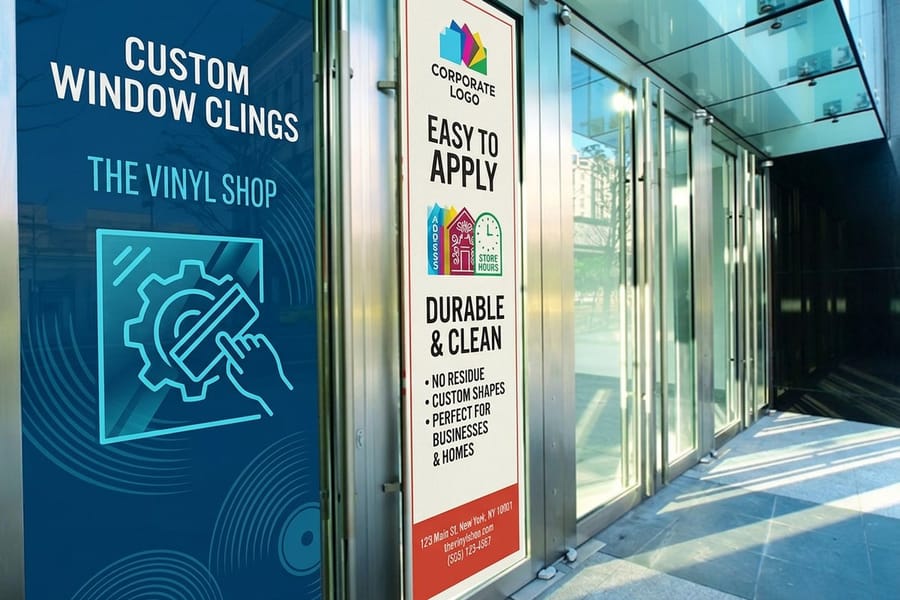
Cling vinyl is one soft PVC sheet of roughly 6 to 12 mil with no adhesive, held on smooth glass by contact alone. A vinyl decal is a 2 to 4 mil face film carried by pressure-sensitive adhesive, so it bonds to almost any clean surface. Use cling when the surface is glass and the graphic comes down again, because it peels off with no residue and goes back up next season. Use a decal when the surface is not glass, or when the graphic has to survive weather. Vinyl window clings start at $30 at 4OVER4.COM and vinyl decals at $93.37.
Quick answer
Glue or no glue, and everything that follows from it
The whole comparison traces back to one layer. A cling has no adhesive, so it needs to be thick and soft to stay in contact with glass, it only works on smooth non-porous surfaces, it lifts off clean, and it can be stored and reused. A decal has adhesive, so its film can be thin and flat, it grips glass, metal, paint and plastic alike, it holds through weather, and it is finished once you apply it. Match the material to the surface first and to the lifespan second, and the price question answers itself.
What Static Cling Vinyl Is, and Why It Holds Without Glue

Cling stock is one material and nothing else: plasticized polyvinyl chloride, cast into a soft sheet somewhere between 6 and 12 mil thick. There is no adhesive on it. There is no liner bonded to it, only a slip sheet that keeps it flat in the box.
What makes it hold is the plasticizer. It keeps the film limp and slightly tacky to the touch, so when you press a sheet against clean glass the air underneath gets pushed out and the two smooth faces sit in near-total contact. Atmospheric pressure does the rest. This is why cling material has to be thick: a thinner sheet would be too stiff to conform, and stiffness is what breaks the contact.
It also explains every limit of the material. Dust on the cling face is a spacer, and a spacer is a leak, which is why a cling that has been on a shelf loses grip until you wipe it with plain water. Heat softens the plasticizer further and the sheet starts to sag against its own weight, which is why a sunny south-facing pane in August is where clings fail. And the surface has to be as smooth as the film, so clear window clings at $30 belong on glass, acrylic and gloss paint, and nowhere with texture. Our guide on how static cling vinyl works goes deeper into the mechanism itself.
What a Vinyl Decal Is Made Of, Layer by Layer
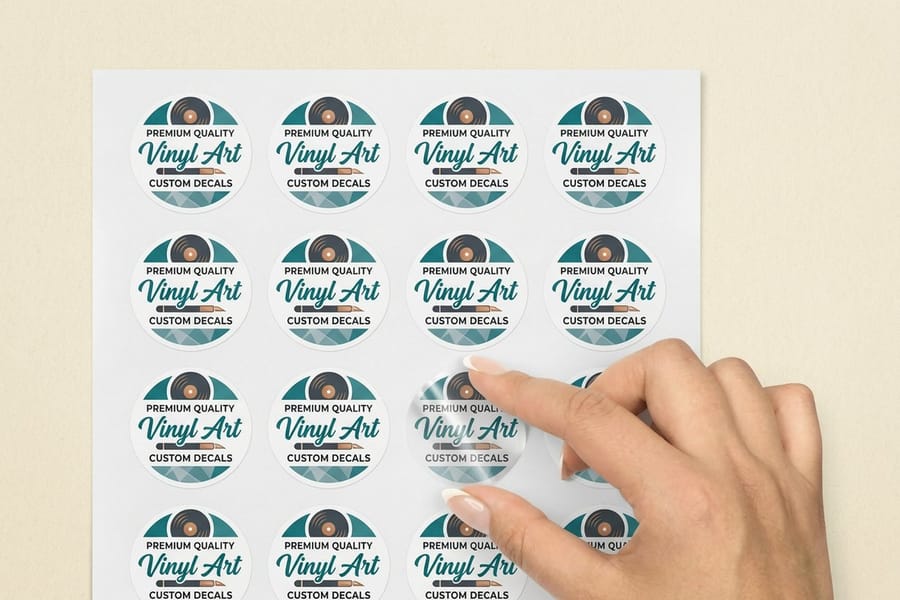
A decal is a stack, and each layer has a job. From the surface up: pressure-sensitive adhesive, then a vinyl face film of roughly 2 to 4 mil, then the printed ink, then a laminate on outdoor work. Under it all, until you apply it, sits a release liner you peel and discard.
Because the adhesive holds the graphic, the film itself can be thin, and thin is what makes a decal lie flat with an edge you can barely feel. It also means the decal does not care what it is stuck to. Glass, painted metal, powder coat, most rigid plastics, a smooth interior wall, a vehicle panel: the same vinyl decals from $93.37 go onto all of them, because the bond is chemical and mechanical rather than a matter of two flat faces meeting.
The adhesive is also the part you choose. A permanent acrylic adhesive keeps building grip for the first 24 to 72 hours and is what you want on anything outdoors. A removable adhesive gives up cleanly for a year or two and is the right call on a leased storefront or a rental wall. Say which one the job needs when you order, because they are not interchangeable, and read how to apply a vinyl decal before the artwork is anywhere near the glass.
| Material | Build | What holds it on | Where it belongs |
|---|---|---|---|
| Vinyl Window Clings | Single sheet, roughly 6 to 12 mil, no adhesive. | Contact between two smooth faces, air pushed out. | Interior side of glass, seasonal and campaign work you take down. |
| Vinyl Decals | Face film 2 to 4 mil, plus adhesive, plus liner. | Pressure-sensitive adhesive that keeps building grip. | Glass, metal, paint, plastic, indoors or out, for the long run. |
| Perforated Window Vinyl | Adhesive film punched with a see-through hole pattern. | Adhesive, on the outside face of the glass. | Full window coverage where staff still need to see the street. |
Read the middle column as the real decision. Everything else about these three materials, the price, the finish, the cut, is negotiable. How the graphic stays attached is not.
Where Each Material Fails, Said Plainly

Cling fails four ways, and three of them are the same failure. Texture beats it, because a rough surface will not make full contact. Heat beats it, because warm plasticized PVC sags. Dust beats it, because dust holds the faces apart. Traffic beats it, because a coat sleeve or a delivery box brushing the lower corner will start a lift, and once a corner is lifted the rest peels itself.
Decals fail differently, and the failures cost more. A permanent adhesive that has spent two summers in direct sun does not come off in one piece, it comes off in shreds with residue underneath, and removal turns into heat, a plastic blade and a solvent. Application is less forgiving too: a decal that lands crooked is not repositionable the way a cling is, so anything above roughly a foot wide wants the wet method and a squeegee. And on a leased space, a permanent decal on a painted wall can pull paint when it leaves.
There is one failure mode worth naming that catches people out on both materials. Clear stock with no white ink under the artwork looks fine on a monitor and washes out completely on a bright window, because daylight is coming through your ink. If the graphic has to read against the sky, order white stock, or ask for a white underprint on the clear. That is the reason white window clings start at $25 and stay the safer choice for anything with fine text. The same rule governs store window decal design.
What Each Route Costs Once You Count the Second Use

Compare the sticker price and clings look cheap. Compare the cost per display and it depends entirely on whether the graphic comes down again.
| Product | Starts at | Reusable | Best fit |
|---|---|---|---|
| White Window Clings | $25 | Yes, several seasons stored flat. | Opaque graphics and fine text that must read against daylight. |
| Vinyl Window Clings | $30 | Yes, same storage rules. | Promotions, hours, seasonal displays you swap on a schedule. |
| Standard Decals | $39.61 | No, single application. | Fixed shapes that stay put: logos, hours, safety notices. |
| Vinyl Decals | $93.37 | No, single application. | Custom outlines, outdoor exposure, non-glass surfaces. |
A retailer who runs four promotions a year and keeps the graphics is buying one set of clings and reusing them, which is a genuinely different number from four sets of decals. A retailer whose window says the same thing for three years is buying one decal and never thinking about it again, and paying a cling premium four times over would be silly. Neither answer is clever, it just depends which one you are.
Quantity moves both. Per-piece price on clings and decals alike drops as the run grows, and the configurator shows the real number as you set size, stock and quantity. If you need to know how much window you are covering before you price anything, measuring and templating window graphics is the step people skip and then reorder over. For a fuller breakdown of what drives cling pricing specifically, see window cling pricing, sizes and material options.
The Verdict, and How to Order the Right One

Order a cling when both of these are true: the surface is smooth glass or acrylic, and the graphic is coming down again. Seasonal retail, promotions, event hours, a menu that changes, anything on the inside of a storefront pane. Cling material is the only one that gives you the graphic back.
Order a decal when either of those is false. Not glass, or not temporary. A logo on a painted door, a notice on a metal panel, anything on the outside of the building, anything on a vehicle, anything that should still be there in two years. Window decals printed in reverse for the inside of the glass are the standard build when the message faces the street, because the glass then protects the ink from everything the weather does.
Two practical notes before you upload. Keep cling artwork chunky: a 10 mil sheet with thin spikes will lift at the tips, while a 3 mil decal held by adhesive stays flat right to the edge, so send fine detail to die-cut decals and give die-cut window clings the bolder shapes. And decide first surface or second surface before you draw, because a second-surface print has to be mirrored and the ink sits behind the film. Everything we print for glass, in both materials, sits in window cling printing and decal printing, and if you want the difference in your hands before committing, the window clings and decals overview covers the formats side by side.
Wally explains the glue question
One film borrows the glass, the other marries it
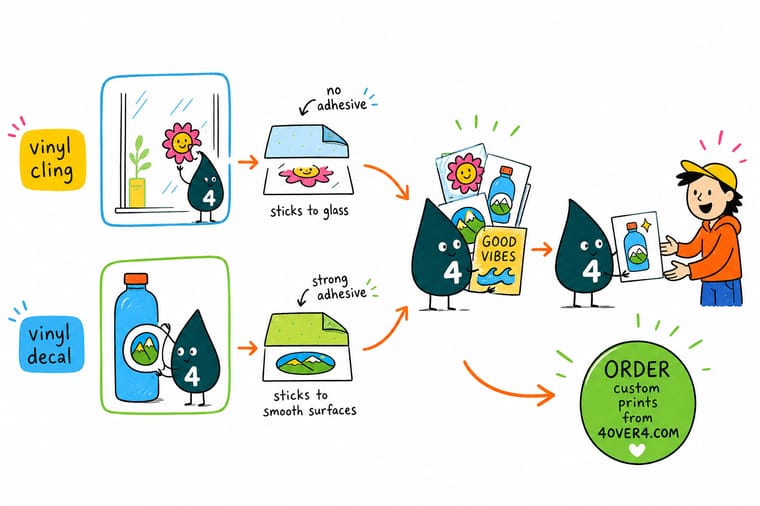
Wally has put both up and taken both down. The cling comes off in one piece, goes back on its liner, and waits in a drawer for next season. The decal comes off in shreds, because that is what a good adhesive is supposed to do. His rule takes two seconds: smooth glass and coming down again means a cling, anything else means a decal, and nobody has ever regretted asking that question before they ordered.
Compare clings and decals →Specs and pricing
Both materials, priced live from the configurator
Set the size, the stock and the quantity and the price updates as you go. These are the three formats most window jobs come down to at 4OVER4.COM.


Print it
Pick the material, then the shape

Explore more
Where to go next





By the numbers
Both vinyl materials are stocked here
Common Questions
Your cling and decal material questions, answered
What is the actual material difference between a vinyl cling and a vinyl decal?
A window cling is one layer: soft plasticized PVC film, usually 6 to 12 mil thick, with no adhesive anywhere on it. It holds because a limp, smooth film pressed against smooth glass squeezes the air out and stays put. A vinyl decal is a sandwich: a thinner vinyl face film of roughly 2 to 4 mil, a pressure-sensitive adhesive layer under it, and a release liner you peel off and throw away. The cling is thicker so it can stay floppy. The decal is thinner because the glue, not the film, is doing the holding.
Will a window cling stick to anything other than glass?
Only if the surface is as smooth and non-porous as glass. Acrylic, a laminated sign face, a gloss-painted metal door and a polished appliance panel all work. Anything with texture does not: brick, painted drywall, wood grain, most car interior trim, frosted or patterned glass. If you run a fingertip over the surface and feel any tooth at all, the cling will let go, usually within an hour or two as it warms up.
Do window clings really come off with no residue?
Yes, because there is nothing to leave behind. That is the honest structural advantage of the material. A decal can leave residue, and an old sun-baked one usually does, which turns removal into a scraper, heat gun and adhesive-remover job. The trade-off is that a cling that leaves no trace is also a cling that can be pushed off by a shoulder brushing past it. Nothing holds it but contact.
How many times can I reuse a vinyl window cling?
Several seasons if you store it correctly, which means flat, on its original liner or a sheet of wax paper, away from heat. The failure mode is not the cling wearing out, it is the cling face collecting dust and losing grip. A wipe with plain water, then a dry lint-free cloth, restores most of it. What kills a cling permanently is being folded, or being stored rolled tightly enough to take a curl set the glass can no longer flatten out.
Which material should I use on the outside of a window?
A decal, essentially always. Outdoor glass runs hot, gets rained on and gets washed, and a cling has no mechanical bond to resist any of that. If the graphic has to face the street, the standard build is a vinyl decal printed in reverse and mounted on the inside of the glass so it reads correctly from outside and the glass itself protects the ink. Order the artwork as a second-surface print and we set the mirroring for you.
Can I get a cling and a decal in the same custom shape?
Yes. Both materials cut to a custom outline. Die-cut window clings start at $30 and die-cut decals at $93.37, and the cutting tolerance is the same on either. The one thing to watch is thin spikes and narrow bridges in your artwork: a 10 mil cling has enough stiffness that a thin arm will lift at the tip and stay lifted, while a 3 mil decal held by adhesive lies flat right to the edge. Keep cling shapes chunky and let decals carry the fine detail.
Get Started
Window decals run 25 for $93.37, clings priced per piece
Upload the artwork, choose cling or adhesive vinyl, set the size and the cut, and we print it sharp enough to read from the sidewalk.
Legal Disclaimer
Gold Standard guarantees apply to all standard orders placed through 4over4.com. Price match requires verifiable proof of a competitor's published price for an equivalent product with matching specifications and turnaround time. Satisfaction guarantee covers manufacturing defects and print quality issues. Contact support with order number and documentation. On-time delivery rate based on tracked orders 1999 to 2026. Individual results may vary based on shipping carrier performance.
