
Truck Crossing Signs That Comply, Survive Weather and Read at Speed


Which sign the road authority will accept, which one you can post yourself, what sheeting and gauge to buy, and how far ahead of the crossing it has to stand.
A truck crossing sign warns drivers that heavy vehicles enter or cross the road ahead, and it comes in two forms: the point up yellow diamond with a black truck symbol used on public roads, and the long horizontal TRUCK CROSSING word panel, typically 24 by 12 or 30 by 12 inches, used on private drives and gates. On a public street the road authority installs it and MUTCD sizing applies. On property you control you install it yourself, and the decisions that matter are reflective sheeting, letter height for the approach speed, and setting it far enough back that a driver still has time to react.
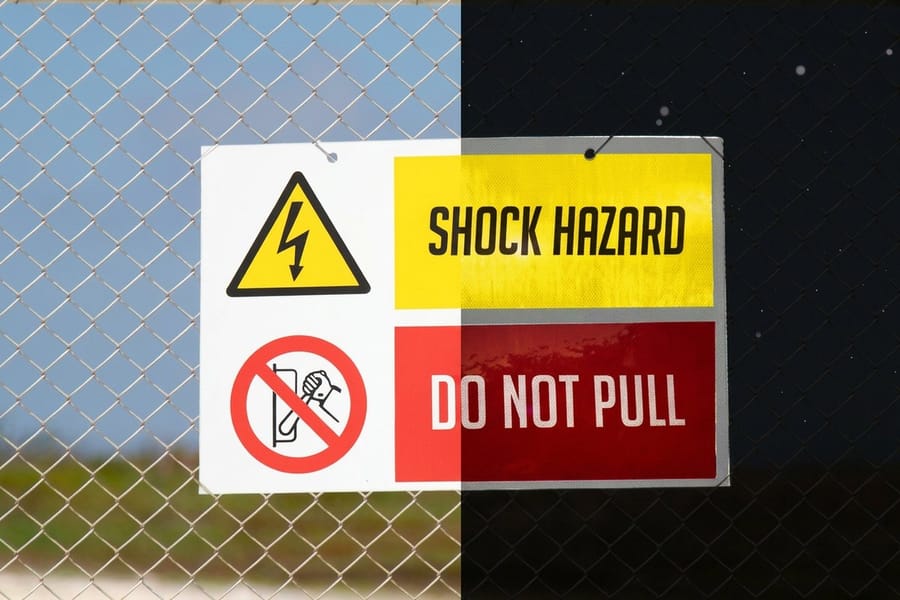
Quick answer
The diamond, the long panel, and who is allowed to post each one
The sign you need depends on who owns the road, not on which one looks right. Public streets take the standard yellow diamond with the black truck symbol, sized from the agency table and installed by the road authority. Private drives, gates and yards take the long horizontal word panel or a custom legend, installed by you, advising rather than regulating. After that the choices are simple: reflective aluminum where trucks cross after dark, coroplast where the crossing ends with the project, letter height matched to the approach speed, and enough advance distance that the driver reads it before the gate rather than beside it.
Why a Warning Sign Earns Its Post
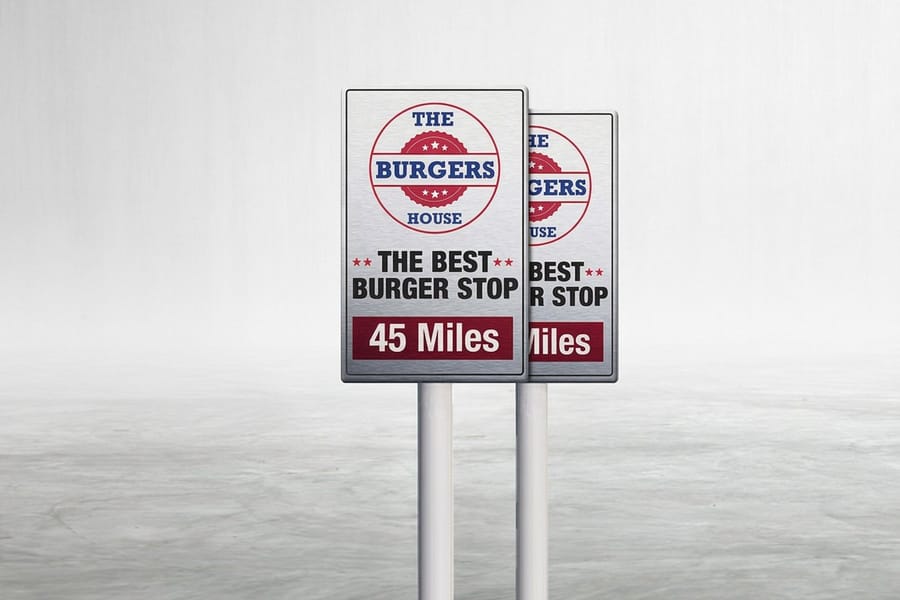
A truck crossing is a place where a slow, heavy vehicle occupies both lanes for several seconds. The driver on the road is not expecting that, and a loaded truck pulling out of a gate needs time no car driver would guess at. The sign exists to move the surprise earlier, into a moment where slowing down is still cheap.
The arithmetic is what makes it concrete. At 45 mph a vehicle covers 66 feet every second. The reaction interval most highway design work assumes is around 2.5 seconds, which is 165 feet gone before the brake pedal moves, and braking distance sits on top of that. A sign bolted to the gate is already behind the driver by the time it registers. A sign set back several hundred feet gives the same driver a chance to lift off.
The second reason is boring and it is the one that matters in a dispute. A posted warning shows that the hazard was identified and marked. That is a different conversation with an insurer than an unmarked drive. It is the same logic behind a slippery when wet sign on a loading apron or a no thru traffic sign on a private lane.
What a warning sign cannot do is control behavior on its own. It has no legal force behind it the way a stop sign does, and drivers filter out signs they see every day. If trucks cross constantly, pair the sign with something physical: a stop bar for the trucks, a mirror on a blind approach, or a flagger during the hours the yard is busy.
Truck Crossing Sign Types, and Which One You Actually Need
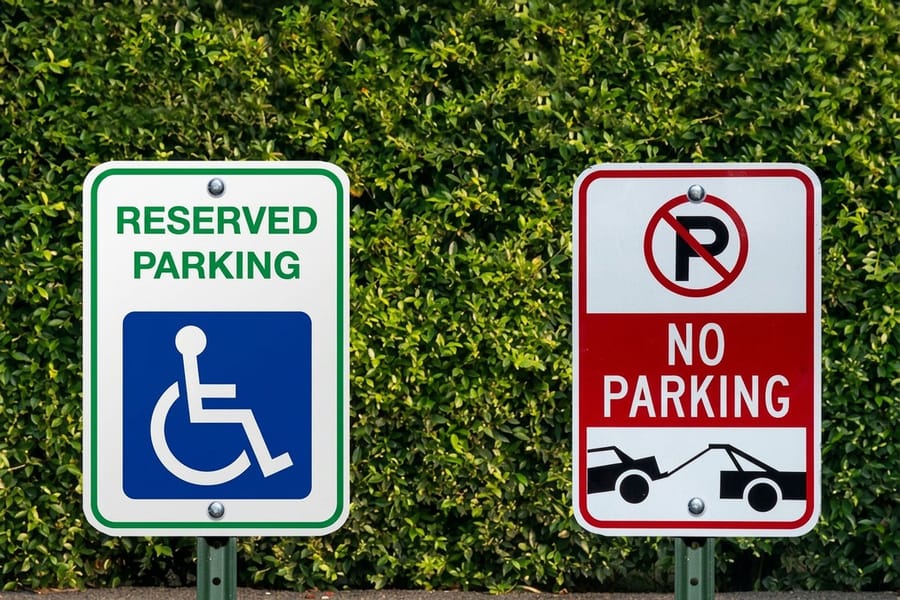
People searching for a truck crossing sign are usually looking at one of four things, and picking the wrong one is the most common ordering mistake we see. The split is between what a public road allows and what a private site needs.
| Sign | Shape and colors | Where it belongs | What it will not do |
|---|---|---|---|
| Diamond symbol | Point up yellow diamond, black truck symbol, black border. | Public roads. The standard MUTCD warning sign for a truck crossing. | Carry a custom message. The symbol is the whole legend. |
| Long word panel | Horizontal rectangle, black TRUCK CROSSING on yellow, often 24 by 12 or 30 by 12 inches. | Private drives, gates, yards, fence lines and rail mounts. | Substitute for the diamond on a public street. Agencies reject it. |
| Diamond plus plaque | The diamond with a smaller rectangular plaque under it reading AHEAD or a distance. | Approaches where the crossing is not visible from the sign. | Work as a standalone. The plaque only qualifies the sign above it. |
| Custom legend | Your own wording, black on yellow, any rectangle you like. | Private sites with a specific instruction, such as SLOW TRUCKS ENTERING. | Look official. That is often an advantage, sometimes not. |
Read the last column first. If the sign is going on a road the public drives and the agency maintains, you are choosing the diamond and the agency is choosing the placement. If the sign is going on a drive you own, the long panel or a custom legend usually communicates better, because a specific sentence outperforms a symbol that drivers have learned to skim.
One detail that gets missed on custom work: the diamond has to sit point up. A yellow square rotated flat reads as something else entirely, and it undercuts the recognition you were buying. Our guide to sign color contrast covers why black on yellow holds legibility further out than any other pairing in daylight.
Materials That Survive Outdoors, and What Each One Costs You
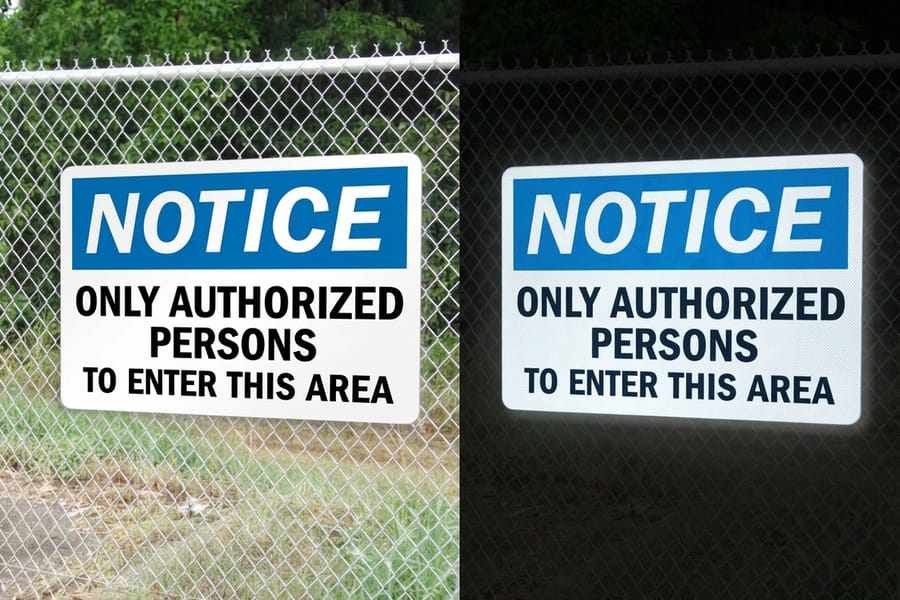
A truck crossing sign lives outside, gets hit by mirrors, and has to read in headlights. Substrate and sheeting are the two decisions that determine whether it is still doing its job in year three.
| Material | Life outdoors | Night performance | Best use |
|---|---|---|---|
| Reflective aluminum | Years. Aluminum does not rust, it forms a stable oxide layer and stays flat. | Returns headlight beams to the driver. The only honest choice for a road that runs after dark. | Permanent crossings, gates on a public approach, anything unlit. |
| Plain aluminum | Years, same substrate, printed rather than sheeted. | Goes dark in headlights. Readable only under site lighting. | Day shift yards, interior docks, lit loading areas. |
| Reflective coroplast | A season to about a year. UV embrittles polypropylene before anything else fails. | Reflective face on a cheap board. Good enough for a temporary night hazard. | Construction phases, detours, seasonal haul routes. |
| Standard coroplast | A few months to a season in full sun. | None. Print only. | Short jobs, daylight work, quantities where every sign is disposable. |
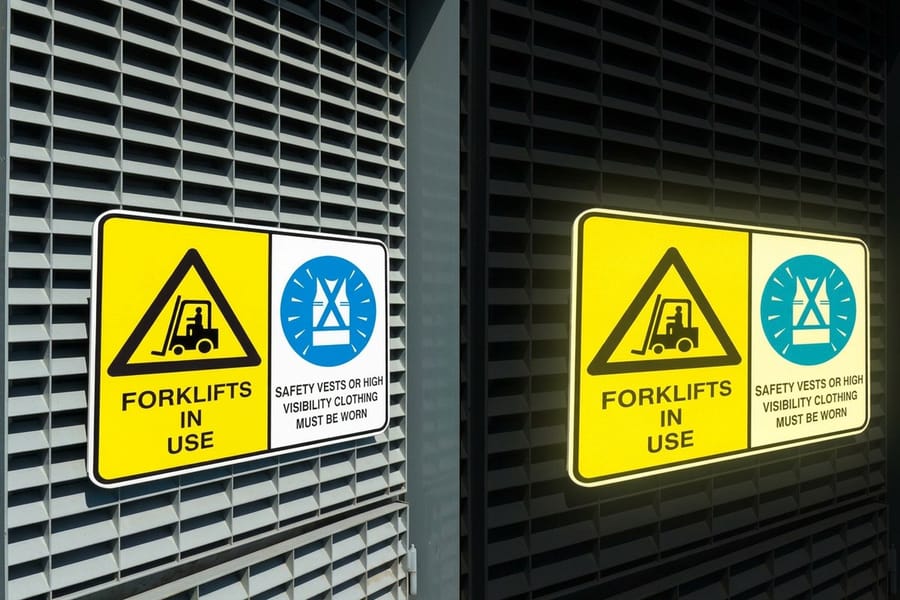
The trade-off nobody mentions is that reflective is not a single grade. Engineer grade sheeting is the entry level and it dims noticeably at a shallow approach angle, which is exactly the geometry of a sign you pass at speed. High intensity prismatic sheeting costs more and holds brightness far wider off axis. If the approach is straight and slow, engineer grade is fine. If the road curves into the crossing, pay for the better sheeting or the sign is dark at the moment it is needed.
Gauge matters too. Thin aluminum flutters and oil cans on a windy post. Anything 24 inches or wider on an open approach wants the heavier gauge and two posts rather than one. Reflective aluminum signs start at $41.02 and plain aluminum signs at $36, so the reflective upgrade on a permanent sign is small money against the post, the hardware and the labor to set it. For temporary work, reflective coroplast starts at $29 and standard coroplast signs at $25. There is more on substrate life in our aluminum versus coroplast versus PVC comparison.
Sizing and Visibility, Worked From the Approach Speed

Size is not a taste decision. It falls out of how fast traffic arrives and how much reading time the driver has. Work backwards from the speed and the number picks itself.
Legibility for high contrast road lettering runs at roughly 30 feet per inch of capital letter height. Two inch caps read at about 60 feet. Three inch caps read at about 90 feet. Six inch caps read at about 180 feet. Then convert to time: at 45 mph the driver covers 66 feet per second, so three inch caps buy less than a second and a half of reading, which is not enough for a two word legend plus a glance at the drive.
- Under 25 mph, private yard. An 18 by 24 inch panel with 3 inch caps is readable and proportionate. Anything bigger is spending money on presence rather than function.
- 25 to 40 mph, gate on a service road. 24 by 30 inches, 4 to 6 inch caps, reflective if trucks move before sunrise.
- Public road, conventional speeds. The 30 by 30 inch diamond is the normal size, with 24 by 24 inches reserved for low speed minor roads and 36 by 36 inches used above 45 mph and on expressways. The road authority applies the table, not you.
- Blind or curved approach. Go one size up and add an advance plaque rather than moving the sign closer to the hazard. Closer does not help a driver who cannot see past the hedge.
Two habits stop most legibility problems before printing. Set the legend in a heavy sans serif with generous letterspacing, because condensed faces lose distance fast. And keep the message to three or four words. Every extra word steals reading time from the words that matter, which is the same principle behind good outdoor yard sign design.
Placement and Compliance, the Part That Decides Whether It Counts
A correct sign in the wrong position is a decoration. Three measurements do most of the work, and they are the same on a private drive as on a public road even though only one of them is enforceable there.
Advance distance. The sign goes before the crossing, far enough back that a driver can see it, read it and lift off before arriving. On a public road the agency works this from a placement table tied to the speed limit. On your own drive, use the arithmetic above: at 45 mph, 2.5 seconds of perception and reaction alone is 165 feet, so a sign at the gate line is too late.
Mounting height. Measured from the bottom of the sign to the near edge of the traveled way, five feet is the rural figure and seven feet is used where people walk or park, so a parked van or a pedestrian does not hide the sign. Too low is the common error on private property, where signs get zip tied to a fence at eye level for a person standing still rather than a driver sitting in a cab.
Lateral offset. Keep the sign back from the shoulder edge, around six feet where there is room. Too close and truck mirrors clip it, snow gets thrown at it, and it sits inside the swing path of the vehicles you are warning about.
On compliance, the dividing line is ownership. On a public street a truck crossing sign is a traffic control device: it has to follow the MUTCD, the road authority installs it, and only that installation gives it any weight in an enforcement or liability discussion. On private property you install it yourself, it advises rather than regulates, and following the same geometry is still the smart move because drivers already know how to read it. When in doubt about the right of way line, call the town engineer before ordering. Start from our state by state sign permit guide if you are not sure who that is.
Ordering Custom or Ready Made, and What to Send Us
Ready made is the right call when the sign is going on a public road, because you want the standard symbol at the standard size with no interpretation. Custom is the right call on private property, where a specific instruction outperforms a generic warning and where the mounting is yours to design around.
Set the file up the way you would any large format job. Build it at full size, keep live copy at least half an inch inside the trim so a mounting hole never eats a letter, convert type to outlines, and supply artwork as vectors rather than a placed photograph of a sign. Tell us where the holes go before we print, because drilling after the fact through a reflective face is how a clean sign gets a scuffed corner. Blank layouts at the standard sizes are in our template library.
Order quantity with the failure mode in mind. Coroplast for a construction phase is consumable, so ordering spares costs almost nothing and saves a second setup trip. Aluminum for a permanent gate is a one time purchase, so the money goes into sheeting grade and gauge instead of count. If the crossing also needs speed, direction or restriction messages, parking signs use the same aluminum stock and post hardware, which keeps one hardware kit across the whole site.
Everything above lives in the aluminum sign printing category, where you can compare gauges, sizes and reflective options in one place, and every product page shows the live price for your quantity before you commit.
Wally explains truck crossing signs
Set it back, light it up, keep the words short
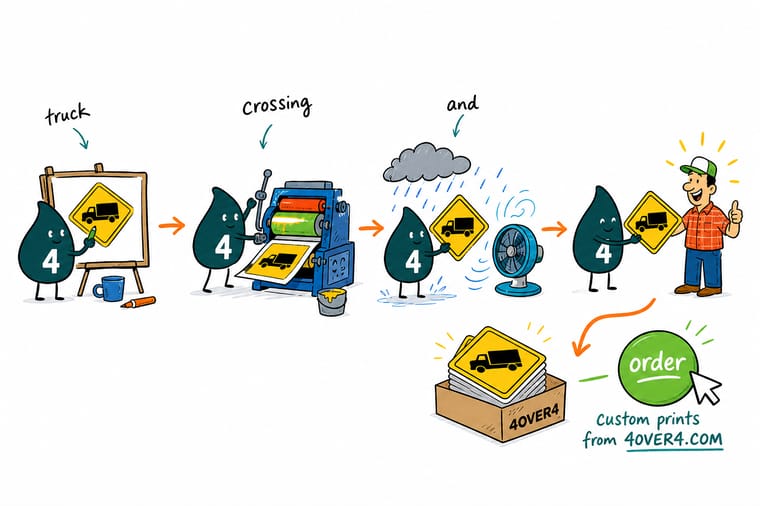
Wally walks the approach before he picks a sign. At 45 mph a driver eats 66 feet a second, so a sign screwed to the gate arrives too late to help anyone. He sets it back, puts the bottom edge five feet up so a parked van cannot hide it, and keeps it about six feet off the shoulder where truck mirrors will not clip it. Then he checks one thing: do trucks cross after dark. If yes, reflective aluminum. If the crossing disappears when the project ends, coroplast and no regrets.
Order reflective aluminum signs →Specs and pricing
Sign substrates, sizes, and starting prices
Compare the three substrates a truck crossing sign is normally printed on, with live configuration choices and starting prices straight from the 4OVER4.COM configurator.

Print it
Order a warning sign that still reads in year three
Explore more
Where to go next



By the numbers
Reflective aluminum and coroplast warning signs
Common Questions
Your truck crossing sign questions, answered
What does a truck crossing sign mean?
It tells approaching drivers that heavy vehicles enter, leave or cross the roadway ahead, usually at a plant gate, a quarry haul road, a construction access or a farm drive. It is a warning sign, not a regulatory one, so it does not order the driver to do anything specific. It asks for attention and a lower speed at a point where a slow, wide vehicle can swing across both lanes. That is why the public road version is a yellow diamond rather than a white regulatory rectangle.
What is a long truck crossing sign?
It is the horizontal rectangular panel with the words TRUCK CROSSING running across it, most often ordered at 24 by 12 inches or 30 by 12 inches for a gate, a fence line or a private drive. The long format exists because a word legend needs width and because a rectangle mounts cleanly on two posts or a rail. On a public road the correct sign is the diamond symbol version instead, since word panels in place of the standard symbol are the first thing an agency rejects.
Do I need permission to put up a truck crossing sign?
On land you own or control, no. On a public street, yes, and it is not a formality. Traffic control devices on a public road must follow the MUTCD and be installed by the road authority, so the practical route is to ask the town engineer or the county highway department to post it. A sign you install yourself in the public right of way can be removed, and a nonconforming sign that a driver relies on is worse than no sign at all. Our guide to sign permits by state covers who to call.
What size should a truck crossing sign be?
For the diamond on a conventional road, 30 by 30 inches is the normal size, 24 by 24 inches is the low speed minimum, and 36 by 36 inches is used on expressways and on approaches above 45 mph. For a private drive the practical range is 18 by 24 inches for a yard, 24 by 30 inches at a gate that trucks approach at speed. Ask your road authority before you order anything destined for a public street, because the size table is theirs to apply.
Does a truck crossing sign have to be reflective?
Any sign on a public road has to be retroreflective or illuminated, and for yellow warning signs that effectively rules out plain engineer grade sheeting on higher speed approaches. On private property nobody enforces it, but the question is whether trucks cross after dark. If the answer is yes even occasionally, reflective aluminum at $41.02 against $36 for plain aluminum is the cheapest safety decision on the list.
How long does a coroplast truck crossing sign last outdoors?
Plan on a season to a year in full sun. Coroplast is polypropylene, and UV makes it chalky and brittle before anything else fails, so the print fades and the corners crack around the grommets. Wind is the second killer, because a flat panel on two stakes flexes at every gust. It is the right material for a detour that ends in March. It is the wrong material for a gate that will still be there in 2030.
Can I get a custom legend such as SLOW TRUCKS ENTERING?
Yes, and for private property it is often the better sign, because a specific instruction beats a generic warning. Keep the legend to three or four words, set it in a heavy sans serif in all caps, and hold the letter height to what the approach speed needs. Black on yellow is the highest contrast pairing for warning work and it is what drivers already read as caution. Upload artwork or start from a blank layout in our template library.
Get Started
Spec a reflective crossing sign in the aluminum configurator
Pick the substrate, choose reflective or plain, upload your legend or start from a blank layout, and we print signs that hold up on a post through weather and headlights.
Legal Disclaimer
Gold Standard guarantees apply to all standard orders placed through 4over4.com. Price match requires verifiable proof of a competitor's published price for an equivalent product with matching specifications and turnaround time. Satisfaction guarantee covers manufacturing defects and print quality issues. Contact support with order number and documentation. On-time delivery rate based on tracked orders 1999 to 2026. Individual results may vary based on shipping carrier performance.
