
The Power of Attention and How to Earn It Without Shouting


Attention is the input every other business result depends on. Attention is won in a specific way, it leaks in four places, and a message that used to work fails for a reason you can name.
Attention is the first thing a business has to win and the only one it cannot get on credit. Nobody reads your offer, compares your price or recommends you until they have first stopped on something you put in front of them. It behaves like a budget rather than a resource: every person spends a fixed amount each day, so you are not adding to their attention, you are taking a slice from something else. That makes the real work narrower than most marketing plans assume. Be worth the slice, take it in a place where the person is free to give it, and take it in the same recognizable form often enough to be remembered.
Quick answer
Four gates, and most campaigns leak at the first one
Attention passes through notice, understand, remember and act, in that order. Failing any one of them produces the same result, which is why "nobody responded" is a useless diagnosis on its own. Notice is won by contrast and placement. Understanding is won by one promise in customer language. Memory is won by repetition in a consistent look, not by a louder single exposure. Action is won by one obvious next step with a reason to take it now. Work backwards through the four when something underperforms, because a better call to action cannot recover attention that leaked at gate one.
Attention Is a Budget, and You Are Asking for a Slice
Psychologists split attention two ways, and the split matters commercially. Involuntary attention is what a siren takes from you whether you like it or not. Voluntary attention is what you choose to give a book, a conversation, or a page you decided to read. Almost every marketing argument is a fight over which one you are trying to buy.
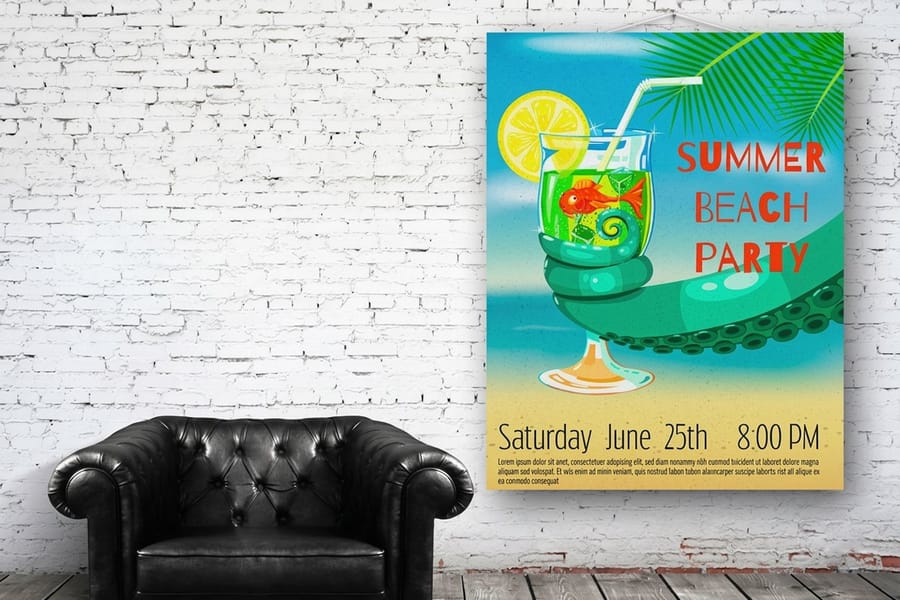
Involuntary attention is available to anyone with enough money or enough volume. Flashing, shouting, a pop up over the article. It works, in the narrow sense that people look. It also spends something: the person now associates your name with the moment they were interrupted, and each repeat costs a little more goodwill than the last.
Voluntary attention is slower to build and far more durable. Somebody subscribed. Somebody kept the card in their wallet. Somebody pinned the chart to the wall in the workshop. You are not paying for that attention every time it happens, which is what makes it the only kind that compounds. The practical version of this trade off is covered in more depth in our guide to monetizing attention without selling your soul.
The limit to keep in mind: nobody has more attention available because your quarter started. Every message you add competes with the rest of that person’s day, including their job, their family, and the six other companies mailing them this week. Adding volume to a message that is not worth stopping for makes the problem louder, not smaller.
The Four Gates Every Message Has to Pass
Attention is not one event. It is four, in order, and a message that fails at any of them produces the same outcome: nothing happens. Naming the gates separately is what turns a vague "our campaign flopped" into a fixable problem.
| Gate | What wins it | What loses it | How to check |
|---|---|---|---|
| 1. Notice | Contrast against the surroundings, placement where eyes already go, size appropriate to the viewing distance. | Blending into everything around it, or landing in a moment when the person is busy with something else. | Show someone the piece in its real setting for two seconds, then take it away and ask what they saw. |
| 2. Understand | One promise, in the words a customer would use, readable before anything else on the piece. | Clever headlines that need a second read, feature lists, and internal language nobody outside the company uses. | Ask a stranger what you sell and who it is for after five seconds with the piece. |
| 3. Remember | Repetition in a consistent look: same colors, same mark, same tone across every piece. | A different design each time, or one exposure and then silence for six months. | Ask a customer a week later to describe your brand without prompting them with the name. |
| 4. Act | One obvious next step, easy to do from where the person is standing, with a reason to do it now. | Three competing calls to action, a long URL nobody will type, or no deadline of any kind. | Count responses through a code or a destination unique to that piece. |
Read the table right to left when something underperforms. Most people rewrite the call to action first because it is the easiest thing to change, and it almost never helps, because attention leaked at gate one. A stronger button cannot recover a piece nobody looked at. Gate two is where the promise lives, and our guide to brand messaging for small business is the place to get that sentence right before you spend on distribution.
Where Attention Is Cheap and Where It Is Expensive
Every channel sells you a different thing under the same word "impression". Comparing them by cost per impression alone hides the difference that decides results: how long the impression lasts and whether the person was free to pay attention when it arrived.
| Channel | What you are really buying | How long it lasts | Where it fails |
|---|---|---|---|
| Search | Someone already looking for what you sell, at the moment they want it. | Seconds, but at peak intent. | Only reaches demand that already exists. It cannot create it. |
| Social feed | Interruption inside entertainment, aimed by interest and location. | Until the thumb moves. | Costs rise as more advertisers chase the same feed, and the impression leaves no trace. |
| Permission you already earned, at close to zero marginal cost. | One glance in a crowded inbox. | Needs a list you built. Volume is punished by filters and by unsubscribes. | |
| Direct mail | A physical object in a box with very little competing for the same minute. | Days on a counter or a fridge. | Slower to land, harder to attribute, and wasted entirely on a bad list. |
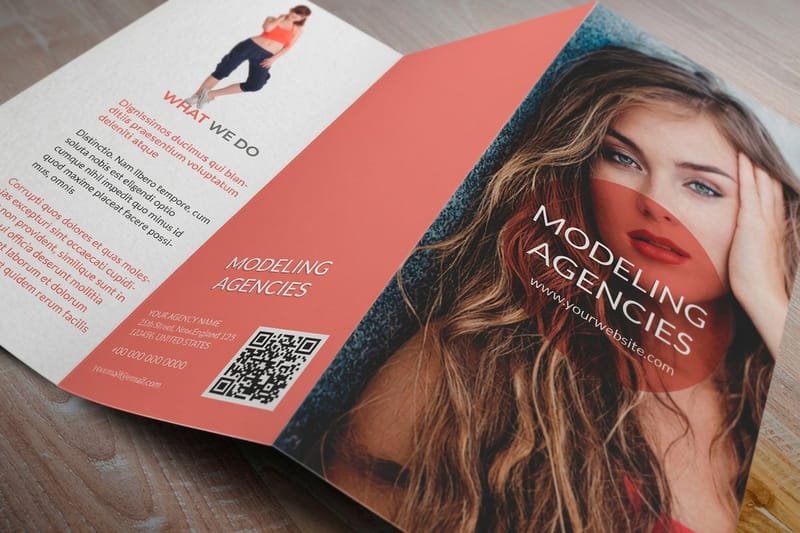
| In hand print | A card, flyer or sample handed over during a real conversation. | Weeks or months if it gets kept. | Volume is limited by how many people you actually meet. |
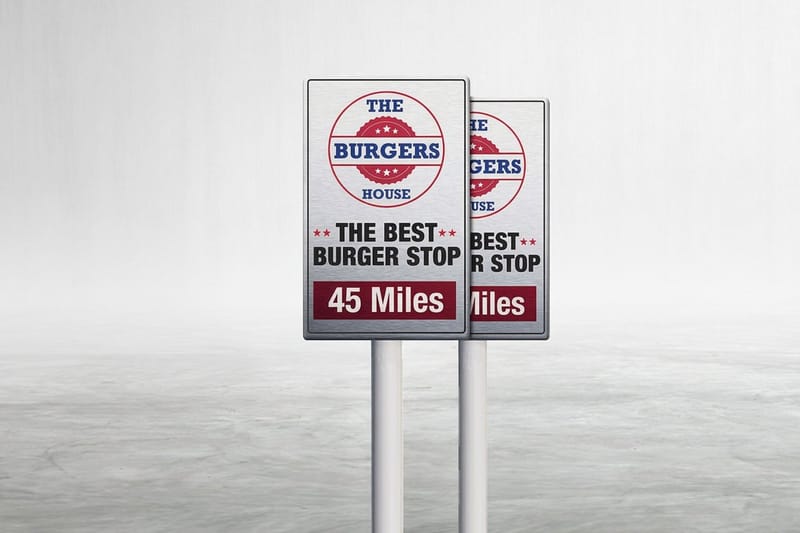
| Signage and posters | Repeated exposure to everyone who passes a fixed spot. | As long as it stays up. | No targeting, and almost no direct attribution without a code. |
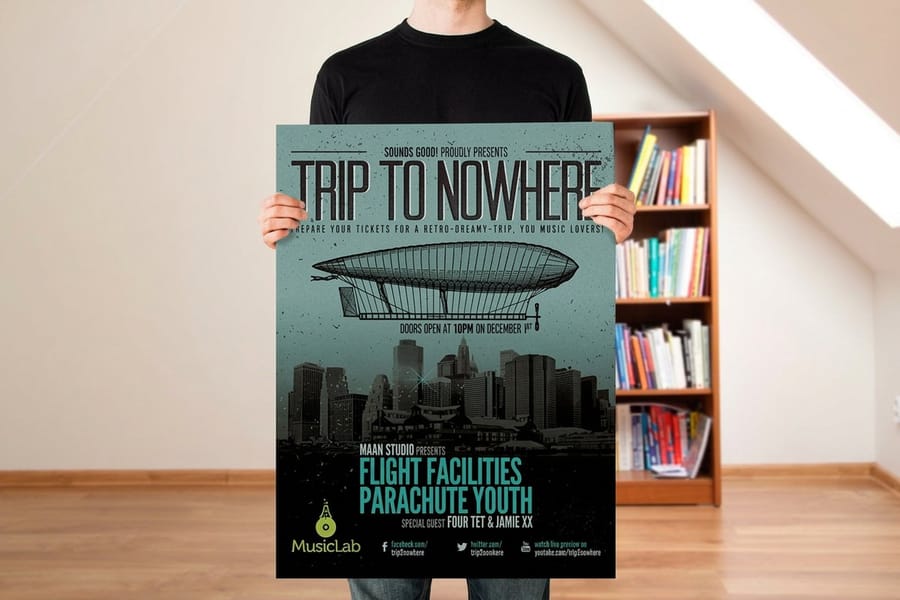
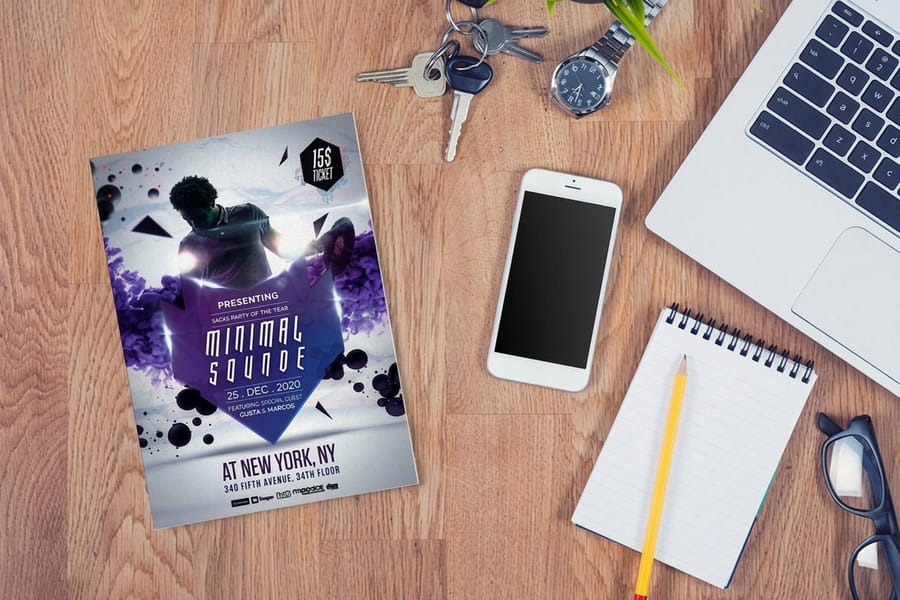
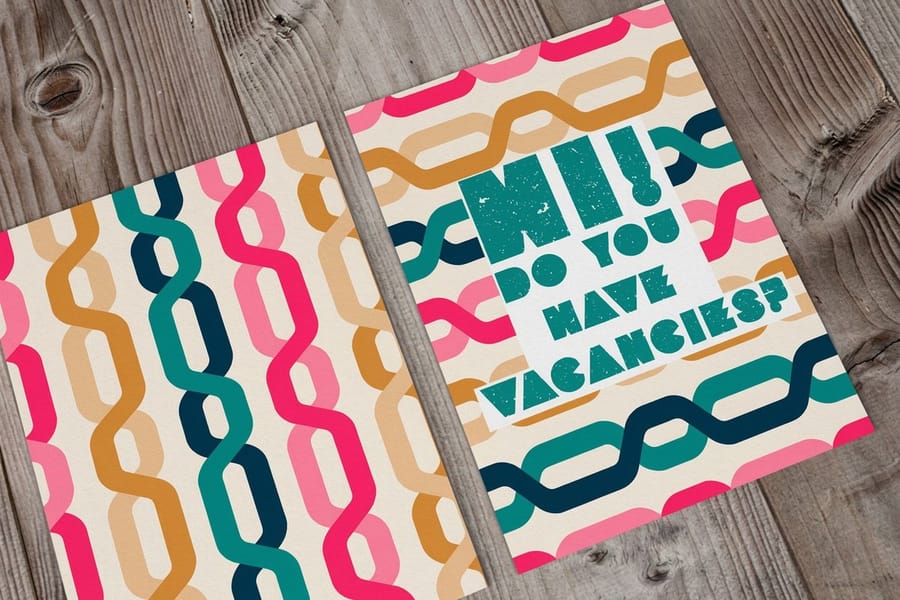
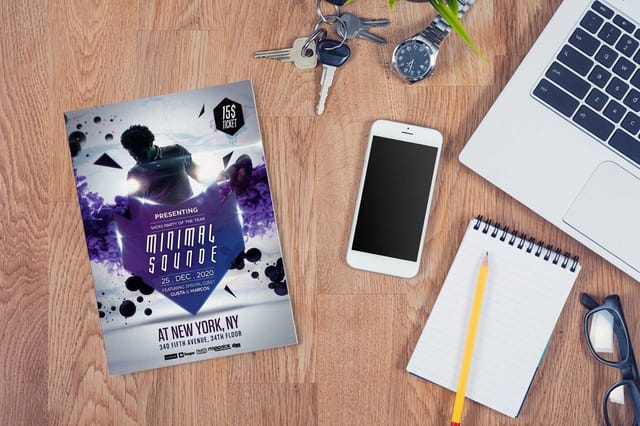
Notice that the durable rows are all physical. That is the honest case for print in an attention strategy: it is not better than digital at reach or speed, it is better at staying in the room afterwards. Standard postcards start at $16.48 and land in a mailbox with a handful of competitors instead of the hundreds in an inbox. Standard flyers start at $39.54 and work where people are already stopped, which is the whole reason flyer distribution is more about placement than about design. Standard posters start at $108.75 and buy the same wall for weeks rather than for one scroll.
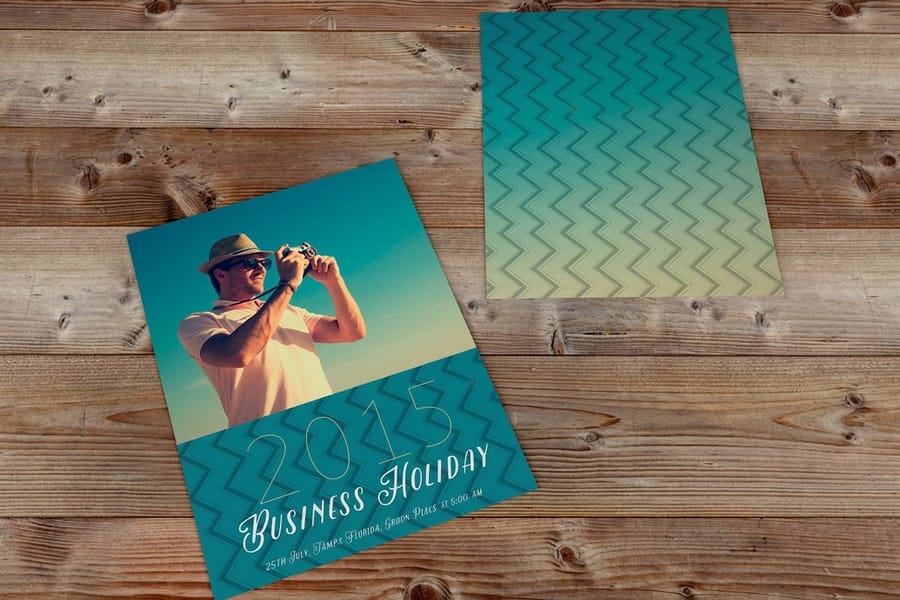
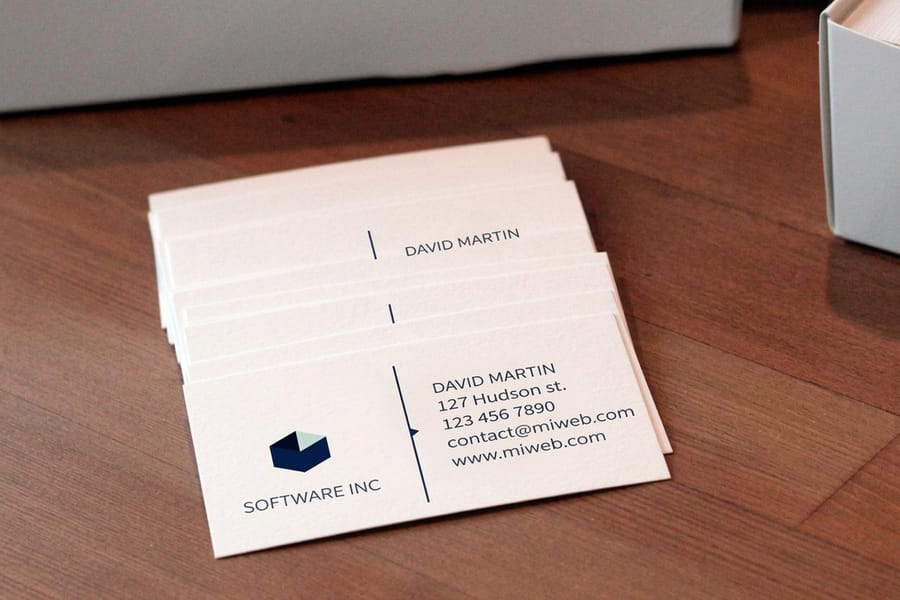
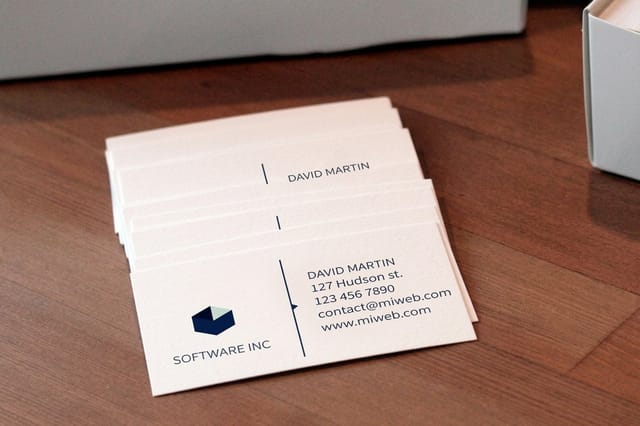
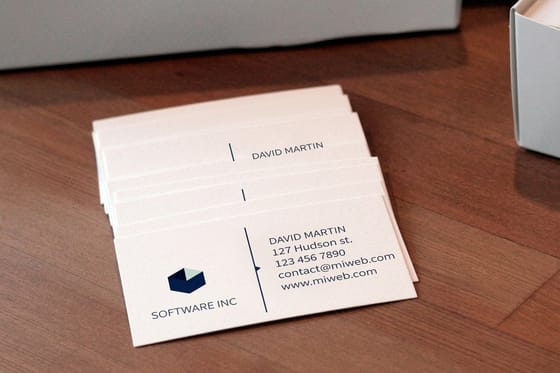
The smallest and most underrated one is the card. Standard business cards start at $17.57, and a card that gets kept is voluntary attention you paid for once and receive repeatedly. Browse the full set in marketing materials or start with postcard printing if mail is the channel with the least competition in your category. If you are still weighing the two halves against each other, our comparison of direct mail against digital marketing puts real cost per response next to real reach.
Holding Attention Without Wearing It Out
Winning attention once is a design problem. Keeping it is a scheduling problem, and the two get confused constantly.
Recall builds through repetition, but only when the repetitions look like each other. Same palette, same mark, same voice, same shape of promise. A business that redesigns its materials every year keeps paying for gate one and never reaches gate three, because each new look is effectively a new brand as far as memory is concerned. Consistency is not a design preference here, it is the mechanism.
The limit sits at the other end. The same creative, shown to the same person often enough, stops registering. People filter what they have already processed. The fix is not to change your identity, it is to change the execution inside it: a new photograph, a different offer, a seasonal angle, while the colors, the mark and the tone stay exactly where they were. That is the discipline behind the pieces in print brand awareness ideas, and it is why the campaigns in how to improve direct mail results repeat to the same list rather than chasing a new one every drop.
There is a second lever that costs almost nothing: make the thing worth keeping. A postcard with a useful reference on the back, a card with a size chart, a calendar, a loyalty stamp card. Anything a person chooses not to throw away turns your one paid interruption into weeks of voluntary looks. That is the cheapest attention available to a small business, and almost nobody designs for it deliberately.
Measuring Attention Without Fooling Yourself
Impressions are the number most often reported and the least informative. An impression counts a chance to be seen, not a person who saw. Two campaigns with identical impression counts can differ by an order of magnitude in whether anyone actually looked.
Three measures survive scrutiny.
- Unaided recall. Ask new customers where they heard about you, with no list to pick from. It is the only measure that catches signage, mail and word of mouth, which every attribution dashboard undercounts.
- Channel unique destinations. Give each piece its own short URL, phone extension or code. Response you can trace beats response you can model.
- Repeat engagement. Returning visitors, repeat openers and repeat buyers show attention that persisted past the first exposure. A one time spike shows the opposite.
Be honest about what cannot be measured cleanly. A poster on a busy street changes what people do without leaving a click trail, and demanding perfect attribution from it usually means cutting the channels that build recall in favor of the ones that harvest existing demand. The usual compromise is a holdout: run the physical channel in some areas and not others, then compare total revenue rather than tracked clicks.
Attention that converts also has to survive contact with the business behind it. A campaign that earns a first visit and then delivers a slow, confusing experience is buying attention it immediately spends, which is the ground covered in creating the perfect customer experience. Two things extend attention after the first response better than anything else you can buy: a sequence that keeps talking usefully, covered in our email nurture strategy guide, and visible proof from other customers, covered in growth with social proof.
Wally explains attention
Four gates, and the leak is almost never the last one
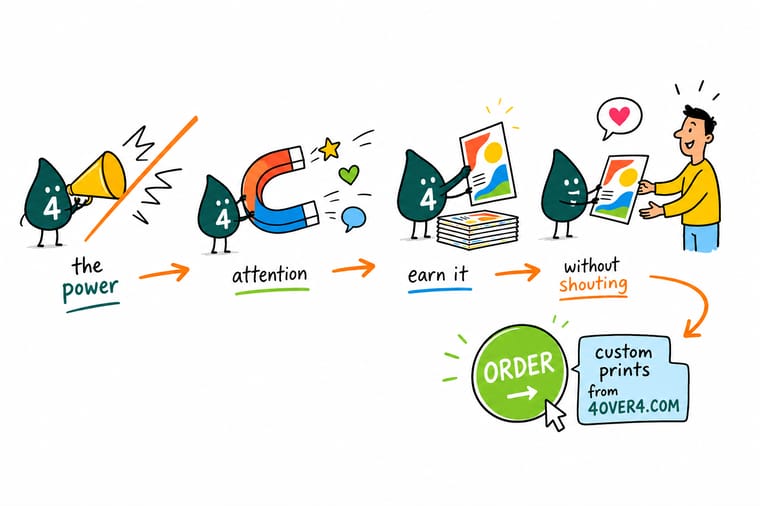
Wally sends the same message through four gates. At the first, most of it never gets looked at, because it sat somewhere busy with nothing to make an eye stop. At the second, some of what was seen was not understood, because the promise took two readings. At the third, part of what was understood faded, because it only appeared once and looked different from last time. Only what survives all three reaches the fourth gate and does something. Wally fixes the gates in order, and he never rewrites the button first.
Print postcards people keep →Specs and pricing
The durable formats, sizes and starting prices
Postcards, flyers and posters are the three physical formats that keep working after the impression is over. Configure sizes, stocks and quantities with live pricing from the 4OVER4.COM configurator.



Print it
Put something in front of people that stays there
Explore more
Where to go next
By the numbers
The print partner behind the attention you buy
Common Questions
Your questions about attention, answered
What does the attention economy mean for a small business?
It means your competition is not only the other companies in your category. You are competing with a phone notification, a colleague talking, and the road ahead of a driver. That reframes the job: instead of asking how to say more, ask what you can say that is worth stopping for, and where the person is least busy when your message reaches them. A postcard read at the mailbox and a display ad seen mid task are not the same opportunity, even if both count as one impression.
Is the human attention span really shrinking?
The famous numbers people quote for this have no solid research behind them, so we will not repeat them. What has genuinely changed is the number of alternatives sitting one thumb movement away. Attention is not weaker, it is cheaper to move elsewhere. The practical consequence is the same either way: your first line and your first image have to earn the second look, because the cost of leaving is now close to zero.
How many times does someone need to see a message before it registers?
There is no fixed number, and any source giving you one is selling something. Frequency needed depends on how distinctive the message looks, how relevant it is at that moment, and how long the buying cycle runs. A plumber who mails the same neighborhood four times a year is aiming at the day a pipe bursts, not at immediate response. The rule that holds is that the same message in a consistent look, repeated over months, builds recall faster than several different looks used once each.
How do I earn attention without being annoying?
Match the intensity of the interruption to the value of what you are offering. A discount worth two dollars does not justify a phone notification. Give people a reason to keep the thing rather than to endure it: a reference chart, a calendar, a loyalty card, a genuinely useful number. Anything a customer chooses to keep converts a one second interruption into repeated voluntary attention, which is the cheapest attention you will ever get.
Does print still earn attention when everyone is on a phone?
It earns a different kind. Print does not compete inside the feed, it competes for the moments the feed is not in front of someone: the walk from the mailbox, the counter at a shop, the wallet. Physical mail also has almost no competition in the box compared to the volume in an inbox. The trade off is speed and measurement. Print takes days to land and is harder to attribute, so it works best as the durable half of a mix rather than as a same day response channel.
Nobody responded to my campaign. What do I fix first?
Work backwards through the four gates. Most people rewrite the call to action, which is the last gate, and nothing changes because the attention leaked at the first one. Check whether the piece was actually seen: was it in the right place, did it have enough contrast against what surrounded it, was the headline readable at the distance people encounter it. Only after you are confident it was noticed does it make sense to argue about the offer or the button.
What is the cheapest way to test whether attention is the problem?
Give each channel its own trackable destination. A unique short URL, a distinct phone extension, or a code that only appears on the printed piece will tell you whether people acted. Then ask new customers one question at checkout: where did you hear about us. Unaided answers from real customers catch the channels no dashboard attributes, particularly signage, mail and word of mouth.
Get Started
Posters run 50 for $108.75 in five business days
Pick a format that outlives the impression, print it in a look people will recognize next time, and send it where your customers are free to look.
Legal Disclaimer
Gold Standard guarantees apply to all standard orders placed through 4over4.com. Price match requires verifiable proof of a competitor's published price for an equivalent product with matching specifications and turnaround time. Satisfaction guarantee covers manufacturing defects and print quality issues. Contact support with order number and documentation. On-time delivery rate based on tracked orders 1999 to 2026. Individual results may vary based on shipping carrier performance.
