
The Neuroinclusive Manager’s Playbook for Meetings, Feedback and Onboarding


Six practices that make a team legible to everybody on it, what each one costs you in real minutes, and the four places where good intentions still run out.
Neuroinclusive management means taking the guesswork out of work instead of asking people to absorb it. Send the agenda before the meeting, say out loud what finished looks like, put the instruction in writing as well as in speech, give the deadline as a date, and make the quiet space a policy rather than a favor. Most of it costs nothing and helps everyone, which is the point: a default nobody has to request is a default nobody has to disclose a diagnosis to receive.

Quick answer
Make the default explicit, and fewer people have to ask
The whole playbook is one move repeated: put the thing that was implied into writing, and hand it over. Agenda before the meeting. Decisions written in the room. Deadlines as dates. Standards on a sheet at the desk rather than in a folder. A signal for do-not-interrupt that applies to you as well. When a need would help more than one person, make it a team default so nobody has to disclose anything to receive it, and keep the formal accommodation route for the things a default cannot cover.
What Neuroinclusive Management Actually Changes

It is not a softer tone of voice. Neuroinclusive management is a change to where information lives: out of your head and your hallway conversations, into things people can read, reread and point at.
The term neurodivergent covers ADHD, autism, dyslexia, dyspraxia, dyscalculia and Tourette syndrome, among others. Those are different conditions with different needs, and a manager who treats them as one profile will get it wrong quickly. What they share at work is a low tolerance for implied rules. The unwritten standard, the meeting whose real purpose is never stated, the deadline that everyone supposedly knows is Thursday: those cost a neurodivergent employee more energy than they cost you, and the cost is invisible because it is paid in advance.
So the design rule is not empathy, it is explicitness. Say the purpose of the meeting. Say what finished looks like. Say the date. Write it after you say it.
Two limits are worth naming before you start. First, needs conflict. A person who thinks by talking and a person who cannot process a spoken brief at speed sit on the same team, and you will not fix that by choosing a house style. Second, none of this replaces the formal route. In the US, Title I of the Americans with Disabilities Act applies to employers with 15 or more employees and requires reasonable accommodation once a need is known. Good defaults reduce how often people have to use that route. They do not remove it.
The Adjustments That Do the Most Work

Managers usually ask which accommodation to offer. The more useful question is which friction shows up most often, because the same handful of changes covers most of the ground and none of them require a diagnosis to hand out.
| Friction | What is actually needed | The change | What it costs you |
|---|---|---|---|
| Verbal-only briefing | A record that survives the conversation | Send the same brief in writing within the hour, before questions arrive | Five minutes per briefing |
| Vague deadline | A fixed point to plan against | Replace "end of week" with a date and a time | Nothing, and you get better estimates back |
| Open-plan noise | Control over interruption, not silence | A bookable quiet room, plus an agreed do-not-interrupt signal | One room off the meeting rota |
| Meeting with no agenda | Time to prepare instead of react | Agenda out the day before, decisions written at the end | Four minutes before, four after |
| Unwritten standard | A visible definition of done | A one-page process sheet at the workstation, not in a folder | An afternoon once, then almost nothing |
Read the last column before the others. Every row is cheap, and that is the argument to take upstairs: these are not concessions, they are the removal of guesswork that was slowing everyone down. The last row is the one people skip, because writing a process down feels like admitting the process was never clear. It usually was not. A printed sheet on the wall beats a document nobody opens, and standard flyers start at $39.54, which makes a laminated process sheet per station the cheapest management tool on this page.
Run Meetings So Nobody Has to Reconstruct Them
Meetings are where the most people lose the thread, and the recovery cost lands after the meeting rather than in it. Three habits fix most of it.
- Agenda out the day before. Not a title. The actual items, in order, with a note against any item that needs a decision. Someone who needs to prepare can prepare, and someone who does not care can skip.
- Write the decisions at the end, in the room. Sixty seconds of typing while everyone is still present beats a follow-up email written from memory two hours later, and it settles the disagreements people did not realize they had.
- Make cameras and speaking optional. On a call, being watched while you think is a real tax for some people. A chat lane for questions gets you contributions from the people who will not interrupt.
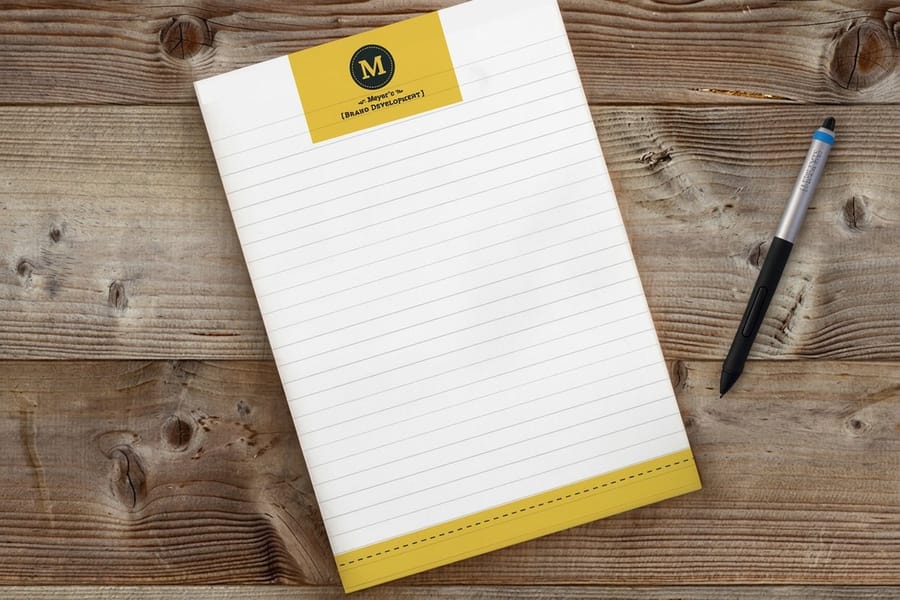
For anything longer than an hour, and for all-hands sessions, put the agenda on the table on paper. It sounds old-fashioned until you watch how often people glance at it. A printed agenda holds the shape of the session for anyone whose working memory is busy, and it does not require a second screen. Standard notepads start at $93.37 and work well printed with a fixed structure down the left side, one line for the decision, one for the owner, one for the date. Our guide to business notepad sizes and sheet counts covers what to specify, and the notepads category lists the stock and sheet-count options.
One caution: do not record every meeting by reflex. A recording is genuinely useful for people who process slowly, and it is genuinely chilling for people who then say less. Announce it, keep it optional, and keep the written summary as the real record.
Give Instructions and Feedback That Do Not Depend on Memory
An instruction that only ever existed as speech has a short life. Say it, then send it, and put the standard somewhere it can be checked without asking you a second time.
Be concrete about what finished means. "Tidy this up" is a preference, not an instruction. "Cut it to one page, drop the pricing table, send it to me by Thursday at 3pm" is a task somebody can complete without a follow-up conversation they may not be comfortable starting. The same applies to priority: if three things are urgent, none of them are, and the person most likely to burn a weekend on the wrong one is the person who takes you literally.
Feedback deserves its own rule. Drop the sandwich. Wrapping a correction in two compliments is meant to soften a message, and the softening works so well that some people leave the room having heard only the compliments. Say the specific behavior, say the effect, say what you want instead, then stop. It is kinder than it sounds, because it ends the guessing.
For work that follows a fixed sequence, put the sequence in print. A short bound handbook beats a wiki page for anything a person needs while their hands are busy or their screen is full. Standard booklets start at $240.55 and saddle-stitch cleanly at eight to sixteen pages, which is about the right length for a role handbook nobody dreads. Set the type for reading rather than for brand polish, and our booklet typography guide covers the spacing and size choices that make a page easier on a dyslexic reader.
Design the Room and the Signals in It
Sensory load is the part of this that managers underestimate, because it is not something anybody complains about twice. Noise, overhead fluorescent flicker, a desk in a walkway and unannounced tapping on the shoulder are all cheap to fix and expensive to endure.
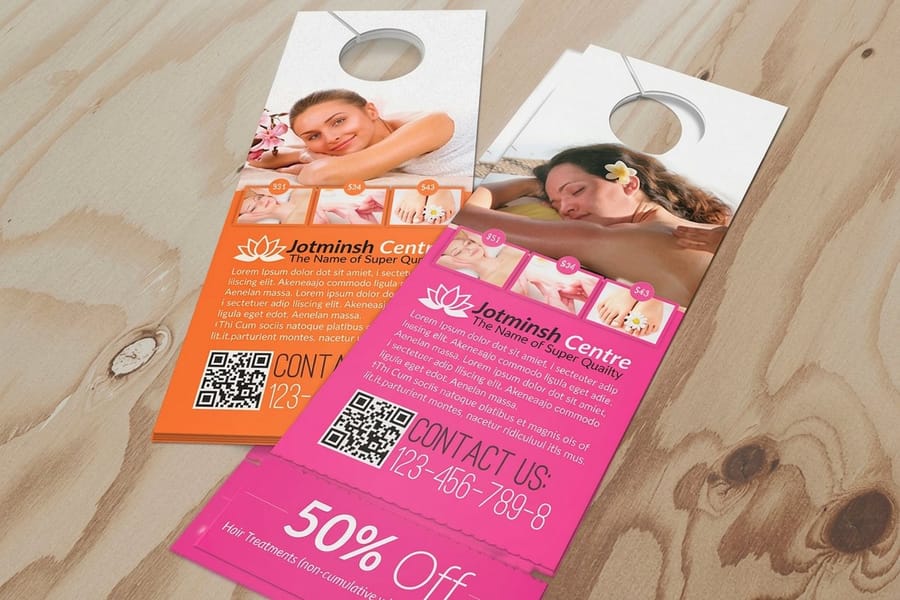
Interruption is the one worth systematizing. Headphones already function as a do-not-disturb sign in most offices, but only if the team has agreed that is what they mean, and only if it applies to managers too. Give the signal a physical form and it stops being deniable: a card that flips to focus, a hanger on the door of a shared room, a colored marker on the desk. Door hangers start at $290.41 and are the honest version of a shared meeting room booking, because a hanger on a handle cannot be ignored the way a calendar entry can.
Then make the building readable. A person who has to ask where something is has just paid a social cost to find a printer. Clear room labels, a posted floor plan and a visible schedule remove that entirely, and they help visitors as a side effect. Standard posters start at $108.75, and the practical rules for size and placement are in our indoor office signage guide and the wayfinding planning guide.
The limit here is enforcement, and it is the most common failure. A quiet room that gets used for loud calls is not a quiet room, it is a meeting room with a sign on it. Whoever owns the space has to protect the rule, or the rule teaches people that asking was pointless.
Hiring and Onboarding Without Screening People Out
Most hiring processes test interview performance and then call it potential. Two changes narrow that gap without lowering the bar.
Send the questions in advance. The objection is that it lets people prepare, which is exactly the point: you are hiring for the job, and the job is almost never an ambush. You will still hear who thinks clearly, and you will stop filtering for quick verbal improvisation in roles that never need it. Second, cut "culture fit" out of the scoring. It is where unexamined preference hides, and it selects for people who present the way the panel does.
Write the ad in plain terms too. List the essential duties rather than a wish list of adjectives, and say what the interview process involves, how many stages, how long each one runs, who is in the room. That single paragraph removes more anxiety than any statement about inclusion at the bottom of the page.
Onboarding is where good intentions usually collapse, because week one delivers a year of context in four days. Slow it down and give people something to hold. A printed first-90-days pack, with the org chart, the acronym list, the tools, and who to ask about what, gets used long after the welcome lunch is forgotten. Our guide to building an employee welcome pack covers what to include, and the office printing checklist lists the everyday pieces worth having on hand before the start date.
Where This Playbook Runs Out
Four honest limits, because a playbook that only lists wins is not much use in a real organization.
You cannot diagnose anybody, and you should not try. Guessing at a diagnosis is intrusive, frequently wrong, and legally risky. Manage the friction the person describes. Whether it has a name is not your business unless they choose to make it so.
Disclosure is theirs to control. An employee who does not tell you is not withholding, they are exercising a choice about privacy, often based on how a previous employer handled it. Build defaults that work without disclosure and the question mostly stops mattering.
Defaults do not replace the legal route. When a need requires something beyond your gift, such as a change to hours, equipment or duties, it goes through the formal accommodation process with HR, documented, with a review date. That protects the employee, and it protects you.
Your authority has edges. If you cannot change the recruitment process, the desk plan or the meeting culture above you, say so plainly instead of promising a fix. A manager who names the boundary keeps trust. A manager who promises a quiet room they cannot deliver loses it within a month.
Wally explains the neuroinclusive default
If it only lives in your head, half the team cannot see it
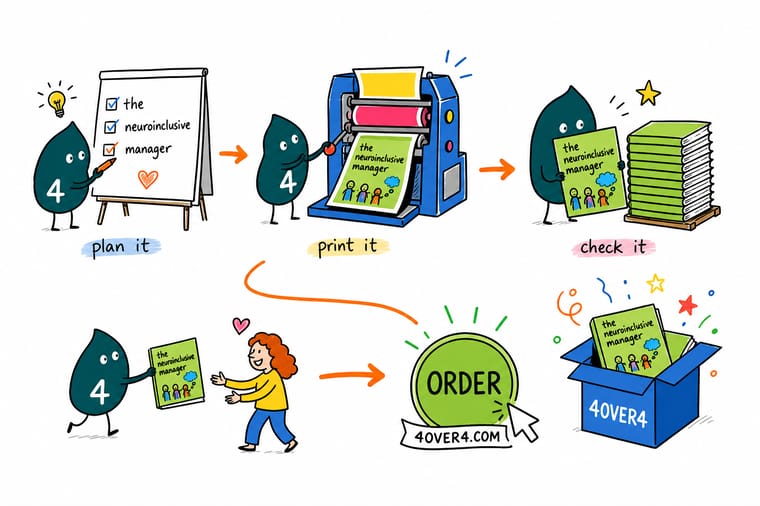
Wally used to give the brief in the corridor and wonder why it came back wrong. Now he writes the agenda before the meeting, notes the decisions before anyone leaves, and pins the process sheet above the workstation instead of burying it in a folder. Nobody had to ask, nobody had to explain their brain, and the work got easier for everyone in the room. That is the whole trick.
Print your team handbook →Specs and pricing
Handbooks, agendas and signage, with live specs
The printed pieces this playbook leans on, with sizes, stocks and starting prices straight from the 4OVER4.COM configurator.



Print it
Put the standard where people can actually see it



Explore more
Where to go next






By the numbers
Handbooks, posters and desk pads for a team
Common Questions
Your neuroinclusive management questions, answered
What does neurodivergent mean in a workplace context?
It is an umbrella term for people whose brains process information differently from the majority, and at work it usually covers ADHD, autism, dyslexia, dyspraxia, dyscalculia and Tourette syndrome. It is not a job description or a skill set, and it does not predict performance. What it does predict is that some ordinary office habits, such as unwritten expectations, ambush meetings and open-plan noise, will cost that person more energy than they cost you.
Can I ask someone on my team whether they are neurodivergent?
No, and you do not need the answer. Asking an employee to disclose a diagnosis is a medical question, and US employers are restricted in when they can ask one. The question that is both legal and useful is about the work: what makes this task harder than it needs to be, and what would help. That gets you an actionable answer, and it works for the person who has never been assessed as much as for the person who has a formal diagnosis they choose not to share.
What counts as a reasonable accommodation?
A change to how, when or where the job is done that lets a qualified person do it, without imposing significant difficulty or expense on the employer. In practice most requests are small: noise-canceling headphones, a shifted start time, written instructions after a verbal briefing, a desk away from a walkway, or a screen-reader-friendly file. The word reasonable is doing real work in that sentence. An accommodation that removes an essential function of the role is not one, and it is fair to say so and look for another route.
Two people on my team need opposite things. What do I do?
Stop trying to pick a winner. One person wants to talk it through, the next cannot hold a spoken brief in their head, so the fix is not to choose the call or the document but to make the document the record and the call optional. The pattern generalizes: publish in the form that is easiest to reread, then allow the synchronous version on top. Where the conflict is physical, such as one person needing quiet and another thinking out loud, you are solving it with space and scheduling rather than with a rule about who is right.
Does printed material actually help, or is a shared document enough?
A document helps only when someone remembers to open it. Print earns its place where the information has to be present at the moment of the task rather than found: the process sheet taped above the workstation, the agenda on the table so nobody has to hold six items in working memory, the first-90-days booklet a new hire can flip through without hunting a folder structure they have not learned yet. Digital is better for anything that changes weekly. Print is better for the things that should not change and should never be searched for.
What is the single change worth making first?
Send the agenda before the meeting and write the decisions down at the end of it. It takes about four minutes, it needs nobody’s permission, and it removes the two moments where the most people quietly lose the thread. If you want a second, replace every soft deadline you give this week with a date and a time. Neither of these is an accommodation for anyone in particular, which is exactly why they work.
Get Started
Posters run 50 for $108.75, or $2.18 each
Print the handbook, the agenda pads, the process sheets and the room signs that turn a good intention into something your team can read on any given Tuesday.
Legal Disclaimer
Gold Standard guarantees apply to all standard orders placed through 4over4.com. Price match requires verifiable proof of a competitor's published price for an equivalent product with matching specifications and turnaround time. Satisfaction guarantee covers manufacturing defects and print quality issues. Contact support with order number and documentation. On-time delivery rate based on tracked orders 1999 to 2026. Individual results may vary based on shipping carrier performance.
