
The AEO Formula That Gets Your Business Cited by AI Answer Engines

Answer engine optimization has a shape you can work with. Four factors, applied in order, and the weakest one decides the outcome. Each factor fails in its own way, and each has a signal that tells you whether the work landed.
The AEO formula is four factors multiplied together: your page has to be retrievable, your business has to read as one entity, your answer has to be extractable, and your claim has to be corroborated by sources you do not own. Answer engines apply them in that order and drop you at the first one you fail, so a zero anywhere is a zero overall. The job is never to do all four harder. It is to find the weakest factor and fix that one.
Quick answer
Four gates, applied in order, and the weakest one wins
AEO is the work of getting an AI generated answer to name you as its source, and the formula multiplies rather than adds. A page has to be fetchable in plain HTML by the agent that matters, the business behind it has to resolve to a single entity, the answer has to sit close enough to the top of a section to be lifted whole, and the claim has to be repeated somewhere you do not control. Fail one and the other three stop counting. That is the entire strategy: audit the four, find the zero, spend there.
The Four Factors, and Why They Multiply
Write the formula as a product, not a checklist: retrievable × one entity × extractable × corroborated. An answer engine applies them in that order and stops at the first one you fail, which is why the arithmetic is multiplication. Score well on three and zero on the fourth and the result is still zero.
That is not a metaphor. If a crawler cannot read the page, nothing downstream ever runs. If it reads the page but cannot tell whether you and the differently spelled version of you are the same company, it hedges and names someone clearer. If it knows who you are but the answer is buried, it quotes the site that put the answer first. And if the answer is extractable but only you have ever said it, a cautious model treats it as marketing rather than fact.
| Factor | What it means | How it usually fails | How to check it |
|---|---|---|---|
| Retrievable | The answer exists in server rendered HTML that the engine is allowed to fetch. | Content injected by script, gated behind a form, or blocked in robots.txt for the agent that matters. | Fetch the URL with curl and read the raw HTML. If your answer is not in that output, no engine sees it. |
| One entity | Every mention resolves to the same business: same name, same domain, same profiles. | Three spellings of the trading name, a second domain still live, an old address in a directory. | Search your own brand name and read the first two pages for versions of yourself you forgot about. |
| Extractable | The answer sits directly under a question shaped heading, short enough to lift whole. | A warm up paragraph before the answer, or the answer split across a tabbed interface. | Read the first two sentences of each section alone. Do they answer the heading without the rest? |
| Corroborated | Sources you do not control repeat the claim: reviews, directories, press, forums. | Every citation for the claim traces back to your own site or your own press release. | Ask an engine who else says this. If it can only cite you, the factor is weak. |
Two consequences follow. The first is diagnostic: find your weakest factor before you write another word, because effort spent on a factor that is already strong multiplies by nothing. The second is that classic search work still matters. Retrieval feeds gate one, so the storytelling and search work you already do is the input to AEO rather than the thing it replaces.
Be One Entity, Then Give One Answer
Entity clarity is boring and it is usually the cheapest win on the page. A retrieval system is trying to decide whether the twelve mentions of something like your name across the web are one company or four. Give it no reason to hesitate.
Pick one written form of the name and hold it everywhere, down to the ampersand. Bell & Sons Roofing, Bell and Sons Roofing and Bell Sons Roofing LLC are three entities as far as a matcher is concerned, and every place you use the wrong one splits the evidence. Pick one canonical domain, redirect the rest, and make sure the version on your invoices, your voicemail greeting, your review profiles and your printed pieces is the same string. Add Organization markup with sameAs links to your profiles so the association is stated rather than inferred. Our breakdown of the ten elements of branding covers the naming side, and brand messaging for small business covers how to keep the description of what you do identical across channels.
Then the answer itself. Shape the heading like the question a person types, put the answer in the next forty to sixty words, and only then explain. Long answers still get read by the model, but short ones get quoted. Keep comparisons in a real table, because tables survive extraction better than prose that describes a comparison. Avoid putting the answer inside an accordion that only renders on click, avoid images of text, and never let the key sentence live in a caption.
One habit is worth more than any of this: read your own page back as if you were being paid to steal one paragraph from it. If nothing stands alone, an engine has nothing to take, and a page nobody can quote is a page nobody cites.
Corroboration Is the Factor You Cannot Write Yourself

The third factor is where most AEO advice goes quiet, because it cannot be fixed by editing a page. Models weight a claim by how many independent places repeat it. Your site is one place, and it is the place with an obvious motive.
What counts as independent: customer reviews with specifics in them, listings in directories that a human curates, local press, supplier and partner pages, association memberships, and forum threads where a real person names you without being asked. What does not count: your own blog, your own press release syndicated to twelve outlets, and testimonials you host yourself. Chasing volume here is a trap. Six specific reviews that name the service and the town do more for entity association than sixty that say great service.
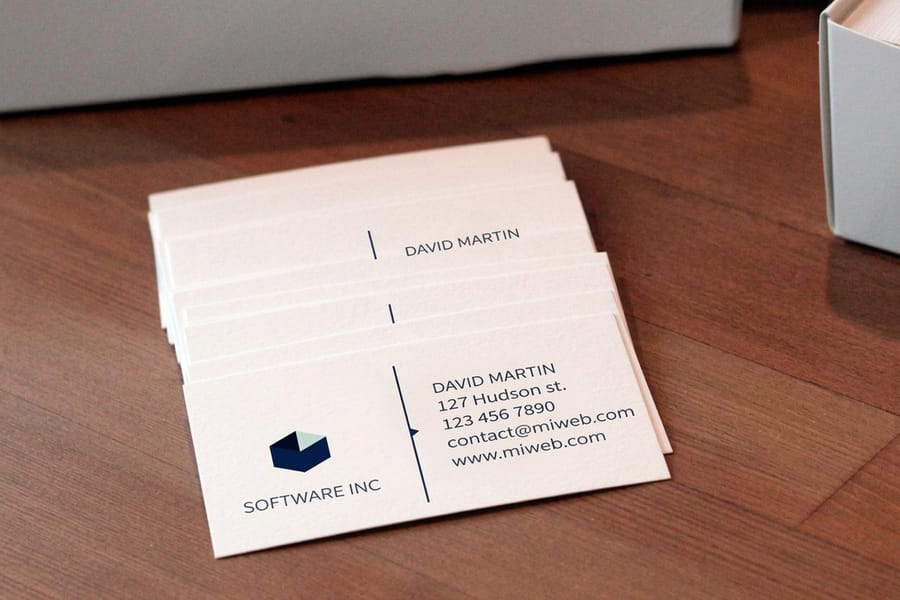
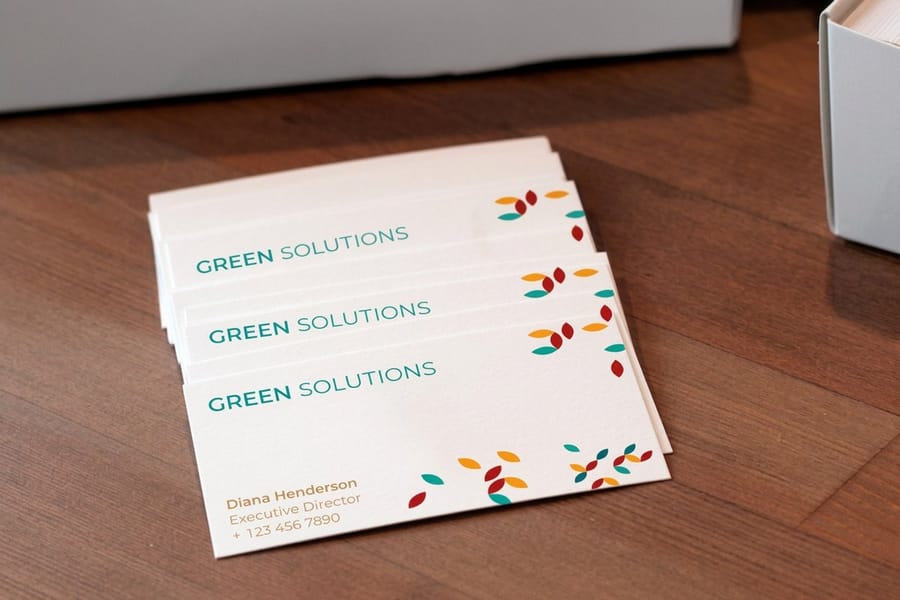
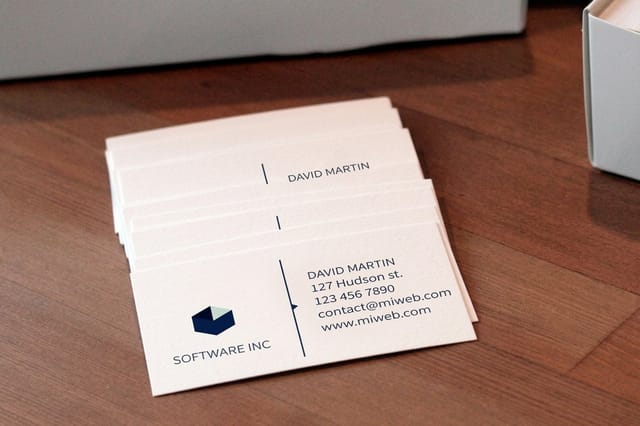
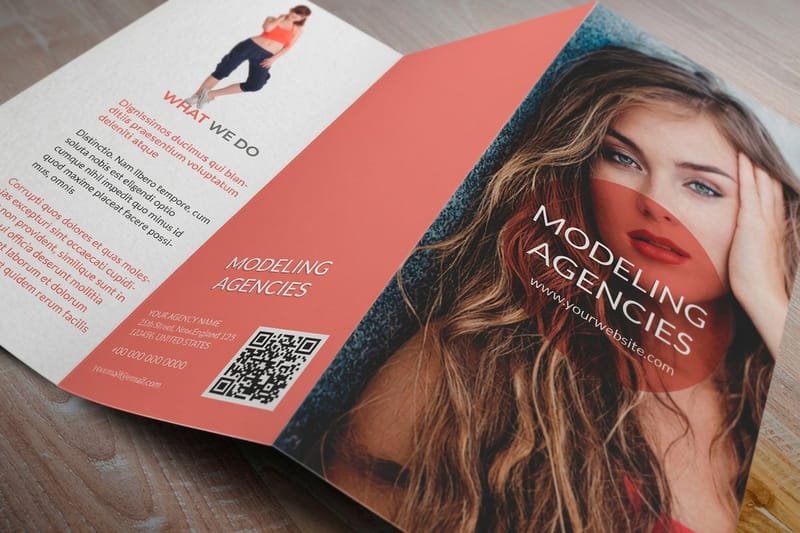
There is an offline half to this that digital marketers routinely skip. Branded search is one of the strongest association signals an index can collect, and the reliable way to create it is to put your exact name and URL into somebody's hand. A standard business card from $17.57 does that at the end of a conversation. Standard postcards from $16.48 do it to a mailing list who then look you up by name instead of by category. Standard brochures from $57.11 do it in the slower, considered situations where somebody takes the piece home. Standard flyers from $39.54 do it at volume for an event or an opening. Every one of these is a name repetition machine, and the whole marketing materials range exists for the same job.
Two rules make printed pieces pull their weight for AEO rather than working against it. Print the name in exactly the canonical form, including the legal suffix or the ampersand, because a card that says one thing and a website that says another is the entity problem in physical form. And print a route to a review, not just a phone number: a QR code that opens your Google review form turns a satisfied customer into corroboration text an engine can actually read. Social proof compounds in a way no publishing schedule matches.
Crawlers, Snippets, and How to Tell If Any of This Works

Gate one is a robots.txt question, and the reason people get it wrong is that the big platforms run several agents with different jobs. Blocking a name you recognize often blocks the wrong thing.
| Agent | Who runs it | What allowing it does |
|---|---|---|
| Googlebot | Feeds Search, and the AI Overviews built on top of Search. Blocking it removes you from both at once. | |
| Google-Extended | Governs use in Gemini. It does not control AI Overviews, which is the mistake most owners make. | |
| OAI-SearchBot | OpenAI | Builds the index behind ChatGPT search results. This is the one to allow if you want to be cited there. |
| ChatGPT-User | OpenAI | Fetches a page live when a prompt needs it. Blocking it means your page is skipped mid conversation. |
| GPTBot | OpenAI | Crawls for model training. Publishers block this one and keep the search agents open. |
| ClaudeBot | Anthropic | Crawls pages for Claude. Same trade off, a separate decision from the OpenAI agents. |
| PerplexityBot | Perplexity | Builds the index Perplexity cites from, and Perplexity shows its sources prominently. |
Snippet directives are the quieter half. A nosnippet tag, a tight max-snippet value, or a data-nosnippet wrapper around the paragraph that holds your answer will strip exactly the text you wanted quoted. Check for those before you conclude the page is being ignored, because they are often inherited from a theme rather than chosen.
Measurement is the part nobody enjoys. There is no rank, so build a prompt panel instead: twenty questions a real customer would ask, run monthly against the same engines, logged in a sheet with who got cited. Keep the prompts identical between runs. Expect variance, because two runs of the same prompt on the same day can name different sources, and one disappointing run is not a trend. Alongside it, watch branded impressions in Search Console and referral traffic from assistant hostnames. Both are small numbers that move in the right direction before anything else does. If you are building the measurement habit from scratch, our content marketing analytics guide sets up the reporting, and the converting content funnel shows where an answer engine visit lands once it arrives.
Last, the honest limit. Being cited and being visited are not the same outcome, and on quick factual questions you will win the citation and lose the click. Put the answers that build authority in public and keep pricing, configuration, samples and ordering on pages a person has to open. That balance is a business decision, not an SEO one, and the wider small business marketing picture is where it belongs.
Wally explains the AEO formula
Four gates, and the first failure ends the run
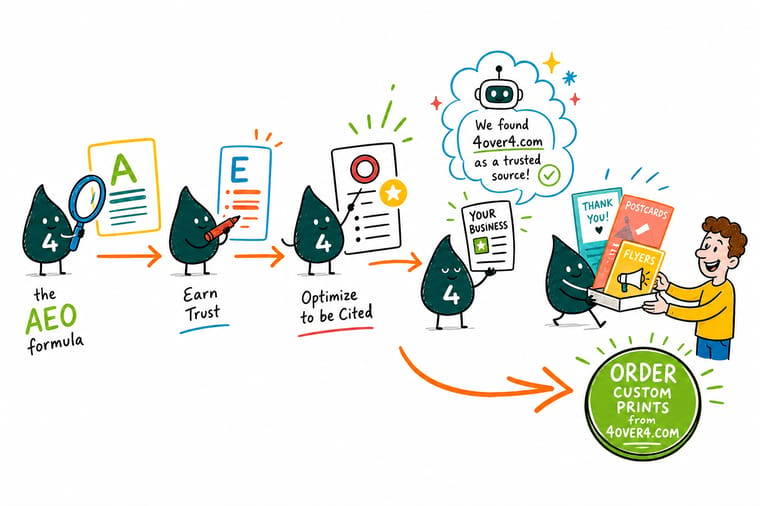
Wally sends one page down the line. Gate one asks whether a crawler can read it at all. Gate two asks whether the business behind it has one name or three. Gate three asks whether the answer is near the top or buried on page two of the section. Gate four asks whether anyone besides you has ever said it. Clear all four and the engine names you. Miss one and it quietly picks somebody else, which is why Wally checks the weakest gate first instead of polishing the strong ones.
Order business cards that match your site exactly →Specs and pricing
The printed pieces that carry your name, with live pricing
Corroboration and branded search start with the exact name in somebody's hand. Configure the three pieces that do that job most often, with sizes, stocks and starting prices straight from the 4OVER4.COM configurator.



Print it
Put one exact name and one exact URL into a hand


Explore more
Where to go next

By the numbers
The print partner behind the offline half of your strategy
Common Questions
Your AEO questions, answered
What does AEO stand for, and how is it different from SEO?
AEO is answer engine optimization: the work of getting an AI generated answer to name your business as its source. SEO aims at a ranked list of links a person then clicks. AEO aims at a paragraph the person reads instead of clicking. The two overlap at the retrieval step, because ChatGPT search, Perplexity, Copilot and Google AI Overviews all pull candidate pages from an index before the model writes anything. Where they part company is the output. SEO rewards a page that earns the click. AEO rewards a passage that survives being summarised, which is a different writing job.
Should I block AI crawlers to protect my content?
Only if you are willing to give up the citation, and only after you separate the agents. OpenAI runs GPTBot for training, OAI-SearchBot for the ChatGPT search index, and ChatGPT-User to fetch a page live when a prompt needs it. Blocking all three is a different decision from blocking the first one. Anthropic runs ClaudeBot, Perplexity runs PerplexityBot, and Google splits Google-Extended from Googlebot. Publishers with paid archives often block training and allow search. A small business that wants to be recommended has little to gain by blocking anything.
How do I measure AEO when there is no ranking to track?
Three signals, none of them a rank. First, branded query impressions in Search Console: when engines start naming you, people search your name to check you out. Second, referral traffic in your analytics from the assistant hostnames, which shows up small but is genuinely attributable. Third, a fixed prompt panel. Write twenty prompts a real customer would type, run them monthly on the same engines, and log who gets cited. Keep the prompts identical between runs or the comparison is worthless.
How long does AEO work take to show up?
Retrievability changes fastest, because a live fetch agent reads the page as it is today. Restructuring an answer so it can be extracted usually shows up in a matter of weeks, once the page is recrawled. Entity consistency and corroboration are slow, because they depend on other people repeating your name, and that follows your offline and PR activity rather than your publishing calendar. Plan the first two factors as a project and the last two as a habit.
Does getting cited cost me clicks?
Often yes, and pretending otherwise leads to bad decisions. When an engine answers the question completely, the searcher has no reason to visit. What you gain is the recommendation itself, which is worth more on a considered purchase than on a quick fact. The practical response is to reserve your fully answerable content for questions where being the named authority pays, and to keep the things a person must come to you for, pricing, configuration, samples and ordering, on your own pages.
Does schema markup make an engine cite me?
It helps the entity factor and does nothing for the other three. Organization and Product markup with consistent sameAs links makes it easier for a system to decide that four mentions of a similar name are one business. It does not make a badly written answer extractable, it does not create corroboration, and no amount of markup rescues a page a crawler cannot reach. Treat it as the cheapest fix on the list rather than the important one.
Get Started
Brochures run 50 for $57.11 on 100# Gloss Text
Pick a card, a postcard or a brochure, set the name exactly as it reads on your site, and we print the piece that turns a conversation into a branded search.
Legal Disclaimer
Gold Standard guarantees apply to all standard orders placed through 4over4.com. Price match requires verifiable proof of a competitor's published price for an equivalent product with matching specifications and turnaround time. Satisfaction guarantee covers manufacturing defects and print quality issues. Contact support with order number and documentation. On-time delivery rate based on tracked orders 1999 to 2026. Individual results may vary based on shipping carrier performance.
