
How Raised Business Card Printing Works and What It Costs


Raised spot UV, raised foil, and dual raised are three ways to put height on a business card. Each one is built differently, priced differently, and asks for a different file setup.
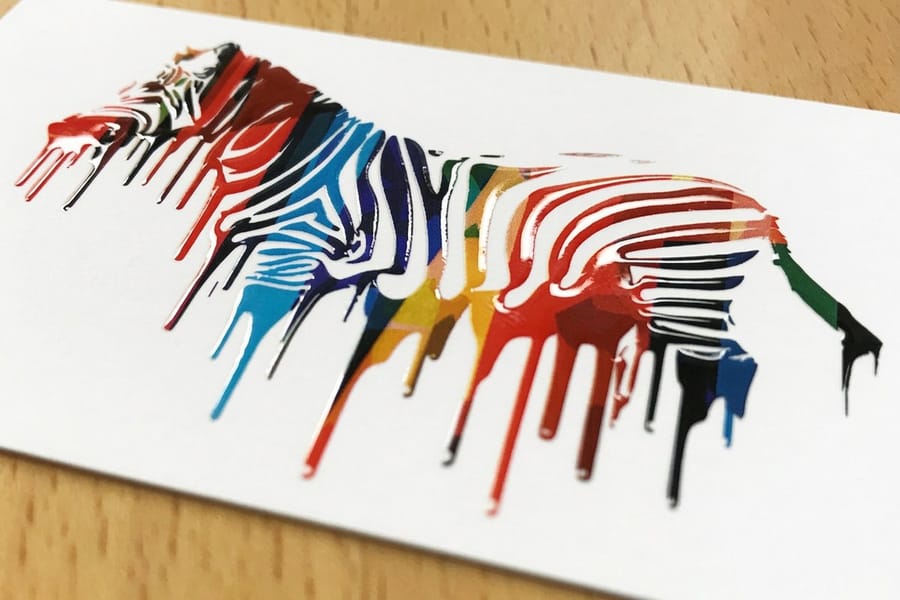
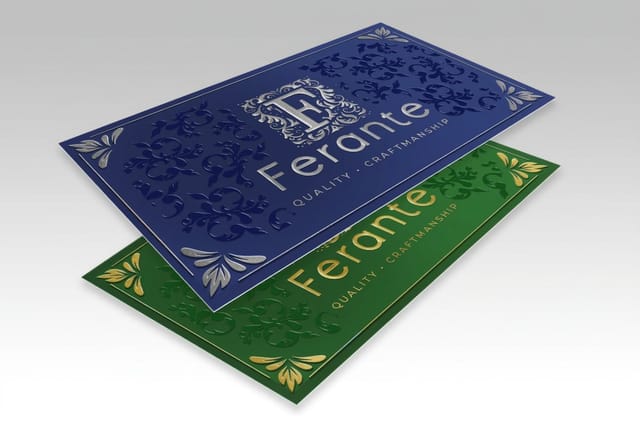
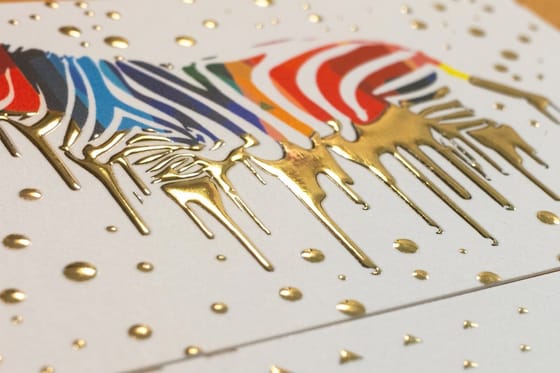
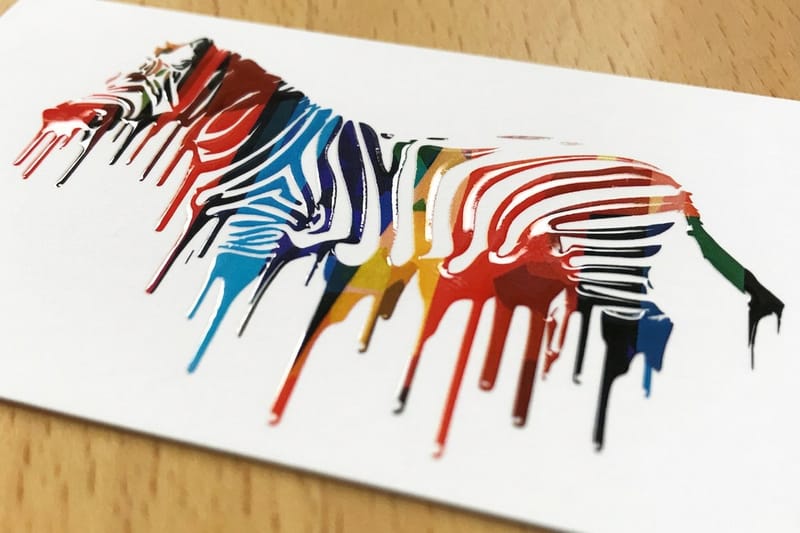
Raised business card printing lays a clear polymer over the printed card in the exact shape you marked in your file, then cures it hard under UV lamps so it stands above the surface. Raised spot UV leaves that layer clear and glossy. Raised foil bonds metallic foil onto it, so the metal follows the dome. Nothing presses the paper, so the back stays flat and fully printable. Raised foil business cards start at $86.78 and raised spot UV at $108.75, against $17.57 for standard cards.
Quick answer
Material added on top, never paper pressed from behind
The raise is a cured polymer layer sitting on the printed card, placed only where a separate 100% K layer in your file marks it. Raised spot UV leaves it clear so it reads as gloss standing off a matte surface. Raised foil bonds metallic foil to that same layer, giving the metal a curved face that flares as the card turns. Because the sheet is never squeezed, the reverse side stays flat and takes a full bleed image, which is the practical advantage over embossing and letterpress. The polymer domes as it cures, so bold shapes raise beautifully and hairlines do not.
How the Raised Layer Is Built on a Card
The card prints first, exactly like any other job. The raise is a second pass, and it only touches the shapes you nominated in your file.
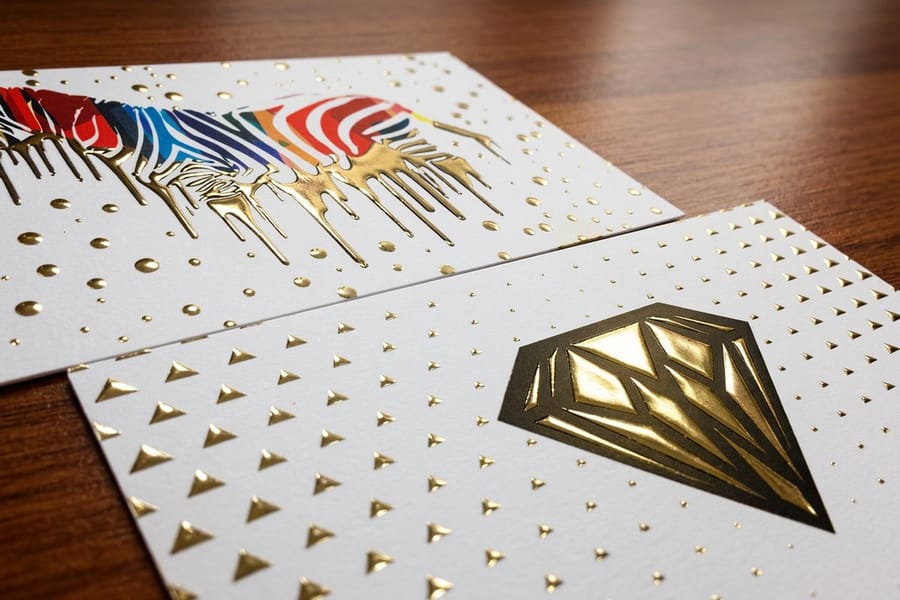
Raised spot UV. A clear polymer is laid over the printed sheet in the shape of your raised layer, then cured under UV lamps in seconds. It goes down as a fluid and hardens where it lands, which is why the edges dome slightly instead of standing up square. What you end up with is a hard glossy shape sitting above the paper.
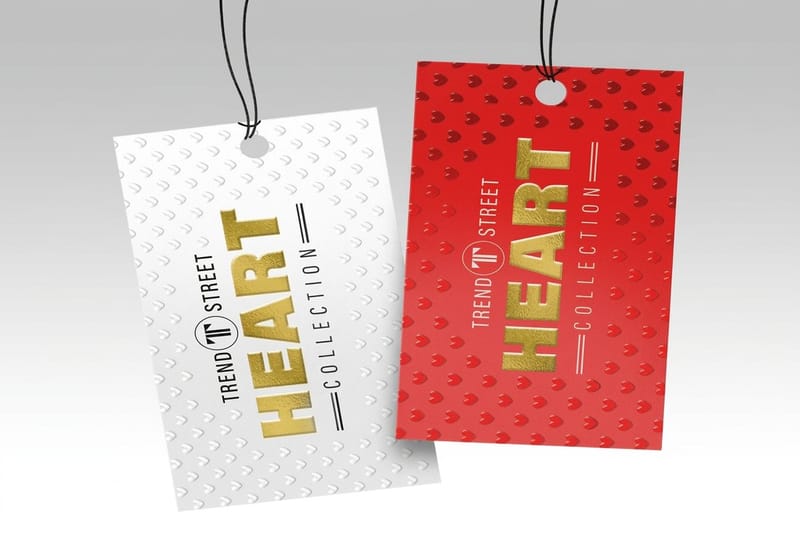
Raised foil. Same clear layer first, then metallic foil is bonded onto it with heat and pressure. The foil follows the contour of the polymer, so the metal has a curved surface rather than a flat one, and it throws light as the card moves. That is the difference you notice when you compare it to a flat foil card lying still on a desk.
Neither pass presses the sheet. Compare that with foil stamping, where a heated metal die pushes foil into the paper and leaves an impression, or with embossing, which squeezes the paper between two dies. Those methods mark the back of the card. A raised finish does not, so the reverse stays flat and can carry a full bleed photo. It is also a different animal from thermography, where resin powder sticks to wet ink and raises everything that was printed rather than a shape you chose.
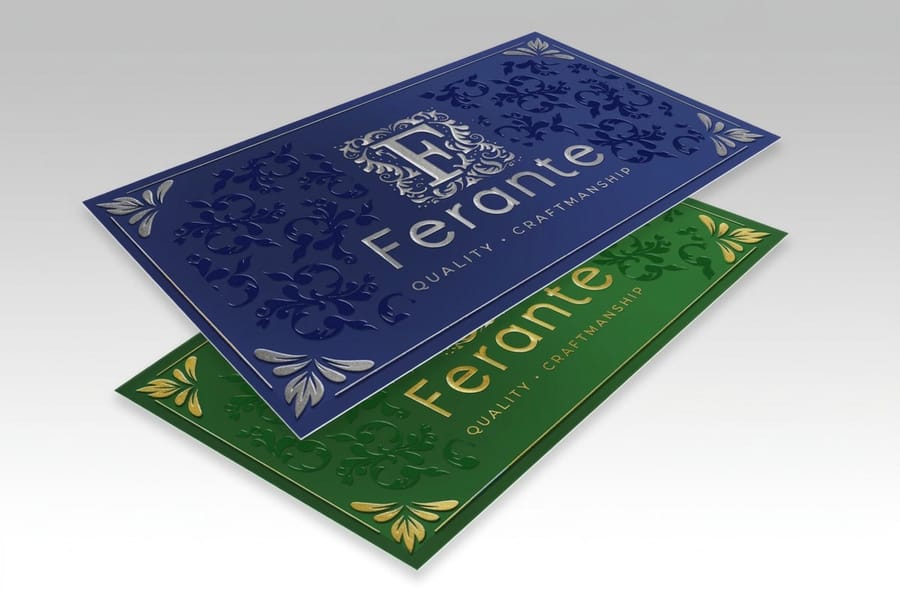
The two products that use this on a card are raised spot UV business cards and raised foil business cards. Run both on the same card and you have dual raised business cards, where the foil mark and the clear gloss sit side by side at slightly different heights.
Raised Spot UV, Raised Foil, Dual Raised and the Flat Alternatives
Five finishes get quoted against each other on business card jobs, and the names do not tell you which ones you can feel. This does.
| Finish | What your finger finds | Where it wins | Starts at |
|---|---|---|---|
| Raised spot UV | A hard glossy shape standing above a matte card. | Logos and names on a matte or soft touch stock, where gloss against dull is the whole idea. | $108.75 |
| Raised foil | A domed metallic shape, brighter at an angle. | Anything that has to read as premium in a handshake: gold, silver, or copper marks. | $86.78 |
| Dual raised | Two raised layers at different heights on one card. | A foil logo with raised gloss detail elsewhere, when one effect is not enough. | $149.00 |
| Flat spot UV | Nothing. Gloss you see, level with the sheet. | The same visual contrast at a lower price, when touch is not the point. | $76.88 |
| Standard cards | Whatever the coating gives you and no more. | Volume handouts, drops, and anything you reprint every few months. | $17.57 |
Read the last column with one caveat. Each product has its own minimum quantity, so those starting prices are not measured at the same box size, and raised foil starting lower than raised spot UV does not mean it is cheaper card for card. Put your real quantity into the configurator on each product page before you decide.
The gap that matters is the first one. Going from standard business cards at $17.57 to a raised finish is a jump of several times the price, and it only pays back on cards you hand over one at a time. Our breakdown of what business cards cost and why covers where the rest of the money goes.
Setting Up the Raised Layer So It Prints Sharp

A raised job needs two things from you: the artwork, and a map of where the raise goes. Get the map wrong and the card comes back looking blurred rather than raised.
Build the map as a separate vector layer, drawn in 100% K, with no gradients, no transparency, and no raster effects. Solid black means raise, everything else means leave flat. Halftones and soft shadows on that layer cannot be interpreted, because the polymer is either there or it is not.
Then respect what the material does. It is fluid until the lamps hit it, so it domes and it fills. A 0.25pt rule loses its edges and reads as a smudge; 0.5pt and heavier holds its shape. Type at 8pt and above in a medium or bold weight raises cleanly, while a light serif at 6pt turns into a bright blob. Two raised shapes sitting a hair apart can flow together, so give them a little breathing room.
Three more rules that save reprints. Keep the raised layer clear of any score or fold, because cured polymer cracks where the paper bends. Hold raised shapes slightly inside the printed shapes underneath them, so a small registration shift does not show as a colored halo around the gloss. And pick the right stock: raised gloss on a gloss laminate is nearly invisible, which is why these cards are built on matte and soft touch surfaces where the contrast does the work.
For the mechanics of bleed, safety margins and layer naming, our business card outline and file setup guide covers the whole handoff, and the blank template library gives you a correctly sized file to start from. If you are still choosing the surface, matte, glossy or soft touch compares the three bases a raised layer sits on.
When a Raised Card Earns Its Price, and When to Skip It
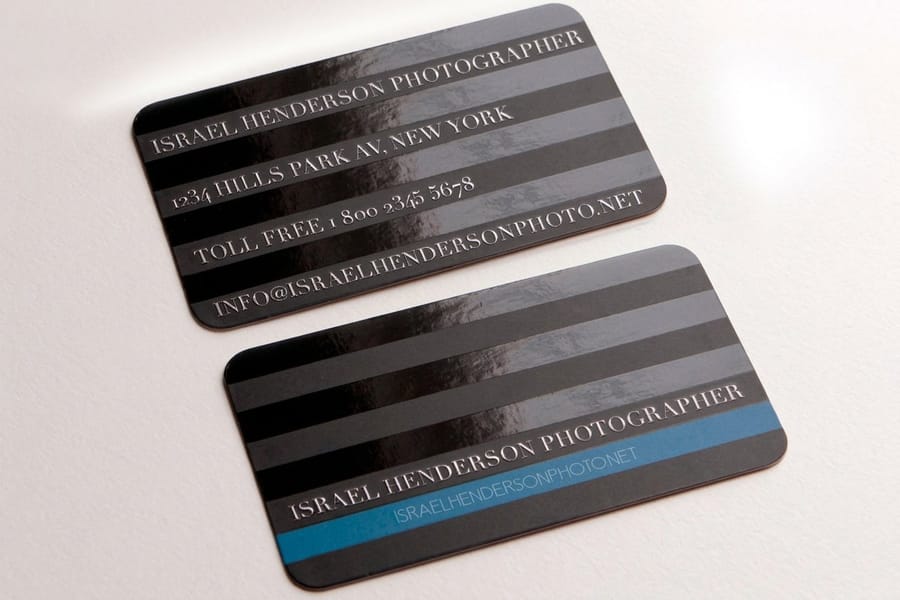
A raised finish only works on you while the card is in someone's hand. That narrows the cases where it is worth paying for.
It earns its price on the cards you give to people you actually want to hear from again: the box you carry to meetings, the cards a real estate agent hands across a kitchen table, the ones a designer leaves after a pitch. Anywhere the card gets turned over and put away rather than swept into a tote bag, the extra second of attention is the whole return.
Skip it on volume. Cards you fan out on a trade show table by the thousand, cards clipped to flyers, cards that change every time a phone number does, all of those are better spent on quantity and a heavier stock. Skip it too when the design is a full bleed photograph, because a raised shape needs quiet space around it to read as deliberate rather than as a printing accident. And if people write on your cards, keep the writing area flat: pen ink skids off cured polymer.
If you want the look without the height, flat spot UV business cards at $76.88 give you the gloss against matte contrast and nothing to feel. If you want the height, start with raised spot UV business cards at $108.75 or raised foil business cards at $86.78, or browse the whole raised foil printing collection and the dual raised collection to see what else carries the finish. Not sure the card size is right yet? Start with business card printing and work back from there.
Wally explains the raise
Clear polymer, UV lamp, and the logo stands up
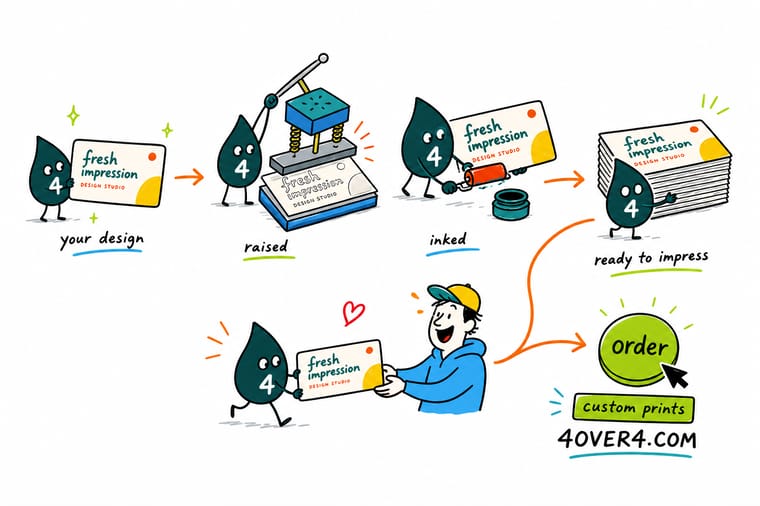
Wally prints the card first, then puts a clear polymer down only on the shape your file marked, and runs it under UV lamps until it sets hard. That is raised spot UV. Press metallic foil onto the same layer while it is warm and you get raised foil, with the metal curving over the top. Nothing squeezed the paper, so the back is flat and still takes a full bleed photo. Give Wally a solid logo and it comes out sharp. Give him a hairline and it domes into a smudge.
Order raised spot UV business cards →Specs and pricing
Raised finishes, sizes, and starting prices
Compare the three raised options side by side, with live configuration choices and starting prices straight from the 4OVER4.COM configurator.


Print it
Order a card people can feel
Explore more
Where to go next

By the numbers
Raised foil, raised spot UV and dual raised cards
Common Questions
Your raised printing questions, answered
What is raised business card printing?
It is a finish that builds a clear polymer layer on top of the printed card, only where your file says, then cures it hard under UV lamps. The cured layer sits above the paper surface, so you can feel the shape with a fingertip and see it catch the light from an angle. Because it adds material instead of pressing the sheet, nothing shows on the reverse and both sides can still carry full color artwork. At 4OVER4.COM it comes in three forms: raised spot UV, raised foil, and dual raised, which carries both on the same card.
What is the difference between spot UV and raised spot UV?
Height. Flat spot UV is a gloss varnish sitting level with the sheet, so the effect is visual: a shiny logo against a matte background. Raised spot UV builds the same shape up off the surface until a fingernail catches it, so the effect is tactile as well. The price gap follows: Spot UV Business Cards start at $76.88 and Raised Spot UV Business Cards start at $108.75. If the design relies on contrast between matte and gloss, flat spot UV does the job. If you want the card to be noticed while it is being handled, pay for the height.
Does the raised layer show through on the back of the card?
No, and that is the practical reason people choose it over embossing. Embossing and letterpress deform the sheet, so a raised front leaves a recess or a bruise behind it, which limits what you can print on the reverse. A raised finish adds a layer on top and leaves the paper undisturbed, so the back is flat, printable, and takes a full bleed image without any ghost of the front design.
Will raised spot UV or raised foil crack or peel?
On a flat card, no. The cured polymer is hard and bonded to the laminate under it, and normal handling in a wallet or a card case does not lift it. It does crack when the card is folded or scored through a raised area, because the layer is rigid and the paper underneath is not. Keep the raised elements clear of any fold line on folded cards and away from the trim edge, and the finish stays intact for the life of the card.
How do I set up a file for a raised finish?
Supply your normal CMYK artwork plus a separate vector layer that marks exactly where the raise goes, drawn in 100% K with no gradients, no transparency, and no raster effects. Anything solid black on that layer gets raised; everything else stays flat. Keep raised strokes at 0.5pt or heavier, raised type at 8pt or above in a weight that is not hairline, and hold the raised shapes slightly inside the printed shapes they sit on so a small registration shift does not read as a halo. Our business card outline and file setup guide walks through the layer structure, and the blank template library has correctly sized starting files.
Can you write on a raised business card with a pen?
On the flat areas, yes, provided the stock is matte or soft touch rather than gloss laminated. On the raised areas, no. Ballpoint and gel ink skid on the cured polymer and either bead up or wipe off. If people write appointment times or notes on your cards, plan the layout so the writing space is a flat, uncoated or matte panel and keep the raised elements around the logo and the name.
Get Started
Raised foil cards run 100 for $86.78 on 16pt Velvet Laminated
Pick your stock, mark the shapes you want raised, and we cure a clear or metallic layer over them that catches a fingernail and leaves the back of the card flat.
Legal Disclaimer
Gold Standard guarantees apply to all standard orders placed through 4over4.com. Price match requires verifiable proof of a competitor's published price for an equivalent product with matching specifications and turnaround time. Satisfaction guarantee covers manufacturing defects and print quality issues. Contact support with order number and documentation. On-time delivery rate based on tracked orders 1999 to 2026. Individual results may vary based on shipping carrier performance.
