
What PVC Paper Really Is and When Synthetic Stock Beats Paper


PVC paper is plastic with a printable face. The missing fibers buy you something, they cost you something, and only certain pieces justify the jump from paper.
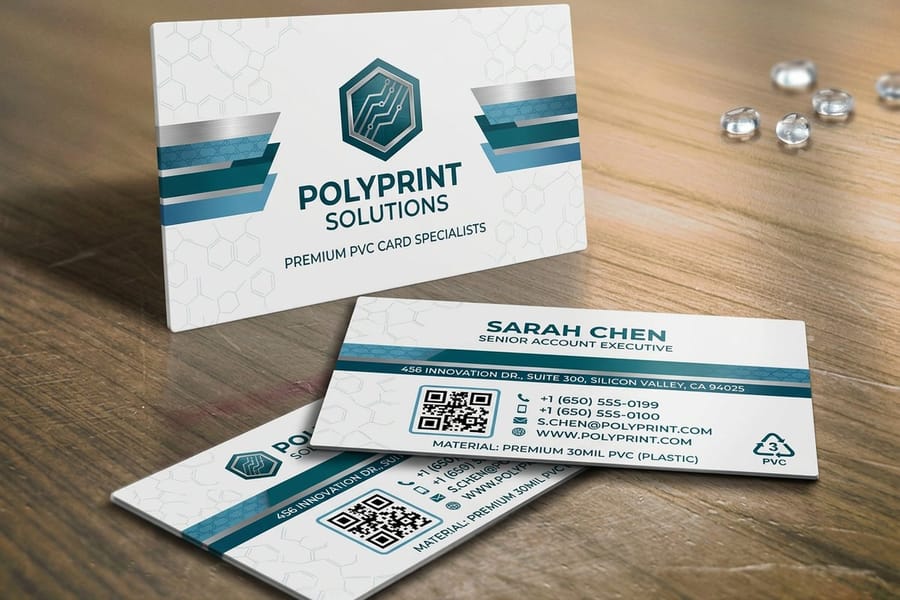
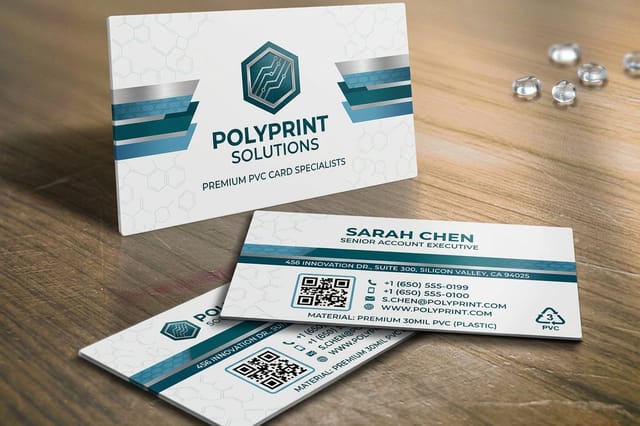
PVC paper is a solid polyvinyl chloride sheet with a printable surface, and it contains no paper fiber at all. That is why it does not swell in water and cannot be torn by hand, and why the ink has to cure on top instead of soaking in. It is sold by gauge rather than by point, so a 30mil card measures 0.030 inches against 0.016 inches for a 16pt paper card. The trade offs are firm: no laser printer, no ballpoint without a signature panel, and no paper recycling.
Quick answer
No fibers inside, and every difference follows from that
Paper works because a fiber core absorbs ink. PVC has no fiber core, so it absorbs nothing. Water cannot enter and swell the sheet, which is what makes it waterproof, and there is no grain for a nick to run along, which is what makes it tear resistant. The same absence means the printed layer sits on the surface and can scuff, a ballpoint will not dry on it, a laser fuser will warp it, and it does not belong in the paper recycling. Buy it when the piece has to last for years or live outdoors, not when it has to be cheap or written on.
What PVC Paper Actually Is, and Why It Is Called Paper
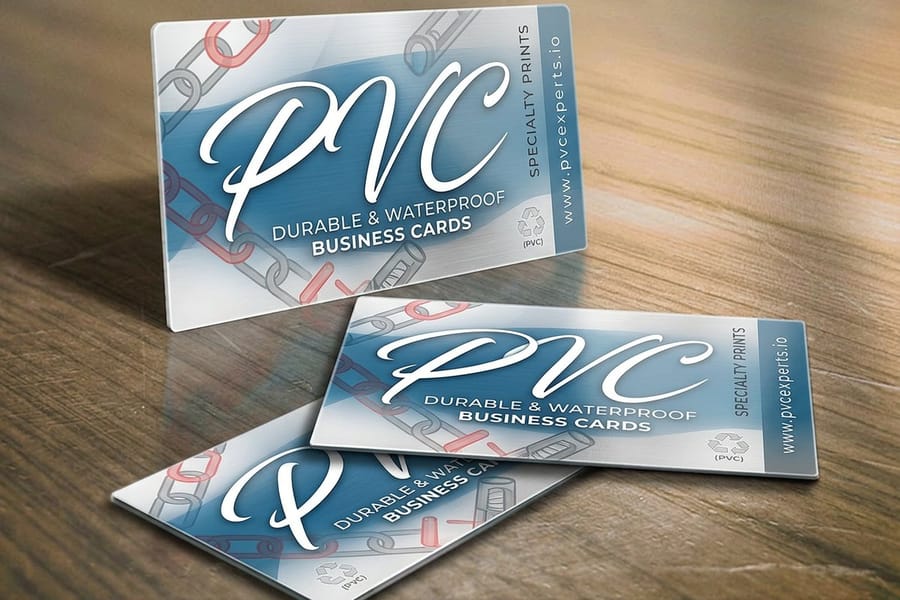
PVC paper is a sheet of polyvinyl chloride with a surface treated to hold ink. The word paper is a workshop habit, not a description. It arrives in flat sheets, it feeds through a press, it gets guillotined and drilled like a paper job, so the trade calls it paper and everyone knows what is meant.
Open a normal sheet under magnification and you find pressed cellulose fibers with a coating on each face. That fiber core does two jobs: it makes the sheet cheap, and it drinks ink, which is how offset and digital printing work in the first place. It also drinks water, and a wet fiber swells. Swelling is why a rained-on flyer buckles, why a folded damp card never lies flat again, and why a nicked edge runs into a tear along the grain.
PVC has no fibers to swell and no grain to tear along. What you gain is obvious at the counter. What you give up is less obvious, and it is the reason this page exists: absorbency is more than a weakness. It is what lets a laser printer bond toner, what lets a ballpoint dry, and what lets the sheet go in the paper recycling. Take the fibers out and all three go with them.
If you have been comparing coated paper weights and wondering where the ceiling is, the gloss cover paper guide covers the top of the paper range. PVC starts where that range runs out.
Waterproof and Tear Proof, Measured Honestly
Waterproof is the claim people buy PVC for, and it holds. A submerged card dries and looks the same, because the substrate never took on water. Tear proof needs a smaller word. You cannot start a tear with your fingers the way you can on paper, and once a corner is nicked the sheet stretches rather than running. You can still cut it with scissors, and you can still crack it if you fold a thick gauge hard against a table edge.
Both properties come from the same absence, and so do the limits. Because nothing soaks in, the printed image lives entirely on the surface. That layer is what scuffs when a card slides across concrete or rides loose in a toolbox, and it is why a protective laminate is worth specifying on anything that gets abraded rather than merely wet. Ask about it up front; it is far cheaper than a reprint.
Temperature is the other honest caveat. PVC softens well below the heat inside a laser fuser, and it stiffens and grows brittle in hard cold, so a sign left outdoors through a northern winter is a different proposition from one in a lobby. For long outdoor exposure the answer is usually a rigid board rather than a card gauge, which is what PVC rigid plastic at $25 is for, or the alternative material covered in the polystyrene signs guide.
PVC, Polypropylene, Polyester and Teslin Compared

Synthetic paper is a family, not a product, and picking the wrong member is the most common way a durable job still disappoints. The four you will meet in a print quote behave quite differently.
| Material | Feel and gauge | Takes toner or pen | Where it belongs |
|---|---|---|---|
| PVC | Rigid and glossy, usually 20mil or 30mil. | Neither, without a signature panel. | Membership, gift, ID and premium business cards that live in a wallet for years. |
| Polypropylene | Thin, flexible, slightly waxy to the touch. | No, but it conforms to curves. | Bottle, jar and cooler labels that wrap and survive condensation. |
| Polyester | Thin and very stiff for its thickness, dimensionally stable. | No, and it resists solvents and heat. | Equipment plates, asset tags, anything near chemicals or warmth. |
| Teslin | Softer, closer to a heavy paper in the hand. | Yes, it is microporous and accepts toner. | Badges and passes that must be durable and still printable in house. |
Read the third column before the fourth. If anyone downstream needs to write on the piece or run it through their own printer, PVC is out and Teslin is usually the answer. If the piece has to bend around a curve, polypropylene is the answer and PVC will fight you. If the piece has to feel expensive and stay flat, PVC wins outright, which is why PVC business cards exist as their own product rather than a paper option.
For labels the choice is normally between a coated paper face and a synthetic one. Our synthetic labels start at $25 and standard waterproof labels at $23.88, so the step up from paper is small enough that the deciding question is the environment, not the budget. The drink label guide works through the condensation case in detail.
Where PVC Earns Its Price, and Where It Does Not
Start with the number, because it is large. PVC business cards begin at $125.22 against $17.57 for standard business cards. That gap only makes sense when the card has to last, so ask one question: how long does this piece stay in service?
Cards that stay in a wallet for years are the clearest case. A gym membership card, a loyalty card, a VIP pass and a professional card handed to people who keep it all justify the material, because the alternative is reprinting a paper card that has gone soft at the corners. Anything handed out at a trade show and thrown away by Friday does not.
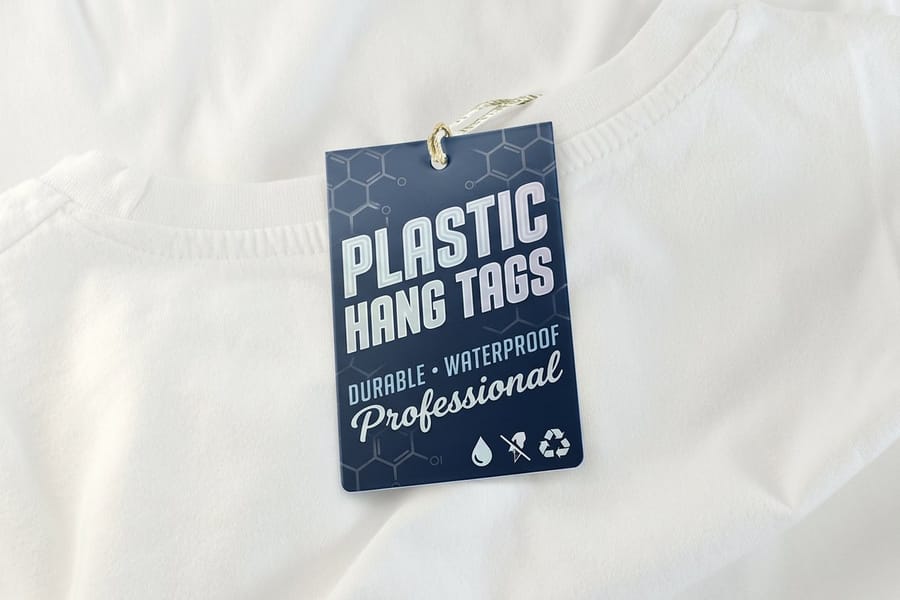
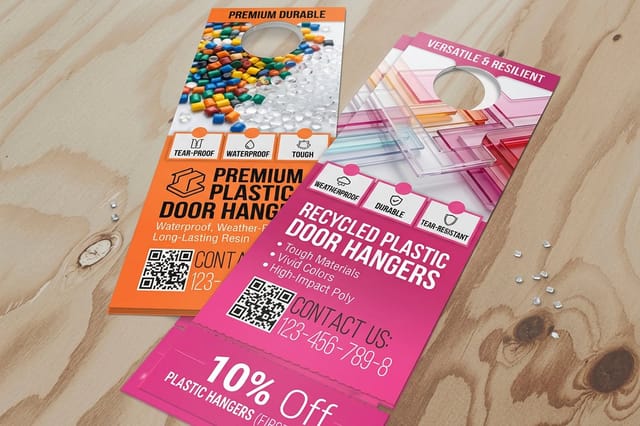
Outdoor and wet handling is the second case, and here the economics are different because the paper version simply fails. Plastic door hangers at $290.41 survive a sprinkler cycle and a week on a handle that paper would not last a morning on. Plastic hang tags at $25.27 stay legible on garden stock, marine gear and anything stored outside. On the label side, premium waterproof labels at $84.68 hold on chilled bottles where a paper face lifts and greys.
Where PVC does not pay: high volume mail, anything the recipient writes on, anything that has to go through an office printer, and any client with a recycling policy that will read the material spec. For those, put the money into stock weight or a protective coating on paper instead. If the piece is really signage rather than a handout, price it against plastic signs at $25 and browse the large format range, since a sign built as a sign outlasts a thick card every time. Ready to lay out a file, start from the correct trim in the blank template library.
Wally explains PVC paper
Take the fibers out and the water has nowhere to go
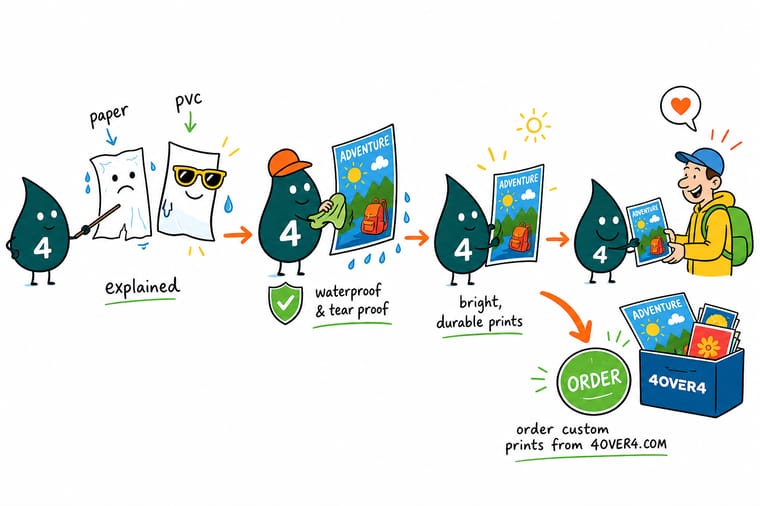
Wally runs two cards under the tap. The paper one drinks it up, swells, and goes soft at the corner. The PVC one gets wet on the outside and that is the end of it, because there is nothing inside for water to enter. Then he tries to sign both. The paper takes the pen straight away. The PVC beads the ink and smears, which is exactly the trade he wants you to see before you order.
Order PVC business cards →Specs and pricing
Synthetic stocks, sizes, and starting prices
Compare the gauges and finishes side by side, with live configuration choices and starting prices straight from the 4OVER4.COM configurator.


Print it
Order a piece that survives the weather

Explore more
Where to go next


By the numbers
PVC cards, hang tags and door hangers
Common Questions
Your PVC and synthetic stock questions, answered
What is PVC paper?
PVC paper is a thin sheet of polyvinyl chloride plastic finished so it can be printed like paper. The trade borrowed the word paper because the material arrives in sheets, feeds through presses and gets cut and drilled the same way. Nothing else about it is paper. There is no cellulose fiber inside, no grain direction, and no absorbency, so it does not soften in water, does not tear once it is nicked, and does not accept ink the way a coated sheet does. You will also see it sold as synthetic paper, plastic card stock, or by a gauge such as 20mil and 30mil.
Is PVC paper genuinely waterproof, or only water resistant?
The sheet itself is waterproof in any normal sense. Submerge a PVC card, dry it, and the substrate is unchanged, because there is no fiber for water to enter and swell. The part that can fail is the printed layer on top and the cut edge, which is why a laminate or a UV cured surface matters on anything that will be scrubbed, iced, or handled with wet gloves. For labels going on bottles and coolers, the honest answer is that the face stock is waterproof and the adhesive is the variable, so tell us the surface and the temperature when you order premium waterproof labels.
Can you write on a PVC card with a normal pen?
Not reliably. Ballpoint and rollerball ink beads on the non porous surface and smears for a long time, sometimes forever. Two fixes work: ask for a signature panel, which is a small printed patch with a receptive coating, or use a fine permanent marker. If a card exists to be filled in by hand, such as a loyalty punch card or an appointment reminder, that is a strong argument for staying on paper and ordering standard business cards instead.
Can PVC go through a laser printer or an office copier?
No. A laser fuser runs far hotter than PVC tolerates, so the sheet curls, warps, and in the worst case leaves melted plastic on the fuser roller, which is an expensive repair. Inkjet will not bond either; it sits wet on the surface and wipes off. Anything variable, such as names, numbers or barcodes, has to be printed at the same time as the rest of the job, or handled by thermal or UV equipment built for plastic.
Is PVC recyclable?
Not in the household paper or mixed plastics stream in most of the United States. PVC is resin code 3, and very few curbside programs accept it. That matters more than it used to when a client has an environmental policy. If durability is the requirement but disposal is a concern, ask about polypropylene or polyester synthetics, which recycle more widely, or about a heavy coated paper stock with a protective coating that gets most of the way there.
How thick is 30mil PVC compared with a 16pt business card?
A 30mil PVC card is 0.030 inches thick. A 16pt card is 0.016 inches. So the PVC card is close to twice the thickness, and it feels stiffer again because it is solid polymer rather than compressed fiber. Thirty mil is the credit card gauge, which is why it is the standard choice for membership and gift cards. Twenty mil is the usual pick when you want a plastic card that still fits comfortably in a wallet slot next to others.
What is the difference between PVC and the other synthetic papers?
PVC is the rigid, glossy one, and it is the right answer for cards. Polypropylene, often sold as BOPP, is thinner and more flexible, which makes it the default for bottle and jar labels. Polyester, or PET, resists heat and solvents better than either and shows up on industrial and equipment labels. Teslin is the odd one out: it is a microporous synthetic that actually accepts toner, so it is used where a sheet must be durable and still printable in house. Tell us the job and the environment and we will point at the family, not just the price.
Get Started
Need a card that comes back out of the rain looking new?
Pick your gauge, tell us where the piece has to live, and we print on PVC, polypropylene or a coated paper stock that actually suits the job.
Legal Disclaimer
Gold Standard guarantees apply to all standard orders placed through 4over4.com. Price match requires verifiable proof of a competitor's published price for an equivalent product with matching specifications and turnaround time. Satisfaction guarantee covers manufacturing defects and print quality issues. Contact support with order number and documentation. On-time delivery rate based on tracked orders 1999 to 2026. Individual results may vary based on shipping carrier performance.
