
How Promo Cards Work and Which Format Drives Redemptions


Four formats, what each one costs to print, and the offer mechanics that decide whether the card comes back to your register.
A promo card is a small printed piece that carries an offer plus a way to claim it, and two formats do almost all the work: a mailed promo postcard for reach, and a plastic discount or loyalty card for repeat visits. Postcards start at $16.48 and are read once. Plastic discount cards start at $226.11 and stay in a wallet for months, so the format is chosen by how many times the offer needs to be read, not by the price of one piece.
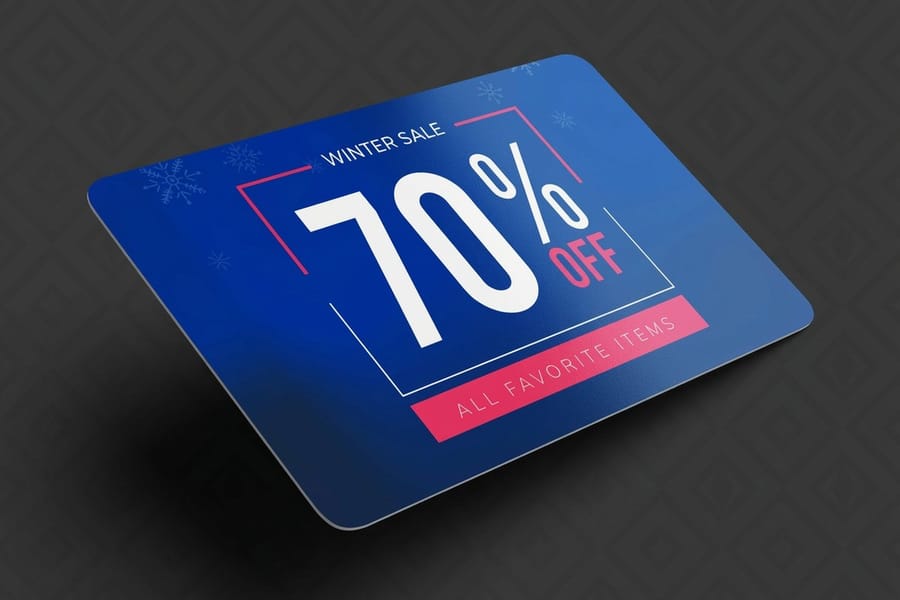
Quick answer
Reach or repeat visits, and the format follows
Promo cards split cleanly by job. A mailed promo postcard buys attention from people who have never walked in, costs little per piece, and is read once. A plastic discount, membership or gift card buys the second and third visit from someone already standing in front of you, costs more per piece, and keeps working every time the wallet opens. Choose on cost per redemption, print the expiry and the claim method on the back, and build the tracking code into the file before the run starts.
The Four Promo Card Formats and What Each One Is For

Everything sold as a promo card falls into four buckets, and picking the wrong bucket is the expensive mistake. The formats differ in who receives them, how long they survive, and whether the offer is meant to fire once or repeatedly.
| Format | Who gets it | How long it lasts | Starts at |
|---|---|---|---|
| Promo postcard | A mailing list, mostly people who have never bought. | One reading, then the recycling bin. | $16.48 |
| Plastic discount card | A customer standing at your counter. | Months in a wallet, read on every visit. | $226.11 |
| Membership or VIP card | Someone who signed up or paid to join. | A full membership term, often a year. | $226.11 |
| Gift card | A buyer, who then hands it to somebody else. | Until the balance is spent. | $226.11 |
Read the second column before the fourth. Standard postcards are cheap because they are meant to be disposable, and their job is finished the moment somebody walks in. Plastic discount cards cost more per piece because they are built to survive a pocket, and their job only starts on the second visit. A plastic membership card adds identity to the discount, which is why gyms and clubs use it, and a plastic gift card is really a payment instrument that happens to be printed.
Two formats sit at the edges and are worth knowing about. Key tags ride on a keyring instead of a wallet, so they get seen more often than a card but hold far less printed information. Paper gift certificates cost a fraction of plastic gift cards and suit a seasonal promotion that ends in January rather than a permanent program.
Building a Promo Card Offer, Step by Step
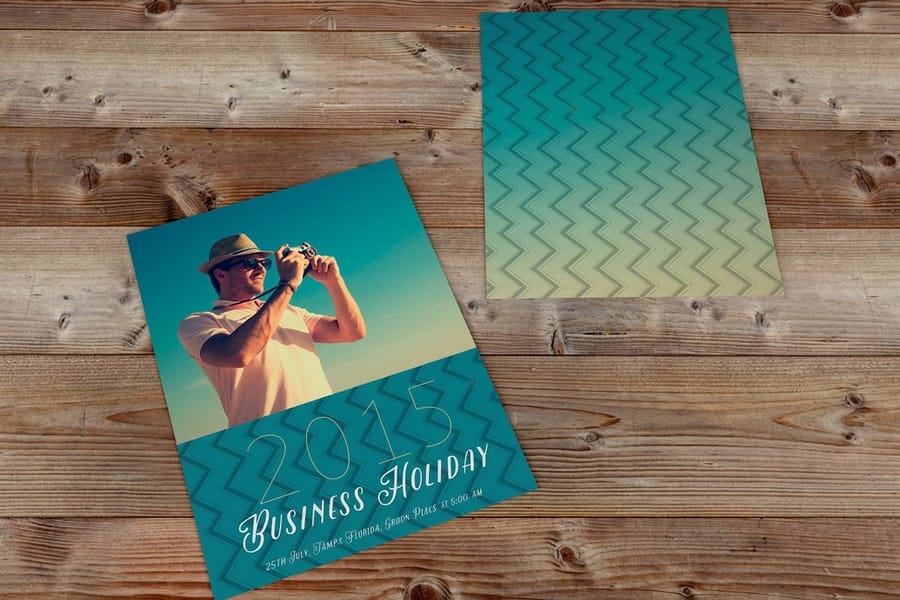
The print is the easy part. The order below is the one that keeps a campaign from producing cards nobody can redeem.
- Decide what a redemption is worth to you. Set the discount from your margin, not from what looked good on a competitor's card. If ten percent off leaves you nothing at your average ticket, the card cannot be saved by better design.
- Pick the format from the visit count. One intended visit means paper. Repeat visits mean plastic. This single choice decides your budget and your minimum run.
- Write the offer in six words or fewer. It has to read across a counter or from a stack of mail. Numbers beat adjectives, and one offer beats three stacked options.
- Put the claim mechanics on the back. Expiry date, exclusions in a readable size, one redemption instruction, and the code or barcode. Anything that could cause an argument at the register belongs here, spelled out.
- Build the tracking before the artwork is final. A distinct code per batch, a barcode your point of sale can actually scan, or a serial number range. It has to be in the file, because it cannot be added to a printed card.
- Set the dates backwards from delivery. Production plus shipping, then the weeks the offer needs to breathe, then the expiry. Mailing dates in particular need the postal transit time added, which our postcard mailing layout guide walks through alongside the address zone rules.
- Proof the small print at full size. Print the PDF at one hundred percent and read the terms at arm's length. Terms nobody can read are terms nobody agreed to.
If a mailing house is going to handle the drop, decide that before you set up the file, because addressing requirements change the layout. The trade-offs are laid out in our comparison of running direct mail through an agency versus doing it yourself.
Stock, Size and Finish, and Where Each One Fails
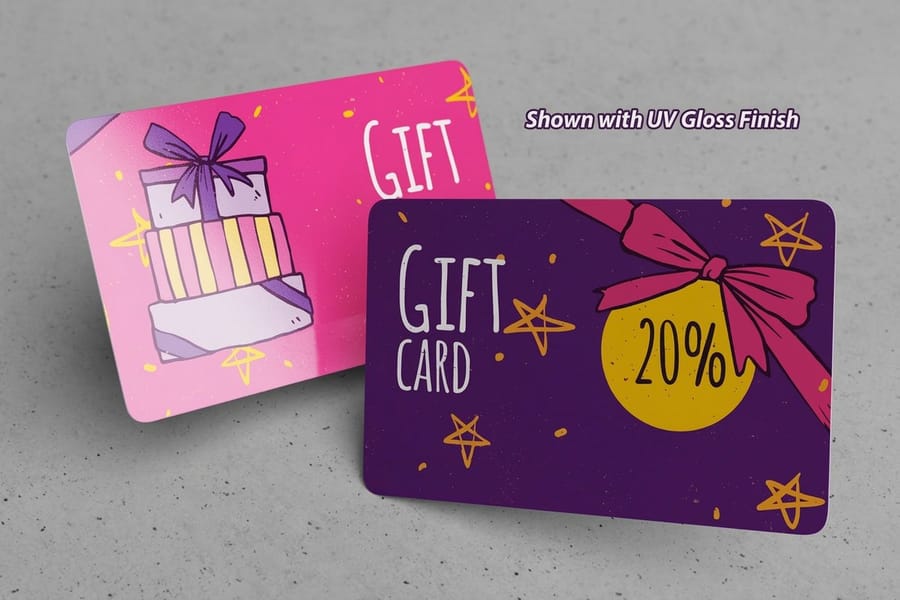
Promo cards live in two material families, and each one fails in a way that surprises people who have only ordered the other.
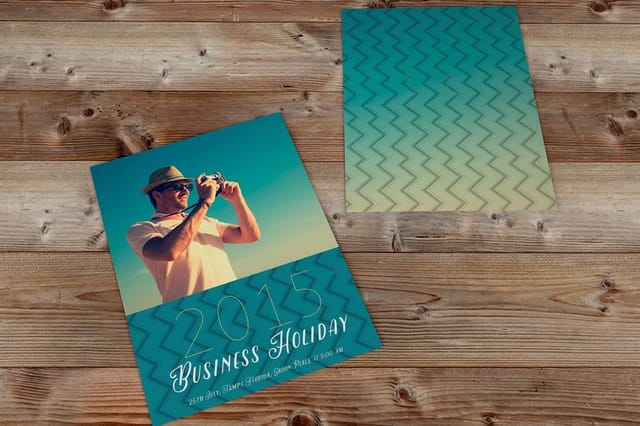
Paper. Promo postcards run on 14pt or 16pt card stock, and 16pt is noticeably more rigid on anything above 4 by 9 inches. A gloss coat makes photography snap and makes handwriting impossible, so if staff need to write a name or a date on the card, ask for an uncoated stock or a writable strip. Paper fails in the wallet: two months of pockets and the corners are soft, the ink is scuffed and the card looks like a receipt.
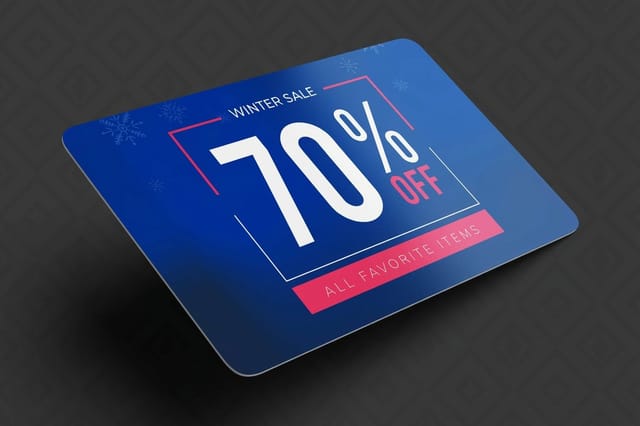
Plastic. Discount, membership, VIP and gift cards print on 30mil PVC, the same thickness as a credit card, at the standard wallet size. That is why they slot into a card sleeve and survive a year. Plastic fails on flexibility instead: there is no way to overprint it in-house, no writable surface unless you specify a signature panel, and the minimum run is high enough that a hundred-card test is not really an option. Order plastic when the program is decided, not while you are still experimenting.
The middle ground. If you want something wallet-shaped without the plastic minimum, print the offer on the back of your standard business cards and hand them out with the receipt. It is not durable and it is not a loyalty program, but it costs $17.57 to start and it tests whether anyone claims the offer at all before you commit to a PVC run. Sizes and stocks for every card format sit on the business card printing and postcard printing pages, and you can start from a correctly sized layout in the blank template library.
Getting the Card Redeemed Once It Leaves Your Hands
Printing is where most promo card projects stop and where the redemption rate is actually decided. Three habits move the number.
Give the card somewhere to live. A wallet-size plastic card gets kept because it fits the slot a wallet already has. An odd-size paper card does not fit anything and ends up in a drawer. This is the whole practical argument for plastic discount cards over a paper voucher, and it is why key tags outperform cards for businesses people visit weekly.
Make the staff the distribution channel. A stack of cards by the register redeems at a fraction of the rate of the same cards handed over with a sentence. The sentence matters more than the artwork, and it needs to name the deadline out loud.
Count what came back. Whatever code or barcode you printed, collect it at the register and total it weekly. A campaign you cannot measure gets repeated at the same size next year regardless of whether it worked. If you ran two lists, two codes tell you which one to mail again.
One limit worth naming. A promo card cannot fix a weak offer or a business people did not want to return to. It shortens the distance between wanting to come back and doing it. If your repeat rate is near zero for reasons unrelated to price, a wallet full of discount cards will not change it, and the money is better spent elsewhere. Browse the full range of card formats in the plastic card printing collection, or read the rest of the campaign playbook in our marketing strategy guides.
Wally explains promo cards
One card for the mailbox, one card for the wallet
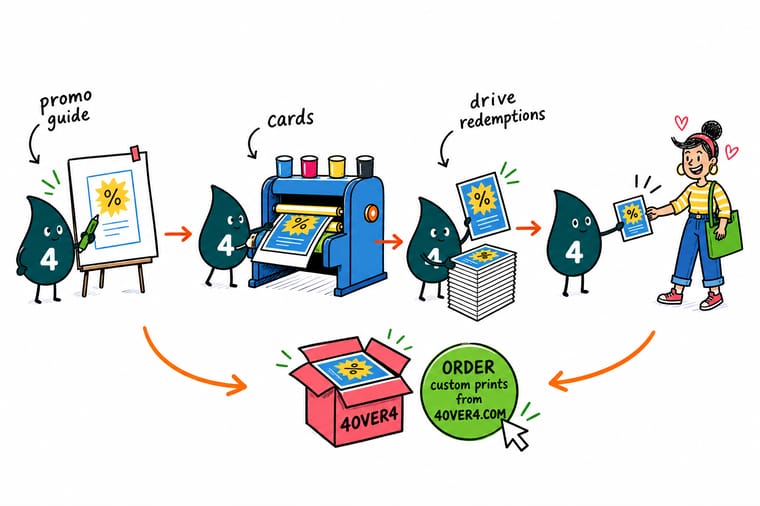
Wally mails a promo postcard to people who have never met him, and it gets one reading before it hits the bin. Then he hands a plastic discount card across the counter to somebody who just paid, and that one rides around in a wallet for a year, getting read on every visit. Same offer, two very different lives. The postcard costs almost nothing and buys reach. The plastic card costs more and buys the next visit. Wally prints the expiry date and the claim code on the back of both, because a card nobody can redeem is just an expensive coaster.
Order plastic discount cards →Specs and pricing
Promo card sizes, stocks and starting prices
Compare the plastic and paper routes side by side, with live configuration choices and starting prices straight from the 4OVER4.COM configurator.


Print it
Order the promo card format that fits the campaign
Explore more
Where to go next

By the numbers
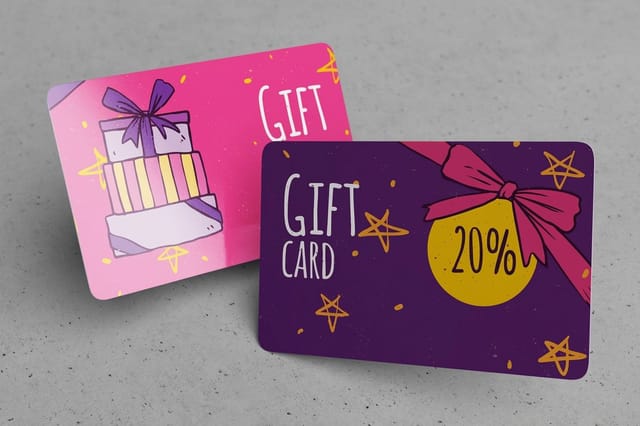
Plastic discount, gift and membership cards
Common Questions
Your promo card questions, answered
What is a promo card?
A promo card is any small printed piece that carries an offer plus a way to claim it. In practice the term covers four things: a promo postcard that goes in the mail, a plastic discount card handed to a customer at the counter, a loyalty or membership card that carries a standing rate, and a gift card or certificate that carries stored value. They share a format and a size, and they behave completely differently. The postcard is a reach tool aimed at people who have not bought yet. The plastic card is a retention tool aimed at people who already have.
Should I mail promo postcards or hand out plastic discount cards?
Mail postcards when you need new names and you are willing to pay postage per person reached. Hand out plastic when the customer is already in front of you and you want them back. The two also work in sequence: the postcard brings someone in the first time, the plastic card they leave with keeps the discount in their wallet for the next twelve months. If your problem is that nobody knows you exist, print postcards. If your problem is that people come once and never return, print plastic.
What do promo cards cost to print?
At 4OVER4.COM standard postcards start at $16.48, standard business cards at $17.57, and plastic discount cards, plastic membership cards and plastic gift cards all start at $226.11. Plastic key tags start at $309.69. The gap is not a markup on the same thing. Paper prints on a sheet-fed press and cuts out; PVC cards are printed, laminated, cured and die-cut individually, and they carry a higher minimum run. That is why the paper formats look cheap per piece and the plastic ones only make sense once a card is going to be used more than once.
What should the back of a promo card say?
The claim mechanics, and nothing decorative. Put the expiry date, the exclusions in a readable size rather than four point gray, one redemption instruction, the store address or website, and the code or barcode if you are tracking. Leave the offer itself on the front where it is read in the first second. The most common self-inflicted wound is burying the expiry date in terms nobody reads and then refusing the card at the register.
Do I need a barcode or QR code to track redemptions?
You need something unique, and a barcode is only one option. If your point of sale can scan, a barcode or QR code on the back gives you a clean count. If it cannot, a printed promo code that staff type in works, and a different code per mailing batch tells you which list responded. Sequential serial numbers on plastic cards do the same job for membership programs. The rule is simply that whatever you use has to exist before the run prints, because it cannot be added to a finished card.
How long should a promo offer run?
Short enough that the deadline matters, long enough that the mail arrives. For a mailed promo postcard, count backwards: printing and delivery, then two to three weeks of usable life after the card lands, then the expiry. An offer that expires four days after the mailing drops gets ignored because half the list has not opened the envelope pile yet. A wallet card is the opposite case, and the honest choice there is a full season or a full year, because the whole point is that it stays in the wallet.
Get Started
Plastic discount cards run 250 for $226.11 on 30mil stock
Pick plastic for repeat visits or postcards for reach, set the expiry, add your tracking code, and we print a card that survives long enough to be redeemed.
Legal Disclaimer
Gold Standard guarantees apply to all standard orders placed through 4over4.com. Price match requires verifiable proof of a competitor's published price for an equivalent product with matching specifications and turnaround time. Satisfaction guarantee covers manufacturing defects and print quality issues. Contact support with order number and documentation. On-time delivery rate based on tracked orders 1999 to 2026. Individual results may vary based on shipping carrier performance.
