
Online Business Security Best Practices That Actually Hold Up


Four doors get used: the login, the checkout, the domain, and the parcel. Each gap has a lock, each lock has a convincing substitute that fails, and paper still closes two of them.
Most online businesses are broken into through a reused password or a believable email, not through clever code. Put phishing-resistant multi-factor authentication on your mailbox, your domain registrar and your store admin, keep card data off your own servers, confirm every change of bank details by voice on a number you already had, and hold one offline backup you have actually restored from. Everything else on this page is detail around those five moves.
Quick answer
Close the four doors that actually get used
Security for a small online business is four locks, not a project. Lock the login with a hardware key rather than an SMS code. Lock the checkout by never holding card data and by knowing which scripts run on the payment page. Lock the domain with a registrar lock and DMARC moved past p=none. Lock the parcel with a seal that cannot be lifted and replaced. Behind all four sits one offline backup you have restored from and a written call list you can reach when the systems are down.
Accounts Are the Front Door, So Fix Them First

Break-ins at small companies rarely start with clever code. They start with a password that was already for sale from somebody else's breach, or with a login page that looked right.
Give every person their own account, on every tool. Shared logins feel efficient until someone leaves and you have no idea which of the eleven services they can still reach. Individual accounts also make offboarding a checklist instead of an archaeology project. Put the passwords in a shared vault, one unique password per service, and let the vault generate them so nobody is inventing patterns.
On passwords themselves, the current guidance is the opposite of what most people were trained on. NIST SP 800-63B tells verifiers to accept up to 64 characters, to allow spaces and any printable character, to check new passwords against known-breached lists, and to stop demanding a symbol, a capital and a number. It also tells them not to force scheduled resets. Rotation on a calendar produces predictable increments, and predictable increments are what credential-stuffing tools try first.
Multi-factor is where the real gain sits, and the type matters more than the fact of having it. A modern phishing kit sits between you and the real login, collects the code you type, and steals the session cookie the moment the login succeeds, which defeats app codes and SMS alike. A hardware security key does not fall for it, because the key checks the domain it is signing for and will not respond to a lookalike. Keys cost money and you need two, one in use and one in a safe, or a lost key locks you out of your own store.
Print the recovery codes for the handful of accounts that would end the business if you lost them, once, and lock the paper away. A pad from our notepads range is a reasonable place for the short incident call list that goes with it. If you are still setting the business up, the guide to starting an e-commerce business covers the account structure to build before you have staff.
The Money Path: Checkout, Chargebacks and the Fake Invoice
Two very different things get attacked here. One is the checkout page, where card data is skimmed. The other is your accounts payable, where somebody talks you into paying the wrong bank account.
For the checkout, the shortest safe answer is to never hold card data. A hosted field or a tokenized checkout keeps the card number inside the processor's iframe, which means a compromise of your server does not expose anybody's card. Never store the security code after authorization under any circumstance, because PCI DSS forbids it outright and no refund process needs it. If you take card-not-present orders, turning on 3-D Secure moves the fraud liability for authenticated transactions to the issuing bank, which is the difference between a chargeback you absorb and one you do not.
The part merchants miss is the page itself. PCI DSS v4.0 added requirements 6.4.3 and 11.6.1, which ask you to know every script running on the payment page and to detect unauthorized changes to it. Both stopped being best practice and became mandatory on 31 March 2025 for merchants in scope. Digital skimming works precisely because one extra line of JavaScript on a page nobody audits is invisible for months.
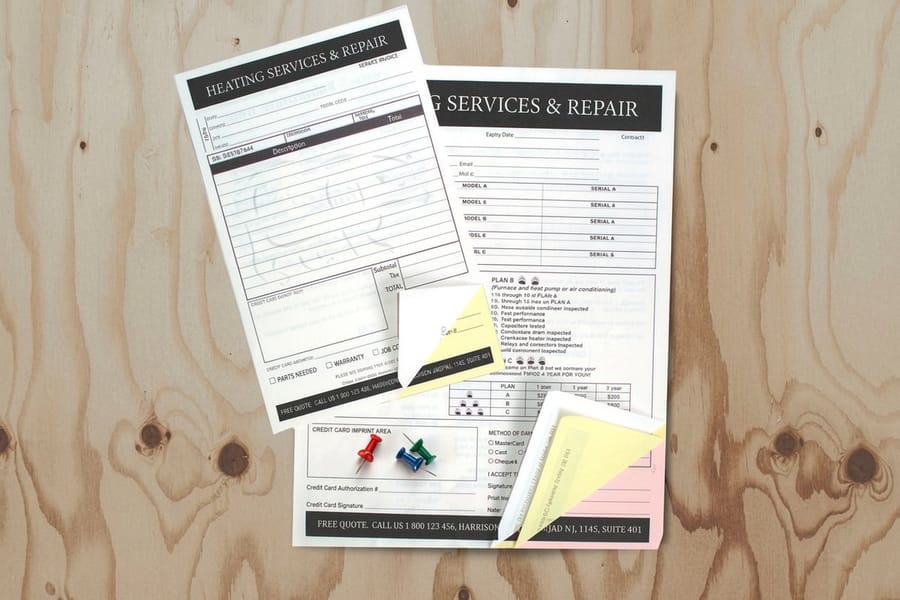
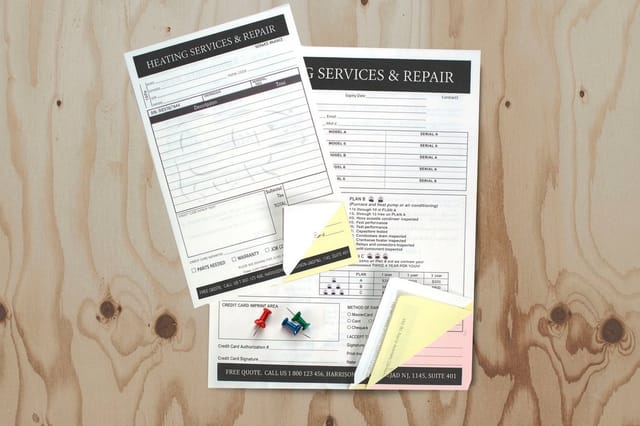
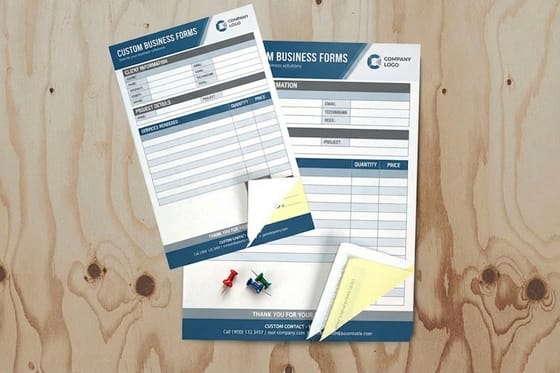
Invoice fraud needs no technology at all. A supplier you know emails to say their bank details have changed, the message reads normally, and the reply-to is one character different from the real domain. The control is boring and it works: any change of payment details is confirmed by voice on a number you already held before the request arrived, and a second person approves the change. Keep the paper trail too. Sequentially numbered carbonless forms give you a copy that stays in the pad, which is worth more in a dispute than a spreadsheet anybody can edit. Our guide to printing custom business receipts covers how those sets are laid out.
Where Print Still Belongs in an Online Security Plan

An online business has physical edges. The parcel leaving your bench, the documents you post, the bench itself where somebody makes the decision to click. Print is not a replacement for any control above, and anyone selling it as one is overselling. It covers four specific gaps.
| Printed piece | What it defends | From | The honest limit |
|---|---|---|---|
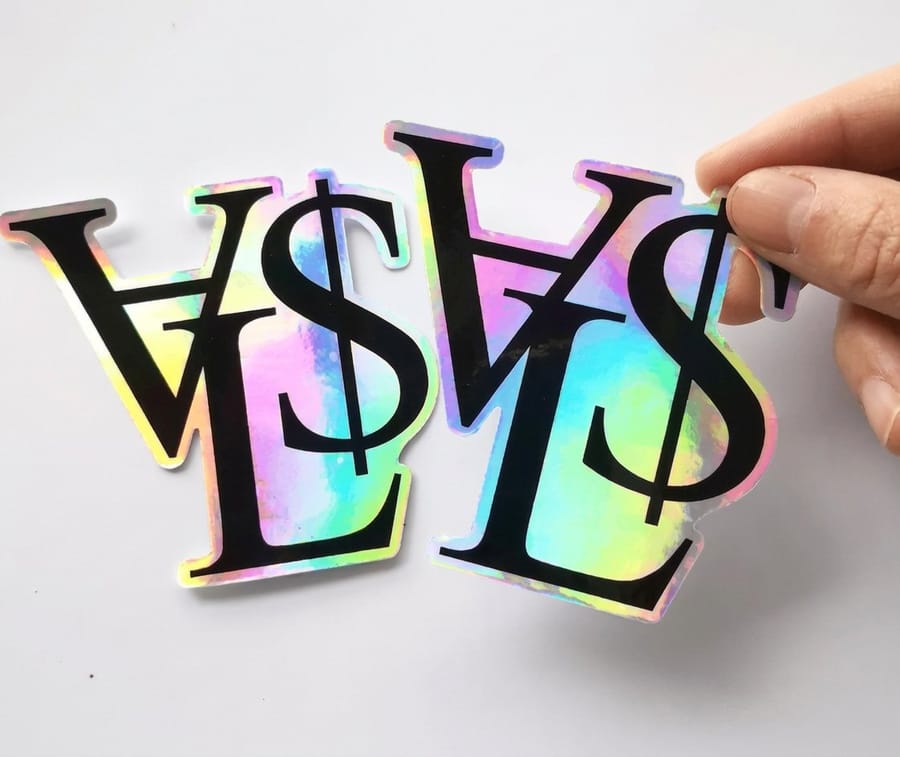
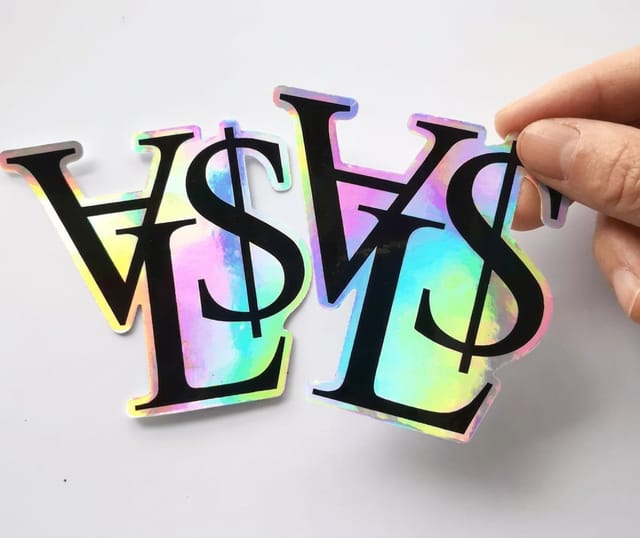
| Holographic seals | Proof a carton was opened in transit, and a mark that is awkward to counterfeit. | $322.98 | A specialty run, so the entry price is well above a plain label. Worth it only if you actually get opened-parcel claims. |
| Warning labels | Telling the receiver to refuse the delivery if the seal is broken. | $29.16 | Instructional only. It changes behavior, it does not stop anyone. |
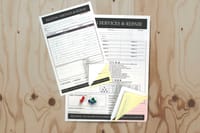
| Carbonless forms | Trading through an outage, and a retained copy of what was agreed. | $120.82 | Paper with customer data on it is a risk of its own. Lock it up, then shred it. |
| Posters | The rule staff need at the moment they are packing or paying. | $108.75 | People stop seeing a poster after a month. Change it quarterly or it is wallpaper. |
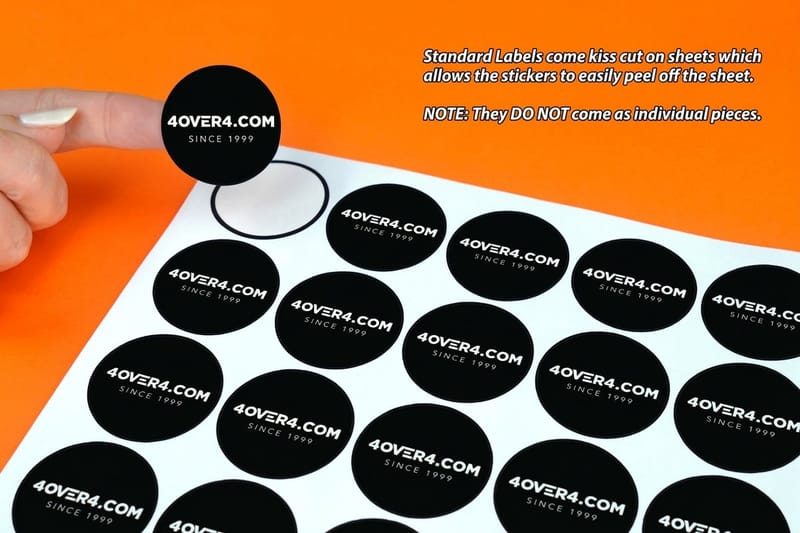
The seal is the one worth understanding properly. A normal paper label is not tamper-evident, because it lifts off in one piece and goes back down looking untouched. A holographic seal across the flap either destroys its own pattern when it is removed or leaves a visible residue, so the customer opening the box can tell you whether it reached them intact. That turns an argument into evidence. Read the guide to packaging labels, seals and tape for how the seal sits alongside branded tape, and browse the rest of the range in custom labels and custom stickers.
The poster above the packing bench is the cheapest control on this page. Two lines, large enough to read from the far side of the room: confirm any change of bank details by phone, and never open an attachment from a supplier who has not sent one before. Order it with the rest of your marketing print rather than as a special job, which the print for e-commerce brands guide walks through.
Your Domain and Your Mail Are Part of the Perimeter
The domain is the account most often left in one person's private registrar login, on a card that expired two years ago. It is also the one that resets everything else.
Move it into a company account, turn on multi-factor there, set auto-renew, and switch on the registrar lock so a transfer cannot start until you clear the lock yourself. Keep the registrar login separate from the hosting login and from the mailbox, so one compromised password does not walk the whole chain. Then look at the neighbours: registering the obvious lookalikes of your own domain costs a few dollars a year and removes the easiest way to impersonate you to your own customers.
On mail authentication, publish SPF, sign with DKIM, and then finish the job with DMARC. Most small businesses publish DMARC at p=none, read one report, and leave it there. At p=none nothing is enforced and anybody can still send mail as your domain. The path is p=none while you find the legitimate senders you forgot about, then quarantine, then reject. Google and Yahoo have required SPF, DKIM and DMARC from bulk senders since February 2024, so the work also protects your delivery rate.
Post is part of the same perimeter and gets the least thought. A branded envelope is excellent for a marketing piece and a poor choice for anything holding an account number, because the print on the outside tells anyone handling it what is inside. Use plain security-tint stock for those, keep account numbers off the exterior entirely, and save the printed envelopes for mail you want opened. If a document needs to resist forgery rather than snooping, that is a different discipline, covered in what security printing is and how it stops document fraud, and the full range sits in envelope printing.
The Data You Hold and the Day Something Goes Wrong

The cheapest data to protect is the data you never collected. Before adding a field to a form, ask what you would do with it and how long you need it, then set a deletion date. A customer list you deleted last year cannot leak this year.
Back up on the 3-2-1 pattern: three copies, on two kinds of media, one of them off-site, and make at least one copy immutable or offline so ransomware cannot encrypt the backup alongside the original. Then restore from it. An untested backup is a belief, not a backup, and the thing people discover during a real incident is not that the files are missing but that a full restore takes eleven hours they had budgeted as one. Write the actual restore time down after you test it.
Review access every quarter. Who still has admin on the store, who still has a key to the analytics, which contractor from March is still in the shared drive. Offboarding runs off the same list. Every US state now has a data-breach notification law, so the clock in an incident is legal as well as commercial, and the plan you want is a single page: who calls the bank, who calls the processor, who talks to customers, and where the backups live. Print it. If the incident is an outage, the online copy is exactly the copy you cannot reach.
Keep trading while you fix it. A numbered order pad and a pen at the counter means the day is not lost, and the copies reconcile afterwards. Our business form printing guide covers the part counts, and NCR form security features explains what sequential numbering and a void pantograph actually prove. More operational guides sit in business applications.
Wally locks the four doors
Login, checkout, domain, parcel
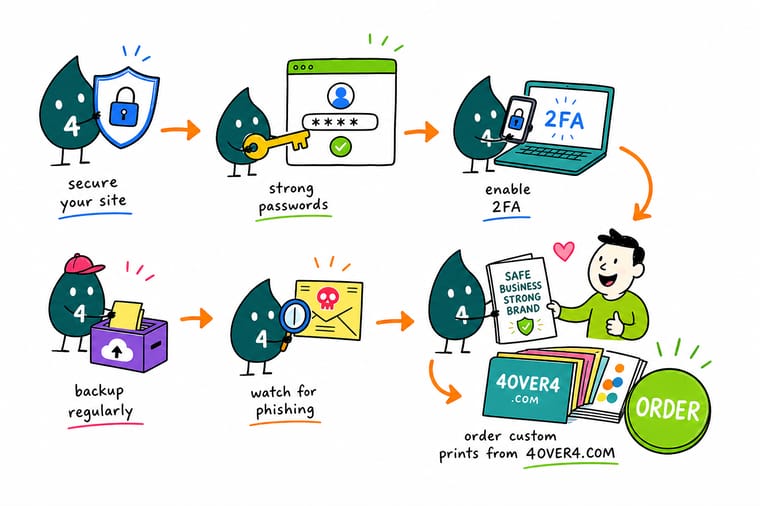
Wally does not bother with the clever attacks. He puts a hardware key on the mailbox and the registrar, keeps card numbers off his own machine, moves DMARC past p=none so nobody can send mail as him, and runs a holographic seal across every carton flap so the customer can see whether the box was opened. Then he restores a backup on purpose, before he needs it. The one thing he keeps on paper is the short list of people to call when the screens go dark.
Order tamper-evident holographic seals →Specs and pricing
The printed pieces, sizes and starting prices
Seals, multi-part forms and envelopes with live configuration choices and starting prices straight from the 4OVER4.COM configurator.


Print it
Back the plan with something physical

Explore more
Where to go next



By the numbers
Holographic seals, warning labels and secure envelopes
Common Questions
Your online security questions, answered
What is the single most important security step for a small online store?
Put strong multi-factor authentication on the email account first, then on the domain registrar, then on the store admin. Almost every other account you own resets through that mailbox, so an attacker who owns your email owns the rest of the estate without ever touching your website. Once those three are locked, work outward to the payment processor, the bank, and the tools your staff log into.
Is SMS two-factor better than nothing?
Yes, and it is still the weakest option on the list. A SIM swap moves your phone number to an attacker's handset by talking a carrier into a port, after which the codes arrive on their screen. The order of preference is a hardware security key, then an authenticator app, then SMS. If a platform only offers SMS, turn it on and add a carrier port-out PIN, then push the vendor for WebAuthn support.
Do I still need to care about PCI compliance if Stripe or Shopify handles the cards?
Yes. Using a hosted or tokenized checkout keeps raw card data off your servers and drops you to the shortest self-assessment questionnaire, but the assessment is still yours to complete and the checkout page is still yours to defend. PCI DSS v4.0 added requirements 6.4.3 and 11.6.1, which ask merchants to inventory the scripts running on the payment page and to detect unauthorized changes to it. Those became mandatory on 31 March 2025. Digital skimming works by slipping one extra script onto a page nobody is watching.
How often should staff change their passwords?
Not on a schedule. NIST SP 800-63B advises against periodic forced resets, because people respond by incrementing a number and reusing the pattern everywhere. Change a password when there is evidence it was exposed, when someone leaves, or when a service you use reports a breach. Spend the effort on unique passwords in a shared vault and on multi-factor instead.
Are tamper-evident seals worth it for a small shop?
They pay off when you are getting claims that a parcel arrived empty or opened, when you sell something worth counterfeiting, or when a courier hands off between several carriers. Custom Holographic Stickers start at $322.98 at 4OVER4.COM, which is a specialty run rather than a plain label price, so the case for them is dispute evidence and not decoration. If you get one such claim a year, skip it and photograph the packed box instead.
What should a small online business actually keep on paper?
Three things. Multi-factor recovery codes for the accounts that would end the business if you lost them, printed once and locked in a safe or a bank box. A short incident call list with the bank, the processor, the host and your insurer, because you will not want to search for those numbers mid-incident. A two-part or three-part order pad so orders can keep being written when the system is down. Everything else is safer not printed, and anything with customer data on it gets shredded rather than binned.
Get Started
Holographic seals start at 100 for $322.98
Pick a holographic seal for the carton flap, a numbered order pad for the day the system is down, and a poster your packing team will read every morning.
Legal Disclaimer
Gold Standard guarantees apply to all standard orders placed through 4over4.com. Price match requires verifiable proof of a competitor's published price for an equivalent product with matching specifications and turnaround time. Satisfaction guarantee covers manufacturing defects and print quality issues. Contact support with order number and documentation. On-time delivery rate based on tracked orders 1999 to 2026. Individual results may vary based on shipping carrier performance.
