
How to Print Menu Cards That Survive a Full Dinner Service


Format, stock, laminate and file setup for menu cards that go back in the caddy at the end of the night instead of in the bin. Written for kitchens that reprint on a season, not a whim.
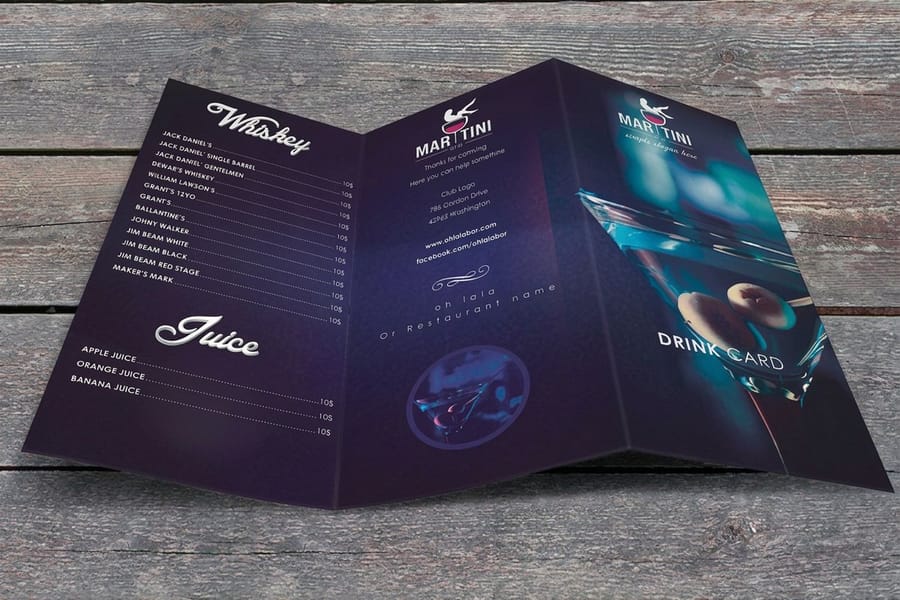
To print menu cards, pick the format the table needs first, print on 14pt cover or heavier, and laminate only if the same card will be handed to hundreds of guests before the prices change. Sizing follows the table setting rather than the dish list, with 4.25 x 11 for dine-in and drink cards and 5.5 x 8.5 for dessert and specials. The two decisions that actually cost money are format, since a folded table tent is a different manufacturing route than a flat card, and how you split fixed content from seasonal content in the file.
Quick answer
The card fails at the edge, so plan the edge first
A menu card is a piece of equipment that happens to carry type. Choose the format from where the piece sits on the table, hold the stock at 14pt or above for anything reused, and treat lamination as a trade rather than an upgrade: it buys spill resistance and takes away your ability to correct a price. Set the file up with the fixed content and the seasonal content on separate cards, and the quarterly reprint stops being a whole new menu.
Pick the Format Before You Pick the Size
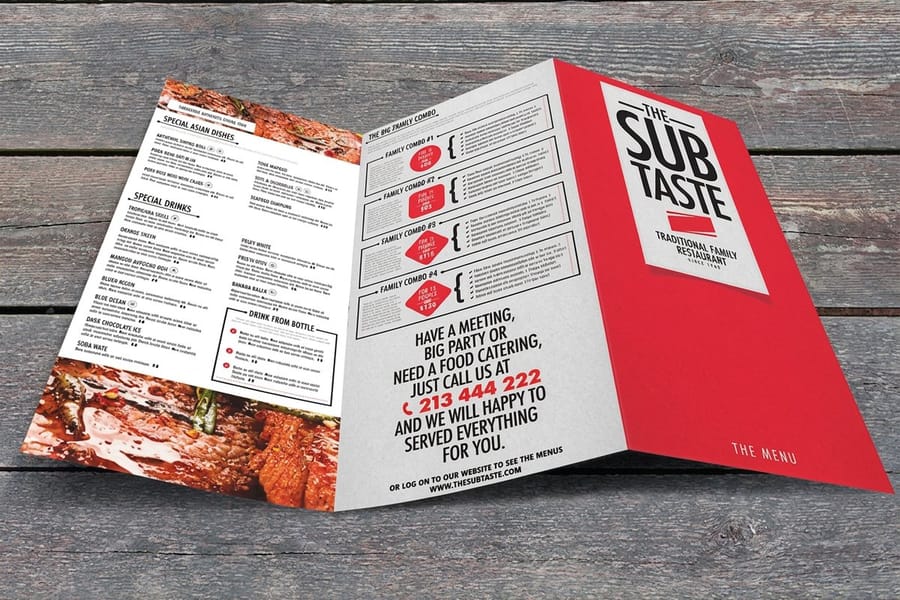
Most menu print jobs go wrong at the very first decision, because the format was chosen from a design file instead of from the table. A flat card, a folding table tent and a multi-page menu are three separate manufacturing routes with three separate price curves, and switching between them after the artwork is built usually means rebuilding it.
| Format | Where it lives | Common size | What it costs you |
|---|---|---|---|
| Flat menu card | Handed to the guest or held in a caddy. | 4.25 x 11, 5.5 x 8.5, 8.5 x 11 | Cheapest per piece. Needs a caddy or a server to hold it up. |
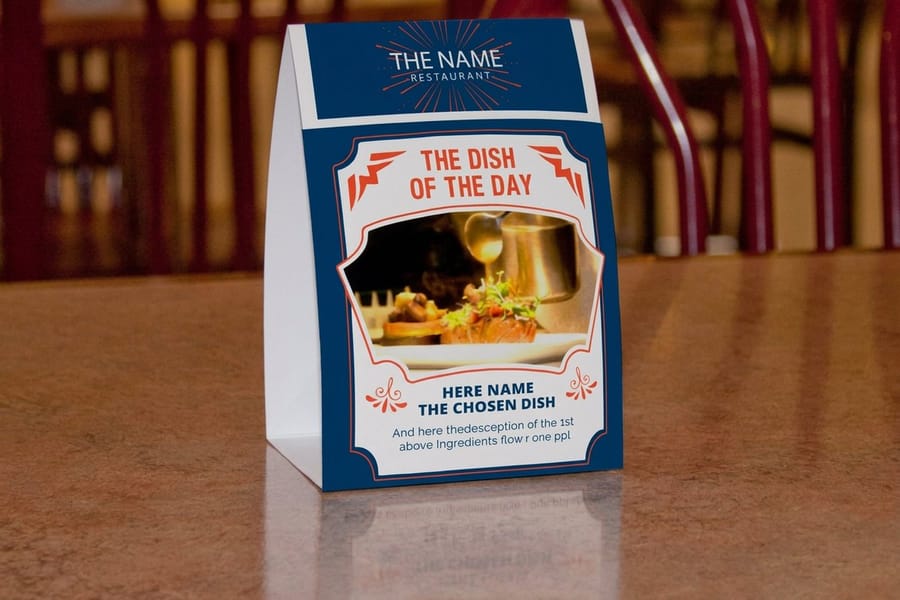
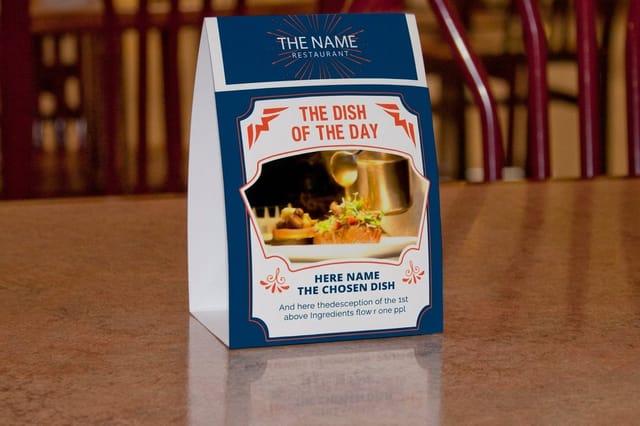
| Table tent | Stands on the table on its own, seen without being picked up. | 4 x 6 folded, 8.5 x 3.667 panels | Scoring and folding push the entry price well above a flat card. |
| Folded menu | Full dine-in menu with sections across panels. | 11 x 8.5 folded to 5.5 x 8.5 | More surface for the same sheet, but the fold has to fall between sections. |
| Takeout sheet | In the bag, read once, thrown away. | 8.5 x 11, 8.5 x 14 | Light stock, high quantity, no laminate. Cheapest way to be in the house. |
The practical split is durability against visibility. A flat card is the cheapest thing on the table and the easiest to reprint, which is why it wins for anything that changes. A table tent is the only one of the four that sells to a guest who never asked for a menu, so it earns its higher entry price on drinks, desserts and happy hour rather than on the main list. Table Tents start at $554.39 against $57.11 for Standard Menus, and that gap is the format decision, not the paper.
If the piece has to fold, read the fold types guide before you build the artwork, because the fold position dictates where a section can start.
Stock and Size That Survive a Dining Room
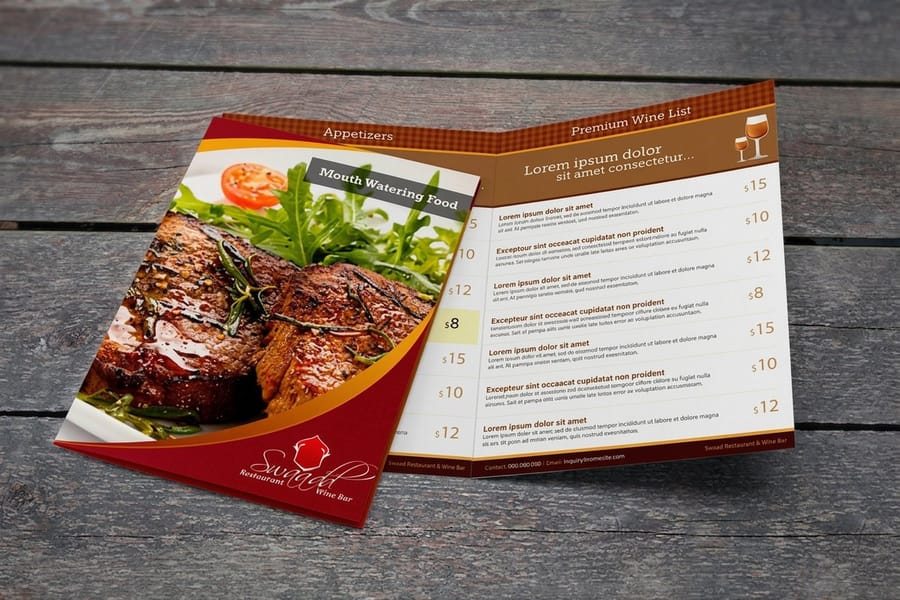
Menu cards do not fail from ink. They fail from being bent, stacked damp, and gripped at one corner by a person holding a phone in the other hand. Stock weight is the whole defense.
14pt cover is the floor for a card that comes back to the caddy. 16pt and 18pt hold their shape noticeably longer, and the difference shows up fastest on tall cards: an 11 inch card in 14pt starts to bow when a guest holds it at the top edge, while the same card in 18pt stays straight. For a takeout sheet destined for a bag, none of that matters. Use 100lb gloss cover, print more of them, and accept that they are consumable. Our 100lb gloss cover breakdown covers where that stock earns its place.
On size, let the smallest table in the room decide. A 4.25 x 11 card fits between a place setting and a water glass, which is why it dominates dine-in service and drink lists. 5.5 x 8.5 is the standard for dessert and specials cards that circulate after the mains are cleared. 8.5 x 11 gives you a single-page full menu, and 8.5 x 14 buys about a third more room for kitchens that refuse to cut items. The full menu size guide lays every dimension out side by side.
One thing worth doing before you order at quantity: print a proof and set it on a real two-top, with plates. A card that has to be moved so a dish can land is a card that ends up on the floor by the second seating.
Lamination: What It Buys and What It Locks In
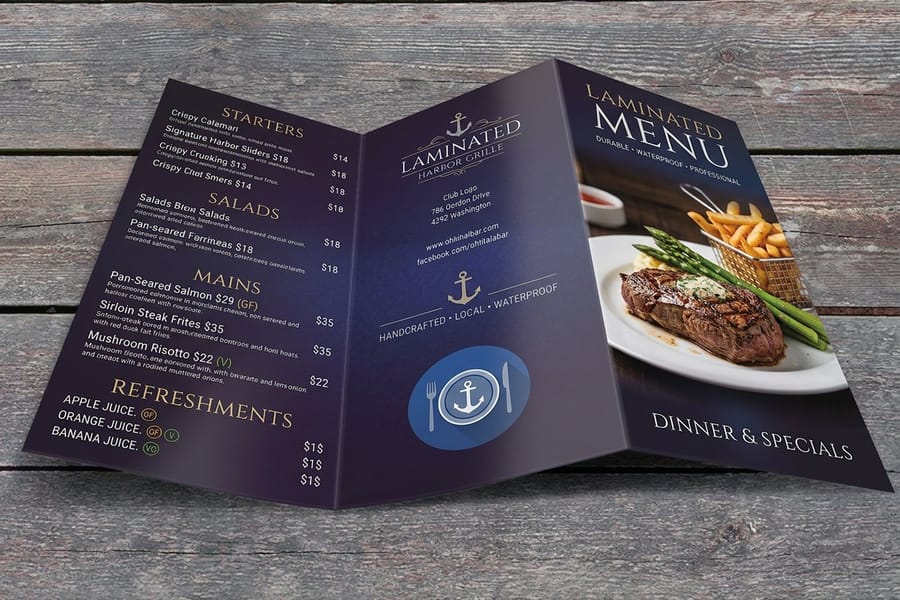
Laminate turns a menu card into equipment. A film on both faces takes wine, oil and a sanitizer wipe without the ink lifting, and the card goes back in rotation instead of the bin. That is worth real money over a season.
It also freezes the card. You cannot write in a price change, a laminated card with a wrong number has to be pulled and reprinted in full, and the film adds thickness that changes how many cards fit a caddy. Gloss film reads brighter and makes food photography pop, at the cost of showing every fingerprint under a downlight. Matte film hides handling and reads calmer, but it knocks the saturation down a step, so a photo-heavy menu loses some of its appetite appeal.
The failure point nobody plans for is the edge. If the film is trimmed flush through the card, the exposed paper core at the cut takes on liquid every time the card is wiped, and the corner begins to separate. A sealed laminate border, where film meets film just past the trim, is what keeps the card intact past a few hundred services. When you order laminated menus, that seal is the specification that matters more than the film gloss.
Where lamination is the wrong tool: outdoor patio service in real weather, and anything that gets handled wet all day. Those want a synthetic sheet rather than laminated paper, which is covered in the waterproof menu guide.
Build the File So the Seasonal Reprint Is Cheap
Menu cards almost never wear out before they go out of date. A supplier price moves, a dish leaves, a cocktail changes, and a perfectly good stack of cards is suddenly wrong. Build for that from the start and the reprint costs a fraction of the original run.
Split the content in two. The base card holds the logo, the section headings, the fixed dishes and the legal lines, and it gets printed in quantity because it will stay true for a year. A second, smaller card holds specials, seasonal items and anything at market price, and it gets printed in short runs whenever the kitchen changes. Design both to sit together so the pair looks intentional rather than patched.
Inside the file, keep every price in its own text block instead of tabbing it onto the end of the dish line. When a number changes, you edit one block and nothing reflows. Set the document at final trim size with an eighth of an inch of bleed on every edge, hold prices and headings a quarter inch inside the trim, convert fonts to outlines, and export a single flattened PDF. Start from a correctly sized file in the blank template library if you would rather not build the geometry yourself, and read how online printing works for the handoff end to end.
Last thing: order the specials card and the base card in the same job when the schedule allows. One shipment, one press check on your part, and the colors match across both pieces because they ran together.
Wally explains menu cards
Where the card actually wears out
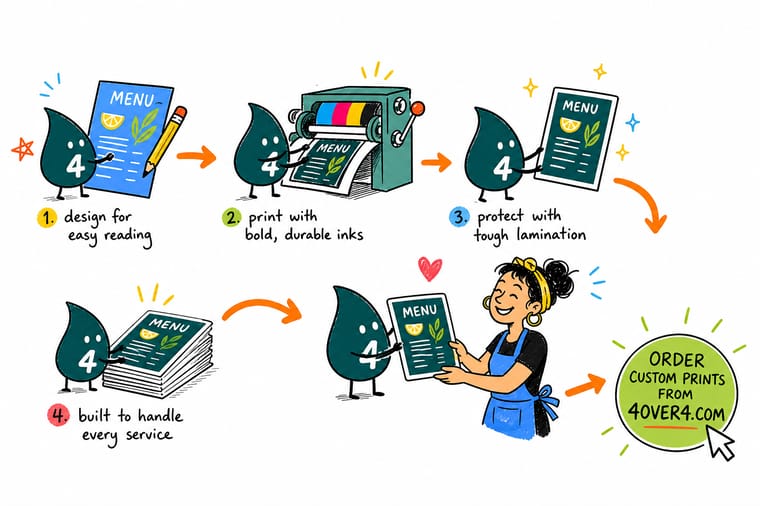
Wally has wiped a lot of menu cards. The face never gives up first. The corner does, because that is where the laminate was cut flush and the paper core drinks whatever is on the table. So he asks for a sealed border, keeps the card at 14pt or heavier so it does not bow when a guest holds it by the top edge, and puts the specials on a second card he can reprint on its own when the kitchen changes its mind on Thursday.
Order laminated menu cards →Specs and pricing
Menu formats, sizes and starting prices
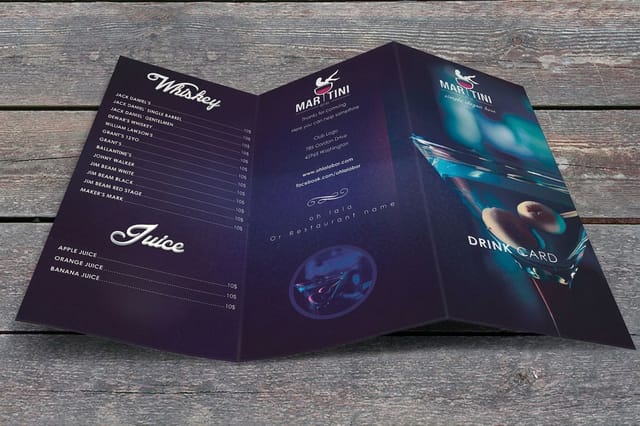
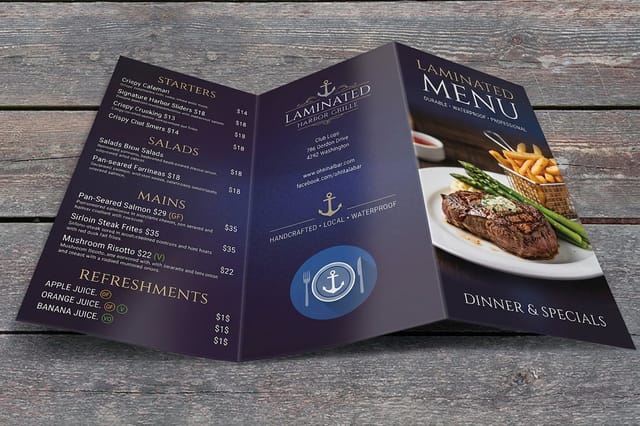
Flat cards, laminated cards and table tents side by side, with live configuration options and starting prices straight from the 4OVER4.COM configurator.
Print it
Order menu cards built for table service
Explore more
Where to go next

By the numbers
Menus laminated for a full dinner service
Common Questions
Your menu card questions, answered
What size should a menu card be?
The size follows the table, not the food list. A slim 4.25 x 11 card slides between a place setting and a glass without crowding either, which is why it dominates dine-in service and drink lists. 5.5 x 8.5 is the standard for a dessert, wine or specials card that gets passed around after the main menu leaves. 8.5 x 11 is a single-page full menu, and 8.5 x 14 buys you a third more room when the kitchen refuses to cut items. Measure your smallest two-top before you commit: a card that has to be moved to make room for a plate gets set on the floor.
Should I laminate menu cards?
Laminate when the same card will be handed to hundreds of guests, skip it when the card is seasonal or disposable. A laminated card survives spills, sanitizer wipes and greasy fingers, so it earns its cost over months of service. It also freezes the content. Nobody is writing a new price on a gloss film, and a card you cannot correct becomes a card the server has to apologize for. If your prices move quarterly, the honest answer is an unlaminated card on heavier stock, reprinted more often.
What paper weight is best for printing menu cards?
14pt cover is the practical minimum for anything reused across services, and 16pt or 18pt is worth the upgrade on tall cards because a 11 inch card in 14pt starts to flop when it is held at the top corner. For takeout menus that go in a bag and get thrown away, 100lb gloss cover is the sensible choice: it prints food photography well, folds cleanly, and costs a fraction of card stock at the same quantity.
How do I set up a menu card so weekly changes are cheap?
Keep everything permanent on one card and everything volatile on another. The base card carries the logo, the section headings, the fixed dishes and the legal lines. A second, smaller card carries the specials, the seasonal cocktails and anything the market price touches. Build both in the same layout so they sit together in the caddy, then reprint only the second one. In the file itself, keep prices in their own text block rather than tabbed into the dish line, so an update never reflows the whole page.
Can I wipe a laminated menu with sanitizer?
Yes, and that is the main reason food service laminates in the first place. The thing that fails is the edge and the corner, not the middle. Repeated wiping drives liquid into any spot where the film was trimmed flush with the paper, the core swells, and the corner starts to separate. Ask for a sealed laminate border, handle the cards by the face rather than the corner, and pull damaged cards out of rotation instead of letting a guest see a peeling edge.
How much does it cost to print menu cards?
Standard Menus start at $57.11 at 4OVER4.COM and Laminated Menus start at $57.11, so the laminate itself is not what moves your budget. Format is. Table Tents start at $554.39 because a tent is a scored, folded, free-standing piece rather than a flat card, which is the real fork in the decision. Configure the size, stock and quantity on the product page to see your exact number before you order.
Get Started
Order 50 laminated menus from $57.11
Pick your size and stock, add a sealed laminate if the card has to survive service, and we print menu cards that go back in the caddy at closing time.
Legal Disclaimer
Gold Standard guarantees apply to all standard orders placed through 4over4.com. Price match requires verifiable proof of a competitor's published price for an equivalent product with matching specifications and turnaround time. Satisfaction guarantee covers manufacturing defects and print quality issues. Contact support with order number and documentation. On-time delivery rate based on tracked orders 1999 to 2026. Individual results may vary based on shipping carrier performance.
