
How to Print a Wholesale Catalog Buyers Can Order From


A wholesale catalog is a booklet built around ordering. Every line item has to carry the same fields, the page count picks the binding, and the run prices from there.
To print a wholesale catalog, give every product a SKU code, a case pack, a minimum order quantity and a wholesale price, put a terms page near the front and an order form at the back, then choose the binding by page count. Saddle stitch covers 8 to about 64 pages in multiples of 4 and opens flat; perfect binding starts around 28 pages and gives you a printable spine. Keep the prices on a separate dated sheet so a price change costs one flyer instead of the whole book.

Quick answer
Structure it for ordering, then let the page count pick the binding
A wholesale catalog earns its cost by removing the reason to email you. Every line carries a SKU, a case pack, a minimum order quantity and a wholesale price next to the photo, with terms near the front and an order form at the back. Count the finished pages before choosing a binding: saddle stitch runs 8 to roughly 64 pages in multiples of 4 and lies flat on a desk, perfect binding needs about 28 pages to hold glue and gives you a spine to print on. Keep the wholesale prices on a separate dated sheet so the book survives the next price change.
What a Wholesale Catalog Carries That a Retail One Does Not
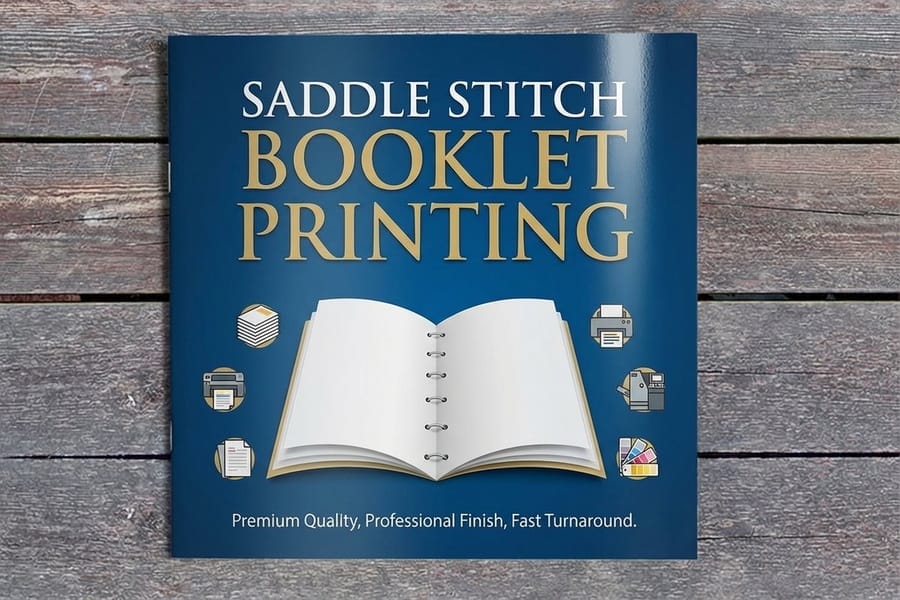
A retail catalog sells a feeling. A wholesale catalog gets an order written on it, so every line has to answer the four questions a buyer asks in sequence: what is it, what do I call it when I order, how many come in a box, and what does it cost me.
Miss one and the buyer stops and emails you. That email is where the order dies, because it arrives on a Thursday afternoon alongside forty others. The point of the printed book is that it removes the need to ask.
| Field on the line | Why it is there | What happens without it |
|---|---|---|
| SKU or item code | The unique string the buyer types into their purchase order. | Orders arrive describing the product in the buyer's own words, and someone in your office guesses. |
| Case pack and inner pack | How many units ship in a carton, and how many in the sleeve inside it. | A buyer orders 10 and receives 120, then asks to return them. |
| Minimum order quantity | The floor per item, and often a separate floor for the whole opening order. | You process orders that cost more to pick and ship than they earn. |
| Wholesale price and MSRP | Their cost and the price they are expected to sell at. | The buyer cannot calculate margin at the page, which is the only calculation that matters to them. |
| Terms and lead time | Payment terms, freight policy, and how long production takes. | Every first order turns into a phone call before it is placed. |
Three structural pages carry the rest: a short terms page near the front, a size or color chart if the line needs one, and an order form at the back. Everything else is product. Resist the brand story spread. Buyers already decided they were interested when they picked the book up.
Format matters less than most people expect, but it is not free. Letter size fits a three ring binder and a file drawer, which is where supplier catalogs actually live, and it prints without waste. Smaller formats mail cheaper and read fine for a short line, but they drop you to two or three products a page and push the page count up. Decide the size before the first spread is designed. If you are still choosing between a bound catalog and a folded piece, the format comparison is the faster read.
Choosing the Binding by Page Count, Not by Preference
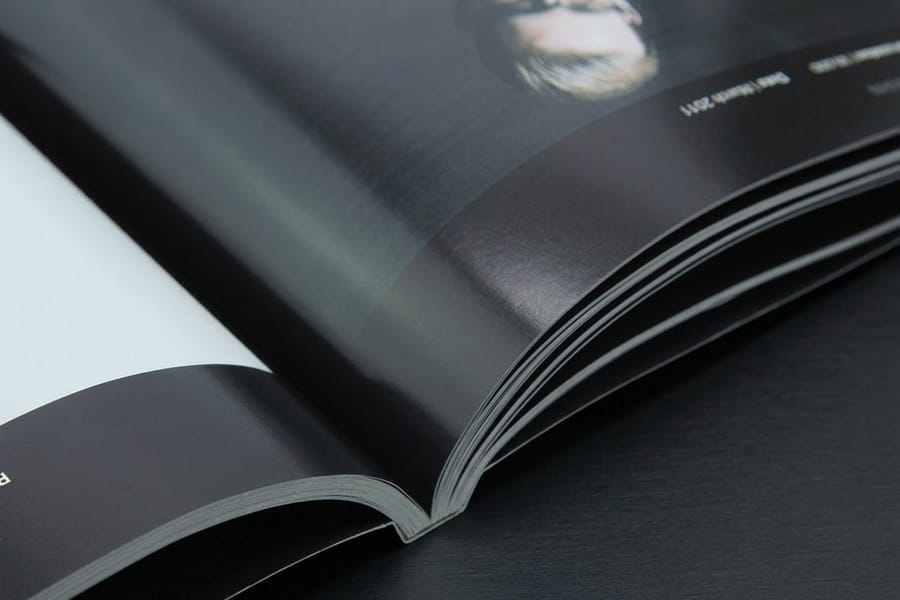
Count the pages, then pick the binding. It happens in that order because page count rules out options and taste does not.
Saddle stitch folds sheets together and staples through the spine fold. One folded sheet makes four pages, so the count is always a multiple of 4: 16, 20, 24, 28. It opens completely flat, which matters more than it sounds when a buyer is writing quantities into a form on a trade show table. It works from 8 pages up to roughly 64, and past about 48 you start to see creep, where the inner pages push outward and get trimmed shorter than the outer ones. That is fixable in prepress by shifting the inner margins, and the page count and creep guide shows exactly how much movement to allow.
Perfect binding stacks the pages, mills the spine edge, and glues a wrapped cover to it. You need enough paper for the glue to hold, which in practice means around 28 pages minimum, and it goes to several hundred. The payoff is a square spine you can print on. A catalog that sits in a buyer's rack with the supplier name readable on the spine gets pulled out again; a stitched one disappears into the pile.
| Binding | Page range | Opens | Spine | Best for |
|---|---|---|---|---|
| Saddle stitch | 8 to about 64, multiples of 4 | Completely flat | Folded, nothing to print on | Seasonal catalogs, show handouts, short lines |
| Perfect bound | About 28 and up | Needs holding open | Square and printable | Full-line reference catalogs kept all year |
| Standard catalogs | Configured per run | Depends on binding | Depends on binding | The straight path when you know your count |
In the overlap between 28 and 64 pages both bindings work and the decision is genuinely yours. Stitching is cheaper and lies flat. Perfect binding costs more and looks more permanent. If the catalog is replaced every season, stitch it. If it is the reference book a dealer keeps for a year, bind it. Our binding types guide covers the rest of the methods, including the ones that suit price lists rather than catalogs.
Pricing the Run and Deciding How Many to Print

Three things move the price of a catalog run: page count, quantity, and paper. Page count is the one you control at layout, and it moves in steps of four, so a design that spills onto page 33 costs you a whole extra folded sheet. Trim it back to 32 and the sheet disappears from the invoice.
Quantity behaves the way every offset job behaves. The setup, plates and makeready are paid once regardless of run length, so the per-unit price falls fastest across the first few breaks and then flattens. Standard catalogs start at $240.55, saddle stitch booklets at $240.55, and perfect bound books at $375.05, which is the real gap between a stitched seasonal book and a bound reference one. Configure both at your actual page count before you decide, because the gap changes with pages.
The trap is buying a bigger break than the season justifies. A catalog is a dated document. Print 1,000 to save on the unit price, change your line in March, and you have thrown away 700 books and the savings with them. Count active accounts, add your prospect list, add one box per rep, add expected show traffic, then round up to the next break and stop. How bulk price breaks work shows where the curve actually flattens so you can see the point past which extra quantity buys nothing.
Paper is the quiet lever. A heavier text stock feels substantial and adds weight to every carton you ship, and freight on catalogs is paid by the pound. On a mailed catalog, dropping the interior a weight often saves more in postage than it costs in perceived quality. On a catalog handed over at a show, spend the money on the cover instead, because that is the surface that gets touched.
The Order Form, the Price List, and What Ships With the Catalog
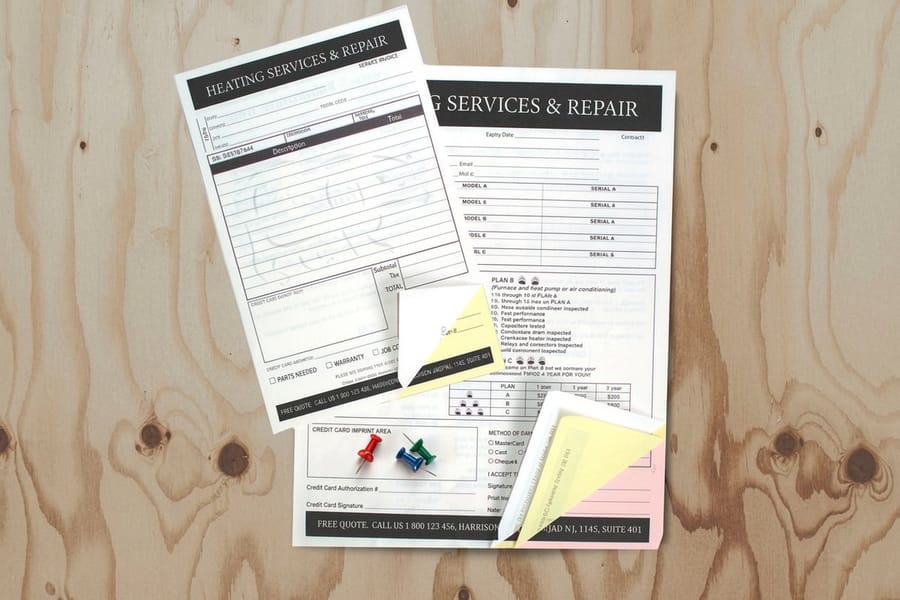
The catalog opens the conversation. The order form closes it, and it is the piece most suppliers treat as an afterthought.
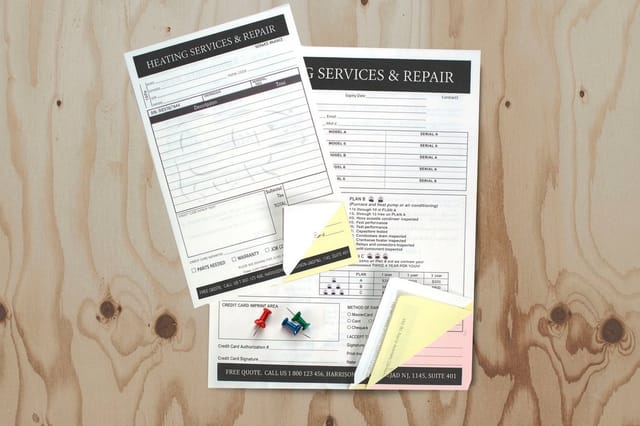
At a show, a buyer writes the order at your table. If the form is bound into the back of the catalog, they tear it out and you lose that page from the book they take home. A separate carbonless form solves both problems: the buyer keeps the top copy, you keep the second, and nobody hunts for a photocopier. Sets start at $120.82. How carbonless paper actually works covers the two and three part options and which colors go in which position.
Keep the price list off the bound pages. Print SKUs, photos, case packs and MSRP in the catalog, then run the wholesale prices on a separate dated sheet. Business flyers start at $57.11 and reprint in a day, so a mid-season price change costs one sheet rather than the whole book. Date the sheet in the footer, because dealers keep old ones and will happily order from a 2024 price.
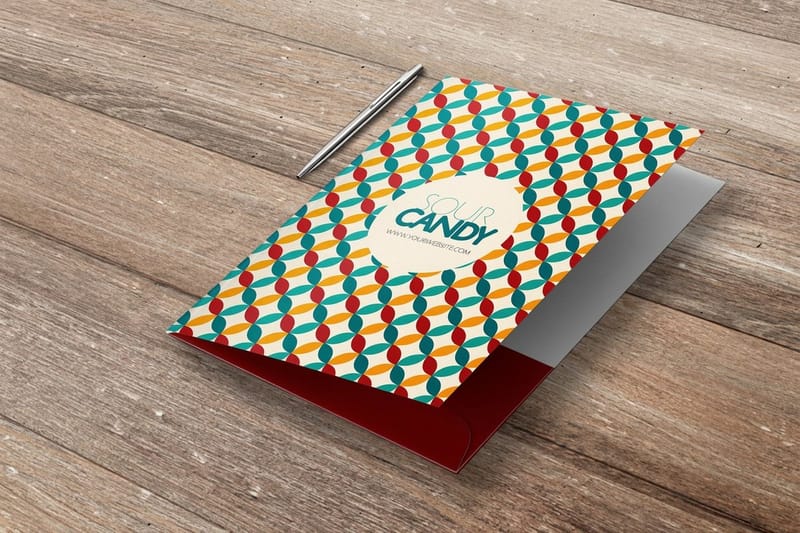
Package the three together. A presentation folder holding the catalog, the current price list and a blank order form turns a stack of paper into something a buyer carries out of a show without dropping half of it. Build all three from correctly sized layouts in our blank template library, and when the files are ready the whole set goes on one order through booklets and catalogs printing.
Wally explains the wholesale catalog
Four numbers on every line, and a page count that divides by four
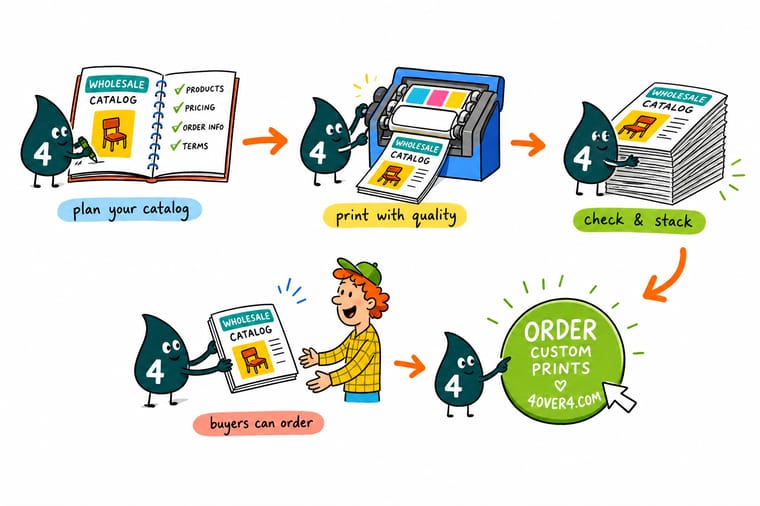
Wally puts a code, a case pack, a minimum order and a wholesale price beside every photo, because that is the whole job of the book. Then he counts pages. Under about 64 he folds and staples, and the catalog opens flat while the buyer writes. Over that, he mills the spine and glues it so the name reads on the shelf. The prices go on a separate dated sheet, so when they change he reprints one flyer instead of a thousand catalogs.
Configure your catalog →Specs and pricing
Catalog formats, page counts, and starting prices
Compare the three bound formats side by side, with live configuration choices and starting prices straight from the 4OVER4.COM configurator.


Print it
Order the catalog and the paperwork that goes with it

Explore more
Where to go next




By the numbers
Catalog printing you can plan a season around
Common Questions
Your wholesale catalog questions, answered
How many pages should a wholesale catalog be?
Count your SKUs first, then work backwards. A page comfortably carries four to six products with a photo, a code, a case pack and a price, so a 120 SKU line lands somewhere around 24 to 32 pages once you add a cover, a terms page and an order form. Saddle-stitched counts must be multiples of 4 because one folded sheet makes four pages, so plan to 24, 28 or 32 rather than 27. If your line is under 60 SKUs, a 16 page catalog usually reads better than a padded 32.
Saddle stitch or perfect bound for a wholesale catalog?
Under about 48 pages, saddle stitch. It costs less, it opens flat on a buyer's desk so nobody has to hold the book down while writing an order, and it ships lighter. Above 64 pages saddle stitching stops being practical and perfect binding takes over, giving you a square printable spine that stays legible when the catalog sits in a rack with a dozen competitors. Between 28 and 64 pages both work, and the tie-breaker is whether you need your name on the spine.
Should the wholesale prices be printed inside the catalog?
Usually no. Wholesale pricing moves with freight, materials and season, and a printed price in a bound catalog freezes you for the life of the print run. The common trade practice is a catalog that carries the SKU, the photo, the case pack and the MSRP, plus a separate dated price list on a flyer or sell sheet that you reprint whenever costs change. Dealers keep the catalog and swap the sheet.
What size should a wholesale catalog print at?
Letter size is the default for a reason: it fits a three ring binder and a file drawer, which is where buyers actually keep supplier material, and it is the cheapest size to produce because it fits standard press sheets without waste. Smaller formats read well for short lines and cost less to mail, but they force you down to two or three products per page. Pick the size before you lay out a single page, because changing it later means rebuilding every spread.
How many catalogs should I print?
Add your active accounts, your prospect list, one box per sales rep, and the traffic you expect from any show you are attending, then round up to the next price break. Per-unit cost falls as the run grows, so the jump from 250 to 500 is often small in absolute dollars, but a catalog is a dated document and unsold copies become waste the moment the line changes. Round up one break, never three.
What files do I need to send to print a catalog?
A print ready PDF with fonts embedded or converted to outlines, images at 300 dpi at final size, CMYK color, and a bleed on every edge that carries color or a photograph to the trim. Pages go in reading order as single pages, not as reader spreads, because the printer imposes them for the binding you chose. Start from a correctly sized layout in our blank template library so the trim, bleed and safety margins are already correct.
Get Started
Set the page count, then price 25 catalogs from $240.55
Set your page count, pick saddle stitch or a perfect bound spine, and we print a catalog that gets written on instead of filed.
Legal Disclaimer
Gold Standard guarantees apply to all standard orders placed through 4over4.com. Price match requires verifiable proof of a competitor's published price for an equivalent product with matching specifications and turnaround time. Satisfaction guarantee covers manufacturing defects and print quality issues. Contact support with order number and documentation. On-time delivery rate based on tracked orders 1999 to 2026. Individual results may vary based on shipping carrier performance.
