
How to Print a Custom Hardcover Book From File to Bound Case


The parts of a cased-in book, the spine width calculation that trips up cover files, what the bindery minimums really are, and the short-run formats that carry most first print runs.
A custom hardcover is printed as two separate items and then joined: a text block of interior pages, sewn or glued, and a case made from two boards plus a spine board wrapped in one printed, laminated sheet. You supply an interior PDF and a flat case wrap file whose width is board width twice, plus the spine, plus two hinge gaps, plus turn-in on every edge. Case binding carries set-up costs that keep minimums in the hundreds, so short first runs usually go out perfect bound instead, from 10 copies at 4OVER4.COM.
Quick answer
Two files, three operations, and a case bigger than the book
The interior and the cover of a hardcover are made on different machines and only meet at the end. Pages are printed and bound into a text block, boards are wrapped in a printed sheet to make a case, and casing in glues the two together through the endpapers. The measurement that decides whether your cover file works is the spine: halve the page count, multiply by the caliper of the interior stock, add both boards. Get that from the printer rather than a generic chart, because the same basis weight can vary enough to push a spine title off center.
What a Hardcover Book Is Actually Made Of
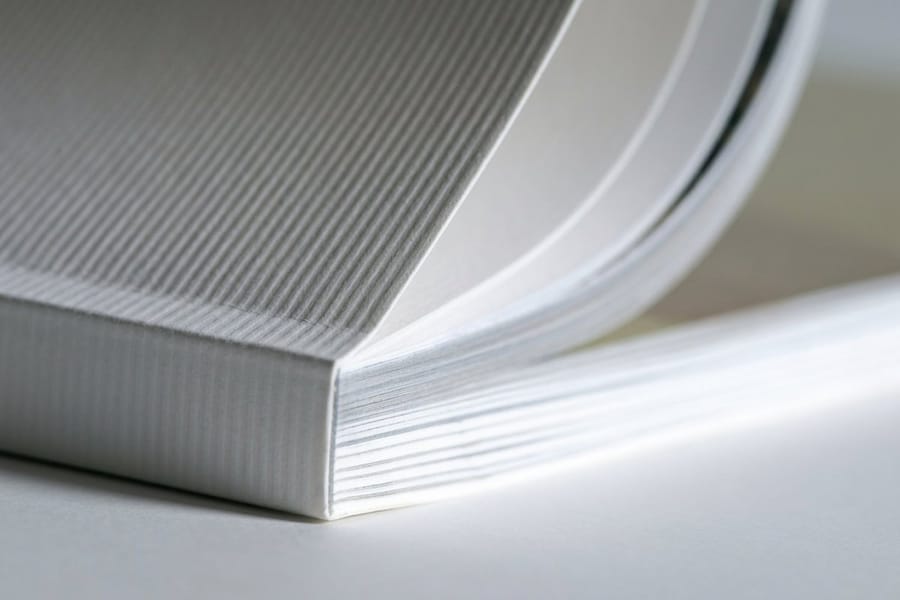
Before you can spec one, it helps to know that a hardcover is an assembly of six parts, and every quote you get is really a price for each of them. Take a hardback off a shelf and open the front board slowly: you can see all six.
| Part | What it is | What it decides |
|---|---|---|
| Text block | Your interior pages, folded into signatures and sewn, or milled flat and glued along the spine. | Page count rules, how flat the book opens, how long the binding survives. |
| Binder boards | Two stiff greyboard panels, plus a narrower strip for the spine. | The finished size, because the boards overhang the pages on three sides. |
| Case wrap | One printed and laminated sheet glued over all three boards and folded inside. | Your cover artwork, and the flat layout your designer has to build to. |
| Hinge gaps | Two narrow channels of bare wrap between the spine board and each cover board. | Whether the cover opens freely or fights back and cracks the wrap. |
| Endpapers | Heavier folded sheets pasted to the inside of each board and to the text block. | How firmly the block is anchored, and whether the boards warp. |
| Jacket, optional | A separate printed sheet that wraps a plain case and folds in at both flaps. | A second cover cost, worth it only for retail display. |
The hinge gaps are the part designers forget. They are bare, they sit right where the artwork crosses from front to spine, and any type or logo that lands in one will fold into a crease. Keep the spine title inside the spine board and give it a few millimeters of clearance either side.
Printing a Hardcover Book Step by Step
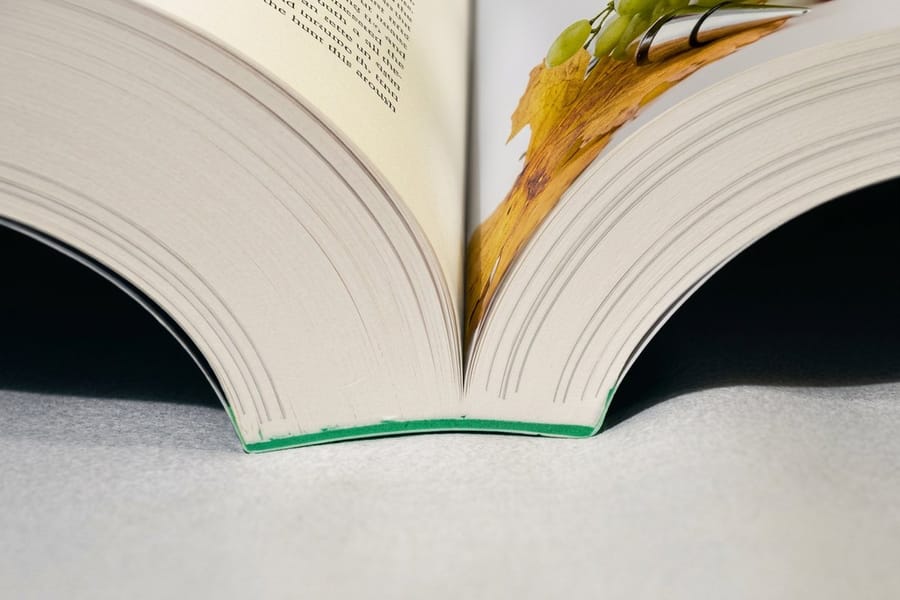
Seven steps, in the order a printer will ask you for them. Doing them out of order is what causes the two week delay everyone blames on the bindery.
- Lock the trim size first. Everything downstream is derived from it: board size, wrap size, spine position, even how many pages fit on a press sheet. Common book trims are 5.5 by 8.5, 6 by 9 and 8.5 by 11 inches. Change it later and every file gets rebuilt.
- Set the final page count. A sewn text block is built from signatures of 8, 16 or 32 pages, so land the count on a multiple of the signature size rather than padding blanks at the back. A glued block only needs an even number. Folded and stapled work is stricter again, which the guide to booklet page counts and creep spells out.
- Choose the interior stock, then measure it. Uncoated offset for reading, coated for photography. The choice matters twice, because the caliper of that exact sheet is what sets your spine width.
- Calculate the spine. Halve the page count to get sheets, multiply by the caliper, add the thickness of both boards. A 300 page book is 150 sheets thick, not 300. Get the caliper from the printer rather than a chart.
- Build the case wrap as one flat file. Board width twice, plus the spine, plus two hinge gaps, plus a turn-in allowance on all four edges. Supply it as a single flat spread with the fold positions marked, not as separate front and back covers.
- Prepare the interior as press-ready pages. Single pages in reading order, CMYK, fonts outlined or embedded, images at 300 ppi, bleed on anything that runs off the edge. Our checklist for commercial print-ready files covers the traps, and the blank template library gives you correctly sized starting layouts.
- Proof before the run, not after. Ask for a bound proof if the quantity justifies it. A digital proof shows color but tells you nothing about whether the spine title is centered or whether the book opens flat, and those are the two faults that cannot be fixed after casing in.
Step four is where most first-time projects come unstuck. The interior gets approved, the cover gets built to a guessed spine, and the wrap comes back for a resize while the press slot moves to the following week.
Where Hardcover Costs More Than People Expect
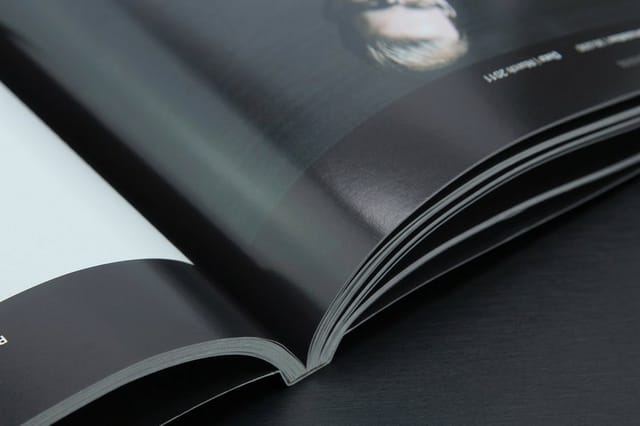
Case binding is set-up heavy in a way digital printing is not. Boards get cut to size, a wrap gets printed and laminated, the case gets made on a caser, the block gets cased in, and the finished books sit in a press while the glue cures. None of that gets much cheaper at ten copies than at one hundred, which is why trade binderies quote hardcover in the hundreds and why a fifty copy hardback run tends to price out at something the author will not accept.
| Binding | Opens flat | Practical page range | Short run | Printable spine |
|---|---|---|---|---|
| Cased-in hardcover | Reasonably, if sewn | 64 pages and up | Poor, minimums in the hundreds | Yes |
| Perfect bound | No, the spine resists | 40 to 300 pages | Good, from 10 copies | Yes |
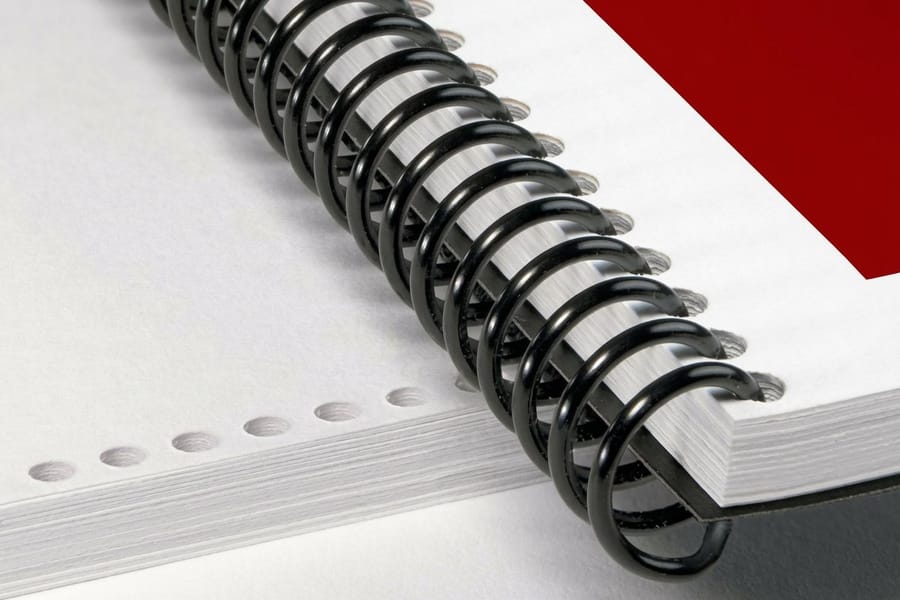
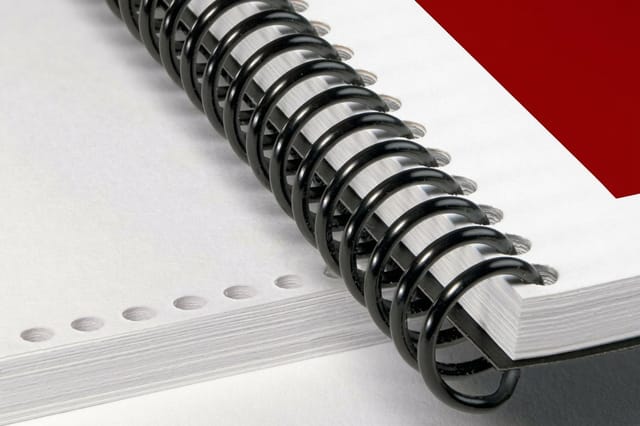
| Spiral coil | Completely, and folds back | 40 pages and up | Good, from 10 copies | No |
| Saddle stitch | Yes, like a thin magazine | 8 to 64 pages, in fours | Good, from 25 copies | No |
Read the last column if the book will ever sit on a shelf. A spine you can print a title on is the single functional thing a hardcover gives you that a stapled or coiled book cannot, and perfect bound books give you the same flat square spine for a fraction of the set-up. Read the second column if the book gets used with both hands busy. A cookbook propped open on a counter or a training manual on a bench wants spiral coil binding, and coil beats hardcover at that job outright.
The honest version: hardcover buys you shelf presence, durability over decades, and the perceived value that lets you charge more per copy. If none of those three is doing real work for your project, the money is better spent on heavier interior stock or a laminated cover. Our guide to book binding costs and run sizes shows where the per-copy curve actually flattens.
The Short-Run Route Most Self-Publishers Take
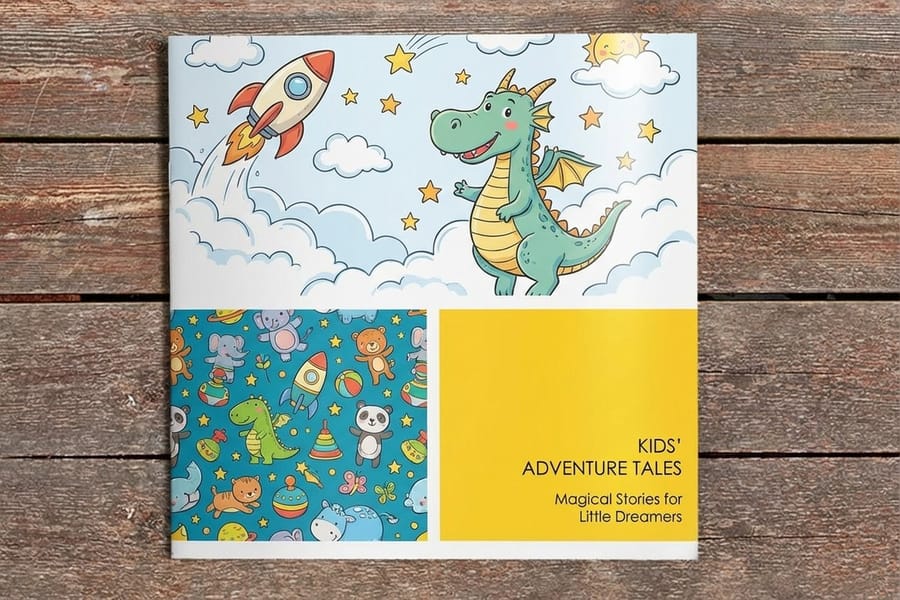
A first run is rarely the run that sells out. It goes to beta readers, reviewers, a launch event and the author's own shelf, and then the text gets corrected. Printing that run cheaply and quickly matters more than printing it in boards.
Perfect bound books start at 10 copies from $375.05, run 40 to 300 pages in two-page steps across four sizes, and carry a printable square spine, which is the format most closely matching a trade paperback. At 500 copies the unit price is about $7.67. If the book is a workbook, a course manual or a cookbook, spiral coil books start at 10 copies from $423.28, offer 131 page-count choices from 40 pages up with no multiple-of-four rule, and can bind on the long or the short edge. Covers there print on 14pt or 80 lb gloss with velvet or silk lamination and optional foil.
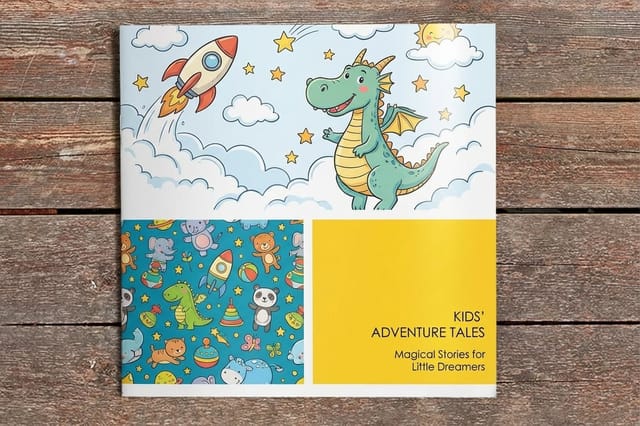
Under about 64 pages, none of that applies and you want folding rather than gluing. Saddle stitch booklet printing starts at 25 copies from $240.55, roughly $9.62 each, with page counts in fours from 8 upward and seven interior stocks paired against three cover stocks. Kids books use the same short-run economics with interiors built for heavy handling.
Whichever you pick, get the interior stock right before the binding. An uncoated offset sheet reads better and a coated sheet holds photographs, and 80 lb gloss book paper is the usual middle ground for a color interior. Browse the full range on the book printing category, and if you are still deciding between formats, the binding types guide lays them out side by side.
Wally explains hardcover books
Measure the stack, then build the case around it
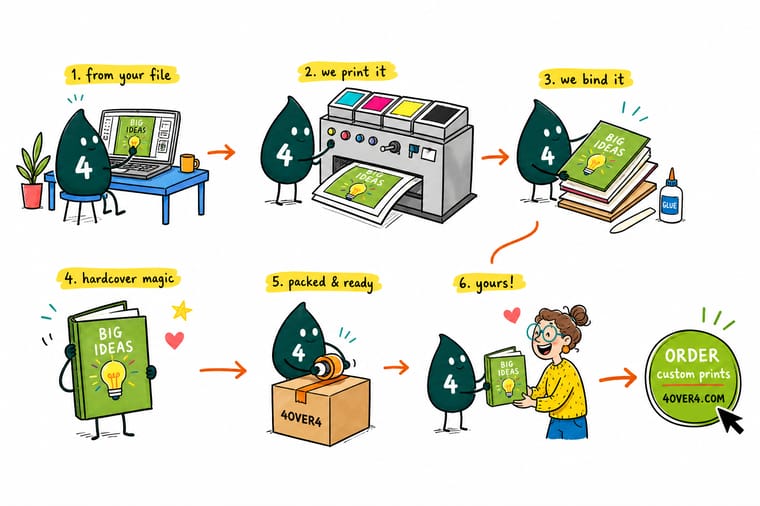
Wally prints the pages and stacks them into a text block. Then he measures that stack, because the spine of the case has to match it exactly, and the number comes from the paper rather than the page count on its own. Two boards and a narrow spine board go onto one printed sheet, the edges fold in and glue down, and the block is pasted in through the endpapers. Boards stick out past the pages on three sides, so the case is always bigger than the book. Ask Wally for ten hardcovers and he will point at the set-up cost and suggest a perfect bound run instead.
Configure a perfect bound book →Specs and pricing
Bound book formats, page counts, and starting prices
Three bindings that handle short runs, with live page-count, size and stock choices and starting prices straight from the 4OVER4.COM configurator.
Print it
Order the run that gets your book into hands
Explore more
Where to go next

By the numbers
Text blocks and cases built on separate machines
Common Questions
Your hardcover book questions, answered
How do you print a custom hardcover book?
In three separate operations. First the interior is printed and gathered into a text block, either sewn in signatures or glued along the spine. Second the case is made: two binder boards and a narrower spine board are laid onto a printed, laminated wrap sheet, and the wrap folds over all four edges and glues down. Third the text block is cased in, with endpapers pasted to the inside of the boards and the hinges pressed so the cover opens without tearing. You supply two files, an interior PDF and a flat case wrap built to the finished board layout, and the bindery does the rest.
How do I calculate the spine width for a hardcover?
Divide the interior page count by two to get the number of sheets, multiply that by the caliper of the text stock, then add the thickness of both boards. A 300 page book is 150 sheets, so the text block thickness is 150 times whatever the caliper is, and the boards add their own measurement on top. Ask the printer for the caliper or the pages-per-inch figure of the exact stock they will run, because two papers with the same basis weight can differ enough to shift the spine by a sixteenth of an inch and throw the title off center.
What is the minimum quantity for hardcover book printing?
Case binding is set-up heavy, so trade binderies usually start quoting at a few hundred copies and the per-book price barely moves between ten and one hundred. Digital short-run hardcover exists, but the unit cost stays high enough that a first run of fifty rarely makes sense commercially. If you need small quantities now, a glued softcover is the practical answer: perfect bound books at 4OVER4.COM start at 10 copies from $375.05, and drop to about $7.67 each at 500.
Does a hardcover book need a page count in multiples of anything?
If the text block is sewn, yes. Sewn books are built from signatures, sheets folded into groups of 8, 16 or 32 pages, so the page count has to land on a multiple of the signature size or you end up with blanks at the back. A glued text block is more forgiving and usually only needs an even number. Saddle stitched work has the strictest rule of all, because every sheet folds into 4 pages, which is covered in our guide to booklet page counts and creep.
Should the cover be a printed case wrap or a dust jacket?
A printed case wrap puts your artwork straight onto the laminated paper glued to the boards, which cannot be lost and costs less. A dust jacket is a separate printed sheet that folds around a plain cloth or paper case, so you are paying for two cover items instead of one. Jackets suit trade fiction, where the shop display matters and the jacket can be reprinted for a new edition. For manuals, yearbooks, cookbooks and anything that gets handled hard, a printed case wrap survives better.
What paper should the interior be printed on?
Text weight, not cover weight. A novel or any text-heavy book reads best on an uncoated offset stock because it does not glare under a lamp and the ink sits into the sheet. A cookbook, a photo book or a catalog wants a coated stock so the images hold their density, and 80 lb gloss book is the usual pick for that. Heavier is not better here: a 300 page book on cover stock will not open flat and the spine will crack.
Can I print a hardcover book with 4OVER4.COM?
Our book printing catalog is built around short-run glued and mechanical bindings rather than case binding, so we print perfect bound books, spiral coil books, saddle stitch booklets, catalogs and kids books. For most self-publishers that covers the first run, the proof copies and the reprint. If your project genuinely needs a cased-in hardcover with boards, start a custom project with us and we will tell you honestly whether the run size justifies it.
Get Started
Get the spine measurement from the printer, then build the cover
Set the trim size, the page count and the stock, and we print a bound run you can hand to a reader, from 10 copies with a printable square spine.
Legal Disclaimer
Gold Standard guarantees apply to all standard orders placed through 4over4.com. Price match requires verifiable proof of a competitor's published price for an equivalent product with matching specifications and turnaround time. Satisfaction guarantee covers manufacturing defects and print quality issues. Contact support with order number and documentation. On-time delivery rate based on tracked orders 1999 to 2026. Individual results may vary based on shipping carrier performance.
