
How to Order Vendor Banners That Fit Your Booth and Hold in Wind


Sizes for tent rails and folding tables, the vinyl or mesh call, grommet spacing that survives a gusty Saturday, and the rest of the booth kit.
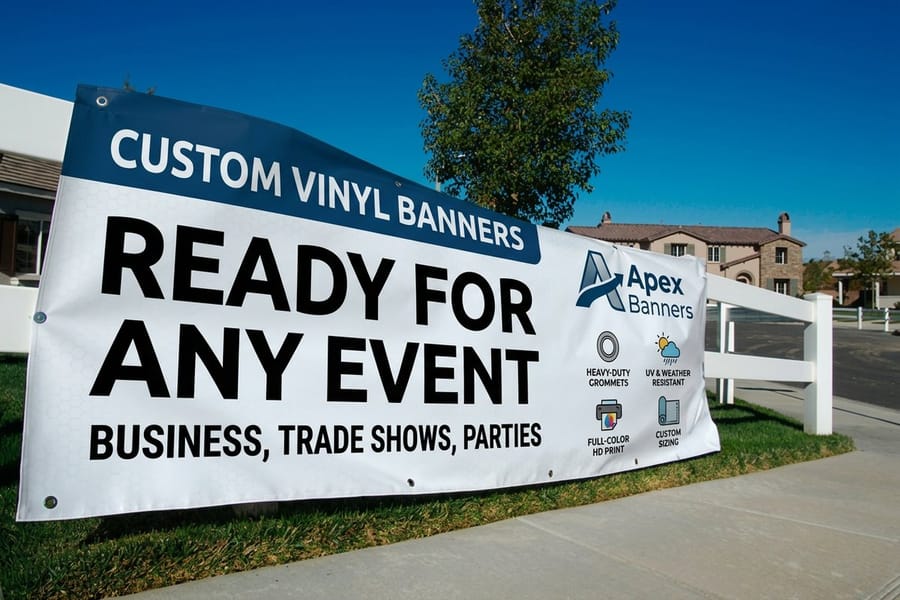
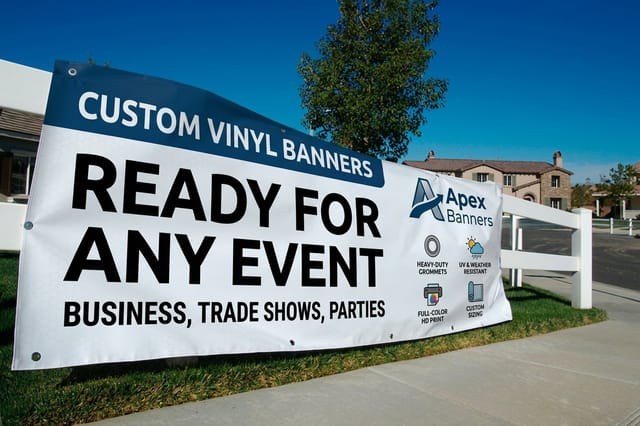
Measure the frame the banner ties to, then order it about two inches narrower per side so the ties have slack to pull against. On a 10 by 10 market tent the clear span between the front legs is roughly 118 inches, so a 9 ft by 2 ft banner fits; on a standard 72 inch folding table a 66 by 24 inch front panel sits inside the corners. Order 13oz scrim vinyl with hems all round and grommets every 24 inches, and tie every one of them.
Quick answer
The two measurements that decide the whole order
Size the banner to the hardware, then take two inches off each side. A 10 by 10 pop-up tent gives you about 118 inches of clear span between the front legs, which makes a 9 ft by 2 ft banner the reliable pick. A 72 inch folding table takes a 66 by 24 inch front panel. Print on 13oz scrim vinyl, hem all four sides, grommet the corners and then every 24 inches, and tie the bottom hem as well as the top.
Step One, Measure the Frame the Banner Hangs On
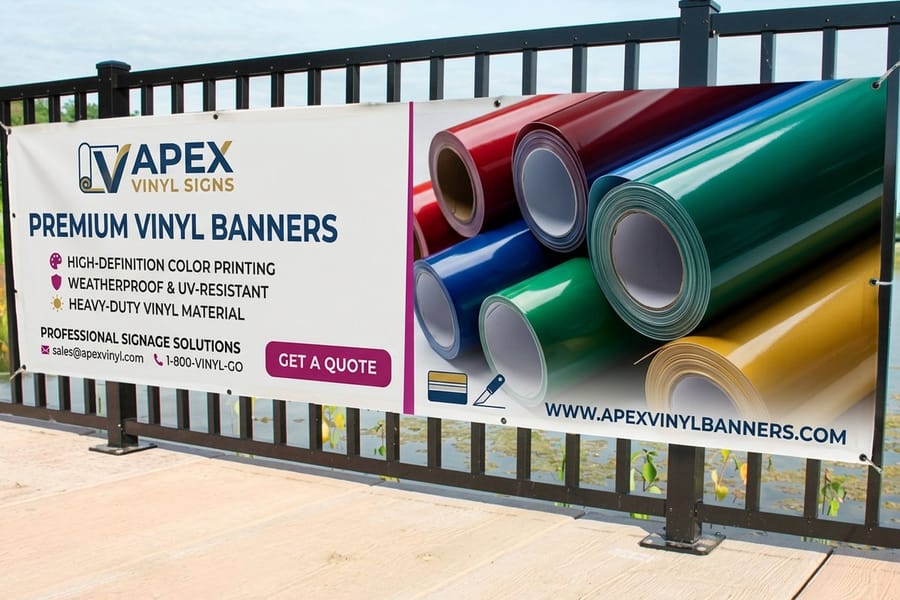
Most vendor banners that arrive wrong were measured against the wrong thing. People measure the space they want the banner to cover, order that number, and then discover the banner is wider than the hardware it has to attach to.
- Measure the clear span, not the frame size. A 10 by 10 pop-up tent is ten feet at the feet. Between the two front leg uprights, where the banner actually lives, you usually have about 118 inches.
- Subtract two inches per side. Ties, bungee balls and zip ties all need slack to pull against. A banner cut to the exact opening either will not reach or hangs loose in the middle.
- Decide the height by what is behind it. Two feet is the working standard on a tent rail because anything taller starts covering the goods on your table.
- Measure the table separately. A standard folding table is 72 inches long and 30 inches high. A front panel of 66 by 24 inches sits inside the corners and clears the ground.
- Write the finished size, not the artwork size. Order the trim size you measured and let the printer add the bleed and the hem allowance.
Those two numbers, tent span and table front, cover most market and craft fair setups. Start from a correctly sized layout in the blank template library and you skip the guesswork entirely. If your booth is an odd shape, our banner dimensions guide lists the stock sizes worth building around.
Step Two, Pick the Material for Where It Hangs
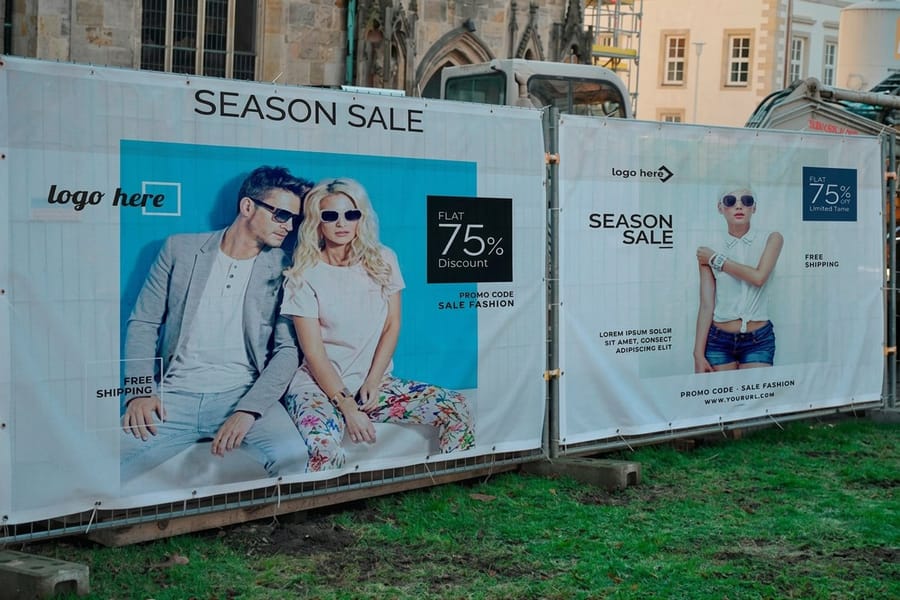
Material is a wind decision before it is a looks decision. Once you know where the banner attaches and how exposed that spot is, the choice usually makes itself.
| Option | Where it belongs | Wind behavior | Starting price |
|---|---|---|---|
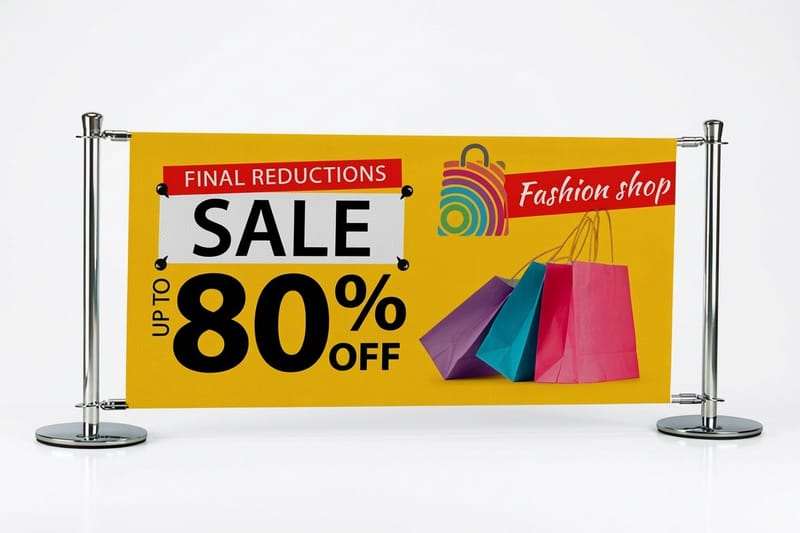
| Vinyl banners | Tent rails, table fronts, fence panels under six feet, indoor walls. | Solid surface, so it needs to be tied at every grommet on both hems. | $79 |
| Mesh banners | Chain link, tall exposed spans, coastal and open-field sites. | Roughly 30 percent open, so gusts pass through instead of loading the ties. | $75 |
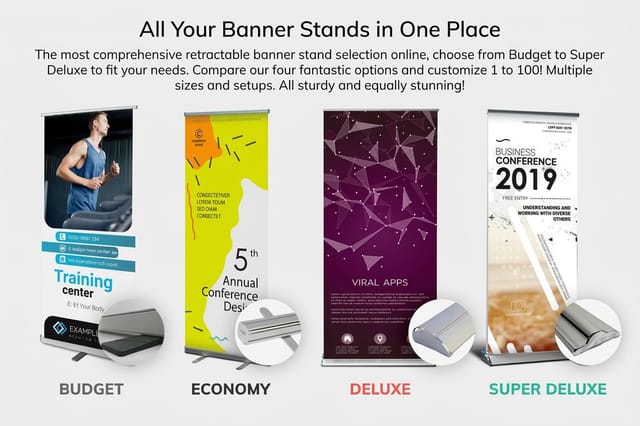
| Retractable stands | Indoor craft fairs, ballroom shows, shielded corners inside a tent. | Weighted base only. It tips outdoors. | $139 |
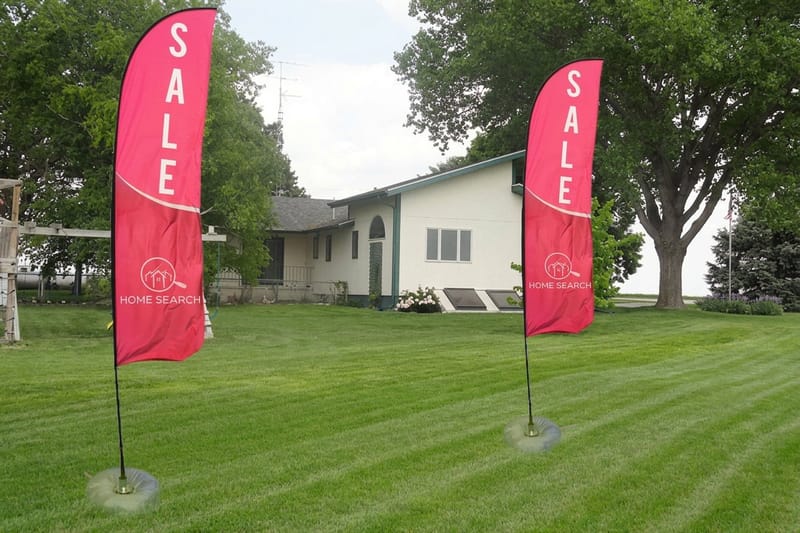
| Feather flags | Aisle ends and roadside frontage where you need height outdoors. | Built to flex and bend with the wind on a ground spike or cross base. | $108.75 |
The mesh line is the one that catches people out. Mesh solves a real problem and it costs no more, so the instinct is to order it for everything outdoors. Look at it from three feet and you will see why not: the open area lightens solid color and softens small type. On a two foot tent banner tied at both hems, plain vinyl is the better print and the wind was never the issue. Save mesh for the tall stuff. The full material comparison lives in our guide to speccing an outdoor vinyl banner.
Step Three, Specify Hems, Grommets and How It Ties Down

Finishing is where a banner earns its second and third season. The print will outlast the mounting almost every time, so this is the part worth reading twice.
Hems. The edge folds back about an inch and is welded or sewn, which doubles the material where the grommets go. Ask for hems on all four sides. An unhemmed banner will start fraying at the first grommet that takes a hard pull.
Grommets. Corners first, then one every 24 inches along the top and bottom hems. A 9 ft tent banner lands at about five per hem. Order the bottom row even if you expect to leave it loose, because a banner tied only at the top lifts, flips, and then shows your customers the back of a blank sheet.
What you tie it with. Bungee balls flex when a gust hits and let the banner move a little. Zip ties do not, so the load goes straight into the grommet and eventually pulls it through the hem. Carry a bag of bungee balls in the market crate and you will replace grommets far less often. Full mounting options are in our guide to hanging a banner.
Two things to check on the proof before you approve it. First, that the grommets are on the hems you actually need, because a banner meant for a table front with grommets only on the top is useless. Second, that nothing important sits within two inches of the trim, since the hem fold eats that inch and the tie hardware covers more of it.
Step Four, Build Artwork That Reads From the Aisle
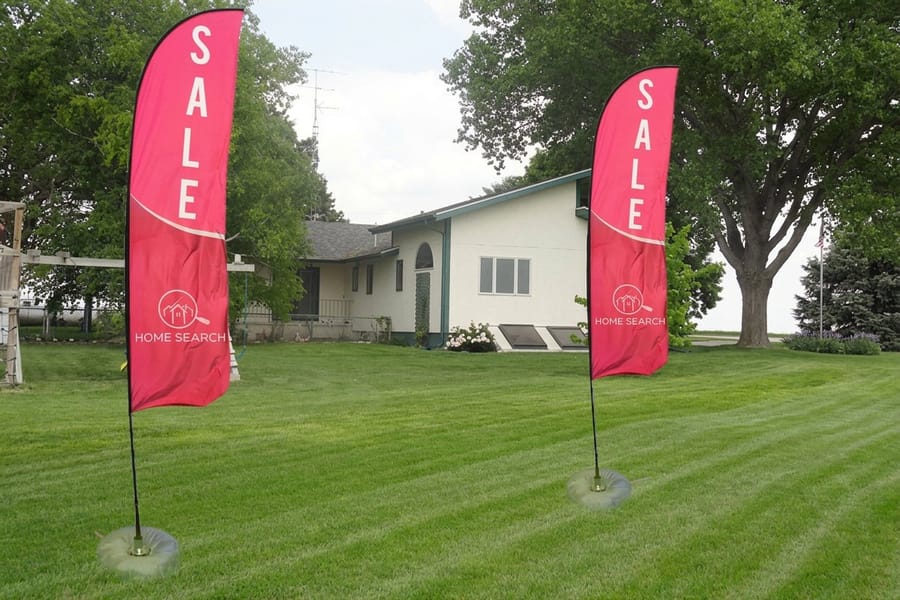
A vendor banner has one job at a market: make someone twenty feet away decide to walk over. That distance sets everything about the layout.
Signmakers work to one inch of capital letter height per ten feet of viewing distance. Market aisles put people at twenty to thirty feet when they are deciding, so your name wants caps of three inches or more. On a two foot tall banner, after margins, three inch caps take up most of the available height. That is the real reason good market banners carry a business name and one short line and nothing else. The price list belongs on the table, not on the banner.
Contrast matters more than color choice. Dark type on a light field or light type on a deep field both work at distance; two mid-tone colors against each other turn into gray mush by the time they reach the aisle. Build the file at full size at 100 dpi, or at quarter size at 300 dpi, and convert type to outlines before you send it. Keep critical content two inches inside the trim on every side.
If the booth already has a look, carry it across the whole kit rather than designing each piece separately. Our farmers market banner design guide walks the layout decisions in detail, and booth signage for vendors and trade shows covers what each surface in a booth should say.
Step Five, Fill Out the Rest of the Booth
The banner names you. The rest of the booth is what makes it look like a business rather than a folding table with product on it.
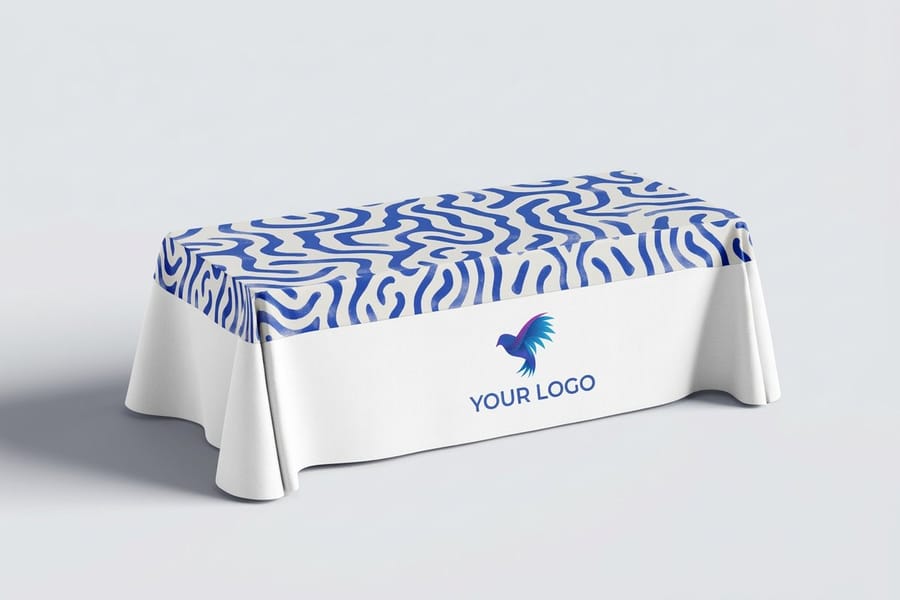
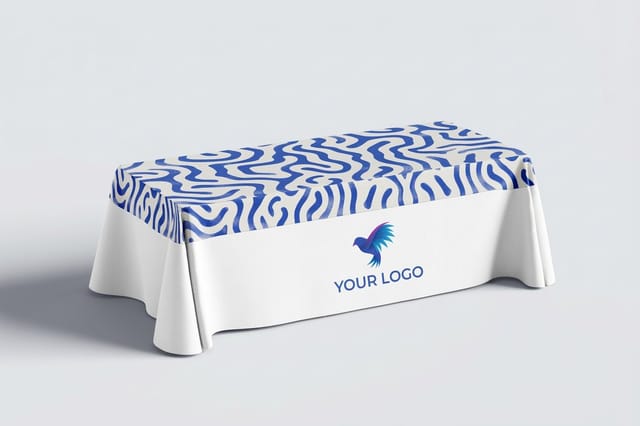
Table throws start at $225.00 and do more work than most vendors expect, because they hide the crates and cash box under the table and give you a second branded surface at eye level for anyone standing close. Buy the throw to match the table you actually own, since a 6 ft throw on an 8 ft table leaves a foot of bare edge at each end. Sizes and drop lengths are laid out in our table cover fit guide.
Feather flags from $108.75 solve the height problem outdoors that a retractable stand cannot. They are visible above tent rooflines from the far end of a market, they flex in wind instead of fighting it, and a ground spike takes about a minute to set. Indoors is the reverse case: at a ballroom craft fair or an indoor holiday market, a retractable banner stand from $139 sets up in under a minute and packs into its own case. Our walkthrough on setting up a retractable stand shows the sequence.
Order the pieces together if you can. Printing the banner, the throw and the flag in one order keeps the color consistent across all three, which is harder to guarantee when they are printed months apart on different runs. Everything sits in one place in the banner printing collection.
Wally sizes a market banner
Measure the rail, not the gap you want to fill

Wally runs the tape between the two front legs of the tent, not across the whole frame, because that clear span is what the banner actually has to fit. He takes two inches off each side so the bungee balls have something to pull against, orders 13oz vinyl with hems on all four sides, and puts a grommet at every corner plus one every 24 inches. Then he ties the bottom hem too. The vendor two stalls down did not, and by ten in the morning his banner was folded over itself.
Order vinyl banners →Specs and pricing
Sizes, materials and starting prices
Configure the size, material and finishing on each option below and the price updates live from the 4OVER4.COM configurator.


Print it
The booth kit, ordered in one go
Explore more
Where to go next

By the numbers
Large format printing you can plan a season around
Common Questions
Vendor banner questions, answered
What size vendor banner fits a 10 by 10 market tent?
Measure the clear span between the two front leg uprights before you order anything. On most 10 by 10 pop-up frames that span is about 118 inches, not the full 120, because the legs and the frame hardware eat into it. A 9 ft by 2 ft banner hangs cleanly across it with room for ties at both ends, and it is a stock-friendly size. If you want the banner to fill more of the rail, spec a custom width of 114 to 116 inches rather than a round 10 feet, which will not fit.
Vinyl or mesh for an outdoor farmers market?
Vinyl unless the banner is fixed flat to something solid that catches wind, like a fence line or a wall. On a tent rail the banner is only two feet tall and tied at both hems, so 13oz scrim vinyl handles normal breeze fine and gives you the stronger color. Mesh earns its place on tall banners, on chain link, and at coastal or hilltop sites where afternoon wind is a known problem. The trade is visible: about 30 percent of a mesh banner is open hole, so solid color areas read lighter and small type loses its edges. Our side-by-side on vinyl banners versus mesh banners covers the exact failure modes.
How many grommets should a vendor banner have?
One at each corner, then one roughly every 24 inches along the top and bottom hems. A 9 ft banner ends up with about five per hem. Order the bottom hem grommets even if you plan to leave the bottom loose, because a banner tied only along the top will lift and flip in the first real gust. The cost of the extra grommets is trivial compared to the show you lose. There is more on placement and reinforcement in our guide to placing grommets on banners.
Can I use a retractable banner stand outdoors?
Not safely on a windy day. The base on a retractable stand is weighted for an indoor aisle, and once the graphic is up it presents a 33 by 80 inch face to the wind with nothing anchoring it to the ground. It works at an indoor craft fair, a hotel ballroom show, or under a tent wall where it is shielded. Outdoors in the open, use a feather flag with a ground spike, or bungee a vinyl banner to the tent frame itself.
How large does the lettering need to be?
The field rule signmakers use is one inch of capital letter height for every ten feet of viewing distance. Market aisles put shoppers 20 to 30 feet away when they decide whether to walk over, so your business name wants caps of at least three inches on a tent banner. That is most of a two foot tall banner once you allow margins, which is the real reason vendor banners carry a name and one line, not a product list.
How far ahead should I order for a weekend market?
Order with a full week of slack beyond the printing turnaround, and pick the turnaround on the product page so you can see the actual dates before you pay. Large format banners ship rolled in a tube, and the delivery leg is where most vendors get caught rather than the press. If a market is on a Saturday, a banner that lands Thursday leaves you a day to discover the grommets are on the wrong hem.
Get Started
Order a feather flag with a ground spike from $108.75
Give us the finished size you measured off the tent rail or the table front, pick your hems and grommets, and we print a banner that fits the frame on the first try.
Legal Disclaimer
Gold Standard guarantees apply to all standard orders placed through 4over4.com. Price match requires verifiable proof of a competitor's published price for an equivalent product with matching specifications and turnaround time. Satisfaction guarantee covers manufacturing defects and print quality issues. Contact support with order number and documentation. On-time delivery rate based on tracked orders 1999 to 2026. Individual results may vary based on shipping carrier performance.
