
How to Choose a Print Service Provider That Delivers On Time


A print service provider runs the press your job goes on. Here is what the term covers, the six questions that vet one in an afternoon, and the three lines in a quote that decide whether the boxes arrive when you need them.
Choose a print service provider by checking four things: what it produces on its own equipment, whether it quotes a delivery date rather than a production window, whether you approve a proof before the press runs, and what the price does at the quantity you actually reorder. A provider owns the press, unlike a broker who resells someone else’s capacity. Everything else, including the marketing language about quality, is settled faster by one small test order than by any amount of comparison.
Quick answer
Equipment, dates, proofs, and the price at your real quantity
A print service provider is the company that produces your job on presses it owns. Pick one by reading its product catalog as an equipment list, asking for an in hand delivery date instead of a production window, confirming you approve a digital proof before anything runs, and comparing prices at the quantity you reorder rather than the one on the landing page. Then place a small paid order of your own artwork. It exercises the file check, the press and the shipping in one pass, and no research substitutes for it.
What a Print Service Provider Actually Is
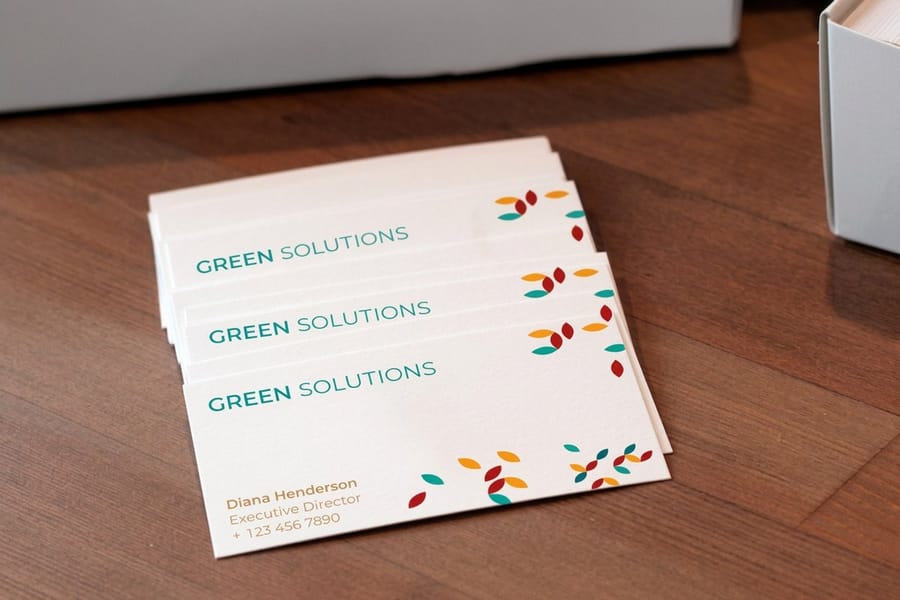
A print service provider produces your job on equipment it owns and controls. That is the whole definition, and it is the reason the term exists: the word "printer" got taken by the machine on the desk, so the industry needed a name for the company behind the press.
The category is wider than most buyers expect. It covers the offset house that runs 40 inch sheets, the digital operation that turns 250 standard postcards around overnight, the wide-format shop cutting vinyl, and the online providers that combine all three behind one configurator. What separates them is not the label. It is which of those presses sit under one roof, because every process that has to be sublet adds a handoff, a schedule and a chance for the color to move.
The distinction that matters most on a first order is provider versus broker. A broker sells you the job and buys it from a plant you never speak to. That layer is genuinely useful for unusual work, and our guide to print brokers explains where it pays. But when a proof needs a change at four in the afternoon, the provider can walk to the machine and the broker has to send an email. If you are buying to resell, the equivalent relationship is a trade account, covered in how a wholesale trade printer works.
How to Vet a Provider in One Afternoon

You do not need a procurement process. You need answers to six questions, and how a provider answers them tells you more than the answers themselves. Vague replies here become vague replies when a shipment is late.
| Ask this | A good answer sounds like | Walk away when |
|---|---|---|
| Do you print this in house? | Named process, named finishing, and a clear list of what gets sublet. | "We handle everything" with no detail behind it. |
| What date does it arrive? | A delivery date that already includes proof time and transit. | Only a production window, with shipping treated as your problem. |
| Do I approve a proof? | A digital proof before production, plus preflight that flags bleed and font issues. | Files go straight to press and errors are billed to you. |
| What is the price at 2,500? | The break table, up and down, given without a phone call. | A single quantity quoted and pricing "on request" for the rest. |
| What happens on a bad run? | A written reprint policy with a claim window and who pays freight. | Case by case, decided after the fact. |
| Can I see the real thing? | Free stock samples, and a small paid test run of your own artwork. | Only rendered product photos on the website. |
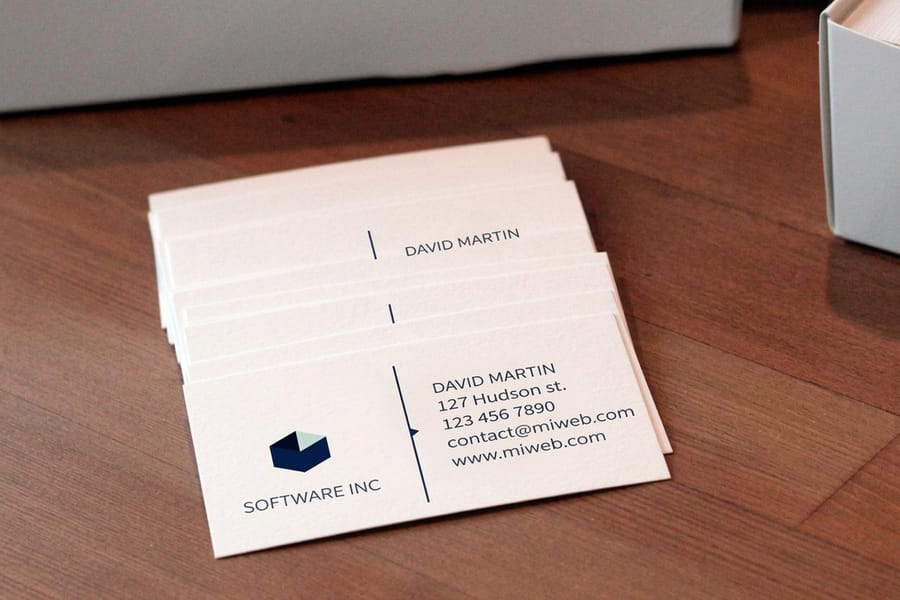
Then do the one test that is worth more than all six answers: place a small order. Two hundred and fifty postcards or one box of cards exercises the file check, the proof, the press, the trim and the shipping label in a single pass, for the price of a lunch. Keep the printed piece. It is your reference for every reorder, and it settles a color argument in ten seconds.
If you are weighing a nearby shop against an online account, the honest comparison is in local print shop vs online printing, and the general checklist lives in how to choose a print shop.
The Capabilities Checklist

Capability is the part buyers under-check, because a homepage looks the same whether a company runs six presses or one. Read the product catalog instead. It is an inventory of equipment written in product names.
- Breadth of substrate. Can one account cover 14pt and 16pt cardstock, uncoated text weight, and rigid signage material? A provider with 60+ stocks is telling you it stocks paper, not that it orders it per job.
- Finishing under one roof. Folding, scoring, die cutting, binding, foil and spot UV. Every finish that has to leave the building adds transit days invisible in the quote.
- Small and large quantities. A press tuned only for 10,000 makes your 250 expensive, and the reverse is just as true. Check both ends of the range before you commit.
- File support. Preflight, downloadable templates and a person who answers file questions. Our blank template library exists for exactly this reason, and preparing commercial print ready files covers the rest.
- Rush capacity. Not whether rush exists, but the daily cutoff time and which products qualify. Same day and rush options spells out how that works in practice.
- Fulfillment options. Split shipping to several addresses, and blind drop shipping if you resell. If that applies to you, read how blind drop shipping works before you sign anything.
- Reorder memory. Saved jobs and one click reorders sound trivial until the third time somebody rebuilds the same flyer file from scratch.
No provider wins every line. Decide which two matter for the work you actually repeat, then weight those. A restaurant reprinting menus and brochures every season needs stock consistency far more than it needs rush capacity. An events team needs the opposite.
Reading the Quote: Turnaround, Proofs and Price Breaks

Two quotes for the same job rarely describe the same thing, and the gap is almost never the paper. It is the three items below, which is why a cheaper quote can arrive later and cost more.
Turnaround is production only. When a provider says two to four business days, the clock starts after your proof is approved and stops when the boxes leave the dock. Your file sat in preflight before that, and the truck drove for two to five days after. Ask for the in hand date and let the provider do the arithmetic. Anyone who can answer that question quickly is tracking their own schedule properly.
Proofing is either included or invisible. A free digital proof you must approve costs the provider a step and saves you a reprint. An operation that skips it is faster on paper and expensive the first time a bleed is short. Read what happens when the proof is wrong, not just whether one exists.
The unit price is the wrong number. Print pricing steps down at quantity breaks because setup is fixed. Standard business cards start at $17.57 and standard flyers at $39.54, but what should drive your decision is the price at the quantity you reorder each quarter, and how much further the next break drops it. How price breaks work shows where the useful steps sit, and an instant online quote lets you read the whole table yourself instead of waiting on a sales reply.
One more line worth checking before you commit: what the provider does when a competitor quotes lower on identical specs. Ours is written down on the price match guarantee, alongside the rest of our printing guarantees.
Wally explains print service providers
Who owns the press, and when do the boxes land
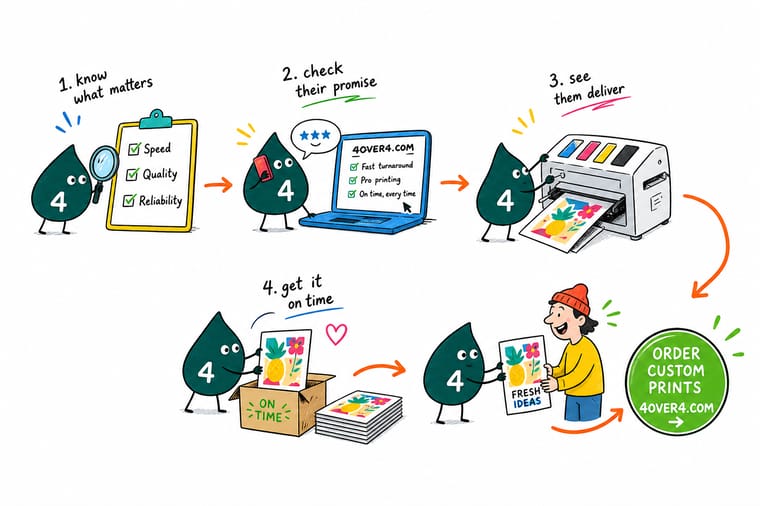
Wally reads two quotes for the same 5,000 flyers. One lists a production window and a low unit price. The other lists an in hand date, a free proof, and the price at the next quantity break. He picks the second, because the first one was measuring production while he was measuring his event date. Then he orders 250 first, keeps the printed piece, and uses it to settle every color question from then on.
Order a test run of business cards →Specs and pricing
Check the specs and starting prices yourself
The fastest way to judge a provider is to configure a real job and read the price. Sizes, stocks, quantities and starting prices below come straight from the 4OVER4.COM configurator.



Print it
Start with a small order and judge the result


Explore more
Where to go next




By the numbers
The provider behind 150,000 businesses
Common Questions
Print service provider questions, answered
What is a print service provider?
A print service provider, often shortened to PSP, is a company that produces printed work on its own equipment and delivers the finished job to you. That covers commercial offset houses, digital print operations, wide-format shops and online printers like 4OVER4.COM. The term became common because "printer" now means the box on the desk as often as it means the company running a press. A PSP typically handles file preflight, proofing, production, finishing such as trimming, folding and binding, and shipping. The broader the finishing menu, the fewer outside vendors touch your job.
What is the difference between a print service provider and a print broker?
The provider runs the press. A broker takes your order, marks it up, and places it with a provider you never speak to. Brokers earn their fee when they know which press suits an unusual job and manage the job well, and a good one is worth it for complex work. The trade-off is control: when a color shifts or a shipment splits, the broker has to relay your question to the plant, which adds a day to every exchange. If you are comparing the two, our guide on what a print broker is walks through when the middle layer pays for itself.
How do I check whether a printer can hold my brand color?
Order the job you actually run, not a sample pack. Send the real file, at the real size, on the real stock, and keep it. That printed piece becomes your reference for every reorder, and it settles arguments faster than any spec sheet. Before that, ask two questions: do you print in CMYK or can you run a spot color, and do you supply a hard copy proof on the ordered stock. A brand color built from CMYK will move slightly between coated and uncoated stock no matter who prints it, so pick the stock first and match to that.
Is a local print shop or an online print service provider better?
It depends on which resource is scarcer for you, time or attention. A local shop is right when you need to stand over the press, hand off a physical original, or collect a job the same afternoon. An online provider is right when the specs are settled, the volume is steady, and you want the same result in Denver and Atlanta without managing two relationships. Many businesses run both, using the local shop for one-off and urgent work and an online PSP for the repeating catalog of cards, flyers and mailers.
What should I ask for before placing a first large order?
Ask for four things: a digital proof you have to approve before production, the delivery date rather than the production window, the price at the next quantity break up and down, and the reprint policy in writing. Then place a small first order of the same product before you commit to the big run. A test run of 250 postcards costs little and tells you more about a provider than any amount of research, because it exercises the file check, the proof, the press and the shipping label in one pass.
Does a print service provider need to be near me?
Only if you are collecting the job yourself. Production quality does not vary by your distance from the plant, but transit time does, and it is the part buyers forget. Ground shipping across the country adds days to the same job that arrives overnight in the next state. If a deadline is tight, ask what the cutoff time is for same-day production and what upgrade turns a four-day ground delivery into a two-day one, then price both before you decide.
Get Started
Test us with one small order
Configure the job, read the price at every quantity break, approve the proof, and see what lands at your door. That is the whole evaluation, and it takes one box of cards.
Legal Disclaimer
Gold Standard guarantees apply to all standard orders placed through 4over4.com. Price match requires verifiable proof of a competitor's published price for an equivalent product with matching specifications and turnaround time. Satisfaction guarantee covers manufacturing defects and print quality issues. Contact support with order number and documentation. On-time delivery rate based on tracked orders 1999 to 2026. Individual results may vary based on shipping carrier performance.
