
How Removable Wall Decals Work on an Exhibition Wall


Removable wall graphics live or die on the surface you stick them to. The adhesive is doing something specific, sealing them is a mistake, and a booth wall goes up and comes down on show schedule.
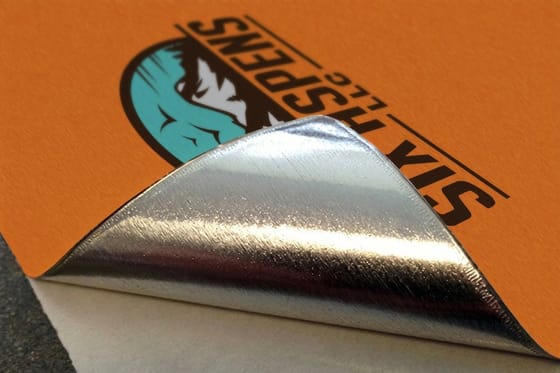
A removable wall decal is printed on a low tack adhesive film or fabric that grips the paint or laminate on the surface, holds a large sheet flat for the length of a show, then folds back on itself and releases without taking the surface with it. You do not seal it: a clear coat or a sealed edge bridges the decal to the wall and turns a five minute strip into a scraping job. The adhesive is only ever as reliable as the surface under it, which is why laminate hardwall and cured eggshell paint work while flat paint, texture and fresh paint do not.

Quick answer
Low tack adhesive, a cured surface, and a peel that folds back on itself
Removable means the adhesive gives way before the surface does. The glue bonds to the paint film or the laminate face, not to the wall behind it, so the decal comes off clean when that film is strong enough to survive the pull. Fold the graphic back on itself at close to 180 degrees and the bond releases quietly. Pull it away from the wall at a steep angle and whichever layer is weakest lets go first, which on flat or freshly painted drywall is the paint. Sealing the edges removes the safety margin altogether, and time works the same way, because acrylic adhesive keeps flowing into the surface for weeks after you put it up.
What Actually Makes a Wall Decal Removable

Removable is a property of the adhesive, not of the print. A permanent decal uses an aggressive acrylic that bonds hard and stays there. A removable decal uses a low tack acrylic that holds well enough to keep a large sheet flat against gravity, and no harder than that. Everything else on the page follows from that one difference.
There is a second thing worth knowing, because it explains most of the horror stories. The adhesive does not grip the wall. It grips the top film sitting on the wall, which is usually paint. When a decal comes down and takes a stripe of color with it, the adhesive did its job perfectly and the paint film was simply the weaker layer. That is why two identical graphics behave completely differently in two rooms.
The material under the print matters as much as the glue. Adhesive Wall Fabric is a polyester fabric with a repositionable back: it lifts and re-sticks while you square it up, it does not stretch out of shape, and it will usually survive being stripped and reused at the next show. Vinyl Wall Graphics use a printed film that lies tighter and reads sharper on a smooth panel, but a vinyl sheet stretches slightly as it peels and rarely lies flat a second time. Fabric for reuse, vinyl for a single run.
Thickness pays you back at removal. A thin film tears into confetti when it is pulled, and picking fragments off a hardwall panel at midnight after a show is the job nobody plans for. A heavier face carries the peel across the whole sheet and comes off in one piece. The same logic runs through vinyl decals against standard decals in general use.
Do You Need to Seal Decals on a Wall? No
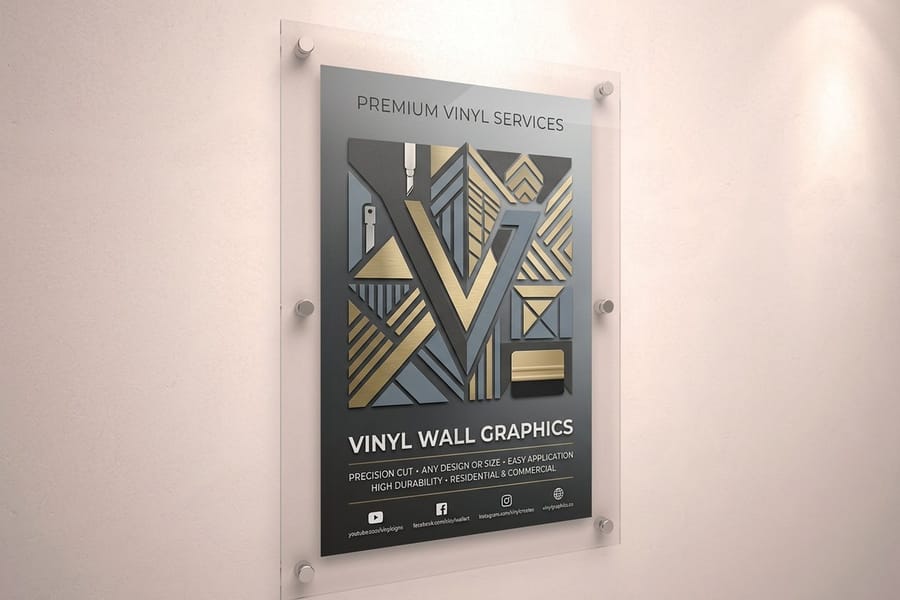
This question comes up on nearly every booth job, and the answer is short. Do not seal a removable wall decal. Sealing it is the one action that reliably converts a five minute strip into an hour with a scraper and a bottle of adhesive remover.
Here is the mechanism. A clear coat, an aerosol sealer or a run of edge sealer does not stop at the decal. It flows over the edge onto the wall and cures into a continuous skin across both surfaces. The decal is now mechanically locked to the paint, and when you pull it, the release has to happen somewhere. It happens in the paint. People seal edges because a corner lifted, but a lifting corner is a symptom of the wrong surface, the wrong dwell time or a dusty wall, and sealing treats the symptom by destroying the wall.
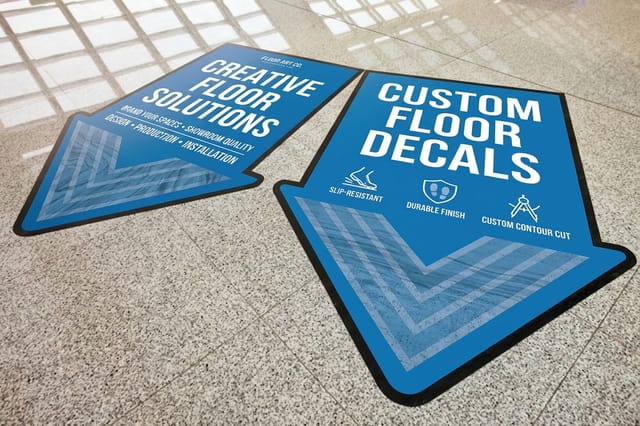
What about protection? A wall graphic in a booth does not need it. Print carries its own surface, foot traffic never touches a wall at eye level, and a show runs three days. The exception is the floor, where an anti-slip laminate is genuinely required, and that laminate goes on at print time as part of the product. Floor Decals ship with the traction surface already bonded, which is a different thing entirely from brushing a sealer over a wall graphic on site.
If the graphic really has to live somewhere wet, greasy or scuffed, change the product rather than the finish. Choose a laminated wall vinyl, a rigid panel, or a printed fabric backdrop that hangs clear of the wall. Our guide to measuring and templating window graphics covers the same discipline for glass, where sealing is even more tempting and just as wrong.
Surfaces That Take a Removable Decal, and the Ones That Do Not
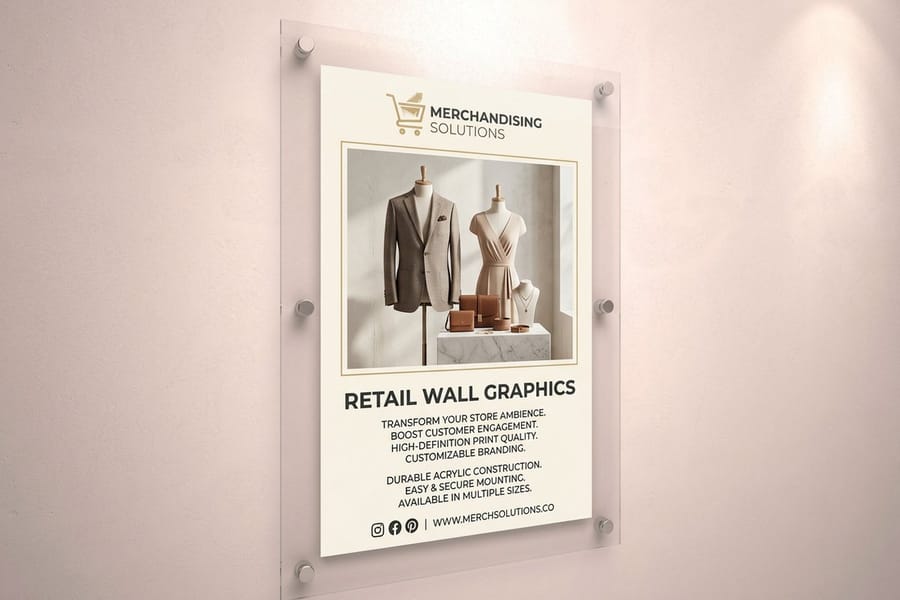
Exhibition halls hand you one of about five surfaces, and the difference between the good ones and the bad ones is entirely about whether the surface has a continuous, cured, non-porous film on top.
| Surface | How it behaves | Verdict |
|---|---|---|
| Laminate or melamine hardwall | Hard, smooth, non-porous and factory finished. The adhesive contacts the whole area and releases cleanly at strike. | The best surface there is. Apply with confidence. |
| Eggshell or satin paint, cured | Enough binder to hold the paint film together under a peel. Needs about thirty days after painting. | Reliable, if you can confirm when it was painted. |
| Flat or matte paint | High pigment, low binder. The surface chalks under a thumb and the top of the film travels with the decal. | Expect damage. Use a free standing backdrop. |
| Textured drywall | Orange peel and knockdown only let the adhesive touch the high points, so the sheet tents and the edges curl. | No. Nothing self adhesive holds for long. |
| Fabric drape or pipe and drape | Nothing for an adhesive to grip, and hall rules usually forbid touching it. | No. Hang a printed fabric backdrop instead. |
Two field tests settle it before the crate opens. Press a strip of masking tape onto the wall, pull it, and look at the tape: color on the tape means the paint will come off with your graphic. Then run a flat palm across the surface, because your hand finds texture that the eye misses under hall lighting.
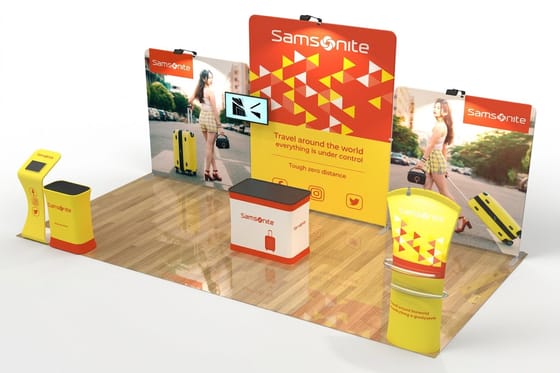
When the wall fails a test, the fix is to stop using the wall. A Fabric Step-and-Repeat stands on its own frame, a retractable stand parks in front of the offending drywall, and neither one leaves anything behind. The displays and booths range exists for exactly this situation, and our trade show signage guide maps which format belongs on which part of a stand.
Applying and Stripping Exhibition Graphics on Show Schedule
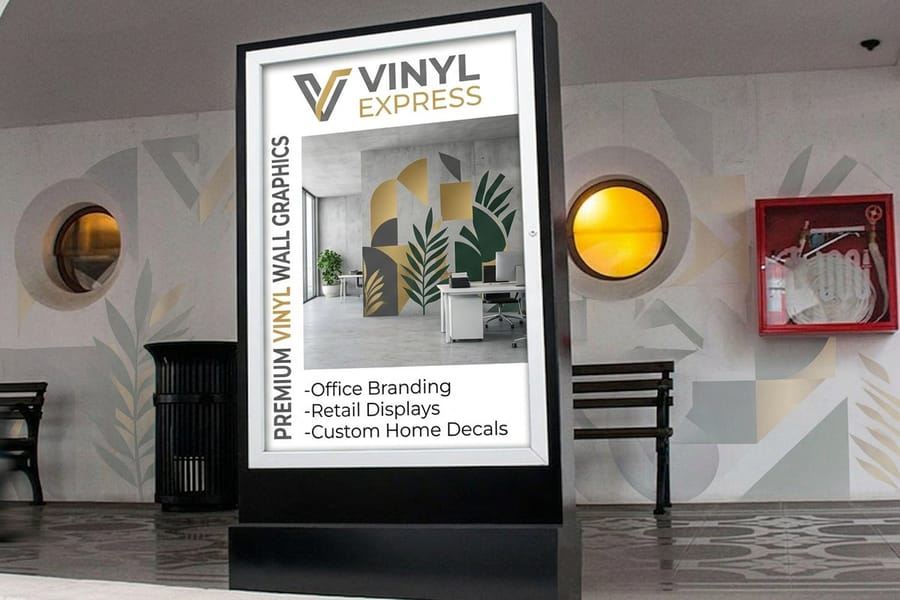
Move in is short and the graphic is the last thing anyone thinks about, so the whole job has to be doable by two people in under an hour. It is, if you prepare in the right order.
- Clean and dry the wall. Isopropyl alcohol on a lint free cloth, then let it flash off. Skip household sprays, because the silicone in them is exactly what stops an adhesive gripping.
- Get the surface above about 50 degrees Fahrenheit. Pressure sensitive adhesive is sluggish on a cold panel in a hall that has been closed all week, and a cold application is the one that curls overnight.
- Hinge before you commit. Position the graphic dry, run a strip of masking tape across the top as a hinge, then peel the liner back a few inches and squeegee outward from the center line.
- Work in one direction. Center to edge, top to bottom, overlapping strokes at a shallow angle. Bubbles get chased to the nearest edge, not pressed flat where they are.
- Plan for panel seams. Anything wider than the press roll arrives as panels that overlap by roughly half an inch. Decide which panel laps over which so the seam faces away from the aisle traffic, and never run a logo across a hardwall panel join.
- Strip in reverse. Warm a corner to about body heat with a hair dryer, lift it, then fold the graphic back on itself so the pull runs close to 180 degrees. Slow and low releases the adhesive. Steep and fast takes the paint.
Two habits save the strike. Number the panels on the back before they leave the crate, and photograph the finished wall, because next year the same crew has to rebuild it from memory. If any residue does stay behind, warm it and lift it with a plastic blade rather than a metal one, which is the same technique in our guide to removing old stickers.
What to Order for an Exhibition Wall

Match the product to the wall you were given, not to the picture in the exhibitor brochure. Three cases cover almost every booth.
You have a clean hardwall panel. Cover it. Adhesive Wall Fabric starts at $25 and is the forgiving choice, because it repositions while you align it and strips for reuse. Vinyl Wall Graphics also start at $25 and give a tighter, glossier read on a perfectly flat panel when the artwork is photographic.
You have a retail space or a showroom rather than a hall. The graphic lives longer, so buy for dwell time and abrasion. Retail Wall Graphics start at $25 and are built for that longer sit, and the whole decals and wall graphics range lists the sizes and materials side by side.
You have drape, textured drywall or a facility that says no. Do not fight it. A Fabric Step-and-Repeat from $217.50 gives you a branded photo wall that touches nothing, and the step and repeat build guide covers logo spacing so faces do not land on a gap. Add Floor Decals from $34 to pull traffic in from the aisle, since the floor is the one surface in a hall that is always yours.
Whatever you pick, size the artwork before you compare prices. These products are priced by area, so a quote only means something once the finished dimensions are fixed. Start from a correctly sized layout in the blank template library, and if this is a first stand, the first time exhibitor checklist lists what else has to be in the crate.
Wally explains removable wall decals
Low tack glue, a cured wall, and a peel that folds back on itself

Wally cleans the panel with alcohol, tapes a hinge across the top, then squeegees from the middle outward so every bubble runs to an edge. At strike he warms a corner, folds the graphic back over itself, and walks it off slowly at 180 degrees. Nothing gets sealed, because a clear coat glues the decal to the paint and the paint is the layer that loses. Give him laminate hardwall or cured eggshell and he is done in twenty minutes. Give him flat paint or a textured wall and he reaches for a free standing backdrop instead.
Order adhesive wall fabric →Specs and pricing
Wall graphic materials, sizes, and starting prices
Vinyl and retail wall graphics both print in 2 business days, and each product page sets its own sizes and finishes.



Print it
Order a wall graphic that comes off as easily as it went on


Explore more
Where to go next




By the numbers
Who prints your wall decals, in numbers
Common Questions
Your removable wall decal questions, answered
Do I need to seal my decals on my wall?
No. Sealing is the most common way people ruin a removable wall graphic. A clear coat, a spray sealer or a bead of edge sealer runs past the decal onto the wall and bonds the two together, so the adhesive is no longer the weakest layer and the paint comes off instead. Removable graphics leave us finished: the print carries its own protective surface, and the edge is meant to stay a free edge so you can lift it later. The only sealing worth doing is on floor graphics, where an anti-slip laminate is applied at print time for traction and scuffing, never brushed on at the wall.
How long can a removable wall decal stay up and still come off clean?
Plan on a clean strip for anything up to a few months, and treat a year as the point where clean removal stops being a promise. Acrylic adhesive keeps flowing into the microscopic texture of the paint after application, so peel strength climbs with time, heat and sunlight. An exhibition graphic that goes up on move in day and comes down at strike is the easiest case there is. A graphic that lives in a showroom through two summers against a sunny wall is the hardest.
Will a wall decal stick to a textured or flat-painted wall?
Textured walls, no. Flat and matte paint, usually not for long. Adhesive needs continuous contact, and an orange peel or knockdown texture only lets it touch the high points, so the decal tents and the edges curl within days. Flat paint is a different problem: it carries a lot of pigment and little binder, so the surface chalks and the top of the paint film comes away with the decal. Eggshell, satin and semi-gloss are the reliable interior finishes, and laminate, melamine, glass and metal hardwall panels are better still.
Can I reuse an exhibition wall graphic at the next show?
Adhesive fabric can be reused several times if you pull it slowly, lay it face up on its liner or a clean sheet, and roll it printed side out. Printed vinyl generally cannot: it stretches as it peels, picks up dust on the adhesive, and rarely lies flat again on the second wall. If reuse matters more than absolute flatness, order the fabric. If the graphic is a one show promotion, vinyl is the cheaper way to get there.
Do trade show venues allow decals on booth walls?
It depends on what the wall is, and the exhibitor kit says so. Rented hardwall panels with a laminate or melamine face are usually fine and are the best surface a decal can land on. Painted drywall in a permanent hall is where the rules get strict, and some venues ban adhesives on it entirely. Fabric drape and pipe and drape take nothing adhesive at all, which is where a printed fabric backdrop replaces the decal. Read the facility rules before you order, not after the graphic ships.
How much do removable wall graphics cost?
Adhesive Wall Fabric and Vinyl Wall Graphics both start at $25 at 4OVER4.COM, and Floor Decals start at $34, because these are priced by square footage rather than by piece. A backdrop for a booth wall costs more than a single decal for the obvious reason that it covers more area, and a Fabric Step-and-Repeat, which comes as a finished backdrop rather than a wall applied graphic, starts at $217.50. Size the artwork before comparing quotes, since a graphic wider than the press roll gets split into panels and that changes the count.
Get Started
Order vinyl wall graphics, printed in 2 business days
Send us the finished dimensions, pick fabric for reuse or vinyl for a single show, and we print a graphic that holds for the run and lifts off at strike.
Legal Disclaimer
Gold Standard guarantees apply to all standard orders placed through 4over4.com. Price match requires verifiable proof of a competitor's published price for an equivalent product with matching specifications and turnaround time. Satisfaction guarantee covers manufacturing defects and print quality issues. Contact support with order number and documentation. On-time delivery rate based on tracked orders 1999 to 2026. Individual results may vary based on shipping carrier performance.
