
Food Truck Flyers vs Vinyl Banners vs Die-Cut Stickers, Ranked by What Each One Sells


Three print pieces, three different moments in the sale. Each reaches a different distance, each has its own entry price, and a truck should buy them in.
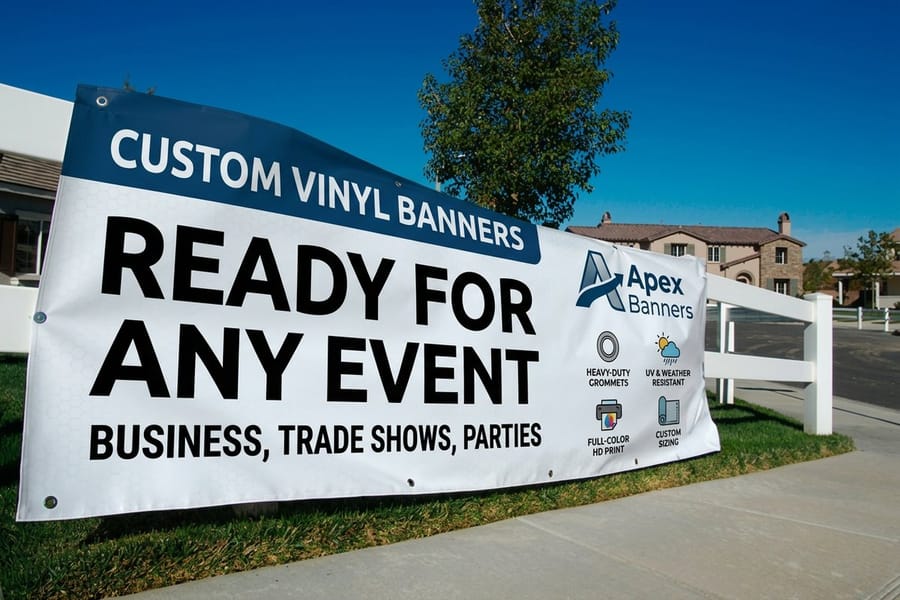
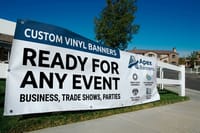
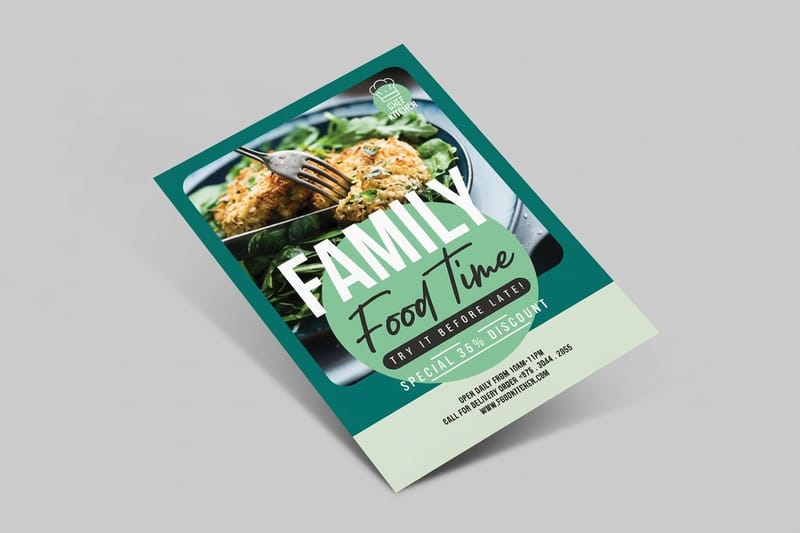
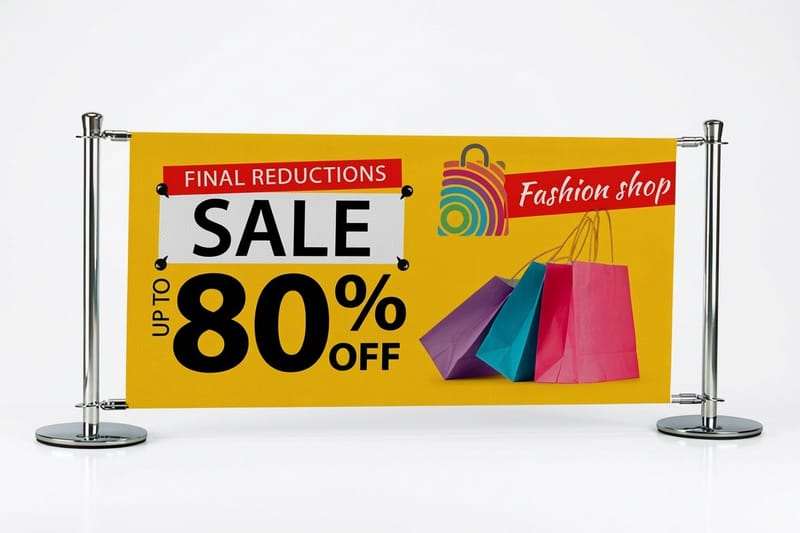
Buy the vinyl banner first at $79, the die-cut stickers second at $93.37, and flyers third at $39.54 only when you have a booked date and a named block. The banner is the only one of the three that reaches somebody sixty feet away who has not decided where to eat. Stickers leave with paying customers and keep working for months. Flyers are the cheapest to print and the fastest to become waste, because the date on them expires.
Quick answer
One reaches the lot, one leaves with the customer, one expires
A vinyl banner is the first thing a food truck should print. It works on people who are still deciding, from across a parking lot, every day it hangs, for $79 to start. Die-cut stickers come second at $93.37 because customers carry them away and display them for months. Flyers come last at $39.54, not because they are weak but because they only work against a fixed date and a fixed place, and every unused one is waste the moment that date passes.
What Each One Actually Does on a Truck Route
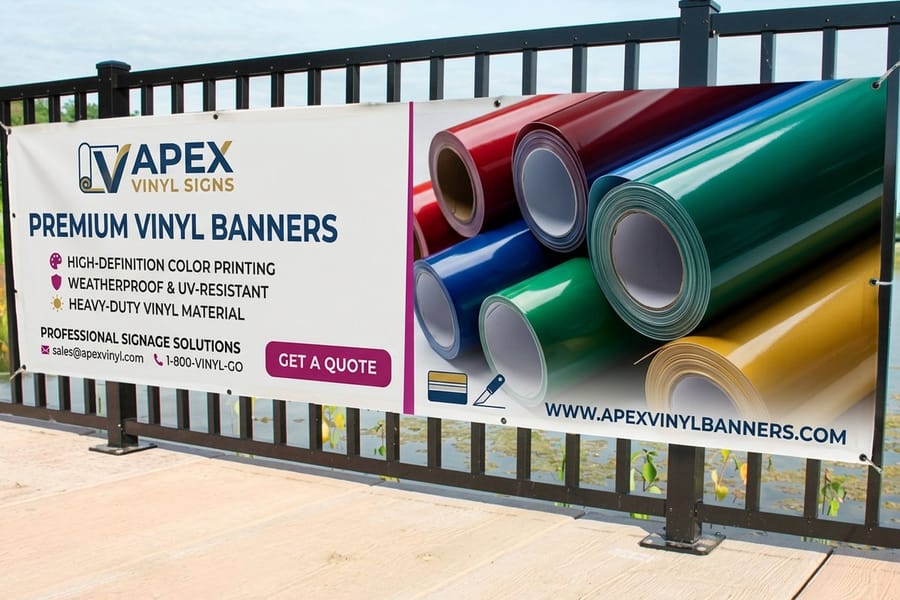
These three are not competing for the same job, which is why comparing them on price alone gives the wrong answer. Each one buys a different moment in the sale.
The banner buys attention before anyone has decided to eat. It is the only piece of the three that works on a stranger sixty feet away. The flyer buys a specific visit, on a date, from someone who took it from your hand. The sticker buys everything that happens after the sale, because it leaves in a paper bag and ends up on a laptop lid where other people see it.
| Piece | Where it works | How long it stays useful | What kills it | Starts at |
|---|---|---|---|---|
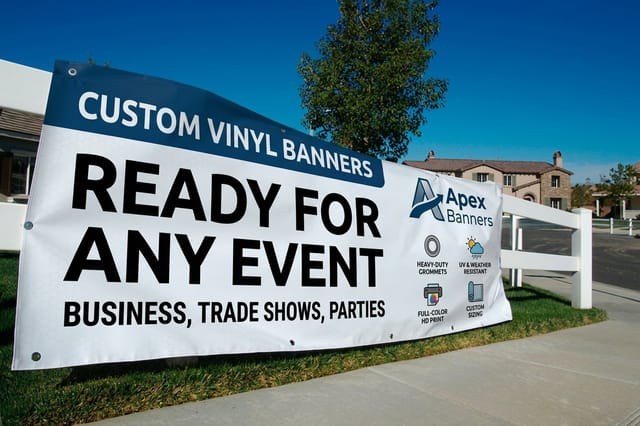
| Vinyl banner | Across a lot, a curb, a festival row. Readable at 30 to 100 ft depending on letter height. | A full season, every service day, no reprint. | Printing prices on it. One menu change and the banner is scrap. | $79 |
| Flyers | Arm's reach. Handed over, or left where a named audience will pick it up. | Until the date on it passes, so days to weeks. | A printed schedule. Your route changes and every remaining flyer lies. | $39.54 |
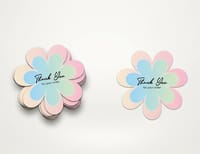
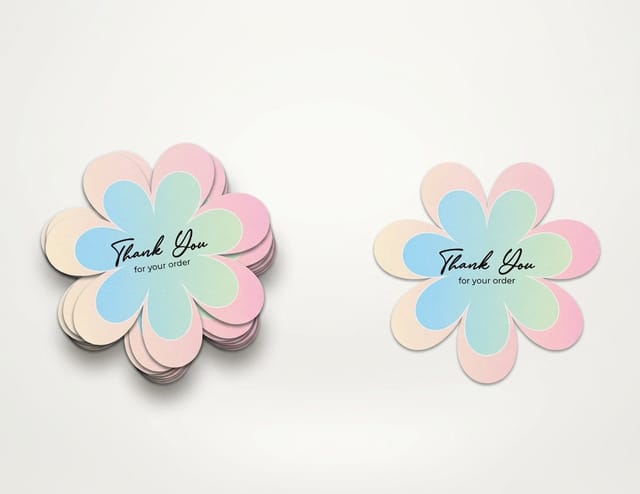
| Die-cut stickers | Also at the window, but the real work happens after the customer walks away. | Months on a bottle, a cooler, a laptop or a case. | Paper stock. Condensation curls it off a cold drink the first day. | $93.37 |
Read the third and fourth columns together. The banner has the longest working life and the stupidest failure mode, and both come from the same fact: it is a fixed message on a durable surface. Keep the message fixed and it earns for a season. Put a price on it and you have bought a disposable sign. Our food truck marketing guide covers where these fit alongside the rest of the route plan.
Sizing Each One to a Truck, Not to a Storefront

A truck is a moving, riveted, curved surface with a hole cut in the side of it. Storefront sizing rules do not transfer.
The banner. Measure the flat panel between the wheel well and the service window, then order roughly six inches shorter on each dimension so the hem and the grommets land on flat metal rather than a door seam. On most step vans that means something in the six to ten foot range by two to three feet tall. Then set the type by distance: about one inch of cap height per ten feet of readable distance. Three inch letters die at around thirty feet. Since people read the food before they read the business, make the cuisine word the biggest thing on the banner and let the name sit under it. Our guide to speccing an outdoor vinyl banner walks through hems, grommet spacing and pole pockets in detail.
The flyers. Hand-out sizes beat poster sizes here. A 4 by 6 or a 5.5 by 8.5 sits in an apron pocket and in a customer's hand without folding. A full 8.5 by 11 gets folded twice and shoved somewhere, which usually means binned. Put the QR code where a thumb does not cover it, so not the bottom right corner. The standard flyer sizes guide lists what each size is actually good at, and you can start from a correctly built layout in the blank template library.
The stickers. A die-cut sticker is cut to the outline of your artwork, so the artwork has to survive a blade. Keep at least an eighth of an inch of solid color inside the cut line and lose any thin tail on a mascot, a flame, or script lettering, because a narrow spur peels first and tears. Around three inches on the longest side is the size people actually stick on a bottle or a laptop. Bigger reads as a bumper sticker and gets used less. Spec outdoor vinyl rather than paper, since a food truck sticker's natural habitat is a cold drink covered in condensation. Our guide to outdoor sticker materials covers the face stocks and laminates that hold up.
What Each One Costs Once You Count the Waste
Order price and real cost are different numbers here, and the gap between them is the whole argument.
Vinyl banners start at $79. That is a single purchase that hangs on the truck every service day of the season with no reorder, so the cost per day of being visible is the lowest of the three by a wide margin. Standard flyers start at $39.54, the cheapest entry price, but flyers are the only one of the three that is consumed. Every one you hand out is gone, and the ones you do not hand out before the date passes are waste. Die-cut stickers start at $93.37, the highest entry price, and they are also the only piece a customer will voluntarily carry, store and display for you.
The practical order for a truck opening this month: buy the banner, buy the stickers, hold the flyer money until you have a date worth spending it on. That sequence is not about which print product is best. It is about which one keeps working when nobody is thinking about it.
One more cost that catches people. Do not print your prices on the banner. A banner with a price list on it becomes scrap the first time your supplier raises a cost, and a replacement is another $79. Prices belong on something you reprint without flinching, like printed menus at $57.11 or a board you write on. Compare live sizes and quantity ladders for all three in the panels further down, or browse the banner printing range, the flyer printing range and the sticker range to price your own combination.
The Verdict: Banner First, Stickers Second, Flyers on a Date

Buy the banner first. It is the only one of the three that reaches a customer who has not walked up yet, it costs $79 to start, and it works every day the truck is open without you doing anything. If you buy one print item this season, buy this one and put the cuisine word on it in the biggest type the panel will hold.
Buy the stickers second. At $93.37 they are the most expensive to start, and they are still the better second purchase than flyers, because they leave with people who already paid you. Drop one in every bag. A sticker on a construction worker's cooler is a sign in a place you will never be allowed to hang one.
Buy flyers third, and only against a date. A booked festival, a catering push into an office park, a grand opening on a named block. Then flyers are excellent and nothing else does that job. Without a date and a place, they are a stack of paper with an expiry on it. If you are handing them out on foot, the flyer distribution guide is worth ten minutes before you print a thousand.
Two exceptions worth naming. If your entire business next month is one festival, the flyer moves to first, because reach across a lot means nothing when everybody is already inside the same fence. And if you hang a banner between poles at that festival rather than flat on the truck, switch to mesh banners at $75, since perforations let wind through instead of loading the grommets until one tears out.
Wally works the lunch rush
Banner across the lot, sticker in the bag, flyer only when there is a date
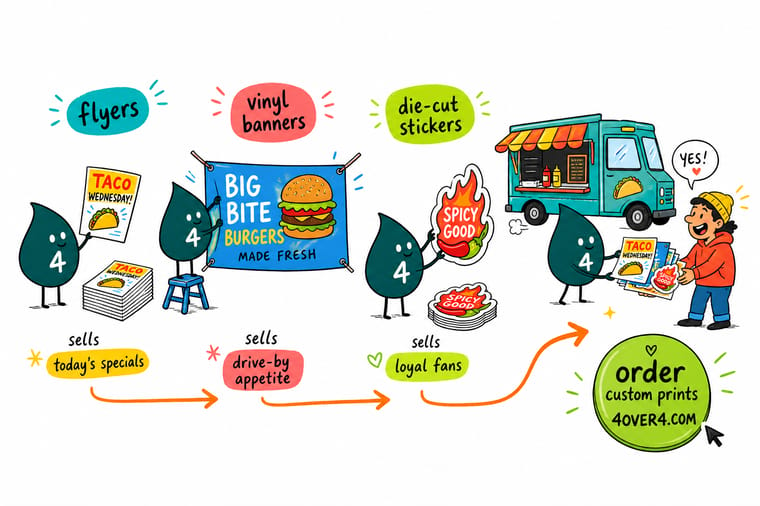
Wally hangs the banner first, because it is the only piece that talks to the person still crossing the parking lot. He keeps the prices off it, since a price change would cost him the whole banner. Then he drops a die-cut sticker in every bag, which turns a paying customer into a moving sign on a laptop lid. Flyers stay in the box until he has a festival on the calendar and a block to walk. Reach first, memory second, dates last.
Price a vinyl banner for your truck →Specs and pricing
Sizes, materials and starting prices, side by side
Configure all three the way a truck would order them, with live sizes, materials and starting prices straight from the 4OVER4.COM configurator.

Print it
Order the three pieces a truck actually uses

Explore more
Where to go next




By the numbers
Food truck print across 25 years on press
Common Questions
Food truck printing questions, answered
Do I still need a banner if my truck is already wrapped?
Usually yes, and for a reason most operators do not expect. A wrap is permanent artwork built around your brand, so it cannot say what you are selling this week. A banner can. Wrapped trucks that lift a banner over the service window use it for the thing that changes: the daily special, the catering line, the new city they just started serving. It also gives you something to hang at a festival booth where the truck is parked behind a fence and nobody can see the wrap at all.
What size vinyl banner fits a food truck?
Measure the flat panel between the wheel well and the service window, then order the banner about six inches shorter than that measurement in each direction. On most step vans and trailers that lands between six and ten feet wide by two to three feet tall. Ordering short matters because the hem and the grommets need to sit on flat metal. A banner that runs long wraps a rivet line or a door seam, bulges, and starts flapping at highway speed. If you also want one for a booth, size that one to the table or the pop up frame instead, not to the truck.
Are flyers still worth printing for a food truck?
They are, but only against a fixed date and a fixed place. A flyer handed to office workers on the block you are parking on next Thursday works. The same flyer left in a stack for people to take home does almost nothing, because by the time they think about it your truck has moved. Standard flyers start at $39.54, so the print cost is rarely the issue. The wasted ones are the cost. Print the route as a QR code pointing at a page you keep updated rather than a printed schedule that is wrong within a month.
Will die-cut stickers survive on a cooler or a water bottle?
On outdoor grade vinyl, yes, through washing and weather. That is the whole point of specifying vinyl rather than paper stock for a giveaway sticker. Paper stickers curl and stain the first time they meet condensation on a cold drink, which is exactly where a food truck sticker ends up. Ask for a vinyl face with a laminate if the stickers will live on car glass or a truck bed toolbox, and check our guide to outdoor sticker materials before you pick a finish.
Should the menu and prices go on the banner?
No. Put the name, the cuisine, and one hero item on the banner, and keep every number off it. The moment beef costs more, or you drop an item, a priced banner becomes a banner you have to reprint. Prices belong on something cheap to reprint: a printed menu, a menu board insert, or a chalk panel. Standard menus start at $57.11, which is less than replacing a banner, and you can reprint them mid season without touching the piece that carries your brand.
Which do I buy first if I only have two hundred dollars?
Banner, then stickers. A vinyl banner starting at $79 is the only piece that reaches people who have not walked up yet, and it works every service day for a whole season. Die-cut stickers starting at $93.37 come next because they leave with paying customers and keep advertising for free. That is roughly $172 for both. Flyers come third and only when you have a specific event on the calendar worth handing them out at.
Does a solid vinyl banner catch too much wind on a truck?
Against the side of the truck, no, because the body blocks the air and there is nothing behind the banner for wind to push into. The problem starts when you string the same banner between two poles at a festival, or across an open fence, where it acts like a sail and pulls on the grommets. That is the situation perforated mesh banners were made for, since the holes let air through instead of loading the tie points.
Get Started
50 flyers cost $39.54, 25 die-cut stickers $93.37
Size the banner to your truck panel, put the cuisine word in the biggest type it will hold, and drop a die-cut sticker in every bag that leaves the window.
Legal Disclaimer
Gold Standard guarantees apply to all standard orders placed through 4over4.com. Price match requires verifiable proof of a competitor's published price for an equivalent product with matching specifications and turnaround time. Satisfaction guarantee covers manufacturing defects and print quality issues. Contact support with order number and documentation. On-time delivery rate based on tracked orders 1999 to 2026. Individual results may vary based on shipping carrier performance.
