
Foam Board Poster Printing Explained From Thickness to Mounting


Which thickness holds its shape at which size, how to fix a board to a wall without tearing it, what matte and gloss do under real lighting, and the point where foam board is the wrong material.
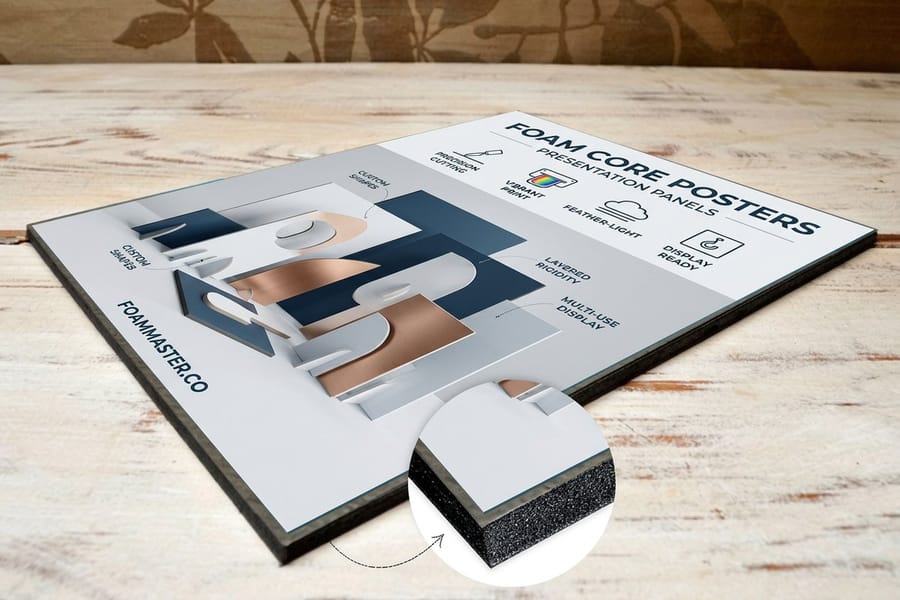
A foam board poster is print on a polystyrene core faced with two paper liners, produced either by printing straight onto the board or by bonding a printed sheet to it. Order 3/16 inch board up to about 24 by 36 inches and 1/2 inch above that, fix it with foam tape or hook-and-loop rather than nails, choose matte if the room has spotlights, and keep it indoors, because the paper liners curl in humidity and yellow in sun.
Quick answer
The paper does the work, the foam only holds it apart
Foam board is two clay-coated paper liners with a polystyrene core between them, and every rule about it follows from that. The paper takes the ink and carries the rigidity, so a dent in the foam is permanent and a nail through the liner is a tear that keeps growing. Three-sixteenths of an inch stays flat through 24 by 36 inches; half-inch board is for larger panels and for anything left leaning on an easel. Matte handles overhead lighting better than gloss. And because the liners are paper, the board belongs indoors.
What a Foam Board Poster Is Made Of
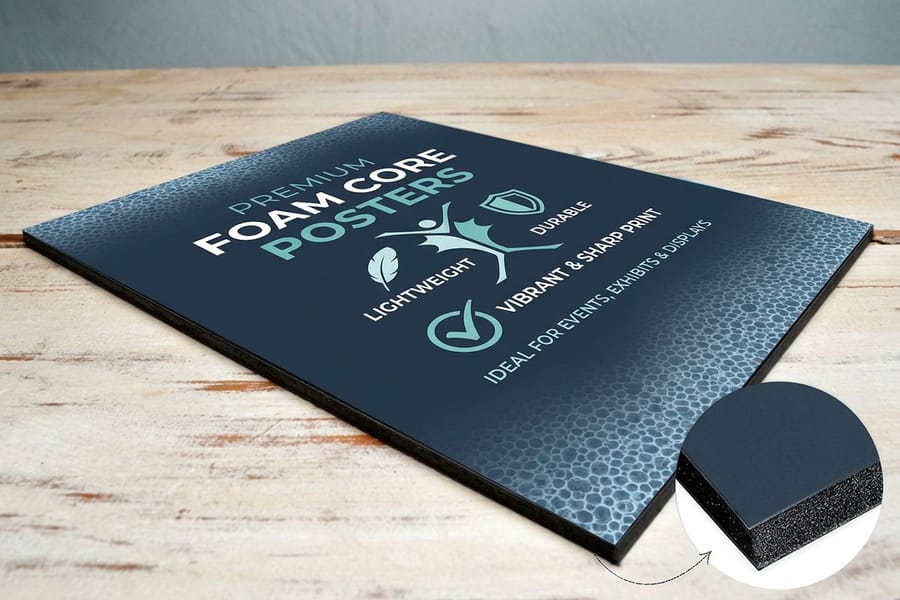
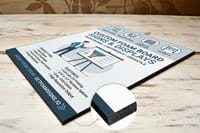
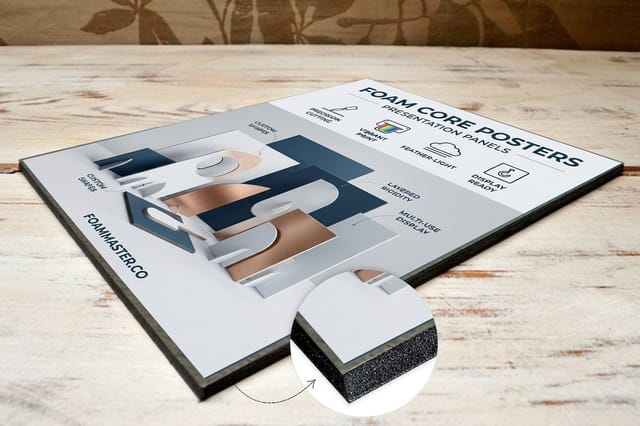
Foam board, foam core, and foamboard all name the same material: a sheet of extruded polystyrene foam faced on both sides with clay-coated paper. The paper is the important half. It takes the ink, it gives the panel its rigidity, and it sets the surface finish. The foam contributes almost no strength of its own; it holds the two paper skins apart so they resist bending, the same trick a corrugated box uses.
That construction explains the two things people notice. First, the board is remarkably light for its size, so a 24 by 36 inch poster hangs on adhesive squares. Second, damage is permanent. Press a thumb into the face and the foam under it compresses and stays compressed, because there is nothing elastic in there to push back. Ship it flat, carry it flat, and keep the corners protected.
There are two routes to a printed board. One prints the artwork directly onto the board face on a flatbed press. The other prints a poster sheet first and bonds it to the board afterwards, which is what mounted posters are. Direct printing has no laminate to peel and no edge seam. Mounting lets you choose the paper and its finish independently of the backing, so it wins for photographic work. Foam core posters start at $49.99 and cover the everyday version of both.
Choosing Between 3/16 Inch and 1/2 Inch Board

Thickness is the first real decision, and it is not about durability. Both thicknesses dent just as easily, because they share the same paper face. Thickness buys resistance to bending across the panel, which is what determines whether a big board stays flat on a wall or sags on an easel.
| Board | Stays flat up to | Weight and handling | Pick it when |
|---|---|---|---|
| 3/16 inch | About 24 by 36 inches, more if it hangs flat against a wall. | Light enough for foam tape or hook-and-loop squares. Easy to carry under one arm. | Wall posters, menu boards, photo prints, retail signage, anything you will hang and leave. |
| 1/2 inch | 36 by 48 inches and beyond, including boards left leaning all day. | Noticeably heavier and thicker at the edge, which reads as more substantial in the hand. | Easel displays, trade show boards, cut-out shapes, anything handled repeatedly by staff. |
| Mounted on board | Depends on the backing you choose, not on the print. | Adds a paper layer plus adhesive, so the edge shows a fine seam on close inspection. | Photography and fine art, where paper finish matters more than turnaround. |
The practical rule: if the board will lean rather than hang, move up a thickness. A leaned panel carries its own weight along one long edge and bows there first, which is exactly what the diagram above shows. If it hangs flat with adhesive spread across the back, three-sixteenths handles more than people expect. Sizes and the current price for each are live in the configurator further down this page, and the full range sits in poster printing.
Mounting a Board Without Wrecking It

Foam board fails at the fixing point more often than anywhere else. Anything that concentrates force in one spot pushes through the liner and crushes the foam behind it, and once the paper tears the hole only grows. Spread the load and the board lasts years.
- Double-sided foam mounting tape. A square at each corner and two in the middle of the long axis. The foam layer in the tape absorbs a wall that is not perfectly flat. The trade-off is that it usually takes paint with it on removal.
- Hook-and-loop squares. The right answer when the same board goes up and comes down for repeat events, because the board side stays attached and only the wall side gets replaced.
- Easel back or a floor easel. For a board that stands rather than hangs. Half-inch board here, always. A three-sixteenths panel above 24 by 36 will visibly bow by the end of a long day.
- A rail or cleat along the top edge. The strongest option for large boards. A thin wooden batten screwed to the wall, with the board resting on it and taped at the base, carries the weight along the whole width instead of at six sticky points.
- Standoffs and drilled holes. Avoid on foam board. Drilled hardware belongs on solid substrates, so use PVC signs if the mounting spec calls for it.
One more habit worth having: hang the board before the room fills up. Adhesive squares need firm pressure for thirty seconds each, and nobody presses properly with a queue behind them. If you are hanging a paper poster alongside the board, our guide to hanging a poster without damage covers the wall side of the problem.
Finish, Edges, and Where Foam Board Stops Working
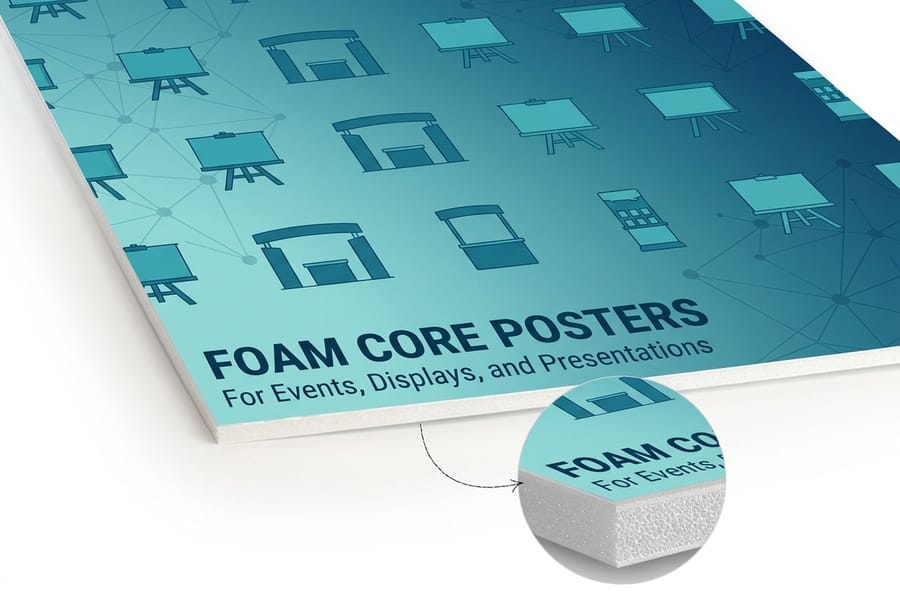
Finish is a lighting decision more than a taste one. Gloss deepens dark tones and makes a photograph look sharper on a table, and it mirrors every downlight in a retail ceiling back into the viewer's eyes. Matte scatters that reflection, holds legibility from any angle, and stops showing every fingerprint the moment staff start moving the board. For trade shows and stores, matte wins most of the time. For a portfolio print viewed straight on in soft light, gloss earns its place. The glossy versus matte comparison goes through what each does to color.
Then the edge. A cut board shows a white foam line around the perimeter, roughly the thickness of the board itself. On a white or light design it disappears. On a full-bleed dark image it reads as a bright outline, which some people love as a border and others hate. If it bothers you, design a light margin into the artwork so the edge looks intentional rather than accidental, and start from a correctly sized file in the blank template library.
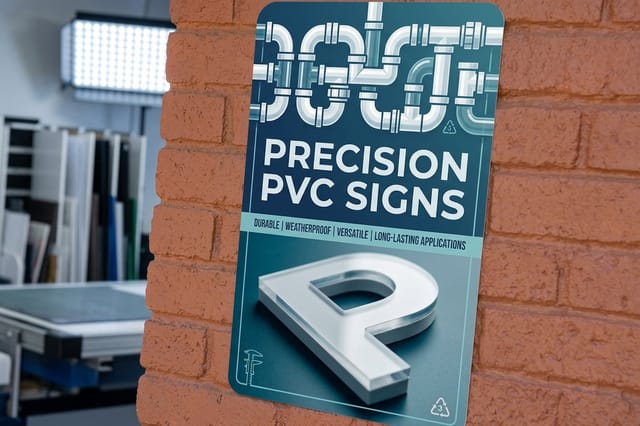
The limit is weather. Foam board is indoor material and no laminate changes that in a useful way. Moisture reaches the liners through the exposed cut edge, the two skins swell unequally, and the panel curls. Sun yellows the paper and makes the foam brittle enough to crack at a corner. For outdoor work, the substrate changes: PVC signs from $25.00 for a solid plastic panel, coroplast yard signs from $25.00 on stakes, or aluminum where the sign has to stay up for years. Weatherproofing a poster and the rigid signs range both start from that split, and foamboard versus Sintra board is the direct head-to-head if you are deciding between the two.
Wally explains foam board
Two paper skins, a foam filling, and no nails
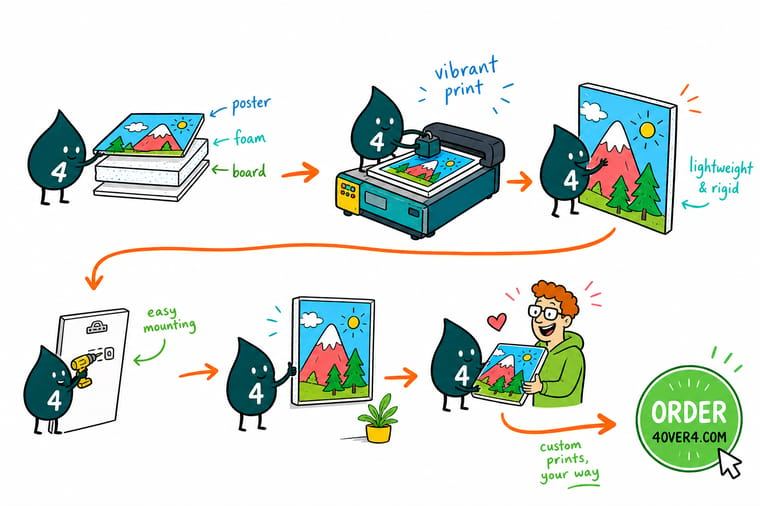
Wally snaps a board in half so you can see it: printed paper on top, printed paper underneath, white foam holding them apart. The paper is what carries the print and the stiffness, which is why a thumbprint stays forever and a nail hole never stops growing. He sticks his board up with foam tape, keeps the three-sixteenths panels under 24 by 36 inches, moves to half-inch for anything that leans on an easel, and takes nothing paper-faced outside.
Order foam core posters →Specs and pricing
Board sizes and starting prices, live from the configurator
Foam core posters, foam core signs and mounted posters side by side, with the sizes and starting prices pulled straight from the 4OVER4.COM configurator.


Print it
Order a board that hangs flat and stays flat

Explore more
Where to go next

By the numbers
The large format press behind a foam board poster
Common Questions
Your foam board questions, answered
How thick is a foam board poster?
Three-sixteenths of an inch is the standard, roughly 4.8 mm, and it is what most poster sizes ship on. Half-inch board is the heavier option for large formats and for anything that has to stand on an easel for a full event. The extra thickness does not make the surface tougher, it makes the panel resist bending across its longest edge, which is the failure people actually notice when a 36 by 48 board starts to bow in the middle.
Can a foam board poster go outside?
No, and this is the one limit worth taking seriously. The two paper liners absorb moisture at slightly different rates, so a humid afternoon curls the board and a rain shower delaminates it. Direct sun yellows the face and makes the foam brittle. For anything outdoors, print on a plastic or metal substrate instead: PVC signs start at $25.00 and take weather without warping, and coroplast yard signs start at $25.00 for short-run outdoor work on stakes.
How do you hang a foam board poster without damaging the wall or the board?
Use double-sided foam mounting tape in a square at each corner plus two squares in the middle, or hook-and-loop squares if the board comes down and goes back up between events. Both spread the load across the paper liner. Nails, pins, and screws all tear the liner and crush the foam around the hole, and the tear grows every time the board is handled. If the board is large or heavy, a wooden rail or a cleat under the top edge carries it far better than adhesive alone.
Is a direct-printed board better than a print mounted onto board?
They suit different jobs. Direct printing puts ink straight on the board face, so there is no laminate layer to lift and no seam at the edge, and it is the faster route for signs and event graphics. A mounted print bonds a poster sheet to the board, which lets you pick the paper and finish first, then choose the backing. If the artwork is photographic and the finish matters more than the turnaround, mounted posters at $39.99 give you that control. Our mounted poster guide walks through the mounting options in detail.
Does foam board warp, and can a warped board be fixed?
It warps when one side takes on moisture faster than the other, which happens fastest when a board is stored leaning against a cold exterior wall or left flat on a damp floor. A slight bow sometimes relaxes if you lay the board flat under even weight for a day or two in a dry room. A board that has been through real humidity does not come back, because the liner fibres have already moved. Store boards flat, off the floor, and out of a garage.
Can foam board be cut into a custom shape?
Yes. Foam board cuts cleanly with a blade or a router, which is why it is the usual substrate for standees, arrow shapes, and cut-out logos. Keep at least a quarter inch of board between the cut line and any printed detail, because the cut exposes a white foam edge that reads as a thin light outline around the shape. Deep interior cut-outs also remove the stiffness that keeps the panel flat, so a heavily cut large board wants half-inch stock. See die cut foam board explained for how the shapes get set up.
Get Started
Foam core posters run 4 business days, coroplast 5
Pick the size, choose the thickness that suits where it will hang or stand, and we print a foam core poster that arrives flat and ready to mount.
Legal Disclaimer
Gold Standard guarantees apply to all standard orders placed through 4over4.com. Price match requires verifiable proof of a competitor's published price for an equivalent product with matching specifications and turnaround time. Satisfaction guarantee covers manufacturing defects and print quality issues. Contact support with order number and documentation. On-time delivery rate based on tracked orders 1999 to 2026. Individual results may vary based on shipping carrier performance.
