
How Cloth Signs and Fabric Banners Work as Soft Signage


Cloth signage is polyester, not plastic, and that one difference changes how it looks under lights, how it travels, and where it fails. The weights and edge finishes follow, and the jobs each product is built for.
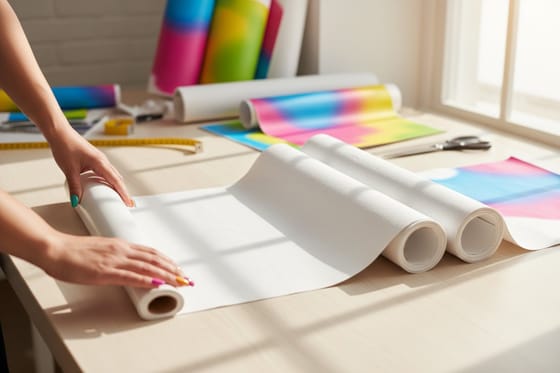
A cloth sign is a large-format graphic printed on woven polyester rather than PVC vinyl, which is why it folds flat without a crease line and reads matte instead of glossy under a light. Weights run from 5oz economy to 9oz premium, with 6oz and 8.8oz tension cloth for framed displays. Cloth wins indoors, on camera, and anywhere the sign gets packed and reused. Vinyl and mesh still win outdoors and in wind.

Quick answer
Ink in a weave, not on a film
Cloth signage prints into woven polyester, so the surface scatters light instead of reflecting it and the panel folds instead of creasing. Order 5oz for economy work, 9oz where a bright wall or window sits behind the sign, 8.8oz or 6oz tension cloth for anything stretched over a frame. The edge finish is the part people get wrong: a sewn hem, a 2 inch or 4 inch pole pocket, grommets, and a 10mm silicone keder each mount to different hardware, and a keder graphic cannot hang from a rope at all.
What Counts as Soft Signage
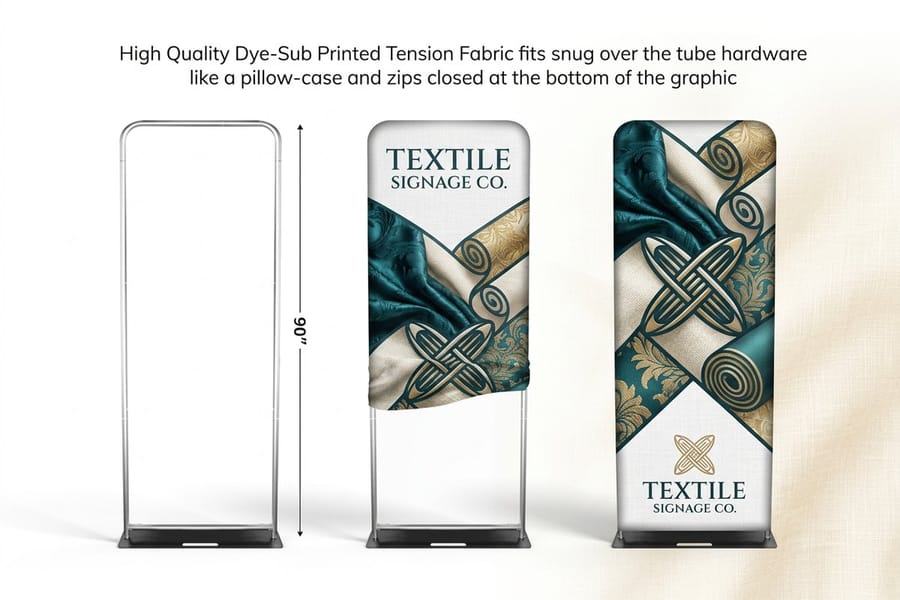
Soft signage is any sign whose face is cloth stretched or hung rather than a rigid board or a plastic sheet. Once you see the category that way, a long list of products collapses into one family that shares the same behavior.
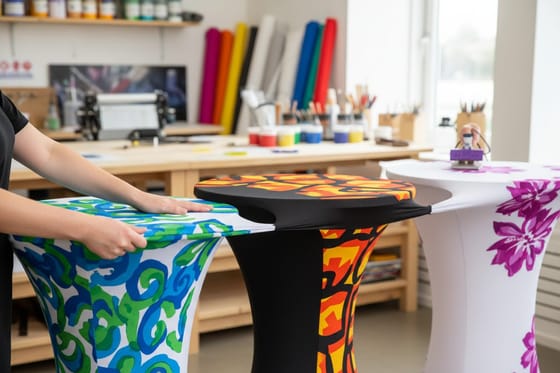
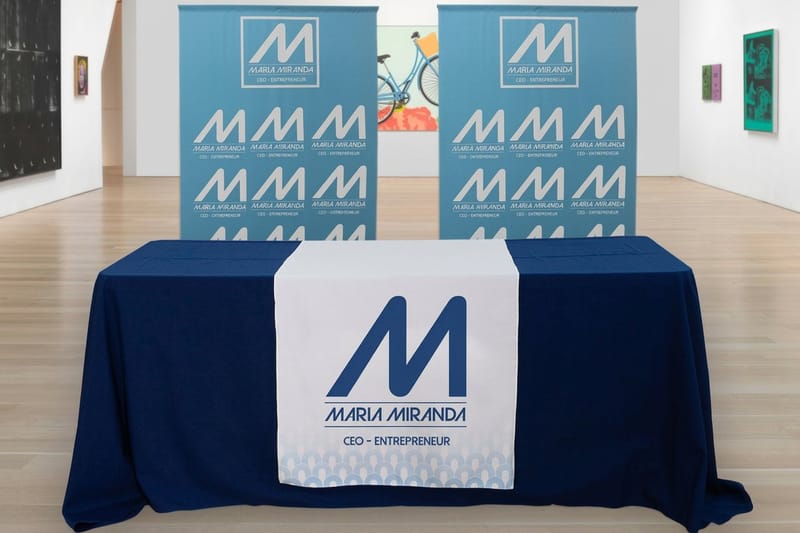
Fabric signs are the made-to-spec panel: pick a size, pick 5oz or 9oz polyester, pick your hems, hang it on a wall or a booth frame. Fabric banners are the same cloth finished for hanging, with grommets, sewn hems, or 2 inch and 4 inch pole pockets. Fabric displays put an 8.8oz tension face over a collapsible tube frame so a 90 inch tall backdrop travels in a bag. SEG fabric is the swappable face for a frame you already own. Fabric table covers wrap the bare folding table the show gave you. Retractable fabric banner stands roll a 9oz coated graphic back into its own aluminum base.
What ties them together is the weave. Ink lands in a woven surface instead of on a film, and everything people like about cloth follows from that one fact: no glare, no crease memory, no crack line where it was folded. Everything people dislike follows from it too, which is the next section.
Cloth or Vinyl, and How to Tell Which One the Job Wants
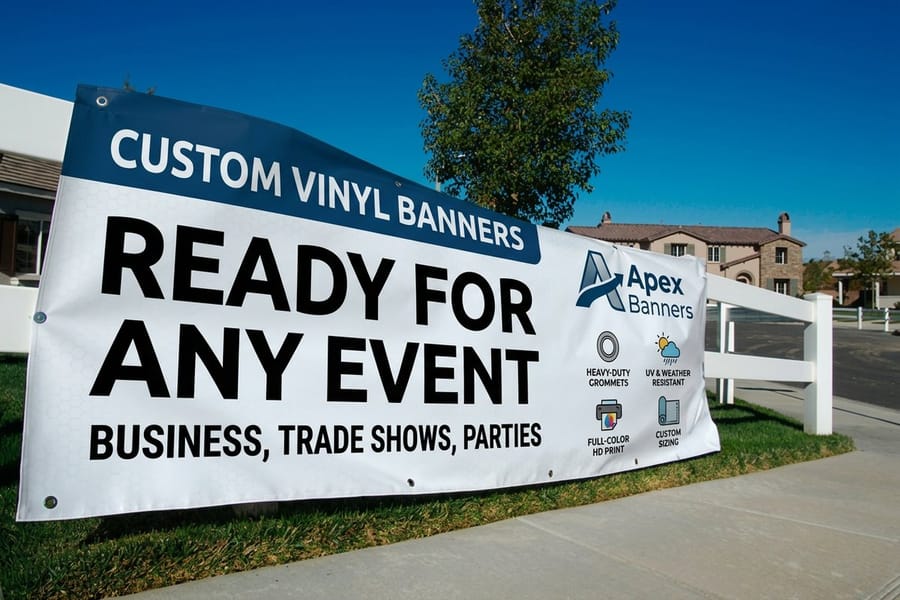
Most people arrive at this question after a photo went wrong. A booth graphic looked fine in the room and came back from the event photographer with a white blowout across the logo. That is vinyl doing exactly what a plastic film does under a hard light.
The trade runs the other way outdoors. Polyester is a textile, so it takes water in and gives it back, it flexes at every mounting point, and once a stitch line opens the weave keeps going. Vinyl does not care. Here is the honest split.
| Factor | Cloth (polyester) | Vinyl (PVC) | Who wins |
|---|---|---|---|
| Under lights and on camera | Matte weave scatters light, reads painted on. | Sheen throws a hotspot back at the lens. | Cloth, decisively. |
| Travel and storage | Folds into a box, shakes out flat. | Must roll in a tube; a fold is permanent. | Cloth. |
| Months outdoors | Holds water, frays at a worked grommet. | 13oz or 15oz weatherable, built for it. | Vinyl. |
| Wind on a fence | Acts as a sail, loads the seams. | Mesh lets air through and stays put. | Mesh vinyl. |
| Entry price | $57.20 for 24 by 72 inches. | $79 for a 2 by 4 foot banner. | Depends on the size you need. |
| Second and third use | Cleans, folds, comes back for the next show. | Survives, but shows the roll and the grime. | Cloth. |
Read the fourth row before anything else if the sign lives outside. A fabric banner on a windy fence line is the single most common way people waste money on soft signage, and mesh banners at $75 exist precisely for that spot. For everything indoors that gets photographed, handled, packed and reused, cloth is the cheaper choice over two seasons even when it costs more on day one. Our vinyl vs fabric vs polyester comparison takes the same argument down to the individual weights.
Fabric Weights and Edge Finishes That Decide the Job
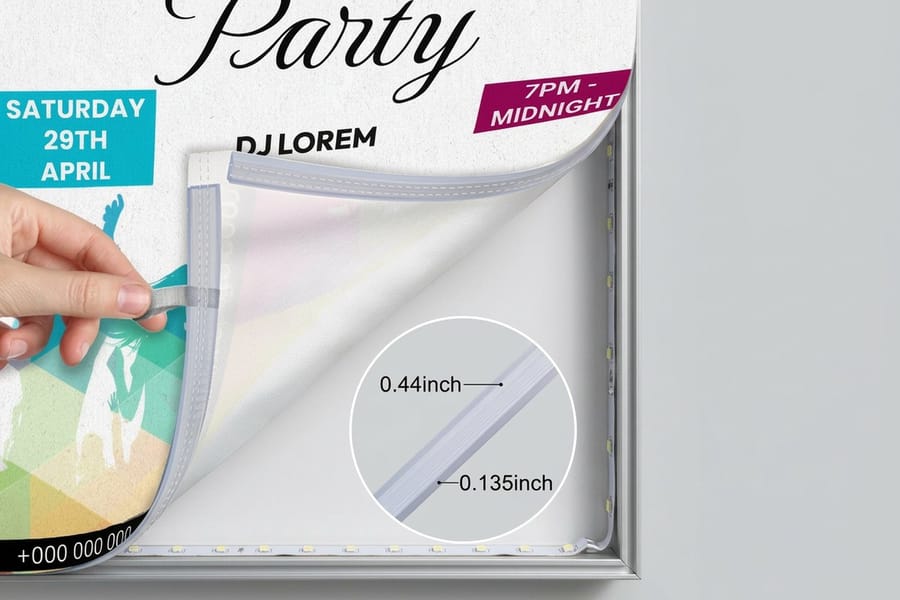
Two specs determine whether a cloth sign works: how heavy the polyester is, and how the edge is finished. Everything else is artwork.
Weight first. A 5oz economy polyester is light, cheap, and slightly translucent, which matters when a window or a bright wall sits behind it and a dark area starts to glow. A 9oz premium polyester blocks more of that, hangs straighter without a batten, and holds a crisper edge on a table cover that has to drape. Tension products sit in between and are built to be pulled taut instead of hung: 8.8oz on a fabric display, 6oz on SEG fabric, 9oz coated on a retractable fabric stand.
| Edge finish | What it is | Mounts to | Watch out for |
|---|---|---|---|
| Sewn hem | Cloth folded back on itself and stitched, on none, two, or all four sides. | Velcro, clamps, a flat wall. | A hem on two sides only will curl on the raw edges over time. |
| Pole pocket | A hem left open at both ends, sized 2 inch or 4 inch. | A pole, a rod, a crossbar. | Measure your pole diameter, not the pocket name. |
| Grommets | Metal rings punched through a hemmed edge, at corners or every 2 feet. | Rope, zip ties, bungee. | All the load lands on two rings. Indoors it is fine; in wind it tears. |
| Silicone keder | A 10mm strip sewn around every edge. | The groove of a SEG frame or light box. | No grommets and no hem, so it cannot hang from anything else. |
The mistake worth naming is ordering the edge last. A keder graphic cannot be hung from a rope, and a hemmed banner will not seat in a frame groove, so a beautiful print can arrive completely unmountable. Measure the hardware you already own first. If you are hanging rather than framing, our guide on where grommets go on a banner covers spacing, and the blank template library has the correct bleed for each size so the hem does not eat your logo.
Packing, Cleaning, and Getting a Second Season Out of a Cloth Sign
The packable claim is real and it is the reason exhibitors switch. Fold a 48 by 144 inch fabric sign into a shipping box, drive it across three states, pull it out and hang it, and there is no crease line to explain. A vinyl banner the same size has to ship rolled on a core, which is a tube longer than most car boots.
Cleaning is where the advice gets ruined by optimism, so here is the careful version. Spot clean with mild soap and cool water, work from the outside of a mark inward, then hang it damp and let it dry flat. Skip the machine and skip the dryer. Polyester shrinks unevenly when it gets hot, and it shrinks first along a stitched hem, which puckers the edge into a wave that no steamer will pull out. If a banner has been boxed for six months and holds a soft crease, hold a garment steamer a few inches off the face and the weave relaxes in about a minute.
Storage decides how many shows you get. Fold it loosely with the print facing in, keep it out of a hot car boot in summer, and never stack anything heavy on the fold. A fabric table cover at $225 that survives eight shows is cheaper per show than a $79 vinyl banner that looks tired after three. That arithmetic is the whole business case for soft signage, and it only works if somebody folds it properly at the end of the day.
Which Cloth Product for Which Job

Match the product to how the sign has to stand up, because that is the only variable that changes between them.
- A booth wall or a stage backdrop. Fabric signs from $57.20, on 9oz if a bright window sits behind you. Order hems on all four sides so the edges stay clean after repeated handling.
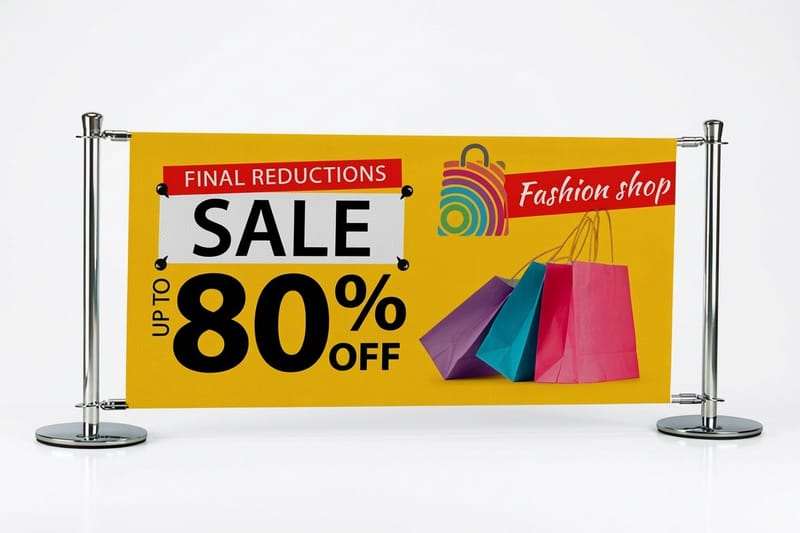
- Something that spans a wall or a rail. Fabric banners from $57.20, with pole pockets top and bottom rather than grommets if the span is over about eight feet, so the load spreads along the whole edge.
- A frame you already own. SEG fabric from $69, cut to your exact frame dimensions. This is the part you reorder every campaign while the frame stays screwed to the wall.
- A backdrop that has to travel in a bag. Fabric displays from $163.67 on an 8.8oz tension face over a collapsible tube frame, single or double sided.
- One person, one minute, no wall. Retractable fabric banner stands from $159.85. The graphic rolls into its own base and the whole display rides home in one bag.
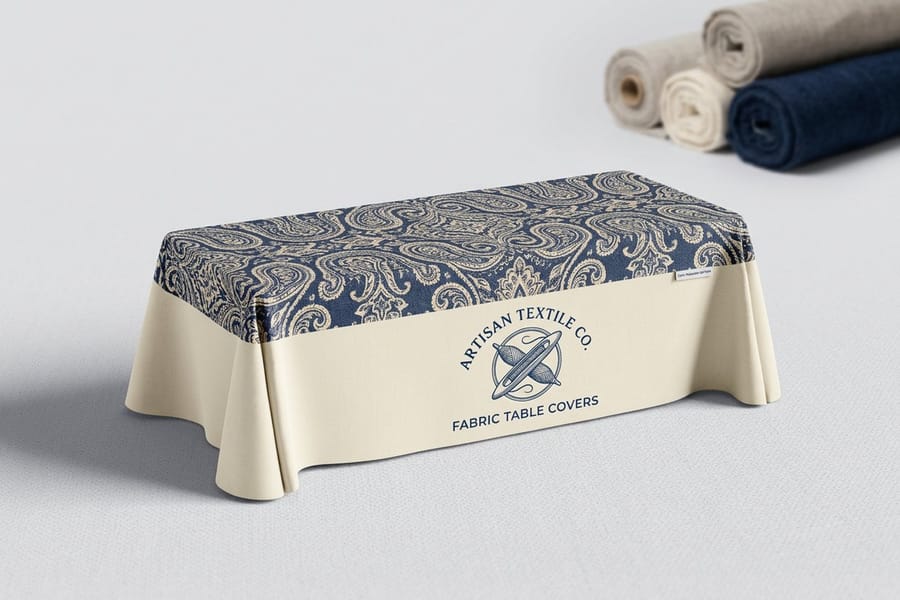
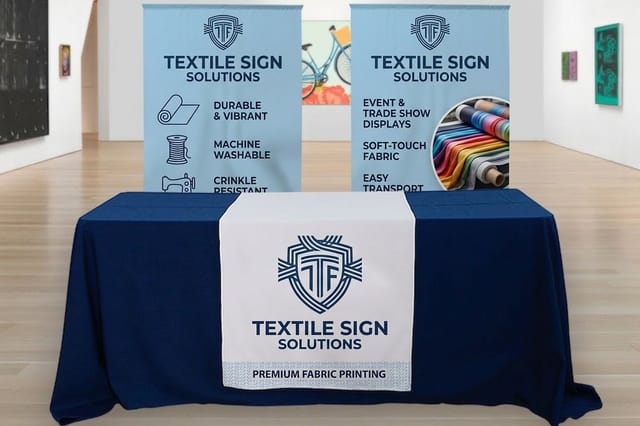
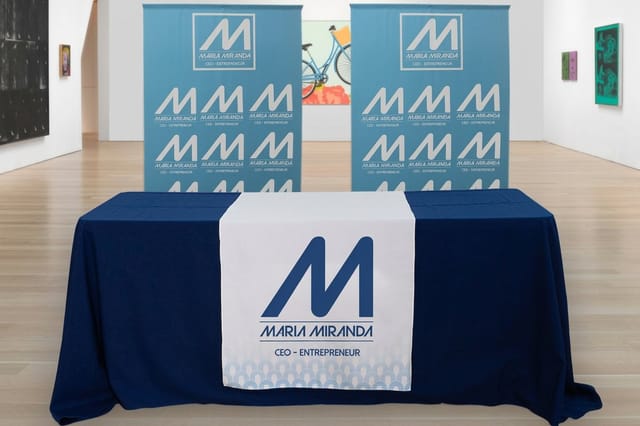
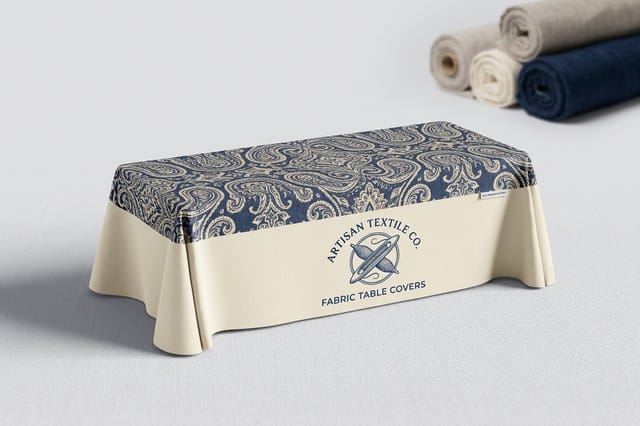
- The bare folding table the venue gave you. Fabric table covers from $225 in 84 by 126.5 inches for a 6 foot table and 84 by 150.5 inches for an 8 foot table.
If the sign lives outdoors for a season, step out of this list entirely and take vinyl banners from $79 or mesh banners from $75 instead. To see the soft options side by side with live configuration, the fabric printing collection lists every cloth product we print, and the banners collection puts them next to the vinyl range so you can price both before you commit.
Wally explains cloth signage
Fold it, pack it, shake it out, hang it again
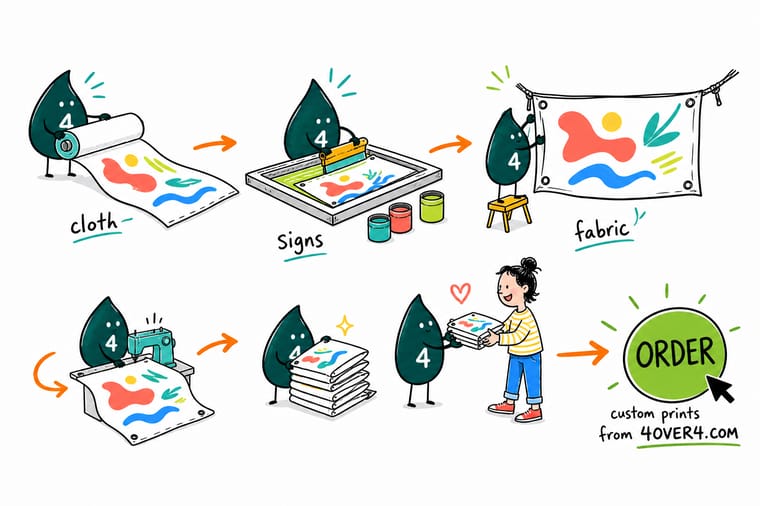
Wally prints your artwork into woven polyester instead of onto plastic film. The weave scatters the spotlight, so the logo photographs clean instead of blowing out white. Then he folds the whole thing into a box, drives it to the next show, and it hangs without a single crease line. He will tell you the limit as well: leave it on a windy fence for a month and the grommets will work the weave until it tears. That job goes on vinyl or mesh.
Order fabric signs →Specs and pricing
Cloth sizes, weights, and starting prices
Compare the three core soft signage products side by side, with live configuration choices and starting prices straight from the 4OVER4.COM configurator.



Print it
Order cloth that folds flat and hangs clean
Explore more
Where to go next


By the numbers
Soft signage inside 25 years of large format work
Common Questions
Your cloth signage questions, answered
What is a cloth sign?
A cloth sign is a large-format graphic printed on woven polyester instead of PVC vinyl. The ink sits in the weave rather than on a plastic film, so the surface stays matte and the whole panel behaves like a textile: it folds, it drapes, and it shakes out flat. At 4OVER4.COM a fabric sign runs from a 24 by 72 inch panel up to 48 by 144 inches, with an any-size build made to order, on either 5oz economy polyester or 9oz premium polyester. People also call these fabric signs, soft signage, or textile graphics, and they all mean the same construction.
Are cloth signs and fabric banners the same thing?
They are the same material in two different jobs. A fabric banner is the classic hanging piece, finished with grommets, hems, or pole pockets so it can span a wall or a stage. A fabric sign is the made-to-spec panel for a fixed spot, usually a booth wall or a backdrop, in a set size with hems on none, the top and bottom, or all four sides. Both start at $57.20 for a 24 by 72 inch piece, so the choice is about how it mounts, not what it costs.
Can you wash a fabric banner?
You can spot clean it, and that solves almost every problem a booth graphic picks up. Mild soap, cool water, a soft cloth, then hang it damp and let it dry flat. Heat is where people ruin them: a hot wash or a tumble dryer can shrink polyester unevenly along a stitched hem, and that pucker will not steam out. If a banner has been folded for months and holds a soft crease, a garment steamer held a few inches off the face relaxes it in a minute.
Do cloth signs work outdoors?
For a weekend, yes. For a season, no. Polyester takes rain and dries fast, so a fabric flag or a fabric banner is fine at a market, a race, or a sidewalk event. What it does not survive is sustained wind on a hard mounting point, because the load concentrates at a grommet and works the weave until it tears. Anything staying up for months belongs on 13oz vinyl, and anything on a fence in wind belongs on mesh, which lets air through instead of fighting it.
What is the difference between fabric banners and SEG fabric?
The edge. A fabric banner is hemmed and hung. SEG fabric carries a 10mm silicone strip, called a keder, sewn around every edge, and that strip presses into a groove on a SEG frame or light box so the face pulls drum tight with no visible hardware. SEG fabric starts at $69 and is cut to your exact frame size rather than a preset, which is why it is the part you reorder when a campaign changes and the frame stays on the wall.
Will my colors match what I get on vinyl?
Close, with two predictable differences. Cloth is matte, so a saturated color reads slightly softer than the same file on gloss vinyl, and deep blacks look a shade lighter because there is no sheen to darken them. Fine detail also softens marginally as the ink spreads into the weave, so hairline rules and 6 point legal type are the first things to suffer. Bump small type up a point or two, avoid thin reversed lines, and the file that works on vinyl works on cloth.
Get Started
A fabric display costs $163.67, a table cover $225.00
Set your size, pick 5oz or 9oz polyester, choose the hem or pole pocket your hardware needs, and we print cloth that hangs flat the second you unpack it.
Legal Disclaimer
Gold Standard guarantees apply to all standard orders placed through 4over4.com. Price match requires verifiable proof of a competitor's published price for an equivalent product with matching specifications and turnaround time. Satisfaction guarantee covers manufacturing defects and print quality issues. Contact support with order number and documentation. On-time delivery rate based on tracked orders 1999 to 2026. Individual results may vary based on shipping carrier performance.
