
How to Buy Back Your Time and Get Your Best Hours Back


The number that tells you what to hand off, the audit that finds it, and the order to do it in so the hours you free up stay free.
Buying back your time means paying somebody else to do the work that costs less per hour than your own time is worth, then spending the freed hours on the few things only you can do. The decision runs off one number, your buyback rate: what you pay yourself in a year, divided by roughly 2,000 working hours, divided by four. Anything below that figure is a candidate to hand off, and the quarter you cut is not caution, it is the budget for hiring, training and the work you redo in the first month.

Quick answer
One rate, one audit, one order to hand things off in
Your buyback rate is your annual pay divided by 2,000 hours, divided by four. Work you can have done below that number should leave your desk, starting with errands and admin and ending with delivery of the core work. Find it by logging two weeks in fifteen minute blocks and marking each block for cost and for energy. Then hand over a recording and a checklist rather than an explanation, and book the freed hours before you free them.
Work Out Your Buyback Rate Before You Delegate Anything

The rate is simple arithmetic and it takes two minutes. What you pay yourself in a year, divided by 2,000 working hours, divided by four.
Use what you actually pay yourself, not company revenue and not the number you would like to be earning. Revenue includes materials, rent and everybody else on payroll, so building the rate on it produces a figure that says you should delegate almost nothing. If your draw is 120,000, your hourly rate is 60 and your buyback rate is 15.
The division by four is the part people argue with, and it is the part that makes the system survive contact with reality. Delegation costs money before it saves any: the search, the trial, the training hours, and the jobs that come back wrong while somebody learns your standards. That quarter is the budget for all of it. Hand work off at your full hourly rate and the trade only turns profitable after the person is already fully trained, which is two or three months out.
The honest limit is cash. The rate tells you what is worth handing off; it does not tell you what you can pay for this month. If the bank balance will not carry the first two months of overlap, the sum is a plan rather than a decision, and the cash flow system for small businesses is the thing to fix first. Rerun the sum whenever you change your own pay, because a rising rate widens the list of work you should no longer touch.
Audit Two Weeks Before You Hand Off One Task

Nobody can list where their week goes from memory. The list you write at your desk is the week you think you had, and it leaves out the forty minutes on hold with a supplier and the three separate trips to the print shop.
Log fifteen minute blocks for two full weeks. Two weeks, not one, because one week is always atypical and you will dismiss it. Against every block put two marks: roughly what it would cost to have somebody else do it, and whether the work drained you or fed you. Energy matters as much as money here. A task that costs almost nothing to do but leaves you flat for the next hour is quietly expensive, and the cost never appears in any ledger.
Sort the blocks into four piles when the fortnight is up. Cheap and draining goes first, and it is usually the biggest pile. Cheap and energising can stay a while longer if it keeps you sane. Expensive and draining is the pile to replace with a specialist rather than an assistant, since it needs judgement you do not want to build yourself. Expensive and energising is the work you are keeping, and it is the reason the whole exercise exists.
One rule saves most of the pain that follows. Do not hand over a process you have not written down, because delegating a broken routine only makes the mess arrive faster and gives it a second owner. Write the steps while you are still doing the task, so the checklist comes out of real work instead of memory. The virtual assistant guide covers how to scope that first role, and the wider business applications guides cover the systems around it.
Buy the Errands First, the Admin Second, the Delivery Last
Hand off in the order of lowest consequence. Errands and pure admin have a low skill threshold and forgiving failure modes, so a mistake in week one costs an apology rather than a client.
| What you hand off | Who usually takes it | What it gives back | Keep it if |
|---|---|---|---|
| Errands and inbox triage | A part time assistant, remote or local | The fragmented hours that ruin deep work | Nothing. This pile goes first, always. |
| Bookkeeping and invoicing | A bookkeeper on a monthly retainer | Month end, plus accurate numbers to set your own rate from | You are still the only person spending money. |
| Printing and stock reorders | An online printer with a saved job | The evenings spent feeding an office laser and trimming by hand | You print one sheet a month and nothing needs to match. |
| Scheduling and follow up | An assistant with a written script | The context switching that costs more than the task | Your calls need pricing judgement in the first minute. |
| Delivery of the core work | A trained employee or a specialist | Capacity beyond your own hands | The process is not written down yet. Fix that first. |
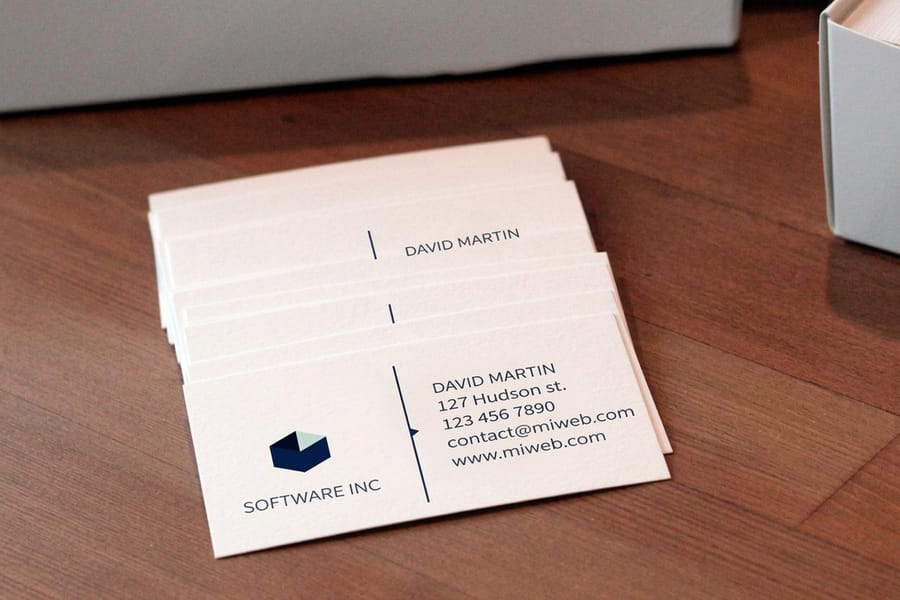
Printing sits in the middle of that ladder for a reason: it is the point where most owners are still trading real hours for a job that a supplier does better and cheaper. Cutting a hundred flyers on a kitchen table is two hours you never invoice, and the edges show. Standard Flyers start at $39.54 and arrive cut to size, Standard Business Cards start at $17.57, and Standard Postcards start at $16.48, which is less than most owners charge for the hour they would have spent on the trimmer.
Set the job up once and the reorder stops being your decision at all. Save the stock, the quantity and the artwork, then let whoever runs your admin place the same order when the box gets low. Standard Letterheads start at $99.95 for the stationery side, and a campaign that would otherwise eat a week of your own labor can run through the direct mail services collection with addressing and postage handled at the same time. The outsourced printing guide puts numbers on what the equipment alone would cost you.
Hand It Over With a Recording and a Checklist

The handover is where most delegation dies. An owner explains a task once in conversation, the person does it wrong twice, and the owner takes it back and concludes that nobody can do it properly.
Record instead of explaining. The next time the task comes up, screen record yourself doing the whole thing at normal speed and narrate the decisions rather than the clicks. What you are capturing is the judgement: why this supplier, why this quantity, what makes you stop and check. Save the recording, write the steps underneath it as a numbered checklist, and hand over both. The pair takes one extra pass through work you were doing anyway, and it survives the person leaving.
- Record one real run of the task, narrating why each decision goes the way it does.
- Write the checklist under the recording, one line per step, in the order you actually did them.
- Name the finished result so there is a standard to hit rather than a vibe to guess at.
- Set the decision boundary. Below this amount they decide alone, above it they ask.
- Ask for the problem and the proposal together. Never a problem on its own.
- Review at week six, not week one, and only against the checklist you wrote.
Accept work that is close rather than identical. If a task comes back at roughly the standard you would have hit yourself, that is a win, because the alternative is you doing it forever. Chasing the last stretch of polish on an errand is how owners end up back in their own inbox at midnight.
Then protect the hours. Empty time refills with the same low value work inside a fortnight unless something is already booked into it, so put the sales calls, the pricing review or the hiring into the calendar before the handover happens. If you are still building the first systems, the first time entrepreneur launchpad sets the order to build them in, and the solo entrepreneur print lineup covers the printed pieces worth setting up once so you never think about them again.
Wally explains buying back your time
Pay for the cheap hours, keep the expensive ones
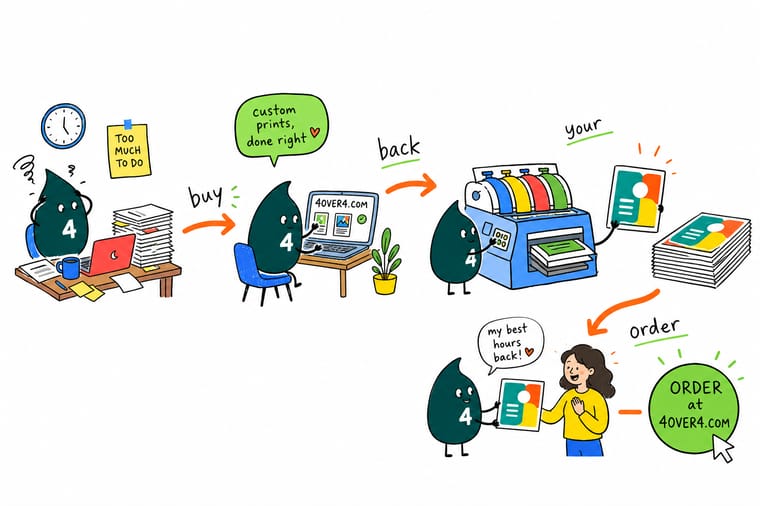
Wally works out what an hour of his own time is worth, cuts it to a quarter, and hands off everything he can buy below that line. Errands go first, then the admin, then the reordering. He never hands over a job without a recording and a checklist, because a routine nobody wrote down just breaks twice as fast with two people on it. The hours he gets back are booked before they exist, or they fill straight back up with the same small work.
Set up a standing business card order →Specs and pricing
The reorders worth setting up once
These are the three jobs owners hand off first, with live configuration choices and starting prices straight from the 4OVER4.COM configurator.



Print it
Take print off your own desk


Explore more
Where to go next





By the numbers
The print jobs you stop touching, handled at 4OVER4
Common Questions
Your buyback questions, answered
What does buying back your time actually mean?
It means paying somebody else to do the work that costs less per hour than your time is worth, and using the hours you get back on the few things only you can do. The transaction runs in both directions: you spend money to buy hours, and you spend those hours on work that produces more money than it cost to free them. If the freed hours go on email and errands again, you bought nothing.
How do I calculate my buyback rate?
Take the amount you actually pay yourself in a year, not company revenue and not what you hope to earn. Divide it by 2,000, which is a rough full year of forty hour weeks, to get your hourly rate. Divide that by four. The result is your buyback rate. If you pay yourself 120,000 a year, your hourly rate is 60 and your buyback rate is 15, so anything you can have done for less than 15 an hour is a candidate to hand off.
Why divide by four instead of using my full hourly rate?
Because delegation is never free at the moment of handover. You pay to find the person, you pay while they learn, and you pay again for the work that comes back wrong the first few times. The quarter is the margin that absorbs all of it. Handing off at your full hourly rate means the trade only breaks even once somebody is already fully trained, which is months away.
I cannot afford to hire anybody yet. What can I do?
Buy time in units smaller than a person. Per task services, a few hours a week of help, and outsourcing anything that needs equipment you would otherwise buy and operate yourself all count. Printing is the clearest example: running flyers through an office laser and trimming them by hand costs you an evening, while Standard Flyers start at $39.54 and arrive cut, and Standard Business Cards start at $17.57. The hour you spend cutting paper is worth more than the difference.
What should I hand off first?
Errands and pure admin, because they have the lowest skill threshold and the fewest consequences when they go slightly wrong. Groceries, inbox triage, calendar wrangling, expense entry and supply reorders are the standard first wave. Client facing work and anything involving pricing or hiring comes much later, after your systems are written down and somebody has proven their judgement on smaller decisions.
How long before delegating actually saves me time?
The first month usually costs more time than it saves, which is the point most owners quit and take the task back. Recording the process, answering questions and correcting the first attempts all land in weeks one to four. Measure at week six instead. If the task still needs your hands every time by then, the problem is almost always a process that was never written down rather than the person doing it.
Get Started
50 flyers cost $39.54, cut and trimmed for you
Set the stock, the quantity and the artwork once, then let whoever runs your admin place the same order every time the box runs low. Cards, postcards and stationery ship from our own presses.
Legal Disclaimer
Gold Standard guarantees apply to all standard orders placed through 4over4.com. Price match requires verifiable proof of a competitor's published price for an equivalent product with matching specifications and turnaround time. Satisfaction guarantee covers manufacturing defects and print quality issues. Contact support with order number and documentation. On-time delivery rate based on tracked orders 1999 to 2026. Individual results may vary based on shipping carrier performance.
