
Bookmarks vs Rack Cards and Which One To Print


Two small formats, two completely different moments. Size, stock, mailing rules and price split them, and one of them is the one your job actually needs.
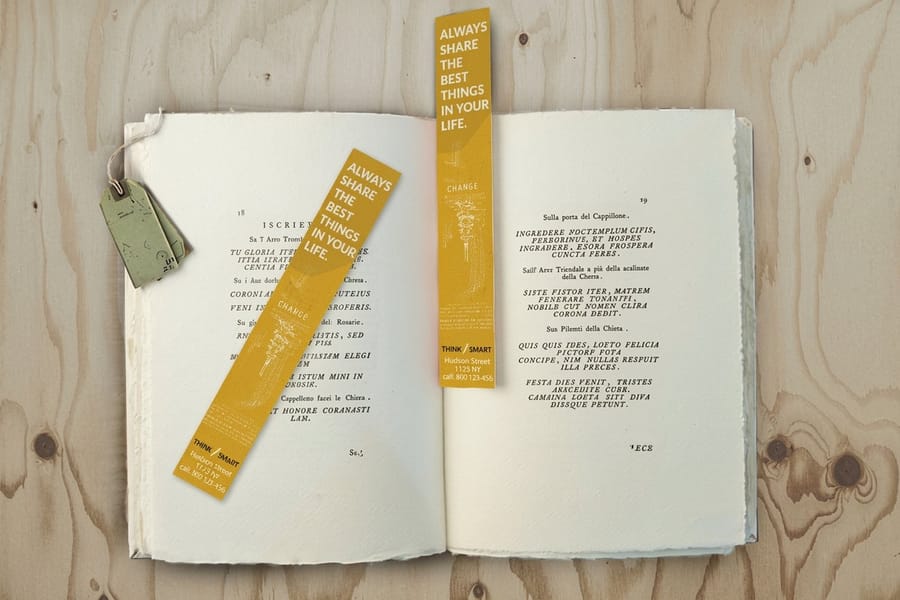
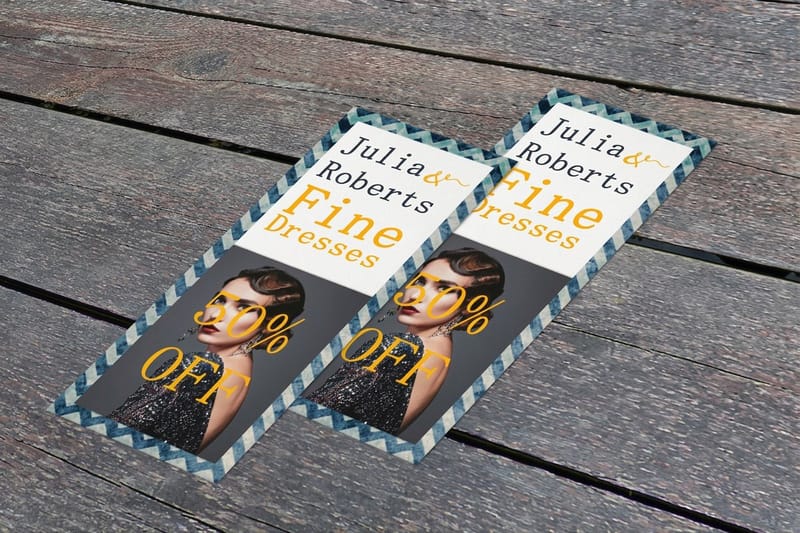
Print bookmarks when you hand the piece to a person, and rack cards when it has to sell itself from a display nobody is standing next to. A bookmark is a narrow 2 by 6 inch keepsake that lives in a book for weeks, so it is read many times but holds only a few words. A rack card is 3.5 by 8.5 inches, sized for a literature rack that hides everything below the top few inches, so the headline and the offer have to sit high. Bookmarks start at $16.48, rack cards at $42.84, and only the rack card can travel through the mail on its own.
Quick answer
Handed over, or picked up from a rack
The delivery method decides the format, not the design. A bookmark is handed to someone who keeps it, so it wins on repeat exposure and loses on space. A rack card sits in a display where the pocket hides its lower half, so it wins on room to sell and loses the moment the headline sits too low. Bookmarks start at $16.48 and cannot be mailed alone. Rack cards start at $42.84 and mail at letter rate. Most businesses that use both are not choosing between them, they are covering two different points of contact.
What Each Format Is Actually Built To Do
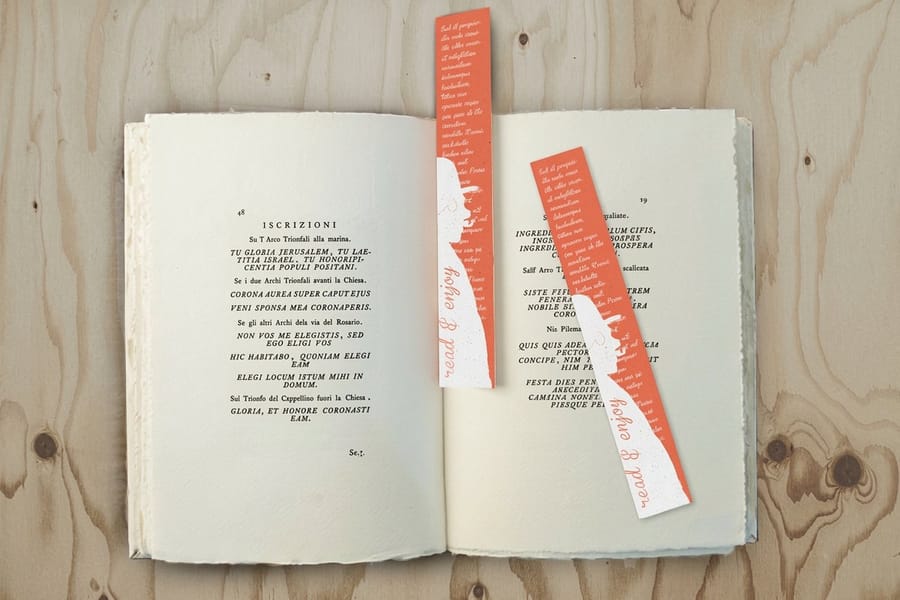
Both are small, cheap, single sheet pieces, and that is where the similarity ends. They are aimed at two different moments.
A bookmark is a gift with a use. Nobody throws away something that solves a small problem, so it stays in a book, on a desk, or in a bag for weeks. That long life is the whole argument for printing one. It also sets the limit: at 2 inches wide there is room for a name, a line, a code and a web address, and nothing more. Push a paragraph onto a bookmark and the type drops below reading size.
A rack card is a salesperson standing in a rack of thirty competitors. It has one job before anything else, which is to get picked up. The message has to be legible from a few feet away, the offer has to be obvious, and the brand has to register in the second it takes someone to scan the display. Once it is in a hand, the back can do the explaining.
The distribution channel is the honest way to choose. Counters, book sales, tote bags, workshops and anything you hand over in person favor bookmarks. Hotel lobbies, visitor centers, waiting rooms, gyms, box offices and any unattended display favor rack cards. If you are not sure which one you have, ask who is standing next to the piece when it reaches the reader.
Size, Stock, Mailing and Cost Side By Side

Four specs decide most of these jobs. Read them across before you read anything else.
| Spec | Bookmarks | Rack cards |
|---|---|---|
| Common size | 2 x 6, 2 x 7, 2 x 8 in | 3.5 x 8.5 in, or 4 x 9 in |
| Visible area in use | All of it, both sides, every time the book opens | Roughly the top 3.5 in until it leaves the pocket |
| Mailable alone | No, it is under the 3.5 x 5 in USPS minimum | Yes, at letter rate |
| Stock priority | Abrasion resistance, laminate or soft touch | Stiffness, so it stands straight in the rack |
| Typical life | Weeks to months in a book | Minutes to a day after pick up |
| Starting price | $16.48 | $42.84 |
The mailing row catches people out most often. USPS will not carry a card smaller than 3.5 inches high by 5 inches long, and a bookmark is 2 inches on its short side, so it needs an envelope or a carrier sheet. A rack card clears the minimum comfortably, and because it runs past 6 inches long it is priced as a letter rather than a postcard. If the piece exists to be mailed, start from flyers or a postcard instead and treat the bookmark as the thing you tuck inside.
The price gap is real but it is not the point. A cheap bookmark that nobody keeps costs more per conversation than a rack card that gets picked up. Browse the live options across bookmark printing and rack card printing to see how coatings move the number.
Designing For a Pocket Versus Designing For a Book
The two layouts fail in opposite ways, so the rules are not transferable.
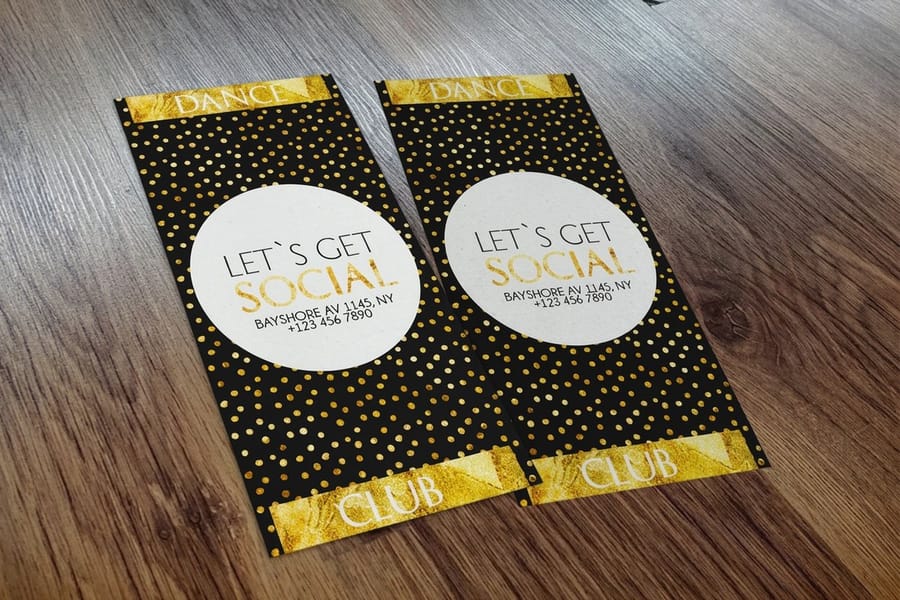
Rack cards: build from the top down. Assume the pocket hides the lower part of the card. Brand, headline and the single strongest image belong in the top few inches, and the headline should hold up at arm's length. The lower part of the front is where the supporting copy goes, and it is fine for it to be invisible in the rack, because by the time it is read the card is already in a hand. Keep the back for detail: hours, directions, a QR code, the fine print. Give the whole card generous margins, since a card that is trimmed tight looks cheap next to a rack full of hotel brochures.
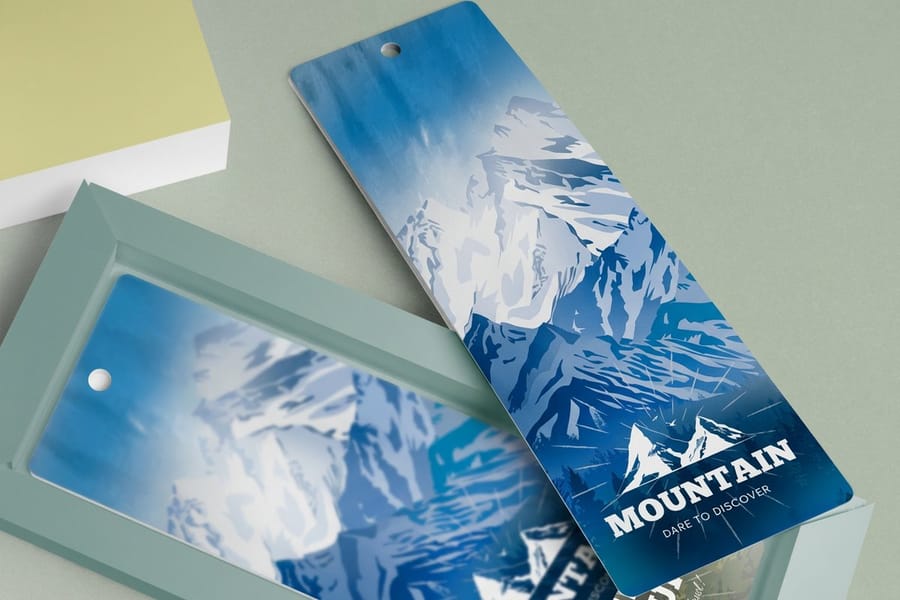
Bookmarks: build vertically and edit hard. Two inches of width is roughly six or seven words per line at a comfortable size, so the design is a column, not a page. Put the strongest element at the top, since that is the part sticking out of a closed book. Keep type well inside the trim on the long edges, because a narrow piece shows any drift badly. Rounded corners are worth the small upcharge here for a practical reason: square corners on a bookmark are the first thing to go soft after a month in a bag.
Both formats need proper bleed and a safe margin, and both are easier to get right from a correctly sized file than from a resized one. Start from the blank template library, then check the specifics in the bookmark size guide or the rack card size guide before you export. If the rack card is the harder brief, our walkthrough on rack card design covers the hierarchy in more depth.
The Verdict, and When To Print Both
Print rack cards if the piece has to sell itself from a display, and bookmarks if you are handing it to someone. That single question settles most briefs, and the specs follow from it rather than the other way around.
Where it gets interesting is the overlap. A yoga studio with a rack in a neighboring cafe and a front desk of its own needs both: rack cards in the cafe to bring strangers in, bookmarks at the desk to keep the class schedule in front of people who already came once. A publisher running a book fair needs bookmarks by the thousand and a handful of rack cards for the venue display. The two are not competitors so much as different stages of the same funnel.
If you are testing a message, start with Standard Bookmarks at $16.48 and see whether the wording gets a reaction before you commit to a rack run at $42.84. If the piece has to carry weight in the hand, Soft Touch Bookmarks at $40.04 give a matte surface people comment on. And when one flat side genuinely cannot hold the information, stop forcing it and fold: Standard Brochures start at $57.11 and the trade-offs are laid out in rack cards versus brochures.
Wally sorts the two formats
One goes in a book, one goes in a rack
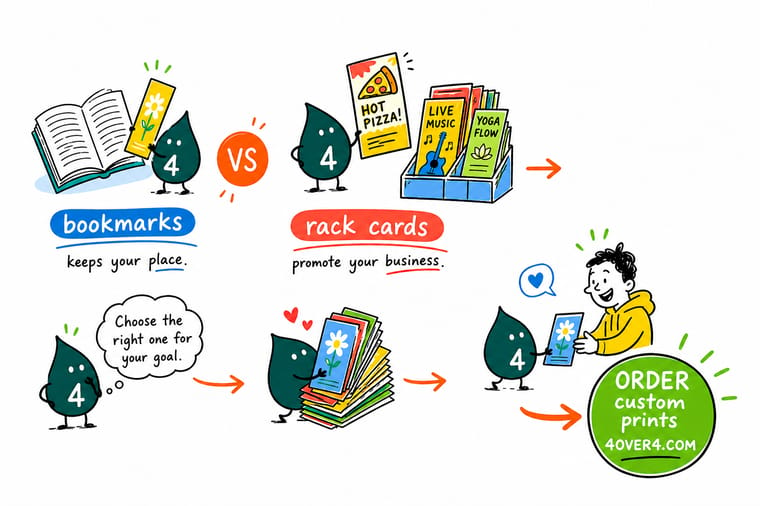
Wally slides a rack card into the display and half of it disappears into the pocket, which is why he keeps the name and the offer up at the top. Then he hands over a bookmark, and it goes straight into a paperback where it will be seen every day for a month. Same printer, same press, two completely different briefs. He also learned the hard way that a 2 inch bookmark will not go through the mail on its own.
Order bookmarks →Specs and pricing
Sizes, stocks and starting prices
Compare both formats with the live configuration choices and starting prices straight from the 4OVER4.COM configurator.



Print it
Order the format that fits your handout


Explore more
Where to go next


By the numbers
Small format work inside a 1,000+ product catalog
Common Questions
Bookmark and rack card questions, answered
Should a small business print bookmarks or rack cards?
Match the format to how the piece reaches someone. If you hand it over in a conversation, at a fair booth, in a shop bag or tucked into a book you sold, print bookmarks: the recipient keeps them, and every time the book opens your name is there again. If the piece has to work alone in a display where nobody is there to explain it, print rack cards, because they are sized for the rack and carry enough room for an offer, a map and a call to action. Businesses that do both, a bookstore with a counter and a hotel lobby partnership for instance, usually run a small bookmark order and a larger rack card order rather than forcing one format to do both jobs.
What size are bookmarks and rack cards?
The common bookmark shapes are 2 by 6, 2 by 7 and 2 by 8 inches, all narrow enough to sit inside a paperback without sticking out the top. Rack cards are built around 3.5 by 8.5 inches, which is the width the pockets in a standard literature rack are made for, with 4 by 9 inches as the wider option. The live size list sits in the configurator on the bookmark and rack card pages, and the dimensions, bleed and safe margins are broken down in our bookmark size guide and rack card size guide.
Can you mail a rack card or a bookmark?
A rack card mails. At 3.5 by 8.5 inches it clears the USPS minimum of 3.5 inches high by 5 inches long, and because it is longer than 6 inches it goes at the letter rate rather than the postcard rate. A bookmark does not mail on its own: at 2 inches wide it falls under the minimum height, so it has to go inside an envelope or be attached to a larger carrier sheet. If mailing is the whole point of the job, a postcard is usually the cheaper format to start from.
What thickness holds up in a rack?
Stiffness matters more than any other spec on a rack card, because a card that bends forward in the pocket hides its own headline. Thin text stock slumps within a day in a warm lobby. Card stock stands. The same logic runs the other way on a bookmark, where the piece is slid in and out of pages repeatedly and the corners take the wear, so a laminate or a soft touch coating buys more life than extra thickness does. The configurator on each product page lists the live stock and coating choices with the price attached to each one.
Do bookmarks need lamination?
Not always, but it is the upgrade that changes how long the piece survives. An uncoated bookmark picks up finger marks and softens at the corners after a few weeks in a bag. Gloss lamination adds a hard shell and makes colors sit up. Soft touch gives a matte, slightly rubbery surface that people notice in the hand, which is why Soft Touch Bookmarks start at $40.04 against $16.48 for the standard version. If the bookmark is a giveaway at an event, plain is fine. If it carries a loyalty code you want redeemed next month, laminate it.
Is a rack card better than a brochure?
It depends on how much you have to say. A rack card is one flat surface per side, which forces a single message and a single call to action, and it is faster to read in a display. A brochure folds, so it holds a price list, a schedule or a floor plan that a rack card cannot fit. Standard Brochures start at $57.11 against $42.84 for Standard Rack Cards. The practical split we see: rack card to get the pick up, brochure to hand over once someone is already asking questions. Our rack cards versus brochures guide walks through the same decision in more detail.
Get Started
50 bookmarks cost $16.48, 50 rack cards $42.84
Pick a size, choose a coating that survives real handling, and we print bookmarks and rack cards that hold their line in a book or in a rack.
Legal Disclaimer
Gold Standard guarantees apply to all standard orders placed through 4over4.com. Price match requires verifiable proof of a competitor's published price for an equivalent product with matching specifications and turnaround time. Satisfaction guarantee covers manufacturing defects and print quality issues. Contact support with order number and documentation. On-time delivery rate based on tracked orders 1999 to 2026. Individual results may vary based on shipping carrier performance.
