
Banner vs Poster and When to Use Each One


One prints on flexible vinyl and hangs outside. The other prints on paper and stays indoors. The spec by spec comparison below carries the real starting prices, and both can run in one campaign.
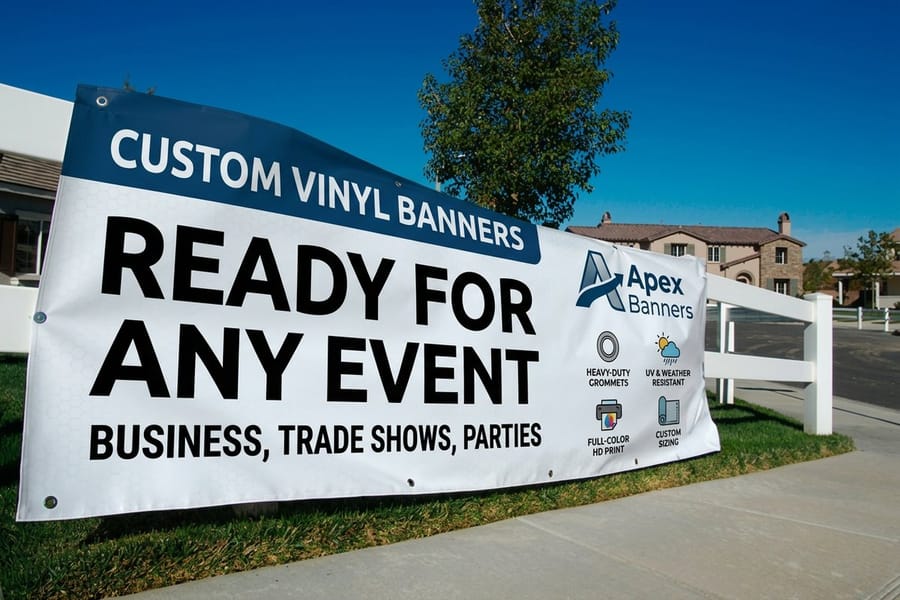
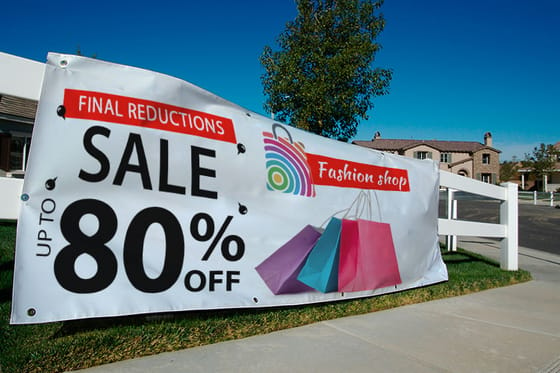
A banner prints on flexible vinyl, mesh or fabric, hangs from grommets, survives weather, and is built to be read from 20 to 100 feet. A poster prints on paper, stays indoors, and is built to be read from 3 to 15 feet. Choose by viewing distance and exposure first, because those two settle the material. Price is not the deciding factor: Vinyl Banners start at $79 and Standard Posters at $108.75 at 4OVER4.COM, so the format name tells you nothing about cost.
Quick answer
Measure the distance, then check the weather
The choice is settled by two questions: how far away the reader stands, and whether the piece gets rained on. Under 15 feet and indoors, print a poster, because paper holds fine detail and frames cleanly. Past 20 feet or anywhere outdoors, print a banner, because 13 oz scrim vinyl takes weather and wind and gives you the width to carry a 6 inch headline. Everything else, including price, follows from those two answers rather than leading them.
Banners vs Posters: Material, Durability and Cost
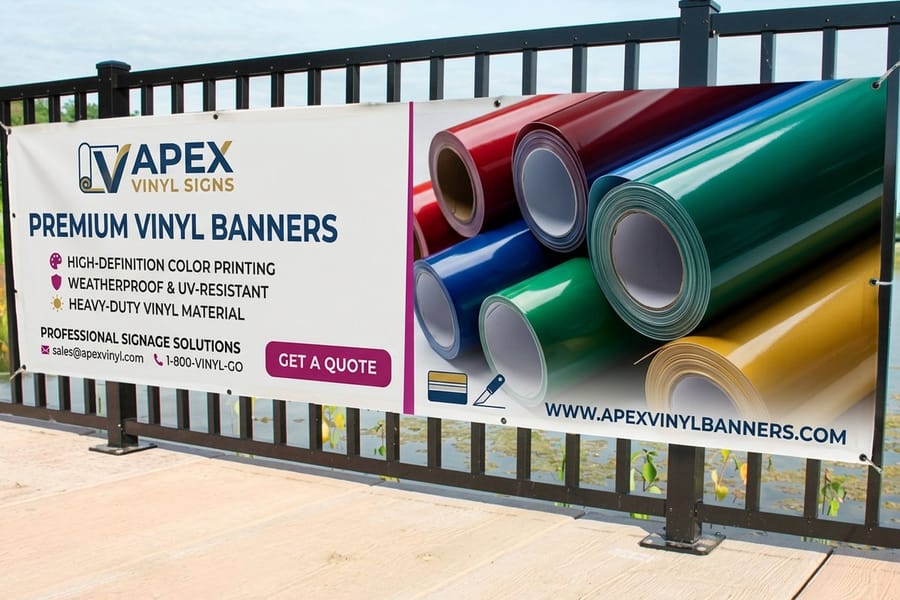
Put the two side by side and the differences fall into three groups: what they are made of, how long they last where you intend to put them, and how much surface you get for the money.
| Standard poster | Vinyl banner | Retractable stand | |
|---|---|---|---|
| Material | Gloss or matte poster paper, printed flat. | 13 oz scrim vinyl, hemmed and grommeted. | Vinyl or fabric graphic rolled into an aluminium base. |
| Read distance | 3 to 15 feet. | 20 to 100 feet. | 6 to 25 feet in a room. |
| Outdoors | Indoor only. One rain shower ends it. | Seasons, including sun and wind. | Indoors. The base tips in any breeze. |
| How it goes up | Tape, frame, or mount to board. | Zip ties, bungees or rope through grommets. | Pull the graphic up, drop the foot out. |
| Reuse | Once. It creases the moment it comes down. | Many times if you roll it, never fold it. | Dozens of times. The graphic lives in the base. |
| Starts at | $108.75 | $79 | $139 |
The row people get wrong is the last one. A banner is not the expensive option by default: Vinyl Banners start at $79 and Mesh Banners at $75, while Standard Posters start at $108.75 and Large Format Posters at $25. Size and quantity move the price far more than the category name does, so price the actual piece you want before you decide anything on cost.
The row that decides most jobs is the third. Paper has no defense against water. Once the piece has to live outside, the material question is settled and the only remaining choice is which flexible substrate, which our banner material comparison works through in detail.
When a Banner Is the Right Call
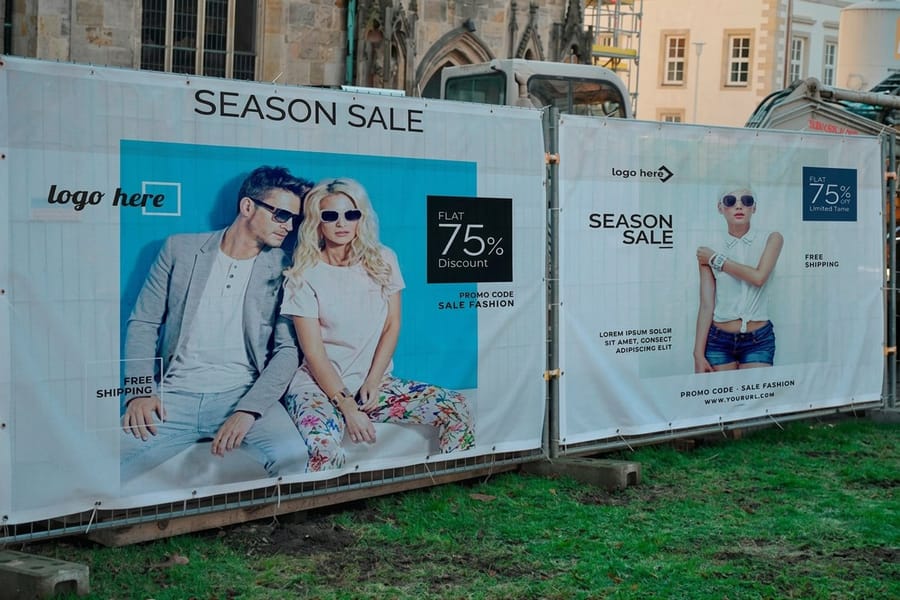
Reach for a banner when any one of these three is true, and stop arguing about it.
- The reader is more than 20 feet away. At that range the headline needs a 2 inch cap minimum, and past 60 feet it needs 6 inches. A banner gives you the width to carry that letter height plus a logo and a phone number without crowding.
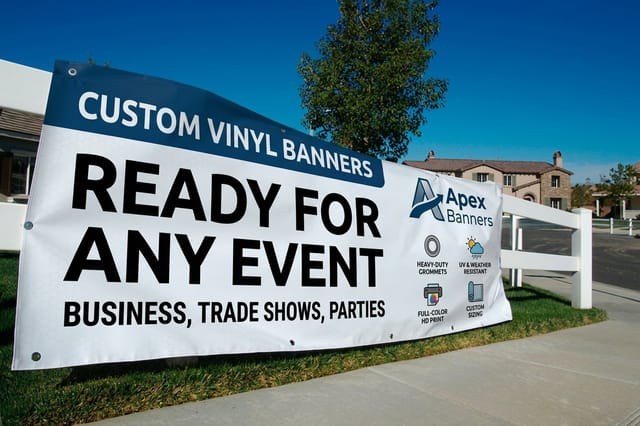
- The piece lives outdoors. Weather is not a design problem, it is a material problem. Scrim vinyl with hemmed edges and grommets is built to be rained on, tied down and left up.
- It has to go up and come down repeatedly. Roll a banner around a tube between uses and it goes back up looking new. That makes it the cheaper piece across a season of markets, races or store events.
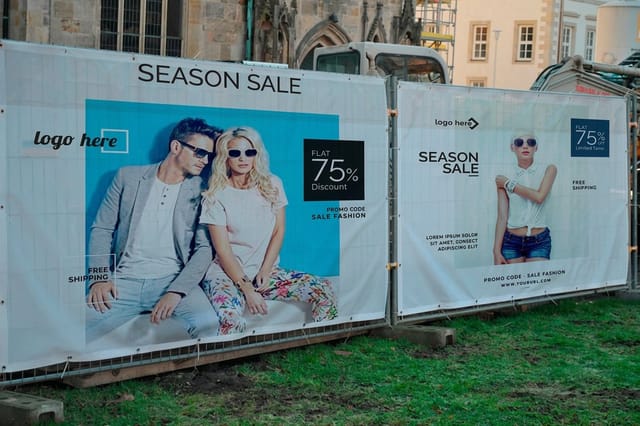
Match the material to where it hangs. A solid wall or a building front takes standard vinyl. An open chain link fence or a scaffold wrap wants mesh, because a solid sheet across that opening behaves like a sail and puts the entire wind load onto the grommets until a corner tears out. Indoors, where there is no weather and no wind, Indoor Banners start at $25 and drop the outdoor construction you are not using.
Size the type before you size the banner. Work out the viewing distance, apply one inch of cap height per ten feet, then check whether that headline plus the rest of your content still fits the width you were planning. It usually pushes the piece a size up. Our breakdown of banner pricing shows what that jump actually costs, and the full range sits in the banner printing collection.
When a Poster Is the Right Call

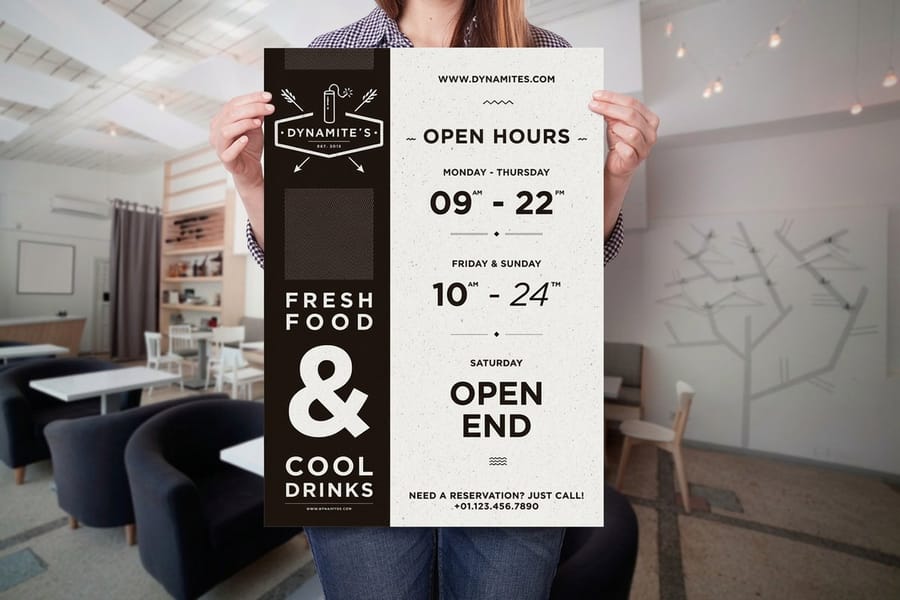
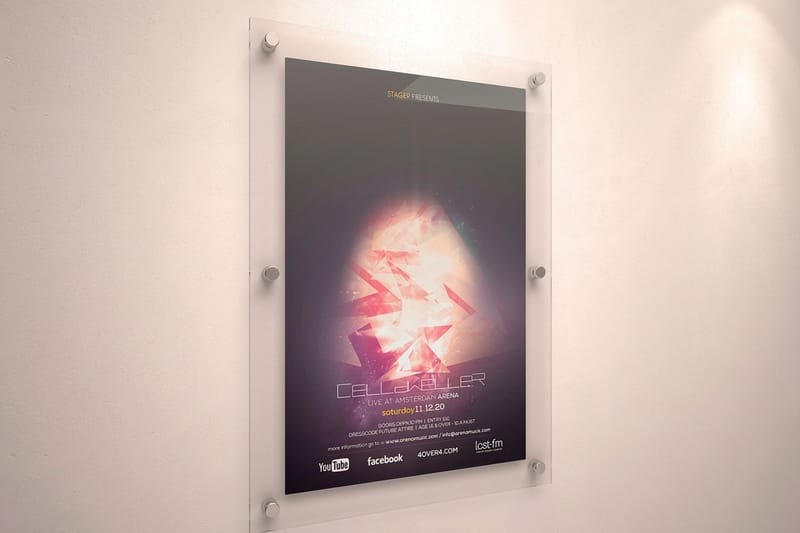
A poster wins whenever the reader is close, standing still, and indoors. That covers more of a campaign than people expect: shop interiors, lobbies, waiting rooms, corridors, gig venues, campus boards, and the wall behind a counter where somebody is queuing with nothing to do but read.
Paper also does two things vinyl cannot. It holds fine detail beautifully, so a poster can carry small type, a full menu, a schedule or a dense photograph and still look intentional at arm's length. And it is flat, which means a framed or mounted poster reads as decor rather than advertising. That matters in a restaurant or a clinic where a hanging vinyl banner would look temporary.
Choose the finish deliberately. Gloss lifts color and photographs, but it mirrors ceiling lights, which is why a gloss poster on a wall opposite a window can be unreadable from the doorway. Matte kills that reflection and suits text heavy work and gallery lighting. The trade off is covered in our gloss versus matte poster paper guide.
If the poster has to stand up on its own without a frame, mount it. Mounted Posters start at $39.99 and bond the print to a rigid board, which removes the curl that makes a taped poster look neglected within a week. For anything above 24 by 36, work from the standard poster sizes and check the resolution you need at that scale before you send the file. The whole paper range sits under poster printing.
Why Pairing Banners and Posters Beats Choosing One

Treat them as two stages of one conversation rather than two options for the same job. The banner is the interruption: it works at speed, from distance, with almost no words, and its only task is to make somebody turn their head or slow down. The poster is the explanation: it works at reading range, with room for dates, prices, a menu, a map or a QR code.
Run only the banner and you get attention with nowhere to send it. People notice the sale and never learn what is in it. Run only the poster and the message is perfect but invisible to anyone who did not already walk through the door. The pair covers both halves, and the cost of adding the second piece is small next to the cost of the first one going to waste.
It also gives your artwork somewhere to breathe. Designers cram a banner because it is the only piece they have: six lines of copy at 2 inch cap height on a 3 by 8 foot banner is unreadable from the distance it was made for. Once a poster is carrying the detail, the banner can drop to four words and a logo, which is what makes it legible at 60 feet in the first place. If you are weighing a rigid sign for the outdoor half instead, our banners versus signs comparison covers that choice.
How to Pair Them Effectively
Start from the route the customer takes, not from the pieces. Walk it: where do they first see you, where do they slow down, where do they decide. Then put the right format at each point.
| Where | What goes there | Why that one |
|---|---|---|
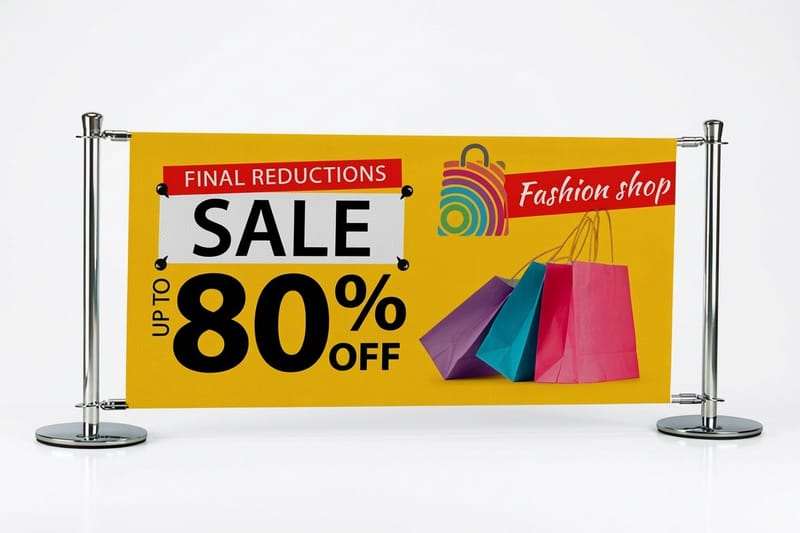
| Street or car park | Vinyl banner, 3 by 8 feet, four words | Read at 60 feet by someone moving. Weatherproof and reusable. |
| Fence or scaffold | Mesh banner | Wind passes through instead of tearing the grommets out. |
| Doorway or window | Poster, 24 by 36, mounted | Read at 6 feet by someone who already stopped. Holds the detail. |
| Inside, at the queue | Poster or retractable stand | Captive reader with time. Room for prices, dates and a QR code. |
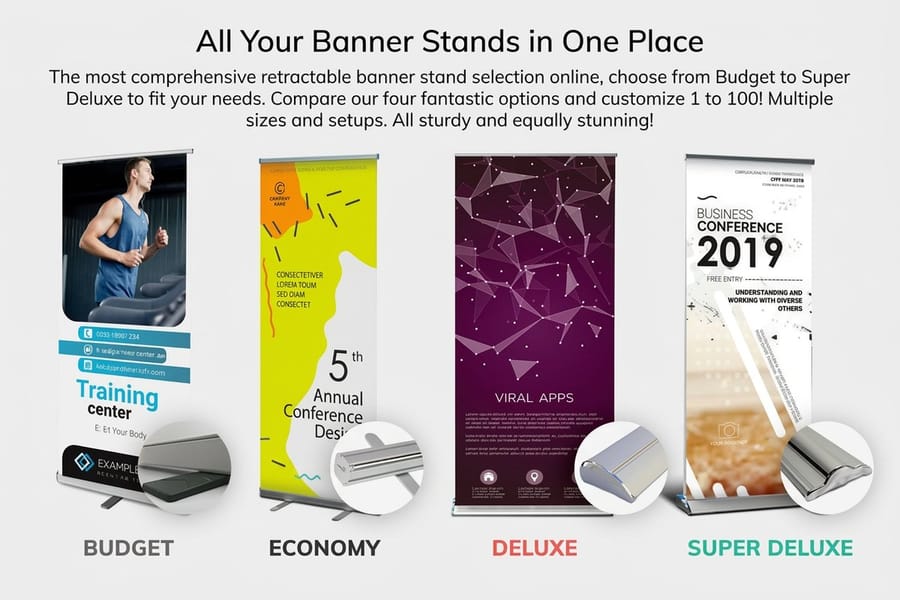
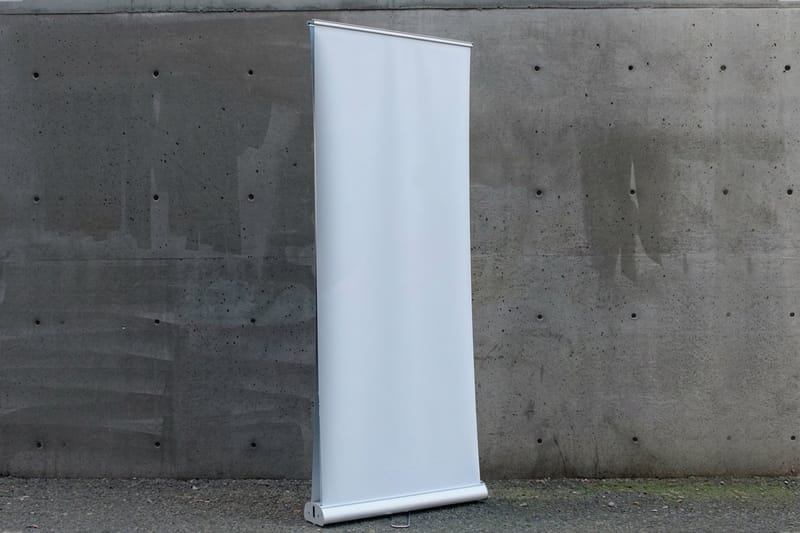
| Trade show booth | Retractable banner stand | No wall to hang from, and the graphic survives a dozen events. |
Keep three things identical across every piece: the headline phrase, the primary color, and the logo lockup. Someone who read the banner from the road has about two seconds to recognize the poster inside as the same offer, and they do it on color and shape long before they read a word. Changing the wording between the two is the fastest way to break that link.
Then let the detail scale with the reading time available. Four words outdoors. A sentence and a price at the door. Everything else inside. If your booth has no wall, Retractable Banner Stands from $139 do the poster job at standing height, and the rest of the hardware is under banner stands. Order both pieces in the same run so the ink matches: printing them weeks apart on different substrates is where color drift shows up. Set the files up from the sizes in our poster resolution guide and the templates in the blank template library.
Common Mistakes to Avoid
Five failures account for most of the reprints we see, and all five are decided before the file is sent.
- Putting paper outdoors. A laminated poster in a sheltered doorway lasts a few weeks. On an open wall it curls, the edges delaminate and the ink fades. Past a fortnight outside, print vinyl.
- Sizing type by eye on a monitor. A headline that looks enormous at 25 percent zoom is a 2 inch cap on the finished banner, which vanishes past 20 feet. Calculate the cap height from the viewing distance, then set the type.
- Solid vinyl on an open fence. It becomes a sail. The wind load concentrates on the grommets and pulls the corners through. Use mesh anywhere air was going to pass through the opening.
- Folding a banner for storage. The crease lines stay. Roll it around a tube, printed side out, and it hangs flat next season.
- Different artwork on each piece. The banner and the poster have to look like the same campaign at a glance. Same headline, same color, same logo, different amount of detail.
One more that costs money quietly: ordering a single banner when you will want a second next quarter. Large format pricing rewards quantity, and a spare hanging in a cupboard is cheaper than a rush reprint. Price the pair on the large format printing range and compare it to two separate orders before you commit.
Wally explains banner vs poster
One shouts from the road, one explains at the counter
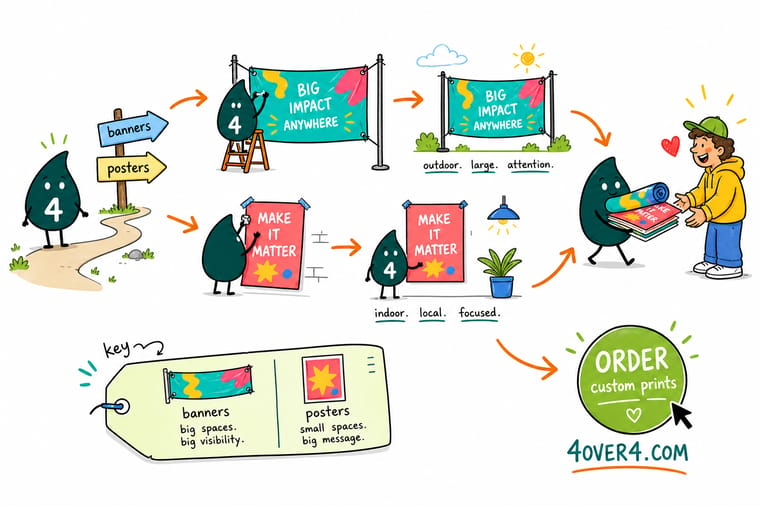
Wally hangs the banner outside because it is vinyl, it is 3 by 8 feet, and the driver reading it is 60 feet away doing 30. Four words, one logo, done. Then he walks in and pins the poster by the queue, where somebody is standing 6 feet away with time to read the dates and the prices. Same headline, same color, different amount of detail. Ask him to put the poster outside and he will point at the sky.
Order vinyl banners →Specs and pricing
Sizes, materials and starting prices side by side
Configure the banner and the poster against each other, with the live size, material and quantity options straight from the 4OVER4.COM configurator.


Print it
Print the banner, the poster, or both

Explore more
Where to go next


By the numbers
One printer for banners and posters both
Common Questions
Your banner and poster questions, answered
What is the actual difference between a banner and a poster?
The substrate and the way it hangs. A banner prints on a flexible material, usually 13 oz scrim vinyl, mesh or polyester fabric, and it is finished with hemmed edges and grommets so it can be tied, zip tied or clipped to something. A poster prints on paper, most often a gloss or matte poster stock, and it is taped, framed, or mounted to a rigid board. Everything else follows from that: the vinyl tolerates weather and wind, the paper does not, and the vinyl can be made wide enough to carry six inch letters while a standard poster runs out of width first.
Is a banner more expensive than a poster?
Not reliably. At 4OVER4.COM Vinyl Banners start at $79 and Mesh Banners at $75, Standard Posters start at $108.75, and Large Format Posters start at $25. The format name tells you nothing about the price, because size, material and quantity move the number far more than the category does. Price the exact size and count you need on each product page rather than assuming paper is the cheap choice.
Can I put a poster outside if I laminate it?
You can buy some time, not a season. Lamination keeps rain off the printed face, but water still wicks in at the cut edges, wind still flexes the sheet, and sun still fades the ink. A laminated poster in a sheltered doorway or an A frame sign holds up for a few weeks. On an open wall through a wet month, it curls and the edges delaminate. If the piece has to live outdoors past a fortnight, print it on vinyl instead.
How big should the headline be on each one?
Use one inch of capital letter height for every ten feet of viewing distance, then double it if the reader is moving. A poster read at 10 feet needs a 1 inch cap, which fits comfortably on 24 by 36. A banner read at 60 feet needs a 6 inch cap, and once you add a logo and a phone number that forces a piece around 3 by 8 feet. This is the calculation that usually decides the format, before anyone talks about material.
Why would I choose mesh over solid vinyl?
Wind. Solid vinyl on a chain link fence or a scaffold catches air like a sail, and the load goes straight into the grommets until the corners tear. Mesh is perforated so most of the air passes through, which is why construction sites and stadium fences use it. The trade off is honest: you see a little through it and the color reads slightly lighter than the same file on solid vinyl, so avoid fine reversed type on mesh.
Do I need a stand, or can I just hang the banner?
Hang it if there is something to hang it from and it can stay up. Use a stand when the piece has to move, stand indoors on a hard floor, or sit beside a table where there is no wall. Retractable Banner Stands start at $139 at 4OVER4.COM and the graphic rolls back into the base between events, which is what keeps a trade show banner looking new on its fifth outing. A grommeted vinyl banner that gets folded into a box does not stay that clean.
Get Started
50 posters cost $108.75, indoor banners ship in 2 business days
Set the banner size from the viewing distance, match the poster artwork to it, and we print the pair on the same run so the color lines up.
Legal Disclaimer
Gold Standard guarantees apply to all standard orders placed through 4over4.com. Price match requires verifiable proof of a competitor's published price for an equivalent product with matching specifications and turnaround time. Satisfaction guarantee covers manufacturing defects and print quality issues. Contact support with order number and documentation. On-time delivery rate based on tracked orders 1999 to 2026. Individual results may vary based on shipping carrier performance.
