
Automotive Banners vs Car Magnets vs Automotive Decals for Auto Shops


Three products, three surfaces, three time frames. Each holds onto something different, each comes off a different way, and a working shop splits the order between them.
Use car magnets on vehicles you do not own or do not want marked permanently, automotive decals on shop-owned trucks and on any panel a magnet cannot hold, and automotive banners on the building or the fence rather than on a vehicle at all. The deciding factor is usually the panel, not the price: a magnet needs flat bare steel, so aluminum hoods, fiberglass caps, plastic bumpers and glass leave decals as the only option. Car magnets start at $47.50, automotive decals at $93.37, vinyl banners at $79.00.

Quick answer
The panel decides it before the price does
Magnets are removable and cheap but need flat bare steel. Decals go on any smooth surface, follow a curve and stay put. Banners hang on the building and carry the message that expires. Test the panel with a kitchen fridge magnet before you order: if it slides off an aluminum hood or a plastic bumper, decals are the only thing that will hold. Then split the budget by ownership, decals on the vans you own, magnets on the cars you do not.
The Three Options Side by Side
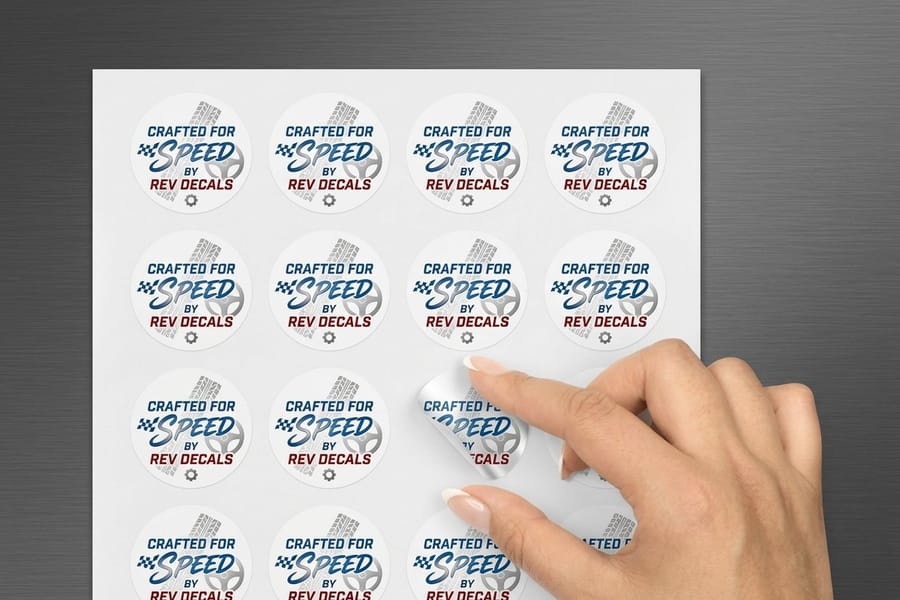
These three products get quoted against each other constantly, and they are not really competing. They occupy different surfaces and different time frames. A magnet is a removable panel, a decal is a permanent graphic, and a banner never touches a vehicle at all.
| Option | Goes on | Comes off | What kills it | From |
|---|---|---|---|---|
| Car magnets | Flat, smooth, bare steel panels only | By hand, in seconds, as often as you like | Aluminum panels, body-line curves, trapped grit, highway wind on a lifted edge | $47.50 |
| Automotive decals | Steel, aluminum, fiberglass, plastic and glass | With heat, slowly, once | Unlaminated vinyl in full sun, cold removal, application over wax or a dirty panel | $93.37 |
| Automotive banners | A wall, a fence, a pole, a bay door | Untie it and roll it up | Wind on solid vinyl, too few grommets, more than seven words | $79.00 |
Read the second column first, because it eliminates most of the argument before price ever enters it. If the vehicle has aluminum doors, magnets are out. If the graphic has to come off for a customer loaner or a tech personal car, decals are out. If the message is a price or a date rather than a business name, a vinyl banner does the job and the vehicle stays clean. The broader picture is in our vehicle signage guide.
Car Magnets: Where They Hold and Where They Fall Off

A vehicle magnet is a printed sheet of flexible ferrite held on by nothing but magnetic attraction and a clean contact patch. That single fact explains every rule that follows.
It needs steel, and it needs it flat. Walk out with a fridge magnet and press it to the door, the hood and the rear quarter. Aluminum hoods, aluminum doors, fiberglass caps and plastic bumpers hold nothing at all. Even on steel, a strong body-line crease breaks contact along the middle of the sheet, and a magnet that only touches at the edges is a magnet you will find on the shoulder of the highway.
The maintenance is real and nobody mentions it at the counter. Take the magnets off roughly once a week. Wash the panel, wash the back of the magnet, dry both, and put it back. Water and road grit trapped between the two is what marks paint. Skip that routine for a winter and you get a rectangle of dull, stained clear coat exactly the shape of your logo, and the magnet itself starts to bond in place.
Round the corners and keep the design loud. Sharp corners are the first thing to lift, and a lifted corner at 60 mph is a lost magnet. Design-wise, treat the panel like a road sign: business name, one service line, phone number, nothing else. Sizes and readable limits are laid out in our car magnet size guide, and the artwork rules in how to design car magnets.
Where magnets win outright: technician personal vehicles, customer loaners, leased vans that have to go back unmarked, and any car that also does school pickup. Car magnets start at $47.50 a pair, which is the cheapest way to put a shop name on a vehicle without committing to it.
Automotive Decals: Permanent, Curve-Friendly, Unforgiving of a Bad Install
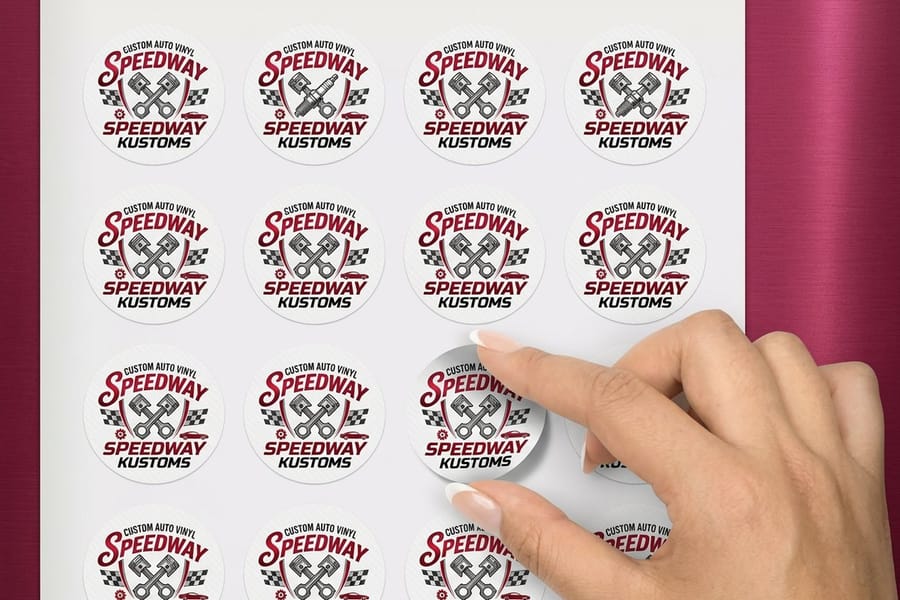
A decal is printed adhesive vinyl. It bonds to the surface instead of clinging to it, which removes every surface restriction a magnet carries. Steel, aluminum, fiberglass, painted plastic and window glass all take vinyl. It also conforms: a decal follows a door crease, wraps a slightly rounded corner and sits down into a body line, and none of that is available from a rigid magnet sheet.
The trade-off is commitment and installation skill. Vinyl goes down once. Application over a waxed, cold or dusty panel traps the wax and the bond fails in a month. Below roughly 50 degrees the adhesive does not grab properly and the vinyl gets brittle, so install in a warm bay, not the January parking lot. Our decal application guide covers the wet method that gives you a few seconds to reposition, which is the difference between a clean install and a creased one on anything over a foot wide.
Two things to plan for up front. Laminate anything that lives in full sun, because unlaminated print is what fades and chalks first. And accept the shadow: when a decal that has been on a panel for three years finally comes off, the paint underneath is a slightly fresher shade than the paint around it, because it did not weather. That is normal, it is not damage, and it is a reason to think about placement on a vehicle you intend to sell.
Where decals win: owned fleet vans, service trucks, box trucks, tow rigs, glass, and any surface a magnet cannot touch. Automotive decals start at $93.37. For a name and phone number in cut lettering rather than a printed graphic, our truck lettering guide covers the cheaper route, and sizing sits in the car decal size guide. Start from the correct dimensions in the blank template library.
Automotive Banners Sell the Shop, Not the Vehicle
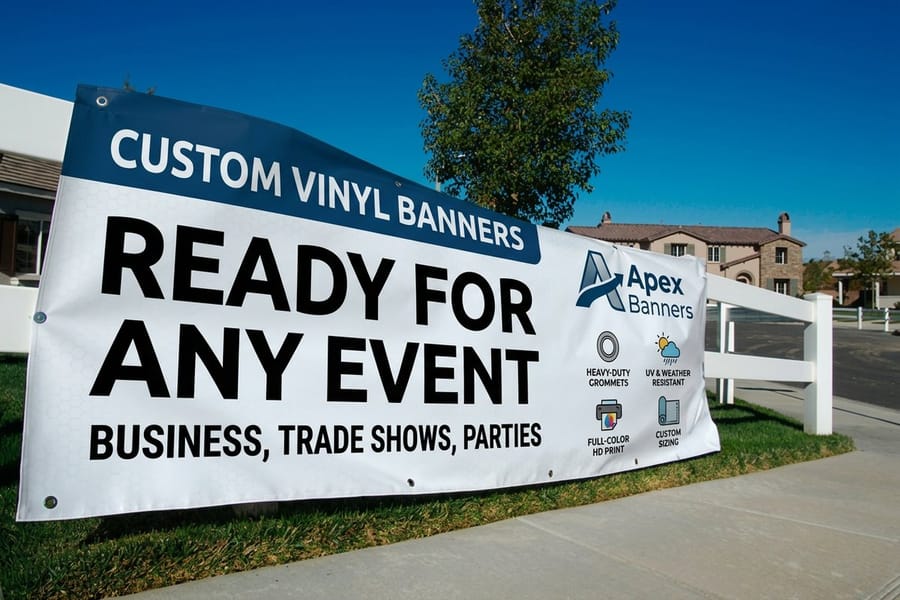
An automotive banner is a different job entirely. It is aimed at the traffic passing your building, and its message expires: brake special, now hiring techs, under new management, open Saturdays. That is exactly the content you do not want bonded to a truck for three years.
Two decisions carry most of the outcome. Material: standard 13oz scrim vinyl for a wall or a covered bay, mesh for a fence or any exposed run. Mesh perforations let wind through instead of loading the banner like a sail, and wind is what tears grommets out and takes fencing with it. Our banner weight comparison covers when the heavier scrim earns its price. Mounting: grommets every two feet along the top and bottom, and bungee cords rather than rigid zip ties so the banner can move slightly in a gust. The full spec sheet is in how to spec an outdoor vinyl banner, and the placement rules in how to place grommets.
On copy, a driver has about three seconds. Seven words is a working ceiling for anything read from a moving car, and the phone number is usually the first thing to cut, because they will find you by the sign on the building. Big number, one offer, high contrast.
Vinyl banners start at $79.00 and mesh banners at $75.00, so a shop can run a new message every quarter for less than one set of decals. Browse the full range in the banner printing collection.
What an Auto Shop Should Actually Buy

Sort it by who owns the vehicle and how long the message has to live. That resolves nearly every case without a spreadsheet.
- Shop-owned vans and service trucks: decals. The vehicle is not going anywhere, the graphic should look installed rather than stuck on, and the aluminum panels on a modern van rule magnets out anyway.
- Technician personal cars and customer loaners: magnets. Nobody puts permanent vinyl on an employee car, and a loaner has to go back looking stock. Run the fridge-magnet test on each vehicle first.
- The building, the fence and the bay door: banners. Any message with a date or a price on it belongs here, where you can take it down when the promotion ends.
- Glass, anywhere: decals. A magnet cannot go on a window. Door hours, service list and a logo on the shop glass are all vinyl work.
A practical first order for a two-bay shop: decals on the two owned vans, a pair of magnets for whichever tech drives to customers, and one mesh banner on the fence facing the road. Compare live configurations and prices in the decals printing and magnets printing ranges, or start from the vinyl banner range if the storefront is the weak link right now.
The one thing not to do is buy magnets because they are the cheapest line on the quote, discover they will not hold on an aluminum-door van, and end up paying for decals anyway. Test the panel first. It takes thirty seconds and it decides the entire order.
Wally tests the panel first
Fridge magnet, thirty seconds, whole order decided
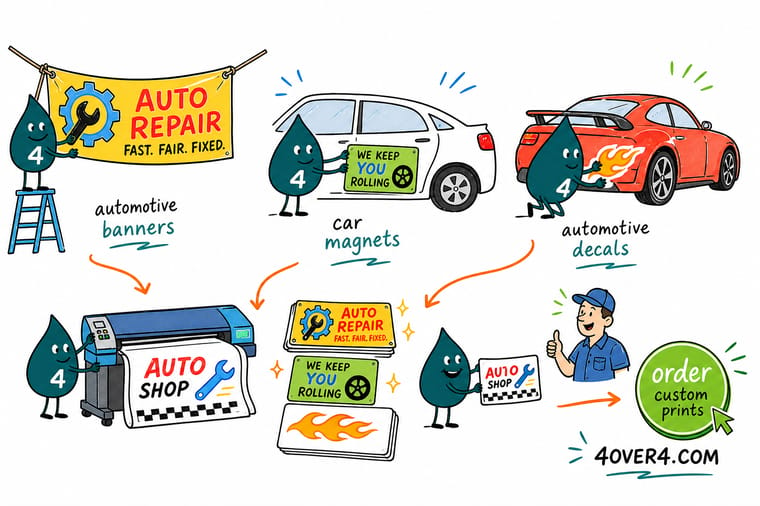
Wally walks out to the van with a kitchen fridge magnet and presses it to the door. Holds, and car magnets are on the table. Slides off, and the panel is aluminum or composite, so the graphic has to be a decal. Then he looks at who owns the vehicle: shop vans get decals, technician cars and loaners get magnets, and the brake special goes on a banner on the fence where he can take it down in April.
Order car magnets →Specs and pricing
Sizes, materials and starting prices
Magnets, decals and banners side by side, with the live configuration choices and starting prices straight from the 4OVER4.COM configurator.



Print it
Put the shop name where drivers see it

Explore more
Where to go next




By the numbers
Vehicle graphics printed over 25 years
Common Questions
Your vehicle graphics questions, answered
Will a car magnet stick to my truck?
Only if the panel is steel, flat and smooth. Take a kitchen fridge magnet out to the vehicle and press it against the door, then the hood, then the tailgate. If it slides off, a printed magnet will do the same at 45 mph. Many current pickups and vans use aluminum for the hood, doors and bed, and a growing number of panels are composite. Body lines, character creases and heavily curved doors also break the contact, because the magnet sheet stays flat while the panel does not. When the fridge test fails, automotive decals are the answer, not a thicker magnet.
Do car magnets damage paint?
The magnet does not. What sits under it does. Road grit, water and road salt get trapped between the magnet and the clear coat, and left there for weeks they abrade and stain the paint. The fix is a routine rather than a product: take the magnet off about once a week, wash and dry both the magnet face and the panel, and put it back only when both are dry. Also keep the magnet off panels with fresh paint or existing paint repair, because the surface under a repaint is softer and fades at a different rate than the panel around it.
How fast can you drive with car magnets on?
Highway speed is where magnets get lost. Air catches any lifted corner, and once an edge is up the rest peels in seconds. Two things prevent it: a fully clean, dry, flat contact patch with no bubble at the edges, and rounded corners rather than sharp ones. If a vehicle spends its day on the interstate rather than around town, that is the profile decals were made for. Check the panel and the corners before every long run, and pull the magnets off before an automatic car wash, which will strip them.
How long do automotive decals last outdoors?
Outdoor vinyl graphics are commonly rated in years rather than seasons, and the real number depends on sun exposure, the vinyl grade and whether the print is laminated. A decal on a south-facing door that parks outside all day fades sooner than the same decal on a van that lives in a bay. Two practical points: laminate anything that will see full sun, and expect the paint under a long-lived decal to be a slightly different shade from the paint around it when the decal finally comes off, because the covered area did not weather.
Can I remove automotive decals later?
Yes, with heat and patience. Warm the vinyl with a heat gun or a hot day, lift a corner, and pull at a shallow angle so the vinyl comes away rather than tearing. Adhesive residue is normal and comes off with an adhesive remover. The two things that go wrong are pulling cold, which shreds the vinyl into confetti, and pulling hard on old repainted panels, where the vinyl can take repaint with it. Factory paint in good condition is not at risk. If a graphic has to come off every few months, use magnets instead.
Vinyl banner or mesh banner for the shop fence?
Anything on a fence or an exposed wall should be mesh. A solid vinyl banner is a sail: wind loads it, the grommets tear, and the banner takes the fence with it. Mesh has perforations that let air through, which drops the load enough that it stays put. For a wall inside a covered bay or a short indoor promotion, solid vinyl gives you the denser color. Grommet spacing matters more than material for most failures, so ask for grommets every two feet along the top and bottom, and use bungees rather than rigid zip ties so the banner can move a little.
Get Started
25 automotive decals cost $93.37, or $3.73 each
Magnets for the cars you do not own, decals for the vans you do, and a banner for the fence out front. Pick the size, upload the artwork, and we print it.
Legal Disclaimer
Gold Standard guarantees apply to all standard orders placed through 4over4.com. Price match requires verifiable proof of a competitor's published price for an equivalent product with matching specifications and turnaround time. Satisfaction guarantee covers manufacturing defects and print quality issues. Contact support with order number and documentation. On-time delivery rate based on tracked orders 1999 to 2026. Individual results may vary based on shipping carrier performance.
