
What Your Business Card Size Says About Your Brand


Business card size meaning, how dimensions shape your brand
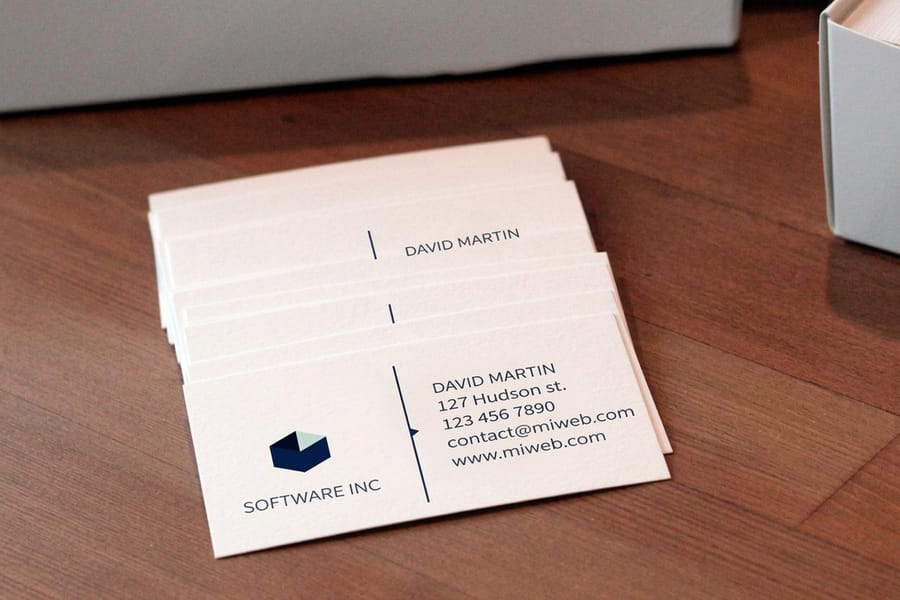
The size you pick for a business card is read as a signal before anyone reads your name on it. A standard card says you are easy to deal with. An oversized card says you want to be noticed and do not mind being awkward to file. A mini card says you are playing with the format on purpose. The US standard measures 3.5 x 2 inches, and it has held that shape for decades for good reasons. It fits a wallet. It slides into a cardholder. It feels familiar in the hand. 4OVER4.COM has printed 10 billion cards and print products for 150,000 businesses since 1999, across every size and shape you can imagine, so the dimension you choose carries real weight. If you came for the exact measurements, trims, and bleeds instead, our full business card size reference keeps every number in one place, and the guide points back here for what those numbers say about you.
Hand someone an oversized card and they struggle to store it. Give them something too small and it disappears in a pocket. The right size quietly signals that you thought through every detail, which is exactly the impression a card exists to create. This guide walks through standard dimensions, regional variations, thickness, and the technical setup, and you can keep exploring the full library of printing articles as you plan.
Why the standard 3.5 x 2 inch card dominates
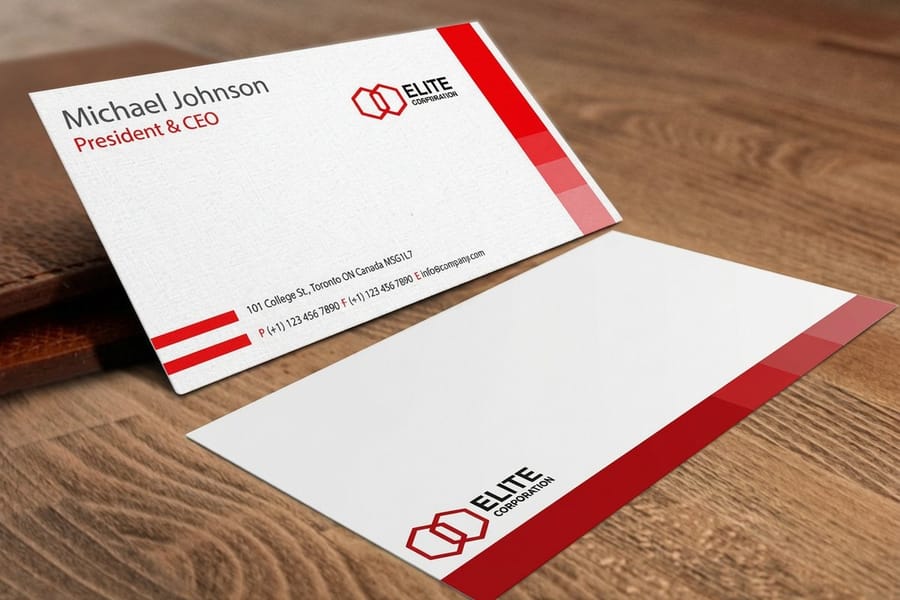
The US and Canadian standard of 3.5 x 2 inches (89 x 51 mm) did not happen by accident. It matches the footprint of a credit card slot, so every wallet, cardholder, and card file was built around it. When you hand someone a standard card, you are quietly saying that you play by the rules and you are easy to work with.
For most professionals, from accountants and lawyers to real estate agents and consultants, the standard size is the right call. It reads professional without feeling stiff, and it leaves room for your name, title, phone, email, and website. Browse business card printing at 4OVER4.COM to see how much fits inside those classic dimensions. Standard never has to mean generic either, because with 60+ paper types a 3.5 x 2 inch card can feel like a luxury invitation or a bold creative statement while the size stays familiar. The texture, finish, and weight do the talking.
| Format | Inches | Millimetres | What it signals |
|---|---|---|---|
| US and Canada standard | 3.5 x 2 | 89 x 51 | Fits every wallet slot and card file. Reads as professional and easy to work with. |
| UK and Europe | 3.35 x 2.17 | 85 x 55 | Taller and narrower. Matches local wallets, so it reads as native rather than imported. |
| Japan | 3.58 x 2.17 | 91 x 55 | The meishi format, handed over with two hands. Getting it right reads as respect. |
| Square, commonly | 2.5 x 2.5 | 64 x 64 | Design-led and deliberate. It will not sit in a card slot, so it lives on a desk or in the bin. |
| Mini | 3 x 1 | 76 x 25 | A conversation starter with room for a name and one line. Playful on purpose. |
Print it
Standard business cards, ready to brand
The classic 3.5 x 2 inch card on premium stock, the fastest way to put your brand in front of a new client.
International business card sizes and what they signal
If you do business across borders, card dimensions shift by region. In the UK and most of Europe, the standard measures 3.35 x 2.17 inches (85 x 55 mm), a touch taller and narrower than the US version. Japan uses 3.58 x 2.17 inches (91 x 55 mm). These are not random differences, and they reflect regional paper standards and cultural habits.
Here is what it means for you. If you are attending a conference in London or meeting clients in Tokyo, carrying cards that match local expectations shows awareness and respect. A card that sits slightly off from local norms can feel awkward in the hand, like a handshake that lasts too long. 4OVER4.COM prints custom dimensions to match any international standard, and for a deeper breakdown of the numbers see the business card size guide and the exact sizes and dimensions in inches and mm.
Quantity and price
Standard card pricing and specs
Real configurator numbers, and the more you order, the lower the per-card cost drops.
| Quantity | Price Per Unit | Total |
|---|---|---|
| 100 | 17.6¢ | $17.57 |
| 200 | 11.5¢ | $23.07 |
| 300 | 9.15¢ | $27.46 |
| 400 | 7.96¢ | $31.86 |
| 500 | 7.25¢ | $36.26 |
| 600 | 6.77¢ | $40.64 |
Non-standard sizes, when breaking the mold works
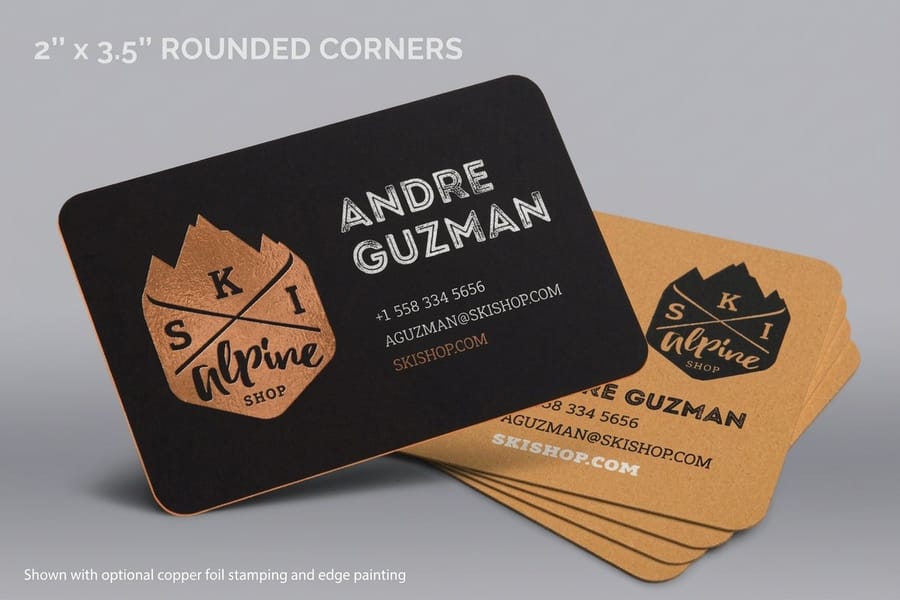
Not every brand fits inside a 3.5 x 2 inch rectangle, and that is fine. Non-standard sizes exist to grab attention, but you need to understand the trade-offs before you go custom.
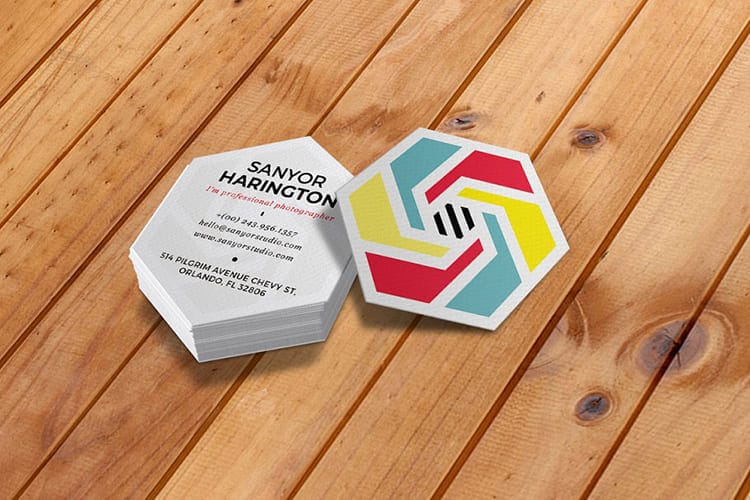
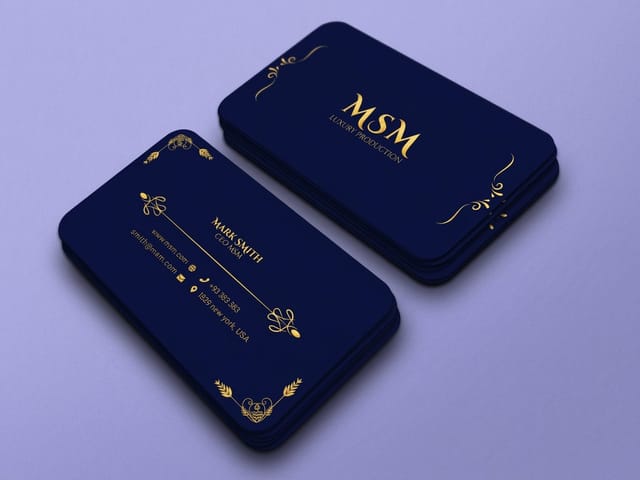
Slim cards (3.5 x 1.75 inches) feel modern and minimalist. They suit tech startups, fashion brands, and anyone who wants to say they are different without being loud about it. The narrower profile stands out in a stack of standard cards, though you get less room for information, so be ruthless about what makes the cut. Square cards (2.5 x 2.5 inches or 2 x 2 inches) are hard to ignore. They do not slot neatly into a cardholder, so people set them on desks or pin them to boards. For visual brands like photographers, designers, and artists, that extra visibility is worth the inconvenience, and it helps to weigh whether square business cards are a good idea for your brand.
Mini cards (3 x 1 inches) work as conversation starters. They are unusual enough to prompt questions, which gives you an opening to talk about your brand, and restaurants, DJs, and event planners use them well. Explore Artist Business Cards to see how creatives handle square and oversized formats, and for something truly one of a kind, custom shaped business cards let you leave the rectangle behind entirely. Die-cut shapes like circles, leaf outlines, guitar picks, or house silhouettes for real estate turn your card into a miniature billboard for your brand.
Upgrade the stock
Premium business cards
Heavier stock and richer finishes for a card that feels like an investment the moment it lands.
What your card thickness says about you
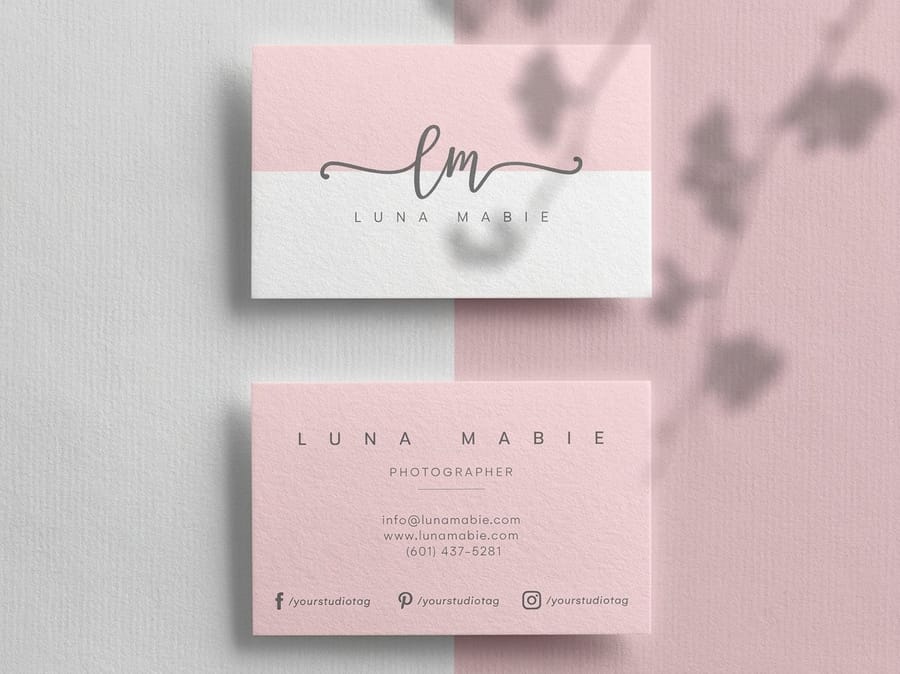
Size is more than length and width. Thickness carries meaning too. A thin, flimsy card says budget. A thick, sturdy card says investment. It really is that simple.
14pt cardstock is the industry baseline, the stock you get from most quick-print shops. It does the job, but nobody comments on how it feels. 16pt cardstock bumps things up to roughly the thickness of a credit card, and that tactile similarity triggers a quiet association with value, so people handle it more carefully. 32pt ultra-thick cardstock is where it gets serious at about three times the thickness of a standard card. Hand someone a 32pt card and they feel the weight and run a thumb across the edge, and that sensory moment becomes a memory.
For a bold, unforgettable impression, look at Black Business Cards on ultra-thick stock, or leave paper behind entirely with 30Mil Clear Plastic Cards that are waterproof and virtually indestructible. If you are still weighing stocks, the breakdown of how thick your card should be lays out every option.
| Thickness | How it feels | What the recipient reads into it |
|---|---|---|
| 14pt | The everyday quick-print card, the industry baseline | Competent and expected. Nobody comments on it, in either direction. |
| 16pt | Roughly the thickness of a credit card | Value, by association. People handle it more carefully and keep it longer. |
| 32pt | About three times a standard card | Deliberate spend. It gets turned over, a thumb runs along the edge, and that moment sticks. |
Plastic card specs
30Mil clear plastic card options
Waterproof, durable, and see-through, with the finishing and quantity choices for a card that survives anything.
Bleed, safe zone, and trim, the hidden size details
Here is where a lot of people get tripped up. Your finished card might be 3.5 x 2 inches, but your design file needs to be larger. The bleed area extends your artwork to 3.75 x 2.25 inches, giving the printer room to trim without leaving white edges.
The safe zone is the opposite. It is the area inside the trim line where you keep all important text and logos, at least 0.125 inches (one eighth of an inch) from every edge. Text that creeps too close to the trim risks getting cut off, and nothing reads amateur like a phone number missing its last digit. The finished size is what your recipient sees, and the bleed and safe zone are what make that finished product look clean and intentional. 4OVER4.COM includes file setup guidance with every order, so you never have to guess.
Size reference
Common business card sizes at a glance
The dimensions most brands choose, in inches and metric, so you can match the format to how your card gets used.
| Size type | Inches | Metric |
|---|---|---|
| Standard rectangular | 3.5 x 2 | 8.9 x 5.1 cm |
| UK and European | 3.35 x 2.17 | 85 x 55 mm |
| Japanese | 3.58 x 2.17 | 91 x 55 mm |
| Oversized | 3.5 x 2.5 | 8.9 x 6.4 cm |
| Slim | 3.5 x 1.75 | 8.9 x 4.4 cm |
| Mini | 3 x 1 | 7.6 x 2.5 cm |
| Square | 2 x 2 | 5.1 x 5.1 cm |
Choosing the right size for your industry
Your industry should steer your card size. Here is how different professionals tend to approach the decision.
Real estate agents almost always stay with the standard 3.5 x 2 inches, since their cards need to fit acrylic holders at open houses and slide into a wallet without fuss, so the focus goes to paper quality and finish. Restaurant owners and chefs often reach for mini or slim cards that double as a loyalty stamp or a subtle reminder tucked into a check presenter, matching the intimate feel of a dining room. Photographers and designers lean toward square or oversized formats, because more surface area means more room to show a portfolio image and the card itself becomes a sample of their work.
Tech founders gravitate to slim or standard cards with bold finishes like spot UV, foil stamping, or soft-touch matte, keeping the size conventional while the finish signals something new. Event planners sometimes use die-cut or folded cards that open to reveal details, which read as mini invitations. See how 150,000+ businesses handled it in the Showcase gallery.
Compare formats
Popular business cards, side by side
Stock, finish, quantity, turnaround, and from-price across our most-ordered business cards.
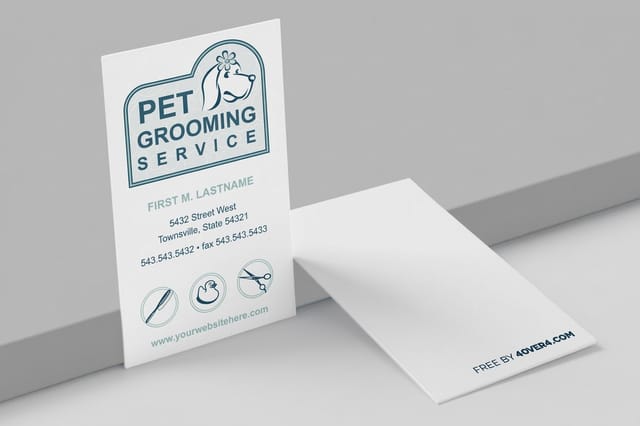 free business cards | 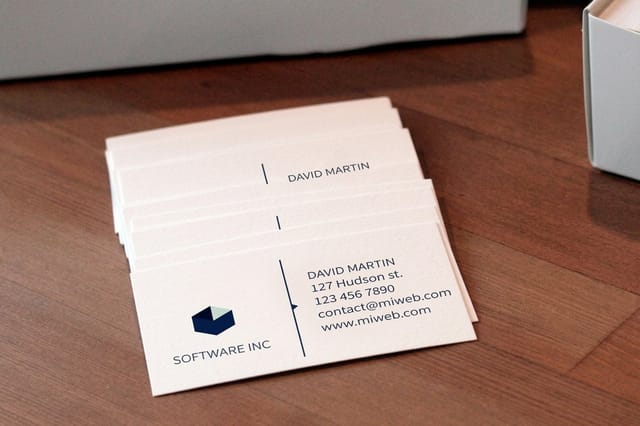 Standard Business Cards |  3D Lenticular Business Cards | 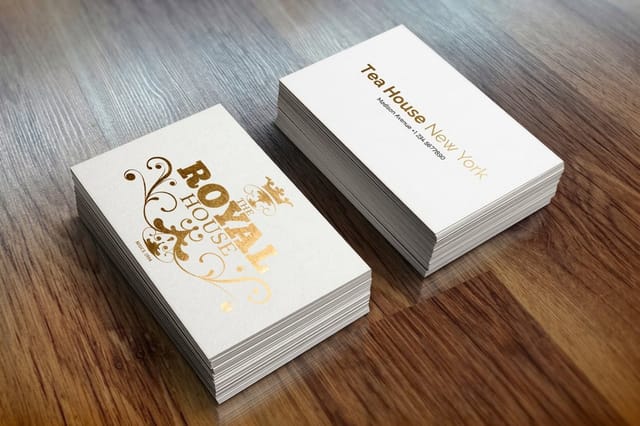 Metallic Foil Business Cards | |
|---|---|---|---|---|
| Min price | Free | $17.57 | $690.88 | $222.13 |
| Paper / stock | 14pt Gloss Cover | 14pt Gloss Cover | 31pt Lenticular Lens | 16 Point Silk Laminated |
| Finish | - | Standard Finish | - | - |
| Size | 2" x 3.5" | 2" x 3.5" | 2" x 3.5" - Vertical | 2" x 3.5" |
| Default qty | 200 | 100 | 500 | 500 |
| Turnaround | 5 business days | 3 business days | 22 business days | 7 business days |
| Rating | ||||
| View & customize | View & customize | View & customize | View & customize |
Specialty card types that change the size
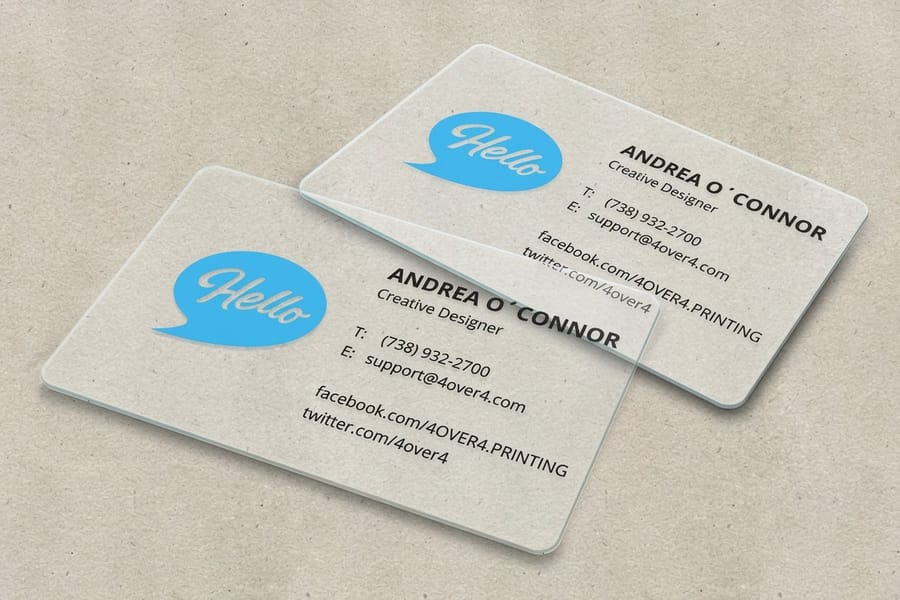
Beyond traditional paper, specialty materials change what size even means. 3D Lenticular Business Cards add depth and motion to a standard 3.5 x 2 inch card, so the dimensions stay put while the visual experience shifts as you tilt it. It starts a conversation every time.
Folded business cards effectively double your real estate. A standard card that folds open to 3.5 x 4 inches gives you room for a mini brochure, an appointment schedule, or a service menu, so you keep the portability of a standard card with the capacity of something larger. Rounded corners do not change the overall dimensions, but they change how the card feels. Soft edges read approachable and modern, and sharp corners read crisp and corporate. Both are valid depending on what your brand needs to say. For durable, standout alternatives to paper, the full plastic cards collection is worth a look.
How to pick the right size, a practical framework
Still not sure which size is right? Run through these questions before you order.
- Where will recipients store the card? If it needs to fit a wallet, stay with standard or slim dimensions.
- How much information do you need? More text demands more space, and a QR code can replace a lot of it.
- What does your industry expect? Conservative fields reward standard sizing, and creative fields reward experimentation.
- Will you trade portability for memorability? Oversized and custom shapes get noticed but can get left behind.
- What is your budget? Standard sizes are the most cost-effective, while custom die-cuts and specialty materials cost more and hit harder.
The best move is to order Free Samples from 4OVER4.COM before you commit to a full run, so you can hold each size, feel the stock, and get honest feedback from colleagues. Touch beats theory every time. Whatever size you land on, keep the design simple with one logo, one name, one title, and your contact details, and let white space do the rest. Use high-resolution art at 300 DPI or better, choose fonts that stay readable at 8pt and up, and remember that a two-sided card doubles your space without changing the physical dimensions. The same principles carry across print, as these logo sticker design ideas show.
Start fast
Templates and print-ready blanks
Business card templates and exact-size blanks so your design lands inside the cut line, including 3D lenticular and black card blanks.




Wally sizes up your business card
The right dimensions say more than the design
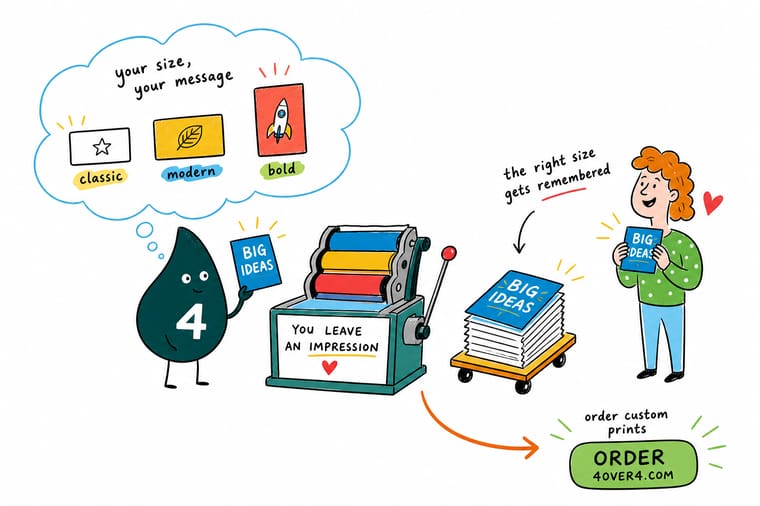
Standard 3.5 x 2 inch cards fit every wallet and read professional, while square, slim, mini, and die-cut shapes make you stand out when your brand calls for it. Thickness matters too, since 32pt stock feels like an investment the moment it lands. Order Free Samples, feel each size in your hand, and 4OVER4.COM prints your choice sharp on 60+ paper types.
Order standard business cards →What to remember about business card sizing
Why getting the size right pays off
- Instant recognition. A familiar size fits every wallet and holder, so your card gets kept, not lost.
- Perceived quality. Thicker stock and clean dimensions make the card feel like an investment.
- Room to breathe. The right size balances your logo, name, and contact details without crowding.
- Regional fit. Matching local standards abroad shows awareness and respect.
- Standout options. Square, slim, mini, and die-cut formats grab attention when your brand calls for it.
- Cost control. Standard sizes print most affordably, so you scale without overspending.
Explore more
More ways to size and print your business cards
The cards below open the size guide, the standard and custom dimensions, and the die-cut card page.
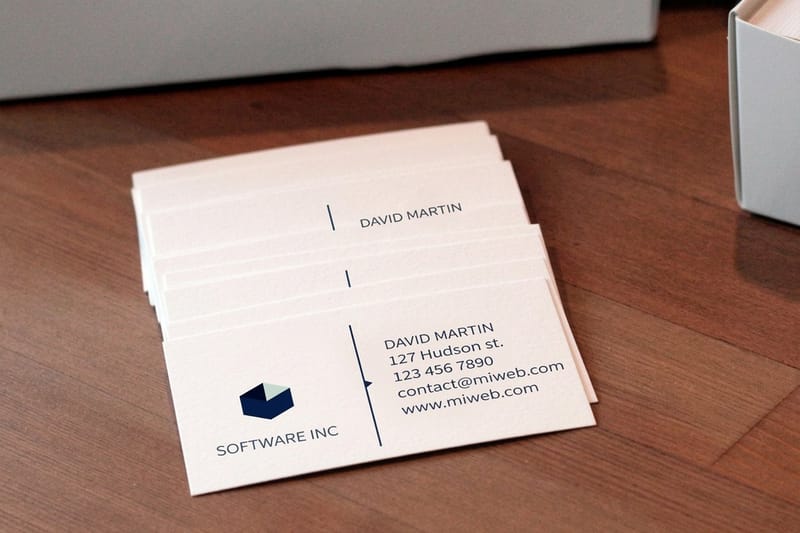 Product Standard Business Cards The classic 3.5 x 2 inch card on premium stock.
 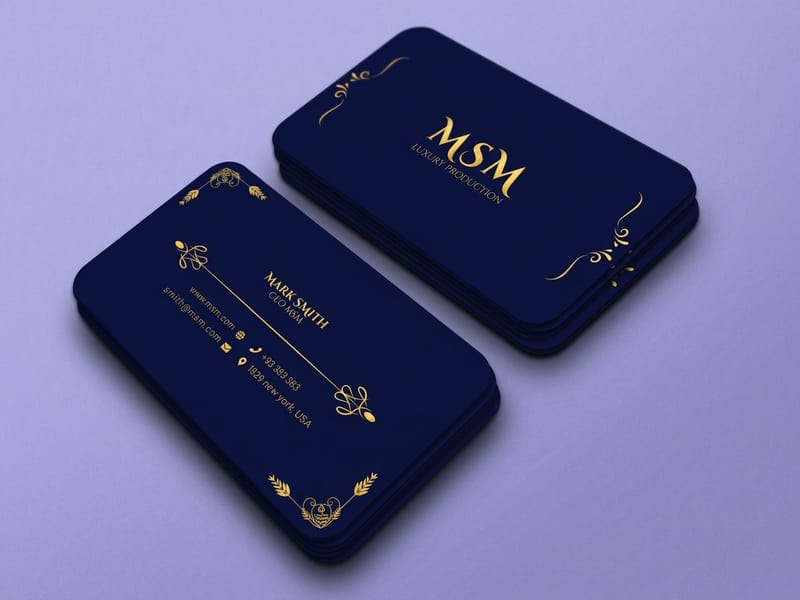 Product Premium Business Cards Heavier stock and richer finishes that feel like an investment.
  Guide Business Card Size Guide Every standard and custom dimension in one place. Article Sizes and Dimensions Exact business card sizes in inches and millimeters.
 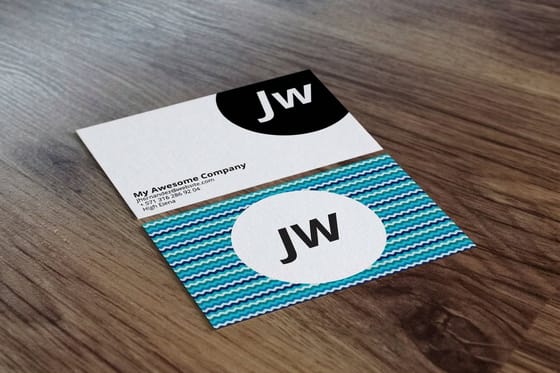 Guide Standard vs Custom Sizes How big business cards are, and when to size up.
 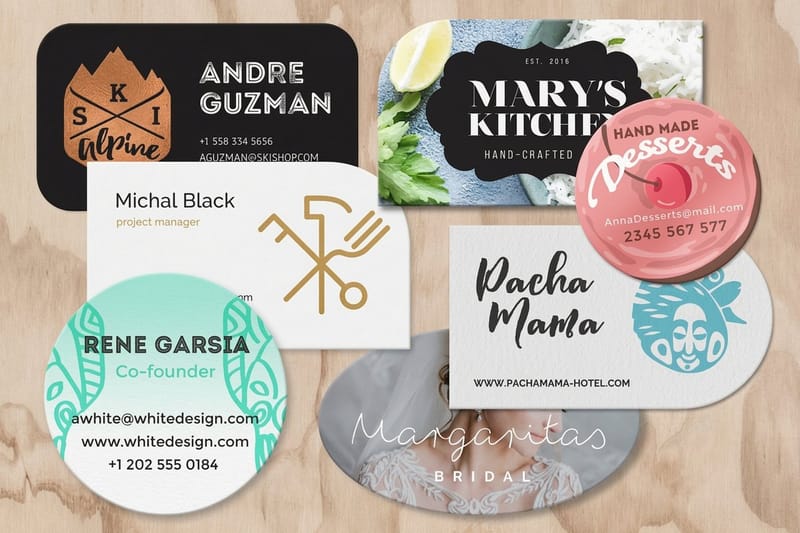 Product Die-Cut Business Cards Contour-cut shapes that follow your logo.
 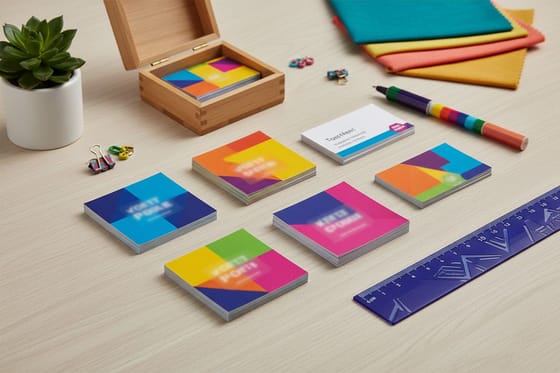 Article Are Square Cards a Good Idea When a 2 x 2 inch card helps or hurts.
  Hub Business Card Printing Browse every business card format in one hub.
  Product 3D Lenticular Cards Depth and motion on a standard-size card.
  Collection Plastic Cards Collection Durable, waterproof cards that stand apart.
 Ready to pick the right business card size?
Choose your dimensions, drop in your design or a free template, and 4OVER4.COM prints it sharp on 60+ paper types, as fast as same day.
Common questions about business card sizes
Does business card size change how people see my brand?
Yes, and faster than the design does. A 3.5 x 2 inch card reads as standard and professional, so it never gets in the way of what you are saying. A square or die-cut card reads as creative, but it will not sit in a wallet slot, so it either earns a spot on a desk or gets thrown out. A mini card reads as playful and usually earns a comment, which is the whole point of it. Thickness carries even more of the signal: 16pt lands close to a credit card and gets handled with care, while 32pt reads as deliberate investment. Decide which signal you want, then design inside it.
When is it worth leaving the standard 3.5 by 2 inch card?
Start with the standard 3.5 x 2 inch format unless your brand clearly benefits from a custom shape. Always design with a 0.125 inch bleed and keep text inside the safe zone, and match the size to your audience, since conservative industries favor standard and creative fields reward experimentation. For deeper design guidance, browse more printing articles.
Will this card still fit in a wallet?
Think about where recipients will store the card and how much information you need. Standard 3.5 x 2 inches works for most professionals, while square or die-cut shapes suit visual brands like photographers and designers. Order samples first, because holding different sizes beats guessing, and explore 30Mil White Plastic Cards if you want a durable, standout alternative to paper.
What does the size alone tell someone about the brand?
The right size creates an instant impression. A standard card signals reliability and professionalism, and a custom shape signals creativity and boldness, so the dimensions should match your brand story. Printed on premium stock with 60+ paper types, the size and material work together to reinforce your message every time you hand one out.
What does a custom shape add to the bill?
Standard size cards on 14pt or 16pt stock are the most affordable, starting at a few cents per card in larger quantities. Custom sizes, die-cuts, and specialty materials like clear plastic or 32pt ultra-thick stock cost more but deliver stronger brand impact. The cheapest option is not always the best value, because the card people keep is the one that works.
