
Edge Gilding That Wraps Your Cards in Metallic Foil


Gilded book edges marked a volume as valuable before it was opened. The same trick works on a card: metallic foil on the trimmed sides flashes with every handshake. This page covers the foils, the stocks that carry them, and how to order edge gilding at 4OVER4.COM.
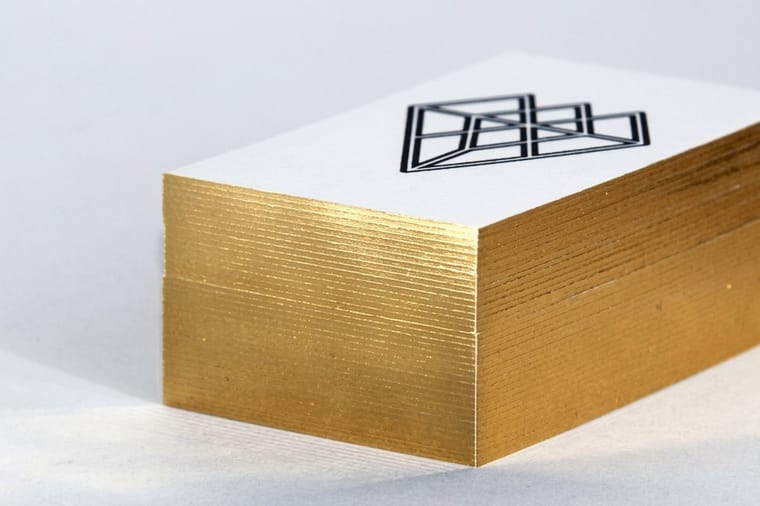
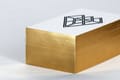
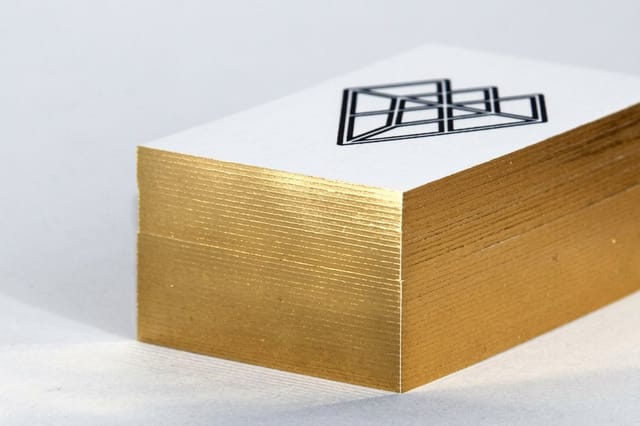
Edge gilding is a finishing process that bonds metallic foil to the trimmed sides of a thick card after printing and cutting. The run is stacked and clamped so the edges form one surface, and gold, silver, or holographic foil is applied with heat and pressure. The printed faces stay untouched. Because the band is only as wide as the card is thick, the finish runs on ultra thick stock, where the metallic edge is wide enough to catch light and read clearly in the hand.
Start here
Foil on the sides, faces untouched
Edge gilding bonds metallic foil to the trimmed sides of a thick card, gilding the stacked run as one block so every edge matches. The printed faces stay exactly as designed, the foil choice sets the temperature, gold, silver, or holographic, and the effect depends on stock thickness, which is why it runs on our ultra thick card range. One metallic edge makes a card get inspected instead of filed.
Why a gilded edge reads as premium before the card is read

Gilded edges came from bookbinding, where gold leaf on the page block marked a volume as valuable before it was opened. The signal works the same way on a card. Metal on the edge says someone paid attention to a surface most people forget exists, and that message lands in the first second of a handshake, before a single word of the front is read.
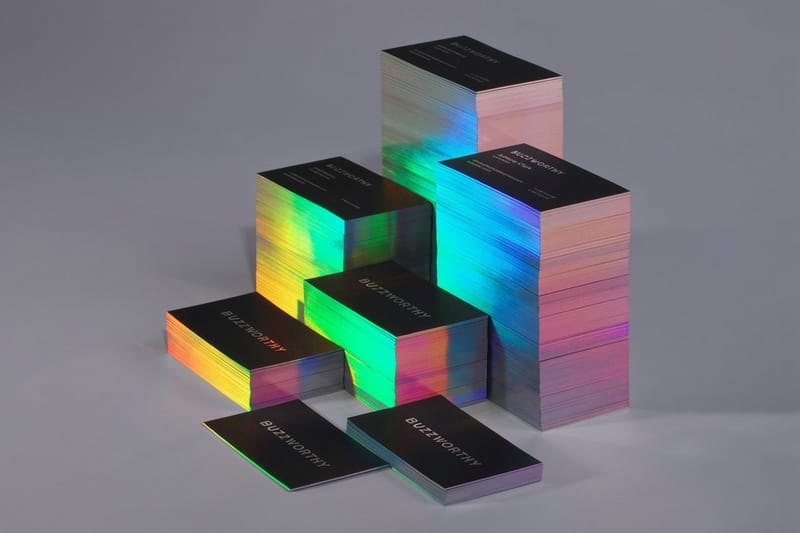
Unlike a printed face, foil plays with light. As the card tilts, the edge flashes and goes quiet again, which is why a gilded card gets turned over and inspected instead of filed. Edge gilded business cards put that behavior on the thickest stock we run, where the metallic band is wide enough to work.
Gilding sits at the premium end of our finishing range alongside foil stamping and edge painting. This page covers how the foil is applied, the gold, silver, and holographic options, why stock thickness decides the effect, and how to order it at 4OVER4.COM.
What edge gilding actually is: heat, pressure, and foil on the stack
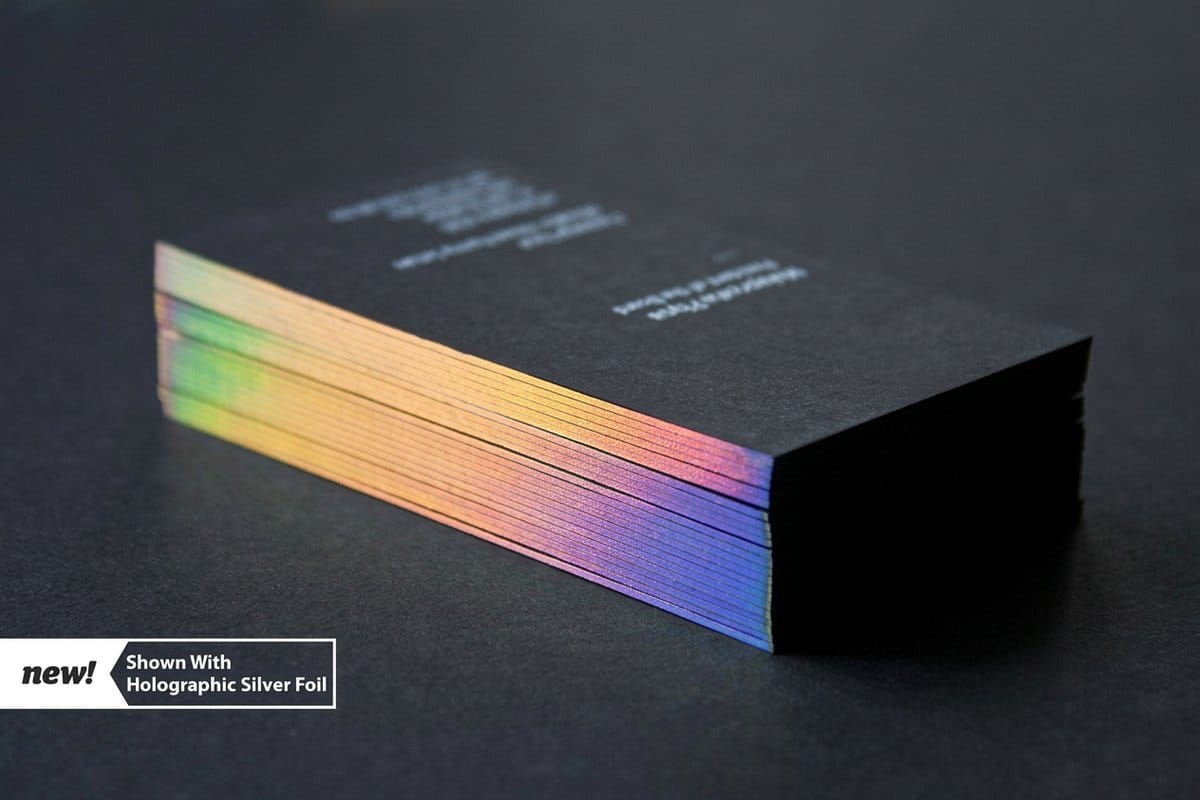
Edge gilding is the last step in the run. Your cards are printed on ultra thick stock, coated or laminated if the product calls for it, and trimmed to final size. The run is then stacked and clamped square, so thousands of individual edges become one flat surface. Metallic foil is bonded to that surface with heat and pressure, and the stack is separated only after the bond has set.
Treating the stack as a single block is what makes the finish consistent: every card receives the same foil, the same coverage, and the same clean line where the edge meets the face. It is also why one run carries one foil finish, the stack is gilded as a whole.
Because the foil bonds to the trimmed edge fibers, the printed faces are never touched. Your design ships exactly as you built it, and the metal lives on its own surface. The same stack logic drives our edge painting service, where pigment replaces foil, and it is why both finishes demand a stock thick enough to give the band real width.
Gold, silver, or holographic: choosing the foil
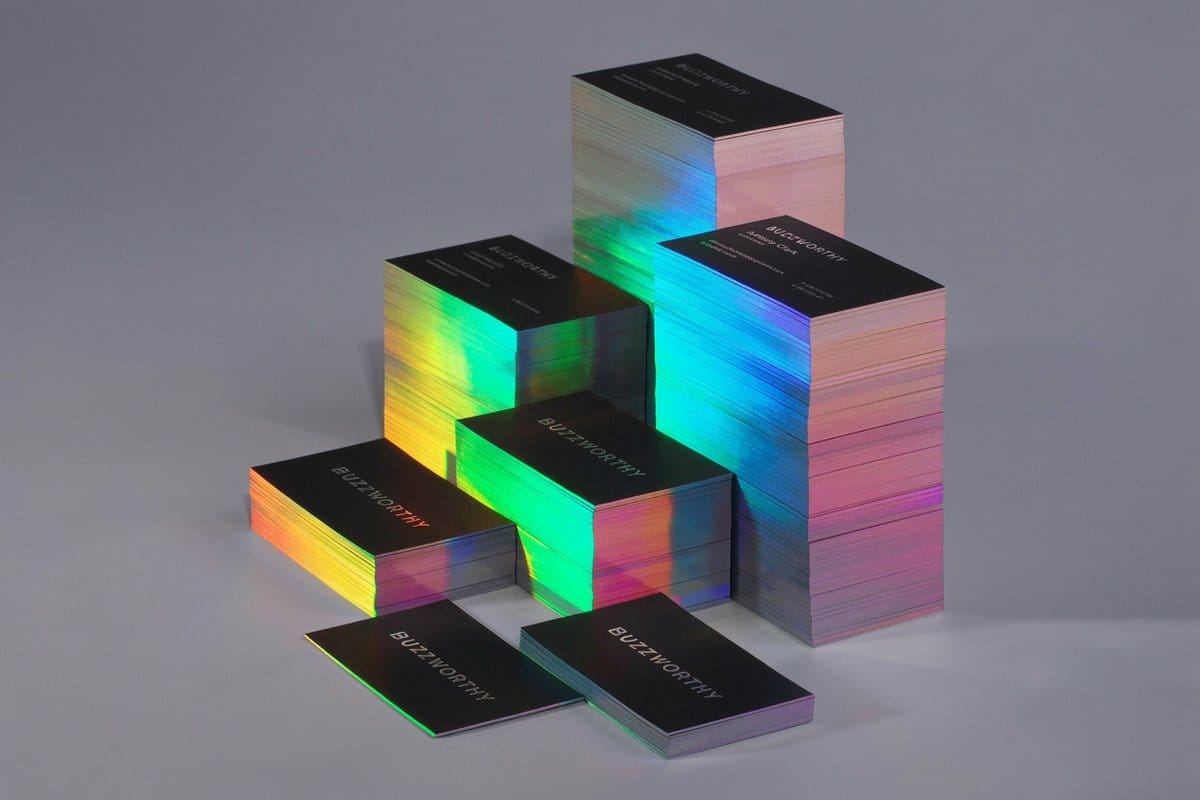
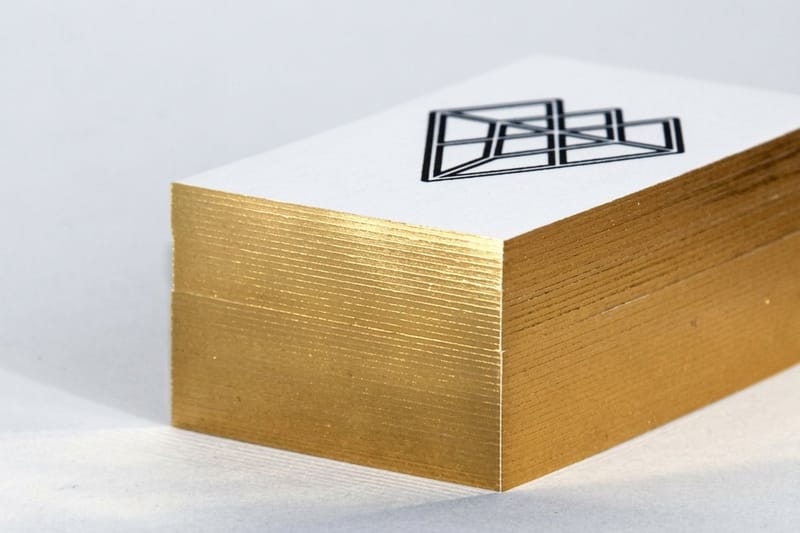
The three finishes carry three different temperatures. Gold is the traditional signal, warm, established, and closest to the bookbinding heritage of the technique. It pairs naturally with deep greens, navy, black, and cream faces. Silver is cooler and more technical, at home next to minimal layouts, gray scales, and modern sans-serif identities.
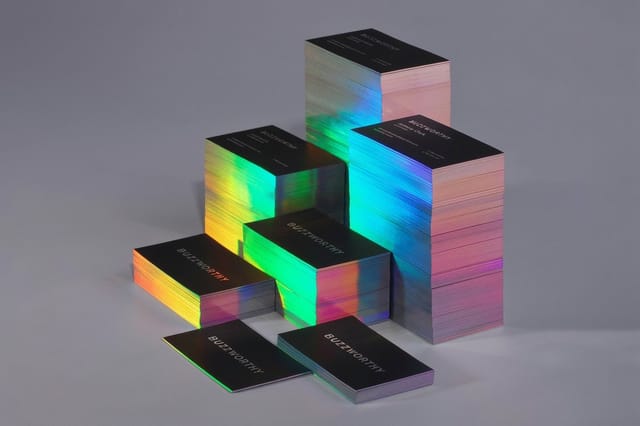
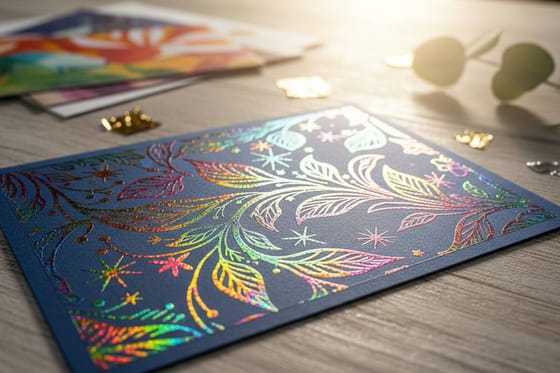
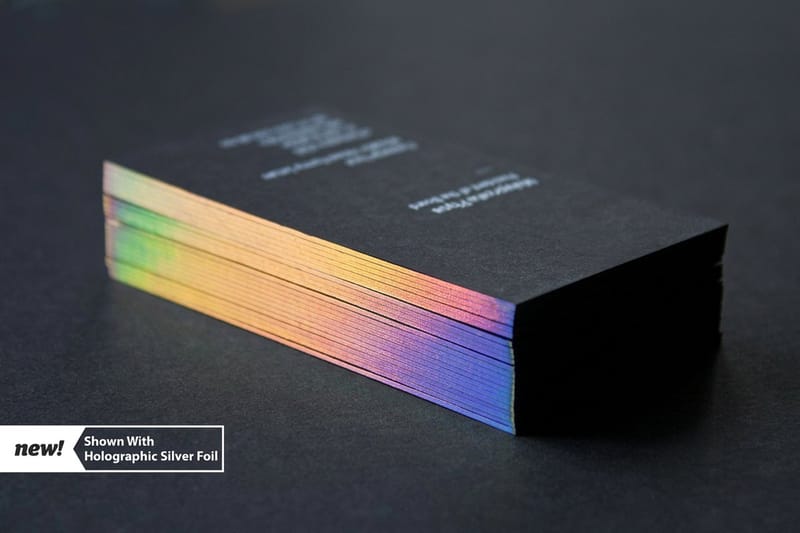
Holographic is the outlier. Instead of one metallic tone, the foil splits light into a moving spectrum, so the edge changes color as the card moves. Our holographic edge gilded cards build the whole product around that effect. It is the right choice when the brand is playful or creative and the card is meant to be a conversation piece, and the wrong one next to a conservative identity.
Decide by the metal already in your identity. If your logo, website accents, or existing print use a warm metallic, gild warm. If you have no metallic reference at all, match the foil to the card face instead: warm faces take gold, cool faces take silver. Real examples of each pairing are in the print showcase.
The thickness rule: why the stock decides the effect
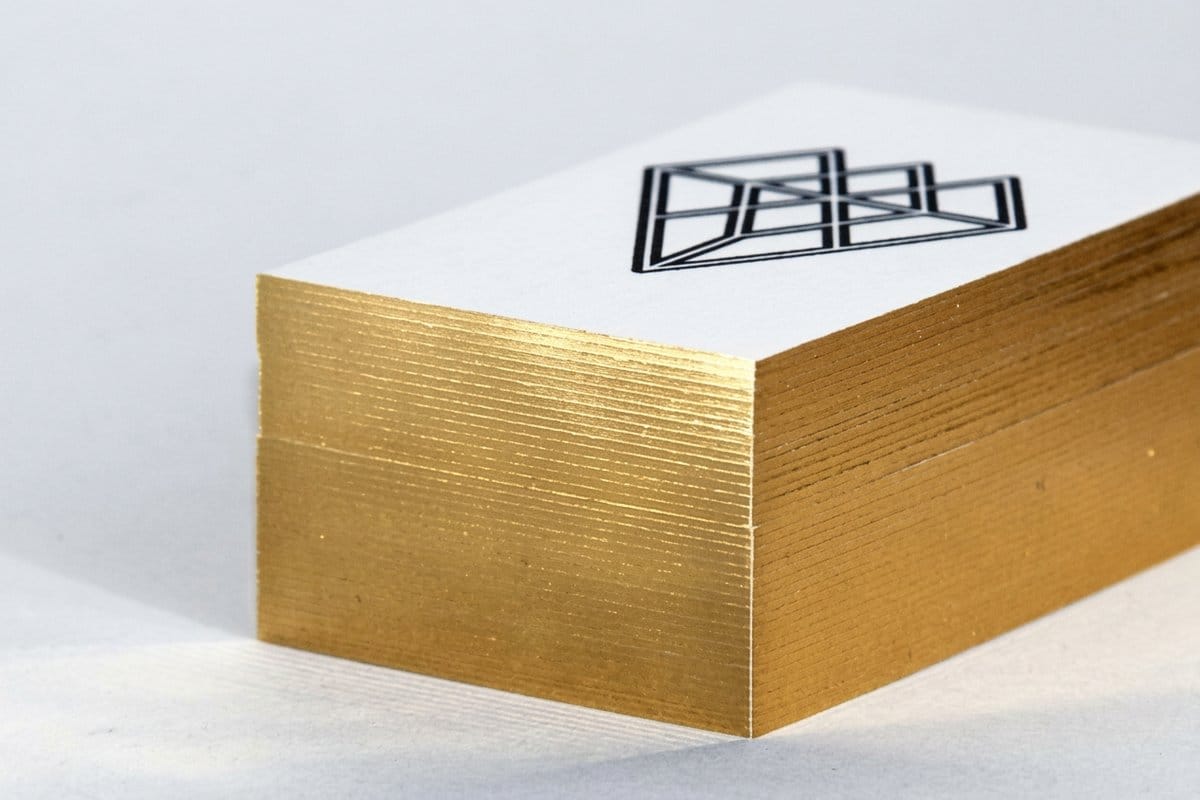
The gilded band is exactly as wide as the card is thick, so the stock is not a detail, it is the effect. A standard 16pt card gives the foil well under half a millimeter of surface, which reads as an accidental glint. An ultra thick card roughly doubles that, and the edge becomes a deliberate metallic line that is visible across a table.
Thickness carries its own message too. A heavy card resists bending, sits flat in the hand, and signals permanence before the foil says anything. The two decisions reinforce each other, which is why edge gilding at 4OVER4 is built into ultra thick products rather than bolted onto thin ones that would waste the foil.
If paper weights and pt measurements are unfamiliar territory, the printing terms glossary covers them, and the specs panel further down this page shows the exact stock behind our edge gilded cards so you know what you are ordering before you order it.
The pieces that carry gilded edges best
Business cards are the natural home for the finish because they are handled, and handling is what gilding rewards. Every exchange tilts the card through the light at least twice. A gilded edge on a card that spends its life in stacks, cases, and pockets gets seen constantly, which makes the small surface unusually productive.
Thick invitations are the second classic use. Wedding suites and gala invitations use a gold or silver edge to set formality before the envelope is fully open, echoing the gilded stationery tradition the finish comes from. Certificates, VIP passes, and loyalty cards on heavy stock use the same cue to signal exclusivity.
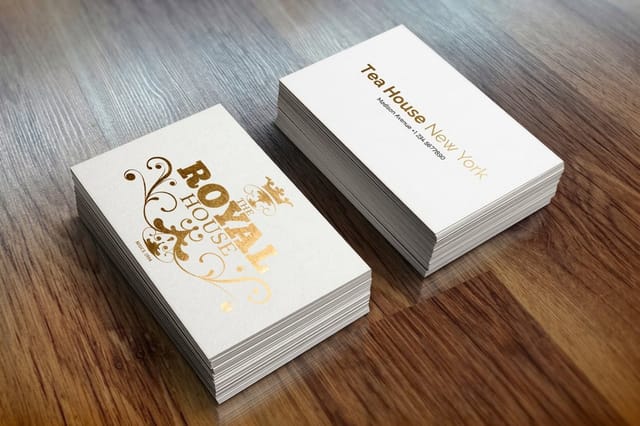
If you want metal on the face of the piece rather than the sides, that is a different service: foil stamping presses foil into logos and type on the printed surface, and metallic foil business cards build the shimmer into the stock itself. The three approaches combine well as long as one of them leads and the others stay quiet.
Pairing gilded edges with the rest of the card

A gilded edge is loud for its size, so the faces around it should be composed. The proven formula is a restrained face on a tactile stock with the metal doing the talking from the side: black or deep-color cards with gold edges, white or pale gray cards with silver, clean layouts either way. The edge supplies the drama, the face supplies the information.
Face finishes combine freely with gilding because they occupy different surfaces. A foil stamped logo in the same metal as the edge is the tightest pairing, one metallic decision expressed twice. Raised spot UV accents work too, adding gloss and texture without competing for the metallic role.
What to avoid is a fight: a holographic edge on a glitter face, or gold edges against large silver face elements, reads as indecision. Keep one metal, keep one loud element, and if you are building a full stationery system, carry the same edge finish across every thick piece in the set. The full range of combinable finishes is on our finishing services hub.
Built into the gilded card, not quoted separately
Edge gilding is built into the price of the gilded product rather than quoted separately. The stack is foiled as one block, so the finishing cost per card stays contained, and the ultra thick stock accounts for most of what you pay. As with any run, the per-unit price drops as quantity climbs, which matters for a card meant to be handed out generously.
Ordering is simple: configure the edge gilded card with your quantity, upload a print-ready front and back, and choose your foil. The live pricing panel below shows real numbers for the product on this page, so you can see exactly how quantity moves the price before committing.
Still weighing shine against color? The comparison table above and the edge painting page lay out the tradeoff: foil for light play, paint for a matched brand color. And if your project needs something the standard products do not cover, an unusual size or a mixed finishing plan, start from the services hub and our team will map it with you.
Compare the options
Metallic finishes side by side
Foil on the edge is one of several ways to put metal on a card. Here is what each finish does and where it fits, so you can pick where the shine should live.
| Finish | What it does | Best for |
|---|---|---|
| Edge gilding | Bonds metallic foil to the trimmed sides of a thick card, so the edges shine gold, silver, or holographic. | Premium business cards, invitations, and stationery that should catch light from the side. |
| Edge painting | Applies a solid matte band of colored pigment to the same trimmed edges, matched to a brand color. | Cards where a specific color, not shine, is the message on the edge. |
| Foil stamping | Presses metallic foil into the face of the card with a heated die, decorating the printed surface itself. | Logos, names, and accents that need metallic shine on the front or back. |
| Metallic foil stock | Prints your design over a foil-based board, so the metallic effect lives in the whole card face. | Designs where large areas, not accents, should shimmer. |
Infographic
Clamp the block, bond the foil
From printed sheet to a metallic edge that catches the light, here is what happens between your file and the finished card.
The stack is gilded as one block under heat and pressure, so every card in the run carries the same foil and the same clean metallic line.
Specs and pricing
What a gilded card costs per unit
Edge gilding ships as part of the edge gilded product, so the whole piece prices out in the configurator. Here are the live specs and price-per-unit, straight from 4OVER4.COM.
| Quantity | Price Per Unit | Total |
|---|---|---|
| 250 | $1.31 | $328.42 |
| 500 | 87.6¢ | $438.25 |
| 1,000 | 54.8¢ | $548.09 |
| 2,000 | 43.9¢ | $877.60 |
Gild these
Products that carry a gilded edge
Wally explains edge gilding
Put the metal where nobody expects it.
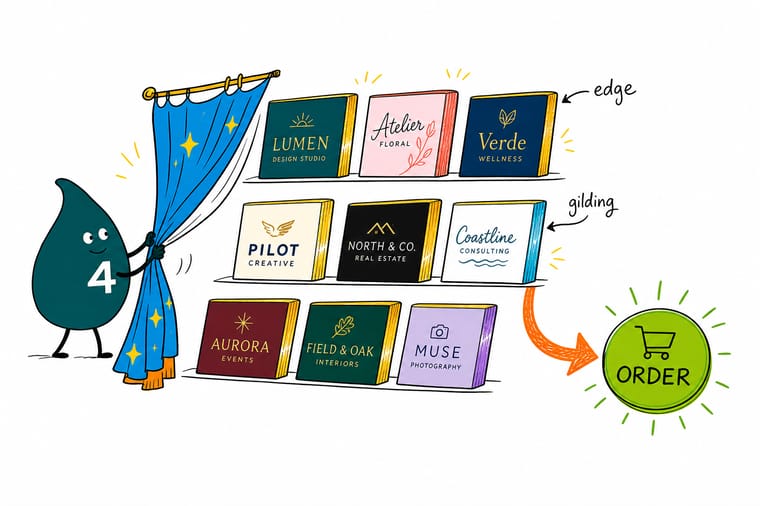
Wally's rule for gilding: the face of the card carries your information, so let the edge carry the drama. Stack the run, clamp it square, bond the foil under heat, and every tilt of the card flashes gold, silver, or a holographic spectrum. Pick ultra thick stock so the band is wide enough to see, match the foil to the metal already in your brand, and let 4OVER4 gild the whole run to match.
Start an edge gilding project →Get Started
Ready to put foil on the edge of your cards?
Bring your design to 4OVER4.COM and finish it with gilded edges on ultra thick stock. Configure your cards and watch the price update live.
Explore more
Where to go next
By the numbers
Foil bonded to every card in the block
Common Questions
Common questions about edge gilding
What is edge gilding on business cards?
Edge gilding is a finishing service that bonds metallic foil to the trimmed sides of a thick card. After printing and cutting, the run is stacked and clamped so the edges form one continuous surface, and foil is applied to that surface with heat and pressure. The faces of the card stay exactly as printed. The result is a card whose edges flash gold, silver, or holographic every time it moves, an effect borrowed from gilded book edges and applied to something that lives in a pocket.
What is the difference between edge gilding and edge painting?
Both finishes decorate the trimmed edge of a thick card, and both leave the printed faces untouched. The difference is the material. Edge painting applies a matte band of colored pigment, so you get a precise brand color. Edge gilding bonds metallic foil, so you get shine and light play instead of flat color. Paint suits identities built on a signature color, gilding suits brands that want to signal premium through metal. Neither works on thin stock, so the stock decision comes before either.
What foil colors are available for gilded edges?
Gold and silver are the classic pair, and they cover most brand temperatures: gold for established, warm, and traditional identities, silver for modern, technical, and minimal ones. Beyond those, holographic foil shifts through the spectrum as the card tilts, which makes it the most attention-grabbing option of the set. Our holographic edge gilded cards ship with that finish built in. If you are matching an existing identity, choose the foil that agrees with the metallic accents you already use.
Does edge gilding require a thick card?
Yes. The gilded band is exactly as wide as the card is thick, so the effect depends entirely on stock weight. On a standard 14pt or 16pt card the foil line is too thin to register as anything but a stray glint. On ultra thick stock around 32pt the edge becomes a visible metallic surface that reads clearly in the hand and in a stack. That is why our edge gilded products are built on the ultra thick range rather than offered as an add-on to standard cards.
Will the foil on the edges wear off?
Gilded edges hold up well to normal card life. The foil is bonded to the edge fibers under heat and pressure rather than resting on the surface, so it does not peel the way a sticker would. Like any finish, it will eventually show wear under hard daily abrasion, but for the life of a typical business card the edge keeps its shine. Cards stored and handed out from a case stay pristine the longest, which also keeps the corners of the thick stock crisp.
Do I need to change my artwork for edge gilding?
No. The foil is applied to the trimmed edge after printing, so your file is prepared exactly like any other card: standard bleed, safe margins, print-ready front and back. There is nothing to draw for the edge itself. You simply choose the foil finish when you configure the product. If your design already uses metallic accents on the face, pick the edge foil that matches them so the card reads as one decision rather than two.
How much does edge gilding cost?
Edge gilding ships as part of the edge gilded product rather than as a separate quote. The stack is gilded as one block, so the finishing cost per card stays reasonable, and the ultra thick stock is the larger share of the price. Per-unit cost falls as quantity rises, like any run. The fastest way to get a real number is to configure the edge gilded card with your quantity and watch the price update live on the product page.
Legal Disclaimer
Gold Standard guarantees apply to all standard orders placed through 4over4.com. Price match requires verifiable proof of a competitor's published price for an equivalent product with matching specifications and turnaround time. Satisfaction guarantee covers manufacturing defects and print quality issues. Contact support with order number and documentation. On-time delivery rate based on tracked orders 1999 to 2026. Individual results may vary based on shipping carrier performance.
