
Wedding Welcome Bag Set: The 3 Printed Pieces That Work Together
Guests arrive on a Friday, tired and half lost, and the first thing they touch from your wedding is the bag waiting at the hotel desk. What is inside sets the tone for the entire weekend, and three printed pieces do almost all of that work.
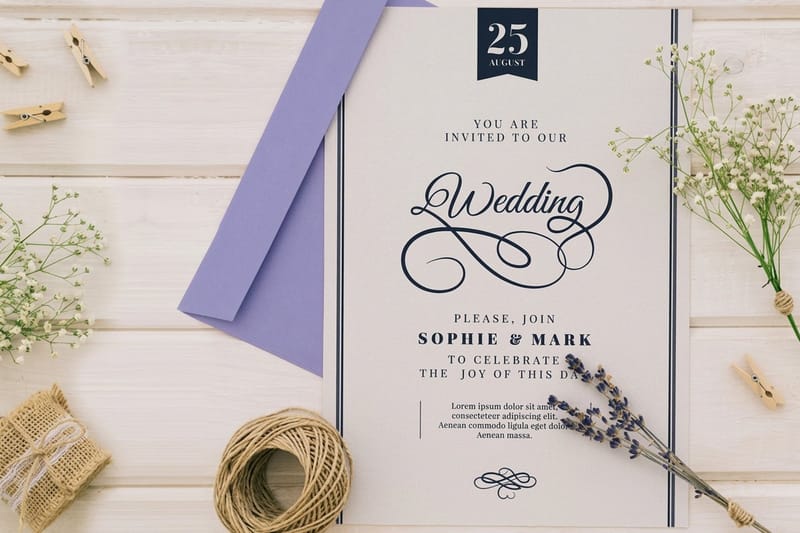
The wedding welcome bag set is three printed pieces that carry the weekend: an embossed invitation that sets the look months in advance, a flat welcome card and schedule that rides inside every bag, and a foil piece for the ceremony or reception table. Print all three on matched stock and the bag reads as one design instead of three separate errands.

The picks
Flat, foil and embossed invitations, from $19.77 for 25
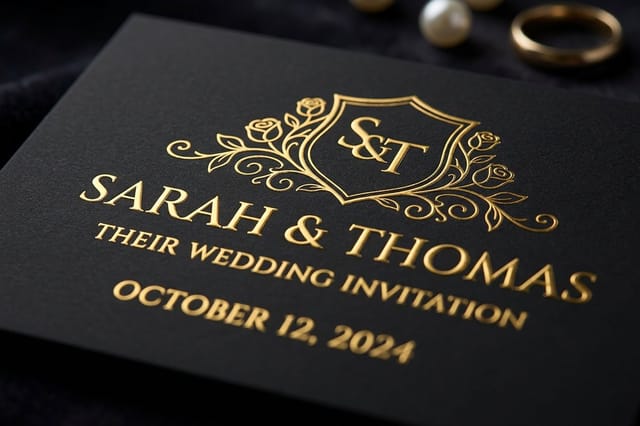
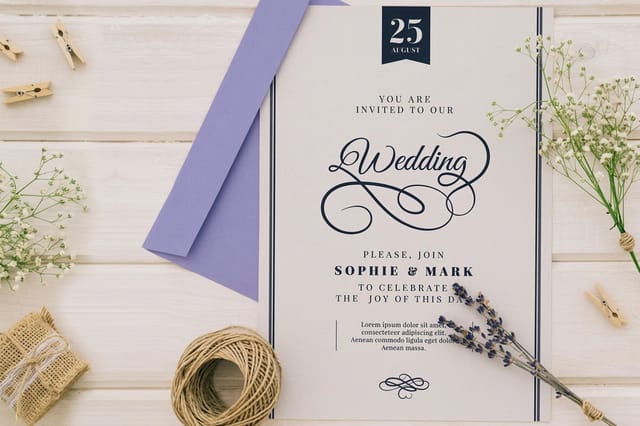
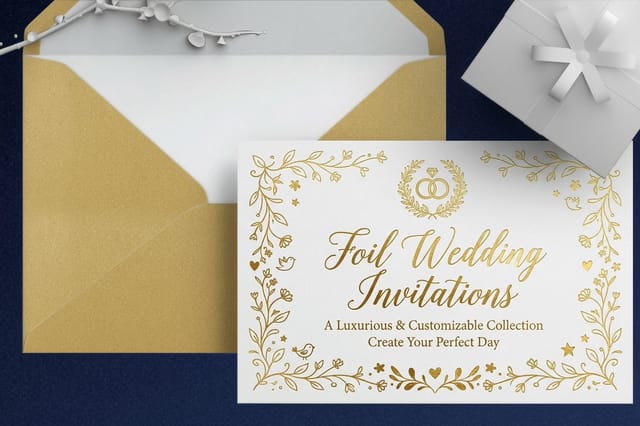
Start here. These are the three printed pieces the whole weekend runs on. The embossed tier needs 10 business days and the flat tier three, so configure the embossed first and the paper choices carry straight into the next two.
Design and print help
One paper choice across all three invitation tiers
The set only works if every piece looks like it came from the same wedding. These are the tools that make matching type, color and stock across three print runs a short job instead of a long one.
How they work together
Print in the order the weekend unfolds
Each piece owns a stage of the weekend, from the envelope that lands in a mailbox in spring to the card a guest photographs at the reception. Print them in this sequence and nothing gets reprinted twice.
The mailed invitation is the first physical thing anyone holds. Its stock, type and texture become the rulebook every later piece follows.
The welcome card and weekend schedule ride inside the bag. Same paper family, lighter cost, printed in the quantity your final headcount needs.
One foil piece for the ceremony or reception table gives the weekend a visual finish line, the piece guests photograph and take home.
1. Embossed wedding invitations: the piece that sets the rules
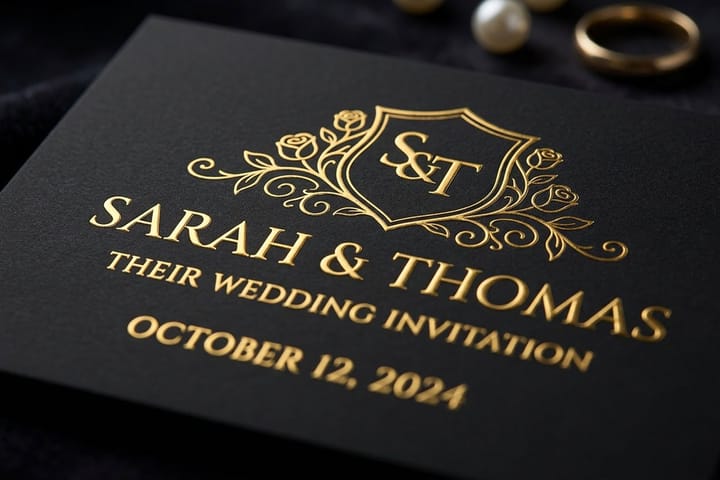
The invitation arrives months before the welcome bag, and it quietly writes the brief for everything that follows. Guests learn the typeface, the colors, the weight of the paper and the formality of the language. When the welcome card echoes those decisions at the hotel desk, the weekend feels planned rather than improvised.
Embossing earns its place because it works without color. A raised monogram or border reads in any light, survives the trip through the mail, and gives the piece a texture people run a thumb across before they read a word. If you have not locked the visual direction yet, the wedding theme flowchart is the fastest way to settle it, and choosing colors that work together applies to a wedding palette just as cleanly as it does to a brand.
Print this piece first, keep a dozen spares, and hold one back for the frame. It is the reference every other piece in the bag is measured against.
2. Flat wedding invitations: the welcome card that runs the weekend

This is the piece that goes in the bag, and it is the hardest working paper of the whole weekend. On one side, a short welcome in your own voice. On the other, the schedule: Friday drinks, shuttle times, ceremony start, dress code, and a phone number that belongs to someone other than the couple. Guests read it twice, once at check in and once on Saturday morning.
Flat printing keeps it affordable enough to print in real quantity and to reprint when the timeline shifts, which it will. Because the stock comes from the same family as the invitation, the bag still feels expensive even though this piece costs a fraction of the mailed one. Couples who want the announcement itself to carry the same flat, clean treatment often start with save the date ideas in the same format.
Write it like a person, not a program. Name the neighborhood coffee shop, warn people about the hill up to the venue, tell them the shuttle really does leave at nine. That is the card guests keep in a pocket all weekend.
3. Foil wedding invitations: the showpiece guests photograph

Foil is the one piece you print in a small quantity and place where it will be seen up close: on the ceremony seat, at each place setting, or in the top of the bag for the guests you most want to impress. Metallic stamping moves as the light moves, which is exactly why it photographs the way flat ink never will.
Use it once and use it deliberately. A whole weekend in foil goes flat fast, while a single foil piece against matched paper reads as the finish line of a set. The same restraint applies to everything else guests see that day, which is why welcome and ceremony signage and custom ceremony programs should carry the same two colors and nothing more.
Order the foil last, after the theme is locked and the count is final. It is the smallest run in the set and the piece guests are most likely to take home.

Specs and pricing
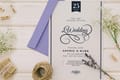
Flat invitation sizes on 14pt gloss cover and pricing
The flat invitation is the volume piece, so its stock and size decide what the welcome card and the foil piece have to match. Check the specs here before you commit the rest of the set.
| Quantity | Price Per Unit | Total |
|---|---|---|
| 25 | 79.1¢ | $19.77 |
| 50 | 50.5¢ | $25.27 |
| 100 | 42.8¢ | $42.84 |
| 200 | 25.8¢ | $51.62 |
| 300 | 20.1¢ | $60.42 |
| 400 | 17.3¢ | $69.20 |
| 500 | 15.6¢ | $77.99 |
| 600 | 15.4¢ | $92.26 |
Wally explains the welcome bag
Three pieces, one wedding, printed to match
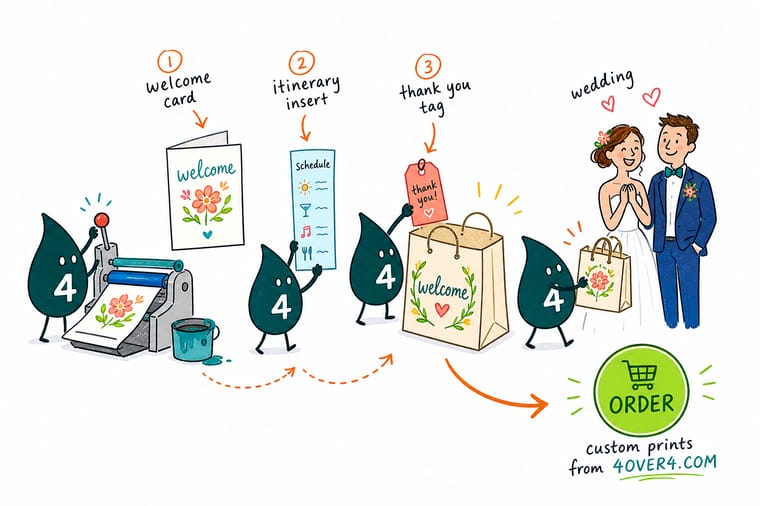
Wally thinks of a welcome bag the way a printer does: one stock family, three jobs. The embossed invitation teaches guests the look, the flat card tells them where to be all weekend, and the foil piece gives Saturday night its finish. Print them together and every guest holds the same wedding three times.
Shop the wedding collection →See it in use
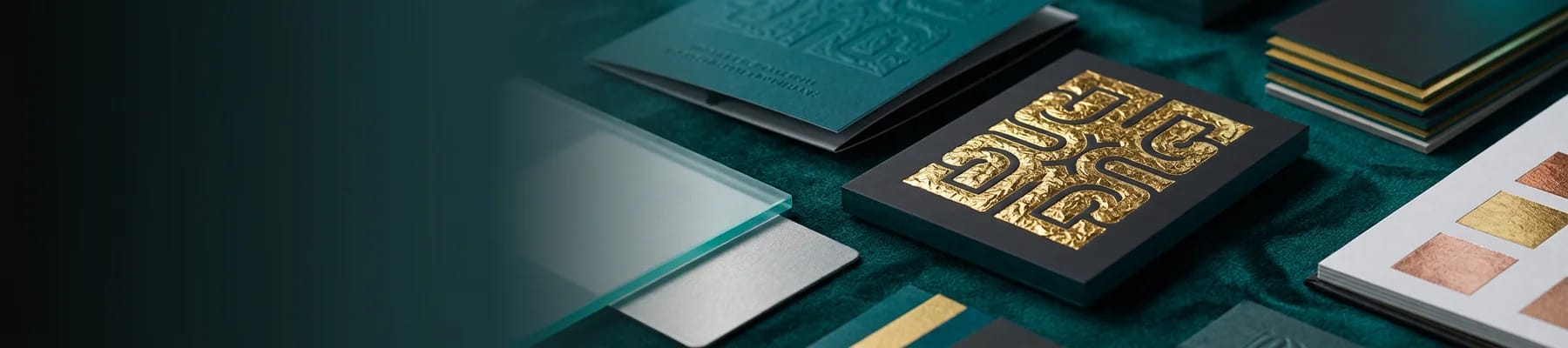
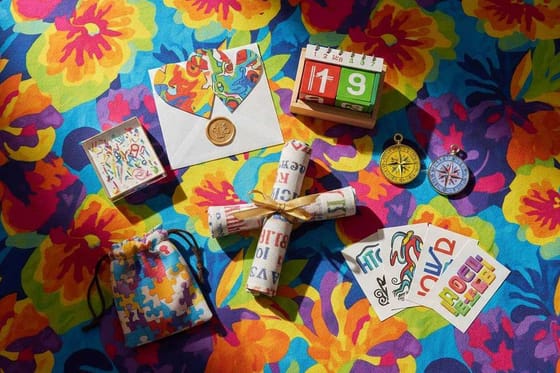
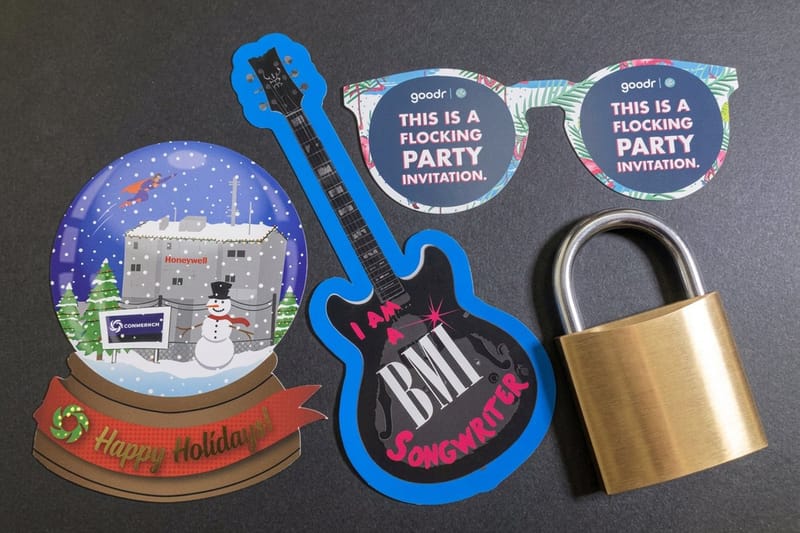
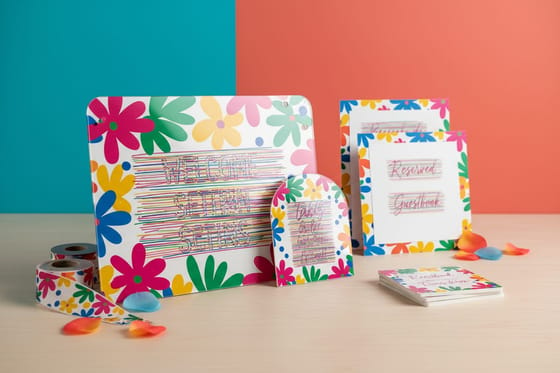
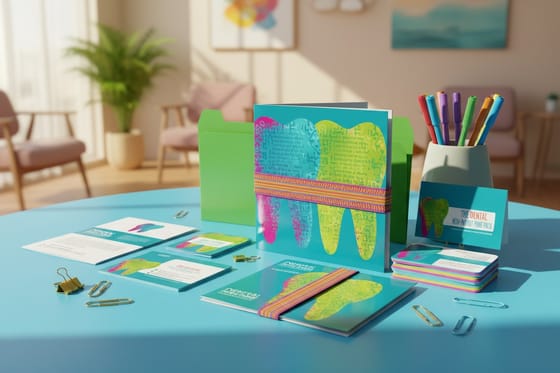
Welcome bag pieces couples have printed
Explore more
Where to go next
By the numbers
One set, printed to greet every guest
Common Questions
Common questions about the wedding welcome bag set
What is a wedding welcome bag set?
It is the printed core of the bag you leave at the hotel for out of town guests. Instead of one loose note, you print three matched pieces: the invitation that already reached them by mail, a flat welcome card and weekend schedule that sits on top of the bag, and a foil piece for the ceremony or reception. Same design language, three jobs.
What should actually go inside the welcome bag?
Lead with the printed card, because that is what gets read. Guests want the weekend at a glance: arrival details, the ceremony time and location, dress code, transport, and one phone number that is not the couple. Snacks, water and local treats sit under it. If a guest can answer every logistics question without opening their phone, the bag has done its job.
When should I order each piece?
Mail the invitation six to eight weeks before the wedding, or three months out for a destination weekend. Print the welcome cards after the RSVP deadline, when your headcount is real, so you are not paying for forty bags nobody claims. The foil piece can be printed last since the quantity is small and fixed.
How do I keep three printed pieces looking like one wedding?
Repeat three things on every piece: the same typeface pairing, the same two colors, and the same margin rhythm. Then keep the paper in one family so the weight and finish carry across. That is why printing the whole set in one place matters more than most couples expect, since stock and ink behave differently from press to press.
Is embossing worth it if guests only see the invitation once?
Embossing is what people feel before they read a word, and it is the reason invitations end up on refrigerators instead of in recycling. It also does quiet work later: once guests have felt that texture, the flat welcome card in the bag reads as part of the same set even though it costs a fraction as much.
How many welcome cards should I print?
Print one per room, not one per guest. Couples share a bag, so a hundred person wedding with sixty traveling guests usually needs around thirty five bags. Then add ten percent for late bookings, wedding party rooms, and the two cards that will get a coffee ring on them before Friday night is over.
Can I add more printed pieces as the weekend grows?
Yes. This set is the working core, not a limit. Couples commonly add ceremony programs, welcome signage, table numbers and thank you cards later, all built from the same type and color rules so nothing looks like an afterthought.
Get Started
Order the invitation, the welcome card and the foil piece together
Order the invitation, the welcome card and the foil piece from one press, on stock that matches, and let every guest hold the same wedding from the mailbox to the reception table.
Legal Disclaimer
Gold Standard guarantees apply to all standard orders placed through 4over4.com. Price match requires verifiable proof of a competitor's published price for an equivalent product with matching specifications and turnaround time. Satisfaction guarantee covers manufacturing defects and print quality issues. Contact support with order number and documentation. On-time delivery rate based on tracked orders 1999 to 2026. Individual results may vary based on shipping carrier performance.
