
6 Ultra-Thick Heavyweight Print Pieces That Work as One Set
Thickness is the one print upgrade a person registers before they read a word. These are the six pieces we print heavy, what each one costs to start, and where the extra caliper stops helping and starts causing problems.
The ultra-thick set is six pieces printed on 26pt to 80pt stock instead of the usual 14pt or 16pt: ultra thick business cards, kraft postcards, kraft hangtags, metallic pearl invitations, edge painted cards and suede cards. Thickness is measured in points, where one point is one thousandth of an inch, so a 32pt card is double a standard card and an 80pt kraft tag is closer to thin board than to paper. Prices start at $29.44.

The picks
Six pieces, from $29.44 kraft postcards to $282.94 suede cards
Read the entry price next to the quantity, not on its own. Four of these start at 50 pieces and two start at 250, so the cheapest line is not always the cheapest card. Every price below comes from the configurator and drops as the run climbs.
- 1

Ultra Thick Business Cards
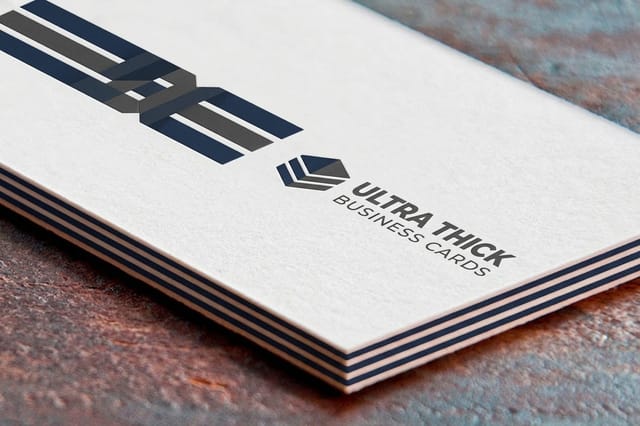
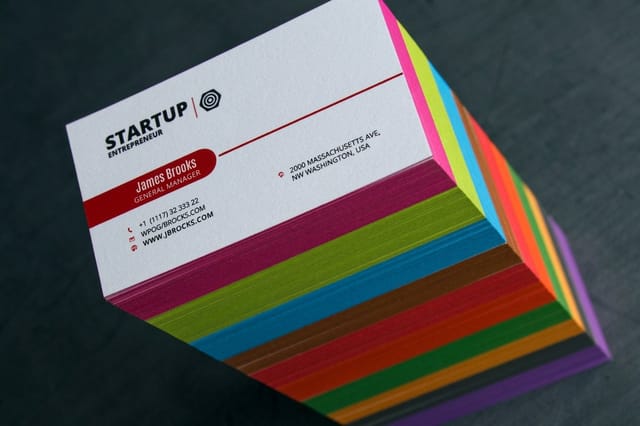
The anchor of the set. Seven stocks run from 32pt UltraWhite uncoated up to 80pt, which is where the search for a super thick card usually ends. Standard turnaround is 5 business days and rush goes down to same day.
- 2
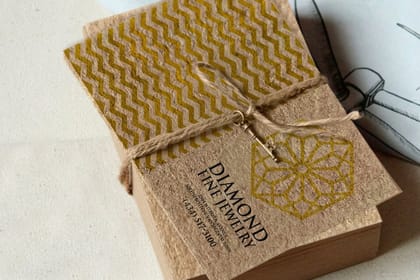
Ultra Thick Kraft Postcards
The cheapest way into the set, and the widest: 14 sizes from a 2.5 in square to a 6 in by 11 in mailer, all on 100% recycled kraft, with edge painting available in 22 colors.
- 3

Ultra Thick Kraft Hangtags
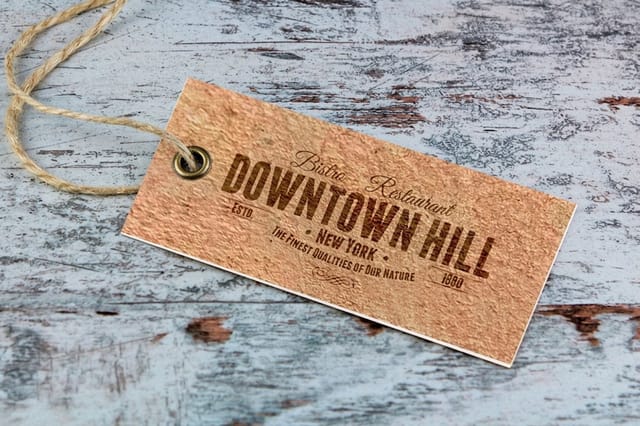
The same post-consumer kraft board, cut to six tag sizes and drilled at 1/8 in or 3/16 in wherever you want the hole. At 80pt the tag stops bending on a hanger, which is the whole point.
- 4
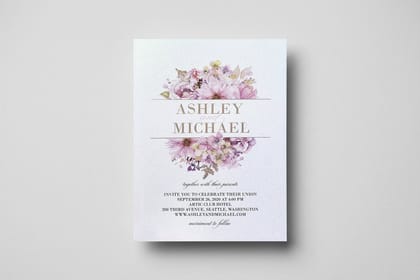
Ultra Thick Metallic Pearl Invitations
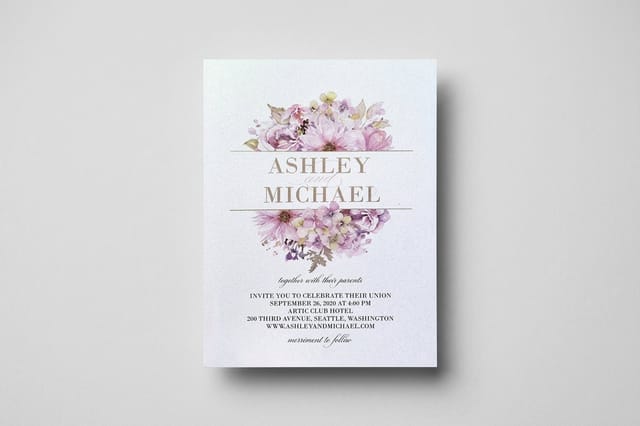
The one piece here that has to fit an envelope, so it sits at 26pt Metallic Pearl Ice with a matching Pearl Ice envelope included. Rounded corners at 1/8 in or 3/8 in are on the same order form.
- 5

Edge Painted Business Cards
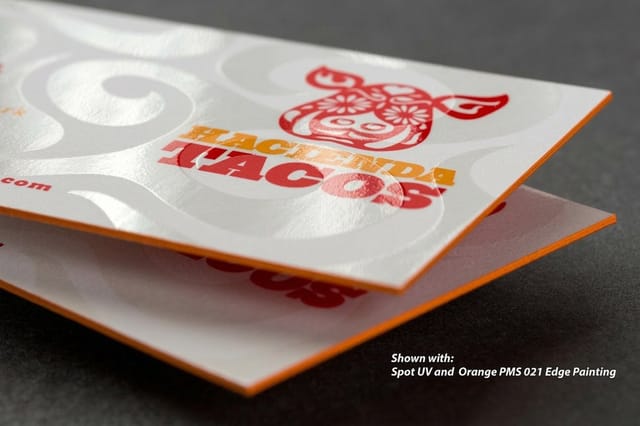
A 32pt UltraWhite core with 16 edge colors painted around the perimeter. The stock has to be this thick for the painted band to read from the side at all.
- 6

Ultra Thick Suede Business Cards
The top of the set on feel: a velvet laminate over a 32pt or 48pt board. Budget the calendar as well as the money, because standard turnaround here is 15 business days.

The caliper ladder
What each piece is available in, from 26pt to 80pt
Six pieces, six different ranges. The invitation is capped by its envelope, the edge painted card is fixed at a single stock, and the three kraft and uncoated products run the whole ladder. Tap a piece to jump to its section.
| Piece | Stocks offered | Caliper | What that means |
|---|---|---|---|
| Metallic pearl invitations | 26pt | 0.026 in | Thickest stock in the set that still slides into its matching envelope. |
| Edge painted business cards | 32pt | 0.032 in | One fixed stock. The painted band needs a thick edge to be visible from the side. |
| Suede business cards | 32pt or 48pt | 0.032 to 0.048 in | Velvet laminate on both faces, so the card feels warmer than it looks. |
| Ultra thick business cards | 32, 40, 48, 56, 64, 72, 80pt | 0.032 to 0.080 in | The widest ladder we print on a card. Uncoated cover in the even steps, gloss cover in the odd ones. |
| Kraft postcards | 32, 48, 64, 80pt | 0.032 to 0.080 in | Above 16pt a card stops qualifying for the USPS postcard rate, so plan on hand delivery or an envelope. |
| Kraft hangtags | 32, 48, 64, 80pt | 0.032 to 0.080 in | At 80pt the tag behaves like thin board and will not curl on a rack. |
Before you order
Three things thick stock changes
Caliper is not a free upgrade. It changes what the piece can do after it leaves the press, and every one of these has sent a job back to be reprinted.
- Folding stops working. Above roughly 32pt the outer fibers crack along a score. If a piece has to fold, print it on a lighter cover stock and spend the budget on a finish instead.
- Mailing rules bite first. The USPS postcard rate caps thickness at 0.016 inches. Every stock on this page is above that, so a thick postcard travels in an envelope, in a box, or by hand.
- Storage and slots shrink. A 32pt card is snug in a wallet and a 64pt card does not go in at all. Card holders, badge sleeves and desktop scanners were all built around 14pt.
None of that argues against printing thick. It argues for deciding what the piece has to do first, then choosing the caliper that still lets it do it. If any of the stock names are unfamiliar, the printing terms page defines them, and you can start any of these from a ready layout in our design templates.
1. Ultra thick business cards, the piece that sets the caliper

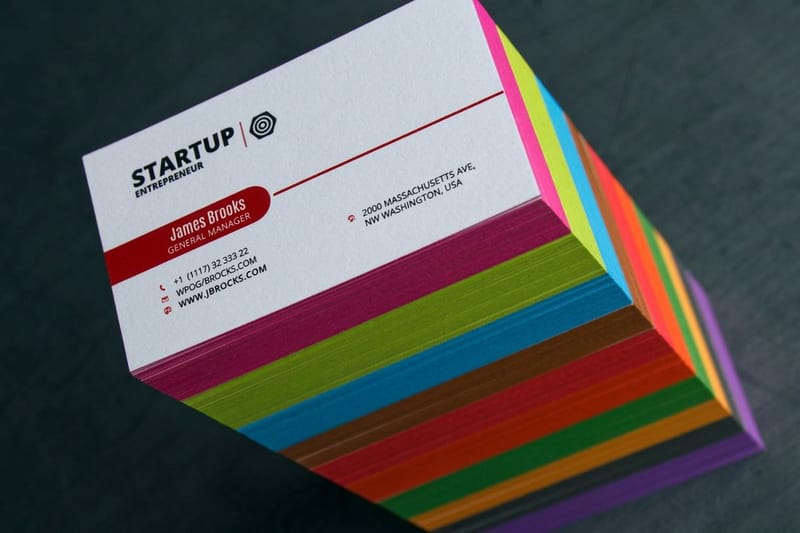
Pick this one first, because whatever thickness you choose here becomes the standard the other five have to match. Ultra thick business cards print on seven stocks: UltraWhite uncoated cover in 32pt, 48pt, 64pt and 80pt, and gloss cover in 40pt, 56pt and 72pt. A normal card is 14pt or 16pt, so even the lightest option here lands with about double the weight of what people are used to receiving.
Fifty start at $36.62, which is roughly 73 cents a card, and the per-card cost falls toward a dime as the run climbs to 10,000. That curve matters more than the entry price. If two salespeople each need a box, ordering the boxes together rather than separately is where the money actually moves.
The trade-off is fit. A 32pt card still slides into most card holders and wallet slots. A 64pt or 80pt card does not, and it will not go through a desktop card scanner either. Order the thickest stock when the card is a leave-behind that sits on a desk, and stay nearer 32pt when it has to live in a pocket. If the numbering is new to you, our breakdown of what pt means in printing and the business card thickness chart put every common stock on one scale. To see how the thick card sits beside every other style, browse business cards printing.
2. Ultra thick kraft postcards, weight and a brown surface at once

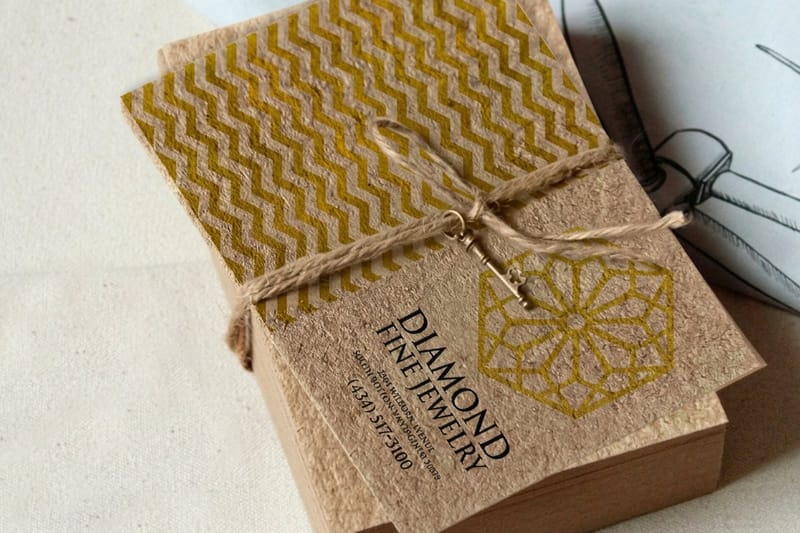
Ultra thick kraft postcards are the cheapest entry to the set at $29.44 for 50, and the most flexible: 32pt, 48pt, 64pt and 80pt stocks, all 100% recycled kraft, in 14 sizes from a 2.5 inch square up to a 6 by 11 inch mailer. Edge painting is available in 22 colors, which turns the brown edge into a deliberate line of color rather than an exposed one.
Two constraints come with the brown paper. First, ink behaves differently: you can print black or white ink on the natural kraft, or full CMYK plus a white underbase on one or both sides, and without that white layer under them your colors sit down into the brown and go muddy. Our guide on how color prints on kraft paper shows what survives the surface and what does not.
Second, mailing. The USPS postcard rate requires a card between 0.007 and 0.016 inches thick. A 32pt kraft postcard measures 0.032 inches, so it is twice the ceiling and cannot travel as a postcard at all. Use these as package inserts, counter cards, or hand-outs, or put them in an envelope and pay letter postage. Standard turnaround is 6 business days with rush down to the next business day. The full range of formats and stocks sits on postcards printing.
3. Ultra thick kraft hangtags, the tag that does not curl on a rack

Same kraft board, different job. Ultra thick kraft hangtags come in four stocks from 32pt to 80pt, all 100% post-consumer recycled, in six set sizes from a 2 inch square to 2 by 6 inches, plus custom sizing up to 3 by 6 inches. Every tag is drilled, at either 1/8 inch or 3/16 inch, in the position you pick. Fifty start at $35.38.
The reason to go thick on a tag is mechanical rather than cosmetic. A thin tag hanging off a garment on a crowded rack bends at the hole, catches on the next hanger, and arrives at the register creased. An 80pt tag has enough stiffness to hang flat and stay flat through a season of customers pushing hangers along a rail. It also holds a punched hole without tearing out, which is what usually kills a lighter tag.
Painted edges in up to 22 colors are available here too, and a colored edge on brown board is the single cheapest way to make a tag look like it came from a brand rather than a box of blanks. If you want the matched stationery around it, the kraft brand stationery set runs the same paper across the rest of the pieces, and hang tags printing lists every other tag material we stock.
4. Ultra thick metallic pearl invitations, thick enough to feel, thin enough to mail
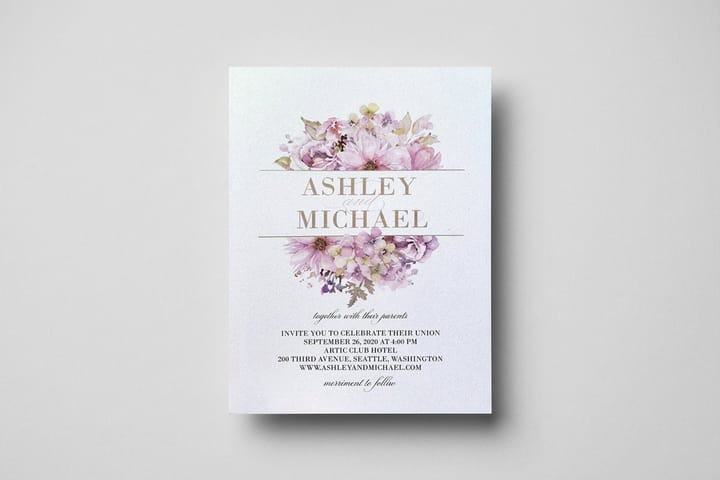
This is the exception in the set, and the exception is instructive. Ultra thick metallic pearl invitations print on a single 26pt Metallic Pearl Ice stock, not 32pt and not 80pt, because an invitation has to go into an envelope and through the mail with a card behind it and a reply piece beside it. Fifty start at $67.00, which is $1.34 a card, and a matching Pearl Ice envelope comes with them.
The pearl shimmer is in the paper itself rather than printed on top, so the color shifts as the card tilts under a light. That does two things: it makes photographs look softer than they do on white stock, and it eats a little contrast out of pale ink. Deep colors and metallics read well on it. Very light tints tend to disappear. There is more on how these surfaces behave in our note on pearlescent paper.
Three sizes cover most suites: 4.25 by 5.5 inches, the classic 5 by 7, and a 6 inch square, with custom sizing up to 6 by 7 inches. Rounded corners at a 1/8 inch or 3/8 inch radius are on the order form, and a free online or hardcopy proof is worth taking before a wedding run. Standard turnaround is 5 business days with rush down to same day. Compare it against the rest of the range on invitations printing.
5. Edge painted business cards, where the thickness becomes visible
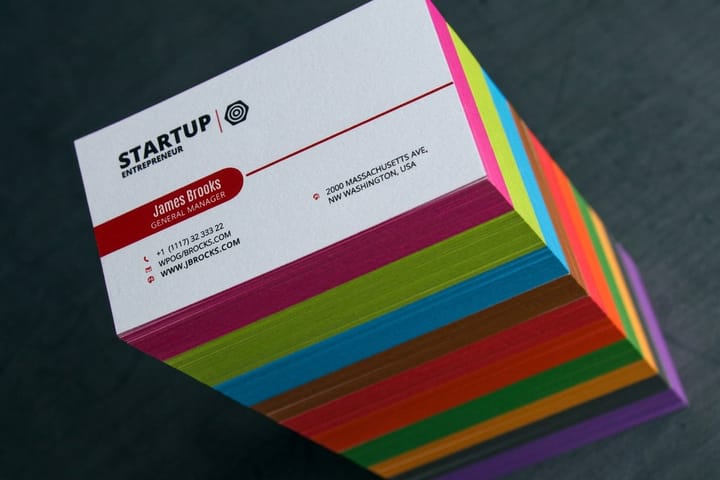
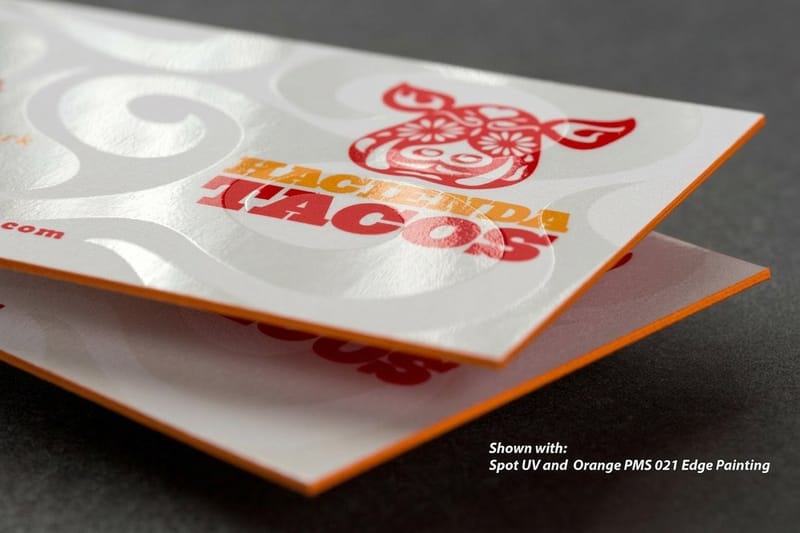
Every other piece in this set makes its case by feel. Edge painted business cards make it by sight, because the caliper is what the design uses. A 32pt UltraWhite uncoated core is painted around the perimeter in one of 16 colors, so a stack that would otherwise read as a white blur from the side turns into a band of color.
The thickness is a requirement here, not an upgrade. Paint a 14pt edge and you get a hairline nobody notices. At 32pt there is enough exposed edge for the color to register from across a table. Print the face full color on the front with a blank back, or full color on both sides, in a 2 by 3.5 inch standard, a 2.125 by 3.375 inch, or a 2.5 inch square.
Two hundred fifty start at $141.70, which works out near 57 cents a card and slides toward 24 cents by 2,000, with a 5 business day standard turnaround and a free online proof option. Keep a clear margin between your artwork and the trim, because the painted band covers the very edge of the card. The process is walked through step by step in how to make painted edge business cards, and the matched pieces live in the edge painted luxury set.
6. Ultra thick suede business cards, the piece you plan the calendar around

The last piece is the one people remember and the one that needs the most lead time. Ultra thick suede business cards wrap a 32pt or 48pt board in a soft matte velvet laminate, so the card feels warm and slightly grippy under a thumb instead of slick. Foil stamping, spot UV and painted edges can all go on top of it.
Here is the honest part. Two hundred fifty start at $282.94, about $1.13 a card, sliding to roughly 42 cents by 2,000, and standard turnaround is 15 business days with a free online proof. That is three weeks, not three days. If a trade show is 10 days out, this is the wrong card for that show. Order it when the calendar allows it and order enough to last, because reordering under pressure is where the extra cost really shows up.
The laminate also changes what you can do afterward. A velvet surface takes a pen poorly, so leave the back clear of any line meant to be written on, and expect fingerprints to show more on a dark field than on a light one. If you are weighing soft-touch feel against other premium routes, our piece on what makes a business card premium compares them without picking a favorite, and the full lineup of finishes sits in the specialty printing collection.
Specs and pricing
The two anchors, side by side
The ultra thick business card sets the caliper for the set and the kraft postcard is the cheapest way to test it. Cards start at $36.62 for 50 on 32pt UltraWhite uncoated cover in 5 business days, kraft postcards at $29.44 for 50 on 32pt kraft in six.

| Quantity | Price Per Unit | Total |
|---|---|---|
| 50 | 73.2¢ | $36.62 |
| 100 | 69.7¢ | $69.68 |
| 200 | 54.4¢ | $108.87 |
| 300 | 49.0¢ | $147.00 |
| 400 | 40.8¢ | $163.33 |
| 500 | 34.8¢ | $174.21 |
| 600 | 30.9¢ | $185.10 |
| 700 | 28.0¢ | $195.98 |
| Quantity | Price Per Unit | Total |
|---|---|---|
| 50 | 58.9¢ | $29.44 |
| 100 | 48.9¢ | $48.88 |
| 200 | 39.4¢ | $78.70 |
| 300 | 35.8¢ | $107.36 |
| 400 | 34.0¢ | $136.04 |
| 500 | 32.9¢ | $164.59 |
| 600 | 32.4¢ | $194.53 |
| 700 | 32.1¢ | $224.47 |
Wally measures the stack
One point is one thousandth of an inch
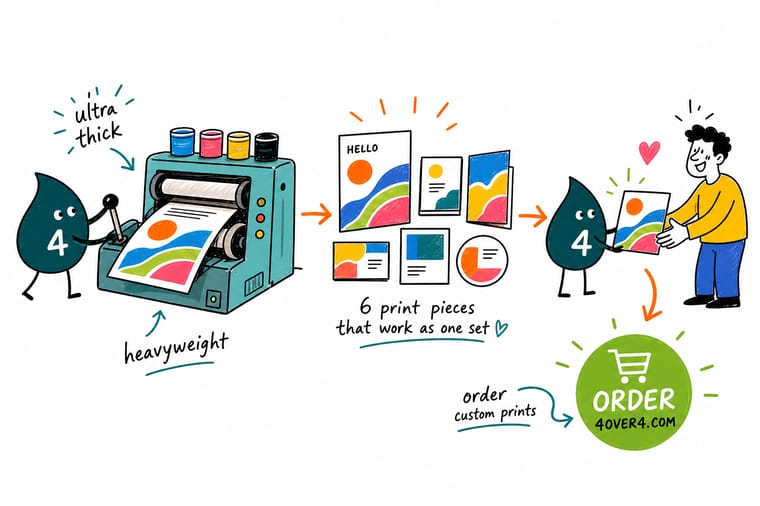
Wally puts a caliper on the set so the numbers stop being abstract. A standard card is 14pt, or 0.014 inches. Our lightest ultra thick stock is 32pt, more than double that. The heaviest is 80pt, about five standard cards stacked, and at that point the piece behaves like thin board: it will not fold, it will not fit a wallet slot, and it will not mail at the postcard rate. Pick the thickness for the job the piece has to do, then let 4OVER4 print the whole set on matching stock.
Shop ultra thick printing →Explore more
Where to go next

By the numbers
What 32 point stock feels like across six pieces
Common Questions
Common questions about ultra thick printing
What does ultra thick actually mean in printing?
It means caliper, measured in points, where one point is one thousandth of an inch. A standard business card is 14pt or 16pt, which is 0.014 to 0.016 inches. Ultra thick starts at 32pt, or 0.032 inches, and runs to 80pt at 0.080 inches. Points are not paper weight: a 32pt uncoated cover and a 32pt kraft measure the same even though they weigh differently on a scale.
Can I mail an ultra thick postcard?
Not at the USPS postcard rate. That rate requires a card between 0.007 and 0.016 inches thick, and the thinnest ultra thick kraft postcard is 0.032 inches, double the ceiling. You have three options: put it in an envelope and pay letter postage, ship it as a package insert inside an order, or hand it out in person. Most brands use ultra thick postcards as inserts and counter pieces rather than mailers for exactly this reason.
Why does the suede card cost so much more than the plain ultra thick card?
Three separate reasons stack up. The suede card starts at 250 pieces while the plain card starts at 50, so the first line you see covers five times the quantity. It carries a velvet laminate on both faces, which is an extra pass. And its standard turnaround is 15 business days against 5 for the plain card. Per card the gap narrows a lot: about $1.13 for suede against roughly 73 cents for the plain card at their entry quantities.
Will ultra thick stock fold or score?
Treat anything above about 32pt as a flat piece. Thick uncoated cover can be scored, but the heavier the caliper the more the outer fibers crack along the fold, and at 64pt or 80pt you are folding what is effectively thin board. If your piece needs to fold, use a lighter cover stock and put the thickness budget somewhere else, like a painted edge or a laminate.
Which piece should I order first if I only want one?
The ultra thick business card at $36.62 for 50, because it sets the stock and the color everything else has to match, and because it is the piece that gets handed over most often. If your product ships in a box rather than being handed across a desk, start with the kraft postcards at $29.44 instead and use them as inserts.
Does full color print properly on the kraft pieces?
Yes, with a white underbase. On the natural brown kraft you can print black or white ink directly, or run full CMYK plus a layer of white beneath it on one or both sides. Without that white layer the brown shows through and every color goes darker and duller than your proof. Pale tints are the first to disappear, so build kraft artwork around strong, saturated color or single-ink line work.
How thick is too thick for a card holder or a wallet?
Around 32pt is the practical ceiling for anything that has to live in a pocket. Most wallet slots and desk card holders were built for a 14pt to 16pt card, so a 32pt card is already snug and a 64pt or 80pt card will not fit at all. That is fine when the card is a leave-behind meant to sit on a desk, and a problem when it has to be carried, so decide which job the card has before you pick the stock.
What is the thickest stock in this set?
Eighty point, at 0.080 inches, available on the ultra thick business cards, the kraft postcards and the kraft hangtags. That is about five standard 14pt cards stacked. The metallic pearl invitation is the thinnest piece here at 26pt, because it has to fit its envelope, and the edge painted card is fixed at 32pt.
Get Started
Print the whole set on one stock
Order the six ultra-thick pieces together at 4OVER4.COM and the caliper, the color and the turnaround stay aligned across all of them. Every price updates live as you build the order.
Legal Disclaimer
Gold Standard guarantees apply to all standard orders placed through 4over4.com. Price match requires verifiable proof of a competitor's published price for an equivalent product with matching specifications and turnaround time. Satisfaction guarantee covers manufacturing defects and print quality issues. Contact support with order number and documentation. On-time delivery rate based on tracked orders 1999 to 2026. Individual results may vary based on shipping carrier performance.
