
The 3-Piece Raised Holographic Set for Brands That Refuse to Blend In
Holographic board splits light into moving color the second a piece is tilted. Raised gloss adds height a thumb can find without looking. Put both on the same sheet and a card, a postcard or a greeting card stops behaving like paper and starts behaving like an object people keep on a desk.
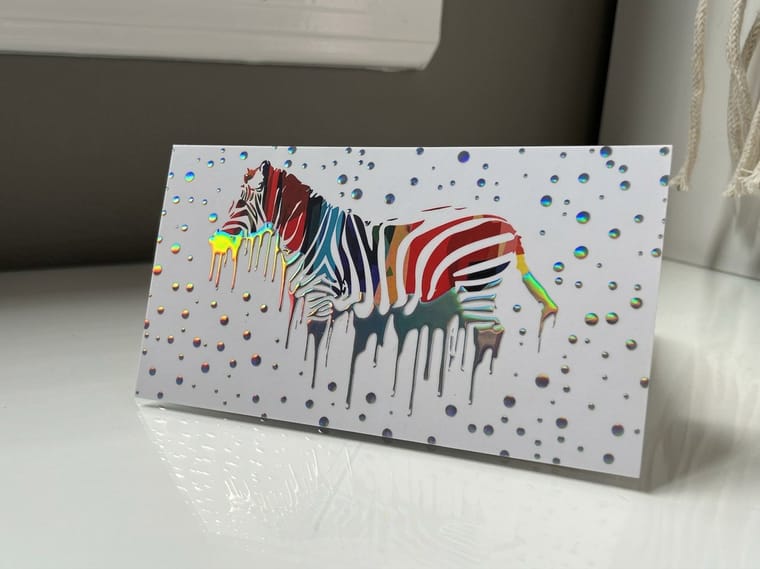
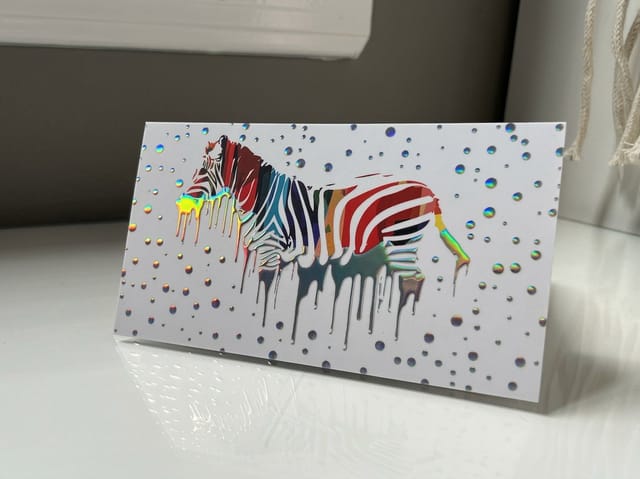
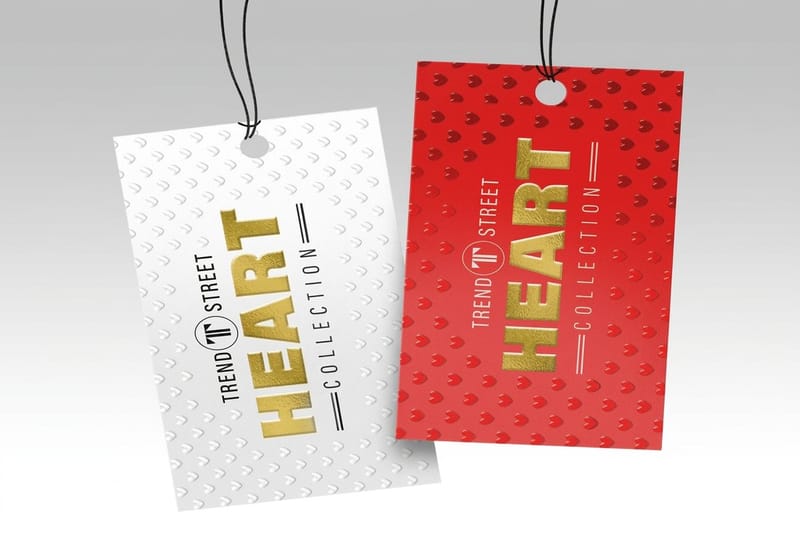
The raised holographic set is three pieces printed on holographic stock with clear raised gloss cured over the artwork you want people to touch. Business cards carry the finish into a handshake, postcards carry it through the mail, and greeting cards carry it into someone's hands the moment an envelope opens. One substrate, one finish, three different distances from your customer, so the brand reads as a single decision everywhere it lands.
The picks
Cards, postcards and greeting cards, from $86.78 for 100
Start here. These are the three raised holographic products we print in house, each with live pricing that moves with quantity, size and turnaround. Configure one to feel out the finish, or order the full set so every piece shares the same base stock.
Design and print help
One holographic mark on all three pieces
A holographic set only works when the raised areas land in the same visual place on every piece. These tools handle layout, stock choice and timing so the set arrives looking deliberate.
How they work together
Three pieces, three distances from your customer
Each format meets someone in a different situation, and the finish has to survive that situation. Match the piece to the moment and the set covers a whole relationship instead of one touchpoint.
The card does its work in the three seconds after a handshake, when someone turns it toward the light and feels the raised mark before reading a single word.
A greeting card gets read sitting down. It is the piece people prop on a shelf, which buys your brand weeks of quiet visibility for the price of one print run.
Postcards face a stack of flat mail with no envelope to hide behind, and a shifting holographic surface is the fastest way to survive the walk back from the mailbox.
1. Raised holographic business cards: the card nobody files away
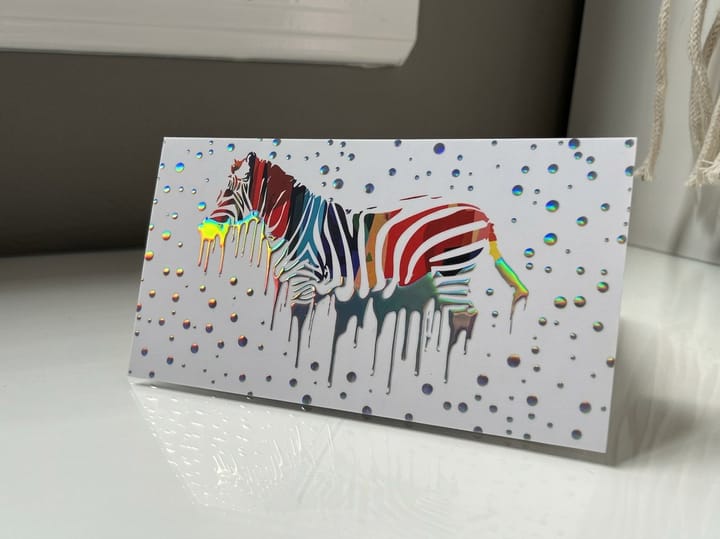
A business card gets about three seconds of attention, and most of that time is spent on the turn. Holographic board rewards exactly that motion, because the color across the face changes as the card rotates. The raised gloss then gives the thumb something to find, and people almost always run a thumb over a card before they put it away.
Keep the raised layer disciplined. A logo, a monogram, a single line of type or a repeating pattern behind clean space is plenty. Solid dark ink holds contact details legible against a reflective base, and open unprinted areas let the substrate do what you paid it to do. If naming and identity decisions are still moving, product branding strategies is a useful sanity check before you commit a mark to a raised plate.
This is the piece that travels furthest per dollar. One card in a wallet keeps working for months, long after the conversation that produced it has been forgotten.
2. Raised holographic greeting cards: the one that gets propped on a shelf
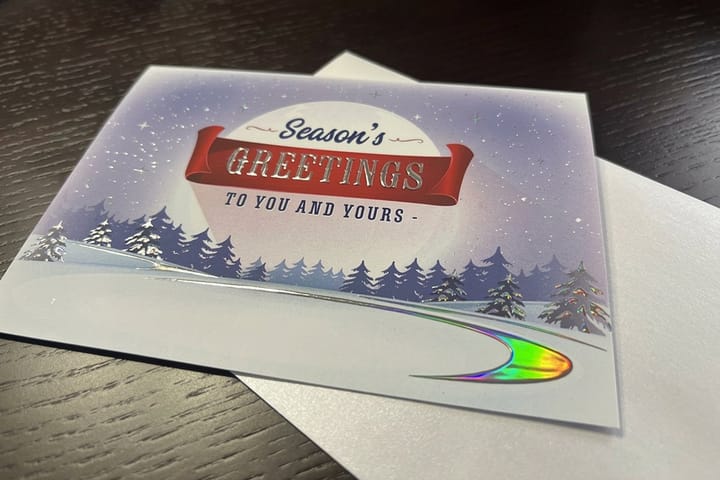
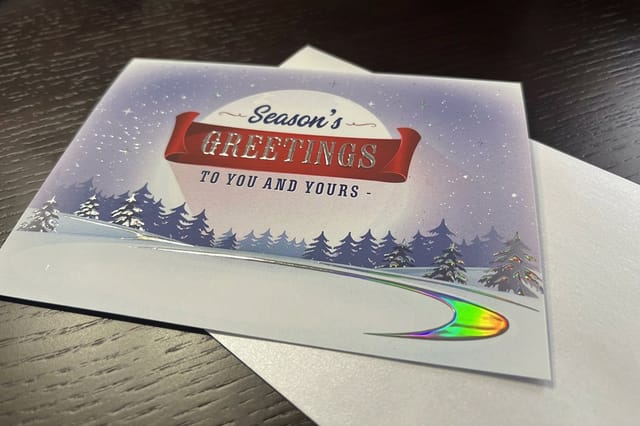
Greeting cards are the only piece in this set that a recipient chooses to keep in view. They stand on a mantel, a reception desk or a shelf, and they stay there for weeks. That display time is why a heavier holographic stock with a raised front makes sense here, even though the format costs more per unit than anything else you print.
Design the front for a distance of six feet and the inside for a distance of one. Raised gloss belongs on the cover art or a seasonal mark, while the interior stays calm enough to carry a handwritten line. Announcements and invitations follow the same logic, and save the date ideas shows how far a single striking card can carry a date that people need to remember.
Send these where relationships are worth more than reach. A hundred cards to your best accounts will outperform a thousand generic ones every time.
3. Raised holographic postcards: mail that survives the walk to the recycling bin
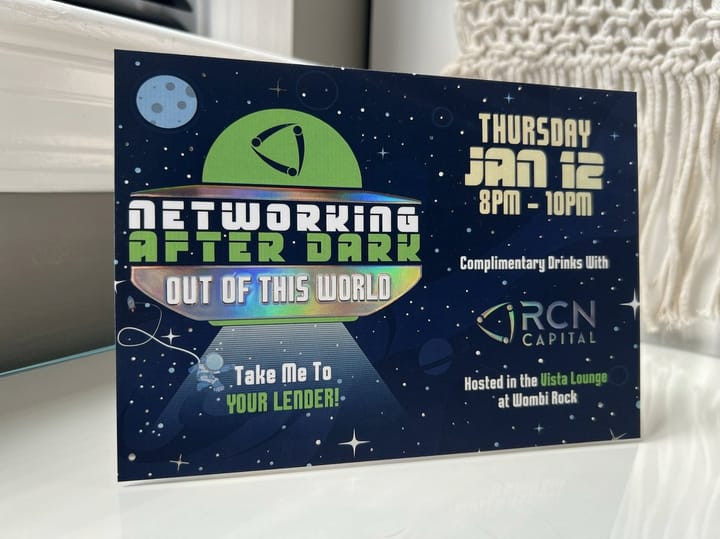
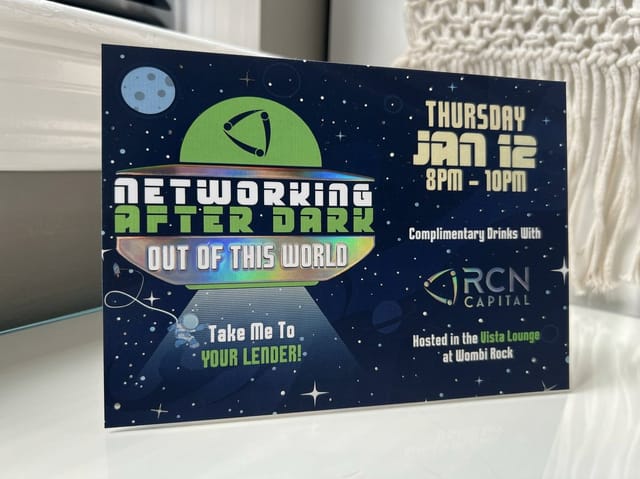
Direct mail is sorted standing up, over a bin, in a few seconds. A postcard has no envelope to buy it time, so the surface has to do the arguing. Holographic board moves as the stack moves, which is the one thing flat mail physically cannot do, and the raised area gives a hand a reason to pause rather than flick.
Put the offer and one image on the front and leave the address side clean and readable for the carrier. The same reflective effect people already recognize from labels and decals is at work here, and how holographic printing works explains why the color shifts the way it does, which helps when you are deciding where to leave the board bare.
If your campaign also includes a folded piece, the layout discipline in the bifold brochure setup guide keeps panel sizes and safe margins consistent with the postcards you mail alongside it.
Specs and pricing
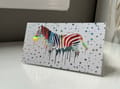
Raised holographic card specs on 16pt velvet cover
The business card sets the stock weight and the raised pattern the rest of the set should follow. Check its specs first, then keep the same finish decisions on the postcards and greeting cards.
| Quantity | Price Per Unit | Total |
|---|---|---|
| 100 | 86.8¢ | $86.78 |
| 250 | 47.9¢ | $119.73 |
| 500 | 37.1¢ | $185.63 |
| 1,000 | 36.1¢ | $361.37 |
Wally explains the raised holographic set
Three pieces, one finish, built to be picked up
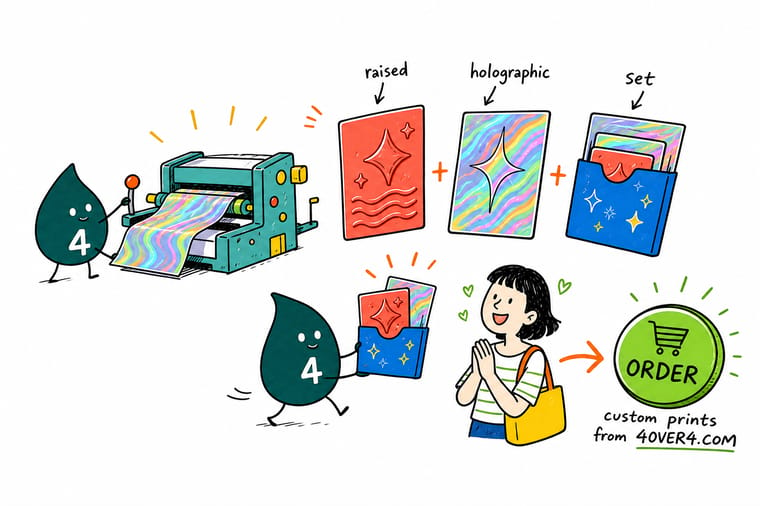
Wally treats holographic stock as the attention grabber and raised gloss as the reason someone keeps holding the piece. His rule is simple: raise one element, leave the rest of the board bare, and print all three formats together so the card in a wallet, the postcard in a mailbox and the greeting card on a shelf clearly came from the same brand on the same day.
Shop the raised spot UV collection →See it in use
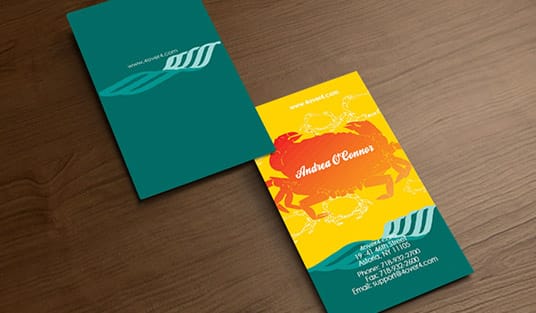
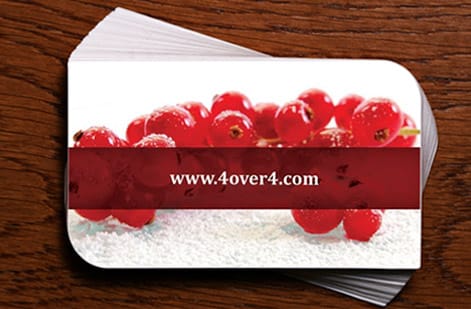
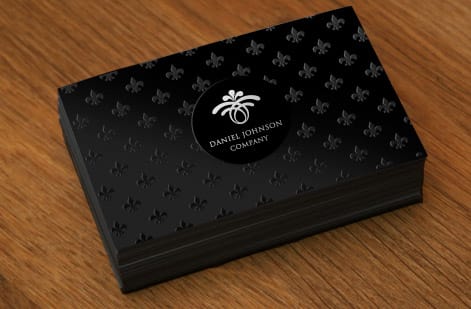
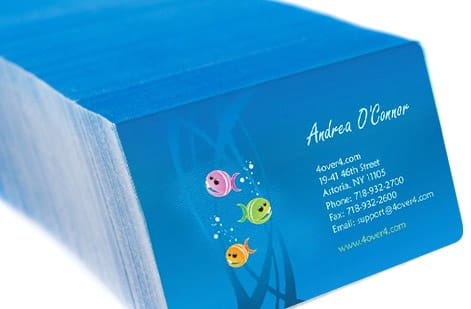
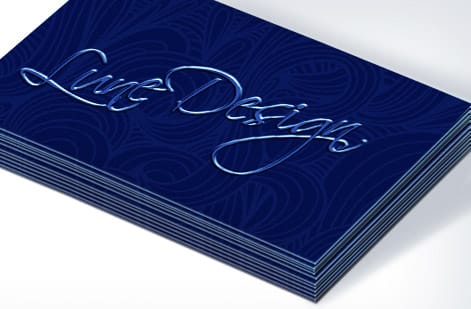
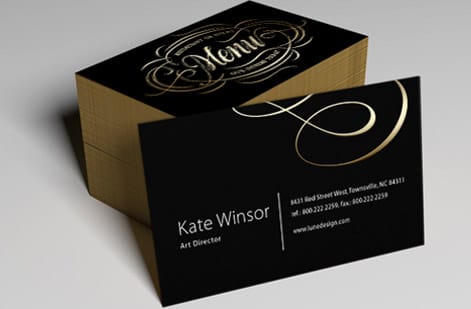
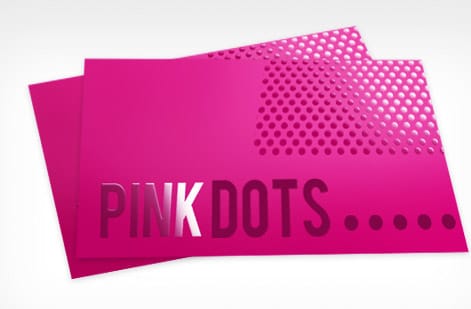
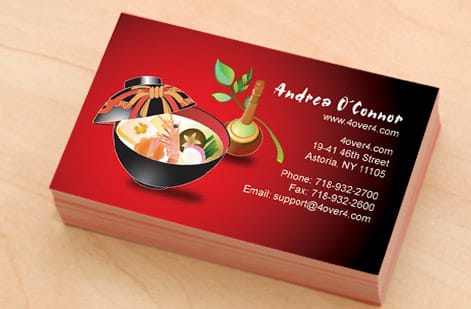
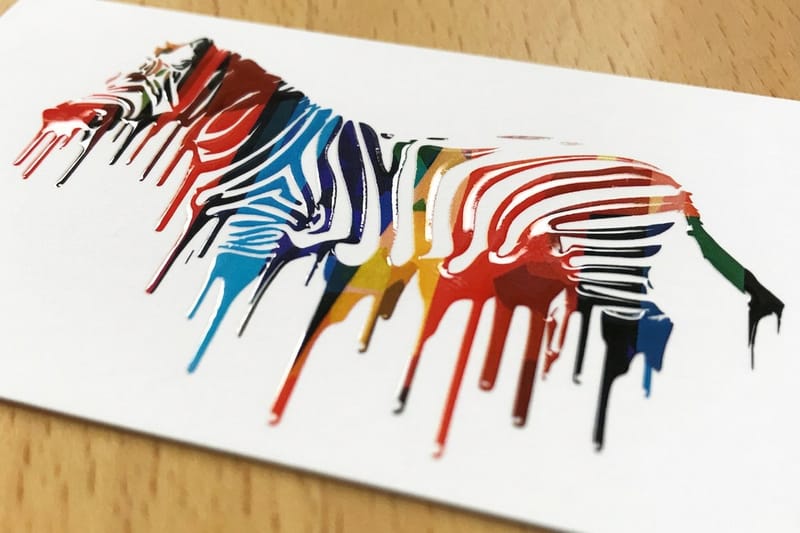
Raised holographic cards brands have ordered
Explore more
Where to go next


By the numbers
One set, printed to be picked up and kept
Common Questions
Common questions about raised holographic printing
What is raised holographic printing?
It is two finishes stacked on one sheet. The paper itself is a holographic board that scatters light into shifting color, and a clear raised gloss is then cured on top of chosen artwork so those areas sit above the surface with real height. The holographic layer works at a distance, the raised layer works in the hand, and the contrast between them is the whole effect.
Which pieces are in the raised holographic set?
Three: raised holographic business cards, raised holographic greeting cards and raised holographic postcards. Each one is the same substrate and the same finish applied to a different format, so a prospect who takes your card, gets your mailer and later opens your holiday card sees one consistent brand instead of three separate print jobs done at different times.
How much of my design should be raised?
Usually less than a quarter of the printed face. Raised gloss earns its keep through contrast, so it belongs on a logo, a monogram, a headline or a pattern accent. When it covers broad areas the eye stops registering the height difference and you have simply paid for a glossier card. Pick the one element you want touched and raise that.
Will my colors look the same on holographic stock?
No, and planning for that is half the job. Ink sits over a reflective silver base, so light colors go luminous and slightly metallic while dark colors go dense. Small type reads best in solid black or a deep brand color. If a color has to match a printed piece on white stock exactly, put it on a white knockout panel rather than fighting the substrate.
Can raised holographic cards still be written on?
Write on the areas that are not raised and not fully coated, and use a fine permanent marker rather than ballpoint. If handwriting matters, such as a note inside a greeting card or a name on the back of a card, keep the inside or the reverse on uncoated stock and save the holographic face for the front where it does the selling.
What does the raised holographic set cost to print?
Pricing is live on each product page and moves with quantity, size and turnaround. Raised holographic business cards start at $86.78, raised holographic postcards start at $299.00 and raised holographic greeting cards start at $618.16. Configure any of the three, watch the total update as you change the run, and order the pieces separately or together in one checkout.
Should I proof this finish before a big run?
Yes. Order free paper samples first so you can tilt the stock under the lighting your customers will actually stand in, because holographic behaves differently under office fluorescents, a trade show spotlight and daylight. Once you know how the base reacts, set your raised areas and print the full set with no surprises.
Get Started
Order 100 raised holographic business cards from $86.78
Order the three raised holographic pieces from 4OVER4.COM and give your cards, mailers and greeting cards the same shifting stock and the same raised mark, printed in one place at live prices.
Legal Disclaimer
Gold Standard guarantees apply to all standard orders placed through 4over4.com. Price match requires verifiable proof of a competitor's published price for an equivalent product with matching specifications and turnaround time. Satisfaction guarantee covers manufacturing defects and print quality issues. Contact support with order number and documentation. On-time delivery rate based on tracked orders 1999 to 2026. Individual results may vary based on shipping carrier performance.
