
The MicroSaaS Success Blueprint Print Kit, 5 Pieces a Solo Founder Actually Uses
Most print advice is written for businesses with a door on a street. A micro-SaaS has a landing page and a Stripe account, so almost none of it applies. Five pieces still do, and each one covers a moment where a screen cannot reach the person you need.
A micro-SaaS needs five printed pieces: business cards, die-cut stickers, a retractable banner stand, postcards, and notepads. Cards and the stand work a conference table, stickers ride laptop lids where other people display your mark for free, postcards win back accounts whose billing address you already hold, and notepads sit on the desk of whoever approved your pilot. Everything else printed for a software product is decoration.
The picks
Five pieces, from $16.48 postcards to $93.37 notepads
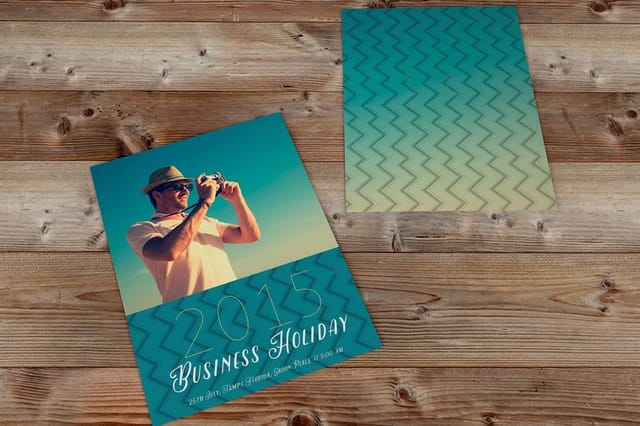
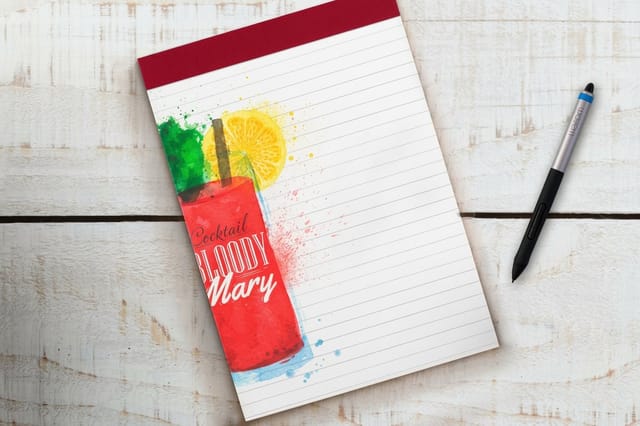
Buy the cards and the stickers first, add the stand before your first event, and keep the postcards for accounts you have invoiced. Every product below can be laid out in our free online designer, or started from a ready design template with the bleed and safe margins already set. Prices come straight from the configurator and drop as your quantity climbs.
Start here
Why a software company prints anything at all
The honest answer is that most of the funnel is a screen, and paper cannot help it. What paper can do is cross the three gaps a screen never closes: the hallway conversation that ends before anyone types an address, the laptop lid that sits open in someone else's meeting, and the mailbox of a customer who stopped opening your emails months ago. The five sections below take those gaps one at a time, with what each piece has to carry and where it fails. For the strategy that sits behind the kit, from picking a niche to pricing the first plan, read the MicroSaaS success blueprint guide, and when a deadline moves under you, same-day printing covers the reprint. If you are not running software at all, the first-time entrepreneur launchpad orders the same idea for a business with a physical door.
What each piece carries
What has to be on it before it is worth printing
Each piece has one job and one thing it must carry to do that job. Read the row, tap the piece to jump to its section, and skip any row where you cannot supply the middle column yet. Printing a piece before you can fill that column is how a founder ends up with 500 cards that list a product name they changed in March.
| Piece | What it has to carry | Starts at |
|---|---|---|
| 1. Standard business cards | The product URL and the free tier, a QR code that lands on the docs, and an uncoated back you can write a promo code on | From $17.57 |
| 2. Die-cut stickers | A mark that still reads when it is cut to its own outline at 2 inches wide, with no hairline rules and no drop shadow | From $93.37 |
| 3. Retractable banner stands | One sentence of positioning and the product name, sized to be read from 10 feet with nobody standing in front of it | From $139 |
| 4. Standard postcards | Postal addresses you already hold from invoicing, and one specific reason for the account to come back | From $16.48 |
| 5. Standard notepads | A footer with the product name and the support address, because a blank pad is a gift and not a reminder | From $93.37 |
1. Standard business cards: the handoff at a conference table
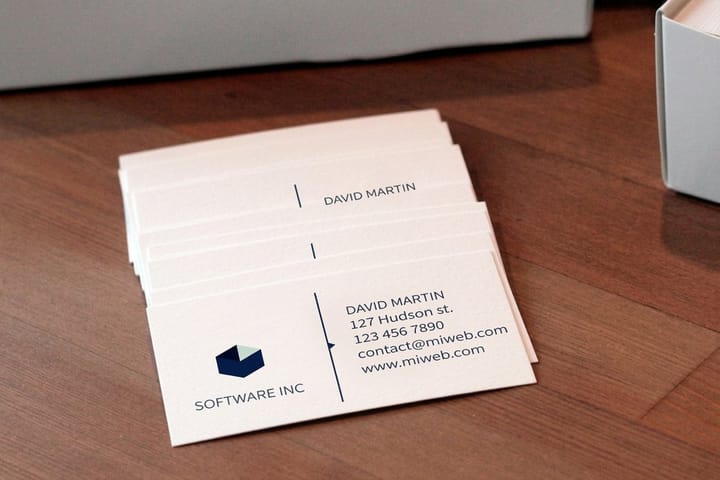
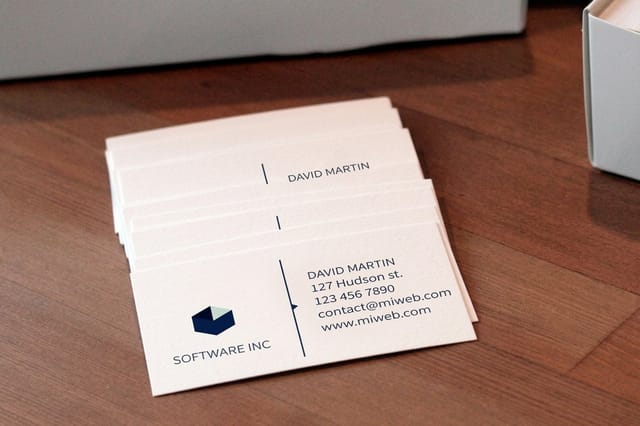
A micro-SaaS founder needs cards for exactly one situation: a conversation at a booth, a meetup, or a hallway track that ends with somebody saying send me a link. An email address typed into a phone at that moment goes wrong half the time. A card does not.
Print the domain large enough to read at arm's length, add a QR code that lands on the docs or a free trial rather than the home page, and put the free tier in words on the front. Leave the job title off. Nobody at a developer conference cares that a two-person company has a chief executive, and the space is worth more as a product line. Standard business cards start at $17.57 for the smallest run, which is the right size when your positioning is still moving month to month.
Finish is the one spec that bites founders. Gloss and soft-touch coatings shed ballpoint, so if you write a promo code or a follow-up date on the back, order an uncoated stock or an uncoated reverse. Our comparison of matte, gloss and soft-touch finishes explains how each one behaves in a hand and under a pen. Then read ten places to leave a business card, because a box in a laptop bag never signed anyone up.
2. Die-cut stickers: the piece your users carry for you
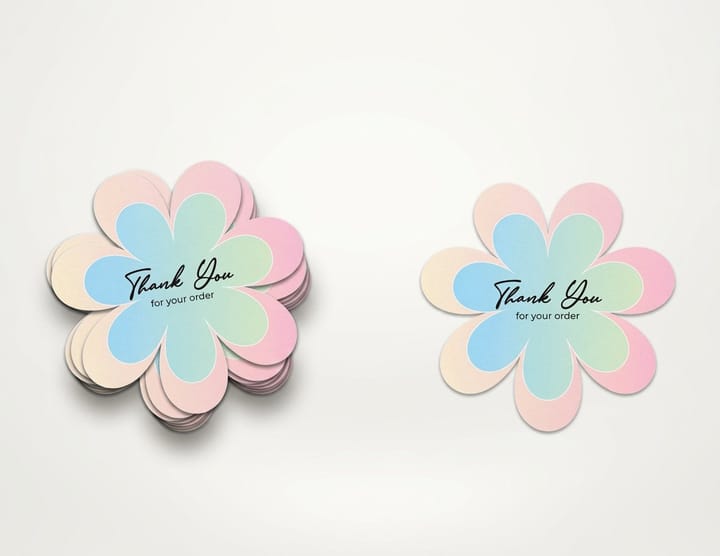
Developer tools have been distributed on laptop lids for twenty years, and the mechanism is simple. Somebody puts your mark on the machine they open in every meeting, and the mark gets seen by their whole team without you paying for the impression. No other item in this kit works while you sleep.
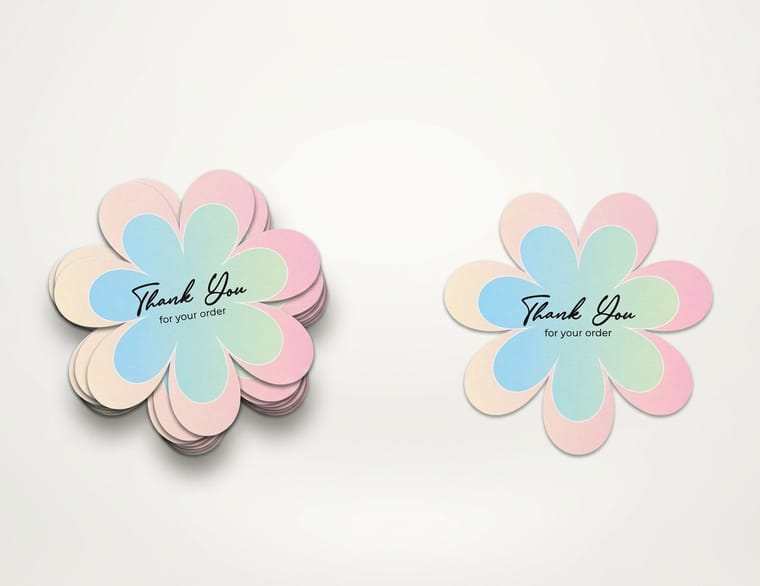
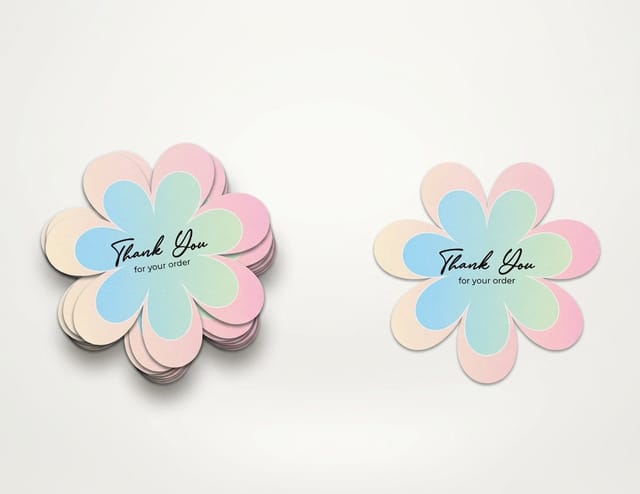
Die-cut stickers follow the outline of your artwork, so the shape itself becomes part of the logo. That is also the catch. Hairline rules, thin serifs and drop shadows fall apart once the cut runs along the edge of the mark, and the die is not something you casually redo. Keep the finished sticker 2 inches or wider if there are words in it, and settle the logo before you order. The entry price is $93.37, the highest in this kit.
There is a cheaper path worth naming. If your mark sits comfortably in a square or a circle, standard stickers start at $23.88 and do the same job on the same laptop lid for a fraction of the outlay. Die-cutting is worth paying for when the silhouette is the brand, and not much else. Material matters too: our guide to choosing sticker material covers which stock survives a bag, a coffee spill and a year of being opened and closed, and 24 hour sticker printing is there for the batch you forgot before a Tuesday flight.
3. Retractable banner stands: the only fixture on the list
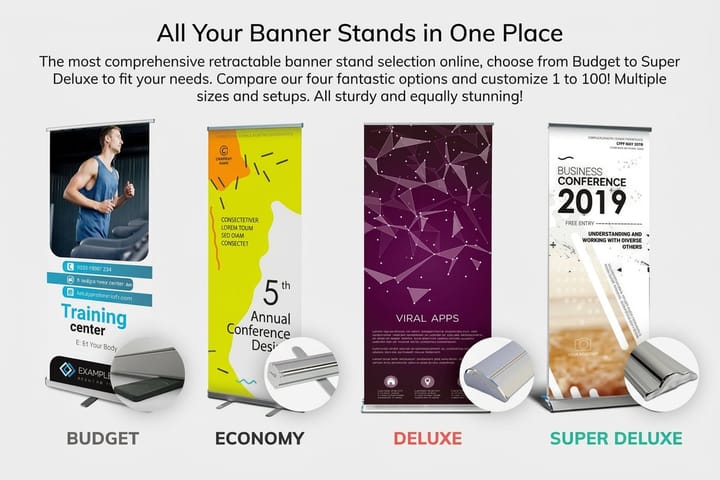
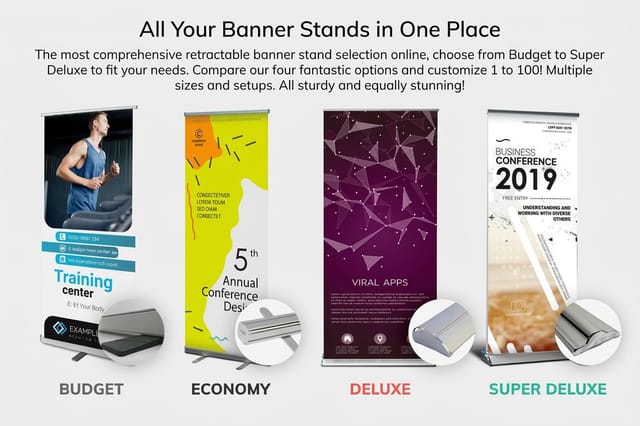
A retractable banner stand is the backdrop behind a six foot table, and for a one-person booth it is doing the work a whole booth build does for a funded company. It rolls into its own base, travels as checked luggage, and sets up in under a minute without tools, which matters when you are the entire booth staff and you also need coffee.
The copy is where founders get this wrong. A banner is read from about ten feet, usually at an angle, often with a person standing in front of the bottom third. That means one sentence of positioning and the product name up high, not a feature list and not a screenshot of your dashboard. Whoever reads it should be able to say what you do out loud before they reach the table.
It is also the one piece here that is a fixture rather than a consumable. Cards and stickers get given away, but a stand comes home and goes out again, so the print carries whatever claim you make for a whole season of events. Reprint the graphic, keep the hardware. If you work both sides of an aisle, our guide to a double sided retractable banner stand covers when the second face earns its cost, and booth signage for vendor and trade show tables covers what belongs on the table itself. Stands start at $139.
4. Standard postcards: win-back mail to accounts you invoiced
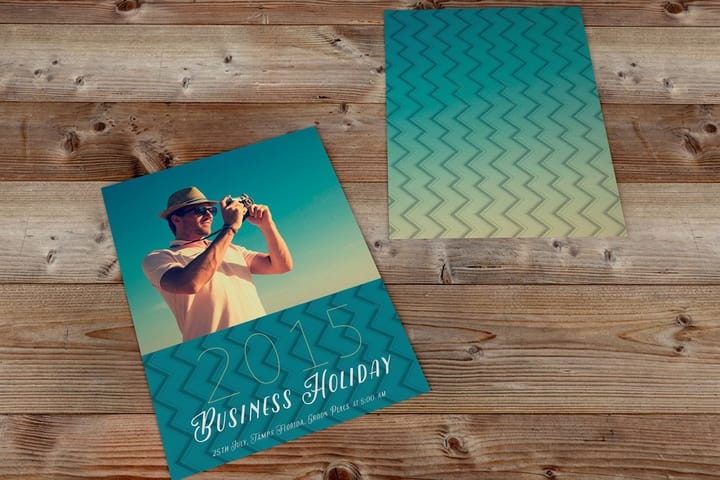
This one comes with a condition attached. Direct mail needs postal addresses, and a self-serve micro-SaaS collecting card details on a $19 plan does not have them. If you invoice teams, though, you hold the billing address of every account that ever paid you, including the ones that canceled quietly and never answered the exit survey.
That list is small, specific and warm, which is exactly the shape where mail beats another email into a full inbox. Write to one situation rather than to everyone: the feature they asked for is shipped, the seat limit they hit is gone, here is the code. Standard postcards start at $16.48, so a run to forty churned accounts costs less than a week of ad spend.
Size is a postage decision before it is a design decision. The USPS postcard rate stops at 4.25 by 6 inches, and a 5 by 7 or 6 by 9 card mails at the letter rate instead, so the bigger card has to earn the difference in replies. Keep your artwork out of the address block on the back, or the run gets handed back at the counter. Our postcard anatomy guide maps the zones, and postcard sizes for direct mail lays out what each size costs you to send.
5. Standard notepads: the leave-behind on a pilot customer desk
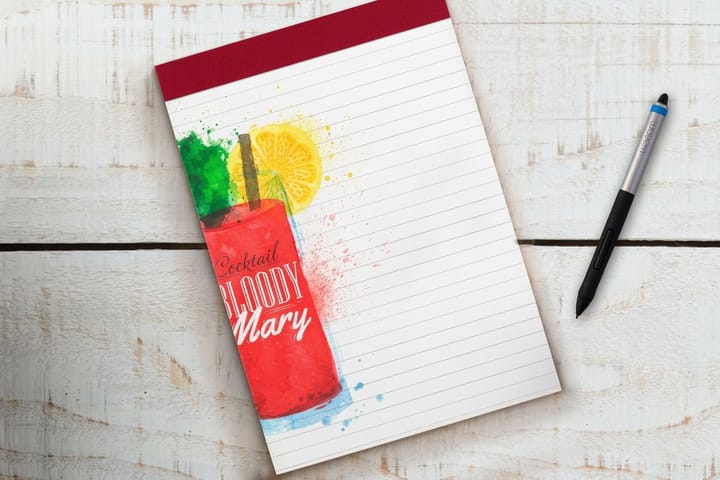
The last piece is for the person inside a company who signed off on your pilot. They are about to spend three months defending that decision in meetings you are not in, and a branded pad next to their keyboard is a quiet reminder of who they are defending.
Print the product name and the support address in the footer of every sheet, not just the cover. Sheets get torn off and passed across desks, which is the whole point, and a pad with branding only on the top sheet stops working after day one. A blank pad is a gift. A footer turns it into a reminder that travels. Standard notepads start at $93.37.
Sheet count is the spec worth thinking about. A thick pad lasts longer but takes up more desk, and a 25 sheet pad gets used up and thrown away inside a quarter, which is fine if your pilot is short and bad if you wanted a year on the desk. Our guide to notepad sizes and sheet counts sets out where each one lands. If the branding itself is still unsettled, fix that before you print anything on this page, using our guide to building a brand style guide.
Specs and pricing
Compare the two you will reorder most
Cards and stickers are the pieces that leave the building, so they are the two a founder reorders after every event. Cards start at $17.57 for 100 on 14pt gloss cover in 3 business days, standard stickers at $23.88 for 25 on uncoated label stock.
| Quantity | Price Per Unit | Total |
|---|---|---|
| 100 | 17.6¢ | $17.57 |
| 200 | 11.5¢ | $23.07 |
| 300 | 9.15¢ | $27.46 |
| 400 | 7.96¢ | $31.86 |
| 500 | 7.25¢ | $36.26 |
| 600 | 6.77¢ | $40.64 |
| 700 | 6.43¢ | $45.04 |
| 800 | 6.18¢ | $49.43 |
| Quantity | Price Per Unit | Total |
|---|---|---|
| 25 | $3.73 | $93.37 |
| 50 | $1.91 | $95.56 |
| 100 | 100.0¢ | $99.95 |
| 200 | 56.3¢ | $112.59 |
| 300 | 41.4¢ | $124.13 |
| 400 | 33.9¢ | $135.65 |
| 500 | 29.2¢ | $146.10 |
| 600 | 26.4¢ | $158.17 |
Wally explains the solo founder booth
Three surfaces, five pieces, no storefront
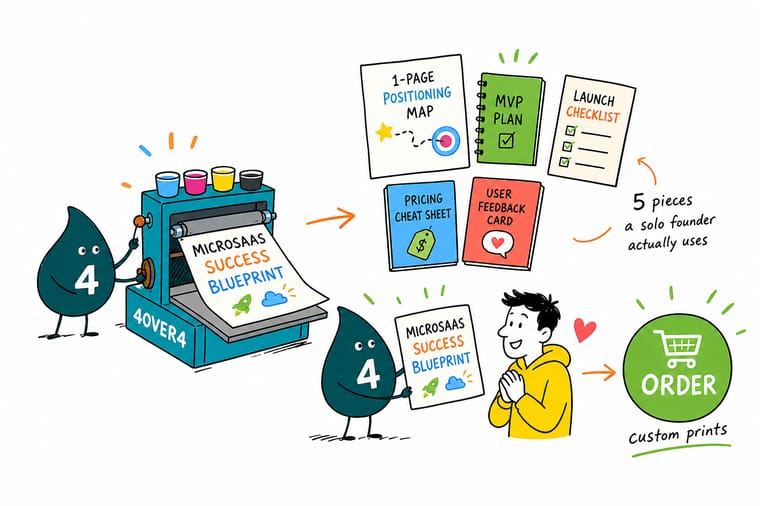
Wally runs the whole booth alone, which is the actual situation. The banner stand behind him says what the product does from ten feet away. The cards go across the table with the domain and the free tier on them. The stickers go home on laptop lids and keep working in meetings he will never attend. Back at the desk, postcards go out to accounts he invoiced and lost, and a branded notepad sits beside the keyboard of the person who approved the pilot. Print those five and the rest of the funnel stays on screen, where it belongs.
Shop business basics printing →See it in use
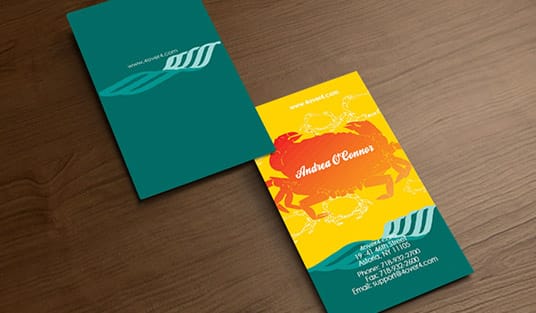
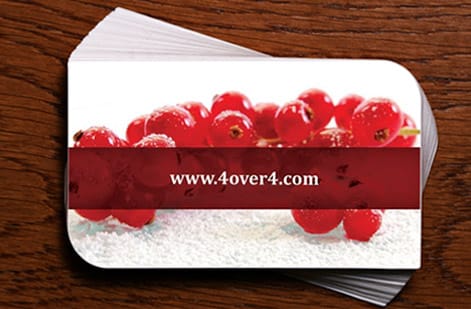
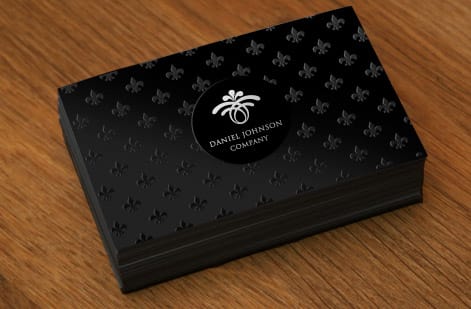
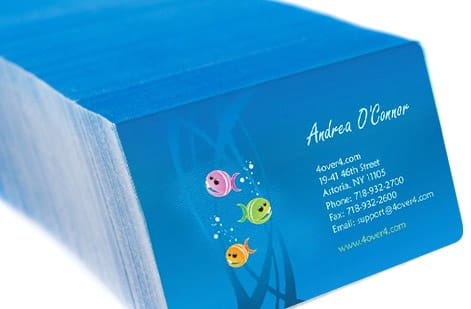
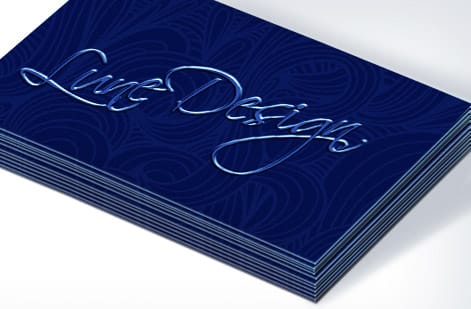
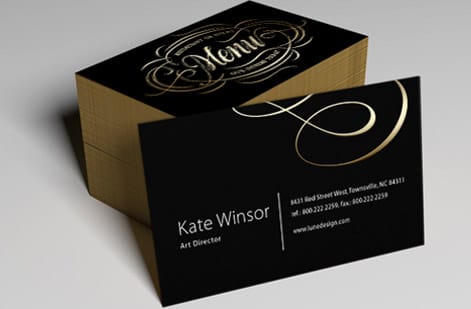
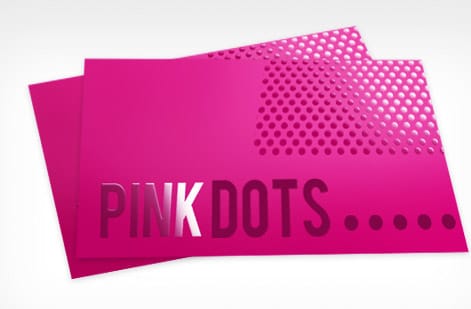
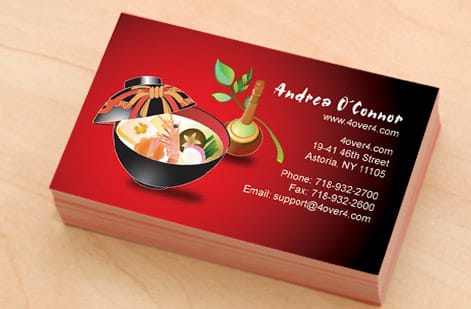
Business cards founders have ordered here
Explore more
Where to go next
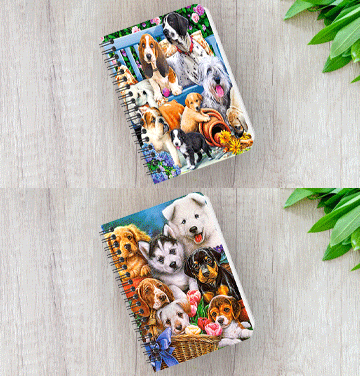

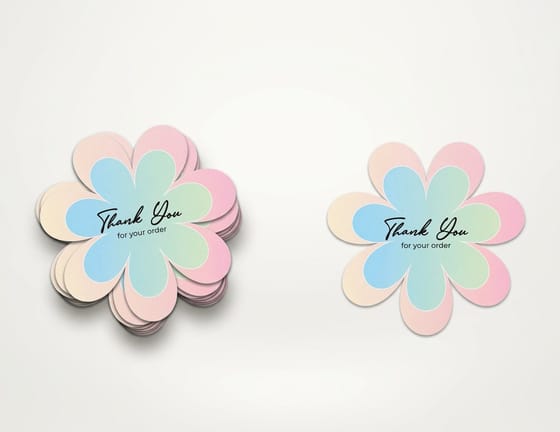
By the numbers
What a one person company can print on demand
Common Questions
Common questions from solo software founders
Does print marketing work at all for a software product?
It works in a narrow set of places, and it is wasted everywhere else. A micro-SaaS has no storefront, so signage has nothing to hang on. What it does have is a conference table, a customer laptop lid, and the billing addresses of accounts it has already invoiced. Business cards, a banner stand, stickers and win-back postcards cover those three surfaces. Anything printed for general awareness is money you should have spent on the product.
What should go on a business card for a SaaS with no office?
The domain, the free tier in plain words, and a QR code that lands on the docs or a trial signup rather than the home page. Leave off the office address you do not have and the job title nobody asked for. If you write promo codes or follow-up dates on the back, order an uncoated stock, because gloss and soft-touch coatings shed ballpoint ink.
Die-cut stickers or standard stickers for laptop lids?
Die-cut follows the outline of your artwork, so the silhouette becomes part of the mark, and it starts at $93.37. Standard stickers come in square, rectangle and circle shapes, start at $23.88, and sit on the same laptop lid doing the same job. Pay for the die cut when the shape is the brand. If your logo is comfortable inside a circle, the cheaper option loses you nothing.
How big is a retractable banner stand and does it travel?
A retractable stand rolls its graphic down into its own base and packs into a carry bag, so it goes as checked luggage and sets up in under a minute with no tools. Set the copy for a ten foot read: the product name high, one sentence of positioning under it, nothing in the bottom third because someone will be standing there. Stands start at $139 and the hardware outlives several reprints of the graphic.
Can I mail postcards to users I only have email addresses for?
No. Mail needs a postal address, and a self-serve product taking card payments online does not collect one. This piece is for invoiced business accounts, where you already hold a billing address for every customer that ever paid, including the ones that canceled. That is usually a list of dozens rather than thousands, which is exactly where a mailed card beats another email.
What does the whole five-piece kit cost to start?
The five starting configurations add up to about $359.79: business cards from $17.57, die-cut stickers from $93.37, a retractable banner stand from $139, postcards from $16.48, and notepads from $93.37. Each figure is the smallest run in the configurator, and the per-unit price drops as quantity climbs. Most founders buy the cards and stickers first and add the stand before their first event.
How fast can I get cards and stickers before a conference?
Time-critical items like business cards, flyers and stickers are what same-day printing exists for, so a Monday decision can be in hand for a Thursday flight. Build in one extra day for shipping to wherever the event is, and send the artwork with bleed and safe margins already correct, because a file that has to be fixed costs you the day you were counting on.
Do I need a designer for any of this?
Not for the first run. Every product here can be laid out in our free online designer, or started from a ready design template where the bleed, trim and safe margins are already set. Bring in a designer once the positioning has stopped changing and you are ordering quantities where a reprint would actually hurt.
Get Started
Print the five and get back to shipping
Cards, stickers, a stand, postcards and notepads, all from one order at 4OVER4.COM. Pick your sizes, stocks and finishes, and watch every price update live as you build it.
Legal Disclaimer
Gold Standard guarantees apply to all standard orders placed through 4over4.com. Price match requires verifiable proof of a competitor's published price for an equivalent product with matching specifications and turnaround time. Satisfaction guarantee covers manufacturing defects and print quality issues. Contact support with order number and documentation. On-time delivery rate based on tracked orders 1999 to 2026. Individual results may vary based on shipping carrier performance.
